The Belarusian Elf: History of a Game Console with a Spectrum's Heart
The story of the Elf, the only Soviet-era 8-bit game console, built on ZX Spectrum architecture in early 1990s Belarus — and why it couldn't survive the Dendy onslaught.
In the late 1980s and early 1990s, the defense conversion wave swept through the Soviet Union. Military factories were ordered to produce civilian goods — from frying pans to televisions. Among them was the Brest-based factory "Tsvetotron," whose special design bureau "Zapad" (West) decided to build something unusual: a cartridge-based game console running on ZX Spectrum architecture.
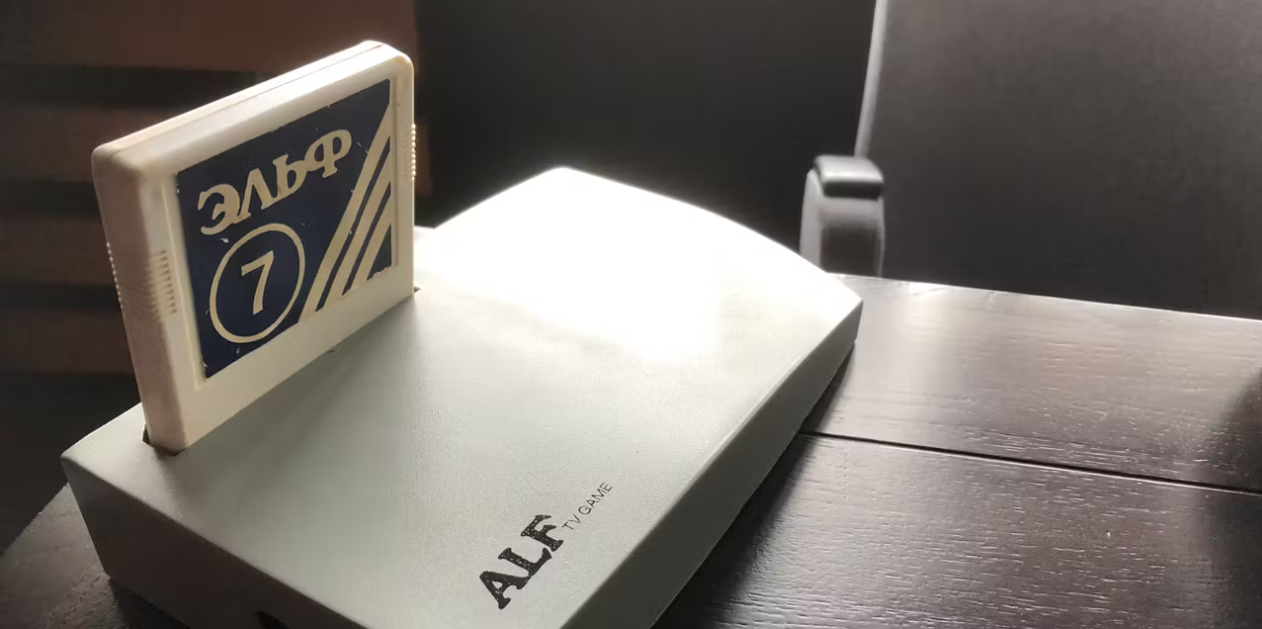
The result was the "Elf" — the only Soviet 8-bit game console ever produced. It appeared somewhere around 1992–1993 and was manufactured until approximately 1995.
How the Elf Came to Be
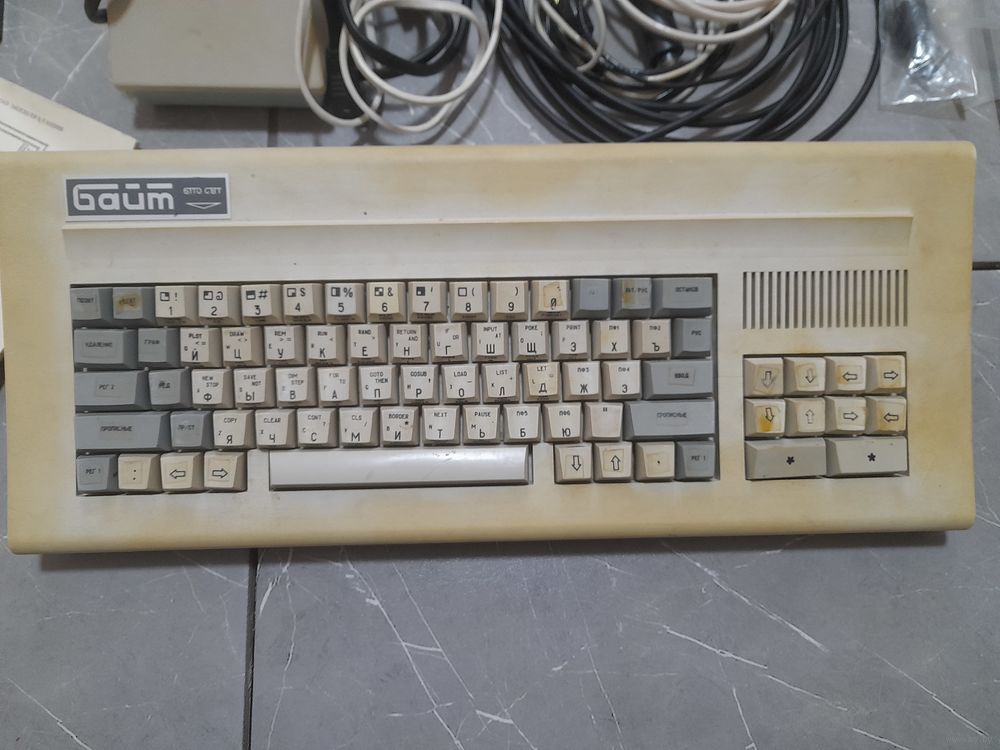
The team at SKB Zapad had experience with Spectrum-compatible computers. They had already developed and produced a ZX Spectrum clone. The idea was to take the familiar architecture, strip away the keyboard, add cartridge support, and create something more accessible for ordinary consumers — a game console.
The concept made sense on paper. Home computers required technical knowledge to operate — loading games from cassette tapes, typing commands, dealing with compatibility issues. A console, by contrast, would be plug-and-play: insert a cartridge, turn it on, and start playing.
Technical Specifications
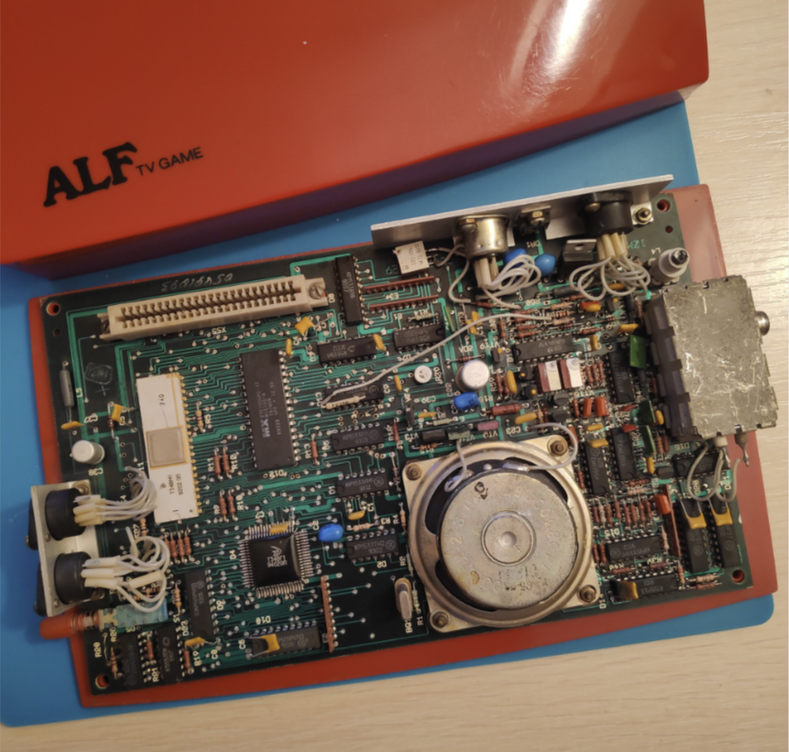
Under the hood, the Elf was essentially a ZX Spectrum in disguise:
- Processor: KR1858VM1 (a Soviet analog of the Zilog Z80A)
- RAM: 64 KB (KR565RU11 chips)
- ROM: KR573RF8 (32 KB)
- Key chip: T34VG1 KA1515KhM1-216 — a custom gate array that handled video generation, memory management, and logic functions
- Display resolution: 256×192 pixels (identical to the ZX Spectrum)
- Video output: SECAM via RF modulator, or RGB
- Sound: Single-bit audio through a built-in speaker
Memory Architecture
The memory system used a bank-switching method. The built-in ROM was divided into 16 KB banks that could be dynamically mapped into the address window #0000–#3FFF. Switching was controlled through port #5F. This allowed the system to access more memory than the Z80's 16-bit address bus would normally permit.
Cartridges and Software
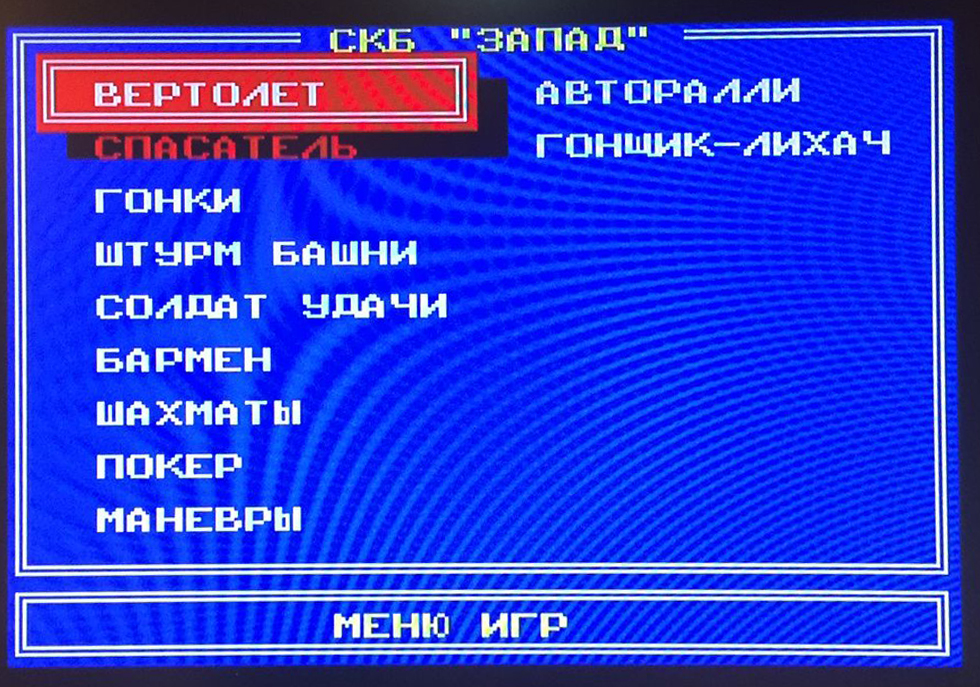
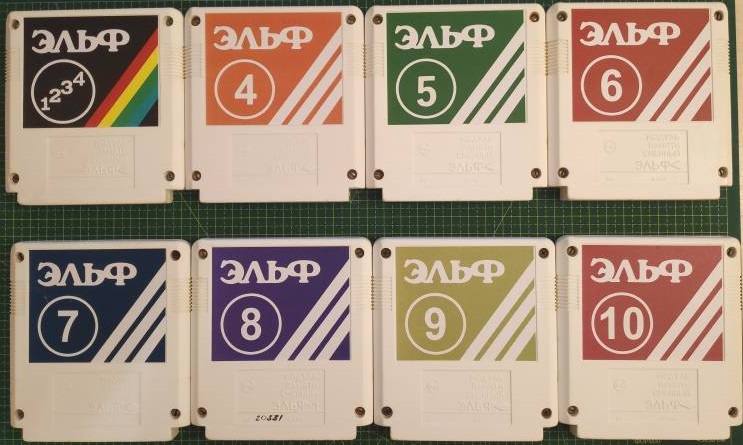
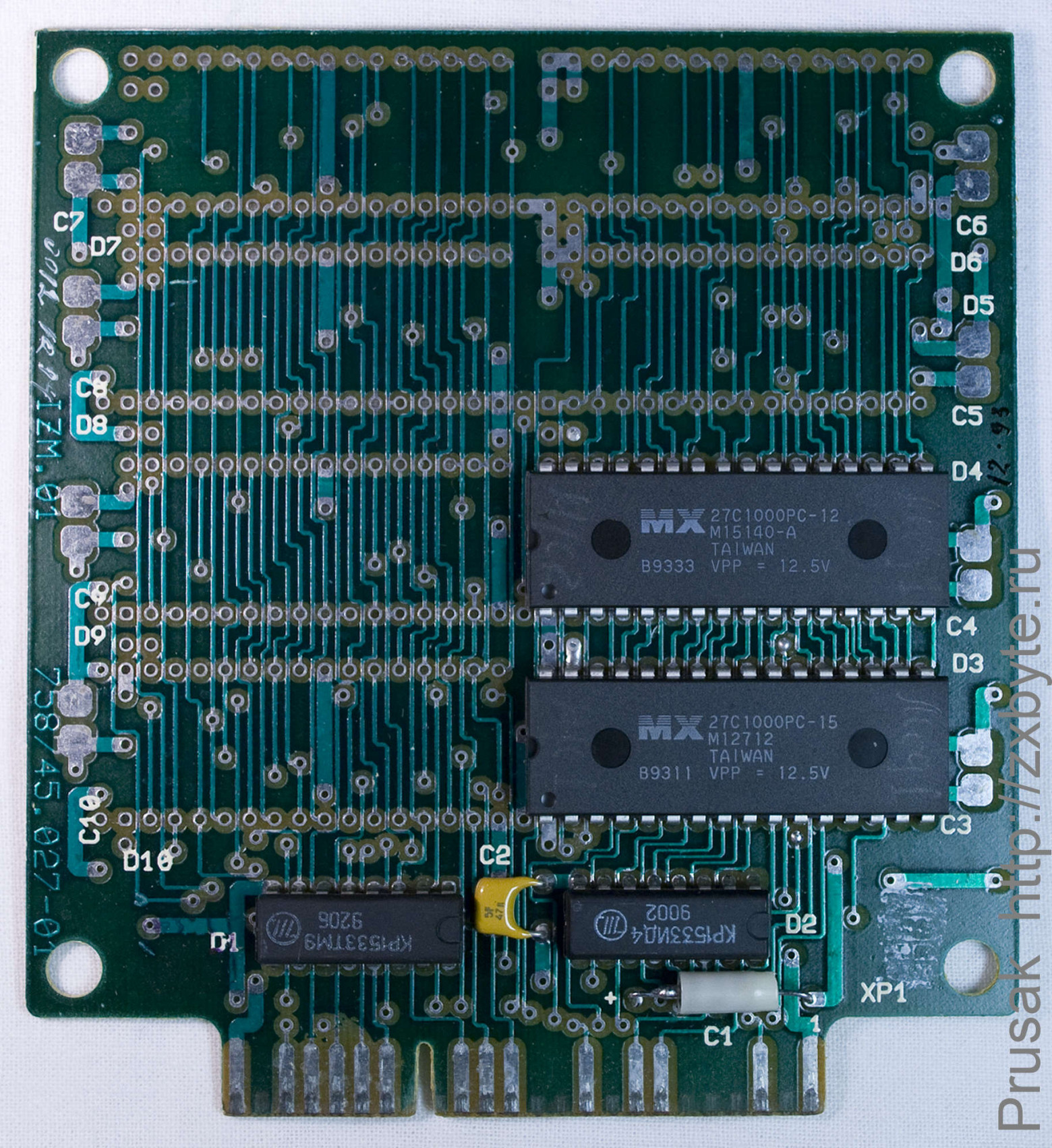
The cartridges could hold anywhere from four to thirty-two games, depending on the ROM chip capacity. The factory produced two cartridge versions:
- The first version featured eight sockets for ROM chips, allowing flexible game combinations
- The second, more compact version used a single large ROM chip
The games themselves were ports of existing ZX Spectrum titles — the same games that Spectrum users loaded from cassettes, but now burned onto ROM chips for instant access.
The Controllers
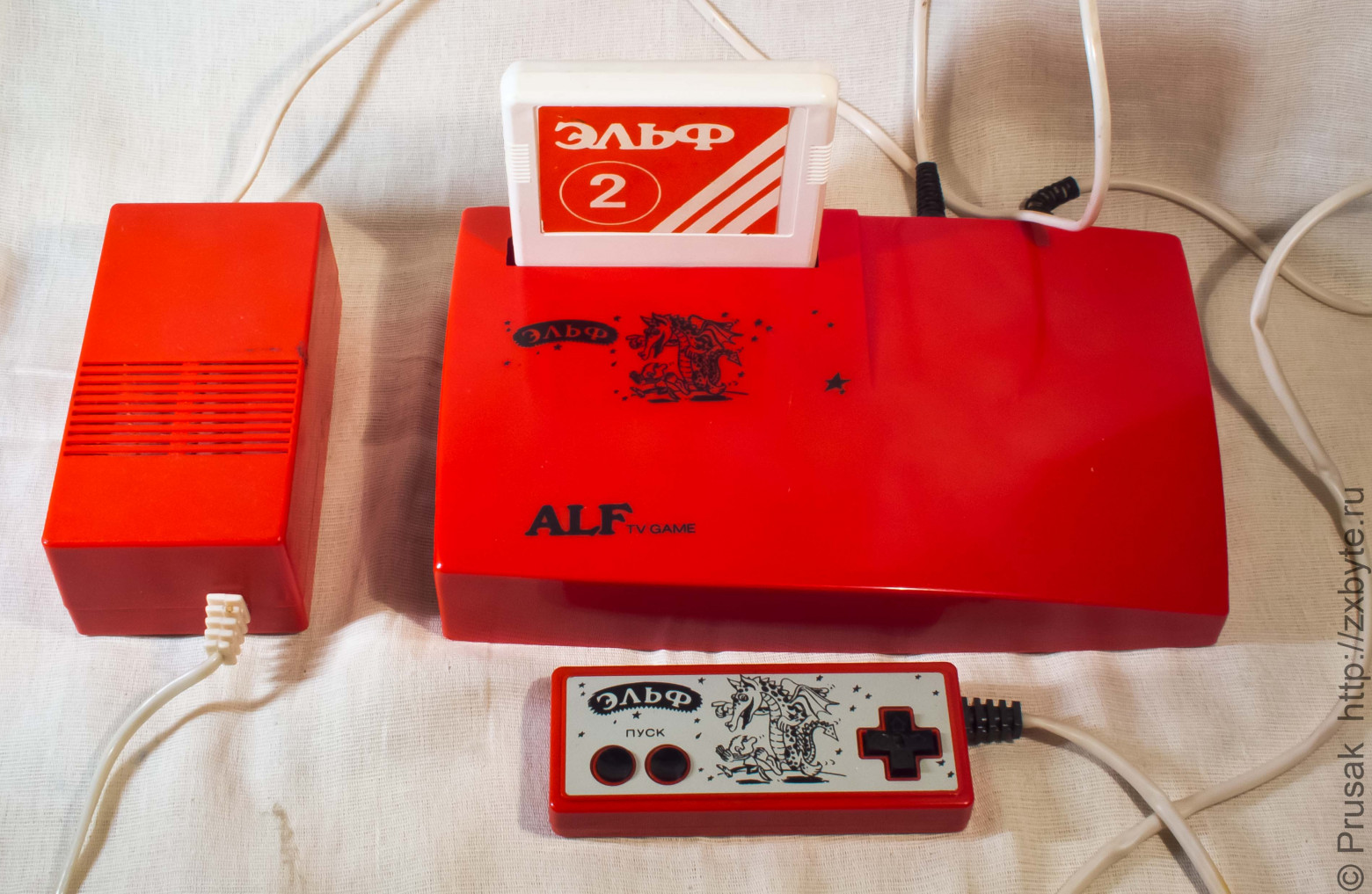
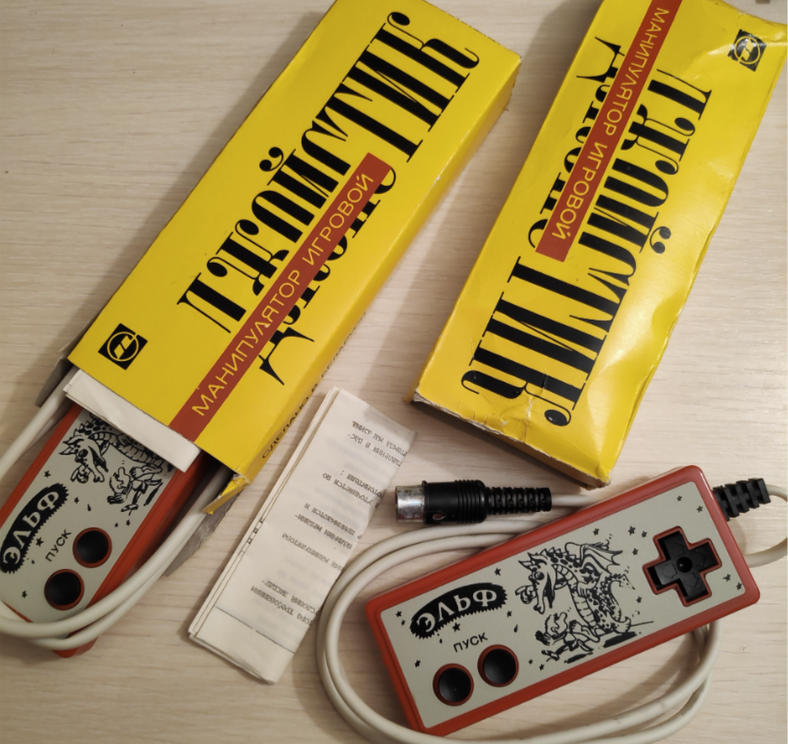
The Elf came with two joystick controllers. However, the button layout was somewhat unusual and not particularly intuitive. The controllers were functionally adequate but couldn't match the ergonomics of Nintendo or Sega gamepads that Soviet kids would soon encounter.
Why the Elf Failed
The main reason for the Elf's commercial failure was its meager game library and the small number of available cartridges, which were only compatible with the Elf itself. The cartridges were expensive, and there was no third-party ecosystem to speak of.
But the real death blow came in 1992 with the arrival of the Dendy — a Taiwanese Famicom clone that flooded the post-Soviet market. The Dendy offered cheap cartridges, a massive game library, and aggressive TV advertising that made it a household name. Against this juggernaut, the Elf had no chance.
Production ceased around 1995. The Elf remains a fascinating footnote in gaming history — a rare example of Soviet engineering ambition in consumer electronics, and a reminder that technical excellence alone isn't enough without ecosystem development, distribution channels, and effective marketing.
The developers missed a key opportunity by not adding a keyboard option, which would have made the device dual-purpose — both a game console and a home computer. This decision limited the Elf to a narrow niche of pure gaming, where it simply couldn't compete with the flood of cheap Asian imports.