Eyes Don't See, But Hands Do: A Blind Engineer's Experience
A blind-from-birth engineer shares his decades-long journey building a full smart home system using Wiren Board controllers and Modbus, proving that visual impairment is no barrier to complex home automation.
I was born blind, though I can distinguish light, darkness, and large shapes. Growing up, I had an irresistible attraction to technology and radio electronics. I loved taking apart electronic toys to see their internals, though reassembling them rarely succeeded. At age 7, I built a small wooden boat from scrap wood and boards — it actually floated and could hold items. By age 9, I created my first power strip with a button switch, constructed from four dual outlets and a switch mounted on a small board.

First Steps Toward Smart Homes
When internet access became available, I discovered the "Smart Home" concept through an article about the "Sapphire" light switch, which could be controlled via an infrared remote. Despite being nearly blind, I use lighting and lighting scenarios because they create atmosphere and provide psychological comfort.
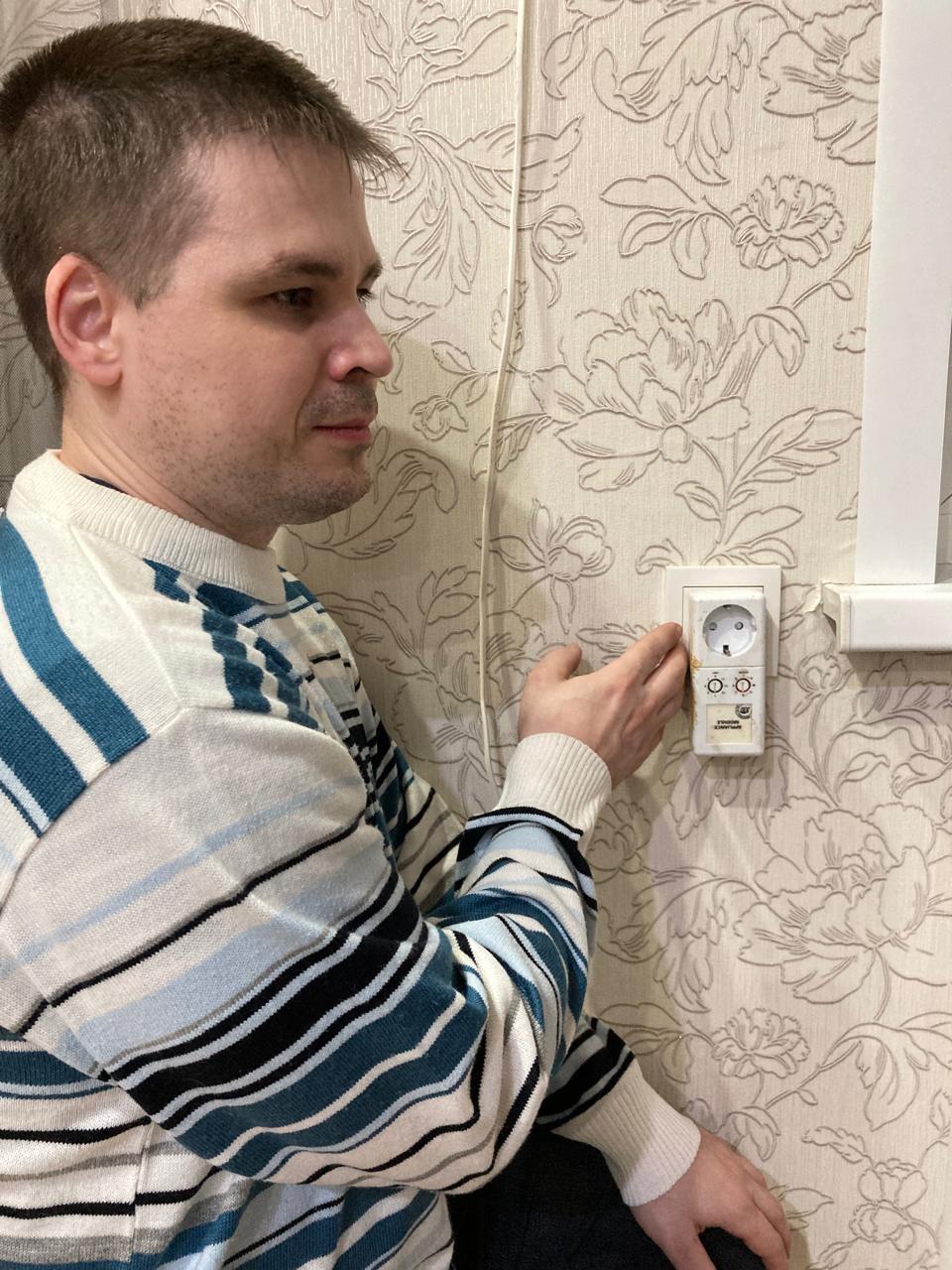
In the early 2000s, the internet offered only two accessible smart home systems: KNX (expensive, poorly documented) and X10 (better documented but imperfect). I found a local supplier and began purchasing X10 modules by the dozen, covering my one-room apartment's lights and outlets.
Development and Learning
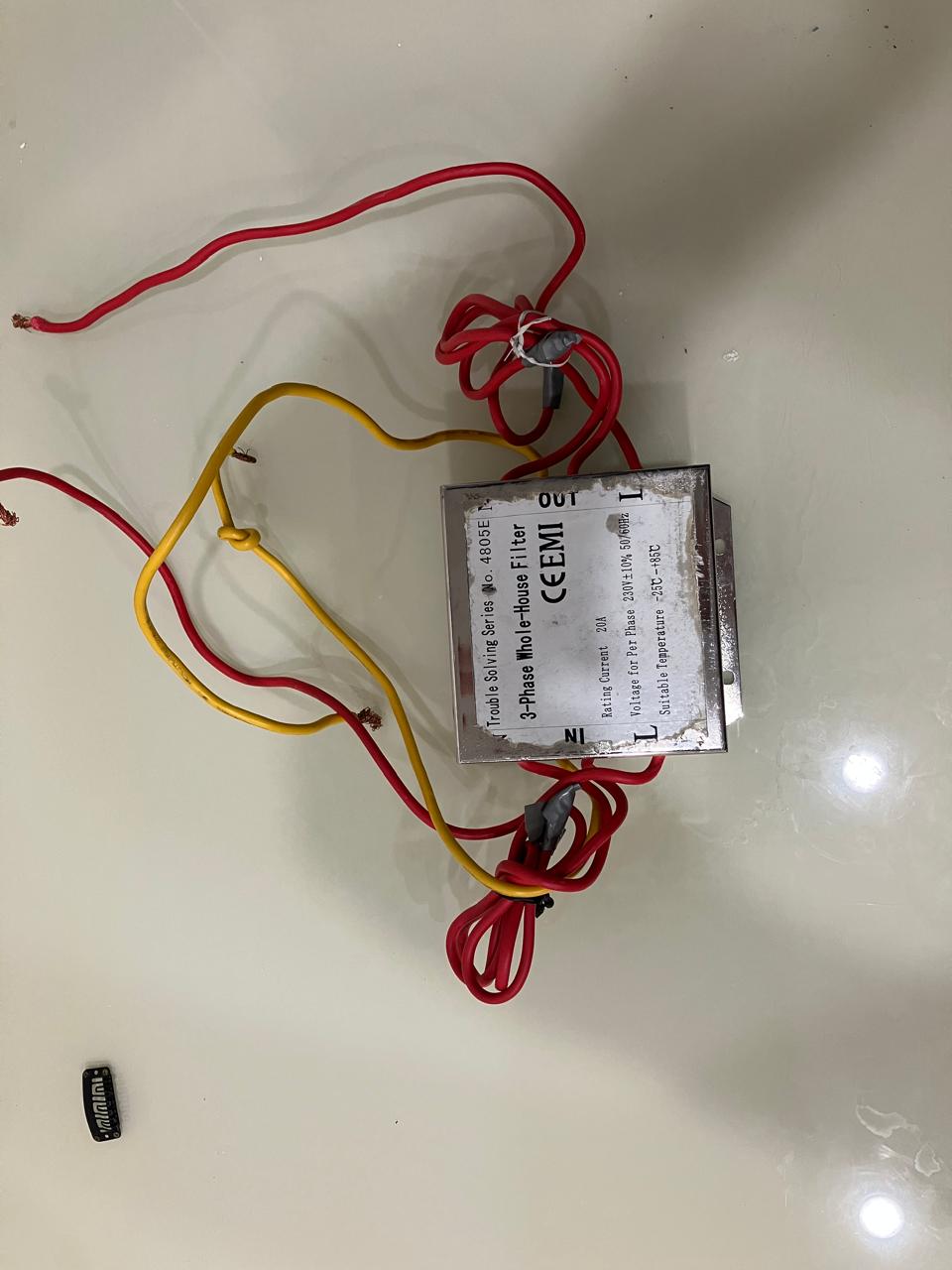
When I moved to a larger multi-unit building, the X10 system's limitations became apparent. A neighbor's evening device operation at 6 PM interfered with my network, causing unpredictable light and outlet failures. Filters didn't help.
My system was controlled by the Ocelot controller, which operated through special software selecting code lines from 2,048 total options. Frustrated with X10's instability, I sought more reliable solutions.
Meeting Wiren Board
An equipment supplier recommended "Contactless Devices" (Бесконтактные устройства), which manufactured the Wiren Board controller — built entirely on Modbus wired control systems. The supplier sent documentation and Evgeny Boger's contact information. I was thrilled by the controller's possibilities but initially overwhelmed by its complexity compared to Ocelot's simple menu selections.
After years studying documentation and forums, I decided to pursue engineering education. I enrolled in an engineering program and established a smart home automation laboratory based on Wiren Board. With students, I created a mini-house with climate control systems. With a friend, I developed a driver enabling control via programmable cash register keyboards.

System Construction
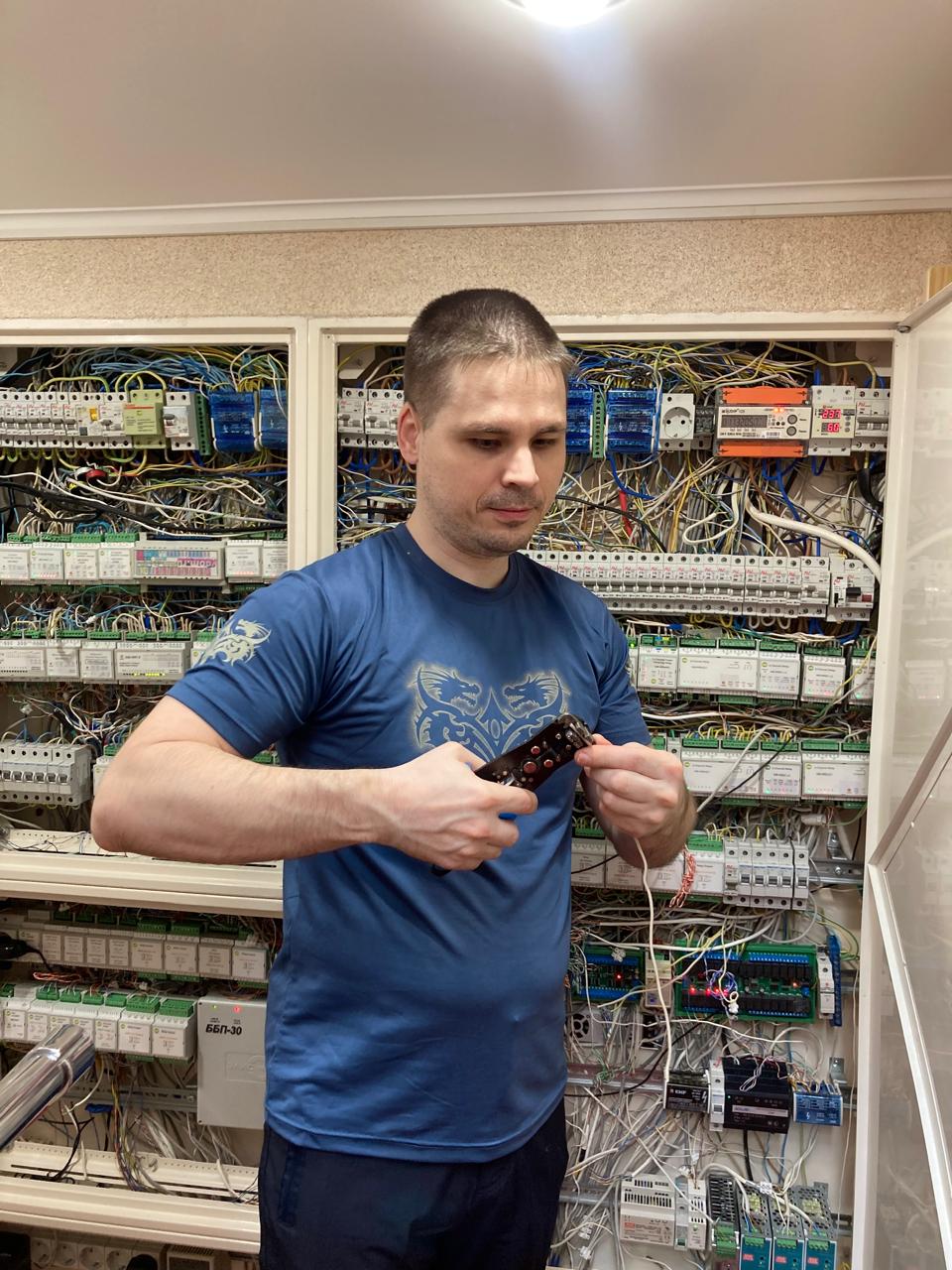
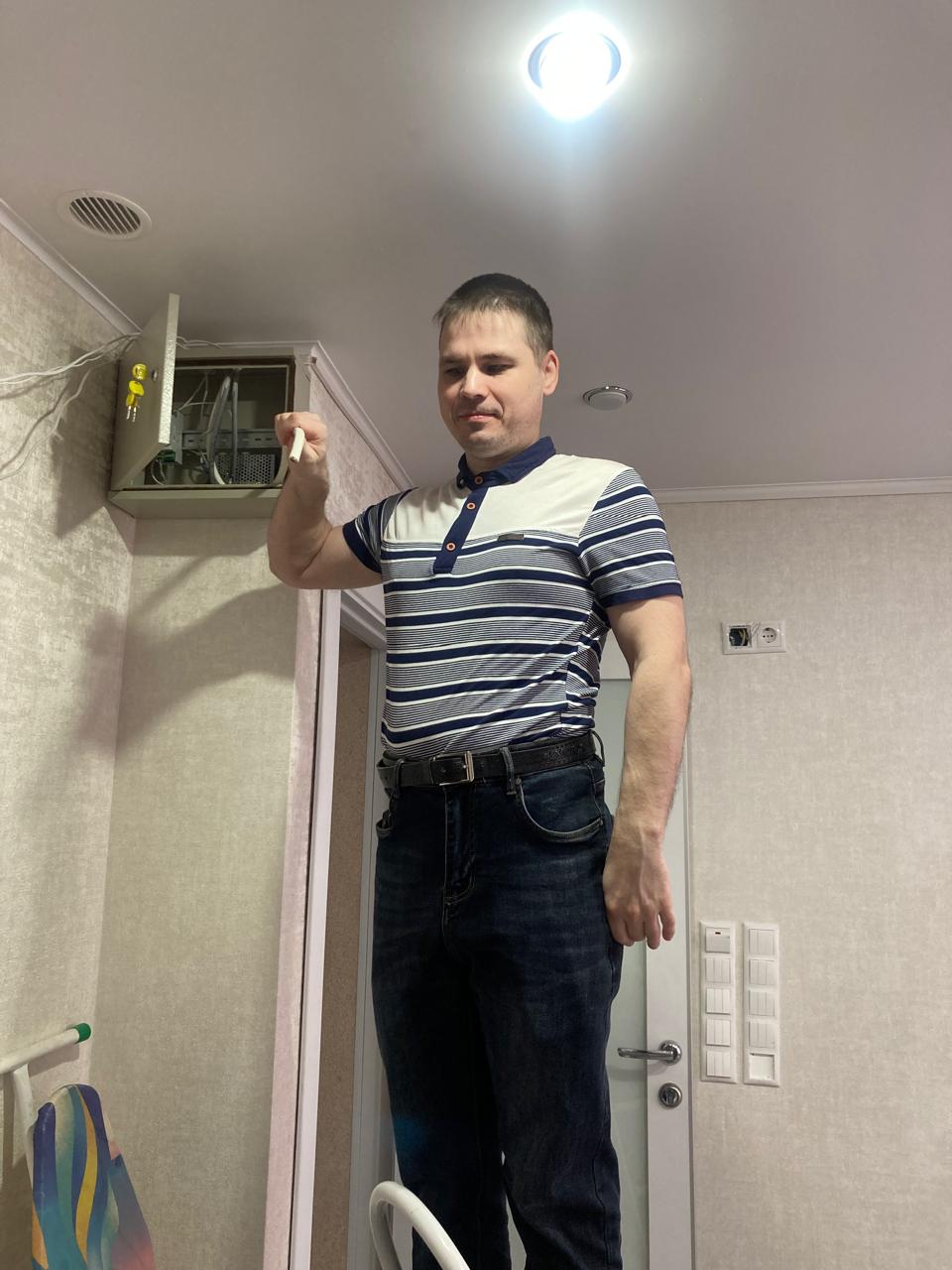
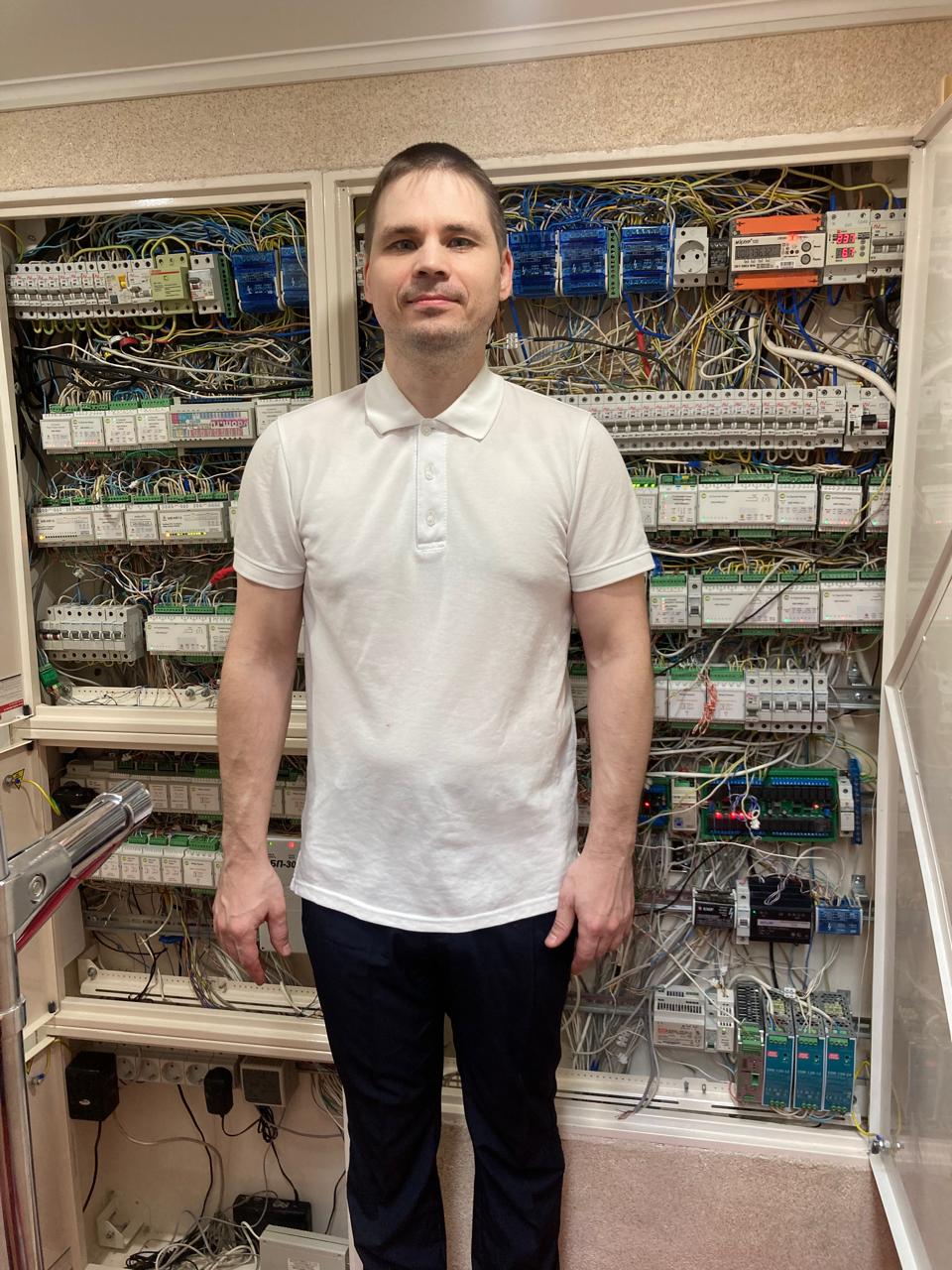
I personally assembled electrical panels and installed them throughout my apartment. My main tool is a "talking" multimeter for locating wires and measuring resistance and voltage. My entire life includes audio-enabled devices: screen readers for computers and smartphones, voice-announcing measuring tapes and thermometers, and Bluetooth-connected devices accessible through smartphone interfaces.
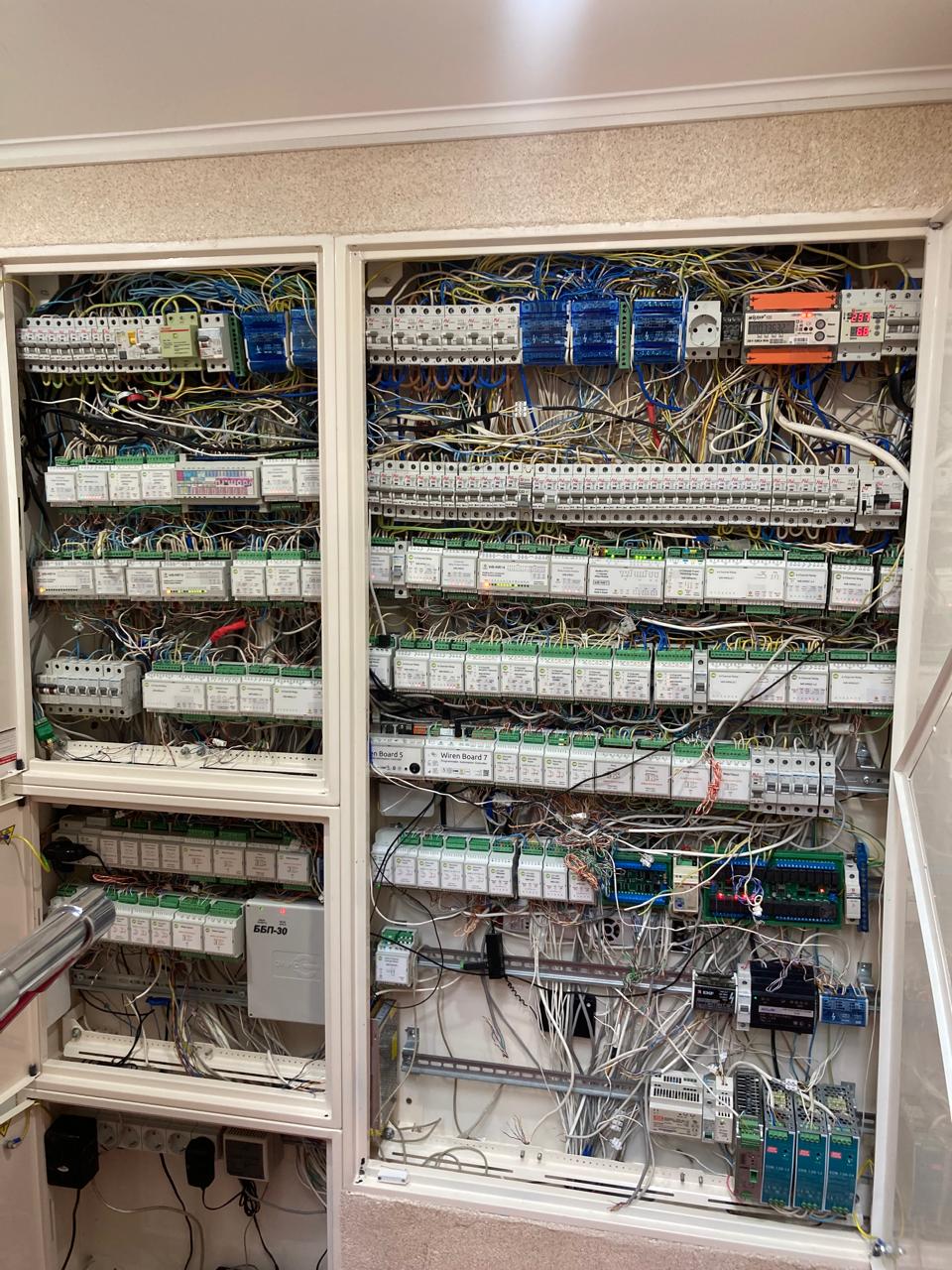
After upgrading from Wiren Board 5.3 to version 7, system updates took seconds and the web interface became responsive.
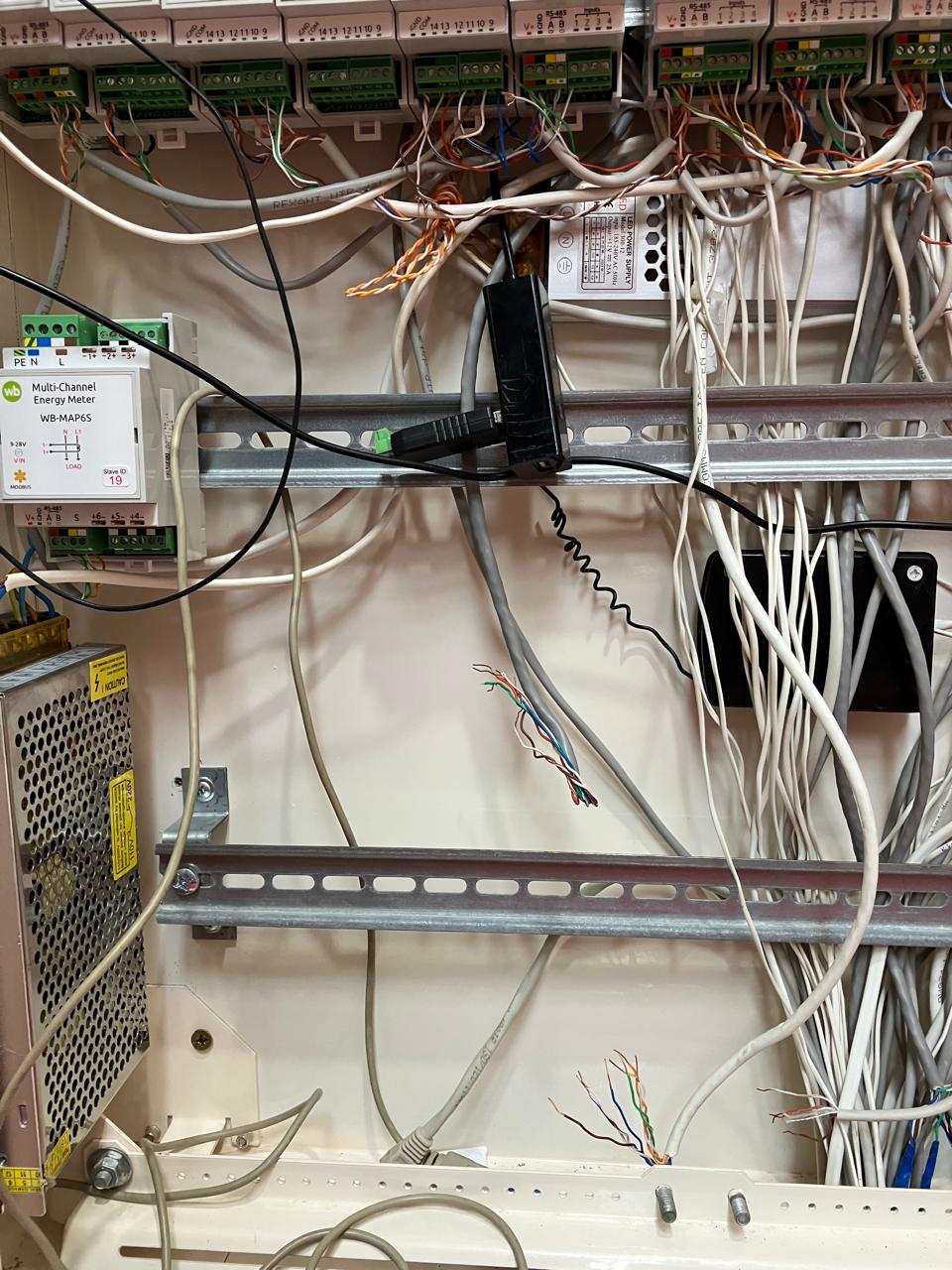
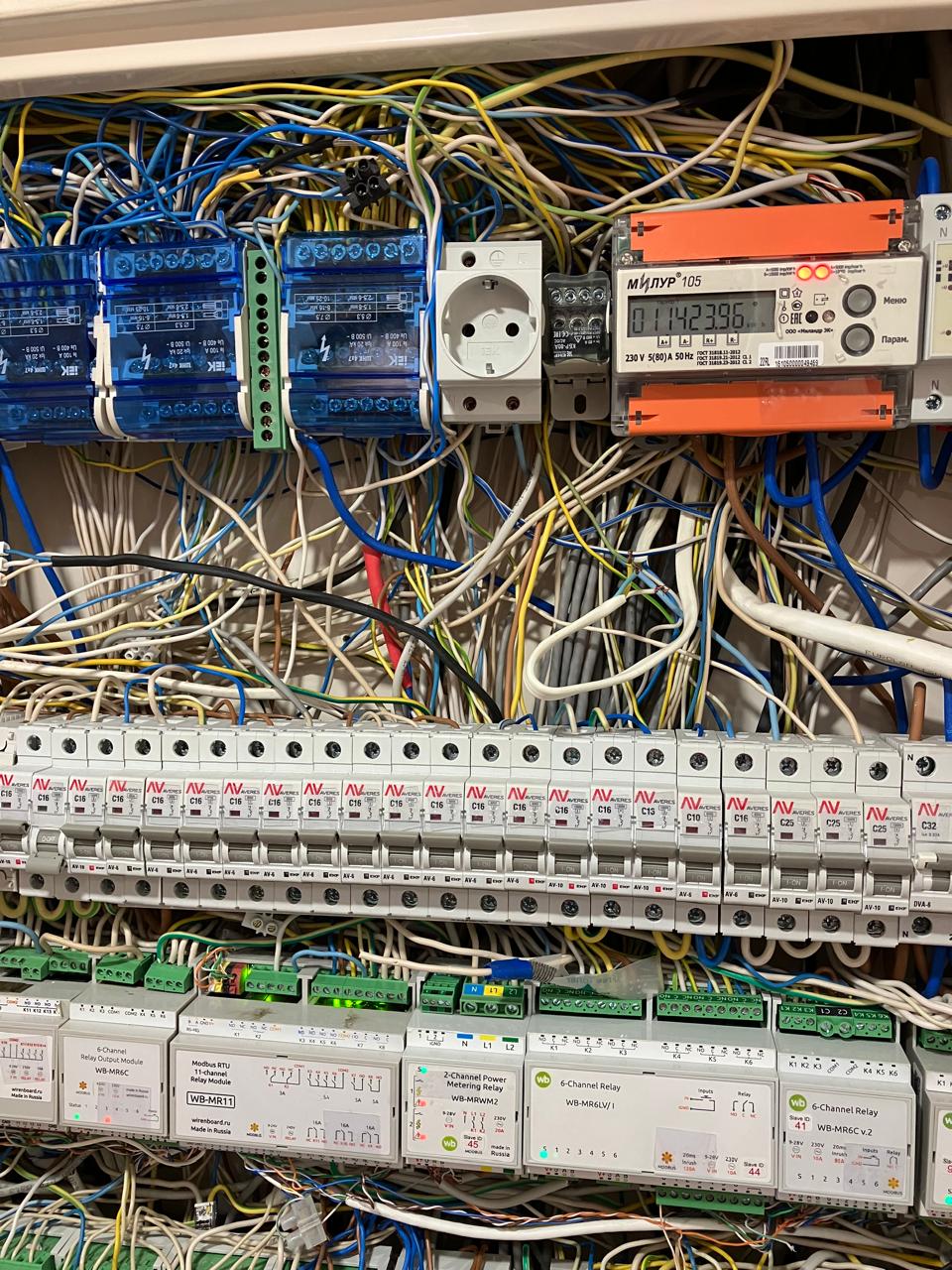
For installation, I purchased empty electrical cabinets and DIN rail mounting hardware, then mounted equipment from EKF's Averes series automatic switches.
During renovation, I laid cables meeting true smart home standards:
- Individual cables from each outlet (no distribution boxes)
- Separate cables for most light fixtures (some ceiling lights grouped in threes)
- Four-core 1.5mm cables to each switch for direct control
- Eight-core twisted pair to scenario switches, radiator temperature sensors, water supply temperature sensors, door frames, furniture cabinets, underfloor heating, ventilation systems, windows, and curtain rods
- Fifty-core cables run to each room for future expansion
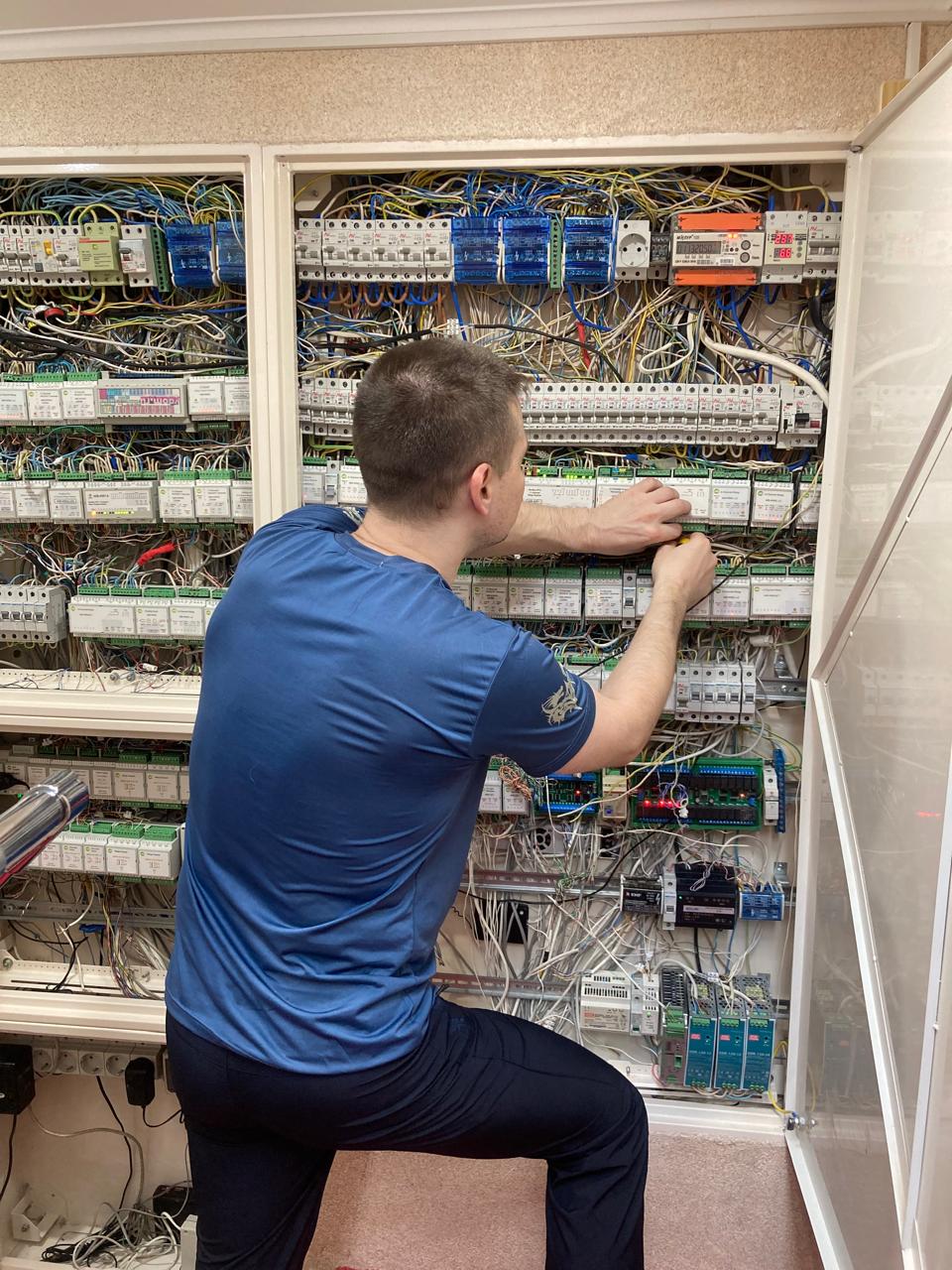
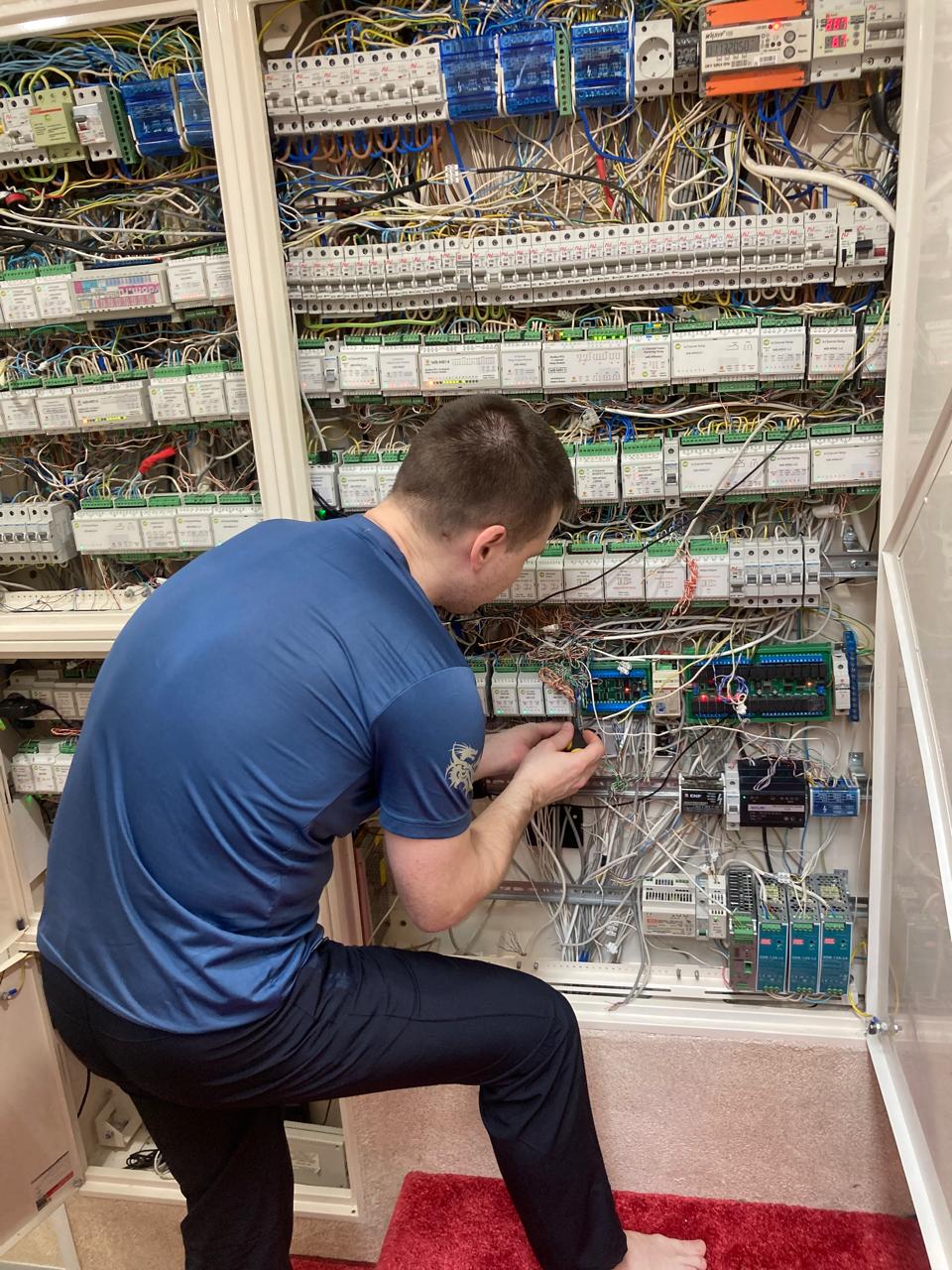
Current System
All connected devices include:
- Lighting control with dimming
- Climate control (ventilation, humidification, heating, cooling)
- Individual outlet management with voltage monitoring
- Curtain and window control
- Water supply system management
- Multimedia and telephone/intercom systems
- Door/cabinet opening sensors
- Temperature sensors in refrigerators
- Current transformers monitoring appliance consumption
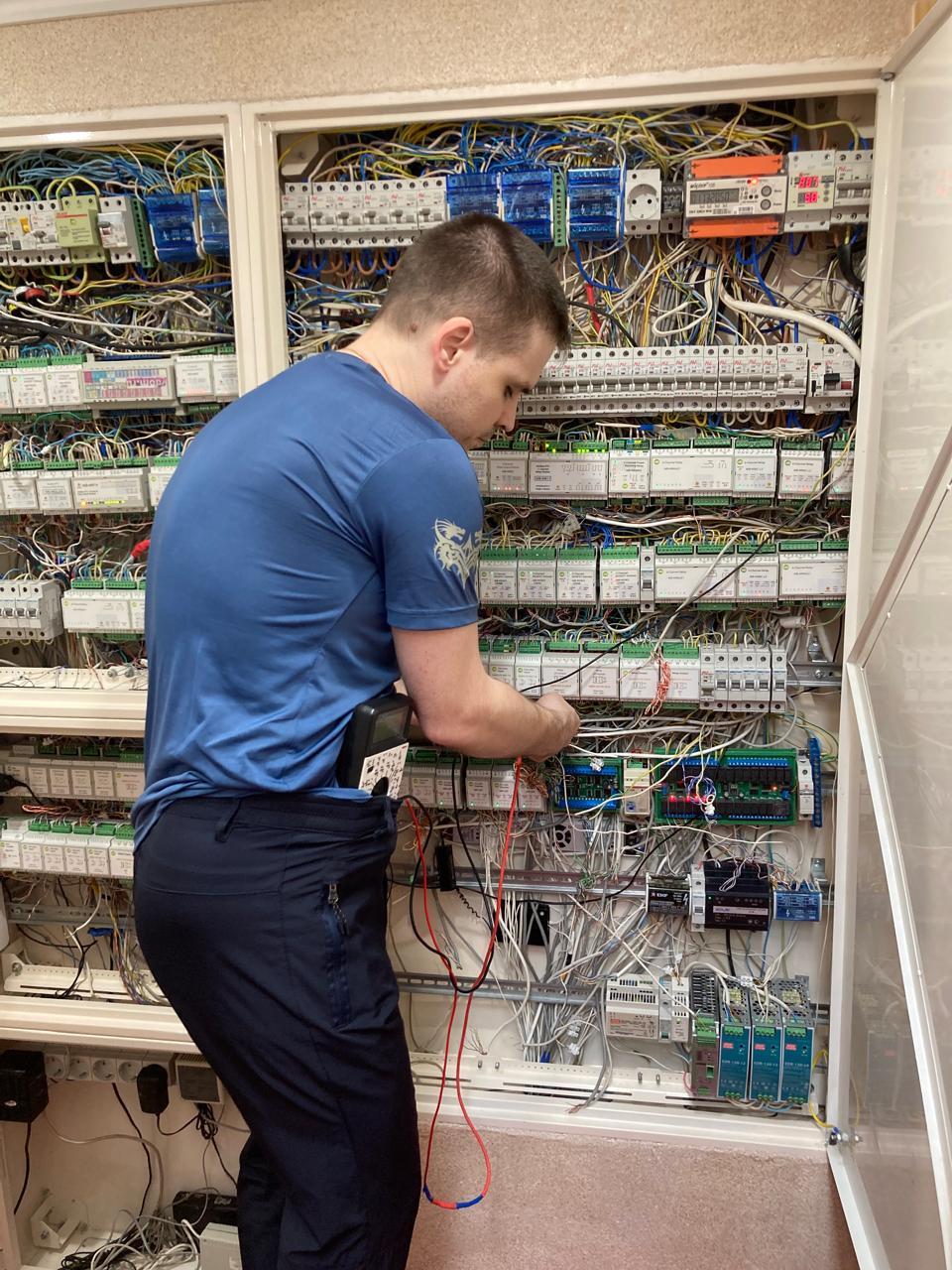
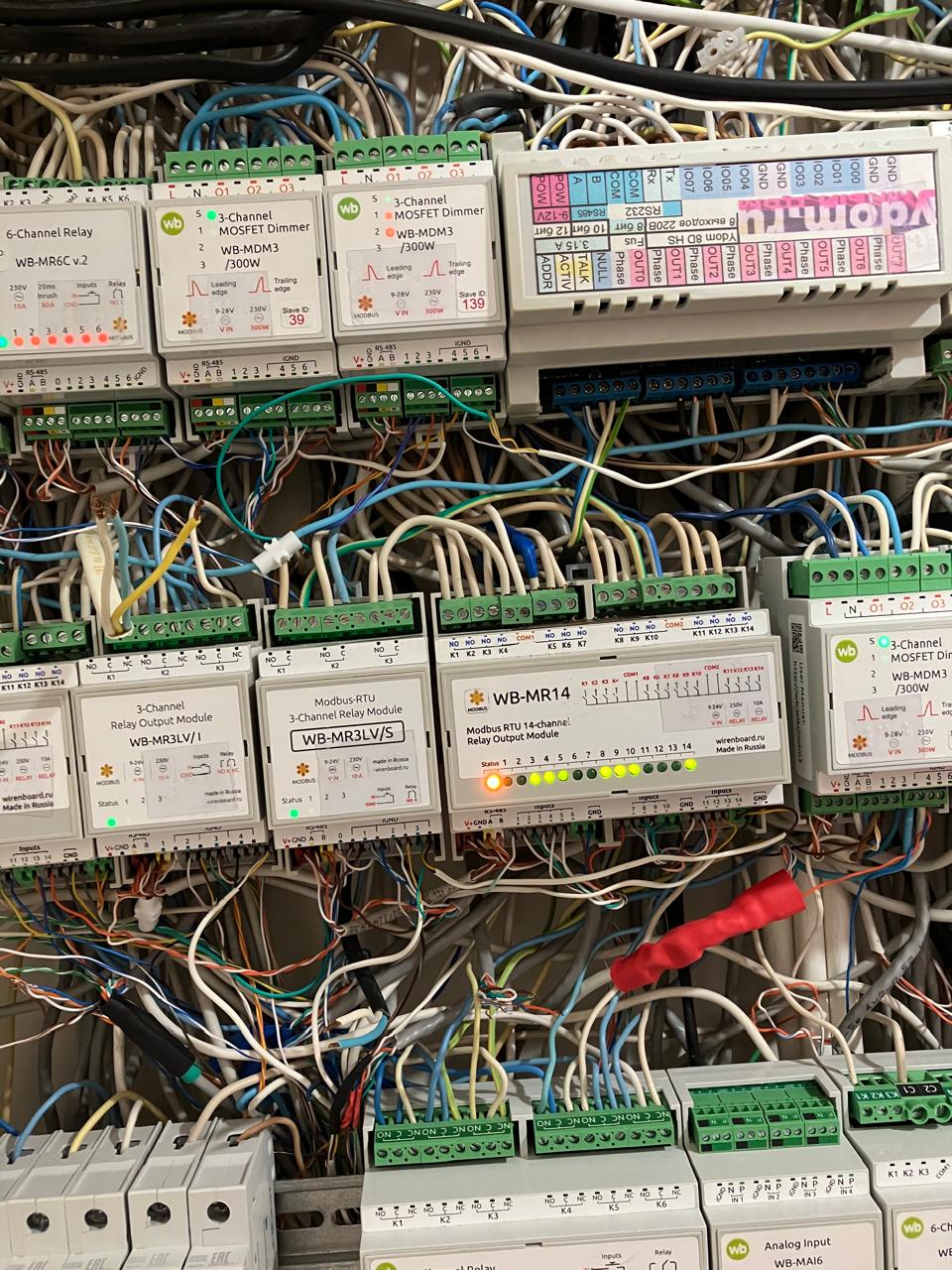
Older Wiren Board modules (WB-MR11, WB-MR14) operate on separate buses due to speed limitations. The Milur-104 meter also runs on a dedicated bus. The system includes a ydom dimmer module and a Chinese 32-channel relay (both showing MQTT errors but functioning correctly).
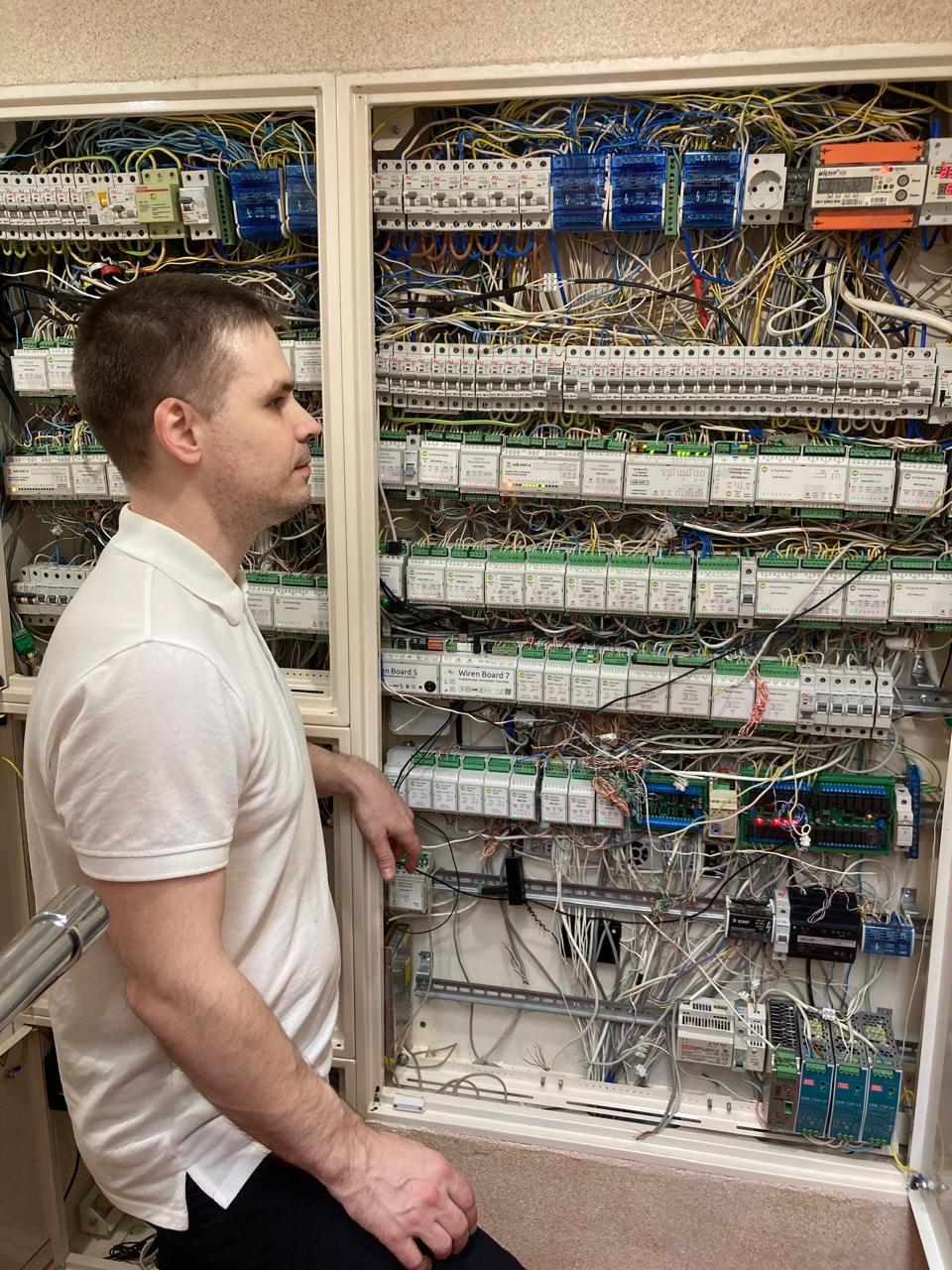
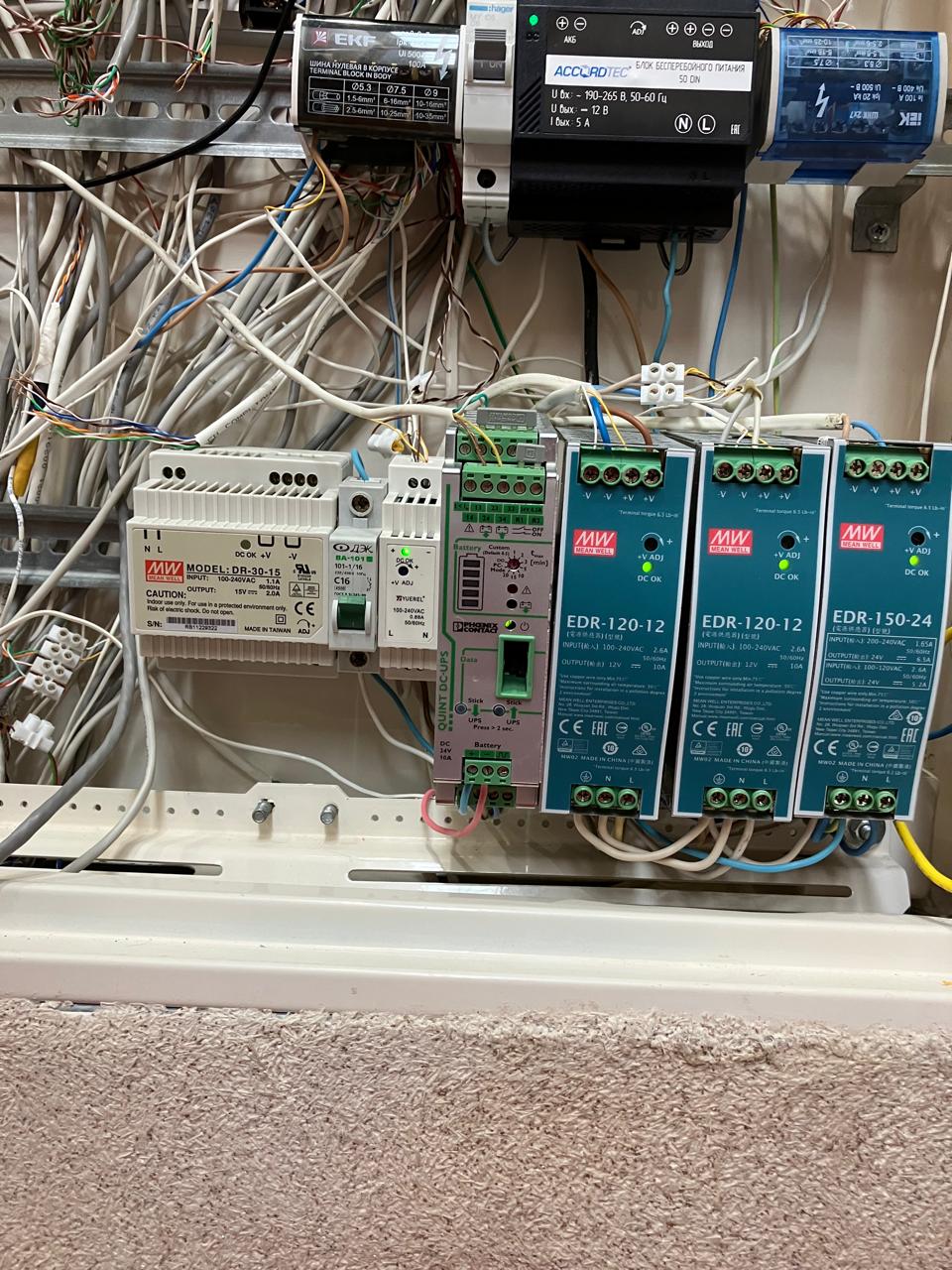
Power supplies for modules, controller, audio amplifiers, and LED strips mount at the cabinet bottom. Beyond Wiren Board's internal battery backup, additional UPS units protect modules and critical systems (water supply, emergency lighting, audio alerts).
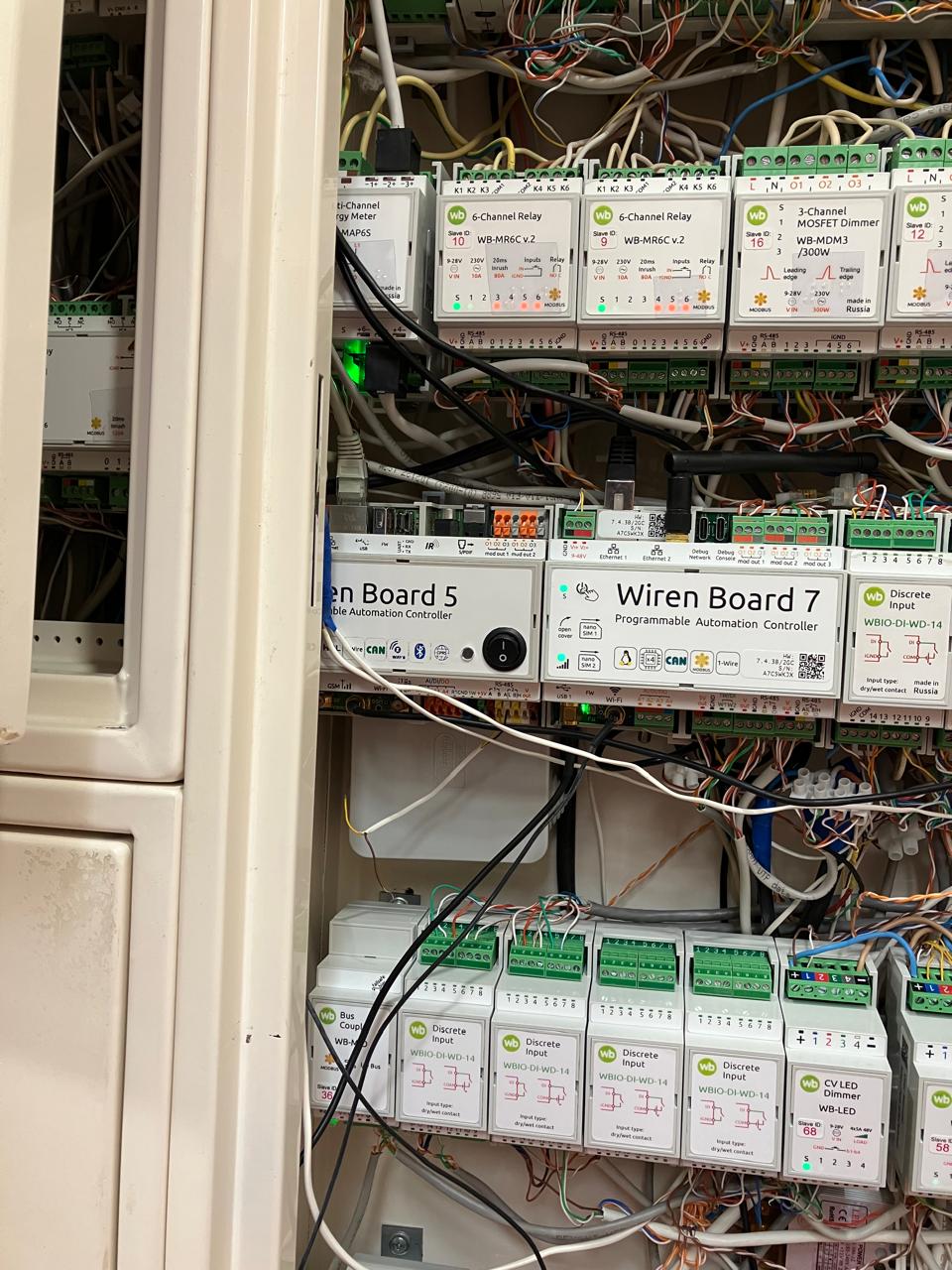
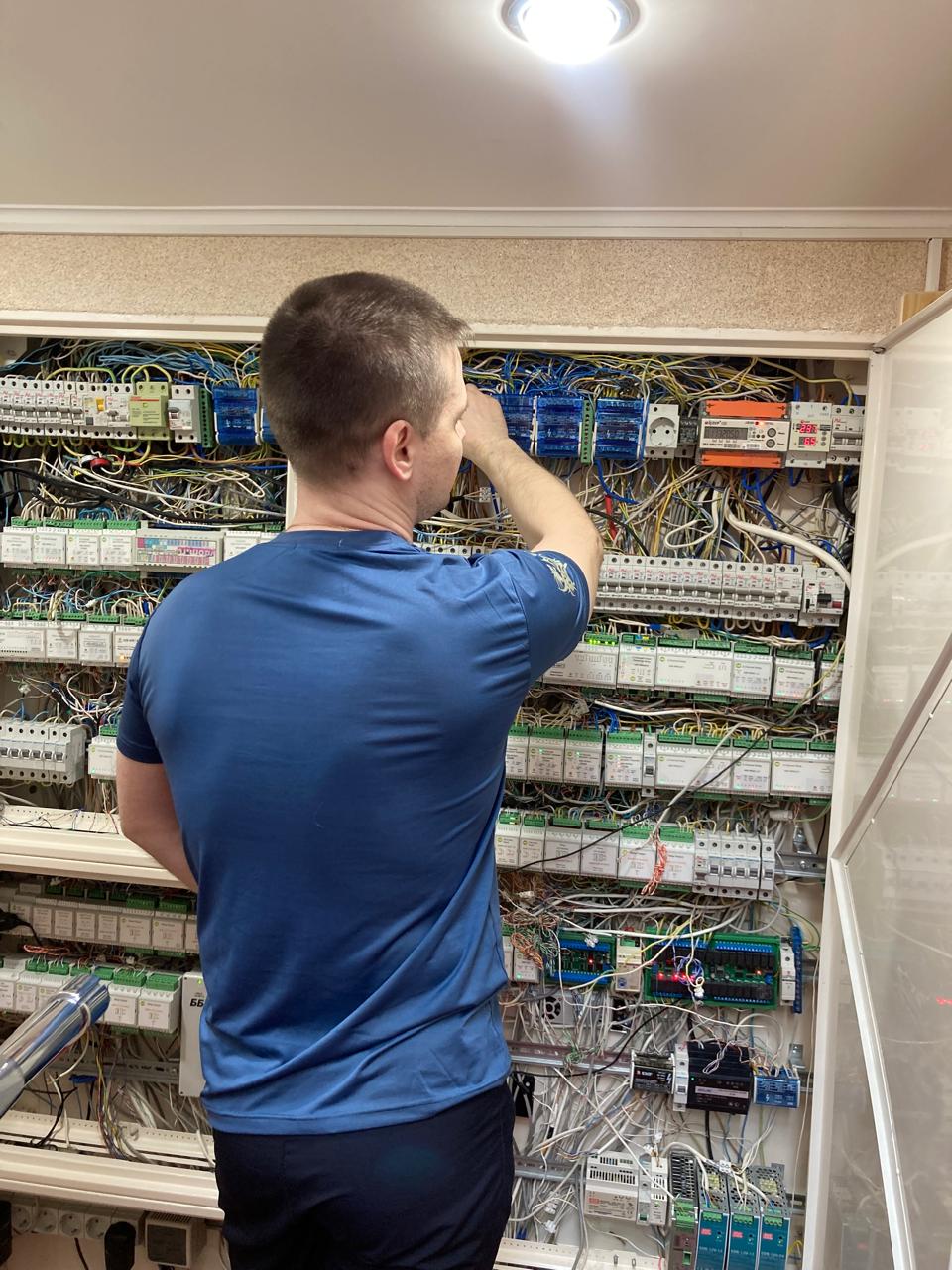
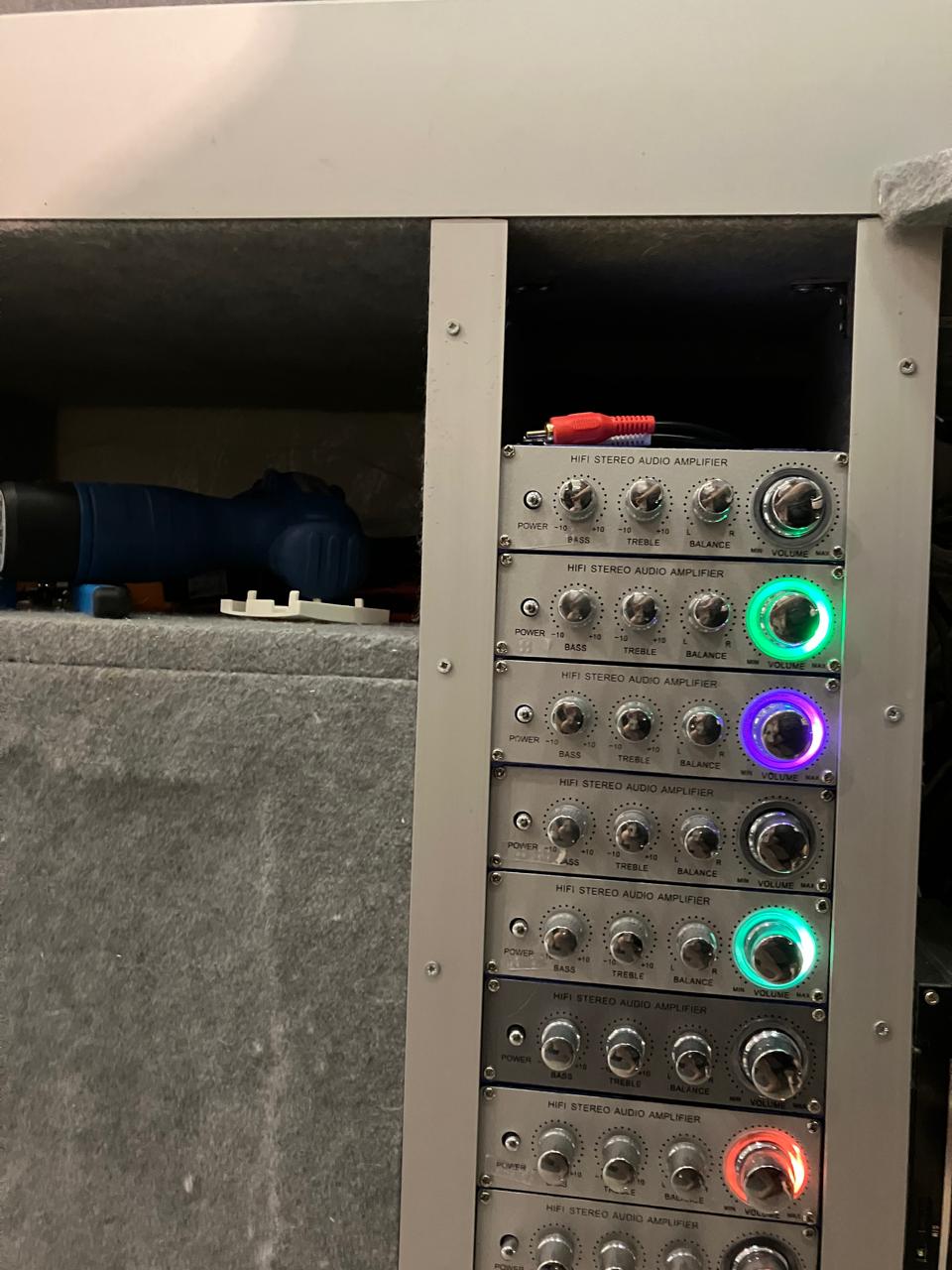
Audio notifications announce scenario activation, climate parameters, battery status, and energy consumption. Each room has dedicated amplifiers with speakers. Notifications use Yandex Mini stations or PC audio card outputs.
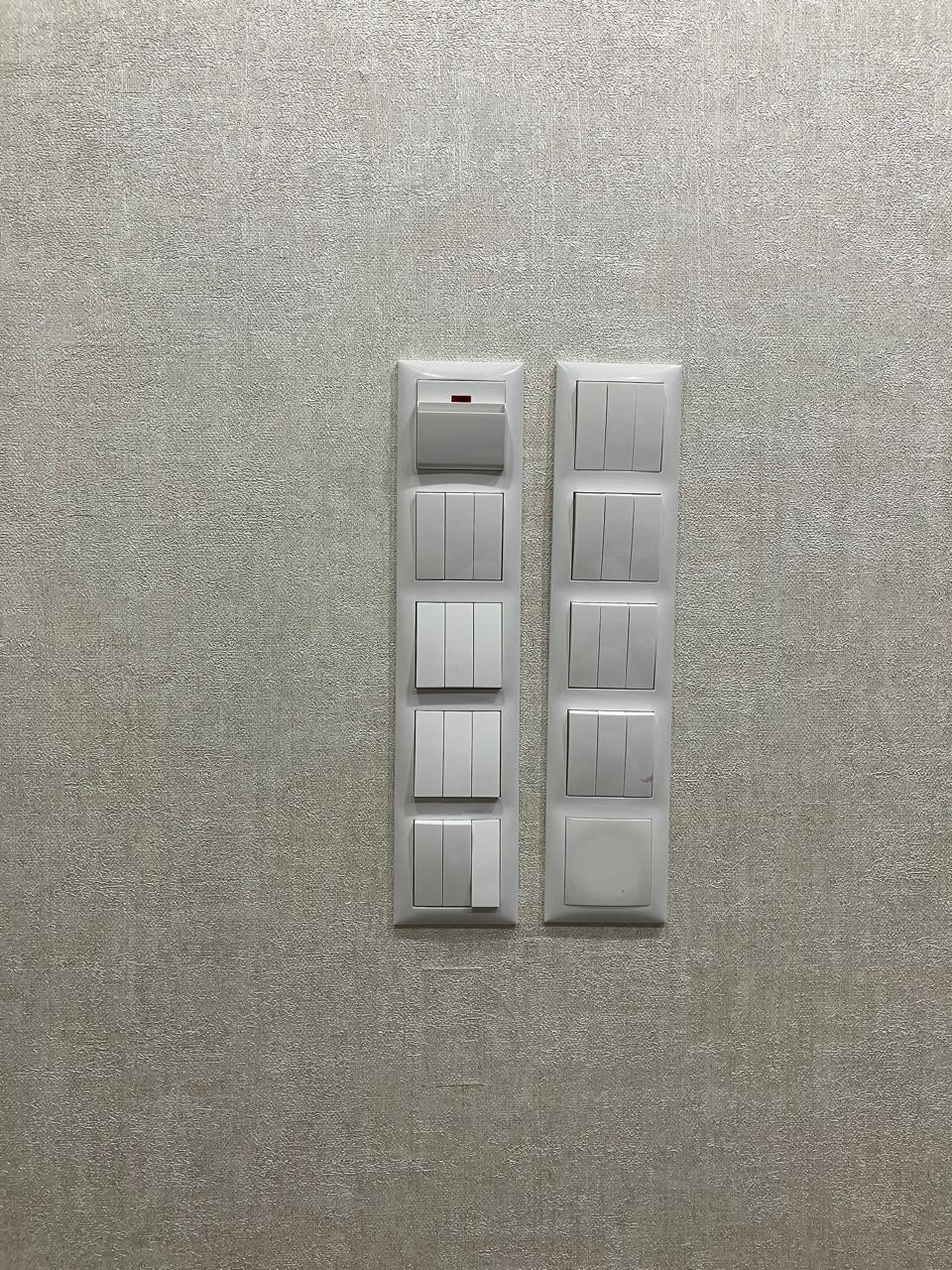
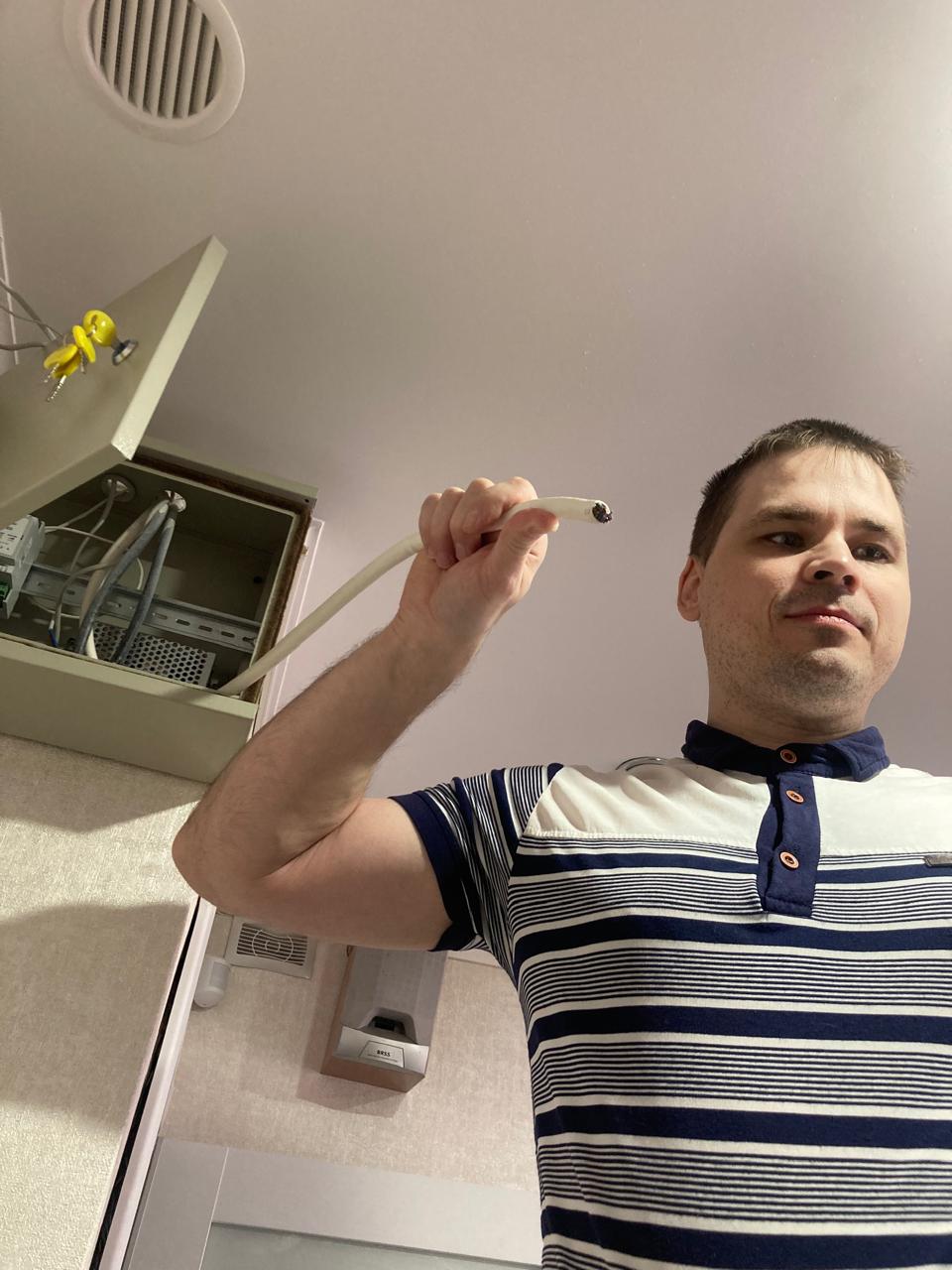
The complete system provides auditory access to temperature, humidity, light levels, CO2, electricity consumption, water usage, and alerts — enabling full operation without visual monitoring.
Instead of a Conclusion
Despite visual limitations preventing professional integration work for others, I transformed this passion into engaging personal development. Constant problem-solving and the pursuit of dreams demonstrates that life gains meaning through dedicated aspiration. A disability is not a reason to give up — it's a reason to find new paths forward.