Burn the Barbarians, Sink the Ships: A Dotted History of Greek Fire
Greek fire was a closely guarded Byzantine weapon invented around the mid-7th century that could burn on water and terrified enemies for centuries. Its exact composition remains unknown to this day, though petroleum-based theories are most widely accepted.
Technologies rarely become obsolete to the point of complete oblivion. Nevertheless, in the relatively recent dark ages, a technology could be forgotten due to the excessive secrecy maintained by a guild, or the death of the small community or lone craftsman who possessed it.
Greek fire would more accurately be called "Byzantine fire," since it was invented around the middle of the 7th century and was used until the late 12th to early 13th century. The formula for Greek fire was kept a strict secret; the Ottoman Turks were subsequently unable to reproduce it, and the exact composition of this incendiary mixture remains unknown to this day.
Greek fire was used primarily in naval battles, as well as in repelling sieges. The burning sticky mixture was lighter than water and, according to some sources, could not be extinguished with water. Most likely, Greek fire contained light petroleum fractions, saltpeter (KNO3), quicklite (CaO), and sulfur.
It appears that prototypes of Greek fire were known in ancient Greece, and a similar mixture was also used in China, though it was likely borrowed from Byzantium.
The earliest mentions of the use of an incendiary mixture are found in the works of the ancient Greek engineer Aeneas Tacticus, written around 350 BC. During the Siege of Plataea in 429 BC, the Spartans attempted to pile "logs soaked in pitch and sulfur" against the Boeotian fortifications and to project this mixture under pressure through hollow logs.
Despite the fact that technologies changed and developed very slowly in antiquity, such innovations clearly outpaced their time, and during the heyday of the Roman Empire they were, if not forgotten, then abandoned and left undeveloped.
The real necessity and material capability to create Greek fire emerged only in Byzantium (the Eastern Roman Empire) in the 7th century AD.
The Secret of the Refugee Kallinikos
The inventor of Greek fire is considered to be the military engineer Kallinikos, born in Heliopolis near Cairo around 620 AD, who entered the service of Byzantine Emperor Constantine IV in the mid-650s.
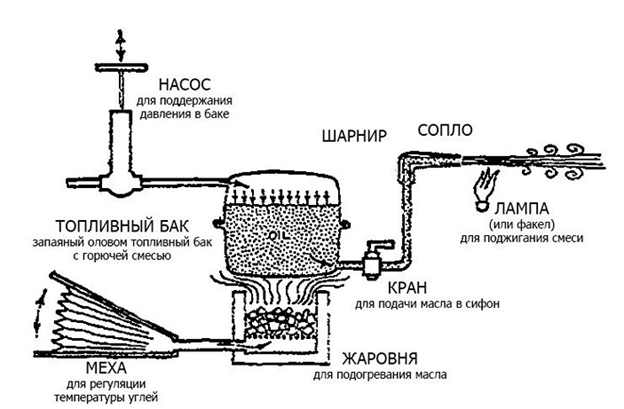
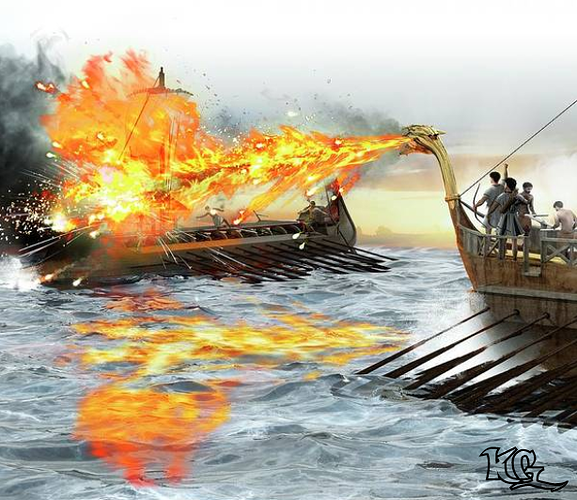
Kallinikos invented the "siphon" or "siphonophore" — a hollow weapon that was installed on the bow or forward section of a ship, styled as a dragon's head, and designed for projecting an incendiary mixture under pressure.
The weapon was made of bronze and produced a jet of flame approximately 15 meters long. This meant Greek fire prevented enemy ships from approaching the Byzantine vessel, making boarding difficult, while in city defense during a siege it was supposed to effectively destroy siege ladders and trebuchets.
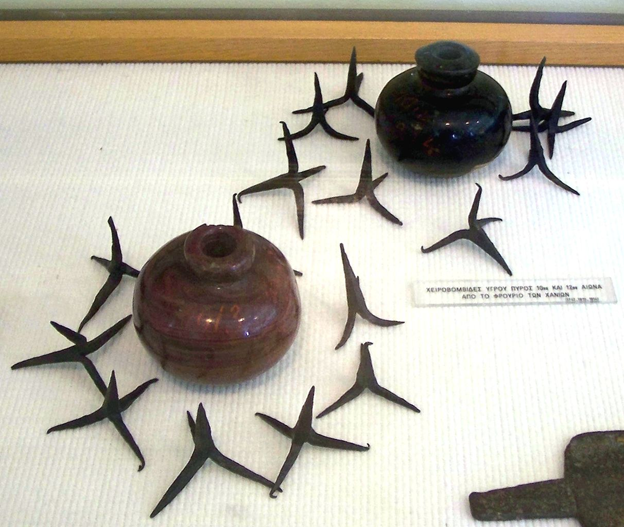
There are records of portable siphons — a single warrior could operate such a primitive flamethrower, and the device resembled a syringe in construction. Additionally, the incendiary mixture was loaded into flattened clay vessels — such a pot could be hurled like a grenade.
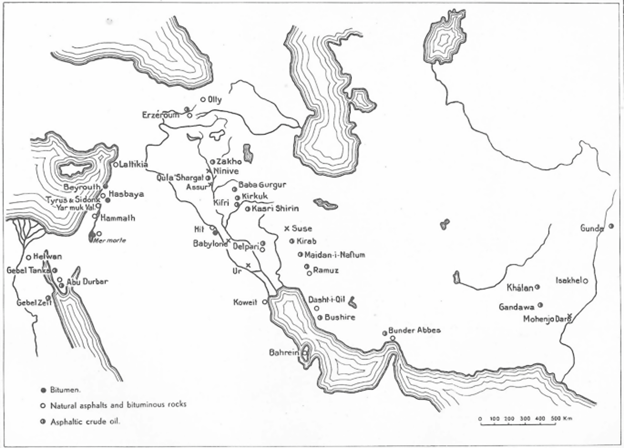
Asia Minor, the cultural and political center of Byzantium, is situated close to the oil-bearing strata of the Caspian coast and the Persian Gulf. Since ancient times, deposits of native petroleum and natural bitumen were known there.
Petroleum was not difficult to find, extract from shallow depths by pouring water into wells so the oil would float to the surface, and also to distill to obtain and separate fractions, up to and including ligroin and kerosene.
Natural asphalt was known to the Babylonians no later than the 7th century BC and was used as road surfacing. Moreover, natural asphalt contains not only mineral resins but also sand and limestone, and when mixed with ligroin it becomes fluid. Kerosene and ligroin burn quickly, but when used as additives to a limestone-asphalt mixture, the resulting compound burns long, hot, and produces heavy smoke.
It was probably these physical properties that could have led the military engineer to the preparation of Greek fire. Various authors mention a wide range of additives — pine resin, sulfur, lime, and even animal fats.
Some Accounts of Use in Combat
The first use of Greek fire in a naval battle apparently took place in 678 AD, during the final stage of repelling the Arab threat. It was during this period that Greek fire began to be described in detail in Arab sources, which noted that the mixture burned upon contact with water or even ignited when it touched water.
It is also known that Greek fire was deployed by order of Emperor Leo III the Isaurian when repelling the Arab attack in the autumn of 717, when the Muslim fleet had completely occupied the Sea of Marmara. In 941, Romanos I Lekapenos used Greek fire against the boats of Prince Igor near the city of Hieron at the entrance to the Bosporus.
Princess Anna Komnene (1083–1153), known as the author of The Alexiad, gives a detailed description of a clash between the Romaioi (Byzantines) and the Pisan fleet between the islands of Samos and Kos in the Aegean Sea:
"When the Romaic fleet approached, a certain count from the Peloponnese named Perichytes, a skilled seafarer, as soon as he spotted the Pisans, spread the oars of his monere like wings and raced toward them as fast as he could. Like fire, he tore through the ranks of the Pisan ships and returned to the Romaic fleet..."
John Kinnamos and Niketas Choniates (Byzantine historians of the 12th century) report that Greek fire was used throughout much of the period they describe. Kinnamos writes that in 1147, ships equipped with Greek fire stood guard, preparing for a possible invasion by the Sicilian Normans.
However, shortly after these events, the technology of Greek fire was lost. At the very least, there are no surviving accounts of its use during the Fourth Crusade, when the crusaders sacked Constantinople in 1204.
The reason is that by the early 13th century, Europe had mastered gunpowder, and traditional artillery and flintlock firearms began to develop. Apparently, Greek fire was difficult to control and very dangerous for the fire operators themselves.
Theories About the Composition
There are three most plausible theories about the composition of Greek fire.
Saltpeter
This version fits best into the history of weaponry, since in this case Greek fire could be considered a "prototype" in the development of ordinary black powder, which consists of saltpeter, charcoal, and sulfur. Chronicles contain mentions that Greek fire produced thick smoke and burst from the siphon with a roar.
On the other hand, saltpeter, known to Taoist alchemists since approximately the 3rd century AD, only began to be used for military purposes in the 10th century — that is, during the heyday of Greek fire. Furthermore, Greek fire differs substantially from gunpowder in description and apparently did not have a granular base.
Lime
Supporting this theory is the observation that Greek fire could not be extinguished with water, only with vinegar. This may refer to an ordinary neutralization reaction. However, this theory is weak because it doesn't explain how siphons with Greek fire could be used to defend a besieged fortress.
Attempts have been made to reproduce such a reaction in modern times, and it does not produce a jet of flame — the reaction proceeds sluggishly. It is possible that the mixture may have included calcium carbide or calcium phosphide, but it is unlikely that such complex reactions could have been mastered in the middle of the first millennium AD.
Petroleum
Thus, the most plausible version remains that Greek fire consisted of various petroleum fractions with additives that provided viscosity and stickiness. In air and when heated, the volatile petroleum fractions quickly evaporate and burn off, after which the wax, resin, or turpentine continues to burn.
This version is also supported linguistically, since in some sources Greek fire was called "Median fire." Media is a region in modern-day Iran, known for its outcrops of native petroleum, which in modern Azerbaijani sources is called "Median oil."
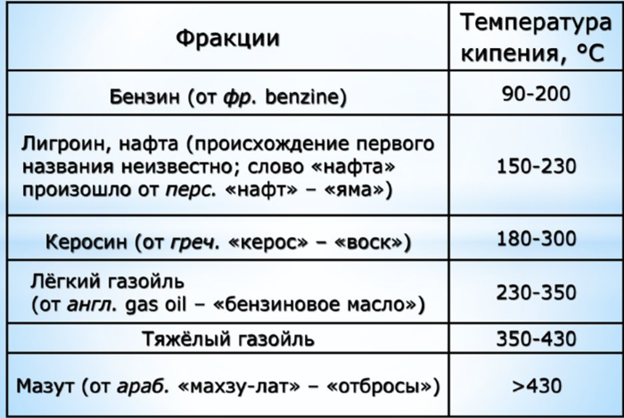
In ancient Persian sources, "Median oil" is synonymous with the word "naphtha" — that is, ligroin, a light petroleum fraction. Finally, during the period in question, the Arabs had significantly easier access to petroleum sources and attempted to use petroleum for military purposes.
Moreover, in 683 AD in Baghdad, light petroleum fractions (white naphtha) were artificially distilled for the first time. But the Arabs were never able to reproduce Greek fire, which points to the complexity and probable variability of its composition.
Attempts to Recreate Greek Fire
Surprisingly, as early as the beginning of the 19th century, the English experimented with liquid combustible compounds, likely attempting to recreate Greek fire. In this case, the goal was not so much ship-mounted artillery as filling for grenades, similar to a "Molotov cocktail."
As grenade filling, they tried using the complex radical alkarsin — cacodyl oxide, discovered in 1760. Alkarsin is a compound of arsenic with alcohol, C4H6AsO. Alkarsin is obtained by distilling a mixture of potassium acetate and arsenic acid at red heat.
Alkarsin is a colorless liquid heavier than water that oxidizes in air, ignites, and upon contact with water releases poisonous arsenic acid fumes.
When alkarsin is distilled in a mixture with strong hydrochloric acid, water, and zinc acting as a catalyst (for example, in zinc vessels), the result is a heavy oily liquid, insoluble in water, that immediately ignites upon contact with air. It is not only sticky and combustible but also lethally poisonous when it evaporates.
Similar properties are possessed by cacodyl C4H6As, which was used as grenade filling starting from the Anglo-American War of 1811–1812.
Later, the English attempted to use a mixture resembling Greek fire during the Crimean War of 1853–1856. This composition included camphor, turpentine, copal varnish, and light petroleum fractions. It ignited on impact, could explode and spray upon detonation by a Bickford fuse, or served as filling for mortar shells.
It was difficult to extinguish with water, and to increase its destructive power, molten sulfur and ground gunpowder were added to the composition. Nevertheless, such a mixture never gained traction in artillery, since the shells easily exploded during handling and even inside the guns, bursting cannon barrels.
The era of a completely different kind of chemical weapon was approaching, and Greek fire, unlike Damascus steel, was never able to find a place on the battlefields of the late colonial world. Its "technological niche" was successfully filled by napalm, which was ultimately banned in 1980.
FAQ
What is this article about in one sentence?
This article explains the core idea in practical terms and focuses on what you can apply in real work.
Who is this article for?
It is written for engineers, technical leaders, and curious readers who want a clear, implementation-focused explanation.
What should I read next?
Use the related articles below to continue with closely connected topics and concrete examples.