Companies That Replaced Humans with AI Are Realizing Their Mistake
The prediction that 2025 would be the year of mass AI agent deployment has not panned out. Companies that aggressively replaced workers with AI are now rehiring as quality collapses and costs mount.
OpenAI's CEO predicted that 2025 would be the year AI agents "work at full capacity." That forecast hasn't aged well. Instead of a revolution, we're witnessing a wave of companies quietly walking back their aggressive AI-replacement strategies after running headfirst into reality.
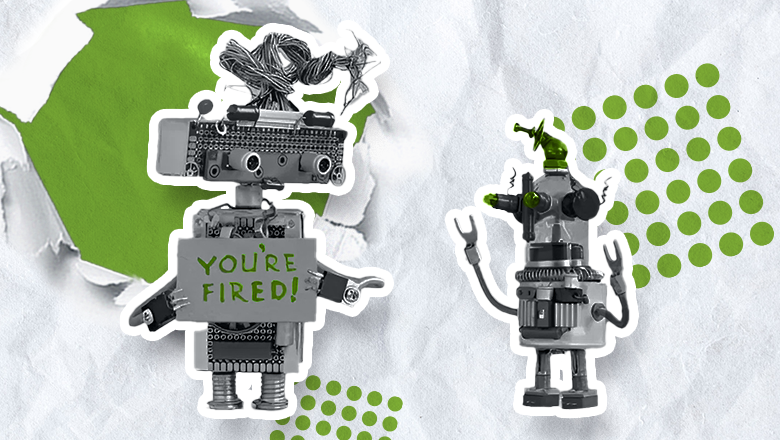
The Numbers Don't Lie
Even the best AI agent, from Anthropic, was only able to complete 24% of typical tasks in testing. The costs of maintaining and supporting these systems turned out to be far higher than expected.
A Gartner survey revealed that over 50% of executives have abandoned plans for mass customer service workforce reductions by 2027. Meanwhile, 62% of office workers believe "the hype around AI is significantly exaggerated," with most using only free tools.
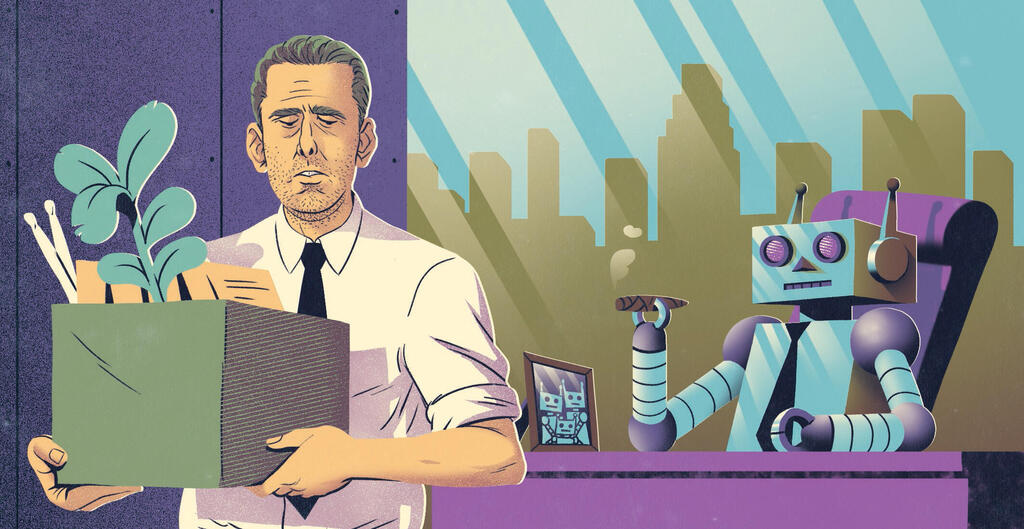
Case Study: Klarna
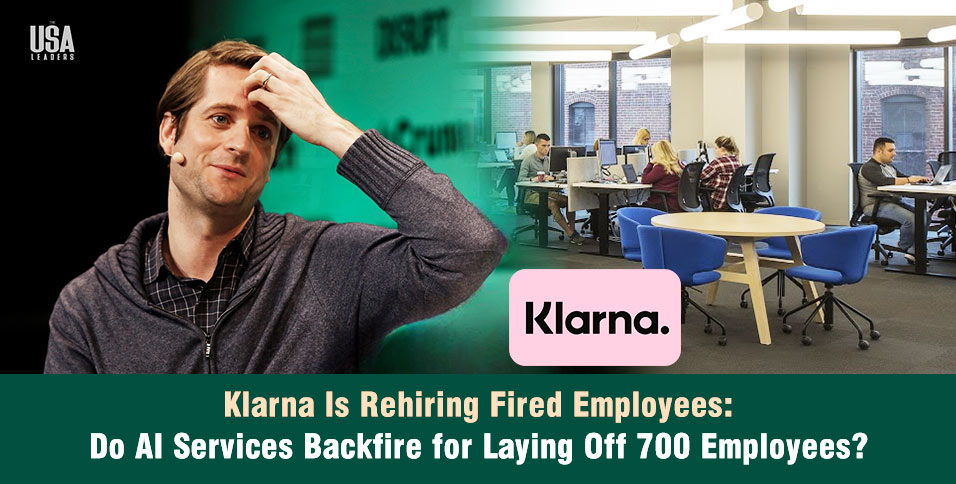
The Swedish fintech company laid off 700 employees in 2024 (a 22% workforce reduction), expecting $40 million in annual savings. Within months, customer service quality deteriorated noticeably. By May 2025, Klarna was forced to rehire staff, having incurred at least $15 million in losses from severance and retraining costs.
Case Study: IBM
IBM automated its HR operations using a virtual assistant called "AskHR," eliminating approximately 8,000 positions. The AI proved inadequate for empathy-dependent tasks. CEO Arvind Krishna later acknowledged that "overall employment actually grew" because reinvestment became necessary in areas AI simply cannot handle.

Case Study: Duolingo
Duolingo reduced its freelance contractors — writers and translators — in 2024, with plans to cut content staff by 90%. User backlash over "template-like" and "bland" AI-generated courses forced the company to halt its expansion plans. The platform ended up rehiring the very creators it had previously terminated.
The Programmer Paradox
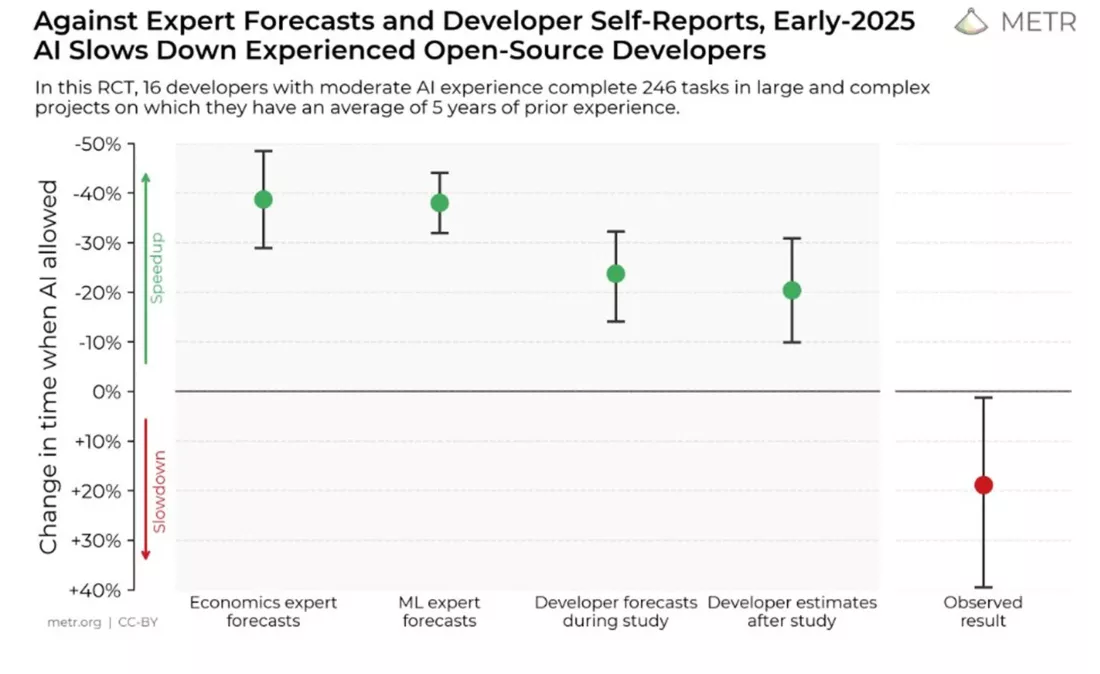
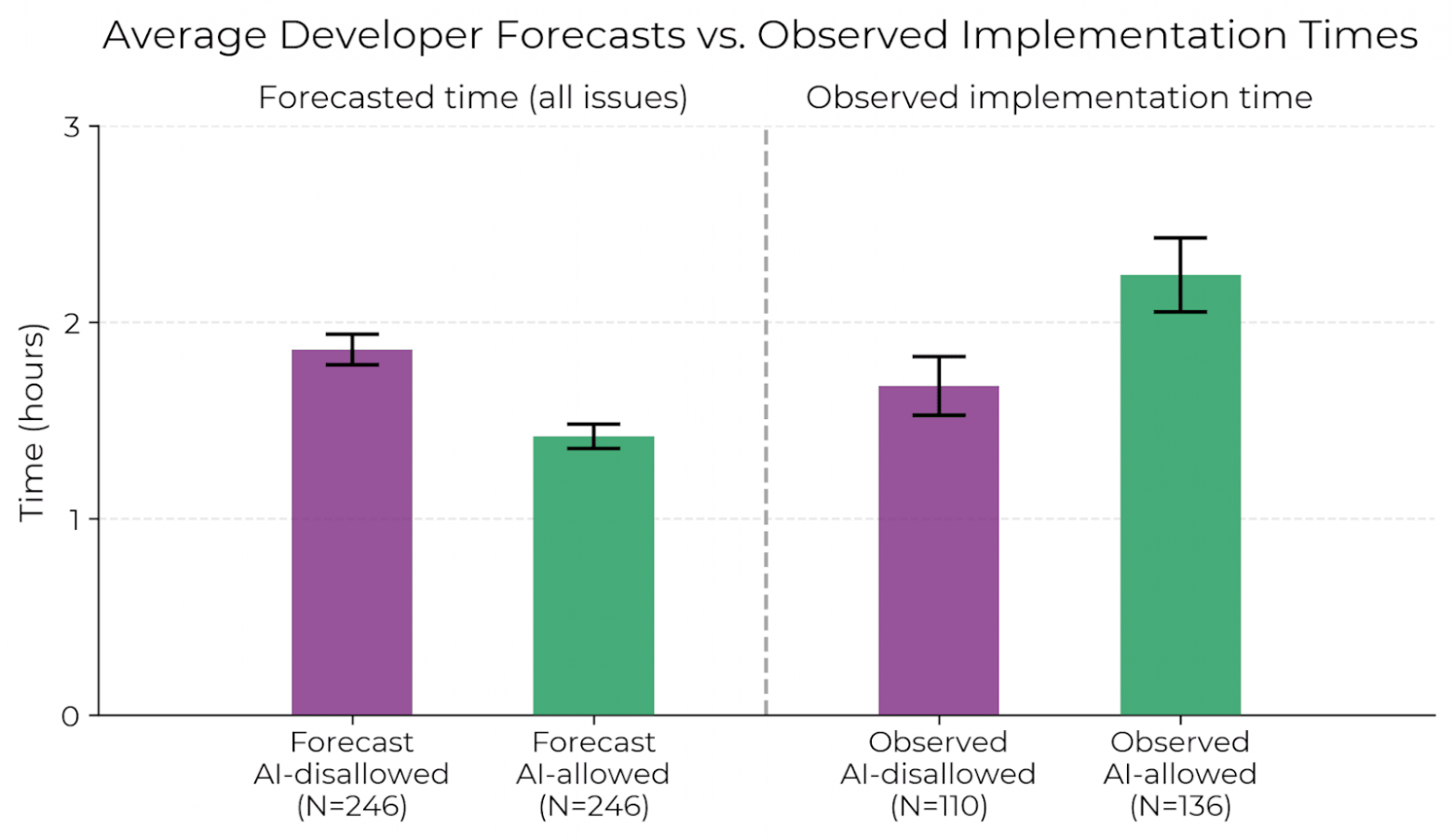
A study by METR (July 2025) uncovered a striking paradox: experienced developers using advanced AI coding tools actually took 19% longer to complete tasks compared to working without them — despite their subjective feeling of working faster. Developers accepted only 44% of AI-generated code and spent 20% of their working hours reviewing and debugging AI suggestions.
The Agents That Weren't
These "agents" are marketed as intelligent life forms capable of sound decision-making, yet they represent only basic automation requiring substantial human support and additional programming costs. The gap between marketing promises and operational reality has never been wider.
The Meta Warning Sign
Meta is investing $70 billion annually in AI data centers but has no clear path to monetization. This pattern is eerily similar to the metaverse investment frenzy of 2021 — massive capital expenditure chasing an unproven thesis. It suggests the AI hype cycle may be reaching its peak.

Conclusion
The lesson is becoming clear: AI works best as a tool that augments human capabilities, not as a wholesale replacement for human workers. Companies that treated AI as a cost-cutting silver bullet are paying the price in degraded quality, customer dissatisfaction, and the very real costs of rehiring and retraining.