The Cretaceous Turkey: What's Wrong with the Velociraptor Image
The popular image of the velociraptor as a towering, scaly killing machine is largely a Hollywood fabrication. Modern paleontology reveals a modest, feathered predator barely half a meter tall that hunted small prey.
The Stereotypical Velociraptor
The velociraptor, or scientifically Velociraptor mongoliensis, is arguably the second most popular predatory dinosaur in popular culture after Tyrannosaurus rex. Like the T. rex, it fell victim to numerous misconceptions and even demonization in favor of spectacle in movies and games. But let's look at a more accurate picture, shaped by modern science rather than the entertainment industry.
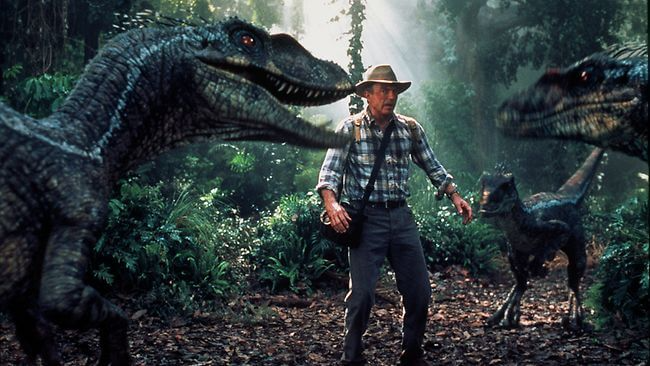
Obviously, the most significant contribution to today's public perception of dinosaurs came from Jurassic Park (and later Jurassic World). Remember the velociraptor from those films? Nearly two meters tall, extremely aggressive (it lunged at the T. rex in several movies), highly intelligent (could even "talk" and open doors), incredibly fast (definitely running at 80 km/h), covered in scales, hunting in packs, coordinating actions with its kin, and so on. A veritable killing machine. But that's merely a cinematic persona.
The velociraptor's size was intentionally exaggerated for the film, but in everything else, it was almost exactly how scientists imagined it in the late 1980s and early 1990s. That's how this dinosaur made it to cinema looking the way I described above.
Later discoveries changed our understanding of the velociraptor. But Jurassic Park and then Jurassic World made money and had massive audiences thanks to the presence of aggressive monsters, so despite new findings, the cinematic dinosaur's appearance wasn't changed even in the latest films.
The velociraptor also appeared in games. Off the top of my head, I can recall ARK: Survival Evolved and both installments of Jurassic World: Evolution. The latter game is based on the movies: the same vehicles, buildings, and even characters. So it's no surprise that the velociraptor is the same there too.
But let's return to the velociraptor's image. Since we're here, clearly something about it in movies and games isn't right.
Size
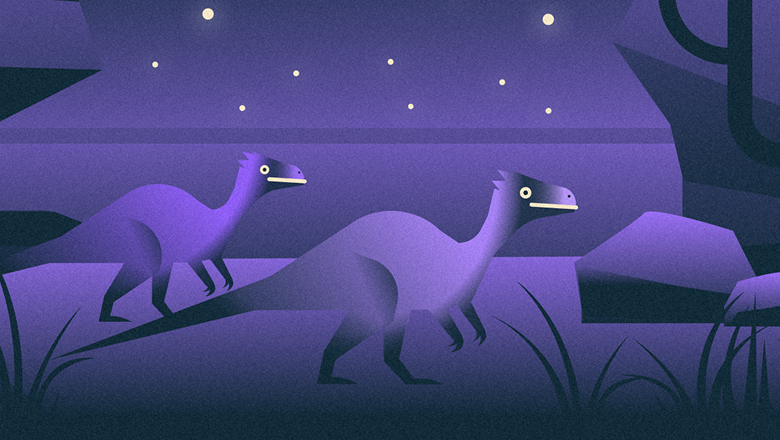
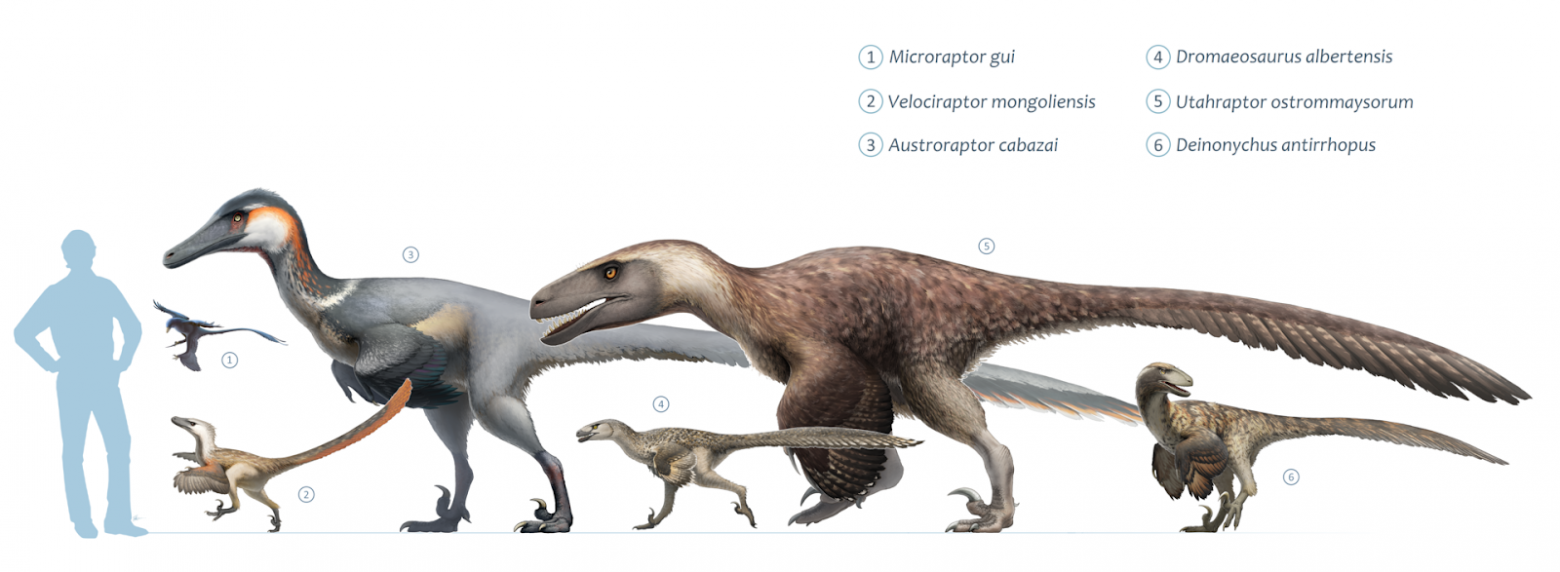
The real dimensions of the velociraptor never sparked heated debates. Since Henry Osborn's 1924 discovery in Mongolia's Gobi Desert, many well-preserved fossils have been found. Scientists knew precisely that this dinosaur measured at most two meters in total length — half of which was the tail. It stood only about half a meter tall and weighed just 15–20 kilograms.
However, the velociraptor had larger relatives, such as Deinonychus and Utahraptor. If we consider only size, then in Jurassic Park, we were likely shown alternately these two creatures, each time passed off as a velociraptor.
Speed
Even the name of this dinosaur translates as "swift thief." It got that name because one of the first finds was a velociraptor skeleton on a nest of eggs. Paleontologists initially assumed it was stealing eggs from another's nest. It was later proven that the unfortunate creature had died while incubating its own clutch, but it was too late to change the name.
So that covers the "raptor" part. Now, to the speed. A hundred years ago, many conclusions about the characteristics and lifestyle of dinosaurs didn't require lengthy research. Osborn and his colleagues simply looked at the fossils, which clearly indicated the lightness and agility of their owner, and said: "This thing obviously ran fast." Speed estimates for the velociraptor in various years exceeded 70 km/h. In one of the Jurassic World installments, it even reached 80 km/h.
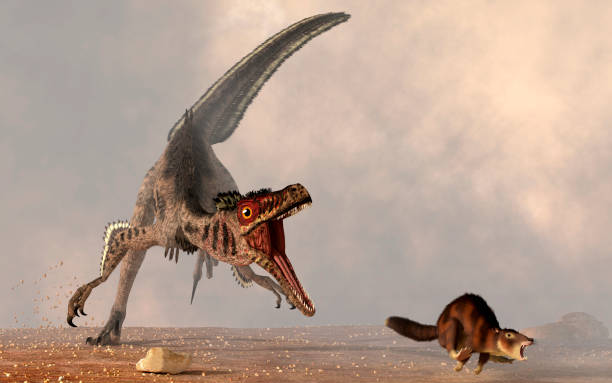
But dynamic simulations and biomechanical models showed that the estimates were significantly exaggerated. It's now believed that the velociraptor, while fast, wasn't nearly as fast as in the movies. It ran at speeds of up to 35–40 km/h, taking three-meter strides. That's fast, but there were certainly swifter dinosaurs.
That said, the velociraptor was indeed adapted for running. And judging by its skeletal structure, it was also very nimble.
Strength
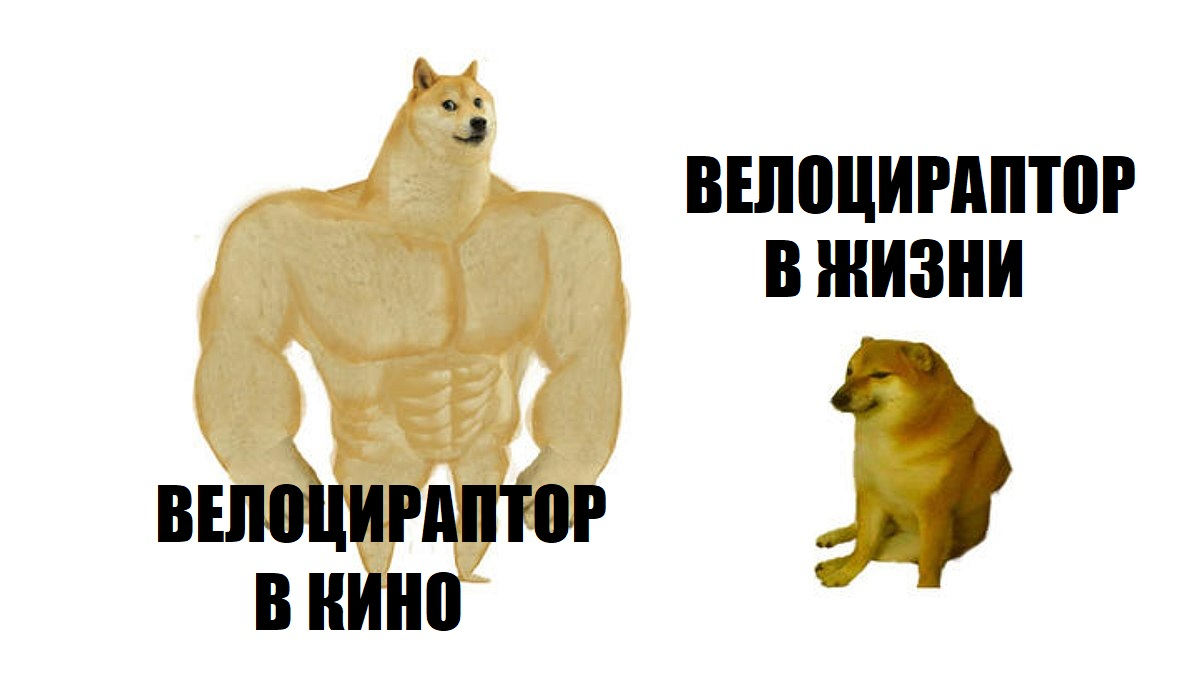
A 20-kilogram adult velociraptor could probably knock a human off their feet. But breaking down doors with its head, as in the movies — no. It wasn't just light, but maximally lightweight for speed. Like many theropods (bipedal predatory dinosaurs), it had cavities in its skull to reduce mass. So attempting to bash through a door headfirst would most likely have given it a concussion. In hunting, it definitely didn't rely on strength but rather wagered on speed and agility.
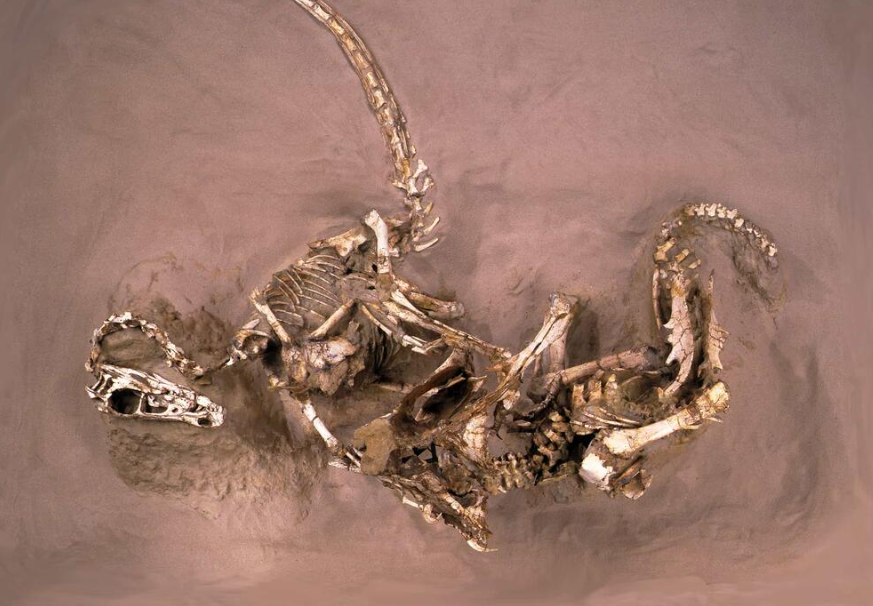
The scientific community was somewhat puzzled by a discovery made by a Mongolian-Polish expedition in the Gobi Desert in 1971. They found the remains of a velociraptor and a protoceratops locked in combat. According to paleontologists, this occurred approximately 75–80 million years ago. This clearly wasn't a case of a velociraptor dying while scavenging an already dead protoceratops (for some time they were thought to be scavengers, but that theory is now considered untenable).
The protoceratops was essentially a prehistoric pig: a four-legged herbivore reaching just under two meters in length and weighing about 80 kg. It was also a relative of the larger and more famous triceratops, which lived slightly later in North America.
Even a cursory examination of the fossils shows that the dinosaurs were actually fighting: the velociraptor's right "arm" is clenched in the protoceratops's jaws, its left claw is scratching the herbivore's skull, and the predator itself is knocked to the ground, trying to fend off with its hind legs, pressing against the opponent's belly and throat. There are different theories about what triggered the fight. Some paleontologists believe the reckless velociraptor attacked the protoceratops. Others are convinced the predator was too small for that and unlikely to hunt such an animal, so the herbivore may have been the aggressor — perhaps defending its young. Regardless, for some reason both perished in the fight — probably due to a sudden sandstorm or rock collapse.
But the main lesson of this prehistoric tragedy is that the velociraptor was by no means the indestructible killing machine often portrayed in cinema.

The Killer Claw
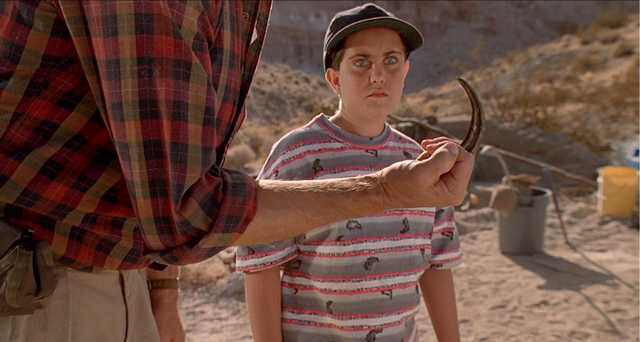
A distinctive and recognizable feature of the velociraptor and all its relatives (by the way, this entire family is called dromaeosaurids) is the enlarged sickle-shaped claw on the second toe. As you might have guessed, when scientists first discovered it, they immediately concluded that dinosaurs used this claw to kill their prey. But then serious science, biomechanics, mathematics, and all that requiring calculations and proof intervened.
A musculoskeletal model showed that the toe with the claw possessed remarkable mobility. Mathematical optimization additionally indicated that the more the dinosaur bent its joints (ankle and knees), the higher the pressure it could generate at the claw's tip.
However, the claw was unlikely a hunting weapon even for larger and stronger dromaeosaurids — such as Deinonychus. The thing is, no matter how hard the dinosaur tried, the force at the tip remained relatively small — only 18.9 newtons under optimal conditions (even less for the velociraptor). For comparison — a domestic cat's bite exceeds 50 newtons. Scientists lean toward the theory that the claw was needed for catching and holding prey, not for killing it.
Intelligence
This is probably one of the greatest misconceptions. Fans of fictional works have gotten used to the idea that the velociraptor displayed outstanding intellectual abilities, sometimes even surpassing those of modern apes. But no. Among dinosaurs, it was apparently above average, but most of its brain capacity was directed toward vision, hearing, and movement coordination rather than planning and communication.
How can we ignore the scene from Jurassic Park where a velociraptor opens a door handle it's seeing for the first time? Even modern mammals can only do this after training (and even then it's not guaranteed), and a turkey that lived 75 million years ago certainly couldn't have managed it.
Incidentally, the fictional intellectual abilities of the velociraptor gave rise to the "philosoraptor" meme. If you used the internet in the 2000s, you know it well.
In 2020, scientists performed micro-CT scans of a fossilized velociraptor skull. They discovered, for example, enlarged floccular lobes of the brain, which modern vertebrates, particularly birds, use to maintain stability of the head and eyes during movement. This indicates exceptional balance and dexterity. The dinosaur's inner ear closely resembles that of flightless birds, and its hearing was apparently similar to that of ravens. Also interesting were the large semicircular canals and eye sockets. It seems the velociraptor had excellent vision.
X-rays of skull remains revealed an elongated cochlear duct. Without getting too technical, the researchers believe the velociraptor was closer to a budgerigar in terms of sounds produced and perceived than to reptiles. This suggests it may have used hearing in social interactions. However, there is no evidence that velociraptors lived in packs, so for now this remains only a hypothesis.
Feathers
Yes, the velociraptor, according to modern understanding, was feathered. Moreover, it had a complex, multilayered plumage, like modern birds.
On the fossils, particularly on the back of the forearm, quill knobs were discovered — structures that in birds serve to anchor secondary flight feathers. This discovery was made by Alan Turner, Peter Makovicky, and Mark Norell in 2007, so it was too late to fix the cinematic image of a scaly velociraptor. However, in scientific circles, the dinosaur's appearance was definitively revised, even though fossils with feather impressions specifically from this dinosaur have still not been found.
In fairness, Spielberg as far back as 1993, while filming the first Jurassic Park, wasn't afraid to reference velociraptor feathers. In one of the opening scenes, the main character, paleontologist Alan Grant, openly states that this dinosaur had feathers, after which he endures ridicule from colleagues. This is probably one of the few cases where cinematic spectacle yielded slightly to science in a feature film. However, subsequently the velociraptors were still shown covered in scales.
And since we're on the subject of feathers, we should also mention warm-bloodedness. The idea that dinosaurs maintained a stable body temperature was a bold hypothesis in the 1960s. Today, it barely raises doubts in scientific circles. This is supported by the discovery of an ever-increasing number of fossils and the emergence of new technologies like histological and isotopic analysis. It was precisely based on new scientific data that researchers concluded several dinosaurs were warm-blooded, including the T. rex.
In 1993, the remains of a Thescelosaurus (a medium-sized duck-billed herbivore) were discovered in the USA. Among the fossils were not only bones, but also — ta-da — a four-chambered heart, like those of mammals and birds. Yes, don't be surprised: extremely rarely, but it does happen that scientists find fossilized internal organs. The fossilization process is essentially the isolation of a body from the external environment, decomposition, and subsequent filling of the resulting cavities with minerals that take on the shape of the deceased animal. It's just that usually internal organs and soft tissues decompose so quickly that their space is filled by surrounding soil. Bones take longer to decompose, which is why they're usually easier to find.
However, skeptics argued that the found specimen was an example of random mineralization — that is, not a fossilized heart but simply a similar-looking formation. Later studies neither confirmed nor denied either side's position. Nevertheless, indirect signs of warm-bloodedness (growth rate, active lifestyle, avian anatomy, isotopic analysis of fossils, etc.) increasingly point to dinosaurs not being the familiar reptiles we know, but rather a special extinct class of animals between reptiles and birds.
Returning to feathers, it's important to understand that the velociraptor was a small dinosaur, so given its warm-bloodedness, feathered covering was necessary for thermoregulation. Larger species could do without it due to their size.
There's also a hypothesis that the velociraptor used feathers not only for thermoregulation but also for greater aerodynamics. For example, it's been proven that Caudipteryx had elongated feathers on its forelimbs and tail. They probably functioned like deployable aerodynamic elements on modern sports cars — to make it easier to brake and change direction. It's quite possible that the velociraptor's plumage worked similarly. And if this seems excessive at speeds of no more than 40 km/h, remember that the velociraptor weighed only 15–20 kg.
And one more thing. Usually all theropods fall victim to a common anatomical inaccuracy — they're depicted with hands oriented in a horizontal plane, as if the dinosaur were about to play piano. In reality, the velociraptor's anatomy indicates that in a relaxed position, its hands were positioned in the sagittal plane — palms facing each other. This correlates well with the assumption that the velociraptor hunted small, agile prey that it caught not only with its jaws but also with its forelimbs.
Conclusion
If someday on some tropical island a dinosaur park does appear, you'll be able to walk almost safely among velociraptors and feed them bread. And if one of them lunges at you, just hide behind a tree. Just don't confuse the velociraptor with its North American big brother, the Utahraptor — now that fellow was a truly dangerous bandit.
FAQ
What is this article about in one sentence?
This article explains the core idea in practical terms and focuses on what you can apply in real work.
Who is this article for?
It is written for engineers, technical leaders, and curious readers who want a clear, implementation-focused explanation.
What should I read next?
Use the related articles below to continue with closely connected topics and concrete examples.