Developing an SD Card with a Secret
A custom SD card adapter that wirelessly triggers remote cameras when a trail camera detects wildlife, using RF 433MHz and Bluetooth modules miniaturized to fit inside a standard SD card form factor.
Greetings, Habr!
I couldn't resist writing about a new system I recently developed. The first device looks like a regular microSD-to-SD adapter, except for an extra chip located in a cutout on the board. The idea behind the project is to send a signal to a second device over a wireless channel when power is supplied to the SD card.
Background and Purpose
In one of my previous articles, I described synchronizing a trail camera with a DSLR camera. Such systems are used by photographers and videographers for shooting wildlife. The image quality from a DSLR is much higher thanks to quality optics (we're talking about SLR cameras).
Simply using a camera with a PIR sensor isn't enough, because beyond just motion detection, the trail camera allows you to set sensitivity, distance to subject, and many other parameters — even image analysis before capture.
The Idea
The idea emerged to transmit the trail camera's trigger signal simultaneously to multiple cameras over RF 433MHz/315MHz or Bluetooth 2.4GHz.
The main problem was that the transmitter module needed to be installed inside the trail camera by soldering to specific points on its board. After analyzing various signals (PIR sensor, memory card, IR illumination, microphone, etc.), it became clear that power is supplied to the memory card as soon as all trigger conditions are met. The rest of the time, the SD card remains unpowered to conserve battery life.
SD Card with Wi-Fi
A Transcend SD card with Wi-Fi was purchased for testing the concept.
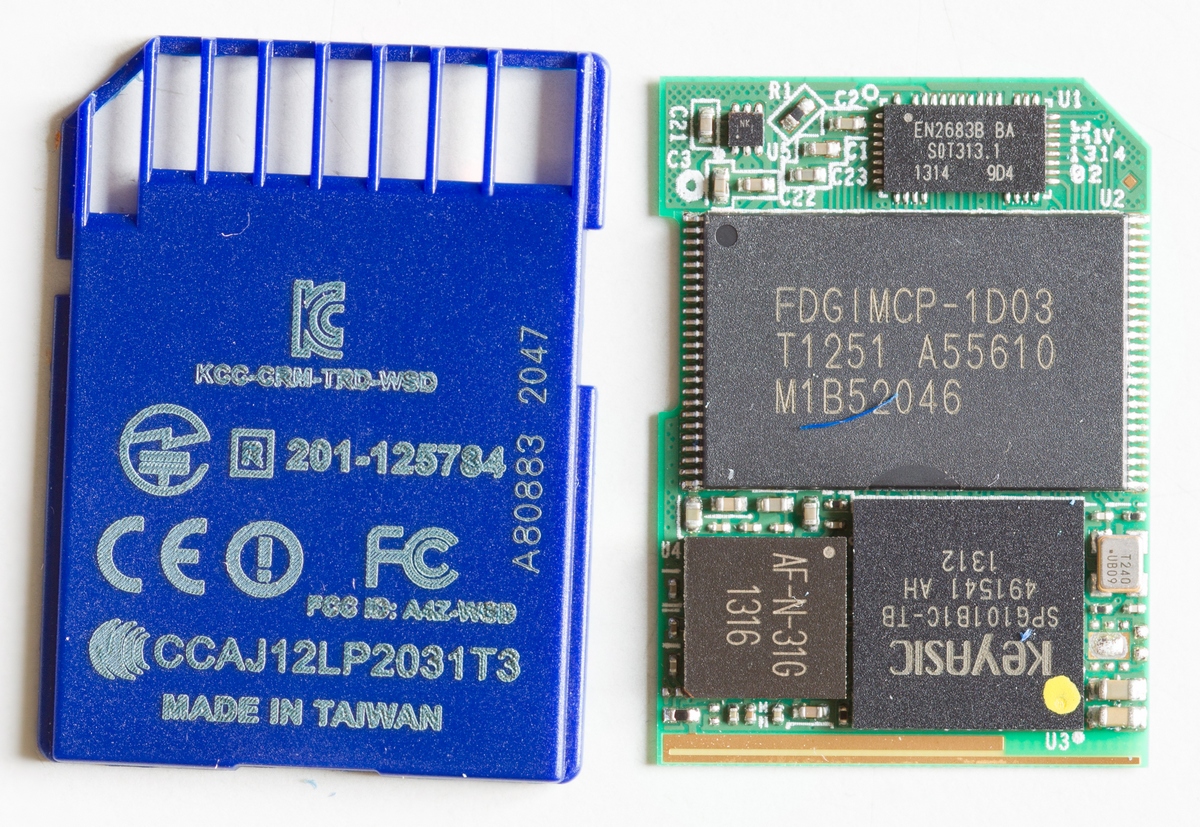
RF Receivers and Transmitters
Off-the-shelf receivers and transmitters were purchased:
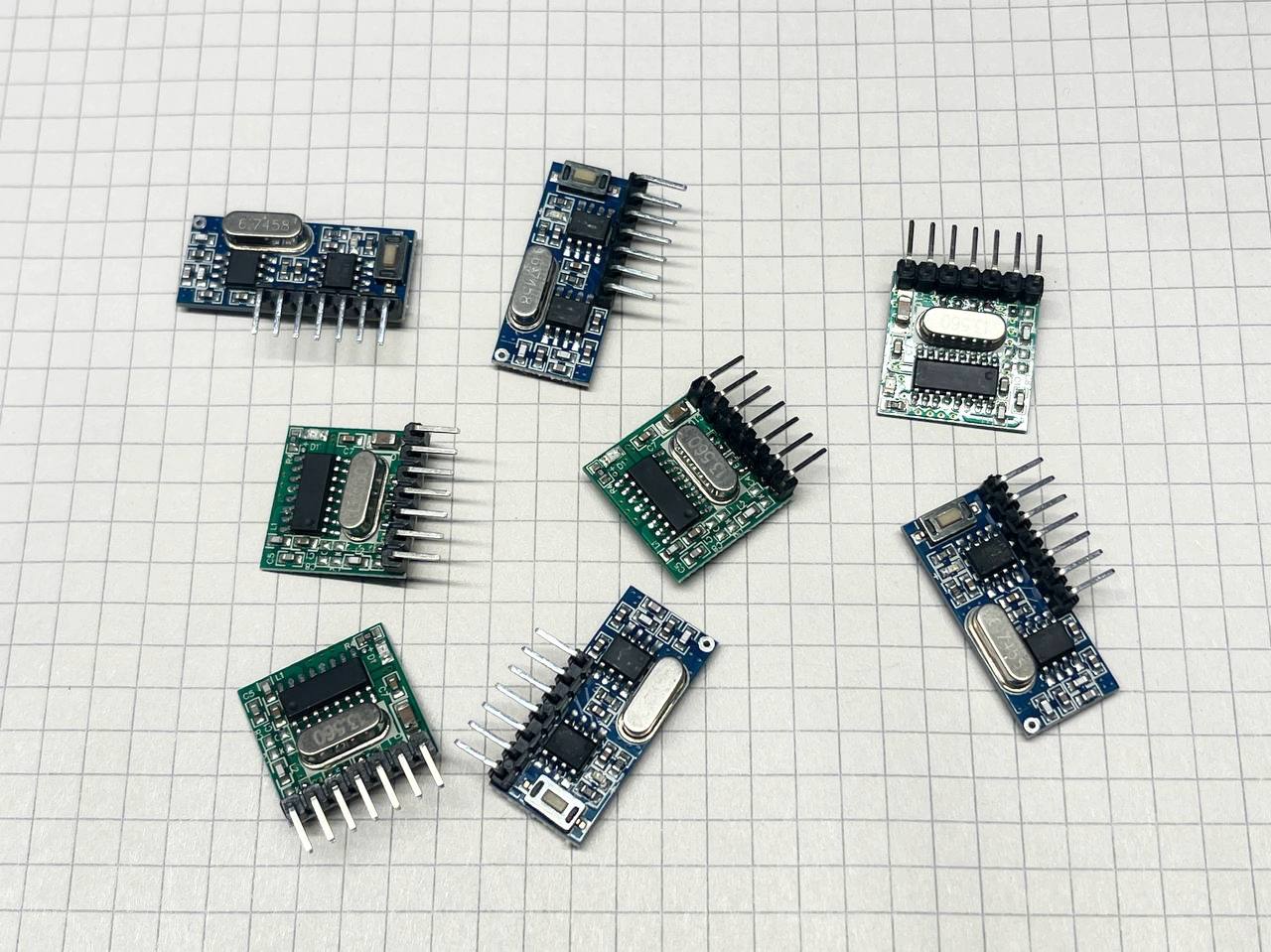
The pairs identified as RX480E-4 and TX-118S-4 showed excellent results. The desired 30-meter range works reliably. Multiple transmitters can be paired with a single receiver within one shooting location.
TX-118S-4 Transmitter Schematic
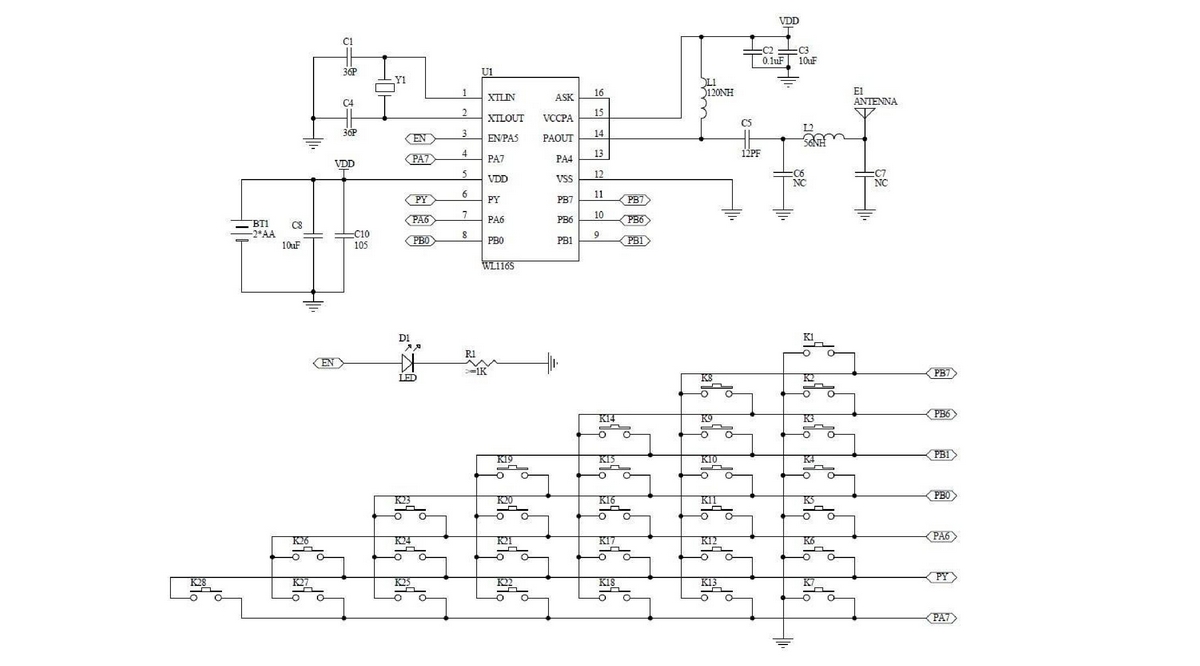
The WL116S chip (a microcontroller with RF section) comes in an SO-16 package. The measured height is 1.6mm above the board surface. A full-size SD card is 2.2mm thick, and the contacts are recessed 1.4mm deep.
With a standard chip mounting, the total device height would be around 3.1mm (with 1.5mm PCB), which wouldn't allow the adapter to fit into a card slot.
The Solution: Flipped Construction
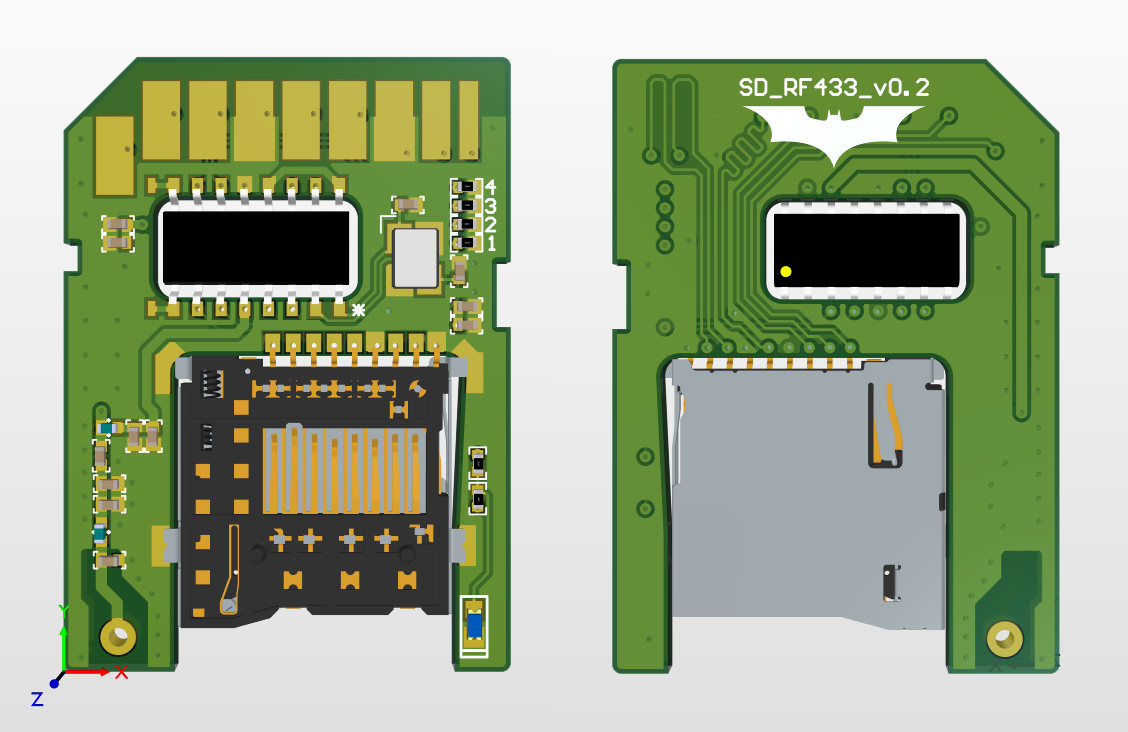
I had to flip the chip with its connector, making cutouts in the board. A mass-produced device with this layout wouldn't work, but that's not needed anyway — the plan is to produce up to 10 units.
Electrical Schematic
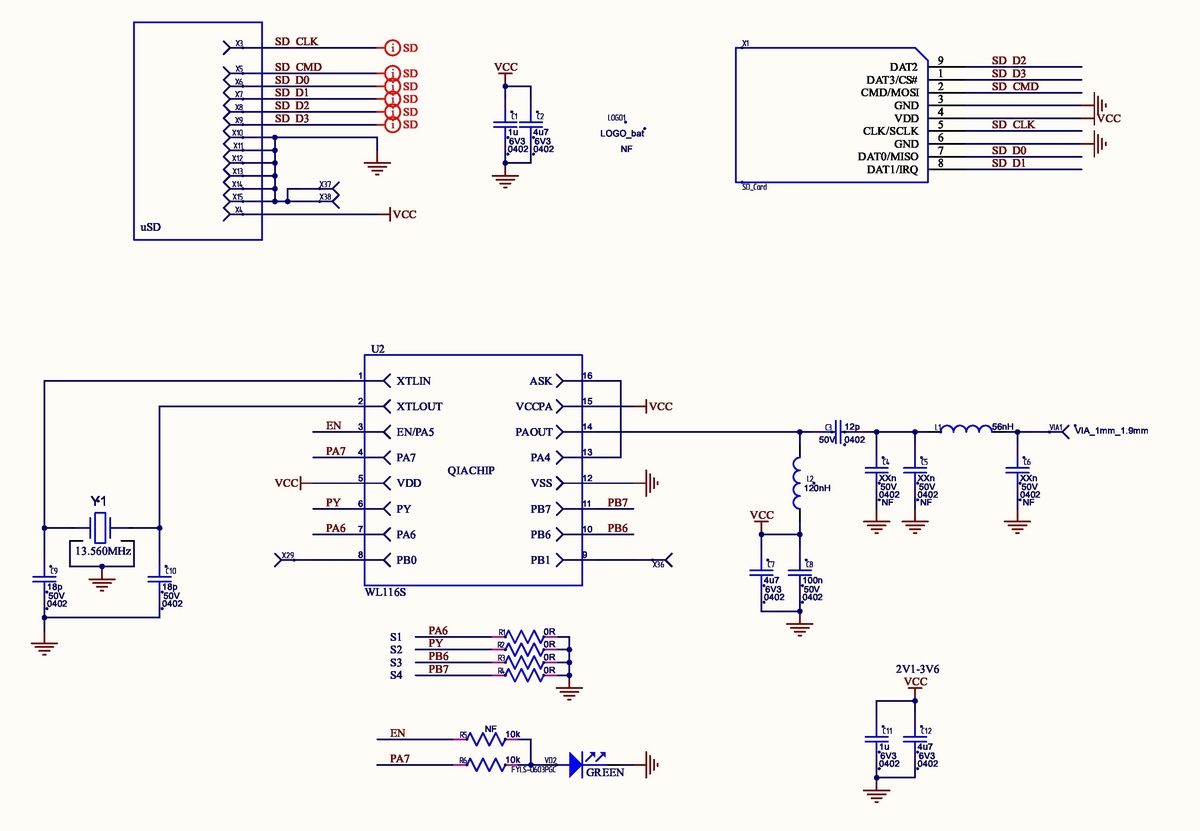
Passive components are in 0402 packages. As soon as the memory card receives power, a wireless signal is transmitted.
It works up to five meters in line of sight without antennas.
First Power-On
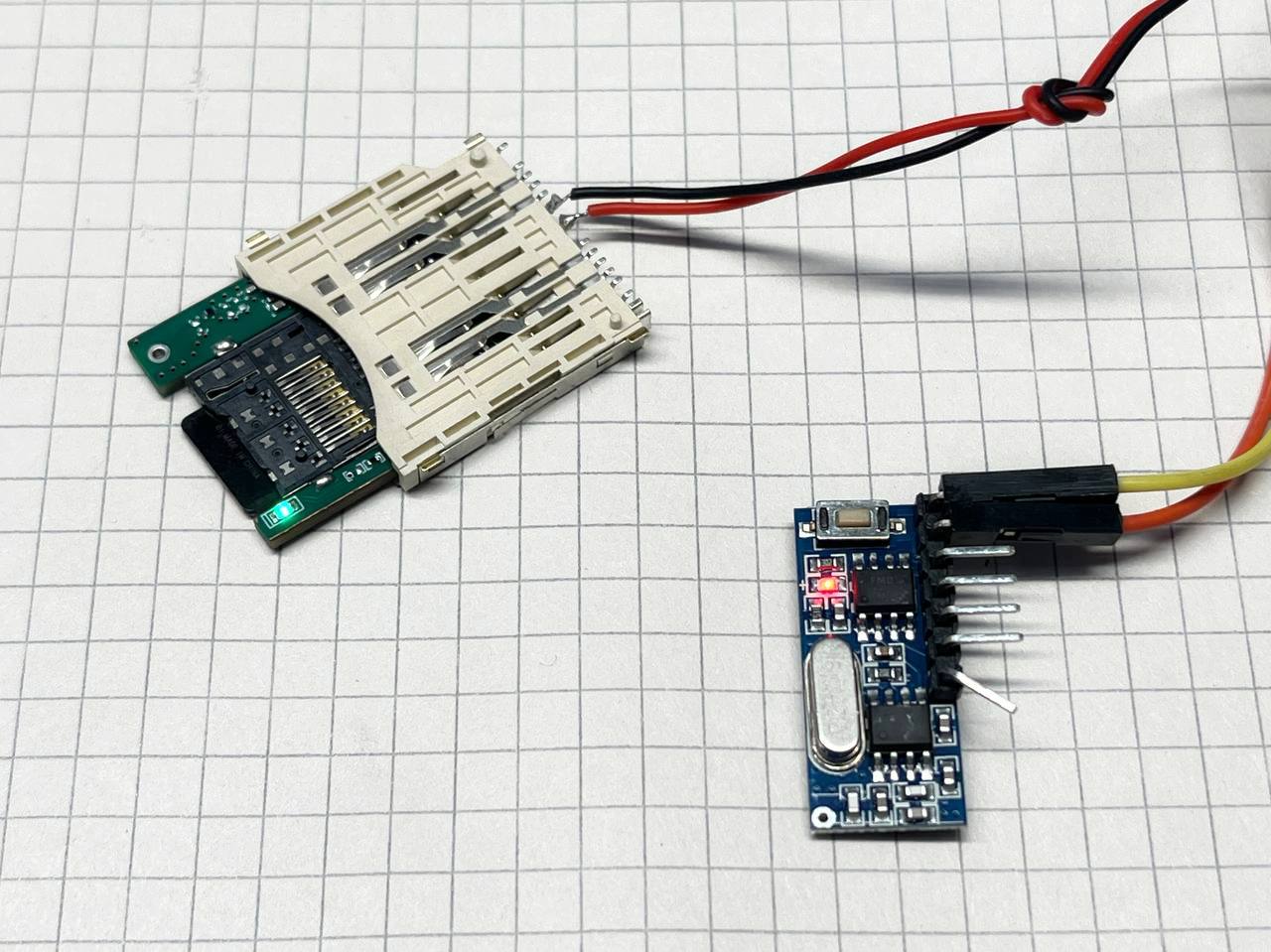
When mirroring the chip, there was a pin order error that was later corrected. The device was potted with epoxy for mechanical strength and insulation.
Assembled Prototype
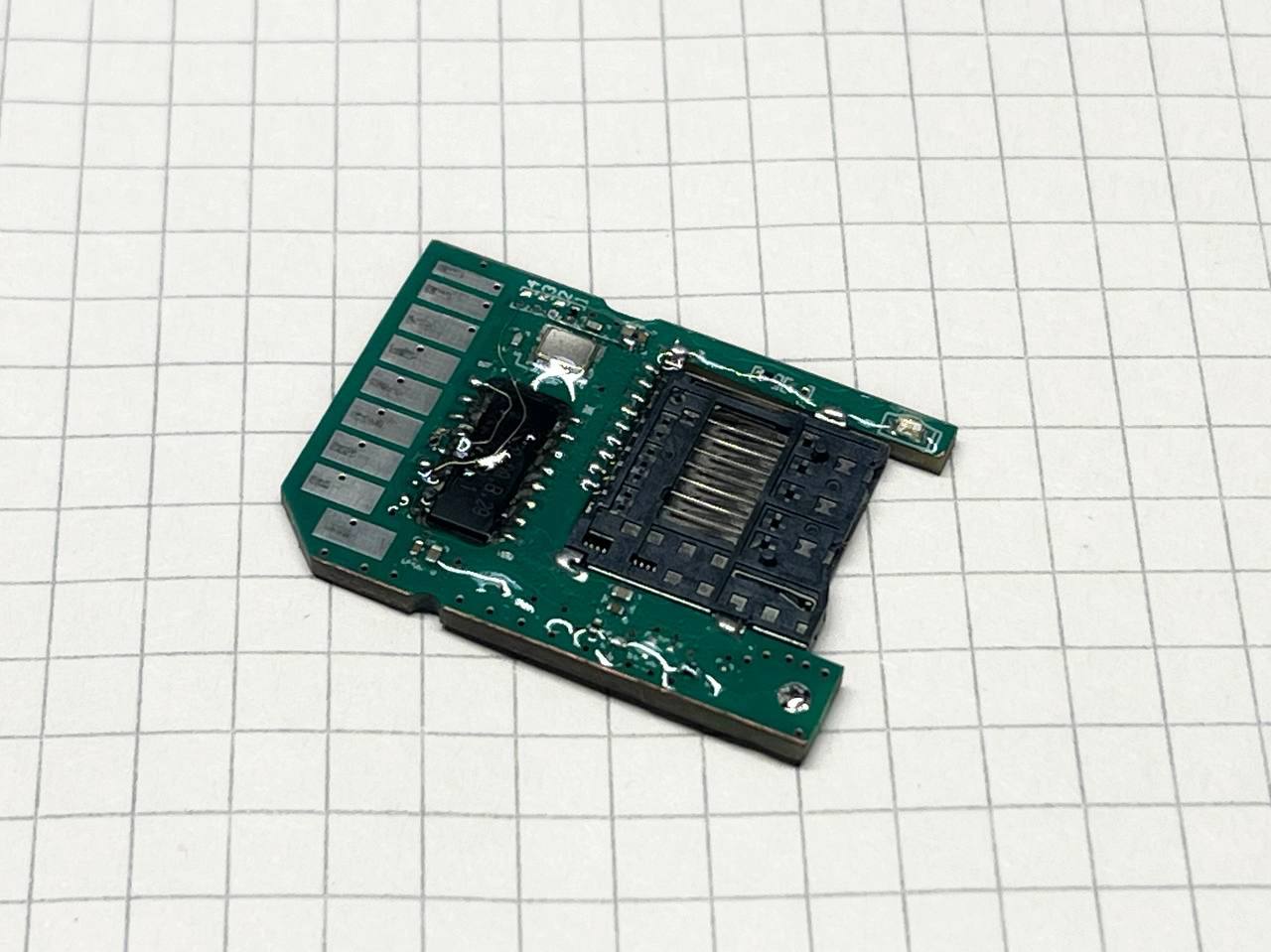
A second iteration is planned with removal of the solder mask and metallization by 1mm on the long sides of the board. Immersion gold plating of the contacts is also needed.
Receiver for Camera Control
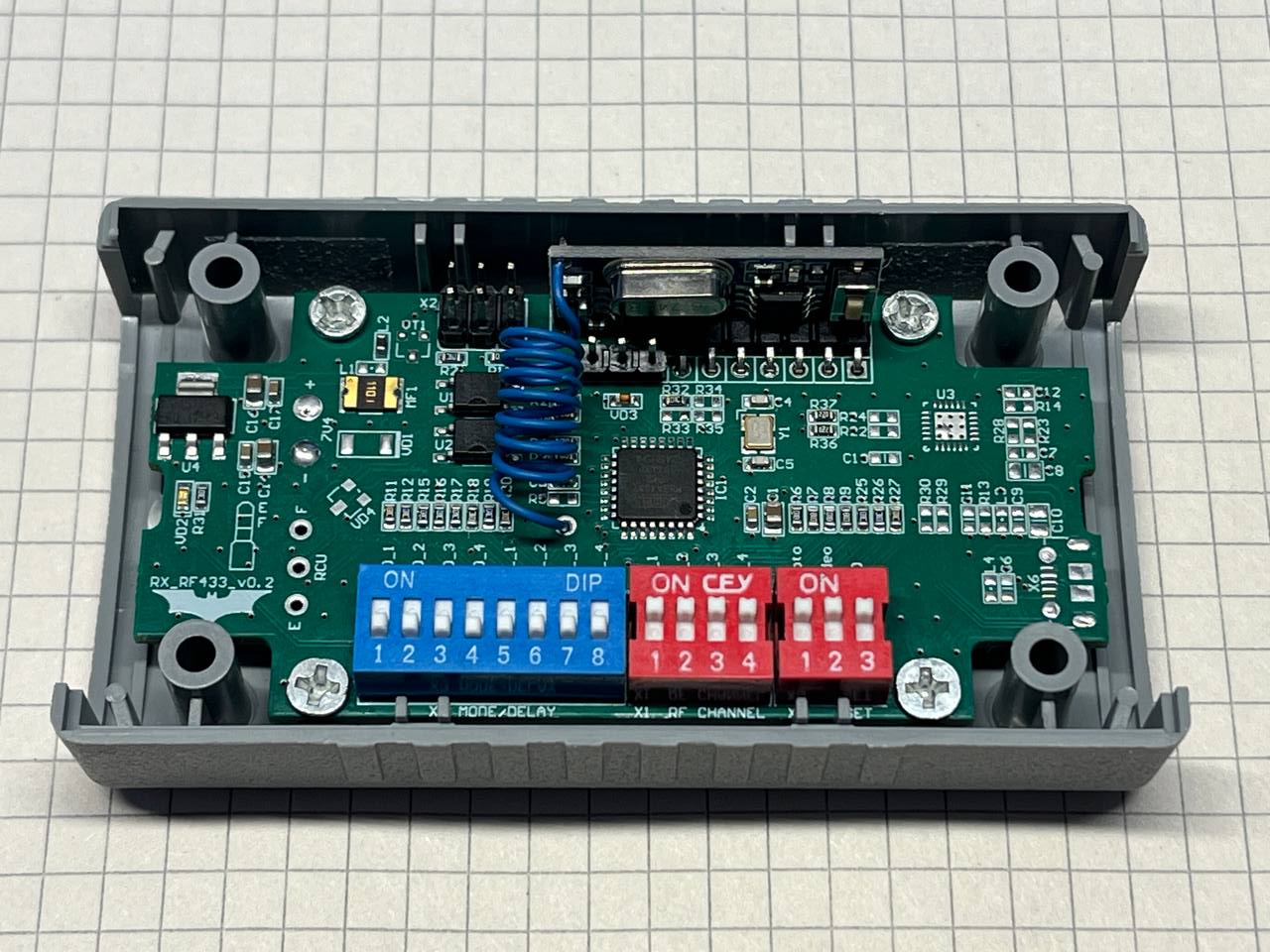
The receiver is built on an Atmega328P (case G404/G434, dimensions 90x50x32mm).
Antennas are wound on a 5mm mandrel with solid-core wire 170mm long. The wireless signal emulates a wired remote, pressing the focus and shutter buttons on the camera.
This unit, along with the camera and battery pack, is installed in a special outdoor enclosure with a window for the lens.
Camera Control
A colleague writes software implementing various photo and video shooting algorithms. There are nuances: the camera goes to sleep and needs to be woken up (without feedback). DIP switches set modes and delays (number of frames, video length, etc.).
Bluetooth Variant
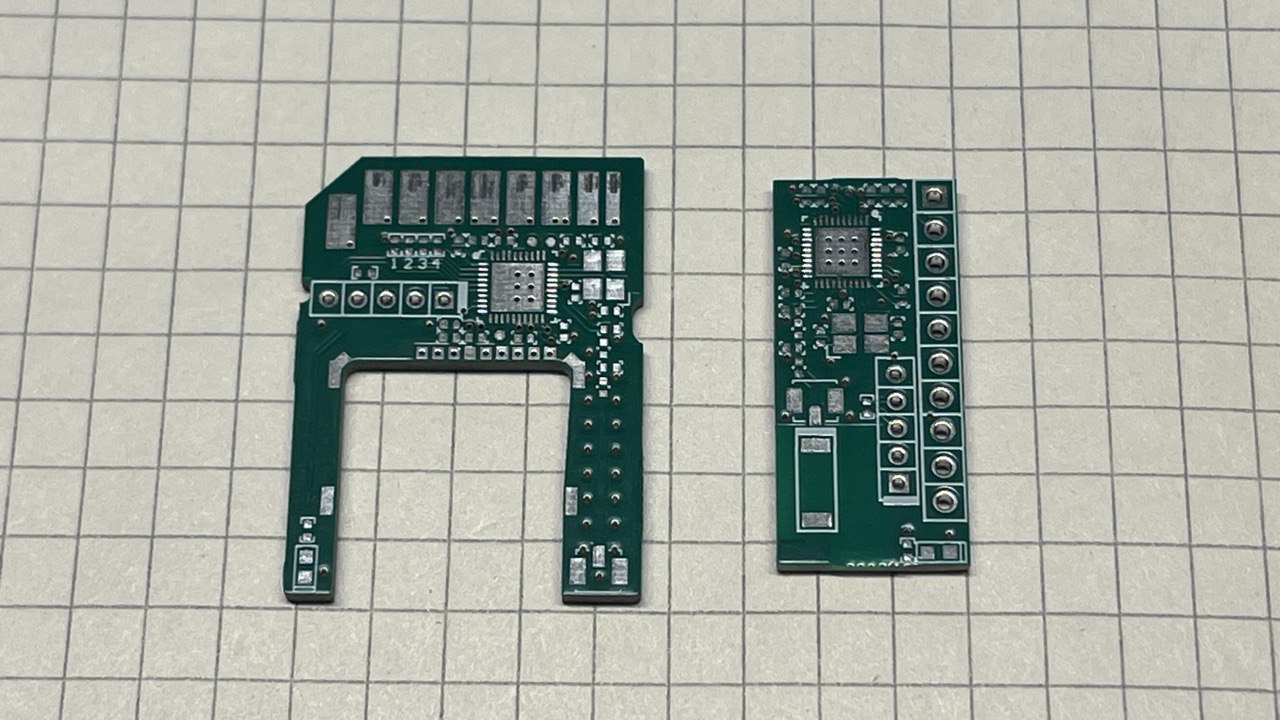
A prototype receiver and transmitter using Bluetooth was created with the NRF52833-QDAA-R7 chip in a QFN package (0.85mm height). This is a full-featured microcontroller that eliminates the need for the Atmega on the receiving device.
Results and Applications
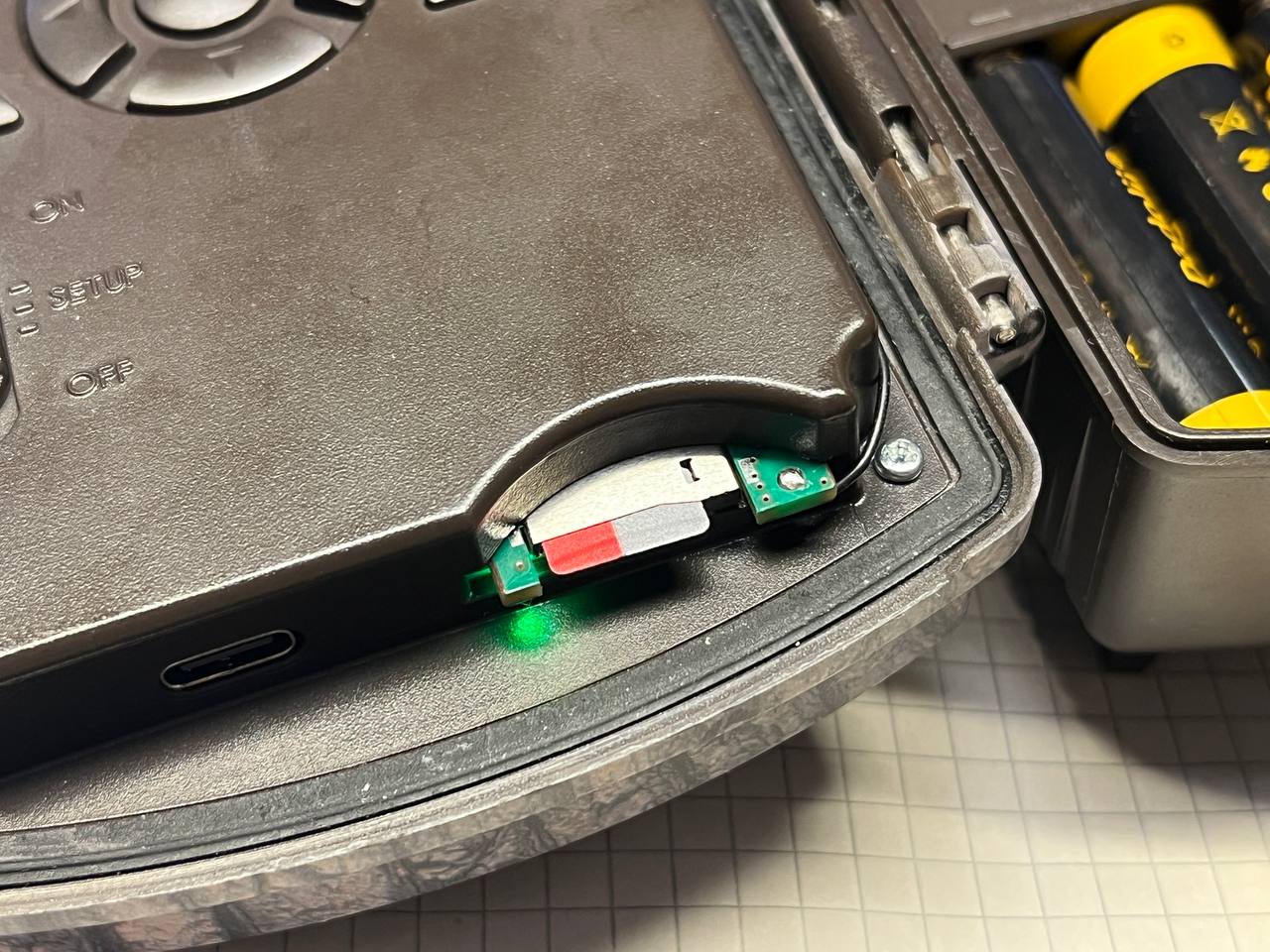
After testing, the system proved to be fully functional. The signal is stable; there is some latency, but it's not critical for this type of shooting.
You can set up two cameras and shoot from different angles or simultaneously capture photos and video.
This topic is popular among photographers. Devices are placed around the forest for six months to a year, then collected along with the photos — assuming a bear hasn't destroyed everything (there have been cases).