Disposable Vapes: Thousands of Useful Components Heading to the Trash
A teardown of a disposable vape reveals a surprisingly powerful device inside — a dual-core DSP microcontroller, Bluetooth 5.3, a color IPS touchscreen, and a lithium battery — all destined for the landfill after just three months of use.
Introduction
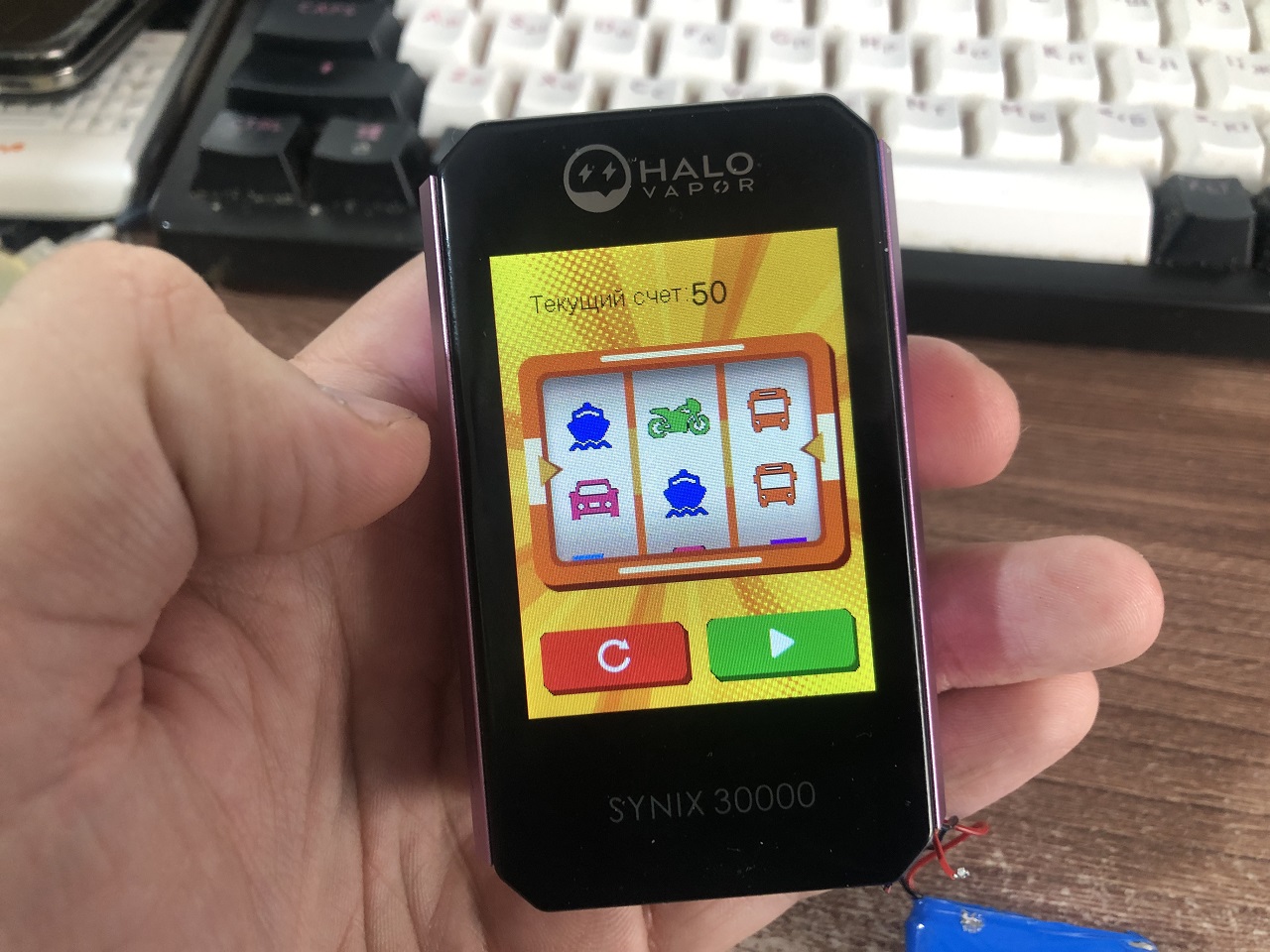
The concept of this blog is built around reviving outdated devices. We've disassembled clients of 2010s services, studied firmware, and repaired gadgets. Today's subject lived just three months before heading to the landfill. Hundreds of similar devices are thrown away every day. This is about how our consumer society denies a second chance to thousands of devices packed with powerful microcontrollers, color IPS displays, and lithium batteries.
Preface
For over a century, people have been discussing consumer society. Definitions vary, but the essence is the same: people buy things not just out of need, but following fashion and the desire to stand out. This fully applies to electronic cigarettes.
Young people have switched from reusable systems to disposable vapes. Manufacturers keep adding functionality: recharging, level indicators, Bluetooth, even games. As a non-smoker, I confess to a "geeky interest" and indignation about sending such a complex device to the trash when it could have a second life.
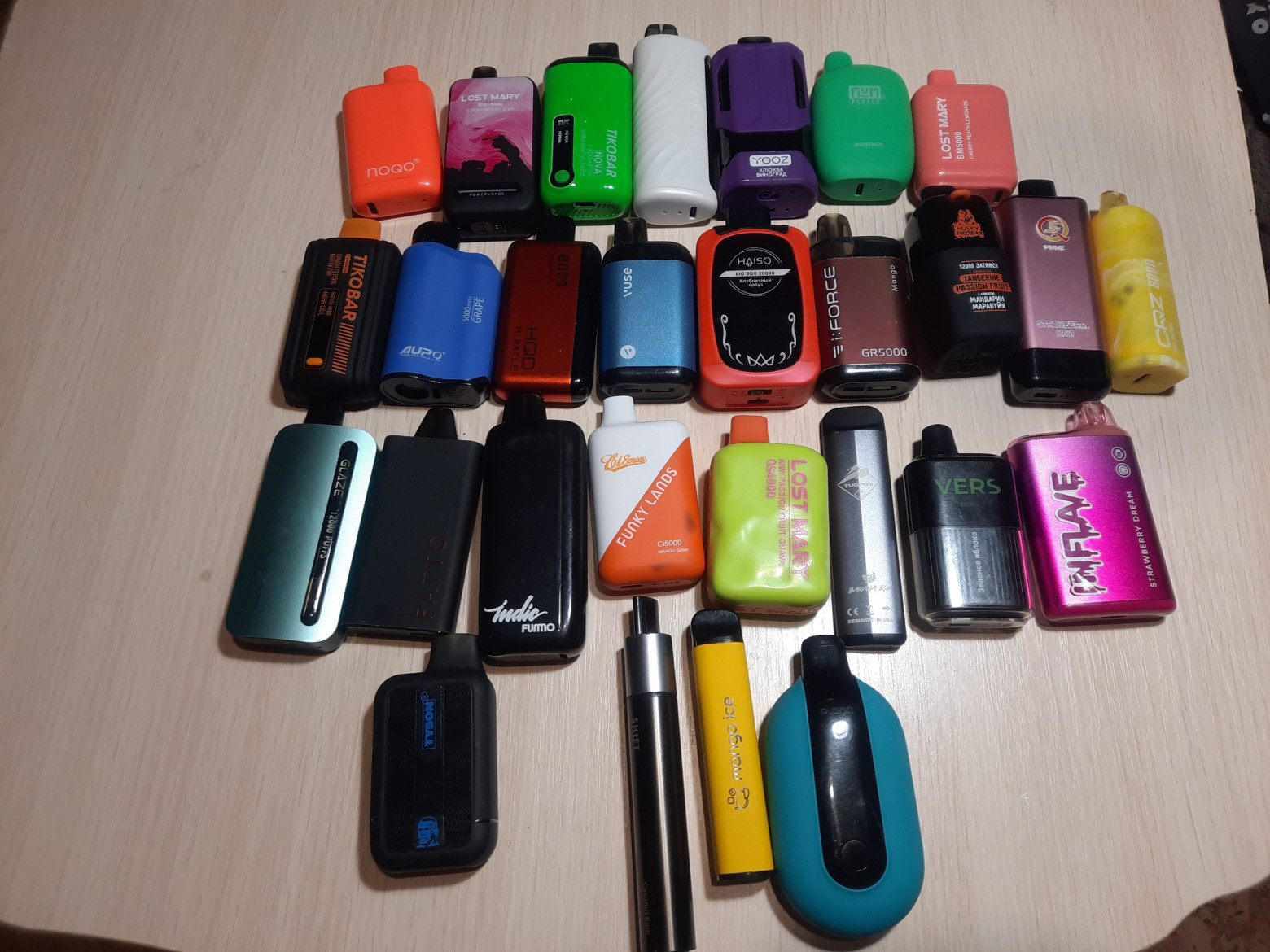
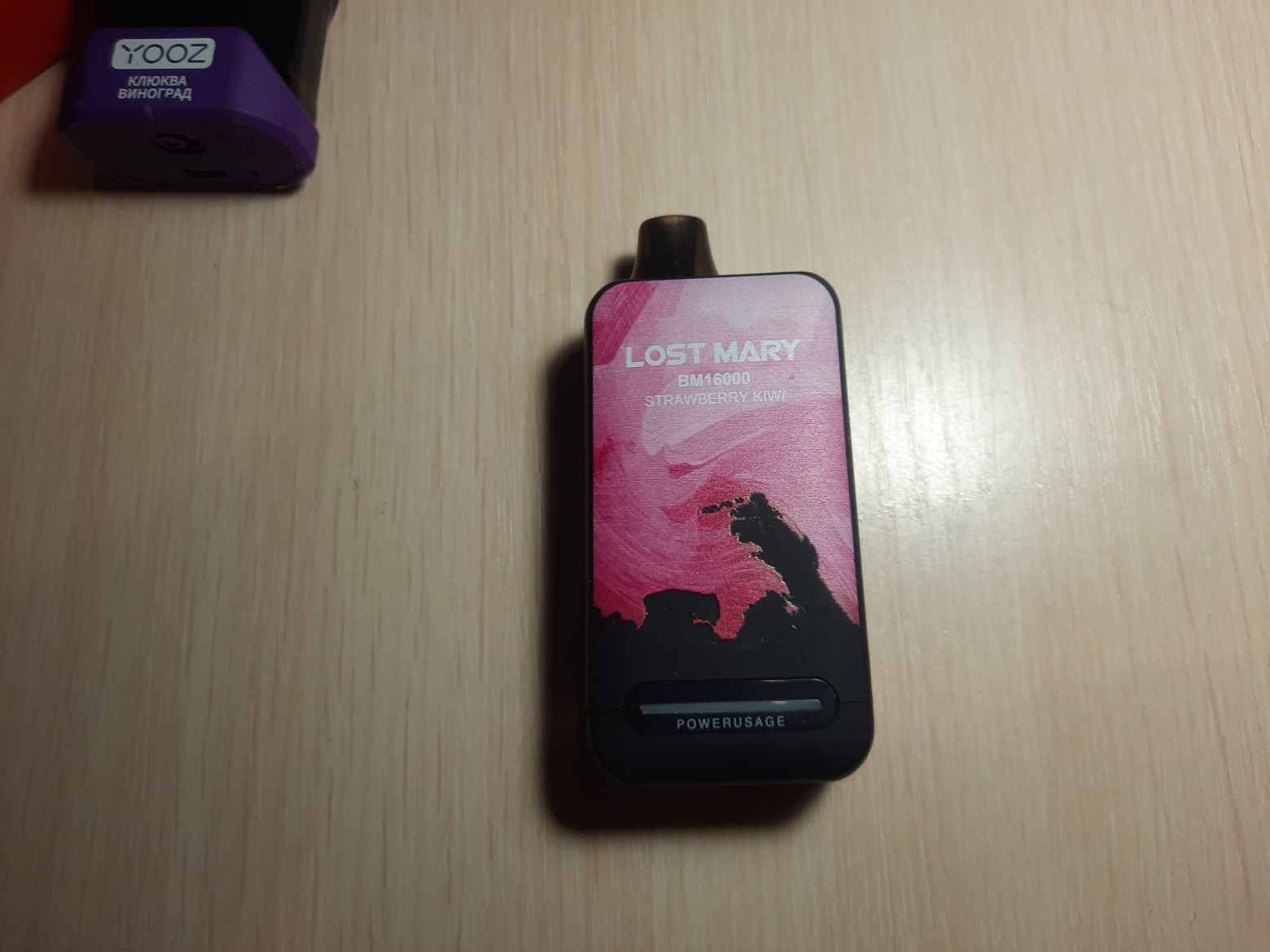
A reader sent me a disposable vape without the atomizer for teardown. It turned out to be not a simple gadget, but a sophisticated device with a powerful microcontroller, radio transceiver, audio amplifier, display, and touchscreen.
Let's Investigate
After powering it on, it became clear that the display is not just a tacked-on addition but an integral part. Through the touchscreen, you can adjust heater strength, monitor battery charge, and check liquid level. The device contains at least 2 ADC channels and PWM control.
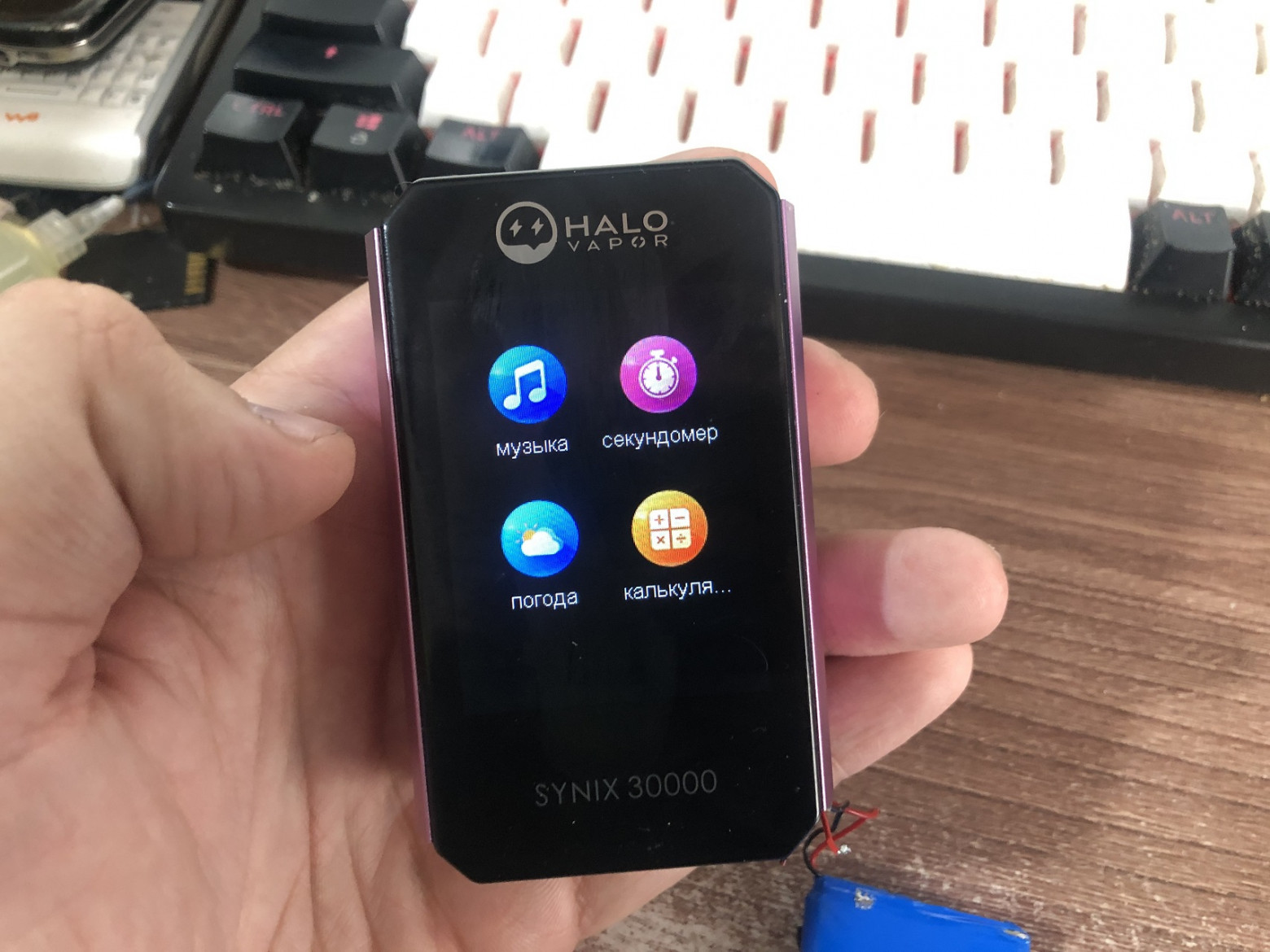
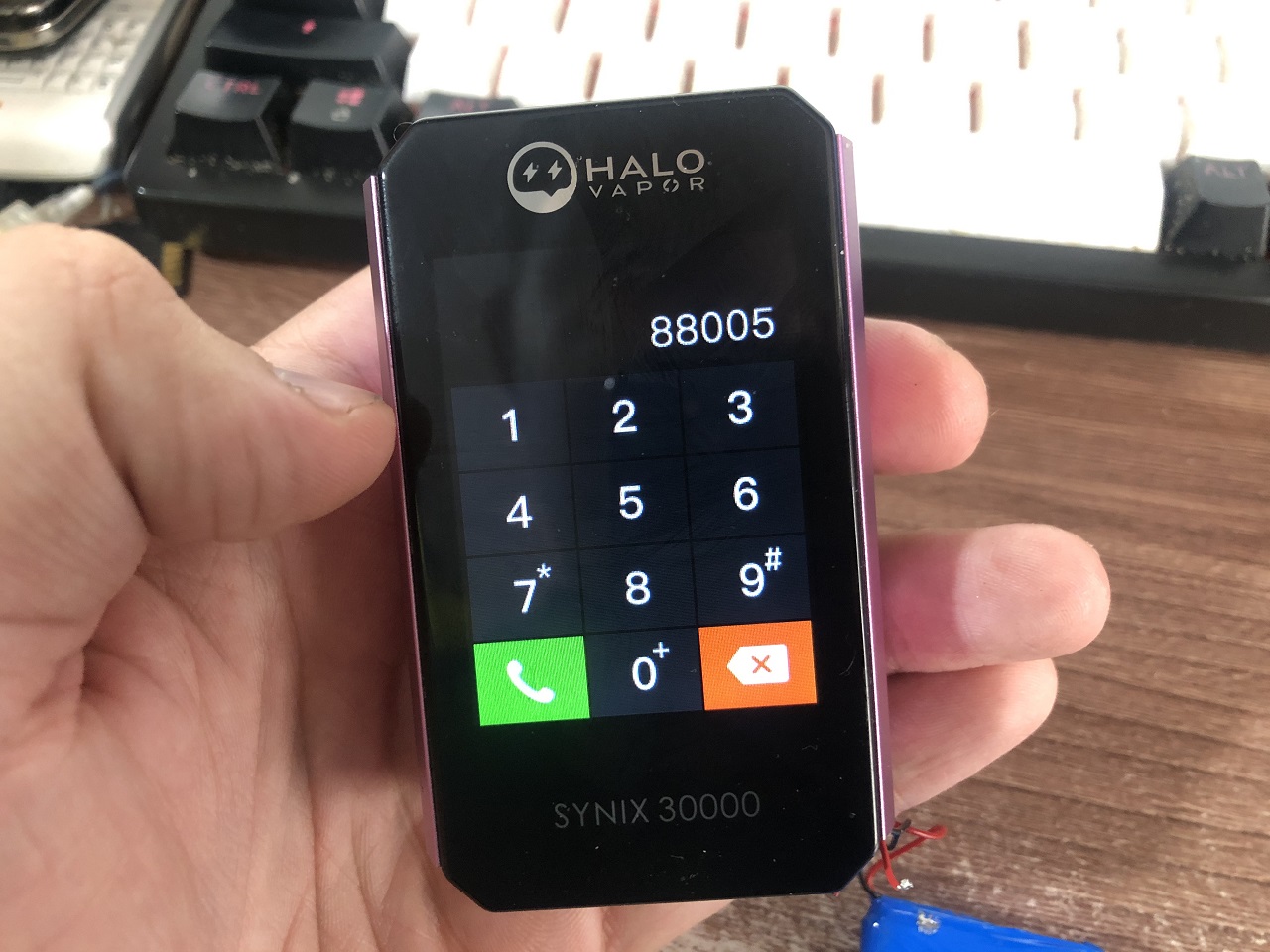
The main menu offers: player, games, phone, weather, settings. The absence of internal storage points to it working as a portable Bluetooth speaker.
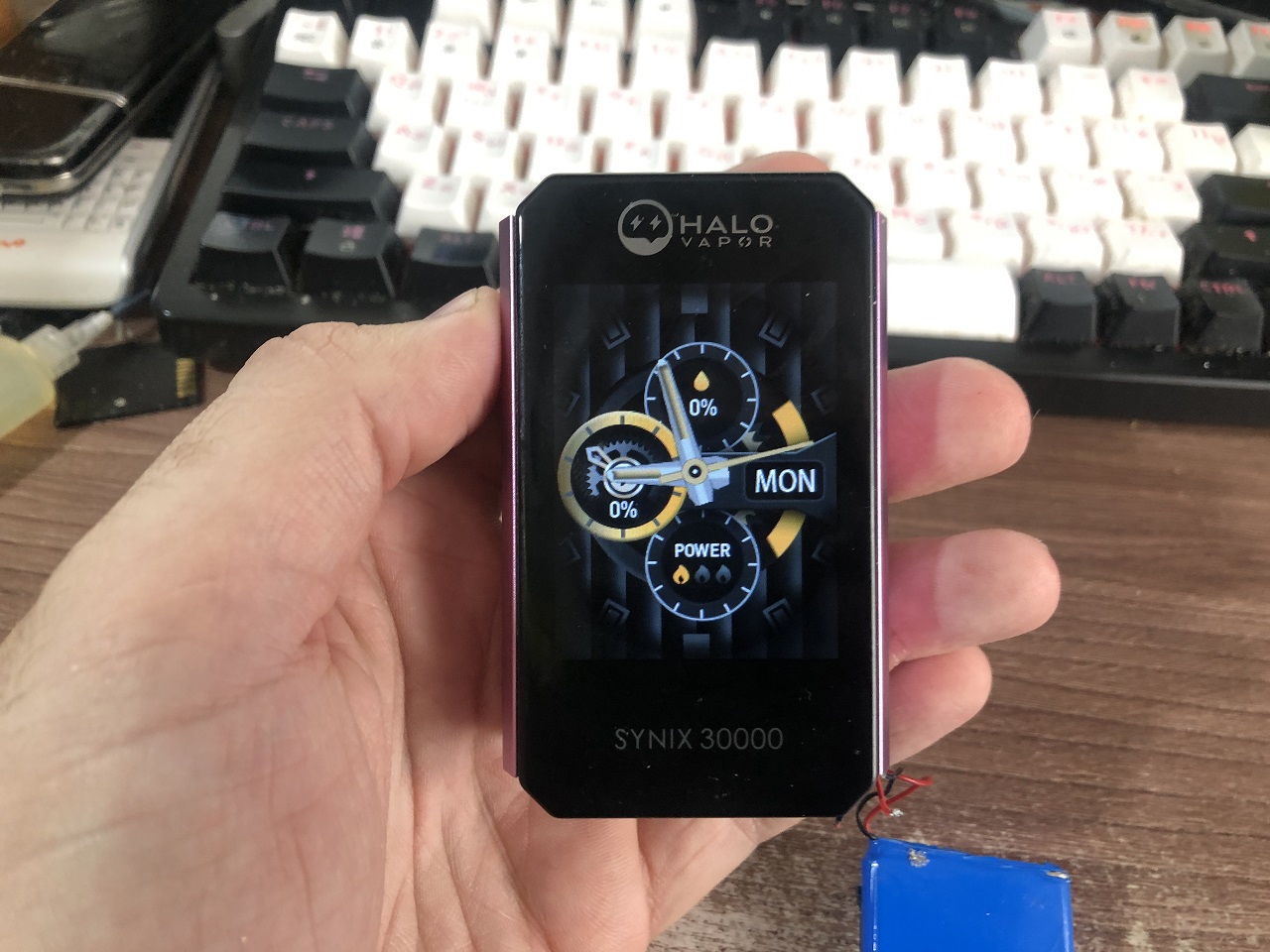
Smartwatch functionality is present: messenger notifications, calls via HandsFree profile, stopwatch, alarm clock.
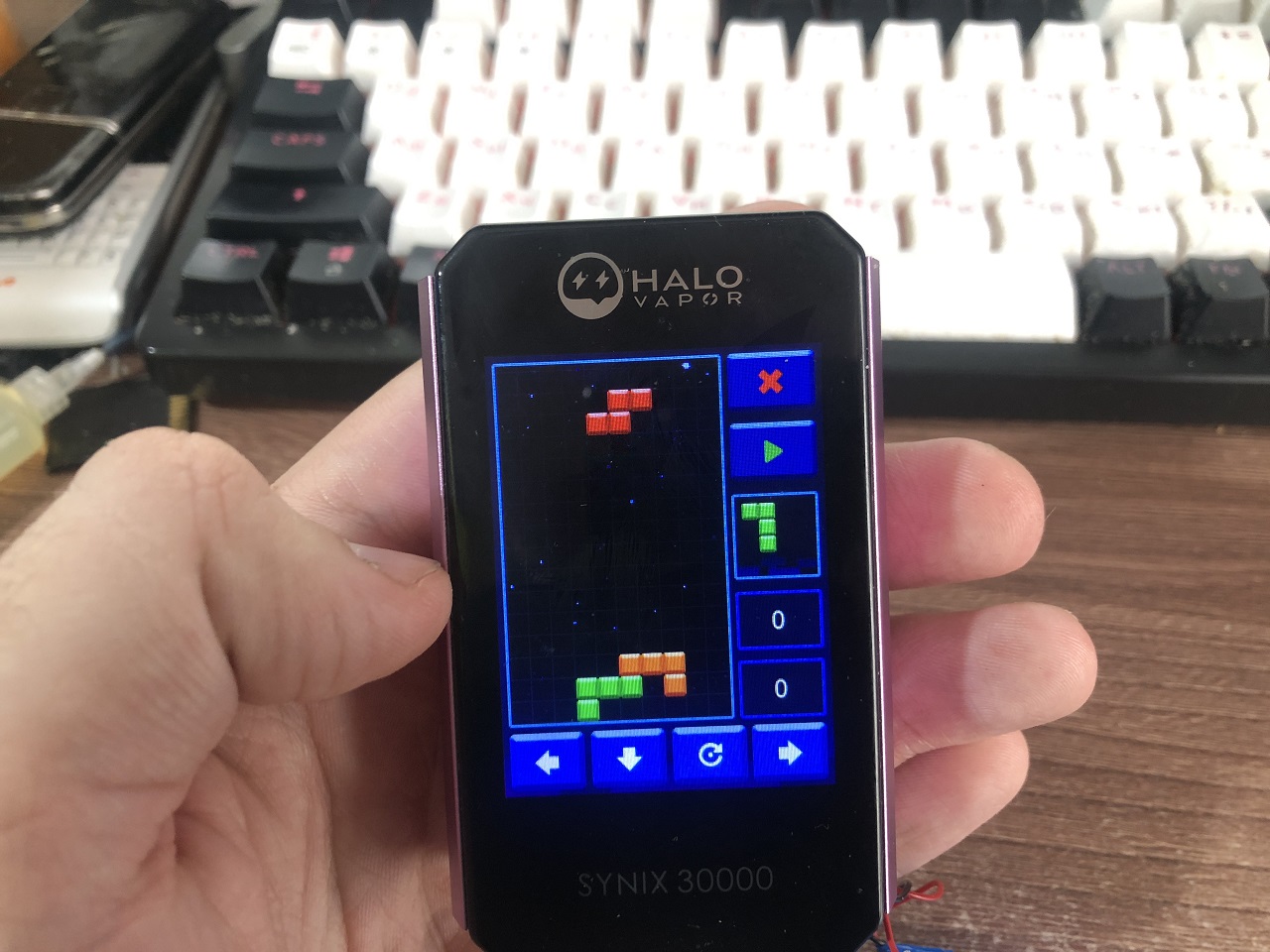
The games are simple with low frame rates, but it raises questions: would an NES emulator or a custom game be possible? Could you remove the atomizer and use it as a microcontroller?
There's an app store, but it only sells AI-generated wallpapers. Not a hint of running third-party programs.
What's Inside?
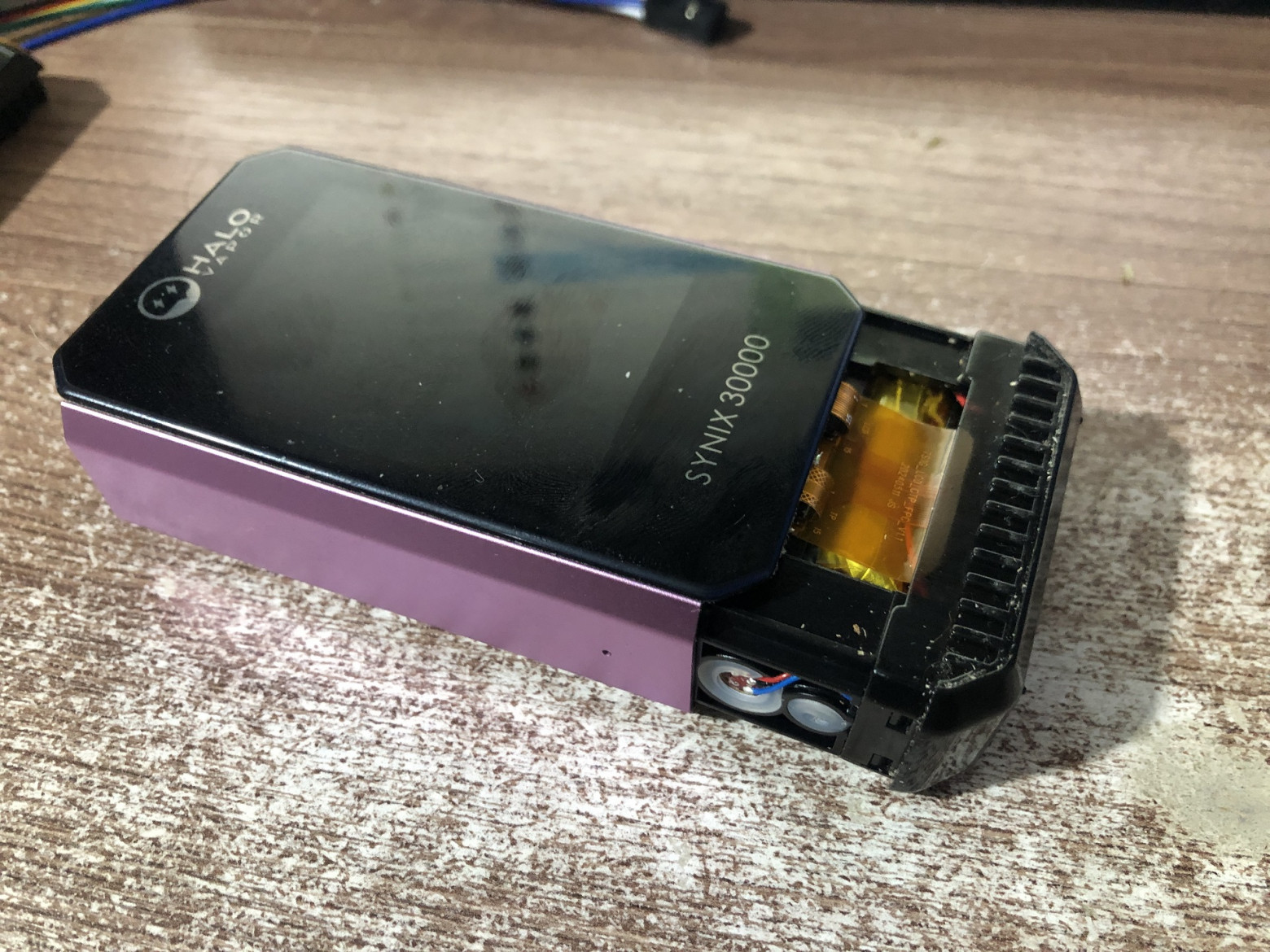
Disassembling disposable vapes is a destructive process — manufacturers prevent refilling. The bottom is glued shut with clips; you need caution and a heat gun.
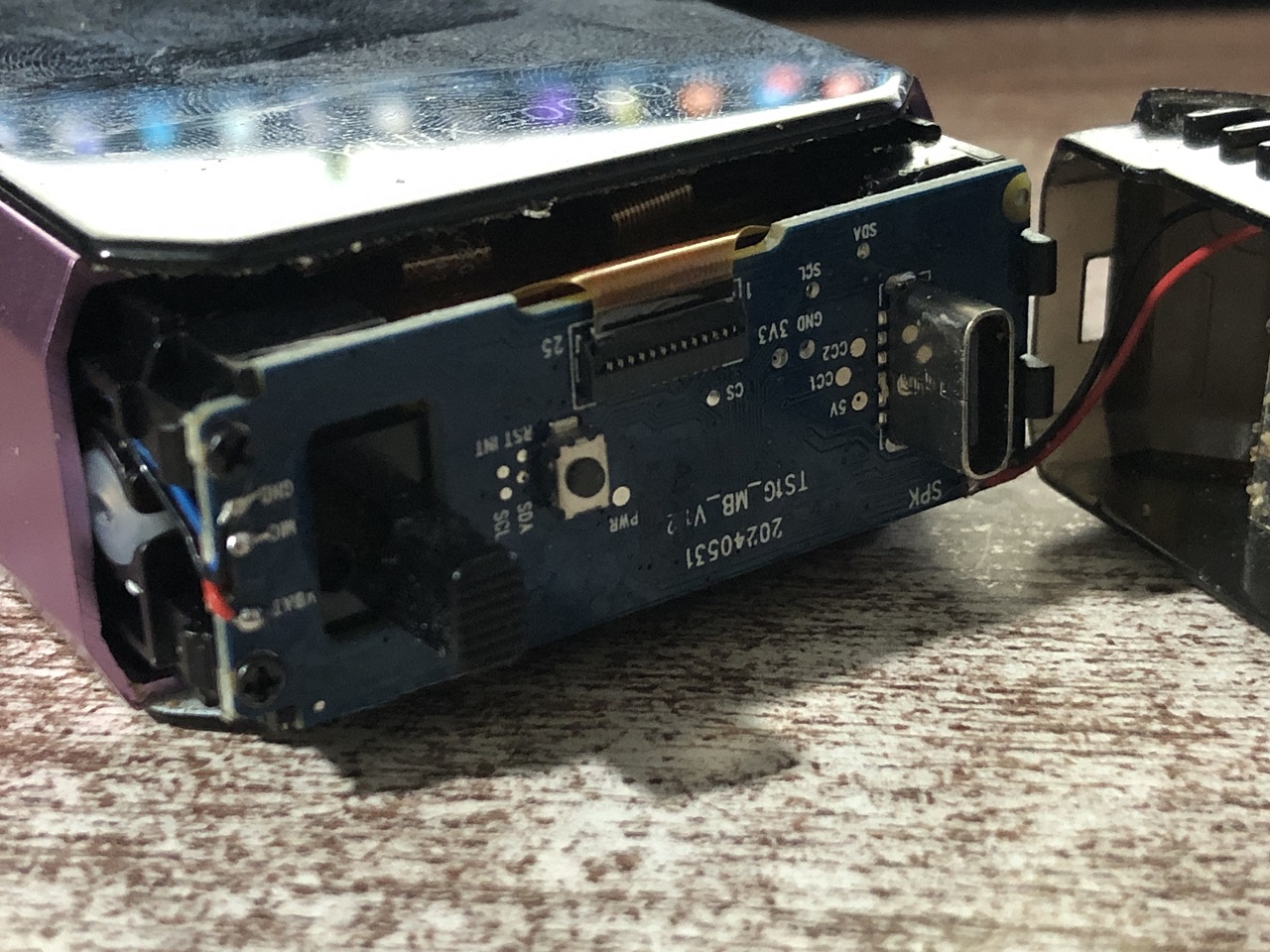
Inside: a tiny PCB with a display/touchscreen ribbon cable (used in other vape models), a USB Type-C connector, a microphone (for detecting draw strength), and a speaker (Bluetooth speaker functionality).
The abundance of labeled test points lets you trace signal lines. On the left: SDA/SCL/RST/INT (touchscreen). On the right: SDA/SCL (display). Power is 3.3V with no external LED drivers.
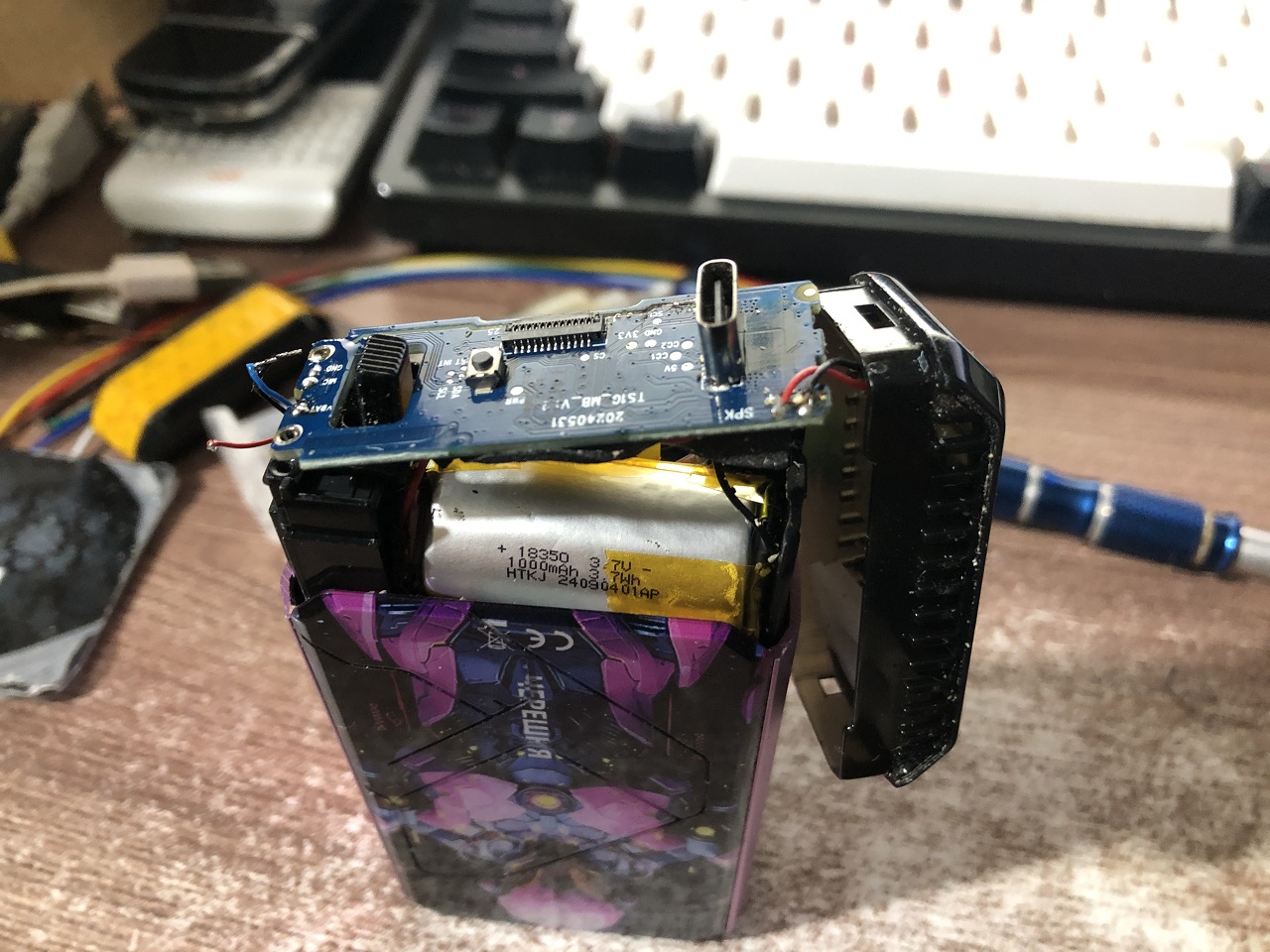
Power comes from a single 18350 lithium cell. With a proper BMS and charger, it can be reused in projects. Out in landfills, there are thousands of perfectly good free batteries just sitting there.
The Heart of the Device: JieLi AC701N Microcontroller
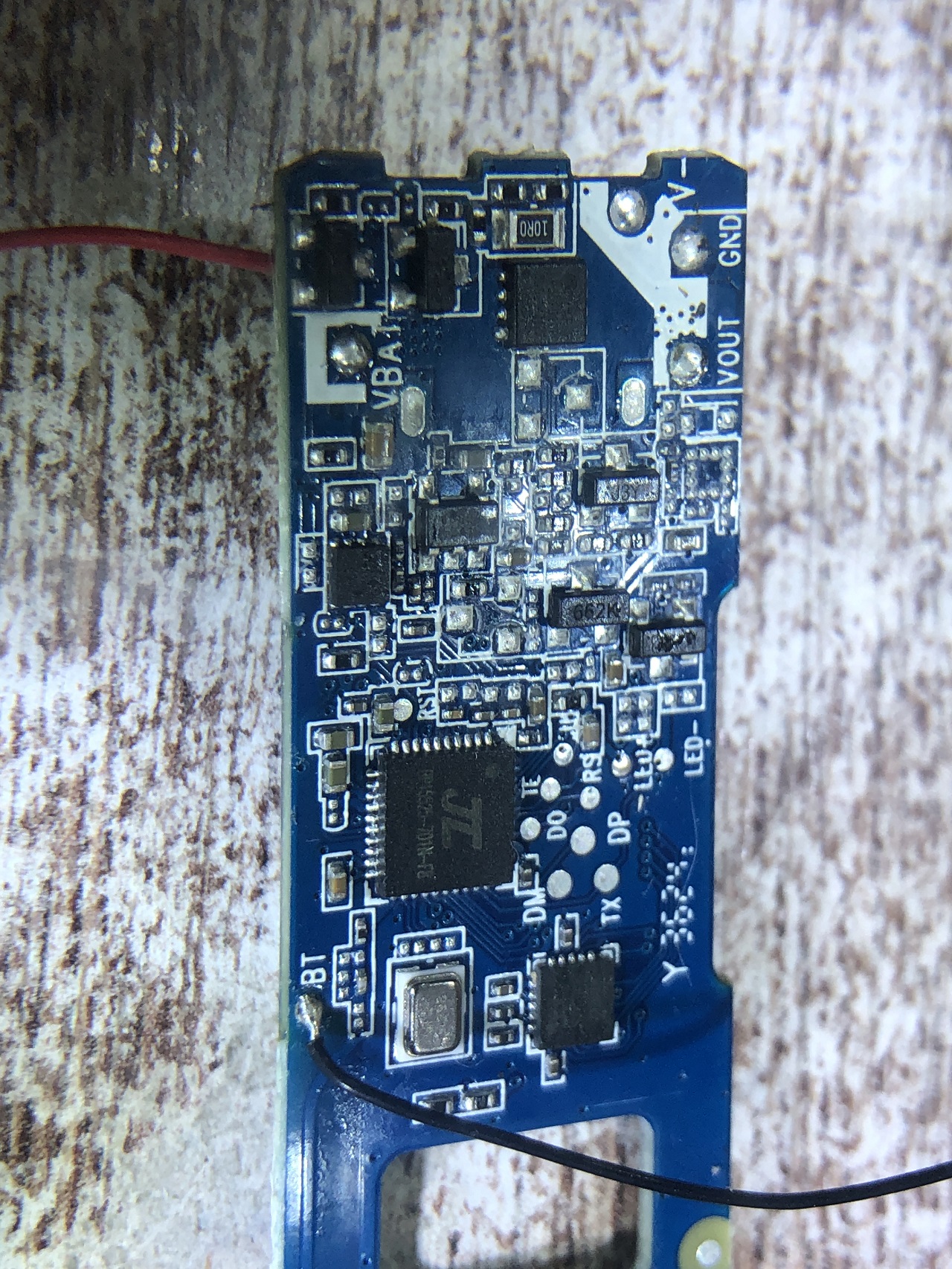
The marking reads 701N-F8. This is a system-on-chip:
- Dual-core DSP with proprietary Pi32v2 architecture and FPU, running at up to 160 MHz with 32 KB instruction cache, 16 KB data cache, and MMU for memory addressing. On par with the RP2350 or ESP32.
- 640 KB SRAM and 1 MB Flash — this is genuinely serious.
- Bluetooth 5.3 with codec support, L2CAP, RFCOMM.
- Controllers: I2C, UART, SPI, USB, MMC, GPIO, PWM.
- Dual-channel DAC with preamplifier, PCM up to 96 kHz.
- Four-channel ADC for the microphone.
- Built-in PMU: Li-Ion controller, LDO, DC-DC Buck converter.
The manufacturer publicly shares source code and build files. The system runs FreeRTOS with a proprietary UI stack and the Bluekitchen Bluetooth stack.
This gadget has enormous potential: an external display for sensors, a component for an alarm system (an inconspicuous key fob), a microcontroller for gaming consoles, DIY phones. There are hundreds of applications.
Conclusion
As I finish writing these lines, I feel deeply saddened. I wanted to express my feelings about disposable devices. I hope we'll eventually see proper schematics and SDKs for these chips — but I strongly doubt it.
A poll among readers (691 votes) showed:
- 65% — "Completely agree. An enormous amount of resources goes to the trash."
- 16% — "My DIY heart is crying... WHAT AMAZING MICROCONTROLLERS!"
- 10% — "Waiting for vape hacking and a Doom port."
- 8% — "Manufacturers should be required to publish source code and schematics."
- 2% — Disagreed with the environmental arguments.