Elite Vibe-Coding
A satirical story about a client who believed AI had made traditional software engineering obsolete — and how a development team gave him exactly what he asked for, while quietly building the real thing behind the scenes. A cautionary tale about magical thinking, vibe-coding hype, and the gap between perception and reality.
Yet another instructive story from modern development life, this time on the topic of vibe-coding — a new infection that strikes most often at ordinary people with no connection whatsoever to IT or programming.
You wanted to know how things really stand in modern IT?
All names in this story are fictional, all coincidences are accidental, and there are no loose ends to follow. Complaints and statements can be sent directly to the lost-and-found department — they'll sort you out there.
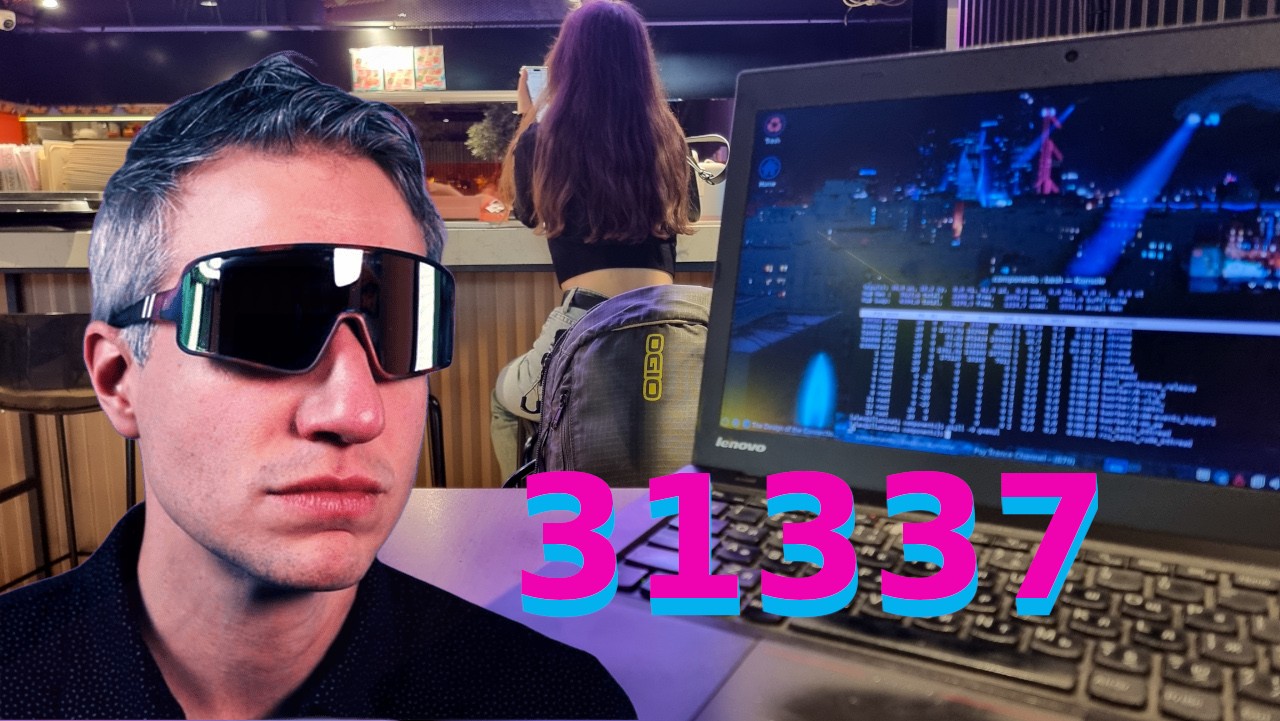
What Is Vibe-Coding
If we're being completely honest, explaining "vibe-coding" depends entirely on whether the reader has an engineering education:
If you were trained to "tighten bolts and extract square roots" — it'll be hard to reduce the whole thing to "development by feel" or the well-known phrase "I just feel it that way."
But when you have no such education and mathematical formulas are just "runes in Elvish" to you — congratulations:
The world around you will always be full of magic and wonder.
And as one manifestation of that "magical thinking," sooner or later comes the attribution of human traits to machines — above all, the idiotic idea that the machine "knows how to think."
I won't go deep into this very philosophical topic, which has become the central idea of countless films, anime, and cyberpunk series. I'll only note that at the current stage of science and technology, we do not know how the human brain works or how the process of thinking occurs. So there's no talk among serious scientists of replicating that process in hardware anytime soon.
Everything humanity has at its disposal right now is a simulation of the external reflection of thinking through neural networks.
But back to the topic of vibe-coding:
Vibe-coding is a trendy new style of software development in which source code is generated by a computer through the composition of requests in human language.
Vibe-coding predictably gained enormous popularity and captured the minds of the masses, since there have always been and will always be more semi-literate idiots with magical thinking than normal engineers. Fortunately, the laws of the universe remain unchanged, and every manifestation of idiocy in life is eventually punished.
The Client Is Always Right
At the close of a pleasant summer evening, with all important work done and the author looking forward to a good night exploring the FreeBSD kernel, an email arrived:
A certain gentleman from a faraway fairy-tale land was craving our help and participation in his project, promising fabulous riches.
As usual.
Work is work, and the application was worth examining even if it was spectacular in its premise and absurd in its content. A video call was arranged for an initial meeting to clarify the project — and the potential client, let's call him Steve, turned out to be a most entertaining character:
"Good friend Steve" laid out his vision of the future of all IT and software development in particular — a vision that in many ways aligned with the ideas of "renowned humanist and AI expert" Dani Shevovalov.
A bit of direct speech from "Uncle Steve," so you can assess his wonderful ideas and general adequacy:
— You understand, Alex (I sign myself as "Alex" precisely for people like this — not everyone is capable of pronouncing "Alexander" in full)...
— ...soon robots will replace all human engineers, programming as an activity is already in the past, nobody writes code by hand anymore...
— ...all your "deep knowledge" and "unique experience" are worth nothing and are needed by no one.
It always amazes me how someone can so casually and without a trace of embarrassment tell a representative of the third-oldest profession about their bleak future and impending death in cold, hunger, and poverty. For some reason nobody talks to doctors and lawyers that way — but engineers? Sure, no problem.
— My nephew can easily and quickly write absolutely anything with ChatGPT, and he's still in school...
— ...he recently wrote a social network (a direct quote).
— AI is our shared great future, delivered to us by the world's corporations!
Unfortunately, the norms of etiquette don't allow you to tell someone where to go right in the middle of business negotiations — so I just nodded, smiled, and listened. And "good friend Steve" kept talking, sharing the interesting backstory that "he himself had fought for Denikin once upon a time" — meaning he had been a programmer himself — somewhere in sunny Lorien, writing Borland C++ software for an insurance firm. But that was a very long time ago.
So in software development he "understands," but he long ago became a senior executive and now works with his head, not his hands.
That was why he needed our help — in the form of those very "hands." And naturally, since Steve "understands," Steve is "in the know" and is himself a former programmer — he would personally choose the entire technology stack and all the tools on which we lowly subjects were to carry out the development. And helping him in this difficult task would be his beloved nephew — a "young IT genius with great prospects" whose judgment Steve trusted completely.
The kid was 17 at the time and genuinely turned out to be far from the dumbest of teenagers.
But entrusting a practically-a-child with technology selection for a real project involving an entire team of serious programmers — well, you can imagine. It was an extremely dubious idea, to put it mildly. After that opening, the conversation should have ended and we should have declined this wonderful, promising project. But times are tough, and the foreign "Uncle Steve" had real budget. So I proposed another call, this time with all three of us, to discuss next steps.

The Young Genius
Steve's nephew, let's call him Mike, turned out to be the most ordinary American teenager with the most ordinary teenage interests and hobbies: sports, girls, school, and computers.
No, Mike didn't spend every free moment in front of a monitor, didn't enter the Net, didn't collect vintage computers from the last century, and wasn't trying to bring a mainframe IBM home. Like all normal teenagers, he simply did homework on the computer, played video games, watched internet content, and was learning to program — on high-level languages, naturally, not pure C or assembly.
Mike also loved vibe-coding:
ChatGPT, Claude, various agents and complex prompts — the apparent power of these technologies had clearly enchanted the kid.
And kind Uncle Steve happily paid all the bills, reasonably believing his beloved nephew was doing something useful.
Vibe-coding is certainly better than a heroin habit, so no complaints about Uncle Steve on that score.
Without any serious development experience but repeatedly receiving long code listings as output, the impressionable teenager had genuinely come to believe that the stuff the neural network produced was real programming. That you no longer need years of study or tinkering with computers to learn the fundamentals — you just have to ask the neural network, and it does all the work itself.
And all that was needed to complete their mega-project was to somehow run the code generated by the neural networks.
Which is why they needed competent "runners" — us.
Yes, you understood correctly: Steve and Mike weren't interested in our years of development experience or our broad competencies. They came with a much simpler and more direct request:
Please fix the output of ChatGPT that somehow won't run.
We'd never been hired as janitors cleaning up after a neural network before. But a hundred bucks is a hundred bucks. Especially per hour.

Capable Executors
I've told stories of past victories and projects before — from which you can draw conclusions about our boldness and courage in taking on the most difficult challenges. But this time the problem wasn't the technology — it was the people. A classic startup "Hacker & Hustler" combo in modern interpretation:
An aging man long removed from the work, and his teenage nephew who was obsessed with AI and vibe-coding.
The difficult choice:
- Try to actually deliver the project, outsmarting the dangerous idiots;
- Quietly walk off into the sunset without the money.
Since you're reading this article, I think it's obvious which option we chose.
— Good friend Steve! We'd be delighted to help your young venture hasten the twilight of humanity and finish off the last remnants of engineering culture!
— But there's a catch.
— You see, AI and robots are the newest, most cutting-edge, most breakthrough technologies, specialists are very scarce and they cost a lot.
— $150/hr.
I knew the going rate for such services in Steve's fairy-tale homeland, so I wasn't expecting to impress him much.
— Alex, we understand completely and fully trust you. But we want to monitor the process. We need your specialist to work on camera, with screen recording.
It's not hard to guess that working on camera "like a performing monkey" while maintaining a healthy mind and productive output is not something every programmer can manage, regardless of experience or skill.
But I was not to be stopped.
— Good friend Steve! Of course we can arrange that — the client's wishes are our law.
— But there's a catch.
— Our experts work across multiple projects; there's confidential information from other clients on their work computers that shouldn't appear on camera.
— So we'll need to set up dedicated workstations specifically for your wonderful project. That's a direct cost we'll need to be compensated for.
— $200/hr. And $6,000 for the necessary equipment purchases.
Steve agreed. And so we acquired a rather good project, complete with a set of delivery obligations — practically against the client's own wishes. Because producing something adequate under those conditions was physically impossible, whatever "global vibe-coding experts" might claim.
Not for a hundred dollars an hour, not for two hundred, not for a million.
There is no way, from the position of an implementer, to successfully persuade a minor idiot enchanted by a new toy and an aging man who once worked in the field but has long since lost touch with reality. Especially when both of them are from the land of "fairy-tale elves" where they grow up hearing stories about the terrible Mordor and its dumb inhabitants.
So we had to apply military cunning and ingenuity.

"Senior Vibecoding Expert," Vasily
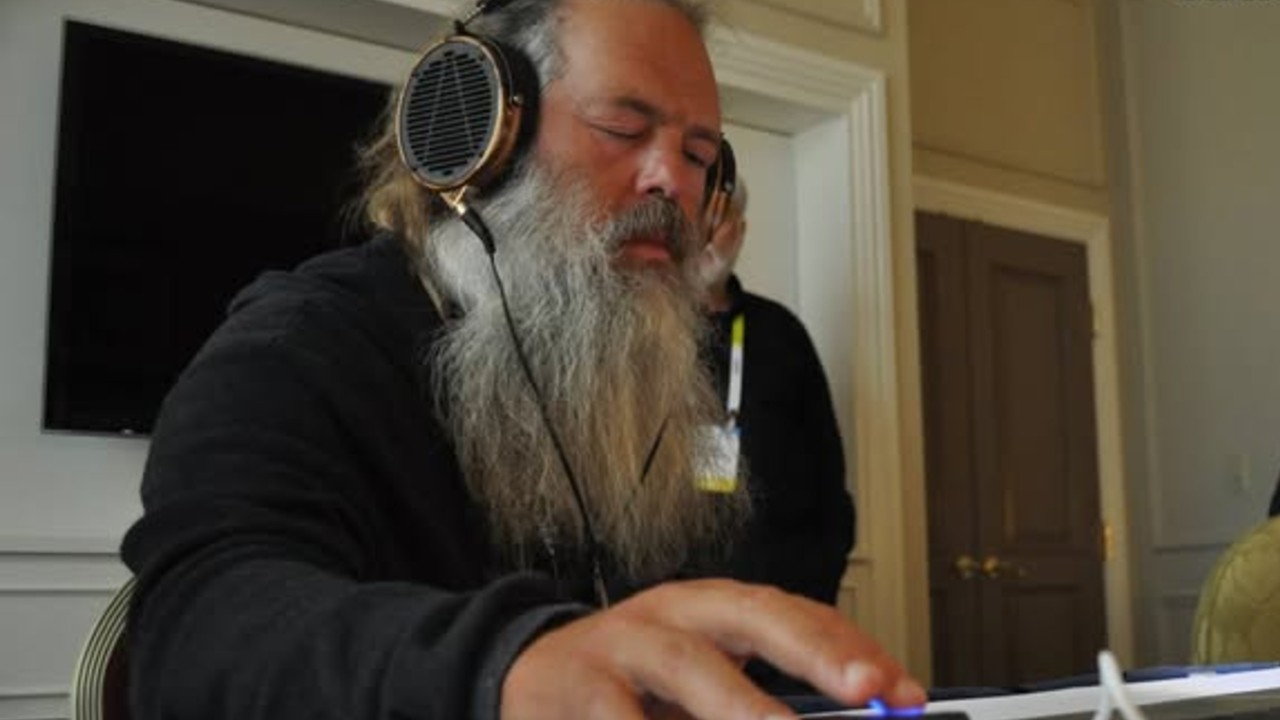
Without much deliberation, we found the employee with the largest beard in the company and put enormous studio headphones on his head — the biggest we could find.
To maximize the resemblance to a certain well-known figure often featured in vibe-coding materials, Vasily also slowly nodded his head and swayed to the rhythm of a relaxing melody.
Vasily was set up with paid subscriptions to ChatGPT, Copilot, Claude, and all other vibe-coder delights, then given the instruction to "do something with a smart expression." All of this was recorded on camera for our grateful clients — good friend Steve and his young but already legendary nephew.
It must be said that financial motivation awakened in Vasily a genuine acting talent:
The screen constantly flickered with open terminal windows, things were launching and bubbling, peculiar code was being generated, and Vasily himself, with an incredibly intelligent expression, hammered at the keys to soothing rhythms from distant tropical islands.
The perfect picture was achieved.
The Process
A good picture is one thing — but the project still had to be actually delivered.
So alongside Vasily, who was playing the role of "world expert in vibe-coding" for the client, we brought in an ordinary programmer, Vitaly — without the tactical beard, enormous headphones, or theatrical flair.
Ordinary engineer Vitaly, using perfectly ordinary technologies and a thoroughly routine development process, sat down and built the entire wonderful project. Completely. Without neural networks, prompts, or code generation. Sipping tea with biscuits, as he'd done many times before.
Of course, the gray and mundane process of iterative development is radically different from the insane torrent of schizoid babble called vibe-coding. Since we'd signed up for the latter, we had to somehow synchronize what was being delivered.
The problem was that "good friend Steve" and especially his teenage nephew, obsessed with vibe-coding, simply wouldn't have understood if we'd started delivering on a regular schedule, writing progress reports, and demonstrating completed functionality — the way things work in normal projects.
Because from their perspective, all of that was... "not cool."
By some incredible inversion, what has long been considered standard in the industry had come to be perceived as "boomer cringe" and a waste of time by a new type of client — one willing to pay $200 an hour for manic AI-assisted code generation. So we took a different path.
The Rock Star of Vibe-Coding
Vasily was given instructions on how a "genuine creative personality" and "rock star of development" should behave. We quickly Googled the biographies of such wonderful individuals as Ozzy Osbourne, Sid Vicious, and Dave Mustaine, duly appreciating their leisure habits and carefully studying what all these characters got up to between concerts, how they treated support staff, and how they interacted with various substances both legal and otherwise.
Vasily was given his directives.
The result was... epic. Of course our Vasily was no match for the hellish debauchery of real rock legends. He didn't shoot up on camera, didn't pour liters of hard liquor down his throat at a sitting, didn't smash equipment or people, didn't crawl naked around the workspace. He simply behaved... a little unusually:
Meditative quotations from the Necronomicon, long periods sitting facing the wall in lotus position, dialogues with an imaginary interlocutor on the topic of AI's future and "the twilight of humanity" — in that vein.
On the camera recording it all looked supremely inspiring. The client had every impression of having hired Ilya Sutskever himself, discussing humanity's future telepathically with Sam Altman in between vibe-coding sessions.
Particularly successful was Vasily's multi-hour monologue (at $200/hr) on the topic of personal responsibility in the use of AI. Vasily delivered it with incredible passion, hands wringing and beard-pulling, practically recreating Shakespeare's immortal works on camera. A brief excerpt:
— Oh my God! I cannot commit this dark code to the repository! It's heresy!
— It will ignite the fires of passion in the hearts of the innocent!
— ...cast into cursed darkness by AI all young and unformed souls!
Truly outstanding. Vasily received a well-deserved bonus.
Of course, none of this was born of love for the art — the entire circus was genuinely necessary for two very down-to-earth purposes:
Justifying the hours billed, and maintaining the legend of the vibe-coding "rock star."
Effectively, while normal iterative development proceeded off-screen, our "star" Vasily continuously generated neural-network nonsense on camera, creating through prompts something resembling a prototype or the required feature. And then he would theatrically delete it all, complaining about AI hallucinations. Sometimes the current version of the project, being built quietly in the background by the other developer, was fed to the neural network, and Vasily would make a show of tweaking prompts to generate new functionality on top of it — and then delete it all again, like a true artist. Creativity is unpredictable, what can you say.

Average Results
We delivered the project.
But most importantly, the client was also absolutely delighted, having fully converted to his belief in the power of high technology:
— See, Alex — that's the future right there! Who needs your skepticism! (I had honestly tried to warn Steve about the consequences.) You just tell the machine what to do and it does it. No typing code by hand — pure vibe and relax.
Good friend Steve could not stop comparing this successful experience to his "combat past":
— I remember how hard it was to code in C++, how I struggled with bugs and crashes. You had to memorize the syntax and all the limitations of Windows. Memory leaked like a sieve.
Though I honestly tried to convey to Steve that progress had moved far ahead even in C++, the gap between his programming knowledge from 1998 and the present day was simply too vast. Even explaining the concept of a garbage collector to Steve proved impossible.
Immersive Success
Like any successful project, this story didn't end with delivery and payment. "Good friend Steve," it turned out, had truly Napoleonic plans extending at minimum to the next century:
Beloved nephew Mike would become the CTO of the newly formed world-domination megacorporation and in that role would continue generating wonderful ideas in the form of non-functioning code through vibe-coding.
And we were supposed to keep "just running" all of it. However, Steve curiously refused to hire his own employees, being fully convinced that his and his nephew's skills, augmented by trendy neural networks, would be sufficient to run a major business. A wonderful plan, reliable as a Swiss watch.
Perhaps we weren't greedy enough, or perhaps too principled — but we didn't pursue the matter further, citing the fact that our "great vibe-coding guru" Vasily had left us, having discovered Buddhist spiritual practices.
And is now traveling somewhere in the vicinity of Tibet.
Naturally this didn't stop Steve and his nephew, and they immediately found other implementers — less squeamish and greedier. Who apparently actually tried to build something for them using vibe-coding. "Apparently" — because we later received several inquiries from murky individuals, adorned with "AI/ML/Vibecoder" badges, asking how we'd managed to deliver such an impressive implementation using vibe-coding. Some even offered percentage of future profits for the answer.

Epilogue and Conclusions
The most reliable way to end your days oozing pus, blood, and worse from every possible orifice is to start being rude to your attending physician — telling them your unique opinion of their profession to their face: "the doctor profession is obsolete," "doctors are needed by nobody," "you wasted decades studying" and generally "a failure in life."
The easiest way to end up in prison, having lost all your property, is to start being rude to your lawyer in roughly the same style. The simplest and most reliable way to lose a lot of money in IT is to start lecturing experienced developers about their difficult profession — even if you are "enchanted and in love" with the latest hot technology that promises mountains of gold and endless success, even if you once wrote code yourself and think you understand something about it.
Now, having read this wonderful story, think about the real state of affairs in the industry and everything connected with AI.
Consider how many other teams like ours are operating in the industry, and what percentage of them are describing the real situation rather than generating another beautiful picture of "AI's total victory." How many of them haven't yet been bought by Elon Musk or Sam Altman.
Had a think? Good.