Everything About Drill Bits: Types, Materials, and When to Use Each
A comprehensive guide to every type of drill bit you are likely to encounter, from simple spade bits to exotic friction drills and mortising bits. Covers materials, coatings, strengths, weaknesses, and the right tool for every job.
Drill bits are one of those tools most people use without thinking much about. You grab something from the box and hope it works. But there are dozens of distinct types, each designed for specific materials and conditions. Using the wrong one wastes time, ruins workpieces, and destroys bits. This guide covers all the main categories.
Spade (Paddle) Drill Bits
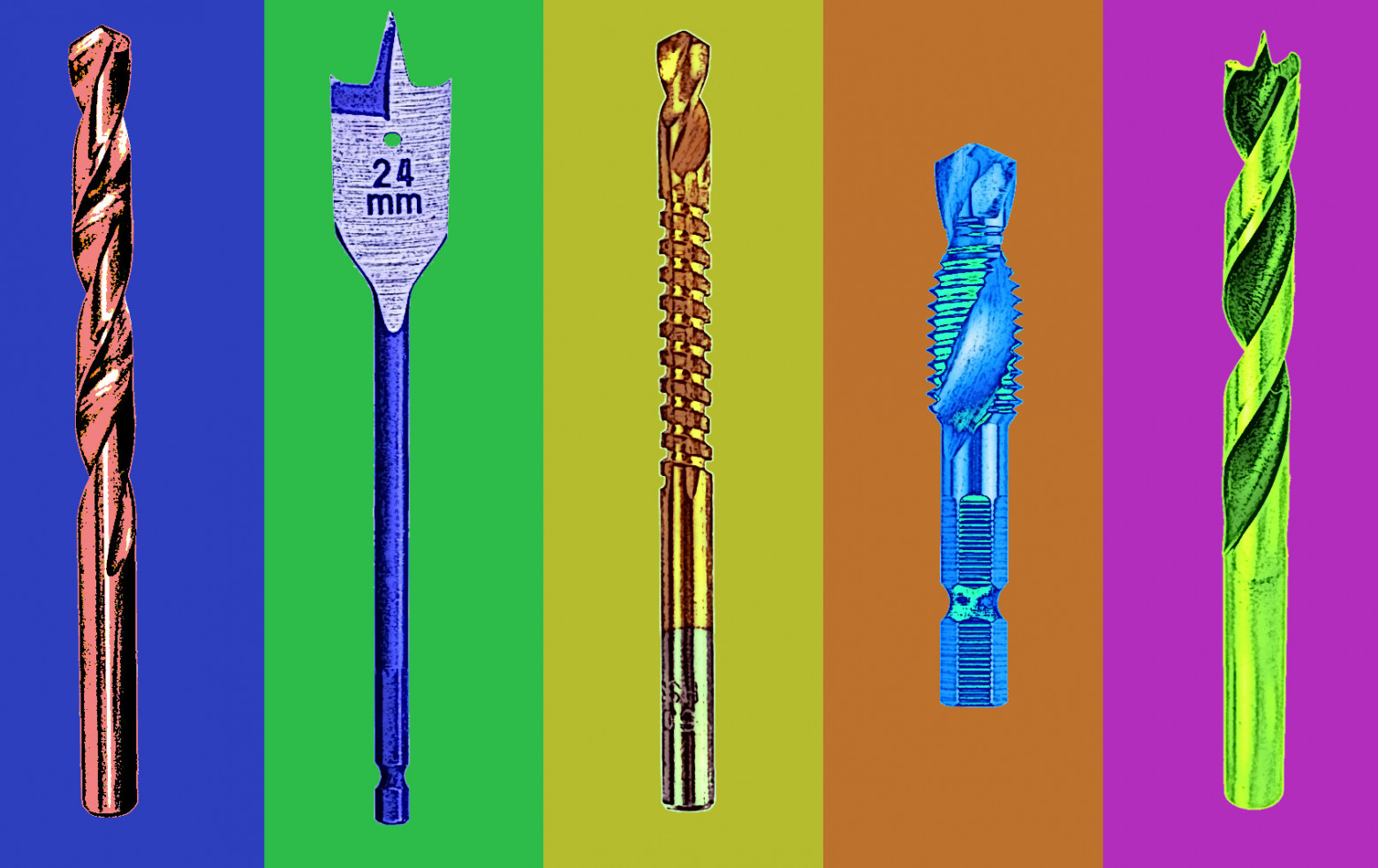
The spade bit is the simplest design: a flat steel "spatula" with sharpened edges. It has been used since antiquity. Its main virtue is low cost due to simple manufacturing.
Disadvantages: No cylindrical calibrating section to maintain direction; chip removal is poor, and sticky materials can bind the bit on deep holes.
Wood Spade Bit

The classic wood spade bit typically has a hexagonal shank for use with extensions. Made from carbon steel, it loses its temper above 150°C — so do not push it too hard. Edge cutters on better models score the perimeter before the main blade passes through, giving cleaner hole edges.
Glass and Ceramic Drill Bit
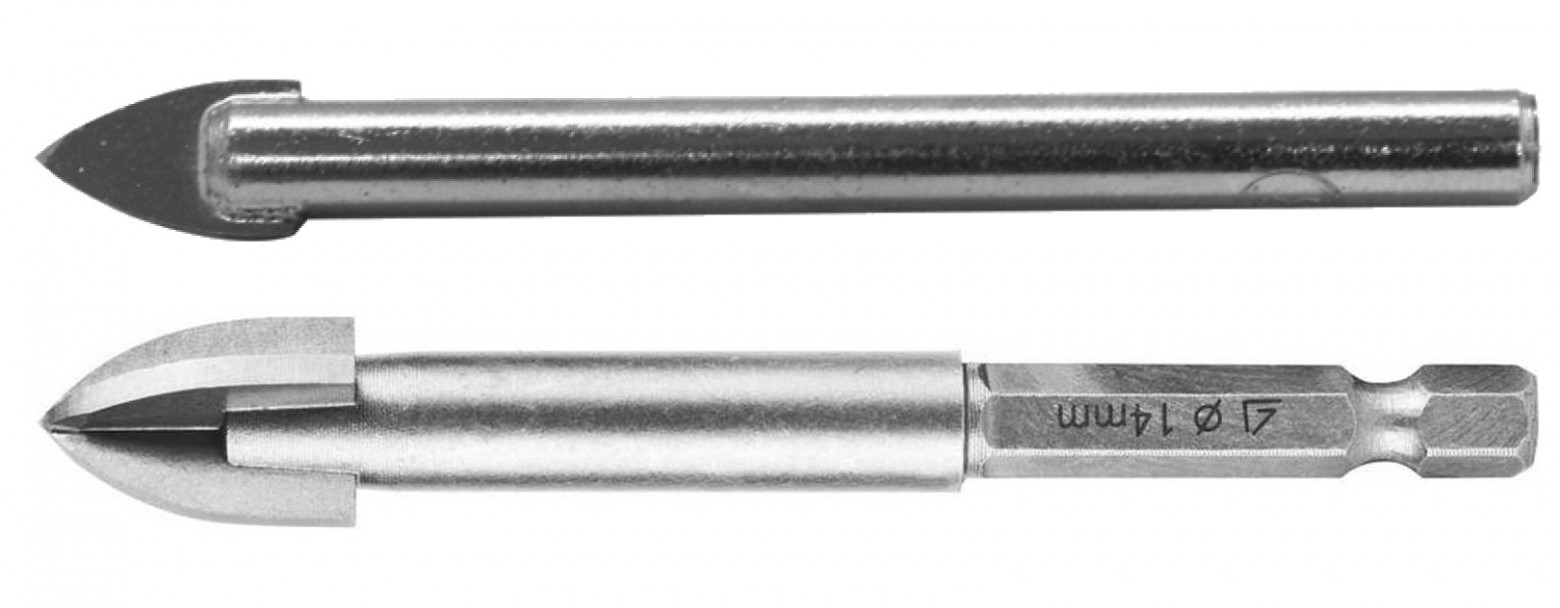
These spade-type bits have tungsten carbide tips brazed on. Four-flute designs outperform two-flute variants. Water cooling is strongly recommended. A useful property: they can also drill hardened steel.
Modular Spade Drill (Industrial)
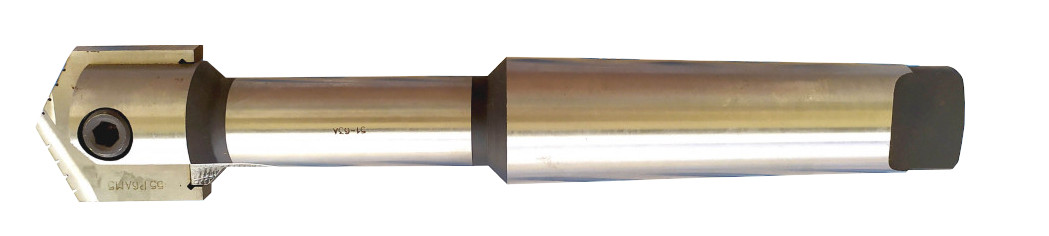
Machine-use only, with a Morse taper shank. The cutting head is a replaceable carbide insert. Cost-effective for production environments since you replace only the tip, not the whole tool.
Twist Drill Bits

The helical flute design solves the main problems of spade bits: chips are continuously evacuated up the flutes, and the cylindrical body maintains direction. This is the most common drill type in the world.
Brad-Point (Wood) Twist Bit

A twist bit optimized for wood, with a center point (brad) for accurate positioning and outer spurs that score the hole perimeter before the main body clears the waste. Results in clean, splinter-free holes. Carbon steel; keep temperatures below 150°C.
Auger Bit

A wide-pitch helix with minimal material between the flutes. Exceptional performance on deep holes in wood — chips are thrown clear aggressively, and hole walls are smooth. The lead screw at the tip pulls the bit forward without needing heavy drill pressure.
Masonry Drill Bit

A carbide tip brazed onto a steel twist body. Does not cut masonry by shaving — it chips and crushes. Best results come with a hammer drill that adds percussive action. Never use water cooling on masonry bits as thermal shock can crack the tip.
Metal Twist Drill Bits
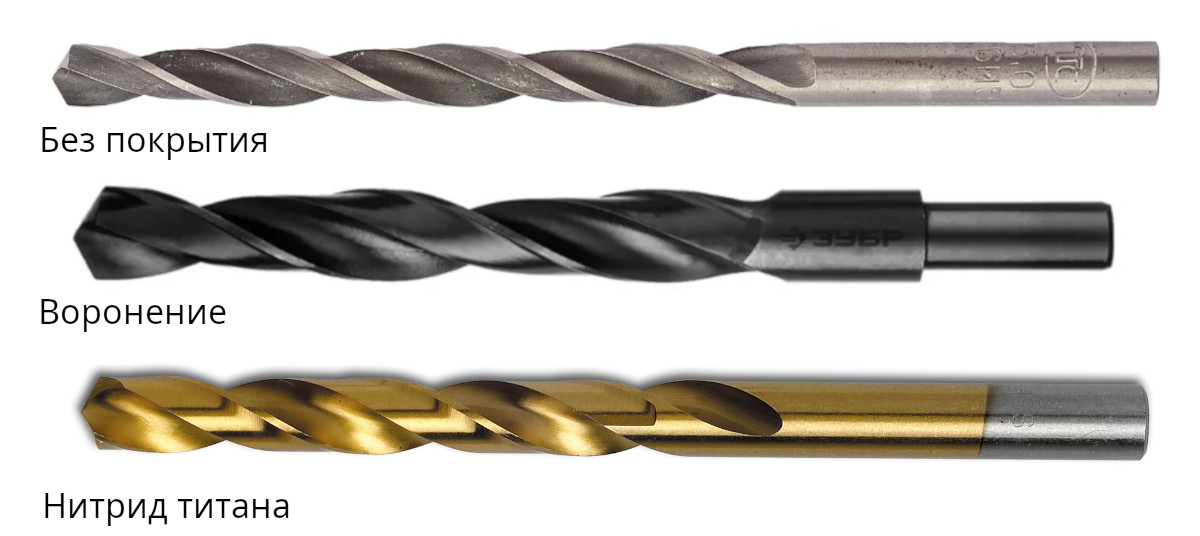
The workhorse of metalworking. Several factors matter when choosing:
- Material — HSS (High Speed Steel): Maintains hardness up to 500°C, suitable for high-speed cutting of metals. The baseline choice for metal drilling.
- Cobalt HSS (HSS-Co): Higher heat resistance, better for stainless steel and hard alloys.
- Left-handed variants: Useful for removing broken right-hand screws — the reverse torque often backs out the fastener as you drill.
- Coatings:
- Bare / oiled: Minimal cost, minimal benefit.
- Black oxide: Provides rust protection only; negligible performance improvement.
- Titanium Nitride (TiN, gold color): Harder surface, reduced friction, less chip adhesion — a genuine improvement for production use.
- Advanced coatings (TiAlN, DLC, etc.): Professional grade; significant gains in tool life at higher cost.
Note that drilling wood with metal twist bits produces rougher hole edges than brad-point bits. Drill rigidity decreases with length — holes deeper than 10× diameter may deviate. Resharpening extends service life considerably until the bit becomes too short to be useful.
Centre Drill
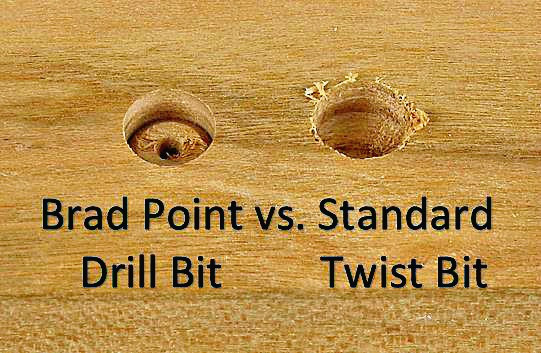
Short, extremely rigid, with a stub tip. Used exclusively to create a starting divot that prevents longer bits from wandering on the surface. An essential first step in precision metalwork.
Gun Drill
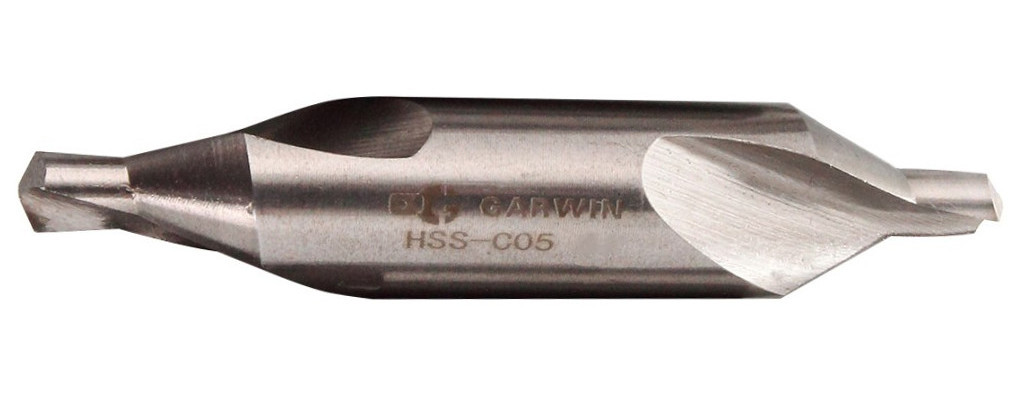
A specialized tool for deep, precise, straight holes (originally developed for gun barrels). Only a small V-shaped section removes material; the rest of the cross-section is solid, maximizing rigidity. Coolant flows through the tool body and flushes chips out the back. Requires dedicated machinery.
Step Drill
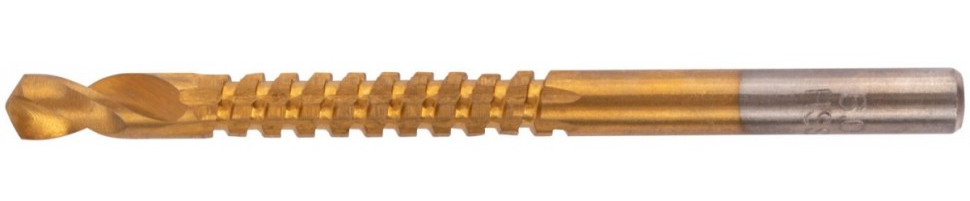
Conical profile with stepped diameters. Ideal for thin sheet metal — one tool drills holes across a range of diameters without needing to change bits. Self-starts without a centre punch on flat sheet. Available in stepped or continuously tapered variants.
Forstner Bit

The specialist for flat-bottomed blind holes in wood. A cylindrical rim guides the cut, preventing the bit from deflecting even at the edge of a workpiece or when drilling at an angle. Essential for cabinetry hardware installation. Requires low RPM and firm pressure.
Ring Drills (Annular Cutters and Hole Saws)
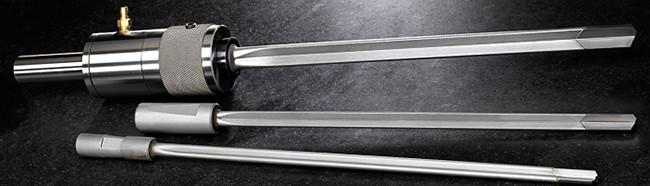
For large-diameter holes, removing only the ring of material at the perimeter rather than the entire disc is far more efficient. This family of tools operates on that principle.
Diamond Core Drill Bit
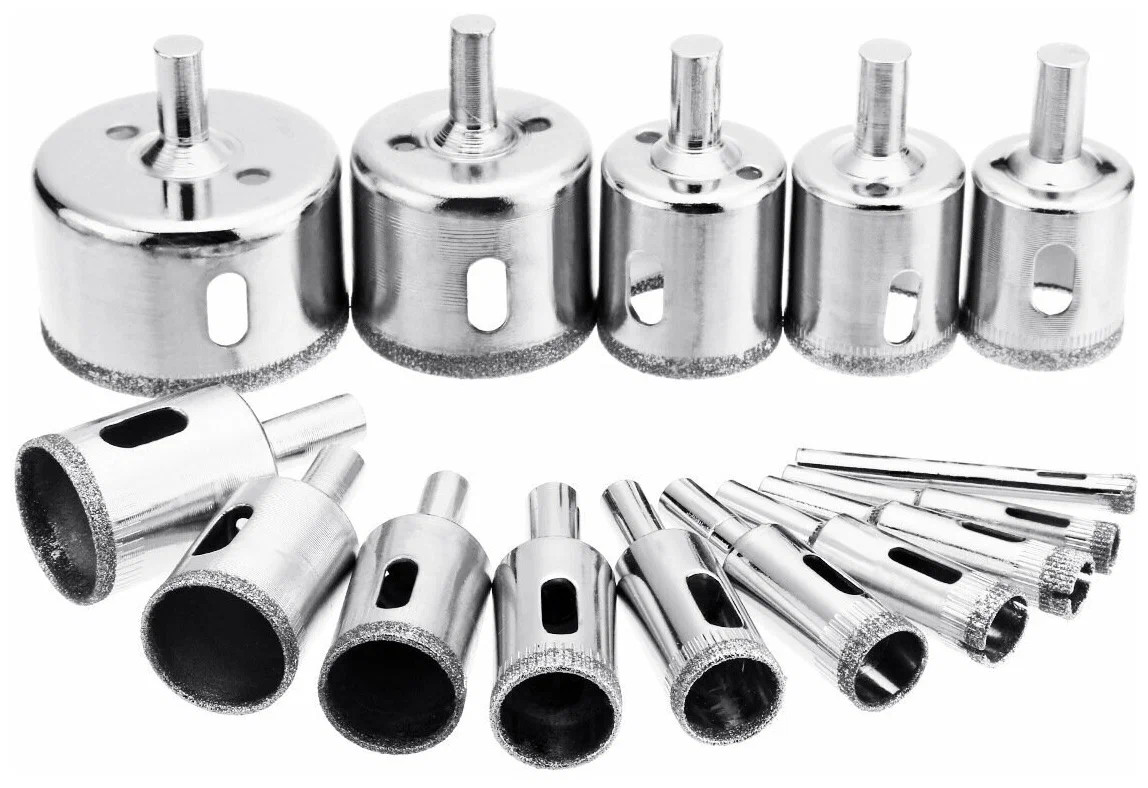
A tube with diamond-impregnated edges (or segmented diamond teeth). Cuts ceramic, glass, stone, and concrete. Water cooling is mandatory — both for the bit and to keep dust down. Cannot cut steel: diamonds dissolve in iron at high temperatures.
Annular Cutter Bit
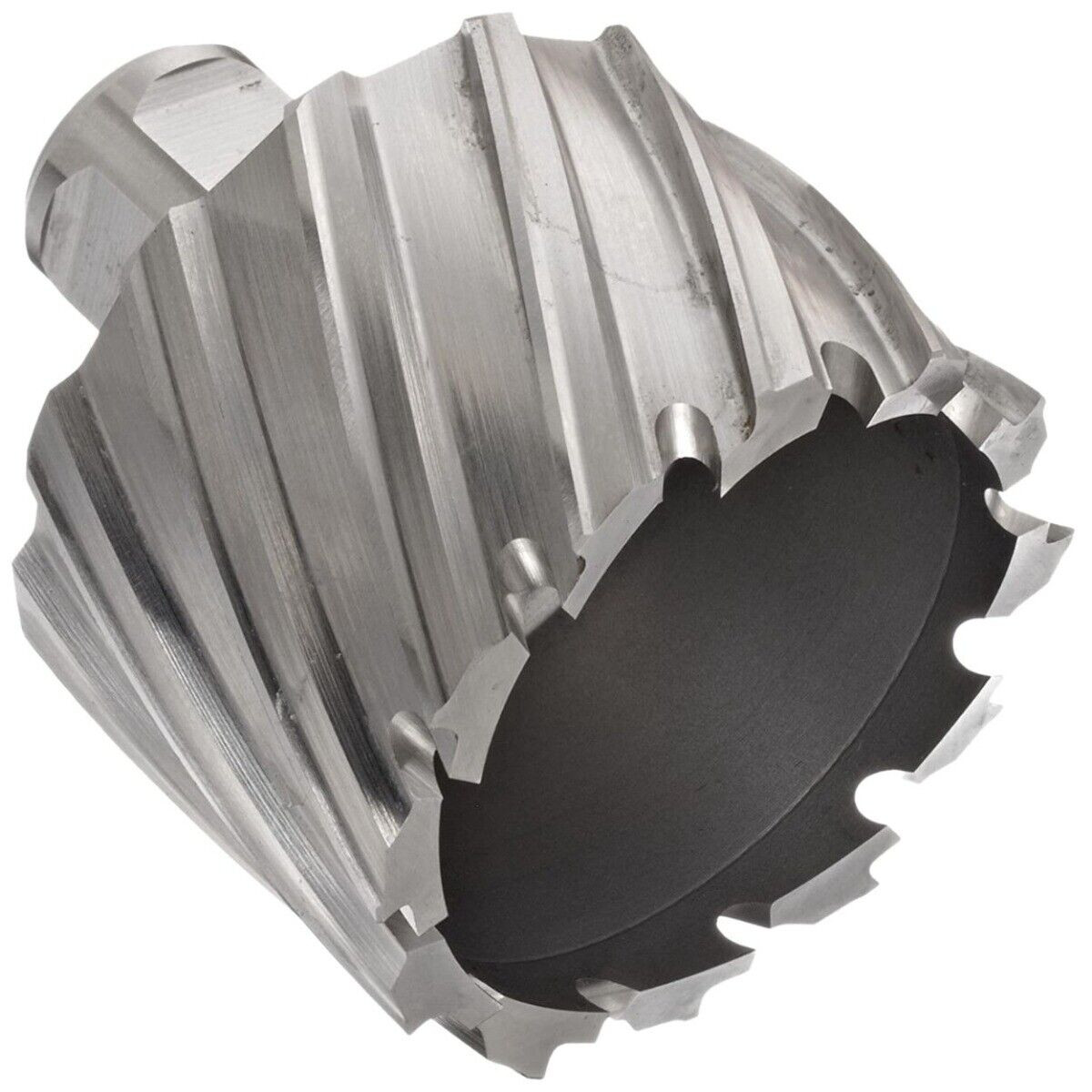
The metalworking equivalent of the hole saw. Requires a magnetic drill press or milling machine. Far superior to twist bits for large holes in steel — less force, less heat, less time. Only cuts through-holes; the slug ejects cleanly. Works well on curved surfaces.
Hole Saw
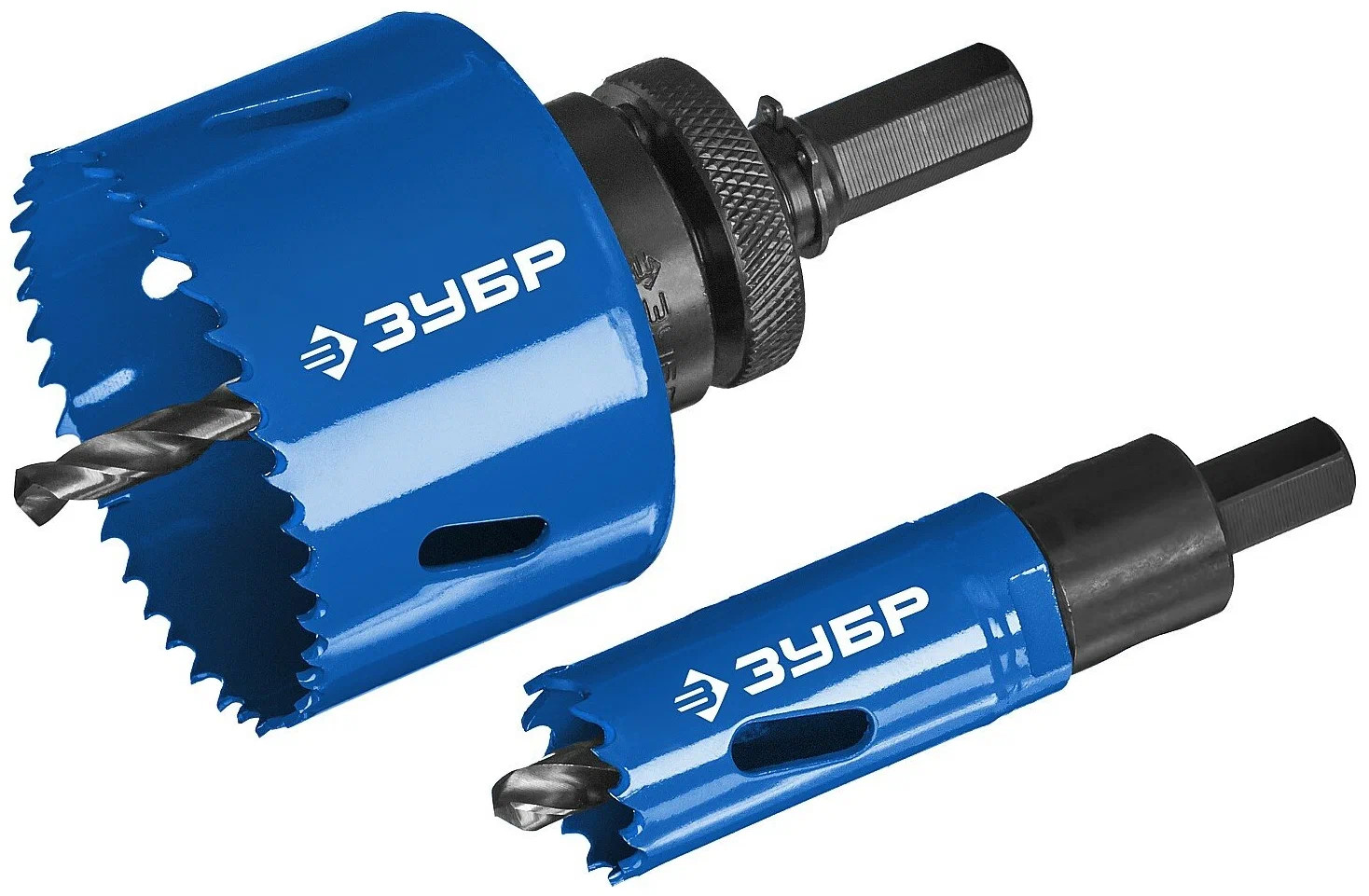
The standard choice for large-diameter holes in wood, plastic, and drywall. Bimetal tooth variants handle thin sheet steel. Carbide-tipped models cut masonry and fiber cement. Chip clearance is poor — withdraw and clear frequently on deep cuts.
Exotic and Specialty Types
- Adjustable "Ballerina" Bit: A central pilot bit with an adjustable arm holding an outer cutter. Cuts circles of variable radius in wood or sheet goods. High injury risk if the workpiece catches; low precision. Use with care and secure the workpiece firmly.
- Friction Drill (Flow Drill): Does not cut at all — it generates enough heat through friction to plasticize steel, then displaces the material to form a reinforced collar around the hole. Used in thin-wall steel tubing to create threaded bosses with no welding.
- Mortising Bit (Square Hole Drill): A chisel square that surrounds a round drill bit. The bit clears the waste, the chisel squares the corners. Requires a dedicated mortising attachment on a drill press or bench chisel machine.
- Self-Centering (Vix) Bit: Spring-loaded housing with a conical tip that seats in the countersink of a hinge or hardware plate. The drill bit fires through the center automatically, producing perfectly positioned pilot holes for screws.
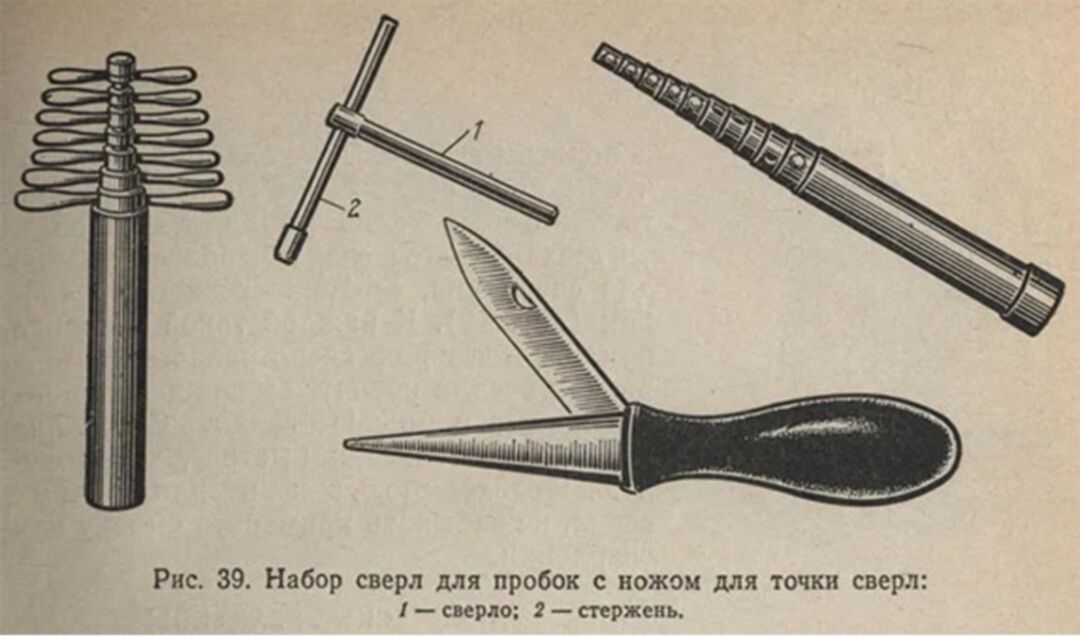
- Plug Cutter: Cuts cylindrical wood plugs for concealing screw heads. Match the species and grain direction to the surrounding wood for invisible repairs.
Related Tools: Not Drill Bits, But Worth Knowing
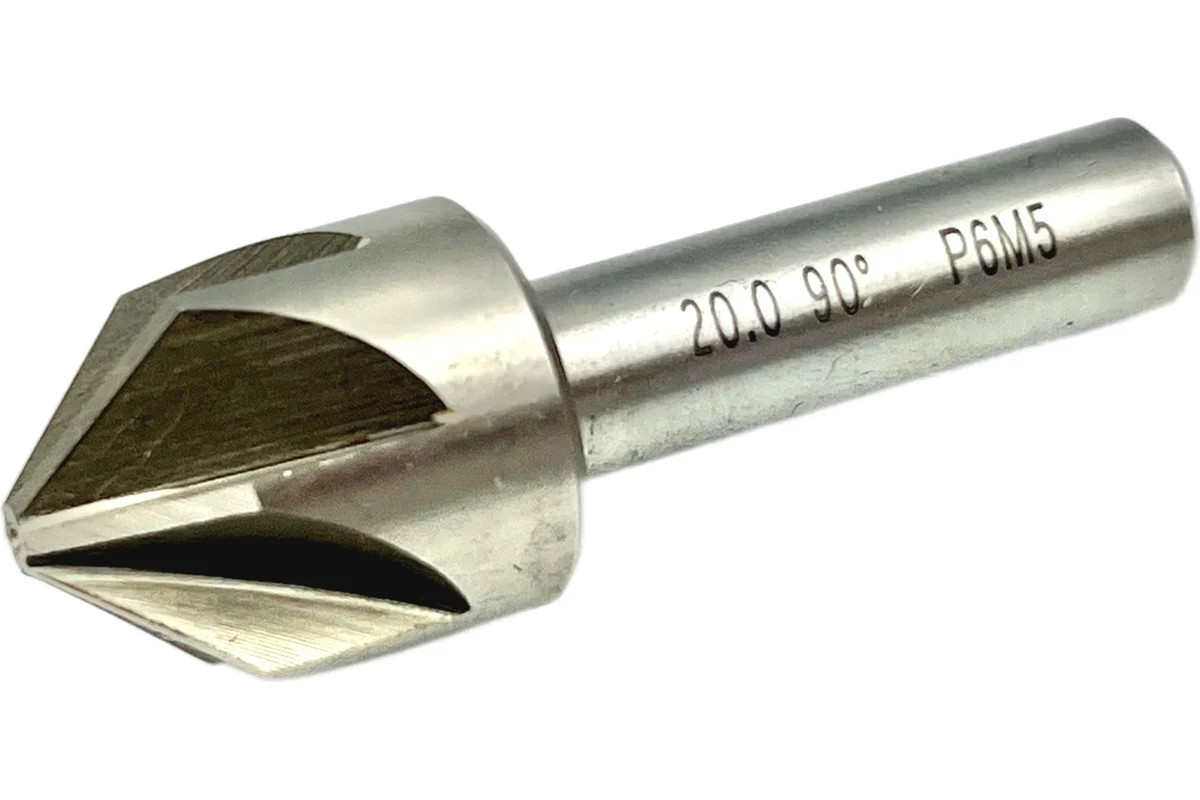
- Countersink: A multi-fluted cone that bevels the entry of a drilled hole so flathead screws sit flush. Also used before painting to break sharp edges that resist paint adhesion.
- Counterbore: Cuts a flat-bottomed cylindrical recess (rather than a bevel) so a bolt head or socket cap sits below the surface.
- Reamer: A multi-fluted finishing tool used after drilling to bring a hole to exact tolerance and improve surface finish. Removes only a few hundredths of a millimeter — always drill undersize first, then ream to final dimension.