Fair Price per Kg/Liter: A Browser Extension That Exposes Hidden Grocery Markup
A browser extension called 'zaKilo' that automatically calculates and displays per-kilogram or per-liter prices on Russian grocery delivery websites, exposing common marketing tricks that manipulate consumers.
Hello everyone! My name is Pavel, and you may already be using my extension Ave blacklist for blocking spammer sellers on classified ad sites. But today it's not about that.
Over a year ago, the Cabinet of Ministers did not support a draft law requiring unit pricing per kilogram or liter. The news made rounds on various forums.
Well, the Cabinet of Ministers didn't support it, but I support it with both hands!
So I wrote a browser extension for calculating unit prices on grocery delivery websites — zaKilo ("per Kilo") (Chrome, Firefox)
I could teach people to calculate unit prices in brick-and-mortar stores too, but who would ask me :D
Marketing Tricks Used to Confuse Consumers
Why should you look at the unit price specifically? Let me walk you through a few marketing tricks that manipulate consumers into making wrong conclusions. I'm all for conscious and rational choices.
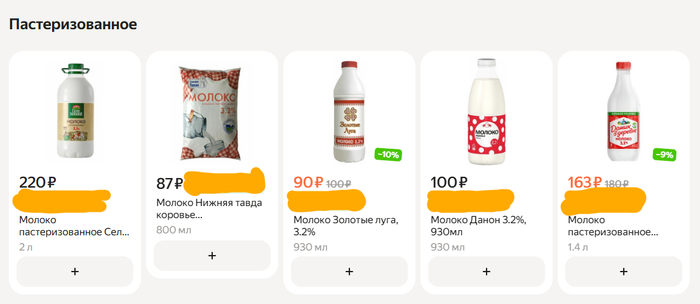
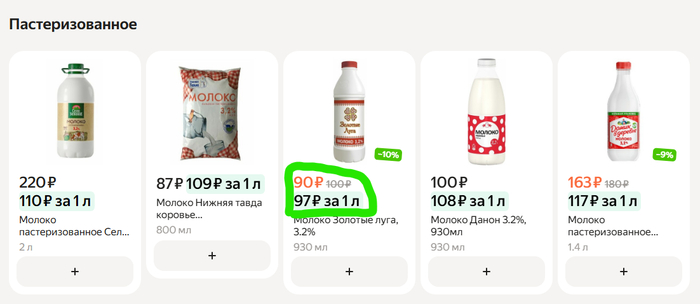
1) Unequal volumes. Ohhh, this is huge in the dairy section. What do you think is the better deal — 800 ml, 930 ml, 1.4 liters, or 2 liters of milk? The following images illustrate exactly this:
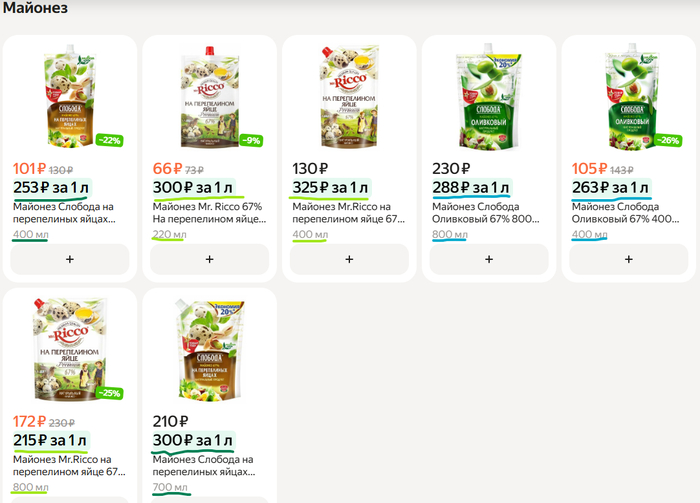
2) The bulk effect. It seems like a larger package should be a better deal. But this doesn't always work. As a result, the consumer may buy more product at an unfavorable price — a double blow to the wallet.
3) Promo packaging. "+10% free" on a bag of chips or coffee — the actual cost per gram stays hidden.
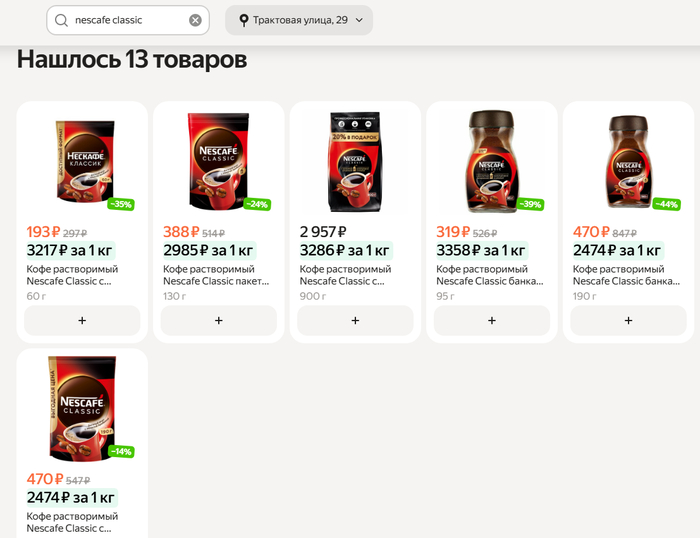
4) Sale blocks. A product in a "special promotion" can actually cost more per unit than a similar product without the promotion, if you don't count grams and milliliters.
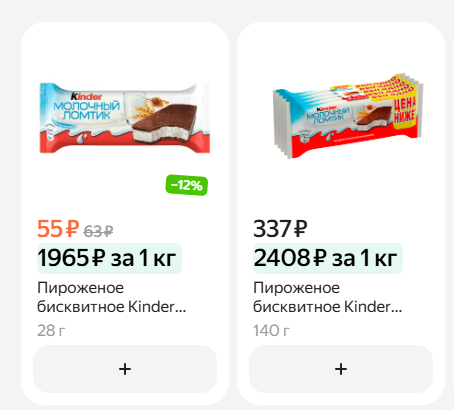
How zaKilo Bridges the Gap
While the unit pricing bill gathers dust in government offices, zaKilo takes on all the work of calculating the price per kilogram or liter — right in your browser. The extension automatically reads the weight and volume of a product from the page, does all calculations locally, and displays a clear label showing the unit price next to the regular price.
— No manual calculations: you don't need to remember formulas or compare options manually — everything is ready in one click.
— Uniform interface: zaKilo displays unit prices in the same place and in the same style across all supported websites, saving you from hunting for tiny print.
— Real savings: you can immediately see which packaging is the better deal, and you won't overpay for "promo packages" or oddly sized products.
— Simple integration: the extension already works on major grocery delivery services (Auchan, Yandex.Market, Perekrestok, Pyaterochka, and others) — just install and compare.
zaKilo bridges the gap between legislators and real shoppers, taking the fight for fair pricing to a practical level.
How Can You Help?
1) Suggest your ideas for improving the extension — I always strictly welcome this.
2) Help with design — on some websites there's such an abundance of numbers and text that adding the per-kg price makes things hard to read, in my opinion. It would be great to develop some kind of universal layout for displaying both the price and the unit price, making it easier to compare products and also easier to integrate the extension on new websites.
3) Currently the extension shows the price per whatever unit is listed on the website — if it's liters, then per 1 liter; if kilograms, then per 1 kg. But in some categories (milk, for example) some products are shown in ml and others in grams. And comparing grams to ml isn't exactly correct either, due to milk's density. I need help identifying which other categories have this kind of inconsistency. I've already made a note about milk, but I can only guess about other categories.
4) Help with development
You can join the project discussion in the Telegram group.
FAQ
What is this article about in one sentence?
This article explains the core idea in practical terms and focuses on what you can apply in real work.
Who is this article for?
It is written for engineers, technical leaders, and curious readers who want a clear, implementation-focused explanation.
What should I read next?
Use the related articles below to continue with closely connected topics and concrete examples.