How I Pulled Myself Out of the Infinite Feed
A personal experiment in digital detox: by moving the phone to another room at night and avoiding all social media before noon, the author gained extra hours of focused work and broke free from the dopamine-driven scroll cycle.
"Just a Minute on Instagram" — Fifty Pages Later
I wake up, reach for my phone, pop into Instagram "for just a minute" (the banned social network, you know the one), and blow my nose into memes, news, reels, comments. Forty minutes later I already need to get ready, didn't have time to brew coffee, my head is buzzing — and I haven't written a single line in my document.
Mornings like this repeated more often than I'd care to admit out loud. At some point it became obvious: if I immediately feed my brain fast "sugar" from the feed, it then turns up its nose at any "broccoli" — from complex texts to long client emails.
The Experiment: Leave the Phone Hungry
I declared a week-long test. The rules were like a board game:
- The phone sleeps in another room. The alarm clock is a good old cheap beeper.
- No social media, email, or news sites before noon. Only phone calls allowed if something's urgent.
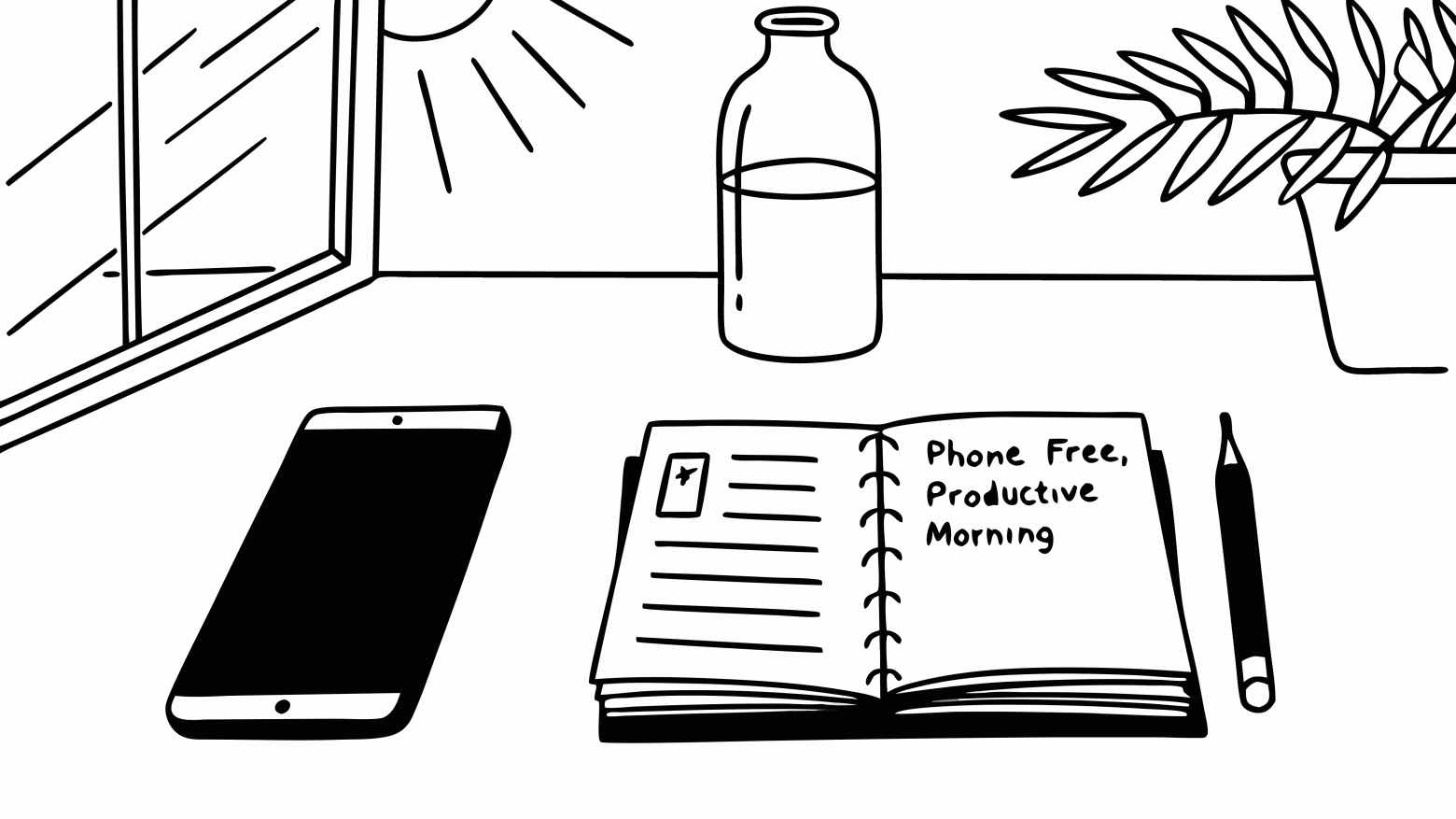
- The main task of the day goes first on the list. I put a sheet of A4 paper on the desk with three items: "do these, and the day is already worthwhile."
- Coffee only after the first solid one-hour work session. No syrups and no TikTok with the cup.
- A short workout + a glass of water instead of zombie-scrolling. Tested and confirmed: cold water on the face wakes you up more effectively than notifications.
Day One
Honestly? It was strange. I kept wanting to "check if the world collapsed without me." At 7:30 I sat down to write copy for a client. At the 20-minute mark, my hand instinctively reached for the invisible phone. I forced myself to finish the paragraph — and was surprised: the process isn't as painful as it seemed under the glow of the screen.
Day Three
The morning went quietly: shower, water, notebook, work. At 10:45 I caught myself thinking I'd finished half a presentation that I usually stretched until lunch. More energy than after a double espresso. I only looked at the cat meme series at 12:15 — and enjoyed it twice as much: the brain is "hungry," so the pleasure is more vivid.
Week Results — Numbers and Feelings
Over seven days of "quiet mornings," the stats came out like this:
- Average "focus session" grew from roughly 17 to 25 minutes.
- Number of tasks completed before 1:00 PM jumped from three to five (out of eight planned).
- The second coffee "to stay awake" disappeared: I used to reach for the cup around 2:30 PM, now one dose after the first hour of work is enough.
- Internal guilt level for "wasted the morning" dropped from a solid 7/10 to a modest 2/10.
Subjectively — less inner restlessness. In the evening I can binge YouTube with a clear conscience, because I know the most important things are already done.
How to Try This If Life Is Noisy
- Afraid of missing an important call? Turn on Focus mode on your phone with exceptions for select contacts.
- Need to respond to clients in the morning? Set aside a 10-minute "communication window" and get out immediately. The key is not to slide back into the feed.
- Kids demanding cartoons? Try the "quiet morning" not from the moment you wake up, but from when the child is already at kindergarten or school. The same first 3-4 hours of your personal active time.
Takeaway
No magic — just fewer "candies" for the brain while it's still drowsy. "Quiet mornings" gave me the feeling of being in the driver's seat and a couple of extra hours of pure focus. I'm not calling on everyone to follow a template, but try at least three days: move the phone out of the bedroom and give yourself a chance to wake up without screen flashes. Then tell me how it went.
FAQ
What is this article about in one sentence?
This article explains the core idea in practical terms and focuses on what you can apply in real work.
Who is this article for?
It is written for engineers, technical leaders, and curious readers who want a clear, implementation-focused explanation.
What should I read next?
Use the related articles below to continue with closely connected topics and concrete examples.