One of the Last Surviving Soviet ES Mainframes Will Be Donated to the Polytechnic Museum
After nearly 40 years at the Central Economic-Mathematical Institute in Moscow, one of the last surviving ES 1055M mainframes — a machine with roots in East German engineering that played a role in the birth of Russia's internet — will be transferred to the Polytechnic Museum.
A Soviet Mainframe's Journey to the Museum
After more than a decade of preparation, the Polytechnic Museum will receive one of the last surviving ES 1055M computers. The machine has been preserved for nearly 40 years at CEMI — the Central Economic-Mathematical Institute — in Moscow.
The History of CEMI
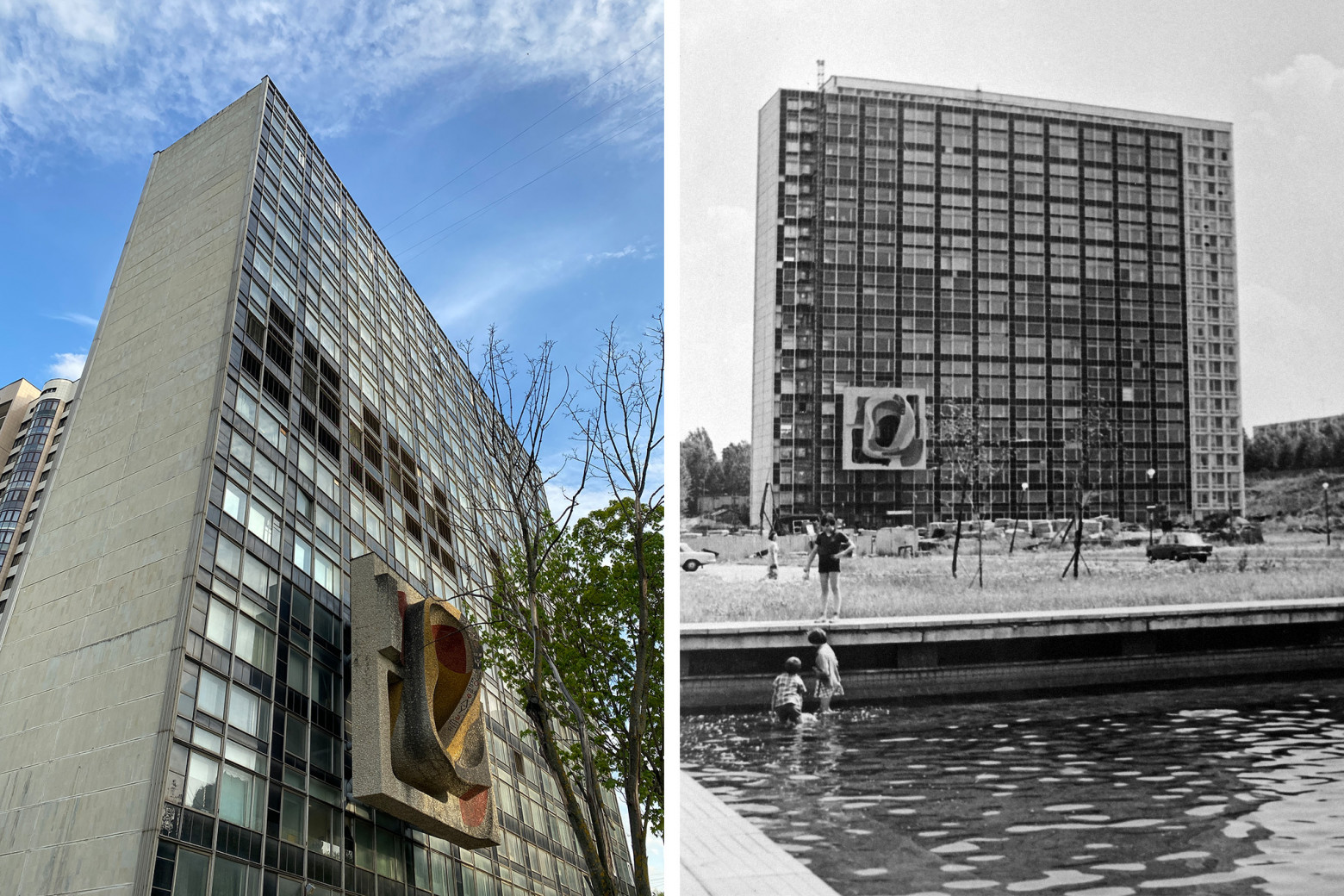
The Central Economic-Mathematical Institute was established in 1963 under academician Vasily Nemchinsky, building on a 1958 laboratory focused on economic-mathematical methods for supporting the USSR's planned economy. Initially housed in an Academy of Sciences building on Lenin Prospect, CEMI later relocated to a former school building on Butlerov Street, where engineers installed an Ural-14 computer in the gymnasium.
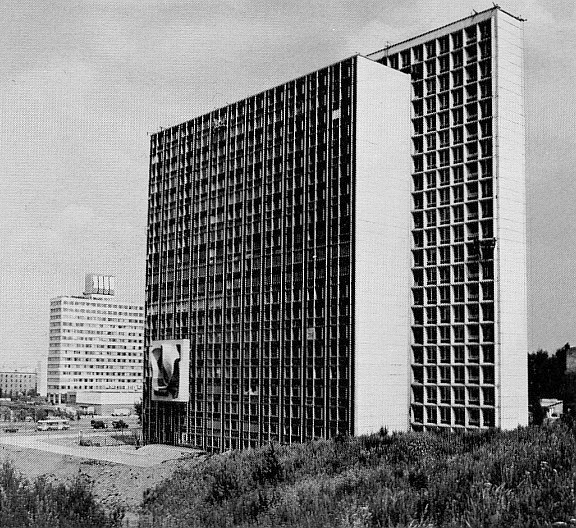
Construction of a purpose-built facility began in 1966, designed by architect Leonid Pavlov. Muscovites know the building as "the house with an ear" thanks to a sculptural Mobius strip on its facade. The building featured a cooling pool with fountains — not decorative, but functional, designed to cool the massive computing equipment inside. The modernist structure comprised two unequal volumes: one for personnel, another for the computers.
By the late 1970s, when construction was finally complete, computer miniaturization had already rendered much of the vast machine hall unnecessary. The spacious halls had to be converted into classrooms and offices.
The ES 1055M: Specifications
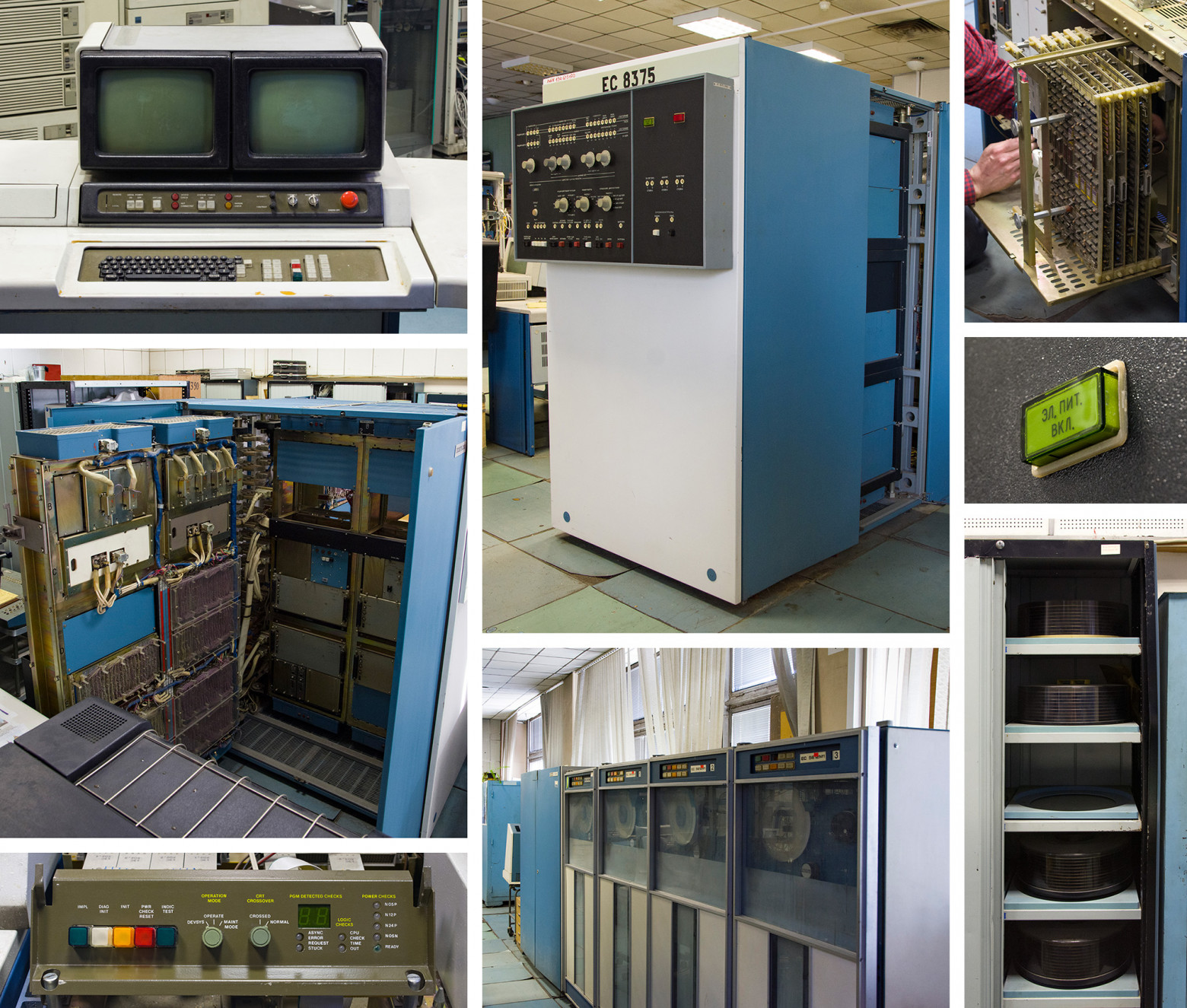
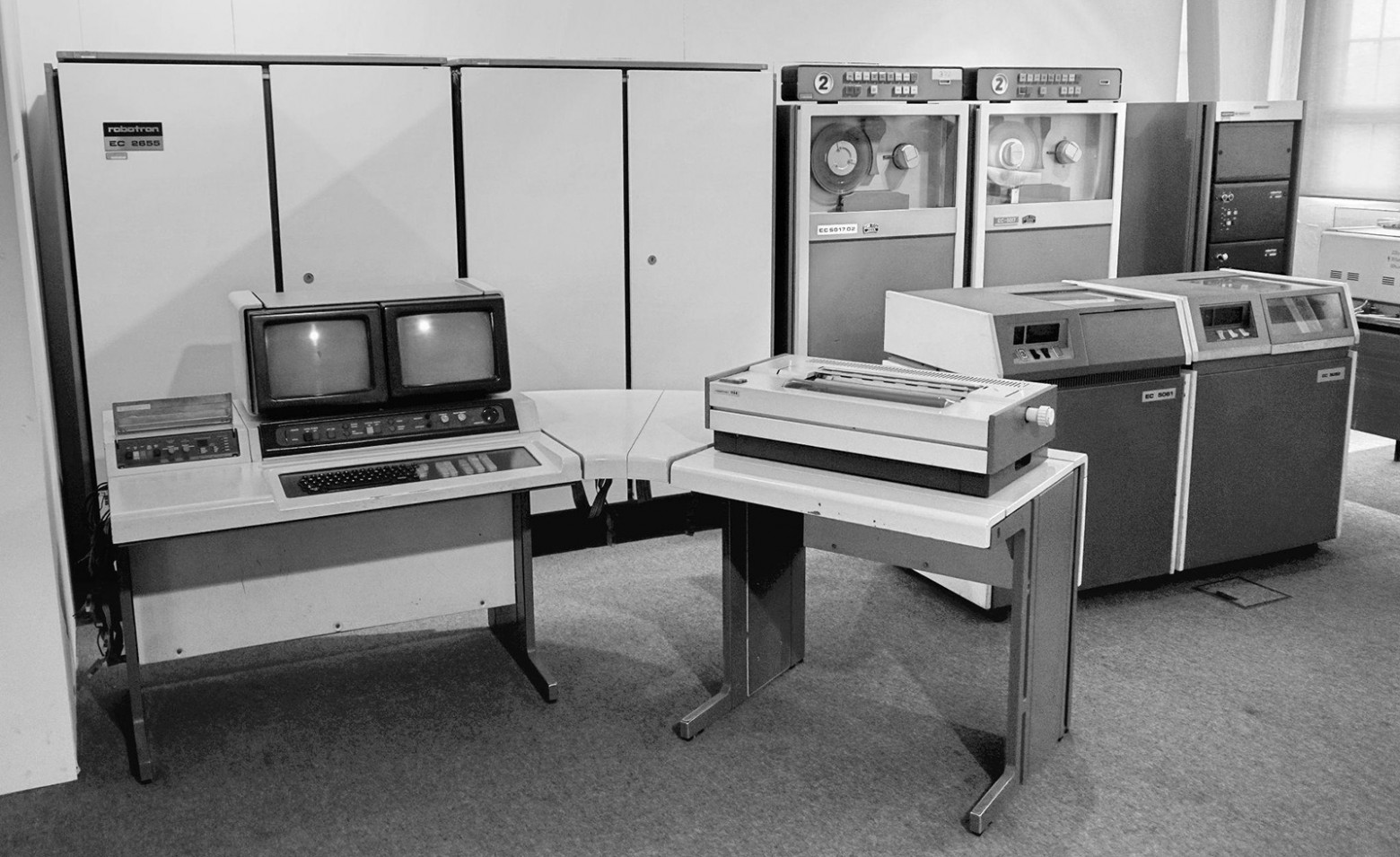
The ES 1055M was, paradoxically, "the most non-Soviet Soviet computer." Its core components were developed by the East German firm Robotron in Karl-Marx-Stadt (now Chemnitz), with peripherals manufactured in Bulgaria. Soviet specialists participated in the overall system architecture.
Technical specifications:
- CPU performance: 450,000–600,000 operations per second
- RAM capacity: 1–2 MB
- I/O throughput: up to 5 MB/s
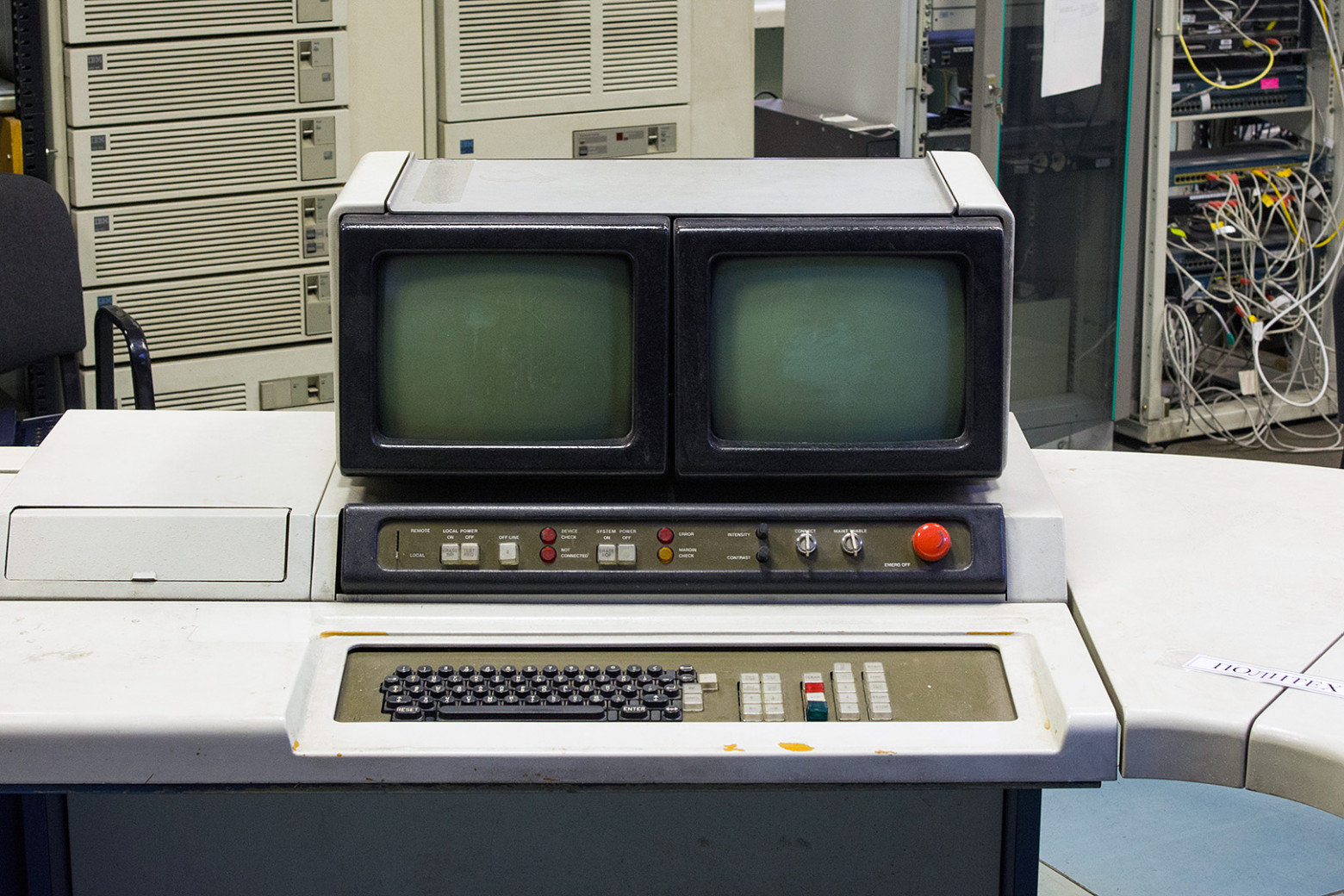
- Control console: ES 7069 with dual CRT displays
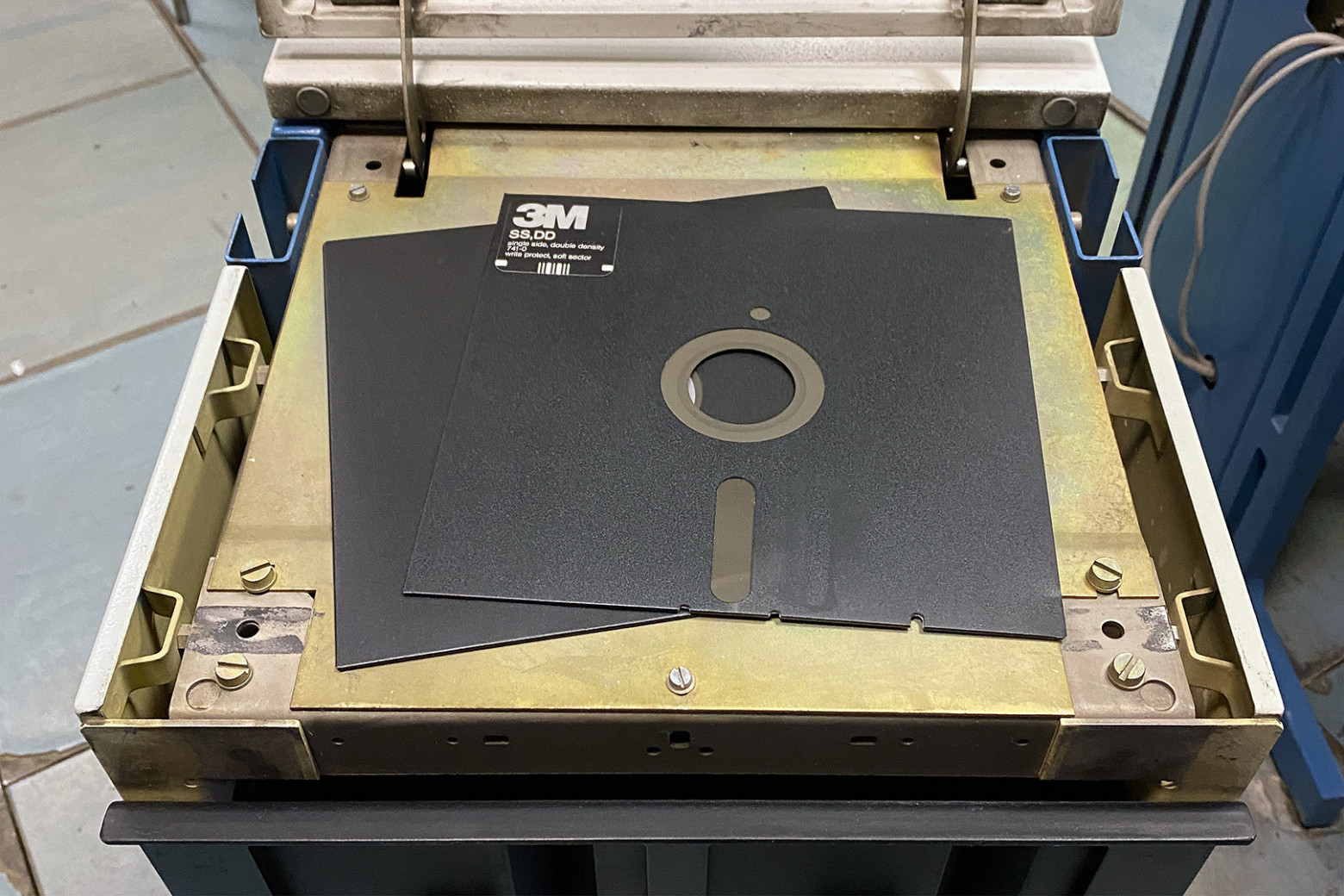
- Storage media: 8-inch floppy disk drive integrated into the control panel
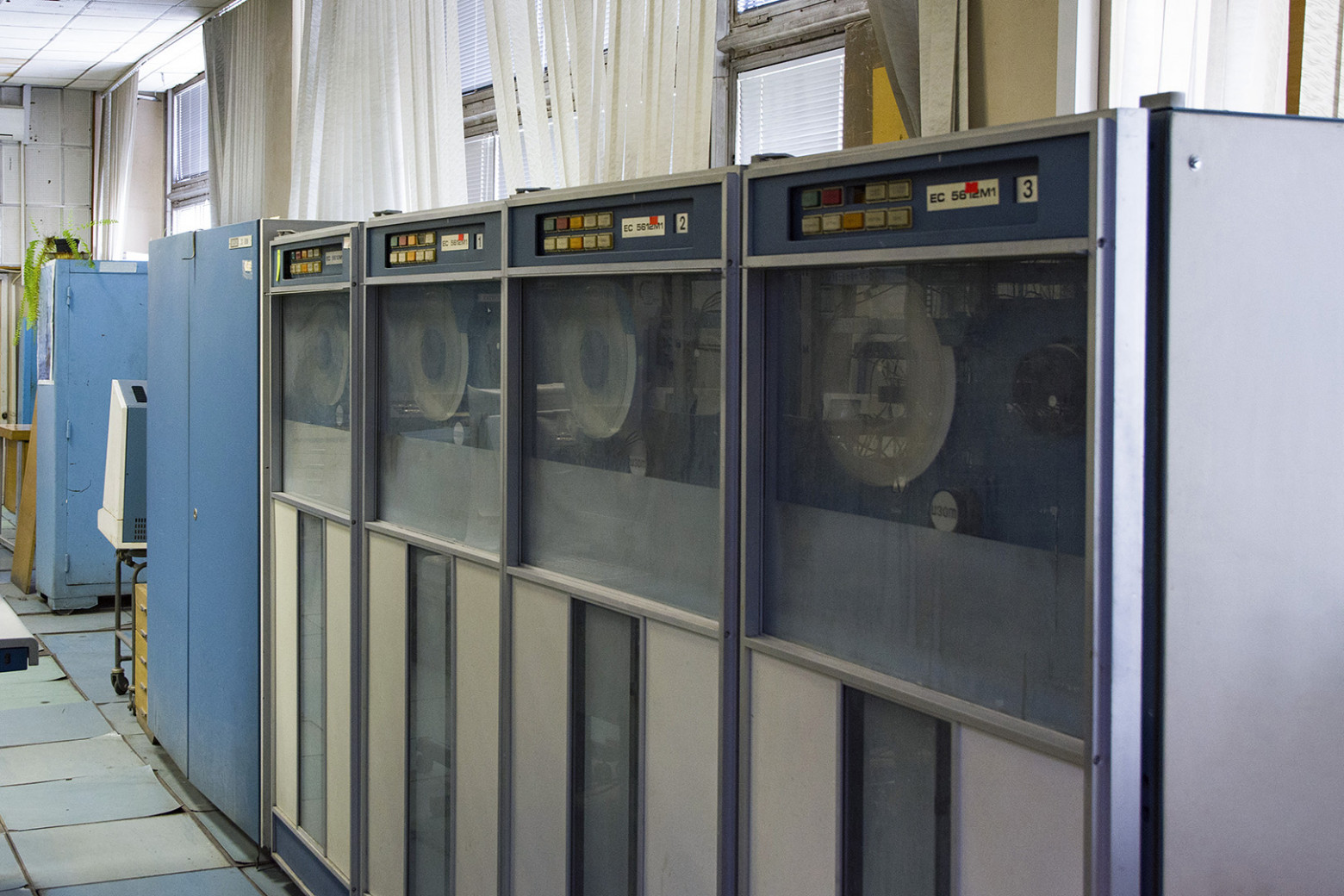
- Tape drives: Four ES 5612M1 magnetic tape units, each larger than a refrigerator
- Hard drives: Eight units, each weighing approximately 400 kg
- Interactive terminals: ES 7927.01M
Though slightly slower than its predecessor, the ES 1060, operators praised its German reliability. The ES 1060 required weekly repairs, while the ES 1055M operated without failures.
Computing Evolution at CEMI
The facility's computing equipment evolved through several generations:
- Ural-14: The initial installation in the converted gymnasium
- ES 1022: The first successor, producing 80,000 operations per second
- ES 1060: A more advanced machine with virtual memory support, double-precision calculations, and automatic command retry on errors. It shipped with ES 5612M1 tape drives and dual ES 5067.02 hard disks boasting 200 MB capacity — exceptional for the era
- ES 1055M: The final mainframe generation at CEMI
A Role in Russian Internet History
The ES 1055M played a crucial and little-known role in the birth of Russia's internet. In 1991, engineers installed an additional teleprocessing unit — the ES 8375, developed in Kazan, which was the country's first industrial telecommunications equipment sample.
Through modems and dedicated telephone lines, a network connection was established between CEMI and the Institute of Organic Chemistry. This formed part of SUEARN — the Soviet segment of the European academic research network. Together with the Institute of Space Research, these three permanent internet nodes entered the .ru domain zone.
By the mid-1990s, network support migrated to an IBM 9370 mainframe, with the ES 1055M serving as a backup until 2000, when Sun Microsystems equipment finally replaced it.
Why the Machine Survived
The ES 1055M occupied the ninth floor of the building. Some components had been hoisted through windows by crane during the original installation. Ironically, the financial constraints of the 1990s proved protective — proper removal without disrupting CEMI's active systems would have required substantial funds that simply weren't available. Staff powered it down and left it in place alongside newer equipment.
The People Behind the Machine
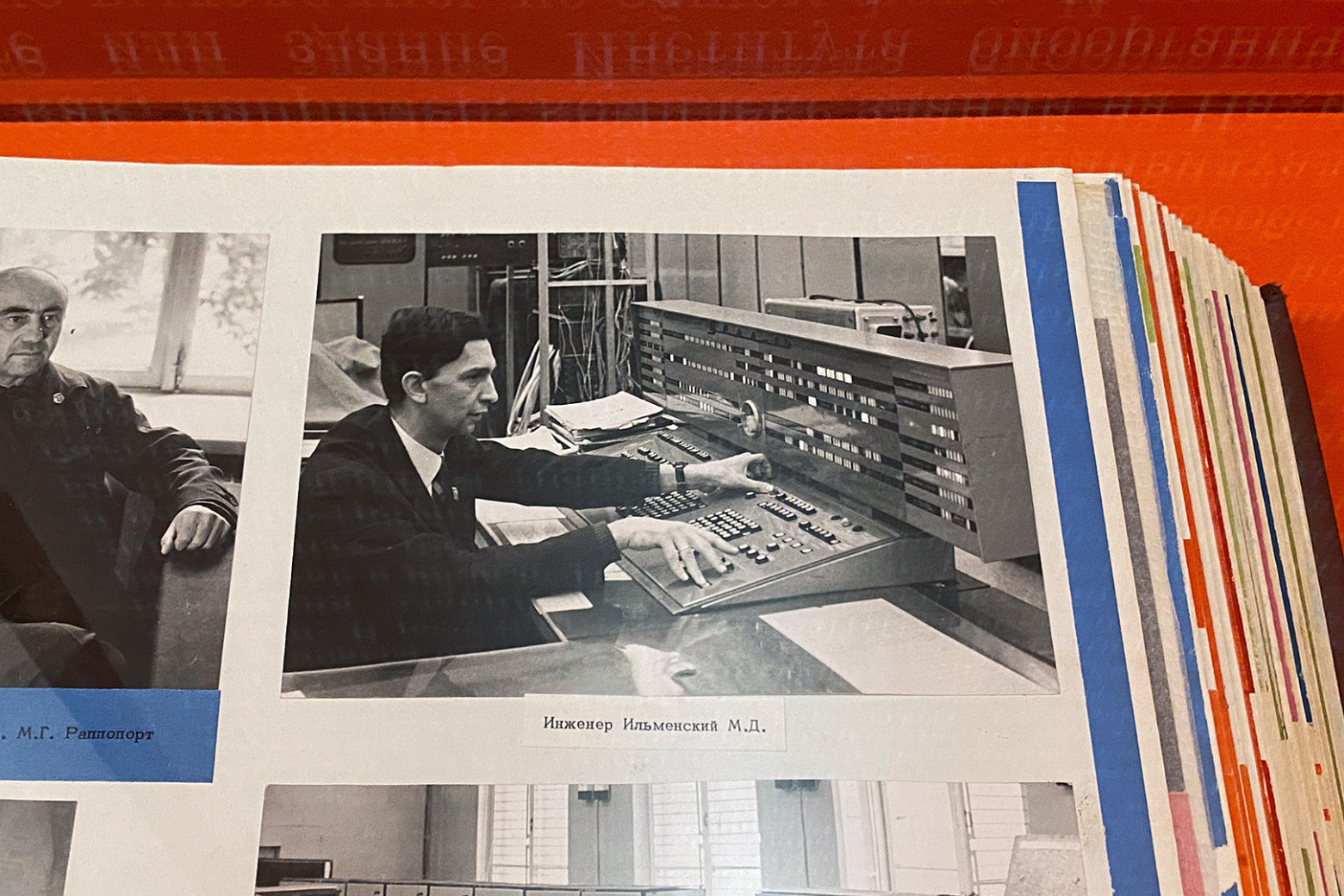
The Department of Economic Informatics has been led since the mid-1960s by Mikhail Dmitrievich Ilmensky, a senior scientific researcher and former deputy director who appears in historical photographs operating the Ural-14. Many of the support engineers, programmers, and operators who maintained these systems are still employed at the institute.
The Careful Dismantling
Restorer Maksim Tuluzakov and author Alexei Butyrin undertook a meticulous documentation and dismantling process:
- Every cable connection was photographed before disconnection
- All detached wires and cables were labeled
- Equipment beneath the false floors was carefully disconnected (machine halls of the era used standard 50×50 cm duralumin tiles over concrete)
- Separating the control console ES 7069 alone took over five hours
- The ES 8375 teleprocessing processor required another five hours
The painstaking approach was designed to preserve authenticity and maintain the potential for future reactivation or display.
What Comes Next
The Polytechnic Museum and CEMI's engineering service will coordinate a multi-stage transportation to archival storage. The museum has promised future updates regarding the ES 1055M and additional computing equipment that may follow it into preservation.
FAQ
What is this article about in one sentence?
This article explains the core idea in practical terms and focuses on what you can apply in real work.
Who is this article for?
It is written for engineers, technical leaders, and curious readers who want a clear, implementation-focused explanation.
What should I read next?
Use the related articles below to continue with closely connected topics and concrete examples.