What I Learned from Counseling 100 IT Professionals
A psychologist shares seven key patterns observed from counseling about a hundred IT professionals, revealing how the industry's rational mindset shapes personal struggles with productivity guilt, relationships, and identity.
Sergey Maximov, a psychologist, shares observations based on counseling approximately one hundred IT professionals over three years. This article is a generalization of life stories, experiences, and reflections from colleagues in the IT world — at a level of candor only accessible through a psychologist's role.
Sample characteristics:
- 100% IT professionals, mid-level to team lead
- 80% men / 20% women
- 60% based in Russia, 40% abroad
- Age range: 25–40 years
- Average engagement: 4–8 sessions

Finding #1: Almost Nobody Actually Works 8 Hours
The real working day lasts 4–6 hours, yet 95% of employees demonstrate or imitate busyness for the full workday. Systematic procrastination occurs in 70–80% of IT professionals.
The paradox: everyone is convinced they work less than their colleagues, even though objectively everyone works roughly the same amount. This breeds anxiety and guilt.
The explanation: the average person is capable of active mental labor (constructing mental models) for about 4–5 hours a day. Programming, as work with abstractions, requires intense mental effort, which explains these results.

Finding #2: Excessive Rationalization of Irrational Domains
The rational approach that works so well at the office often spills over into personal life, relationships, and intimacy — areas where an emotional approach is far more effective.
Examples of paradoxes:
- Copying the lifestyle of a "successful" person doesn't guarantee happiness (seen in ~10% of clients)
- Objective well-being (good job, salary, possessions) doesn't ensure subjective well-being (~15–20% of clients)
Consequences: excessive rationality makes it harder to self-diagnose fatigue and creates problems in communication.
Finding #3: Searching for an Algorithm Instead of Having an Honest Conversation
About 35–40% of clients struggle with communication. The problem isn't fear or ignorance — it's an over-focus on structured, well-reasoned information.
The core issue: the emotional component creates the context for communication. Ignoring it in an attempt to avoid "noise" paradoxically increases misunderstandings.
The result: ~20% of clients have heard phrases like "You're a robot!" or "You're a soulless machine!" from their partners. They often don't realize their partners experience the same thing in conversations with them.

Finding #4: An Anxious Drive Toward Correctness and Efficiency
Perfectionism in IT takes two forms:
- The correctness criterion — conforming to the rules of a system (a contract, a service, a relationship, a worldview)
- The efficiency criterion — an optimal ratio of benefits to costs
The problem: the anxiety and anguish of performing a good but imperfect action significantly affects quality of life. This is seen in moderate form in 15% of clients, and approaches obsessive levels in 5%.
The paradox: while declaring the value of equal relationships, many choose a relationship format and follow it unilaterally, ignoring their partner's opinion.
Finding #5: Justifying Irrational Desires with Rational Arguments
A person has a desire (an emotion) that they consider irrational. Instead of acknowledging the desire, they search for logical justifications.
Example: a client deep in debt was assembling a powerful computer, justifying it with the need to study machine learning and neural networks. In practice, he played games and watched streams.
Frequency: at least 40% of clients have encountered this phenomenon. In other demographic groups, it occurs about half as often, since they find it psychologically easier to simply say "I want it."
The core issue: denying one's own emotionality and irrationality creates a host of problems.

Finding #6: Intellect as the Only Measure of a Person
At least 20% of clients struggled to answer these questions:
- "What do you value in yourself besides intellect?"
- "Can a person be interesting if their intellect is mediocre?"
- "What quality is comparable in value to intellect?"
The risk of undiversified self-esteem: if all self-worth depends on intellect, any threat of "no longer being smart" becomes an existential crisis.
Cognitive bias: working among the intellectual elite, a specialist may feel "stupid" even though objectively that's untrue. Most know about cognitive biases but don't apply that knowledge to themselves.
Impact on behavior: fear of failure in new endeavors (where the risk of flopping is higher) limits attempts at growth. This creates conditions for "stagnation" — commonly seen in colleagues aged 33–37.
Finding #7: Responsibility Zone Exceeds Capability Zone
There exists a cycle: uncertainty → seeking knowledge → reducing one uncertainty → discovering greater uncertainty → new anxiety.
The problem: the belief "I know = I can influence = I am responsible" leads to taking on responsibility for situations beyond one's control (politics, military conflicts, etc.).
The formula: the shortened version of this belief is "I can = I must." It occurs in ~20% of clients. This belief is hard to detect behind logical arguments, but it heavily impacts quality of life.

Conclusion
Despite the fact that no two people are alike, social groups demonstrate common patterns of thinking and behavior. This article is a generalization of the author's experience with a specific sample and serves as food for thought about risk areas.
Final thought: "Unfortunately, a book titled 'How a Programmer Can Avoid Wasting Their Life' doesn't exist, but it will probably be written based on the material of your life :-)"
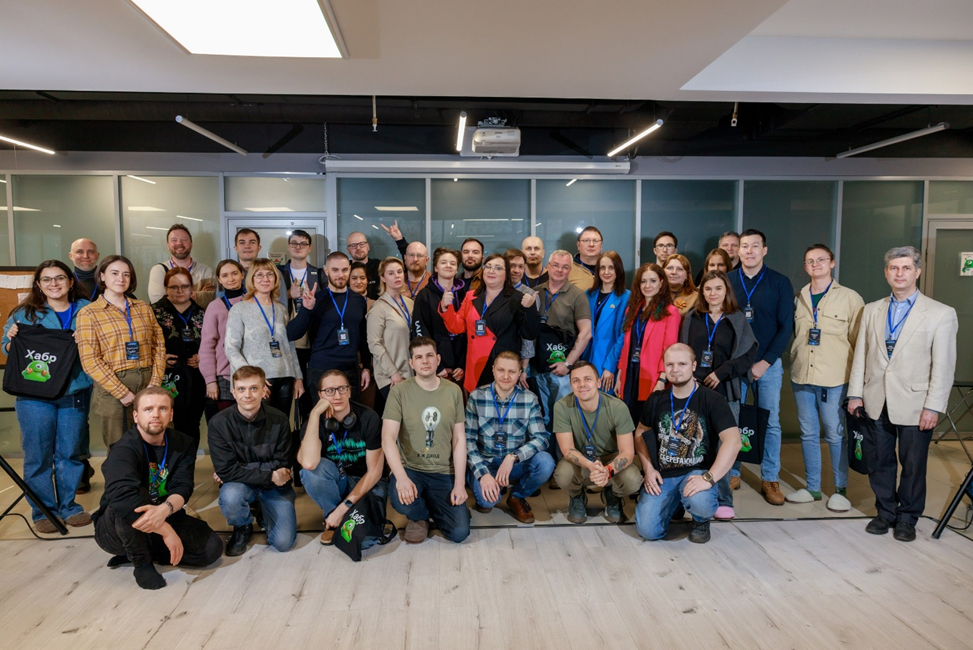
The author expresses gratitude to the Habr team for the opportunity to publish and for the author event that inspired writing this article.