The Main Secret Behind Programming Language Success
A satirical investigation into why truly successful programming languages seem to share one surprising trait among their creators. Spoiler: it involves facial hair.
Once upon a time, when computers were still big and programs were small...
Actually, no, not that long ago.
Once upon a time, when laptops didn't have built-in Wi-Fi yet, and phones didn't have Bluetooth, and many of today's IT professionals hadn't even been born.
In short, somewhere at the very beginning of the century (around 2002 or so), on the of those days (I think it was called LiveJournal back then, "but don't quote me on that!"), an interesting article was published in which the author, while examining various programming languages, discovered an amazing pattern and accidentally uncovered the main secret behind the popularity of any programming language.
I couldn't find the original article now — only broken links to various old resources. But this information is so important that we can't let the secret be lost. Right now only the old-timers remember it, and not even all of them — very few people remember this at all. Some use this secret, but purely intuitively, while the younger generation doesn't know about it at all. And it matters!
Long story short, I recently had the idea to verify the facts from that article and share this secret with my fellow professionals. The result: first, everything checks out on an even larger scale (you'll see for yourselves!), and second, I made an amazing discovery that once again confirmed all the conclusions of the original article (I'm shocked myself!).
Those with weak nerves, please step away from your screens — we're starting.
But first.
Disclaimer
This article is meant as a joke!
Professors of algorithmic languages departments (my respect), programmers who know only one language (the best one, of course!), and people who can't take irony — please don't be offended!
If you feel that the author is an idiot unfair to any particular language, please come back here and re-read this disclaimer from the beginning!
There, we've sent all the random people into recursion, time to begin.
Second Warning
There will be many, very many images below from Wikipedia.
So Then,
as you all know, there are a great many programming languages. Some are successful and popular, some are not. New ones keep appearing, and you'd think each successive one should be better and more popular than the previous ones, but it's not that simple. The anonymous author of the original article once managed to find the secret. Let's follow in his footsteps (careful, watch your step and don't step in a core dump — C++ has been working around here) and find this pattern.
There are many different language popularity rankings — by search mentions, in job postings, conference attendance, lines of code on GitHub, or developer salaries. We'll take the TIOBE index as an example and look at what's on top. Here's the top of the list as of last night:
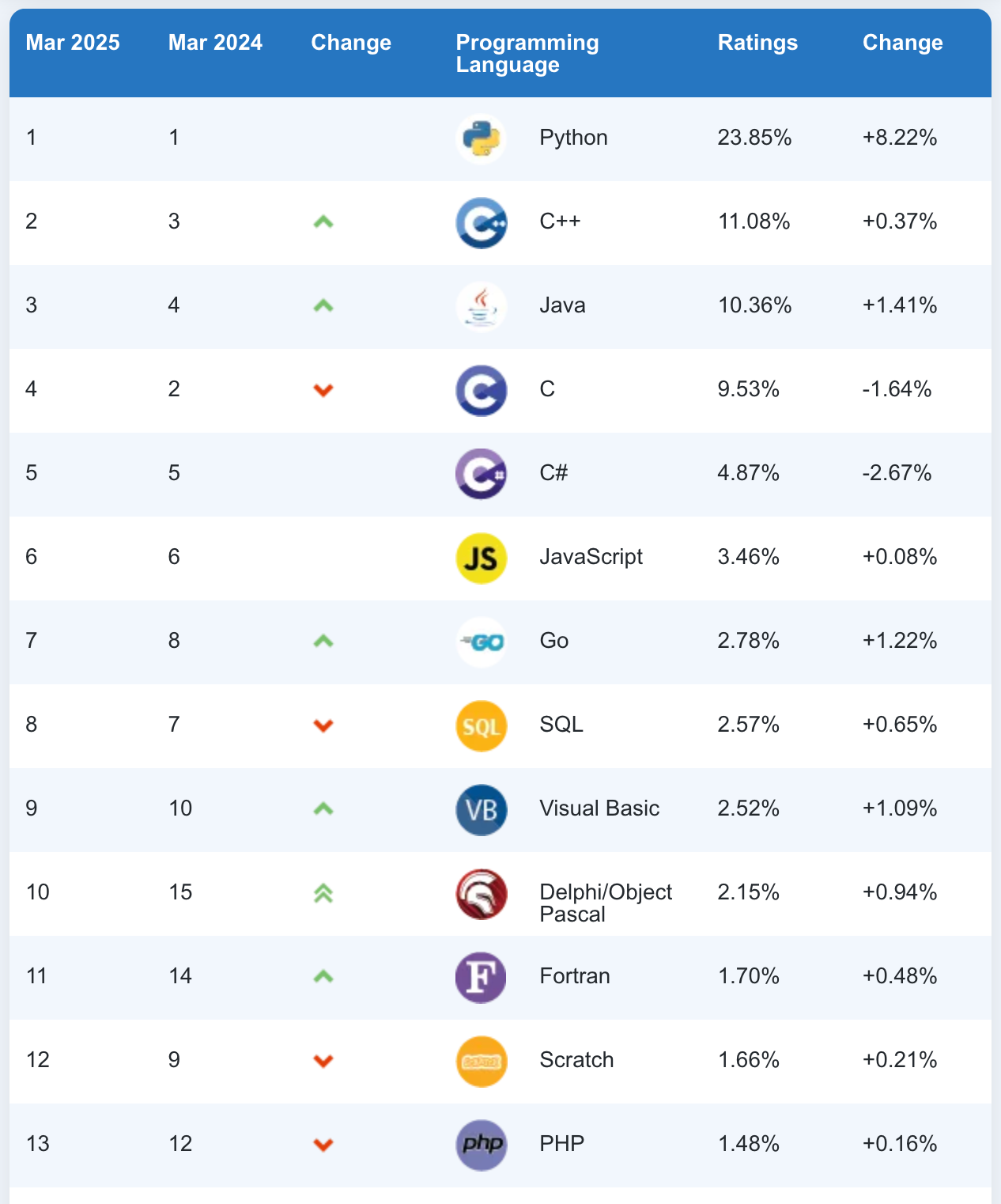
The leaders here are usually the same every night: Python, C++, C, Java.
Python
A wonderful language (especially if you know how to use it) — simple, clear, convenient. Three pages of Go code can be written as a one-line list comprehension.
Whatever you write, it will most likely work and possibly even correctly. Its popularity and first place are well deserved.
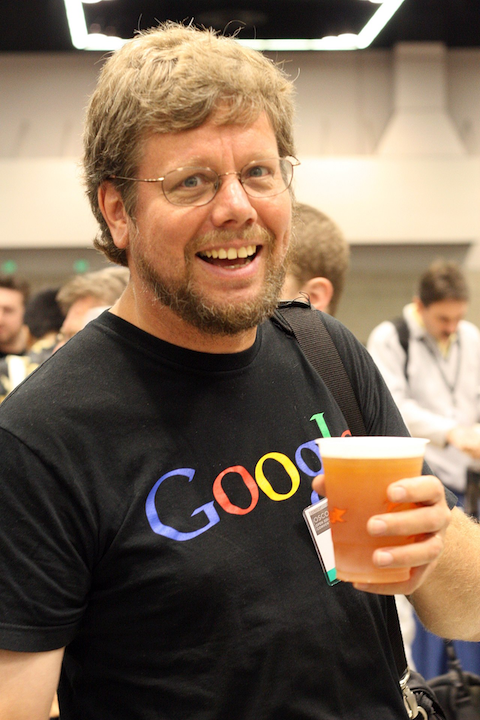
And here is the author of this wonderful language, Guido van Rossum:
C++
Also one of the pillars of all modern IT — incredibly fast (I'm obviously not talking about compilation), simple (the author's book has a mere 1,800 pages covering just the basics), and safe (careful, core dumps!).
No, really, it's an excellent language. If you don't like C++, you just haven't finished reading. The language author has several books, all enormous highly recommended.
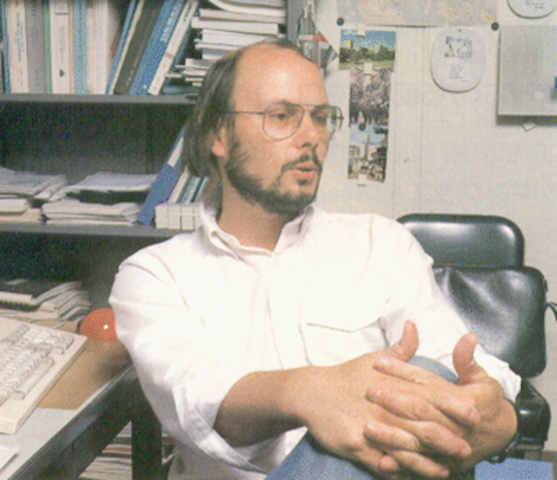
The creator of C++ — Bjarne Stroustrup:
C
The predecessor of C++ — not as expressive and convenient and the books are shorter, but an entire epoch in programming. The amount of software written in it is too vast to list — you know it all yourselves. Its syntax was inherited by many other languages on this list. More than 50 years in service and not going anywhere.
Here are the distinguished authors of the language, Ken Thompson and Dennis Ritchie, in their youth (and this, mind you, is 1973!):
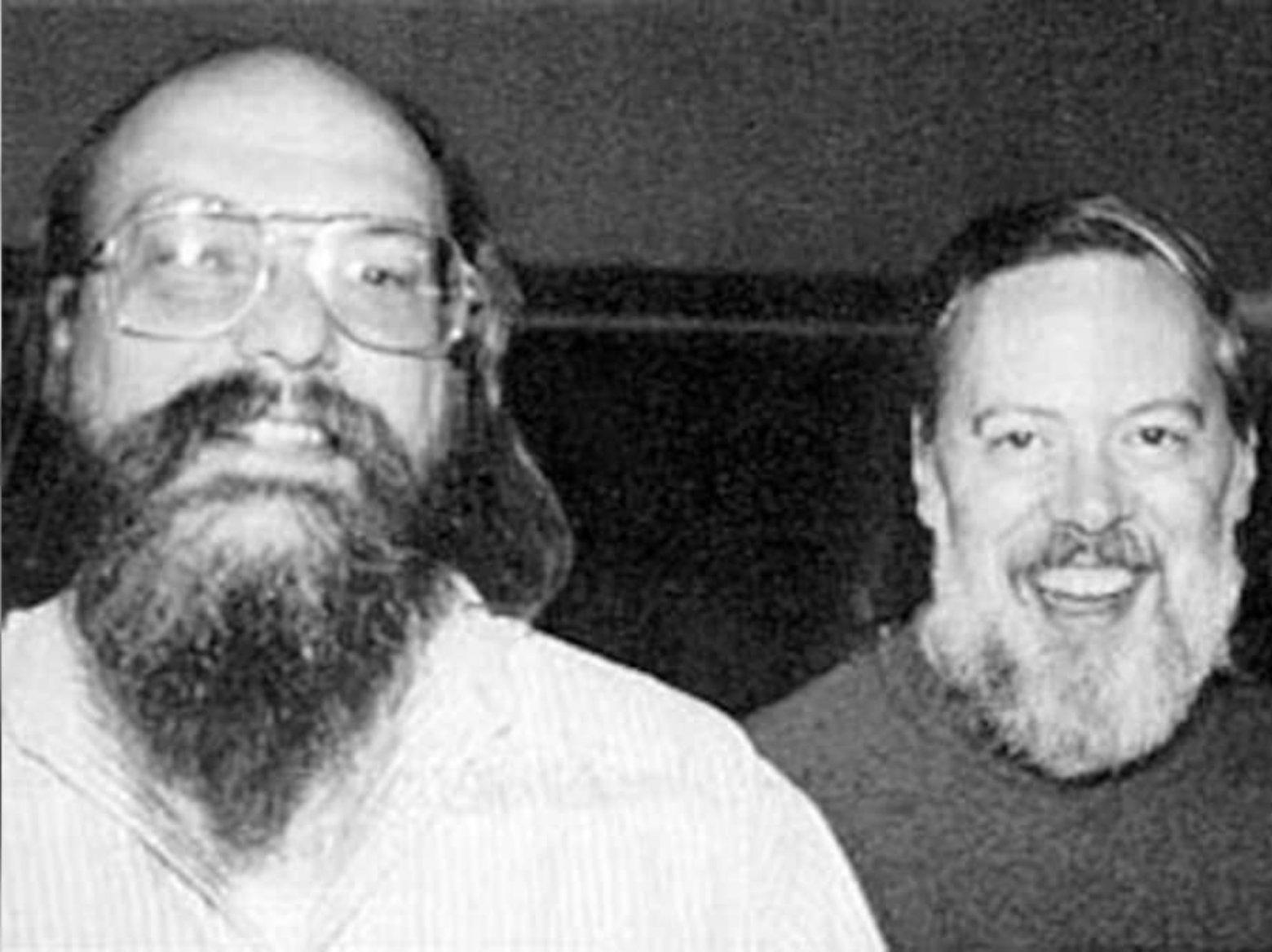
By the way, pay attention...
This photo was taken more than half a century ago (!!!), and the guy on the left is not only still alive and looks about the same, but is still active and energetic, and appears on this list twice.
Java
By many rankings, the most popular language in the world.
Billions of mobile devices, banking apps, SIM cards, web services, cross-platform applications. Syntactically very similar to the two previous languages.
The developer of the first version of the language, James Gosling:
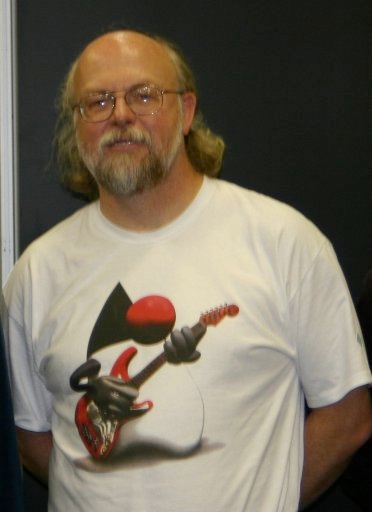
Have you noticed something in common yet?
Let's keep looking.
With a big gap behind the four generally recognized leaders comes
C#
When Java became popular, a certain well-known company discovered a "fatal flaw" in it (old-timers remember).
Java wasn't created by them.
So this company decided to make their own Java, with blackjack and delegates, with their own proprietary tools, runtime, cross-platform (naturally, across this same company's platforms), and so on. Something that would be like Java, but not Java.
Somewhere it supposedly still exists and occupies some niche, but I personally haven't encountered it in about twenty years. And I don't regret it, although I used to write in it.
(Did someone not read the disclaimer carefully?)
The creator of the language — Anders Hejlsberg:

JavaScript
Now here, seriously, watch your step — this language is reeeeally weird in places.
For example:
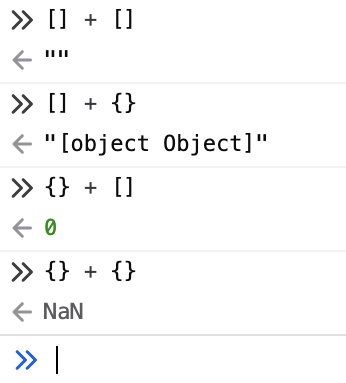
array + array = empty string
array + object = string of empty object
object + array = zero
object + object = a number, but not a number...
The brain of someone raised on Pascal, C/C++, or Java is already boiling.
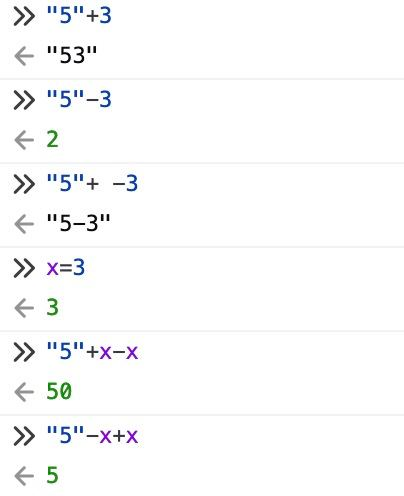
I'm not kidding — press F12 and check it right now in your browser console.
The creator of this "miracle," Brendan Eich, looks at you like

...with absolutely no respect.
And this is now, when it at least works almost identically across different browsers. Before, even that was a real problem. In short, this language also gets a minus.
Scratch
A children's programming language — bright, fun, kids love it, and it instills an interest in programming. Which means the language fulfills its mission perfectly, is widely used in educational courses, and can be counted as a success.
In last year's ranking, it was even in the top 10, and now it's in 12th place.
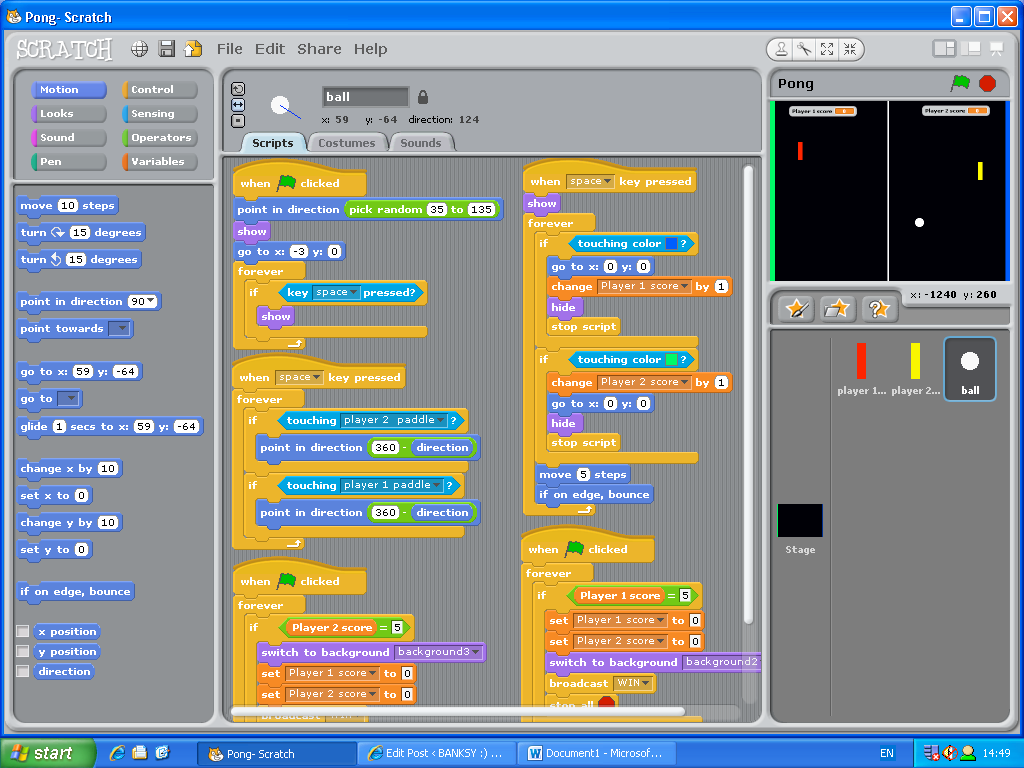
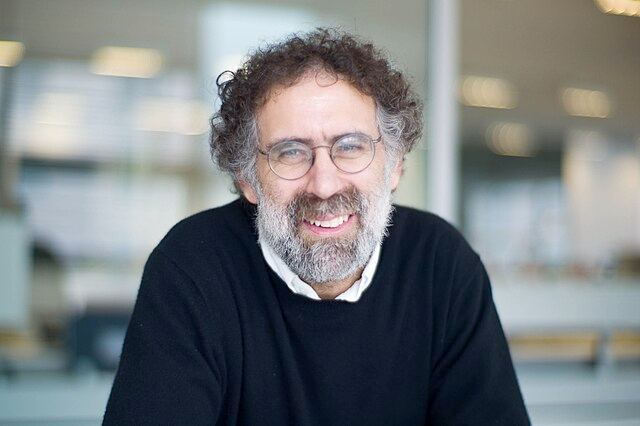
The author — Mitchel Resnick:
FORTRAN
Finally! The only normal language!!
(According to FORTRAN programmers.)
"You don't need to put semicolons everywhere and all those curly braces! Why do you need them when everything is already perfectly clear without them?!"
Yes, I've actually met living FORTRAN programmers.
And even a real FORTRAN developer. Long life to them, if still alive!
A language where matrices are stored in memory by columns, not by rows (heard anything about CPU cache?),
variable types are determined automatically by the first letter of the name (variable declarations? what for?),
and spaces are allowed in identifiers (super convenient — those bracket people never thought of it!).
That famous story when instead of
DO 3 I = 1,4
the code hadDO 3 I = 1.4
and as a result, an interplanetary space probe costing hundreds of millions fell without even reaching orbit.
The first version means"Execute a DO loop from here to label 3 for all values of variable I in the range from one to four,"
while the second means"Assign the value 1.4 to the variable named DO 3 I"
See above — spaces in names are allowed here, and anything starting with the letter D is a floating-point variable!
The language author — John Warner Backus:
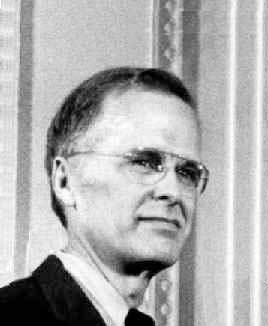
(If you remember Backus-Naur form, that's also him.)
BASIC
Not far behind is the loyal friend and comrade of FORTRAN, good old BASIC:
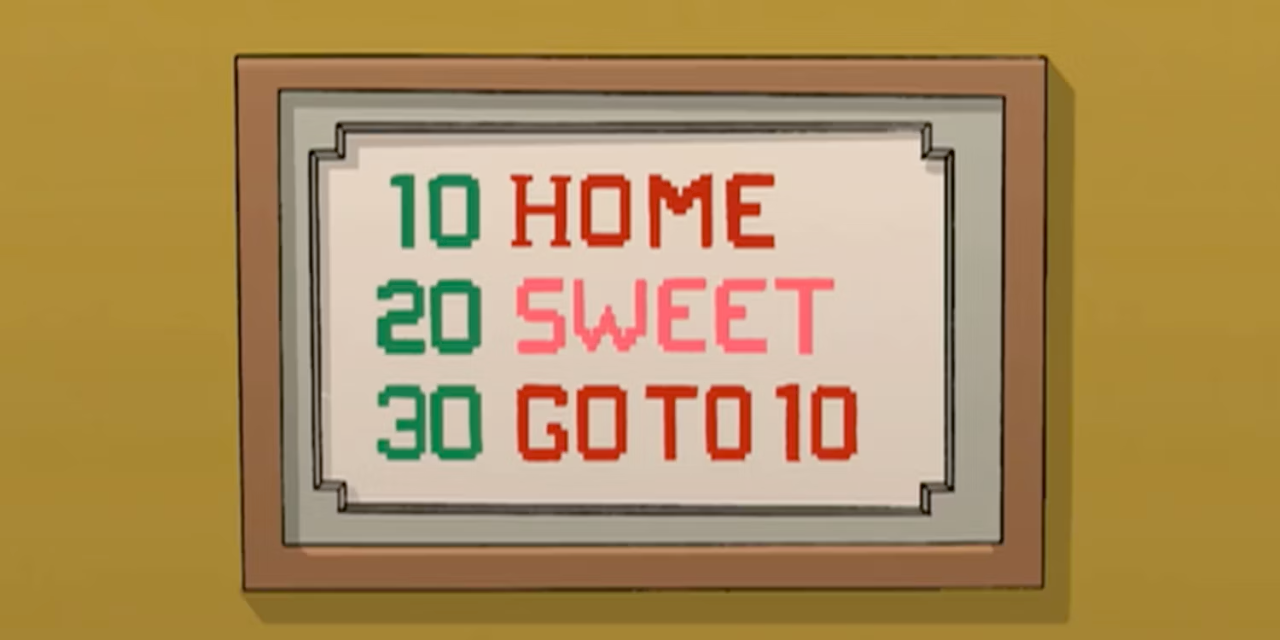
Hit like if you remember where this is from.
And to really make the oldschoolers cringe...
Here's POKE 23755,0 and RANDOMIZE USR 16384 for you.
Yes, I know, I know it's 15616, but that's for the rich folks with a disk drive. I had a tough childhood with Bill Gilbert's tape loaders and a decryptor in video memory...
The developers of BASIC — Thomas Eugene Kurtz (on the left) and John George Kemeny (on the right):
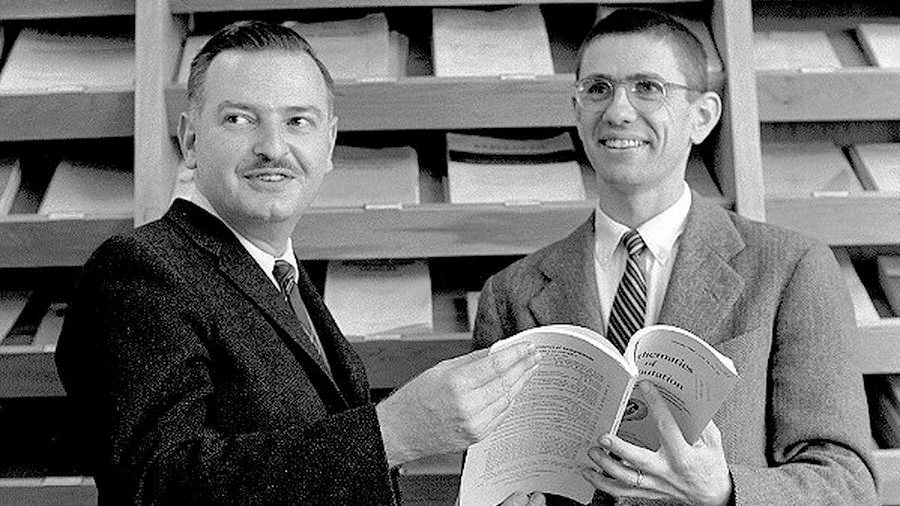
I think everyone has already noticed this obvious pattern.
All the most genuine, worthy, practical, and popular languages were created exclusively by dudes with beards!
And without a beard — you get BASIC, FORTRAN, or JavaScript!
Don't believe it?? Read on.
We've only just begun.
SQL
8th place in the ranking.
A language where you can't write a game, a website, or a mobile or desktop application.
Where you say SELECT COUNT(*), and it goes silent for a month, maxing out the CPU on all replicas of the production cluster.
(Yes, I know what SQL is for — re-read the disclaimer at the beginning!)
Meet Donald D. Chamberlin and Raymond Boyce:


Characteristically, neither has a beard.
PHP
A very popular language among web developers. 13th place in the ranking.
Famous for its security (in case you didn't know, the letter S in its name stands for Security!).
Rasmus Lerdorf:
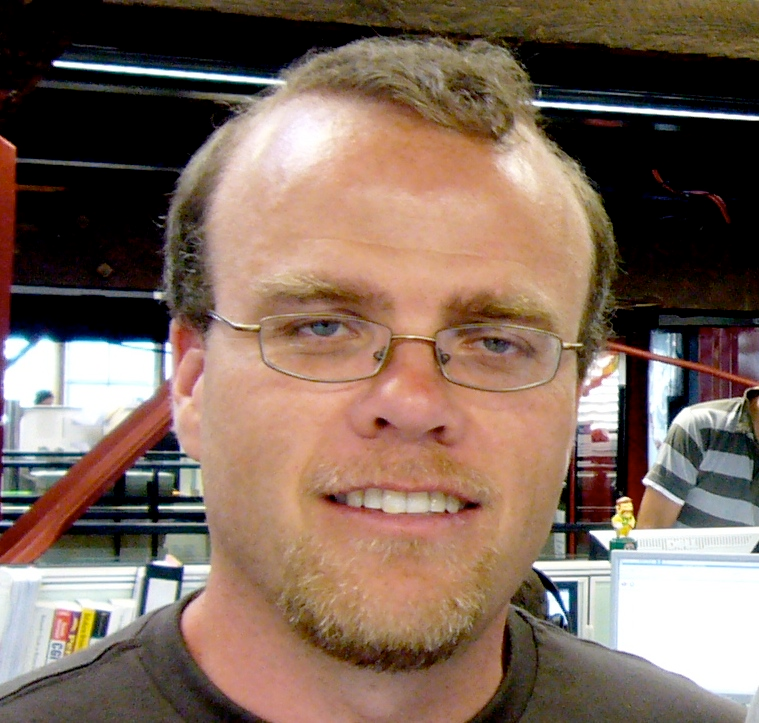
Not quite Thompson or Gosling. But... overall... there is a beard.
And the language is used pretty much all over the internet.
Which can't be said about another once-popular language among web backend developers — yes, I'm talking about
Perl
That write-only language where writing is fun but reading is... not so much.
If you've seen the violent reaction Perl developers have to code written by some other Perl developer, you'll understand.
If you haven't, let me explain: if you approach a real Perl developer with some task, they'll think for a moment and then produce a one-liner that completely solves your problem. Something like this:
say s/(^[-+]?\d+?(?=(?>(?:\d{3})+)(?!\d))|\G\d{3}(?=\d))/$1,/gr for @ARGV;
(I honestly have no idea what this does!)
The author of Perl — Larry Wall:
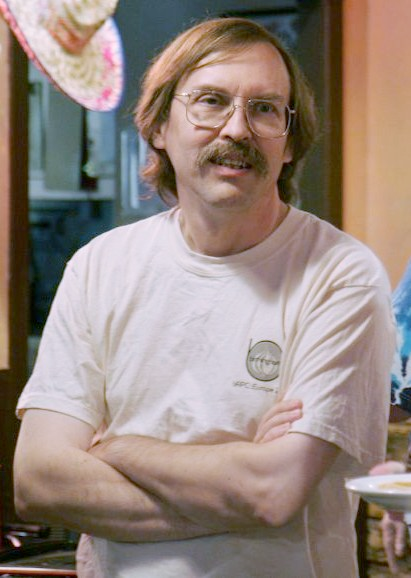
No beard, of course.
Go
This one is ambiguous.
On one hand, a new modern hip language — fast and simple code, automatic memory management, built-in reflection, channels and goroutines. On the other hand — really clunky OOP, half-baked polymorphism, and this incantationif err != nil { return err } literally every other line.
Hmm, just for a second...
Just as an example, what I have right under my feet right now:
> fgrep -R "if err != nil" . | wc -l
88839
Almost ninety thousand identical lines in one project, people...
And that's not even all such checks.
And why is that?
Because there are several authors: Robert Griesemer, Rob Pike, and Ken Thompson, and you can already see for yourselves:
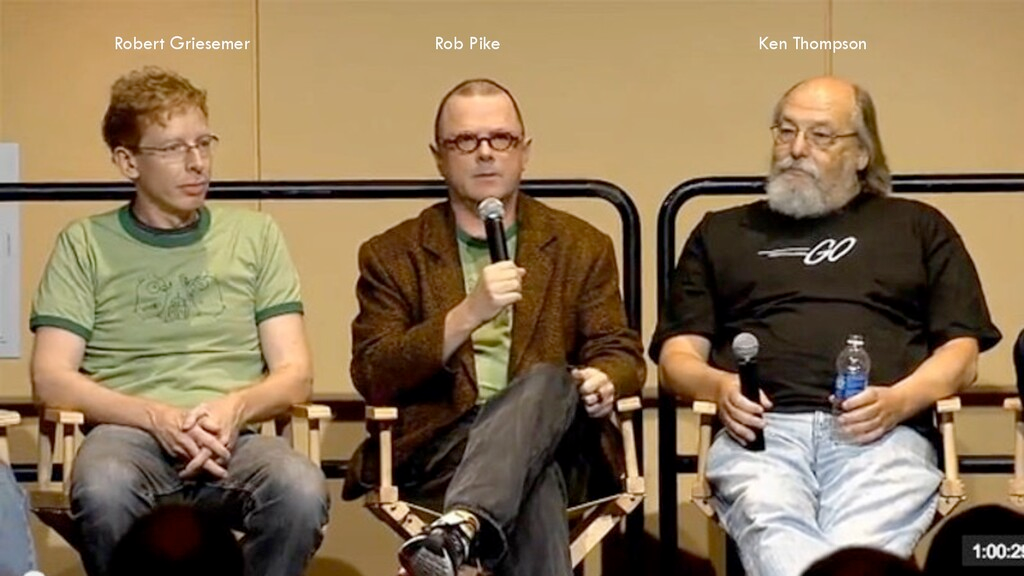
COBOL
"The use of COBOL cripples the mind; its teaching should be regarded as a criminal offense," wrote Dijkstra way back in 1975.
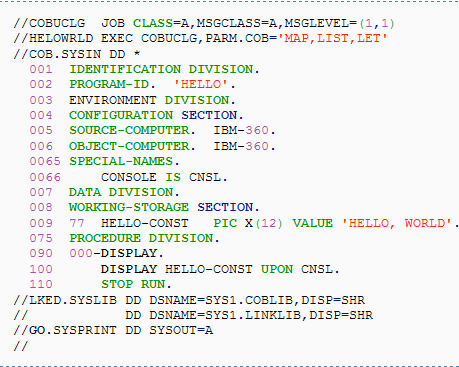
I myself, fortunately, never studied COBOL and never wrote in it, but if Google is to be believed, here's Hello World:
The creator of the language is Rear Admiral of the United States Navy, Grace Hopper:

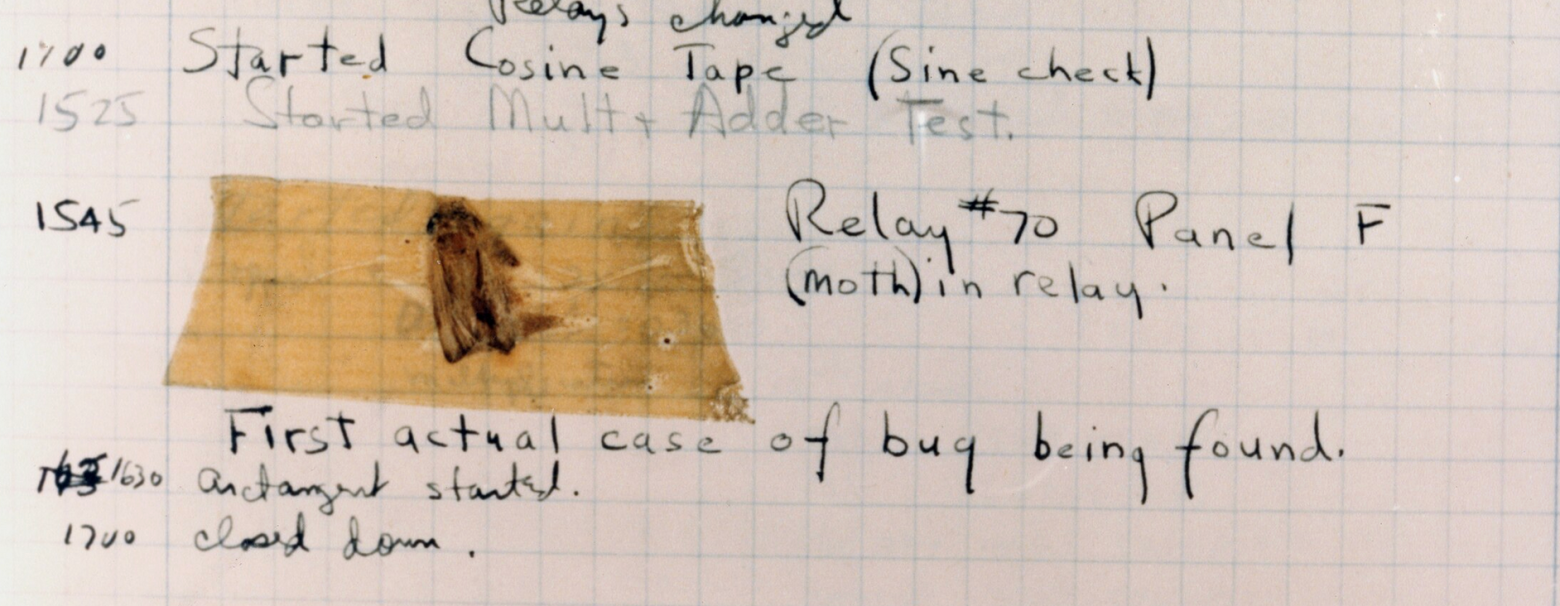
Yes, the very same Amazing Grace who fearlessly found (caught), neutralized (with a slipper), and reliably fixed (with tape) the very first bug in a program's history.
During test runs, we should note. (Write tests!!!)
The test job logs have survived to this day:
But the beard situation here is... you understand... Despite all respect for her achievements.
Want more?
Sure! Here's a whole bunch of famous languages that nobody knows.
Lisp
Short for Lots of Irritating, Stupid Parentheses — the one where you keep opening parentheses throughout your entire program and at the end have to close exactly as many as you opened.
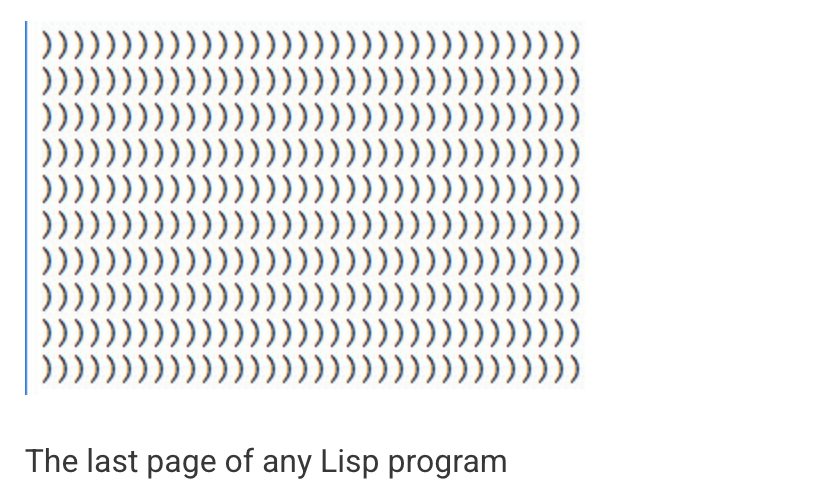
And no, those aren't emoticons — the program consists of lists of lists of lists of lists, and each list is closed with a parenthesis.
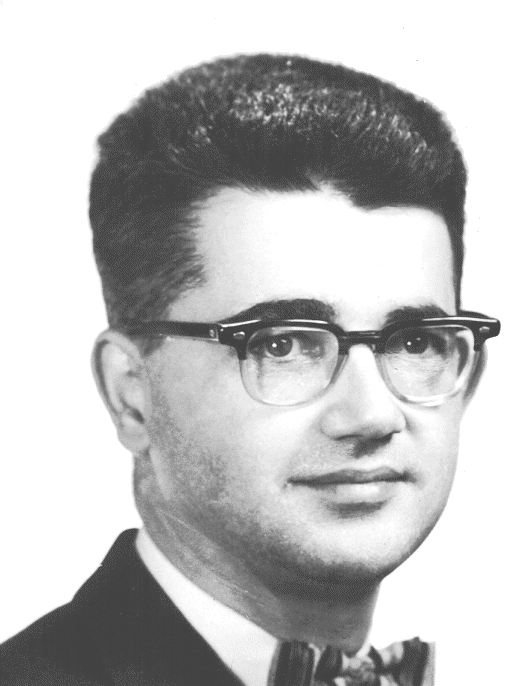
John McCarthy, photo from the 1950s, while working on Lisp:
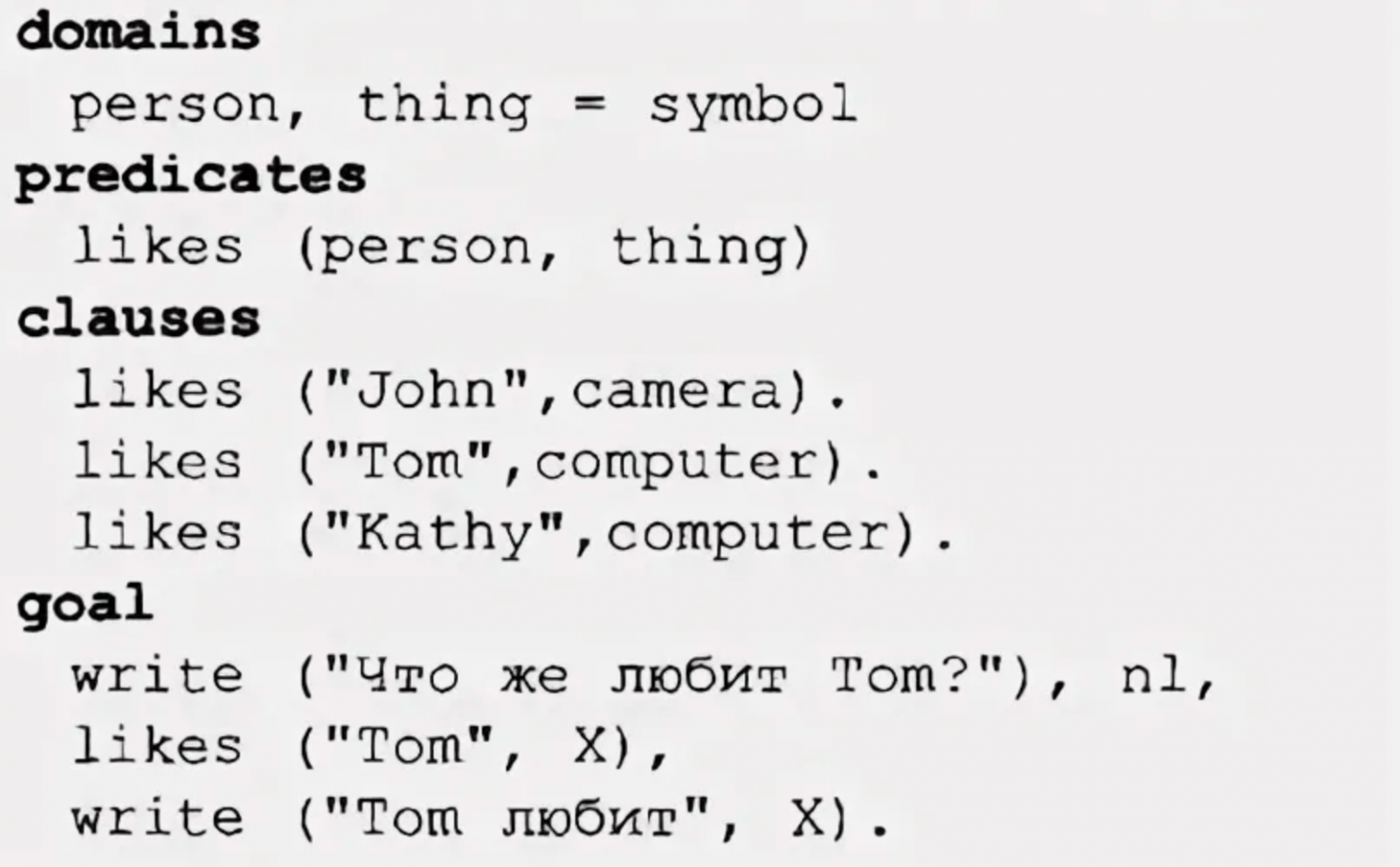
Prolog
This is when you write some logical predicates, build a cyclic graph from them, and then it tries to infer something and instantly goes into an infinite loop.

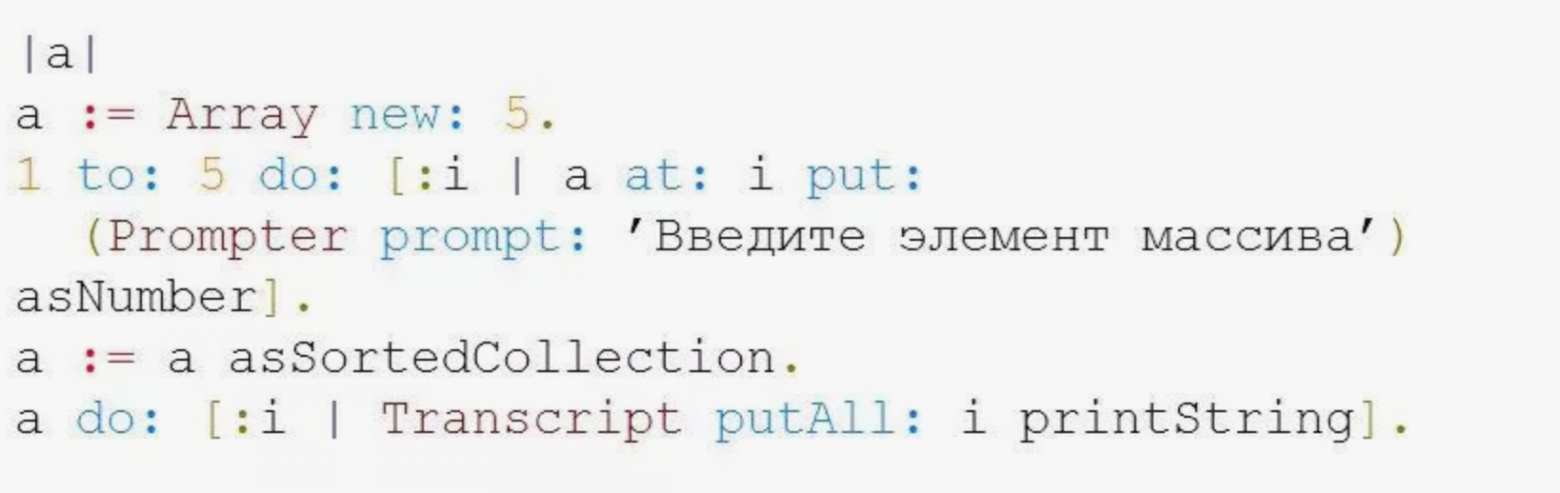
Smalltalk
Does anyone remember this?
Raise your hand if you've written in it.
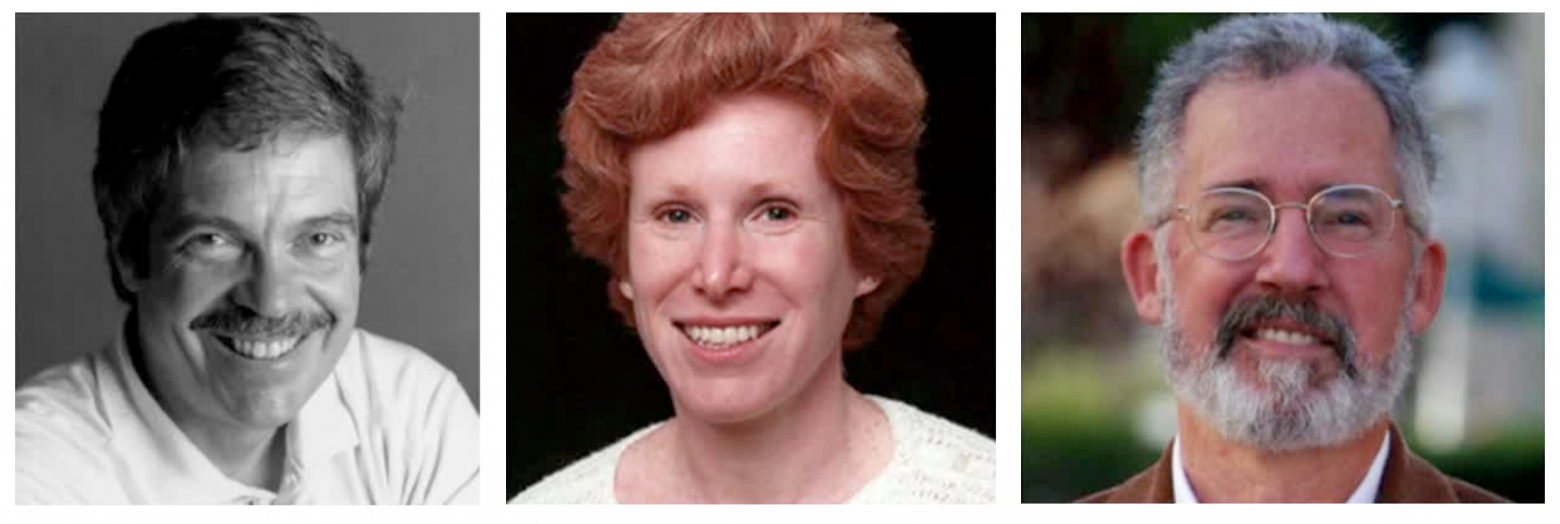
Authors of the first version: Alan Kay, Adele Goldberg, Dan Ingalls.
Aha! Gotcha! — you'll say.
Look, there he is on the right — a real, living counterexample who, smirking, casts doubt on the entire theory!
But no:
Here's his photo from the 80s, when he was working on this language:
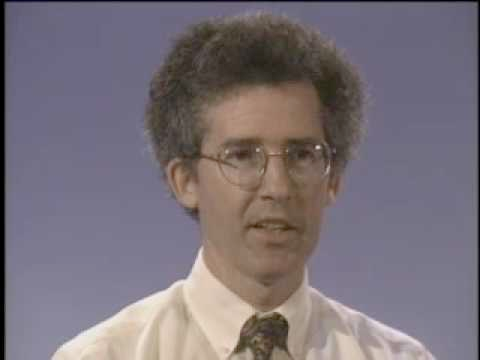
A thumbnail from his 1989 lecture on YouTube, no less! Find it if you're interested.
PL360
Algol
Pascal
Modula
Modula-2
Oberon
Oberon-2
Euler
And all of these are the work of one person! The legendary Niklaus Wirth:

You've probably heard the joke that while computers get faster every year, programs get slower — and programs get slower faster than computers get faster.
This is the so-called "Wirth's Law."
A living legend, yet all his languages have firmly entered history.
Even Pascal, sigh...
Ada
That very "language from hell" from programmer jokes.
Who writes in it?
Who ever wrote in it?...
I did. During an exam on a programming languages course, either in the summer or winter session, in a semi-conscious state. Never encountered it again.
The language creators tried to make the most reliable and maximally formalized language. As a result, even the attempt to describe the language standard completely failed.
Two teams of brave researchers took on the task of fully documenting the language.
After a long time, they produced TWO different specifications of the language, over 600 pages each, and then couldn't agree on which one was correct. They couldn't even definitively determine whether they were describing the same language or two different ones!
Additionally, during creation it was assumed that all software would be written only in Ada, so interaction with programs in other languages wasn't needed and was even harmful.
Greetings to the Omsk Metro with its single station...
The author is considered to be Jean Ichbiah:
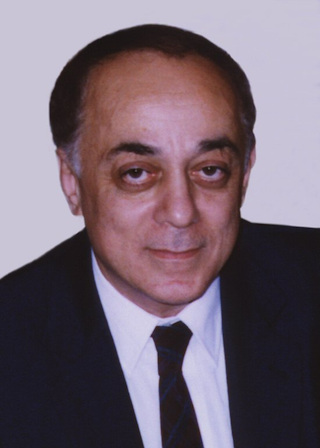
Not convinced?!
Fine, let's continue!
Forth
"In Lisp wrote much who person, parentheses without language invented" (my own quote)
A language with no parentheses, so everything is written backwards.
Instead of (25 * 10) + 50
we write 25 10 * 50 +
And instead of

we write

"less, if, drop, else, then" — seriously?
Happy debugging, folks...
The author — Charles H. Moore (a.k.a. Chuck Moore).
Beard or no beard? Your guess!
Three,
two,
one...
Ta-da:
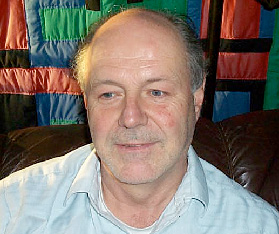
Moving on!
APL
Not to be confused with Apple.
Short for "A Programming Language." Modest.
Here's another plain screenshot from Wikipedia:
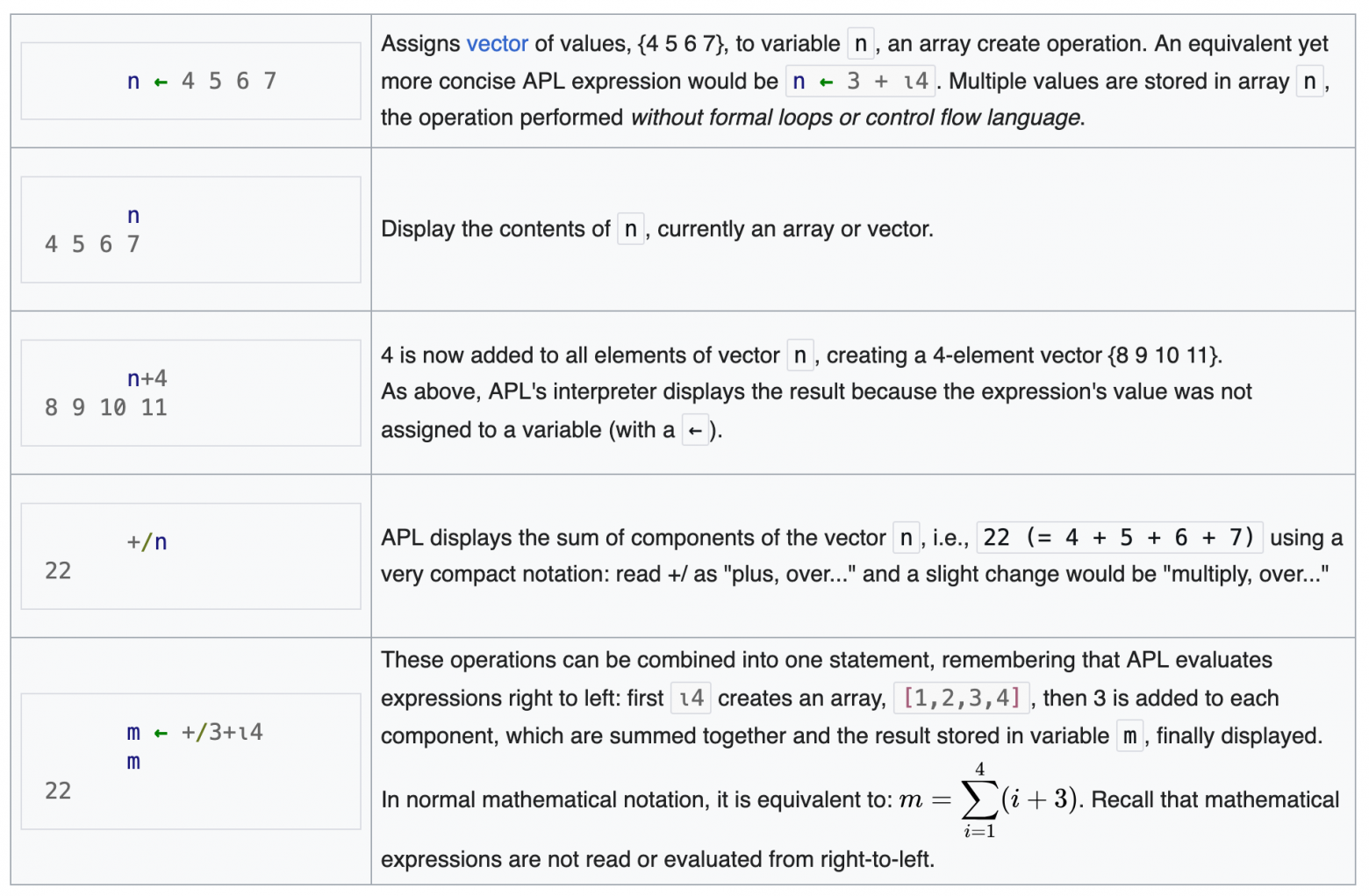
Once again something unclear, barely readable, and backwards code behind it.
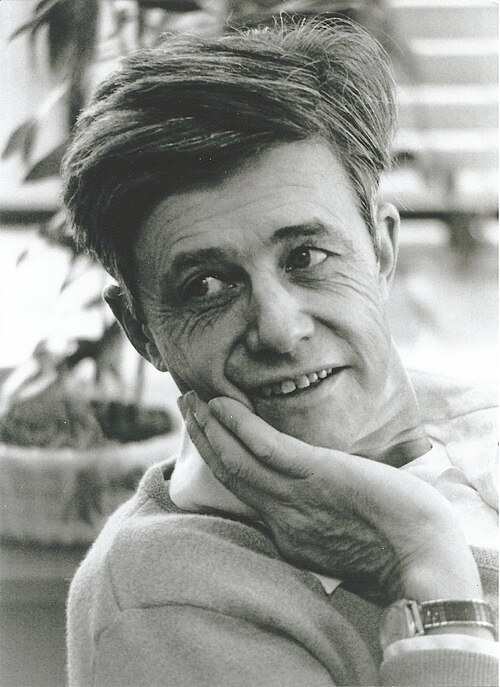
The author, Kenneth E. Iverson.
And once again the main question of this article, the universe, and everything — well, what do you think?
Photo below!
Ruby
Now this one you've surely all heard of.
Yes, damn it — GitHub is written in it!
And also GitLab, Metasploit, Homebrew, and YaST — depending on what's closer to you.
The creator of the language, Yukihiro Matsumoto.
If you're voting beard — press F5. If you think no beard — Ctrl-R.
Answer:
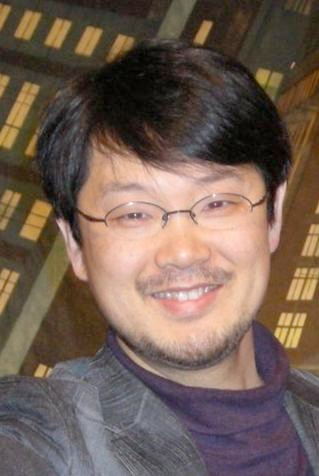
Judging by the sly expression on his face, he knows something and possibly even read the original article (he didn't).
Erlang
It was developed at a big company, and all the right words are there: "a functional language for use in highly loaded distributed fault-tolerant parallel real-time systems."
Everything you could want. But who's actually seen it? Who uses it?
I heard it was somewhere at Yandex, until the committee banned it...
In the TIOBE index it's mentioned at the bottom, in the list of others that didn't make the ranking. In the company of the already mentioned APL, Algol, Forth, Modula-2, and Smalltalk...
And they had every chance of success...
But, as we say in Ancient Rome: dura lex, sed lex.
See for yourselves — here's the team of creators:

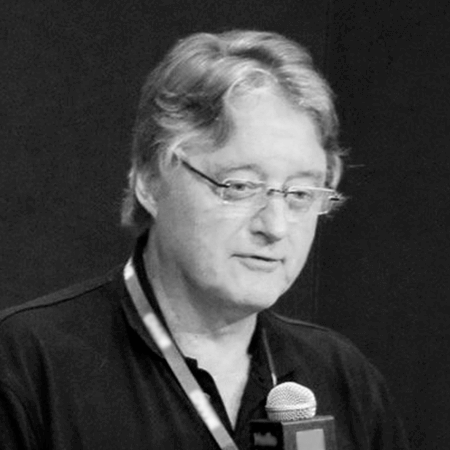
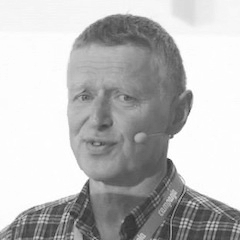

Such sadness in their eyes. Come on guys, you had so much potential...
Brainfuck
Of course!!
You can't skip this one!
Ladies and gentlemen, I present Hello World:

COBOL is nervously twitching in the corner, having another stroke.
And here's the wc utility (word count, not what you might have thought):
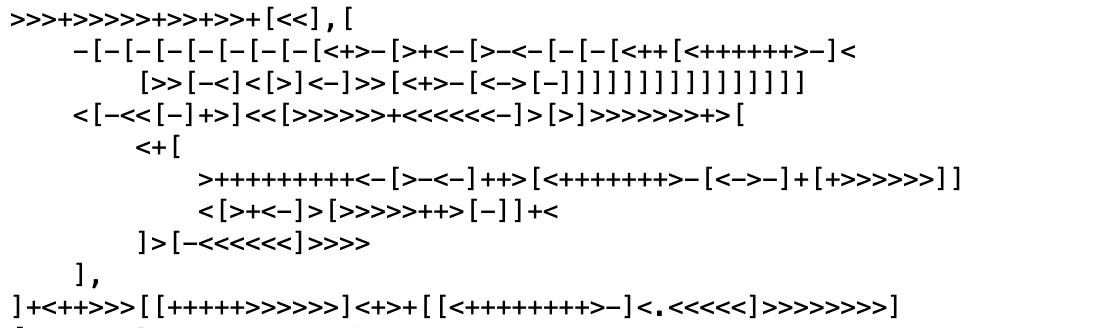
It works, I checked.
So, what about the beard? Anyone still doubting?
Here's the language author, Urban Muller:
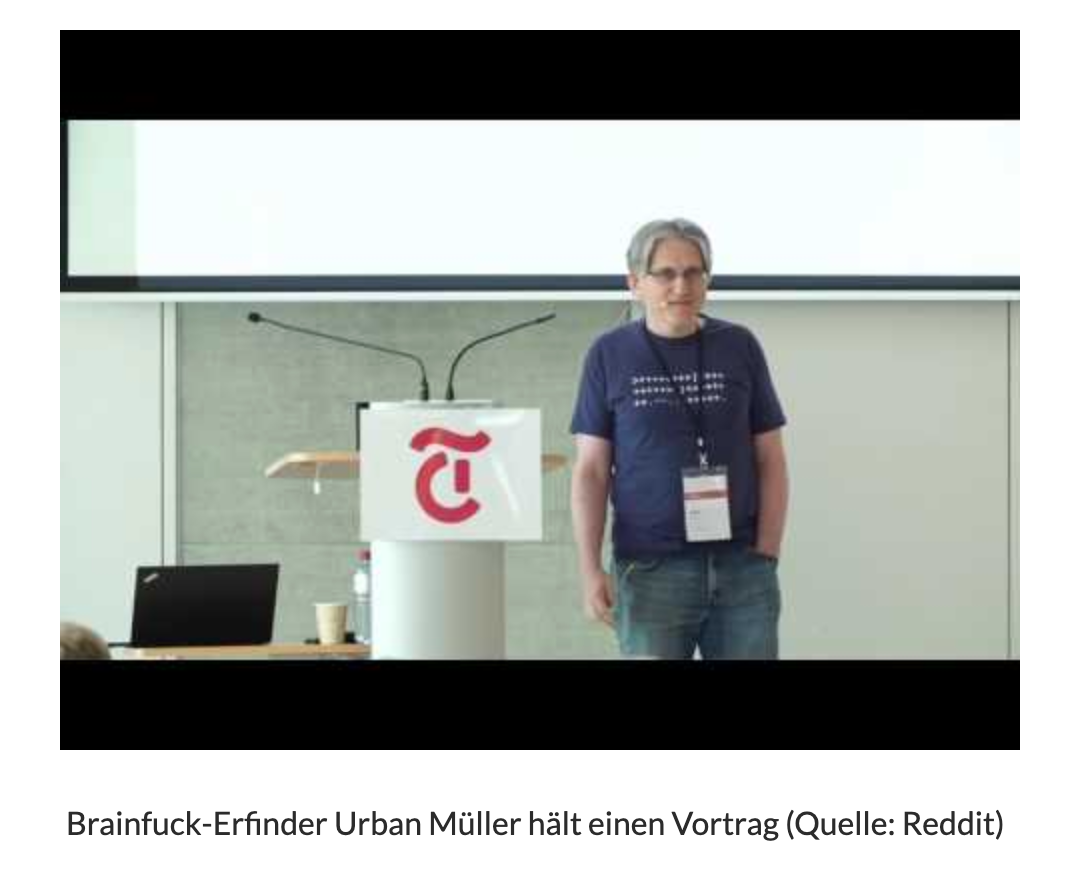
The photo quality isn't great... well, it is what it is, but this is definitely the very same Muller. He even has something written in Brainfuck on his T-shirt!..
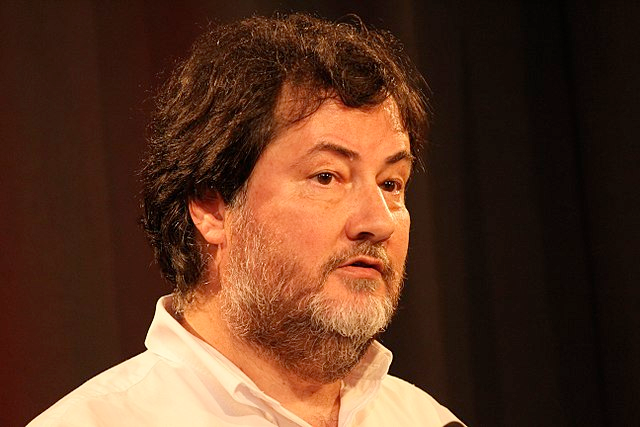
R
A language for analysts, ML engineers, and other data scientologientists. Growing in popularity, already in the top 20 of the ranking.
Even I've had to encounter it, somewhere in Coursera labs.
Here are the authors:

Kotlin
And finally — the grand finale!
Kotlin.
So there's Java.
Language #1 by many rankings.
Been around for a very long time by IT standards.
A language created by a dude with a beard!!! and backed by Sun Microsystems, a corporation with billions in revenue.
And alongside it are even bigger friends: Google, Oracle, Microsoft, and IBM.
One of the pillars of the IT industry, no jokes.
And then suddenly some Andrey Breslav (who even is this?) from some remote Russia (where even is that?) shows up with some Kotlin of his (what even is that??).
And Google just goes ahead and switches Android from the great and mighty Java to Kotlin!
That can't happen — you'll say!
And Andrey doesn't even have a beard, I'll add:
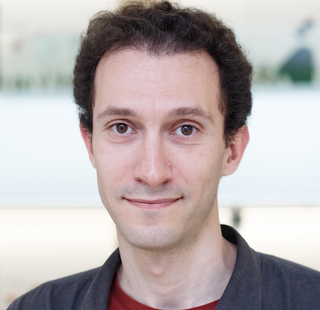
It can't happen.
And you don't have to believe me (I'm shocked myself!!) — go to Andrey's website and read it yourself!
When creating a new language, Andrey KNEW about this law! He writes about it himself!
That's why at the presentation of his language, he deliberately and brazenly used it!!!
Here's a screenshot from the first Kotlin presentation:
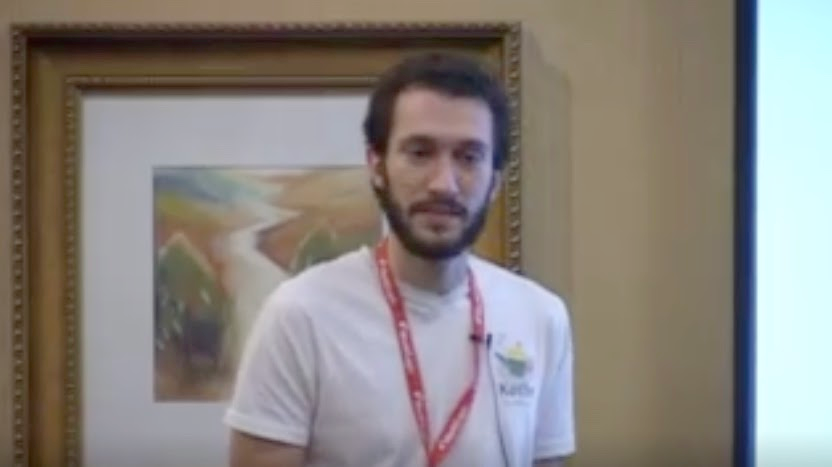
Checkmate, non-believers!
The law not only works on past examples but is confirmed experimentally!!!
And it's not just me — smart people at Wired wrote about the same thing!
Conclusions
Now you know where the real secret of success lies, and when you develop your own language, don't forget about it!
The author once participated in developing a new and terrrribly promising programming language. We had our own compiler, runtime environment, and even an IDE, but nobody on the team had a beard. The outcome is predictable — the language was forgotten and consigned to the dustbin of history. Meanwhile, more talented colleagues applied the law in practice — and the results came quickly.
Don't repeat other people's mistakes.
FAQ
What is this article about in one sentence?
This article explains the core idea in practical terms and focuses on what you can apply in real work.
Who is this article for?
It is written for engineers, technical leaders, and curious readers who want a clear, implementation-focused explanation.
What should I read next?
Use the related articles below to continue with closely connected topics and concrete examples.