Modernizing an Ancient Linux Driver with Claude Code
A case study on reviving the ftape Linux kernel driver, unmaintained for 25 years, to work with modern kernels using AI-assisted development with Claude Code.
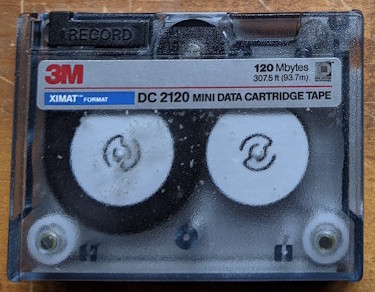
What happens when you need to read data from a tape cassette that was last written to in the late 1990s, and the driver required to do so was removed from the Linux kernel over two decades ago? This article documents how the ftape driver — designed for QIC-80 tape drives connected via floppy disk controllers — was modernized from kernel 2.4 compatibility to compile and run on kernel 6.8, all with the help of Claude Code.
The Problem
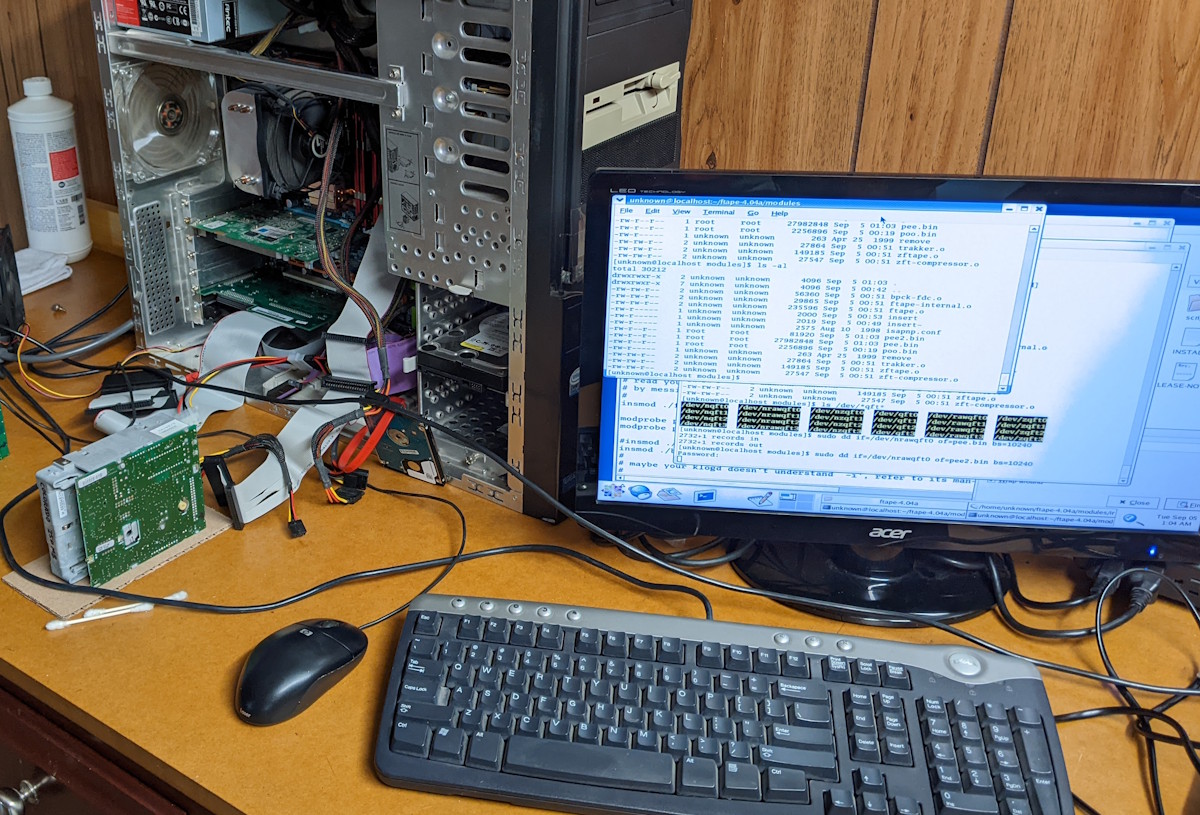
The ftape driver hasn't been maintained since around the year 2000 and was eventually removed from the Linux kernel tree. For anyone needing to recover data from QIC-80 tape cartridges, the only option was booting an ancient distribution like CentOS 3.5 — an increasingly impractical solution as hardware evolves.
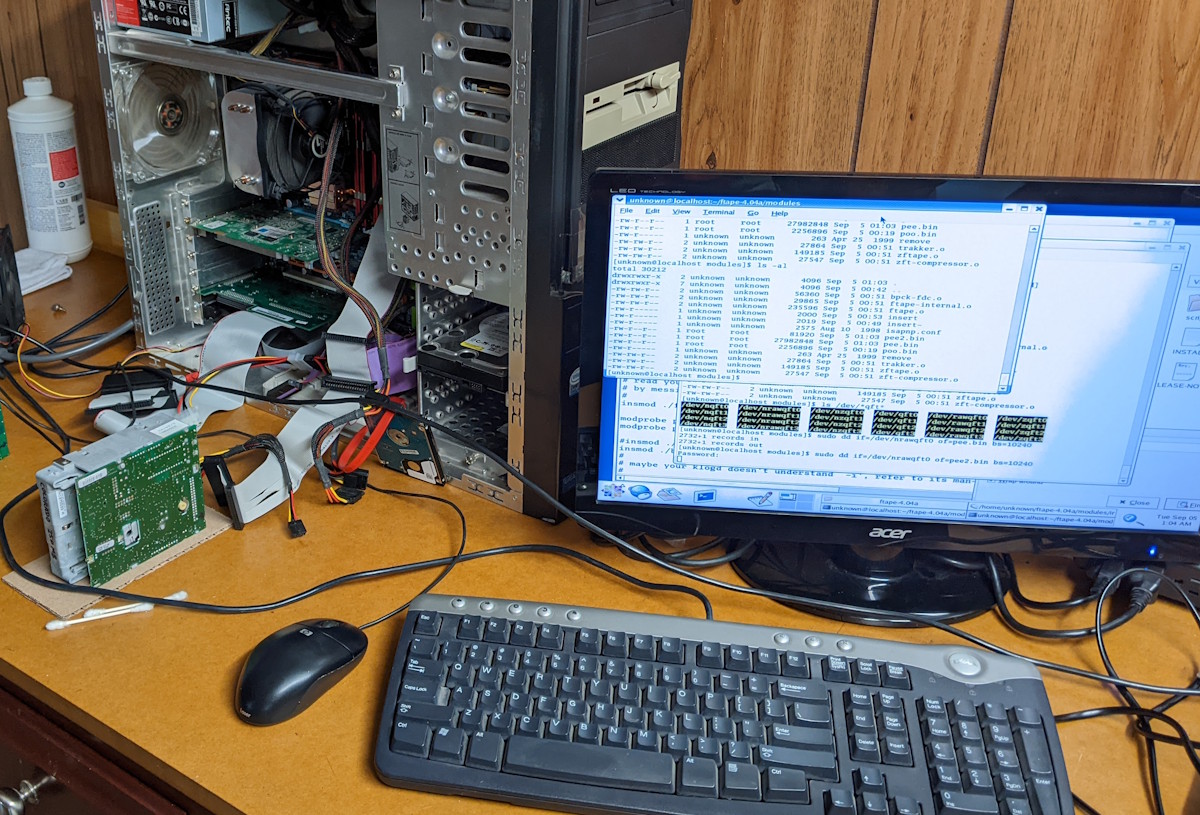
These tape drives connect to the floppy disk controller (FDC) rather than a dedicated SCSI adapter. This was an economical hardware approach that enabled data transfer at approximately 500 Kbps. The driver implements a specialized protocol to communicate with the tape drive through the FDC interface — a design that was clever for its era but resulted in complex, tightly-coupled kernel code.
The Approach: AI-Assisted Modernization
The approach was straightforward: provide Claude Code with the repository containing the old ftape source code and ask it to modernize the driver for compilation with modern kernels (up to version 6.8).
Over 25 years of Linux kernel development, countless APIs have been changed, renamed, or entirely removed. Function signatures have evolved, module initialization patterns have been overhauled, and device driver interfaces have been restructured multiple times. Manually tracking down and updating each of these changes would be an enormous undertaking requiring deep knowledge of kernel history.
What Claude Code Did
Through several iterations, Claude Code accomplished the following:
- Identified and replaced deprecated kernel functions and structures accumulated over 25 years of kernel development
- Generated a working out-of-tree build system (Makefile) without additional prompting — recognizing that a standalone module build was the most practical approach
- Analyzed dmesg output to troubleshoot runtime issues after successful compilation
- Pinpointed configuration problems where unset module parameters defaulted to invalid addresses
The model was able to iteratively receive compiler error output and make the necessary changes until compilation succeeded. This iterative loop — compile, review errors, fix, repeat — is a pattern particularly well-suited to AI assistance.
Debugging Runtime Issues
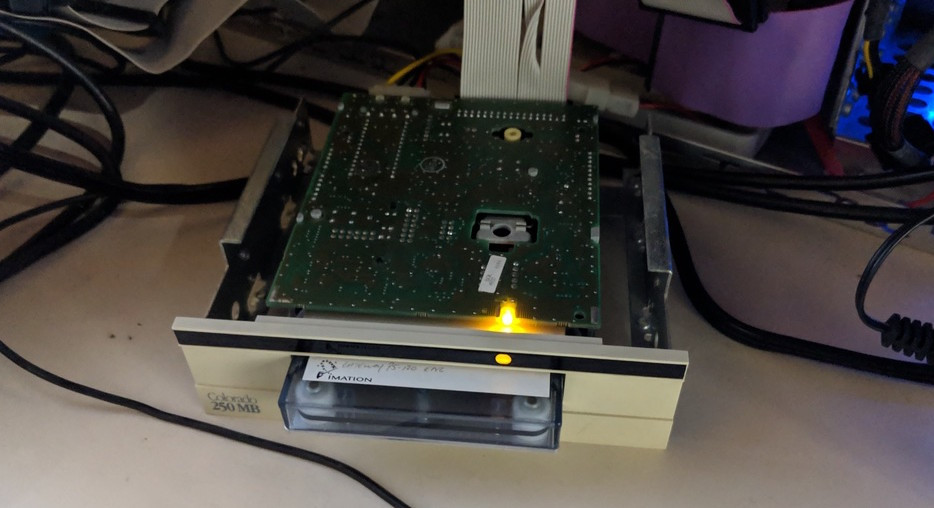
Compilation success was only half the battle. When the module was loaded and an attempt was made to read from the tape device, the system returned "No such device or address" errors (ENXIO). By examining dmesg output, Claude identified that certain module parameters were defaulting to 0xffff — invalid addresses that caused the FDC initialization to fail.
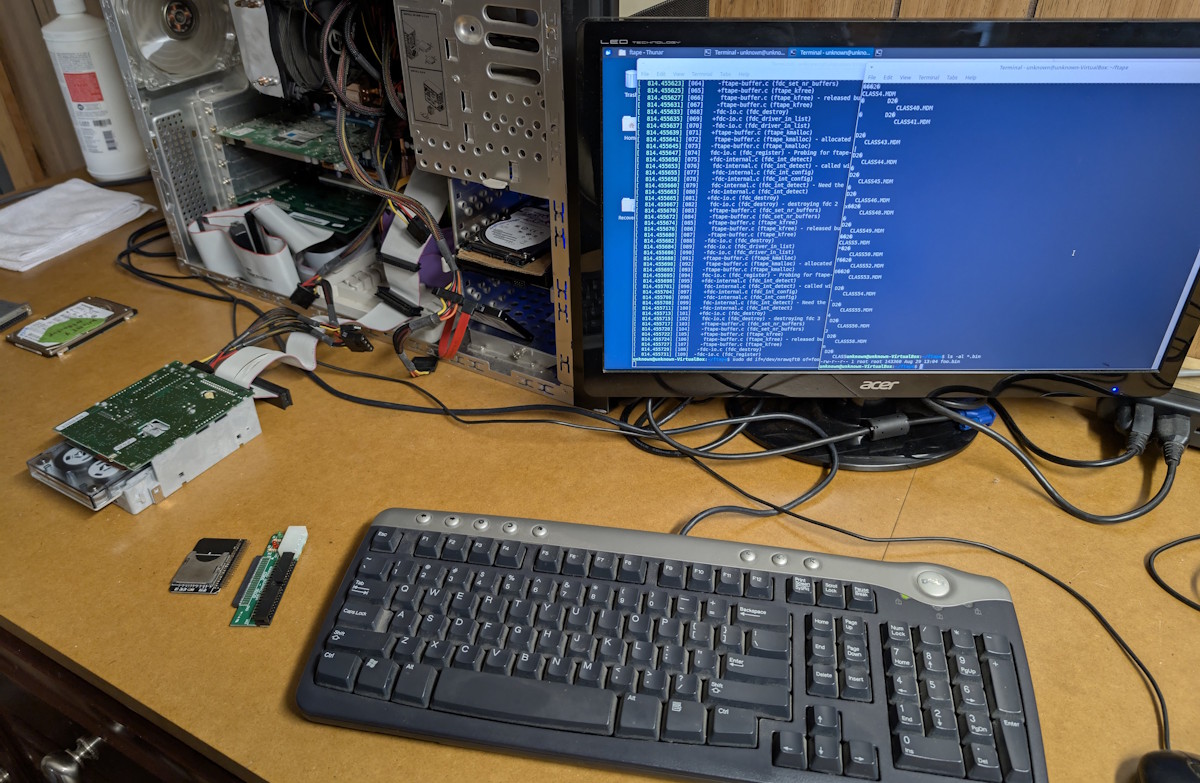
Once the correct parameters were specified, the driver initialized properly and began communicating with the tape drive hardware.
The Result
The ftape driver now compiles and functions on modern Linux (Xubuntu 24.04 with kernel 6.8). Data was successfully recovered from legacy tape cartridges — giving a second life to hardware that had been considered obsolete for a quarter century.
Lessons and Recommendations
The author emphasizes that AI tools work best as "force multipliers" for skilled practitioners, not as replacements for expertise. Key takeaways include:
- Collaboration with AI resembles working with a junior developer — you remain responsible for direction, architecture, and validation. The AI handles the tedious lookup and boilerplate work.
- Domain-specific terminology improves prompt effectiveness. The more precisely you describe what you need — including function structures and gap identification — the better the results.
- Develop intuition about which tasks suit AI assistance. Not every challenge yields to AI solutions, and recognizing this boundary is itself a valuable skill.
- Use these tools as force multipliers for existing expertise rather than knowledge substitutes. The author's deep understanding of kernel modules allowed him to validate and guide Claude's suggestions.
- Verification and testing remain essential. Treat AI-generated code with the same rigor you'd apply to a pull request from any contributor.
The experience demonstrates that AI-assisted development is particularly effective for modernization tasks — where the logic is sound but the interfaces have changed — and less about inventing new solutions from scratch.
FAQ
What is this article about in one sentence?
This article explains the core idea in practical terms and focuses on what you can apply in real work.
Who is this article for?
It is written for engineers, technical leaders, and curious readers who want a clear, implementation-focused explanation.
What should I read next?
Use the related articles below to continue with closely connected topics and concrete examples.