Natural Intelligence vs Artificial: A Showdown on the Moon
Two independent research teams tried to locate the Soviet Luna-9 spacecraft on the Moon's surface using very different methods -- neural networks vs manual visual search -- and arrived at contradictory conclusions.
Two independent studies were published for the 60th anniversary of the first soft landing on the Moon, both attempting to determine the location of the Soviet Luna-9 spacecraft. However, the teams reached very different conclusions.
The History of Luna-9
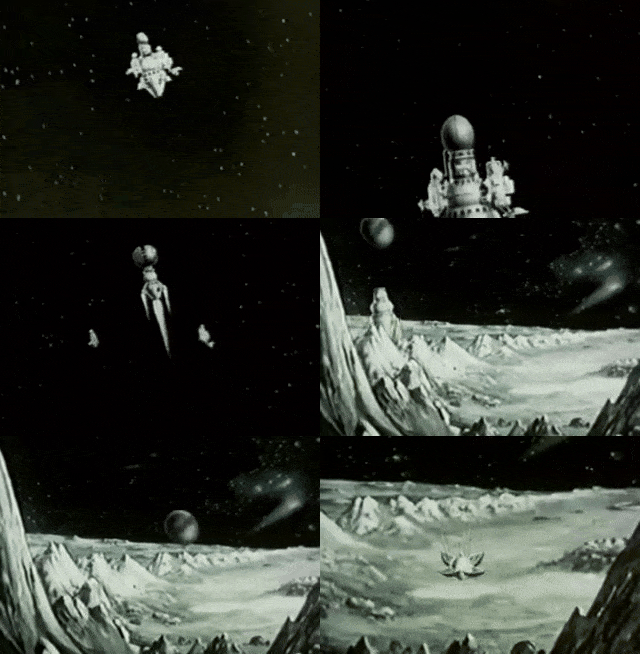
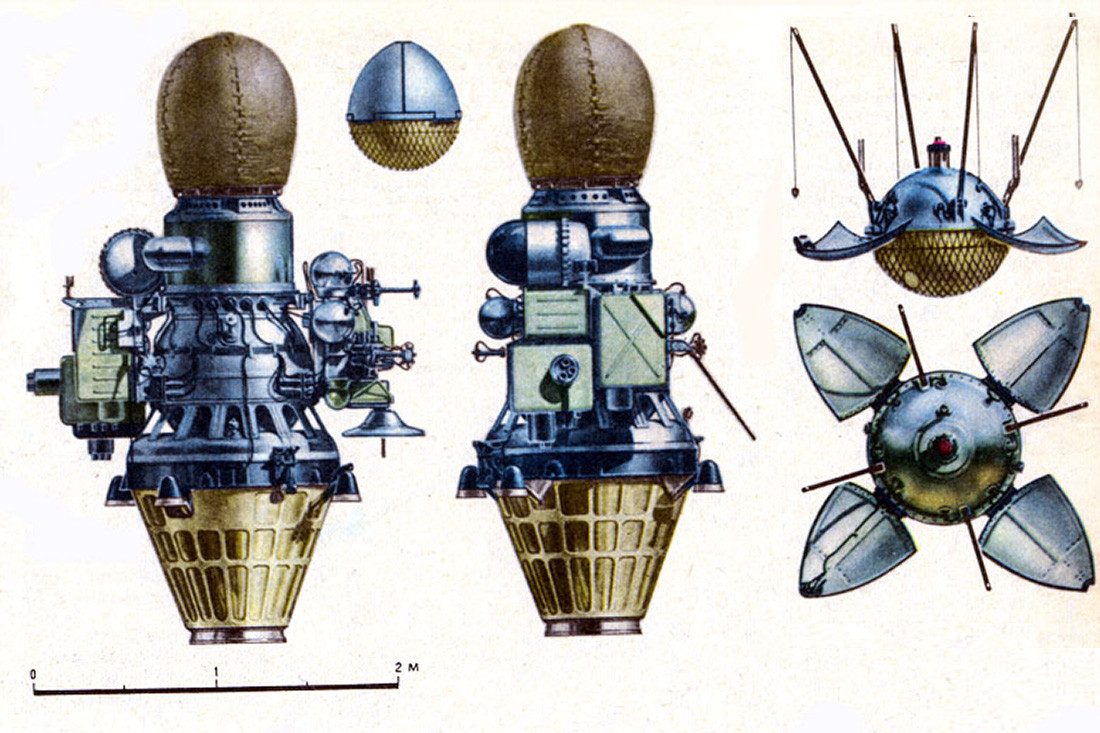
Luna-9 performed a soft landing on the Moon on February 3, 1966, and transmitted the first close-up photographs of the lunar surface. During landing, the spacecraft separated into two parts:
- The landing stage (approximately 2m by 1m)
- The descent module (1.6 by 1.6m, 1.2m tall with antennas)
Auxiliary elements separated from both parts: two orientation blocks and airbag cushions from the soft-landing system.
The Difficulty of the Search
The search was complicated by several factors:
- Spacecraft size -- the descent module was the smallest autonomous spacecraft to ever perform a soft landing
- Coordinate accuracy -- the margin of error for the landing site in 1966 was "up to 50 km"
- Image resolution -- NASA's modern LRO satellite photographed the Moon at 0.5-1m resolution, but Luna-9's components occupy only 1-4 pixels
The British-Japanese Team's Research
Scientists from University College London (Lewis J. Pinault, Ian A. Crawford) and the Japanese space agency JAXA (Hajime Yano) developed an algorithm for searching for man-made objects based on the YOLO (You Only Look Once) architecture.
YOLO-ETA (You-Only-Look-Once -- Extraterrestrial Artefact) -- an adapted algorithm for searching for artifacts on other celestial bodies.
Training Methodology
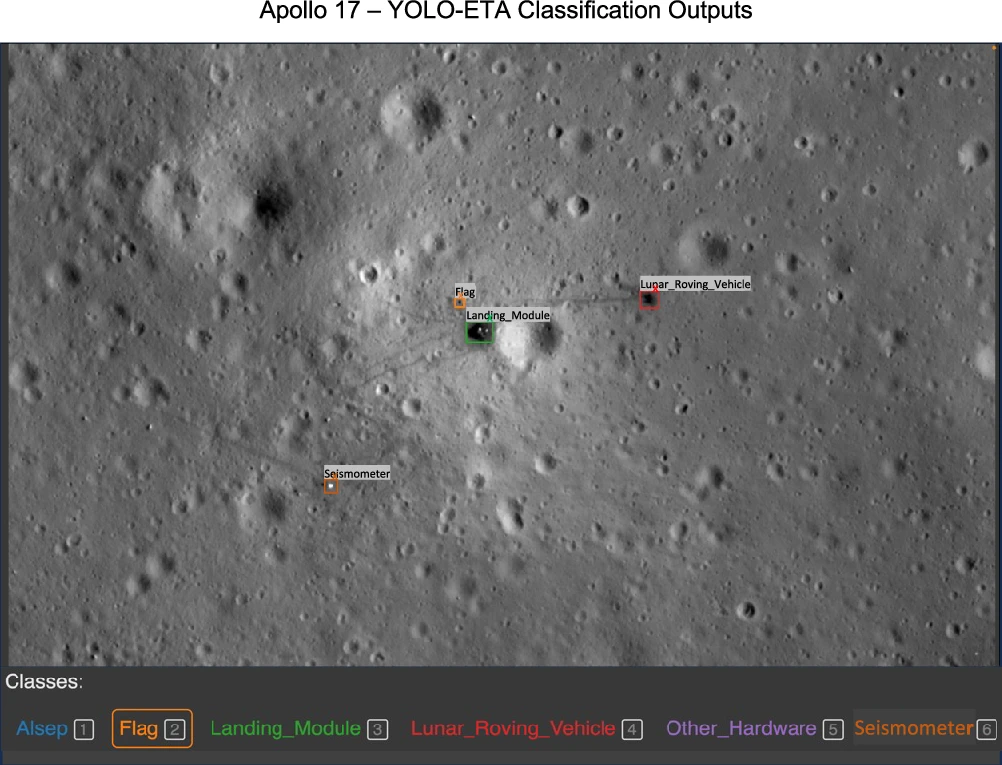
- Trained on 125 images of Apollo landing sites
- Image distortion: scaling, cropping, rotation, mirroring
- Testing on known Apollo 17 and Luna-16 landing sites
- Final test on the Surveyor 7 landing site
Search Results
- Search area: a 5x5 km square centered at 7.08° N, -64.37° E
- Found location: 7.03° N, -64.33° E (approximately 2 km from center)
Neural Network Findings
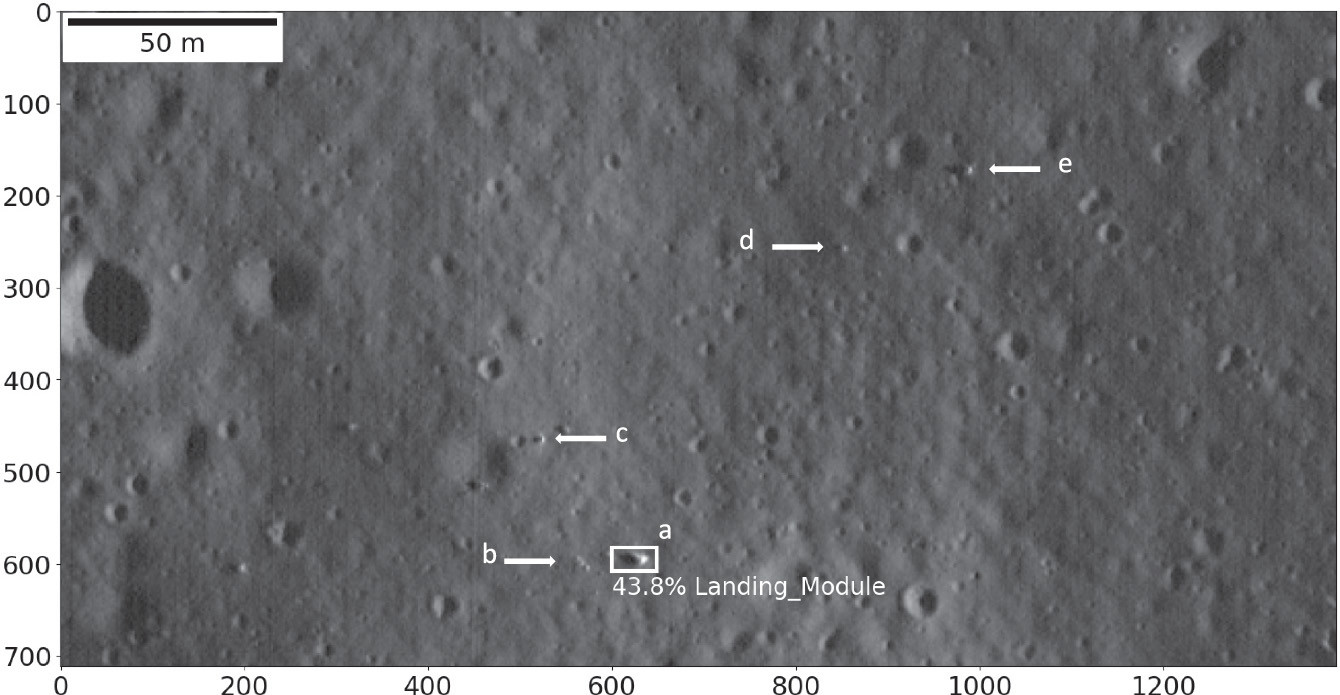
The algorithm detected:
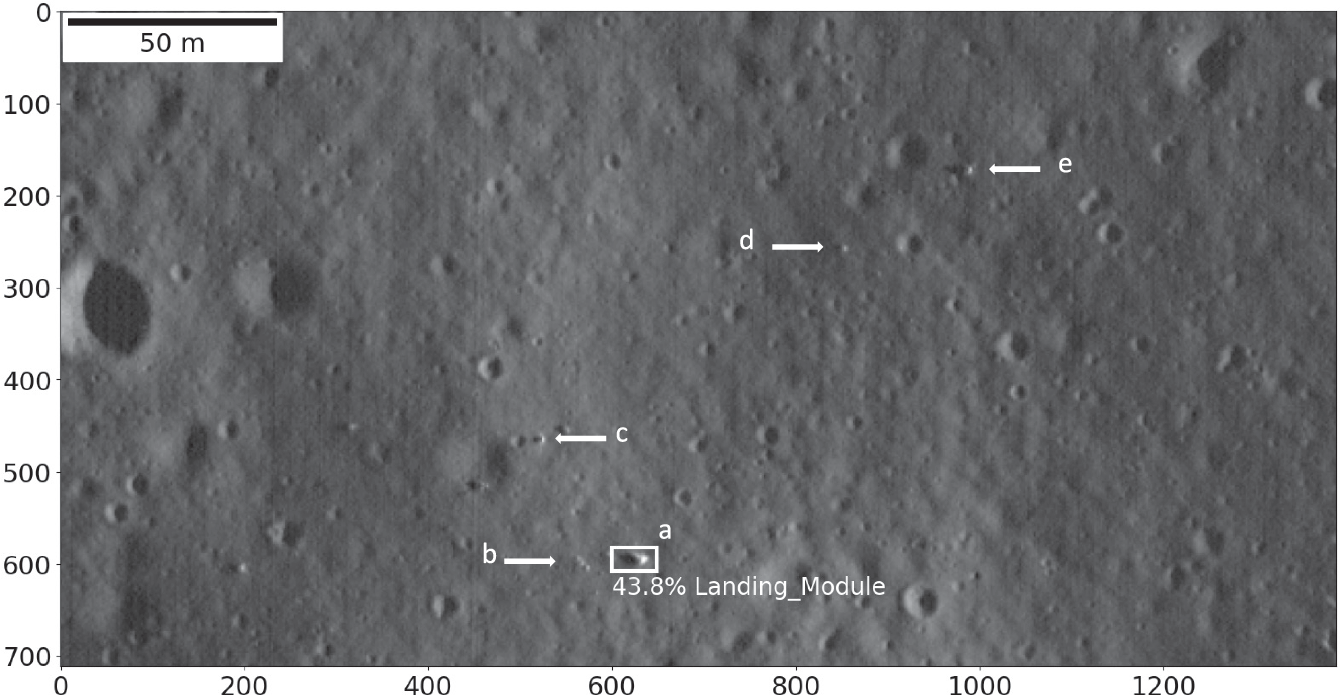
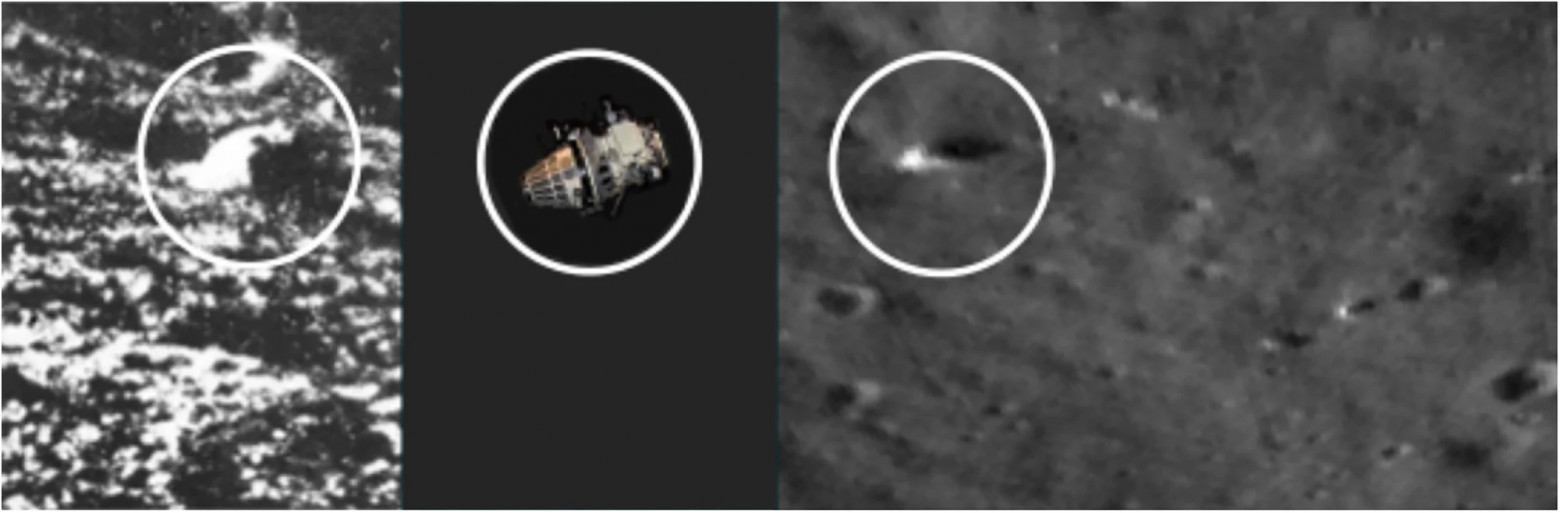
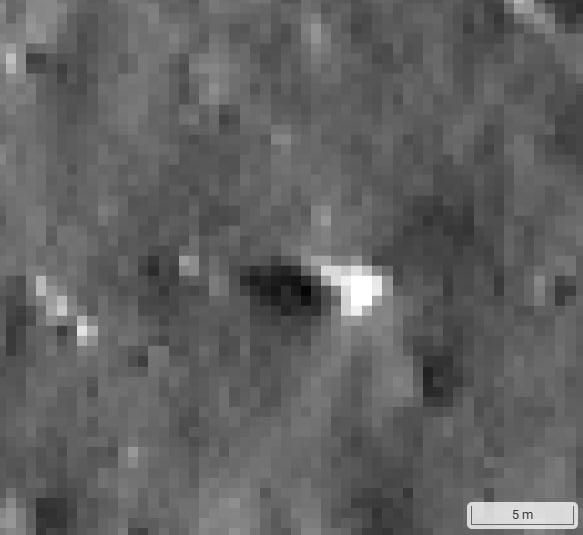
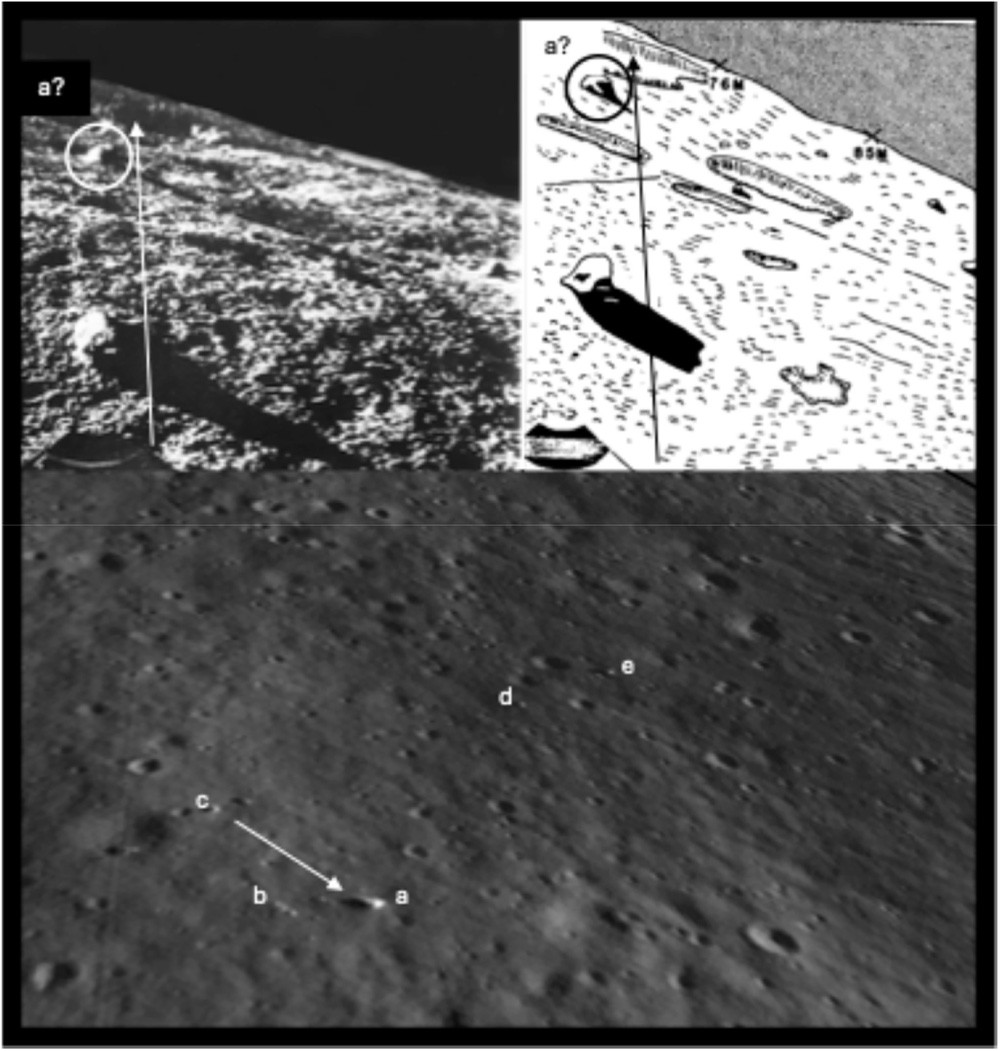
- An elongated object, interpreted as the transfer stage
- A single pixel, identified as the descent module
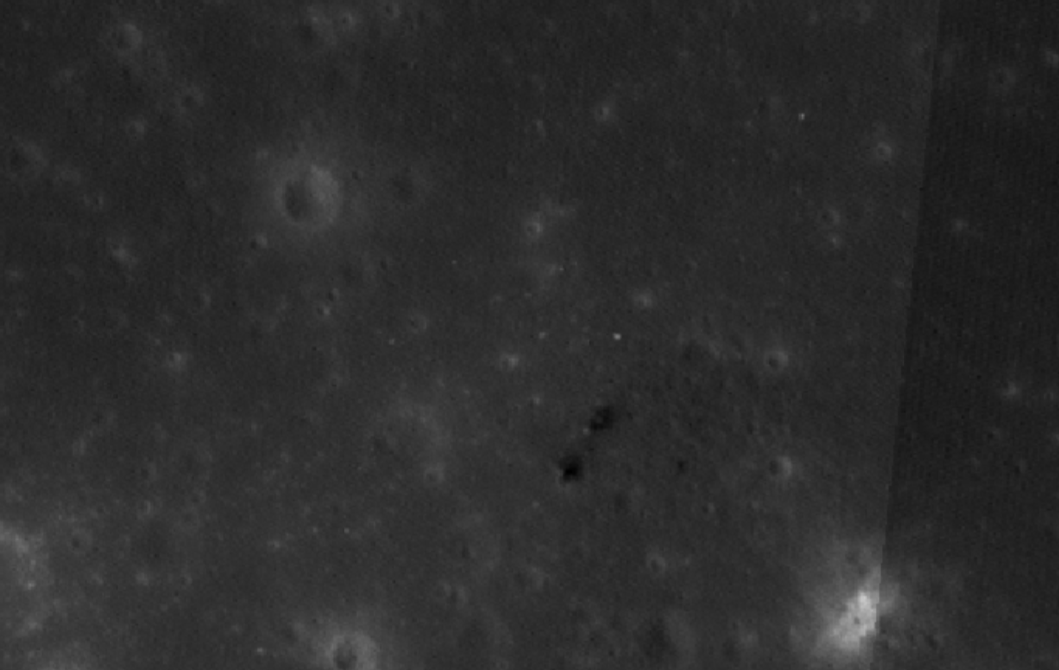
- Two dark spots approximately 7m in diameter, presumably traces from the transfer stage's lateral blocks (150-kilogram blocks falling at 500 m/s)
Critique by Vitaly Egorov
The article's author identified several errors in the research:
First error -- coordinates: The authors used incorrectly converted coordinates (7.08° instead of 7.13°). Soviet cartographers indicated "7°08' N, -64°22' E", which when converting from arc minutes yields different values. The discrepancy was 1.5 km.
Second error -- search radius: Too small a radius was chosen (2.5 km), within which enthusiasts and NASA scientists had already searched.
Third error -- object size: The found object was approximately 5m in size, whereas Luna-9's maximum size did not exceed "3-3.5m" (if the parts hadn't separated) or 2m (after separation).
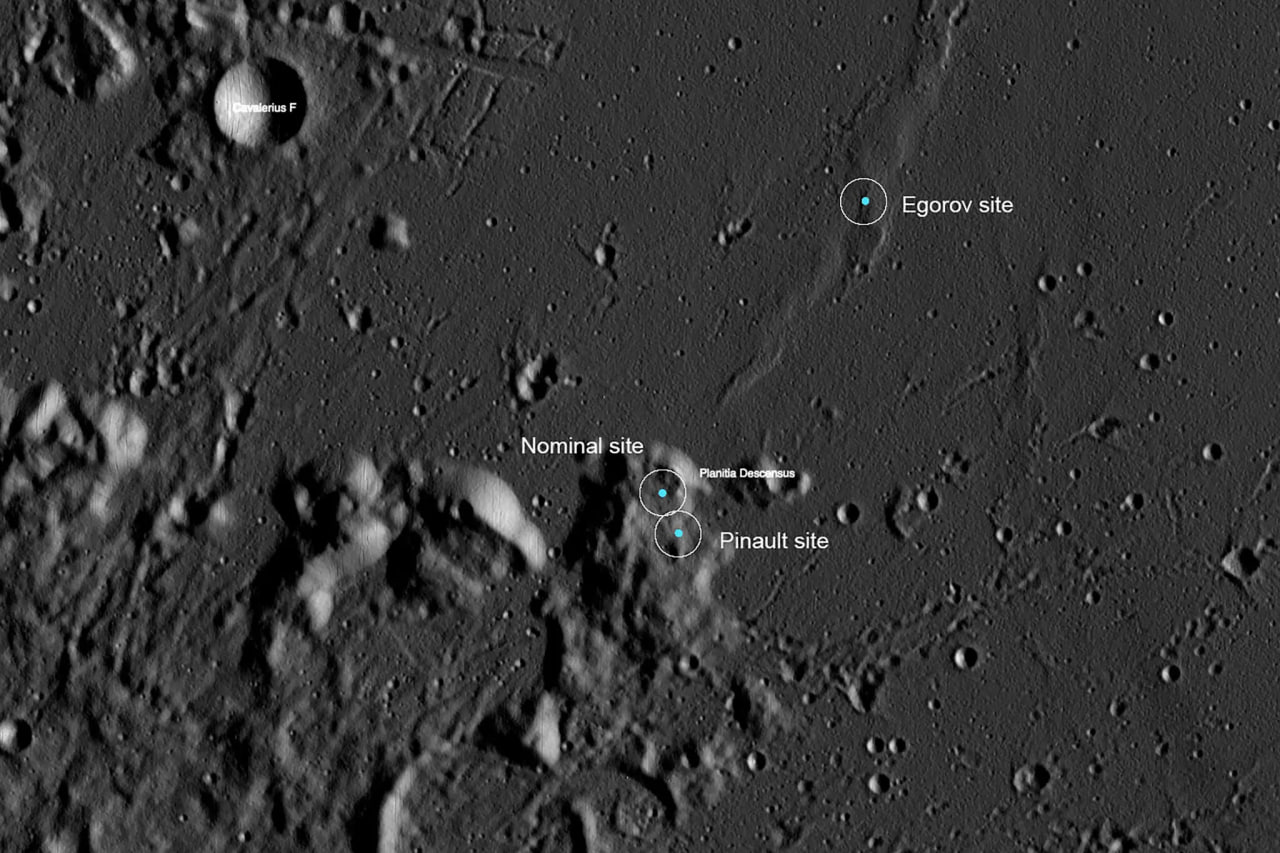
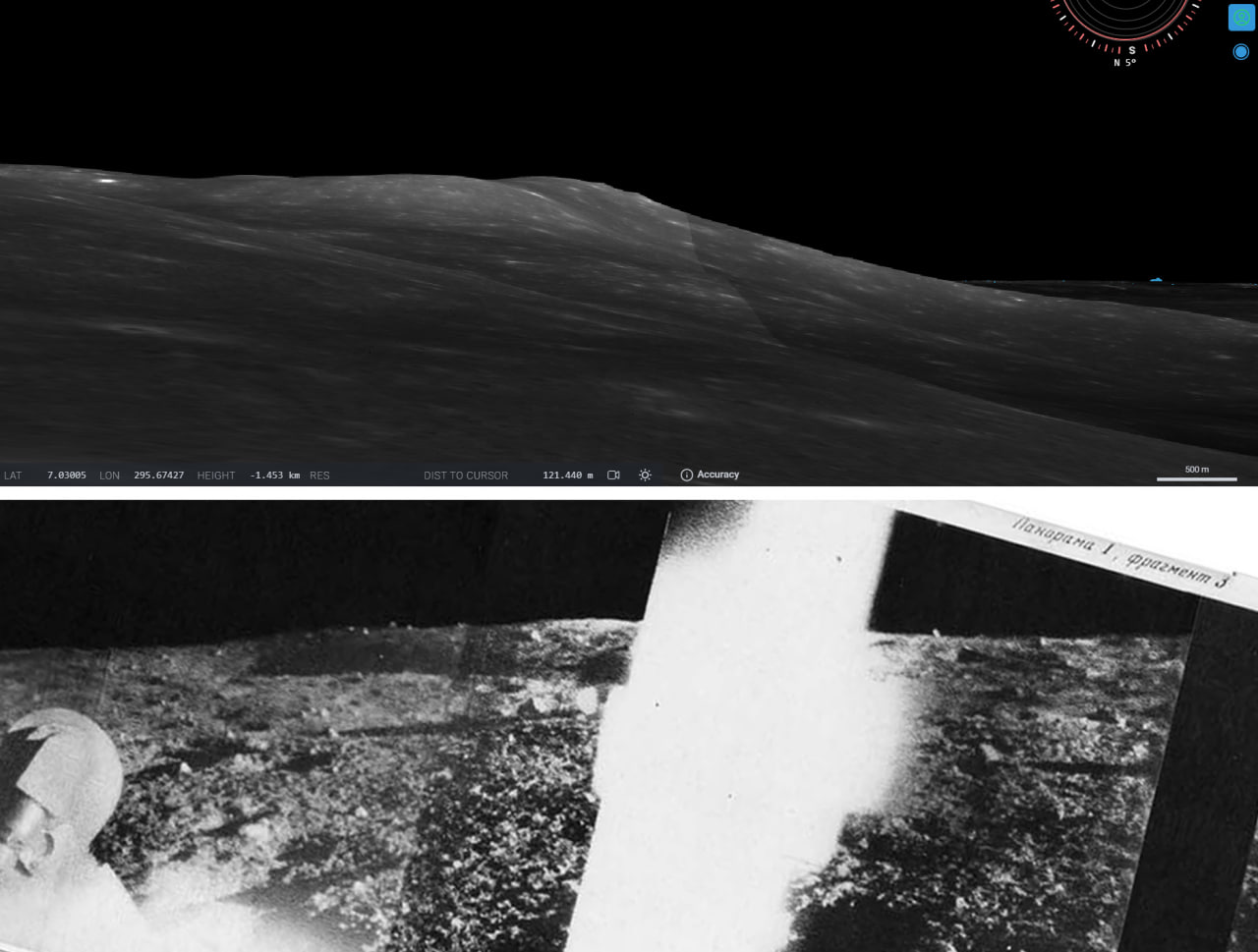
Fourth error -- terrain: Panoramas from Luna-9 show flat terrain, but the found point is in foothills. The authors explain this as an elevated plateau, but comparison with a 3D model of the Moon shows discrepancies.
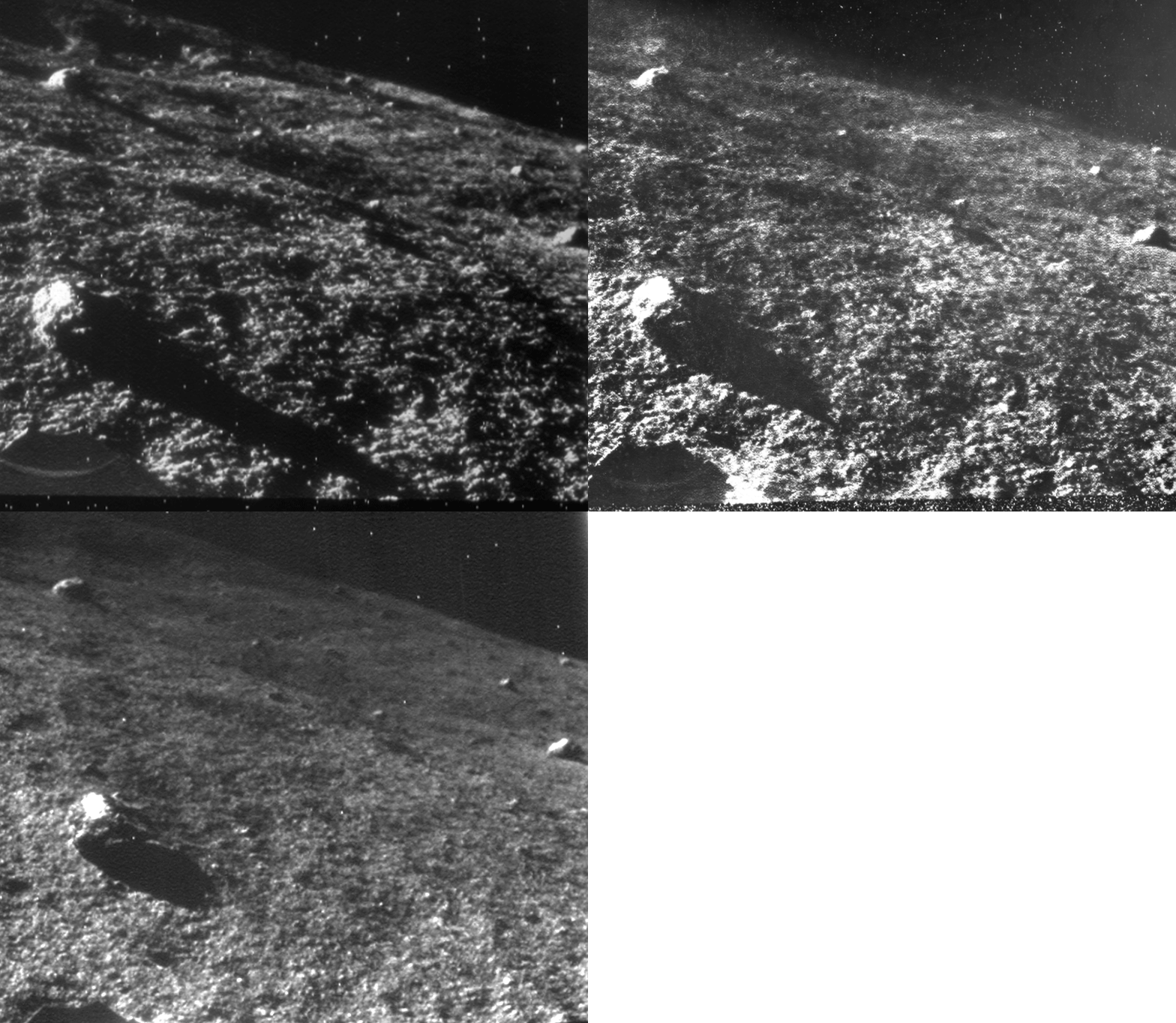
Fifth error -- panorama interpretation: The authors suggested a visible fallen stage in the panorama, but "this rock (in the upper left corner) shows no signs of artificial origin," according to Egorov.
Resolving the Dispute
Two research groups applied different methods and obtained different results:
- Enthusiast Zelenyikot and colleagues -- visual search using satellite images and panoramas
- British-Japanese group -- YOLO-ETA neural network technology
The difference in indicated coordinates reaches 20 km.
Resolution: India's Chandrayaan-2 spacecraft has planned to photograph the proposed Luna-9 landing sites in March 2026.
Key Takeaway
The author notes: it's important to understand that "all the errors were made by the people who used it" (referring to the neural network). The neural network did its job, but human errors in data preparation and interpretation of results led to incorrect conclusions. The AI tool worked as designed -- the failures were in how humans wielded it.