Newton and Killer Spheres: The Physics of Spallation
When a projectile strikes armor without penetrating it, deadly steel discs can still eject from the interior and kill the crew inside. This is spallation — a phenomenon rooted in elastic wave mechanics that plagued WWII tank crews and still challenges modern spacecraft design.
In an earlier discussion on Habr about Whipple shields using kevlar — including on the Giotto spacecraft — a fascinating tangent emerged: sometimes humanity understands surprisingly little about the things it builds. Today, though, we turn to a related subject with a happier ending: spallation plates.
Armor That Kills From the Inside
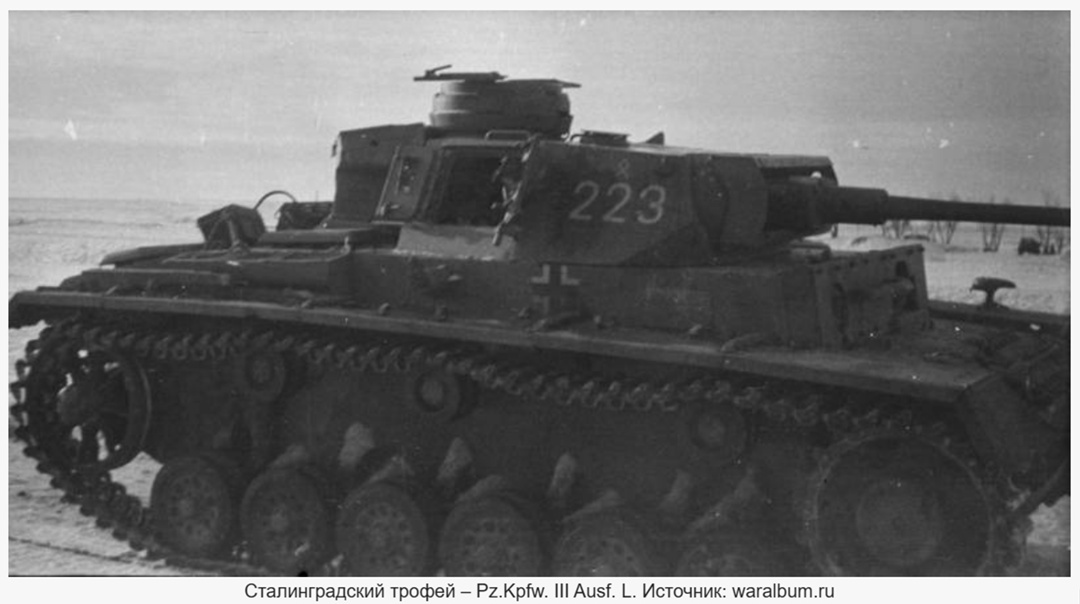
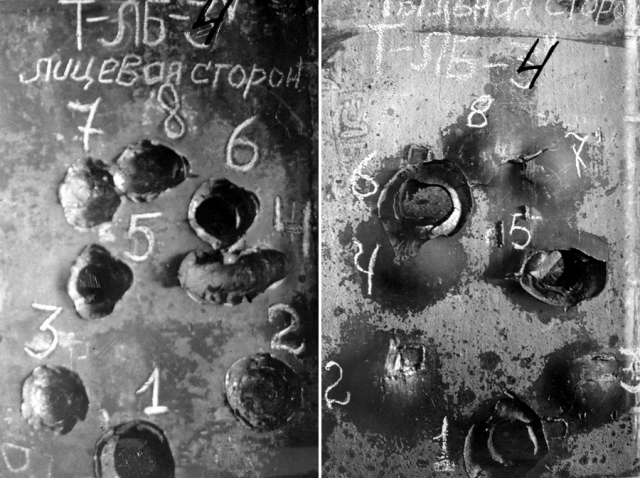
Let us go back about 80 years, to the final years of World War II. As tank armor grew thicker, a previously theoretical problem became widespread. Engineers started noticing something disturbing: after a bombardment, a tank might appear completely intact from the outside. No holes in the armor. And yet inside the crew compartment — catastrophic destruction.
Upon closer inspection, flat steel discs had separated from the interior surface of the armor. These fragments — called spall plates — possessed enough velocity to incapacitate or kill the entire crew. The projectile had never penetrated. The armor had "held." And still everyone inside was dead.
The Mechanics: How Elastic Waves Tear Metal Apart
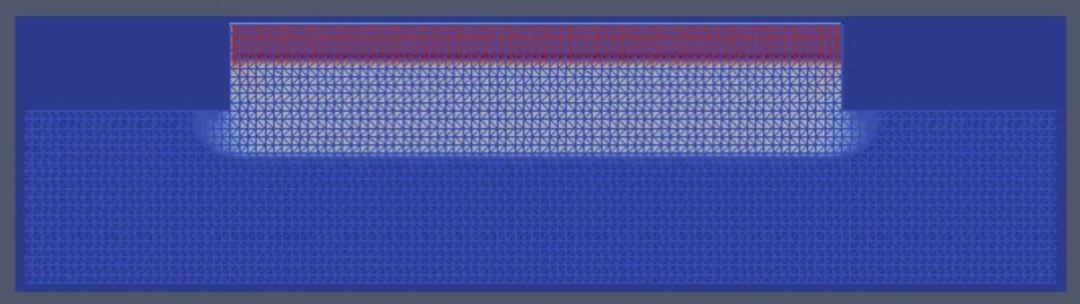
Imagine two flat discs colliding — a simplified model of projectile meeting armor. The moment they touch, elastic waves begin propagating through both materials. Color-coded simulations show this clearly: blue indicates stationary material, red indicates material moving rapidly.
Here is the sequence of events:
- Impact creates a compression wave that travels both upward through the projectile and downward into the target.
- When the compression wave reaches the upper free boundary of the projectile, it reflects — and a reflected wave travels back down.
- This reflected wave, now doubled in effective thickness, continues into the target material.
- At the rear free surface of the armor, compression waves reflect as tension waves — this is a fundamental property of wave physics at free boundaries.
- When the incoming tensile waves and the reflected tensile waves overlap, the local stress exceeds the material's tensile strength.
- The material fractures along that plane, and a disc ejects from the rear surface.
"This happens because compression waves reflect as tension waves from free boundaries" — a principle Newton himself would have recognized. The analogy to Newton's Cradle is exact: momentum transfers through an elastic medium with minimal energy loss, so the ejected fragment can reach velocities approaching that of the original projectile.
Why It Is Hard to Reproduce in the Lab
The conditions for clean, reproducible spallation are demanding:
- Perfectly flat surfaces
- Matched materials on both sides
- Absence of internal defects — no pores, no microcracks, no grain boundary weaknesses
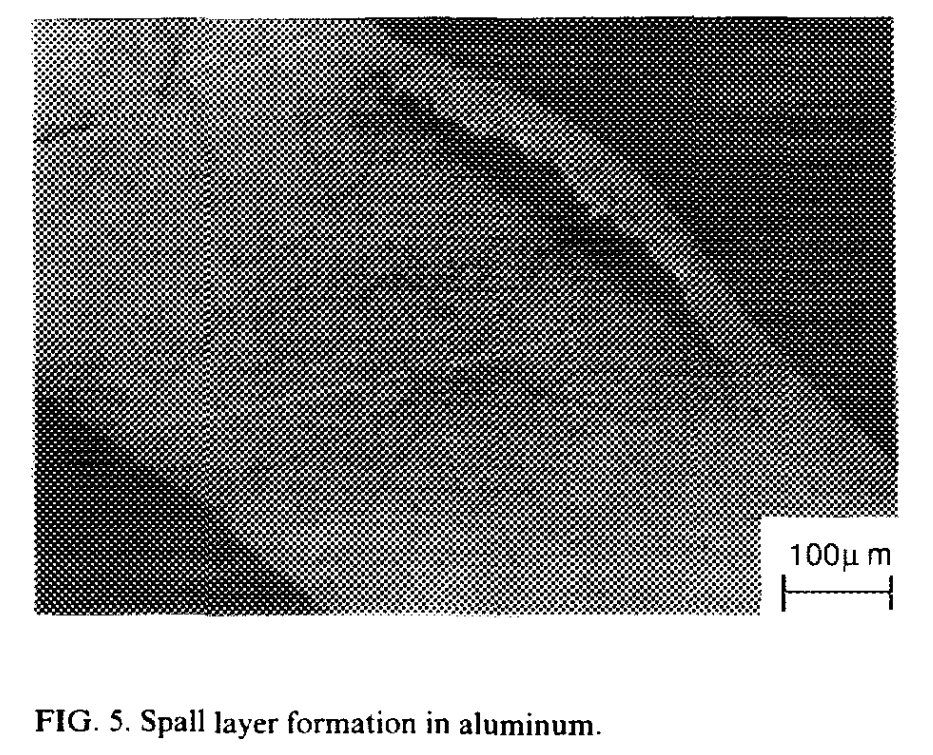
Researcher Ganel managed to achieve reliable spallation results even with sapphire samples by using laser-induced impacts — a feat considered nearly impossible with conventional laboratory methods. The crystalline perfection of sapphire actually makes it a useful test material precisely because its failure is so clean and reproducible.
From WWII Tanks to Modern Solutions
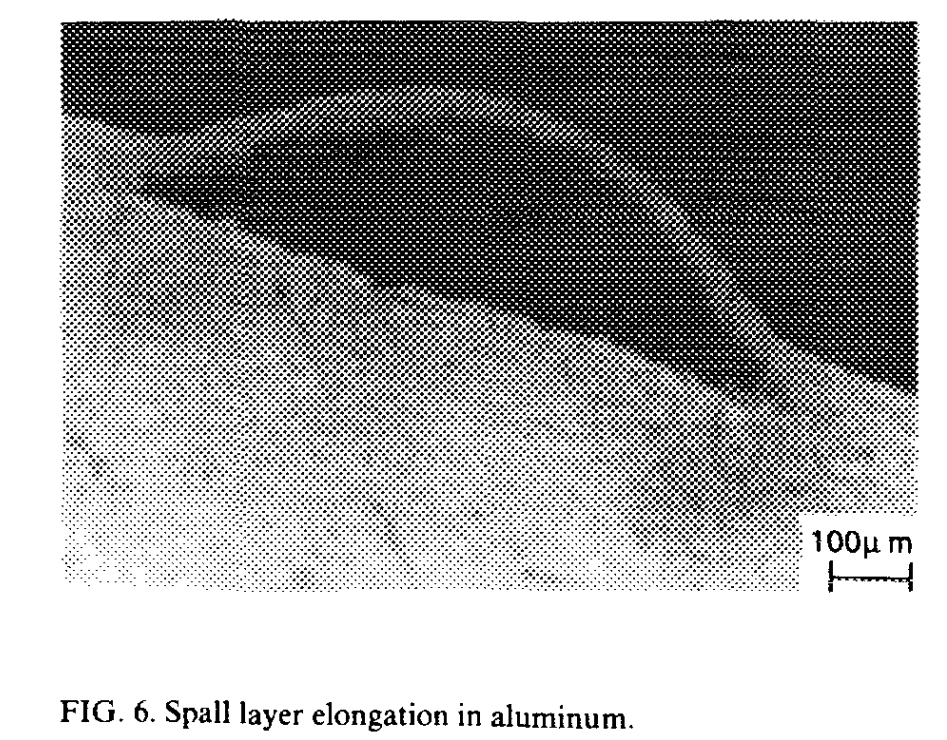
By the end of World War II, spallation had become a widespread practical problem tackled simultaneously by physicists, materials scientists, and engineers. The T-34's designers addressed it through metallurgical processing — casting, forging, and rolling techniques that increase fracture toughness and disrupt the clean wave propagation that causes spalling.
Later engineering solutions included:
- Layered armor designs that introduce impedance mismatches, scattering waves before they can constructively interfere
- Active armor systems that detonate outward to disrupt incoming projectile geometry
- Anti-spalling polymer layers bonded to interior surfaces, which absorb kinetic energy viscously before disc separation can occur
High-Velocity Impacts: Near-Orbital Speeds
Modern research has pushed spallation studies into extreme velocity regimes relevant to space debris. Consider a 1.2 cm sphere striking a target at 6.8 km/s — near orbital velocity. At such speeds the projectile itself largely disperses as an ultrathin deposit across the crater bottom. Yet the spallation damage at the rear of the target plate can be more severe than the entry crater.
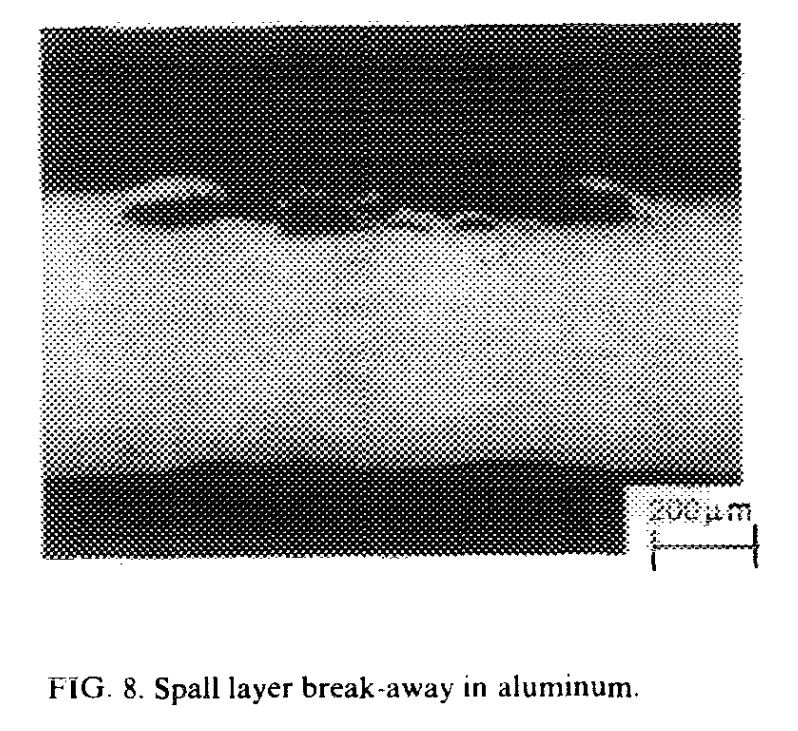
This has direct implications for spacecraft shielding design. Whipple shields — the layered bumper systems used on the International Space Station — exploit this physics deliberately: the outer bumper causes an impactor to fragment and vaporize, spreading the energy over a wider area before it reaches the pressure hull.
The Electron Beam Experiment: A Frozen Flower
One of the most visually striking demonstrations comes from firing a relativistic electron beam into a block of clear acrylic. Three distinct damage zones appear:
- The entry crater — surprisingly minimal, given the energy involved
- The rear spallation disc — the classic result, a neat disc ejected from the back surface
- A radial crack rosette — fractures spreading outward from the impact axis in a pattern the author describes as a "frozen flower"
The thermal plasma created by the electron beam expands like a flat pressure pulse, mimicking the geometry of flat-plate impact and producing textbook spallation mechanics. The fractal-like crack pattern is a beautiful artifact of the stress wave's interaction with the material's microstructure.
What We Know — and What We Don't
Spallation engineering is now well integrated into industrial standards and armor design. Early computers and numerical modeling accelerated understanding enormously, and the phenomenon is considered "solved" at the engineering level for most practical applications.
Kevlar-based Whipple shields are a different story. They have been flying on spacecraft for 40 years — since Giotto in 1985 — yet modern materials science still cannot fully predict how exactly the fabric fails and absorbs energy. The fibrous, anisotropic microstructure of woven polymers makes analytical modeling extremely difficult. As Beklemysheva's 2024 numerical modeling work on fracturing in fiber-reinforced polymers shows, this remains an active research frontier.
The watchmaker, to borrow Dawkins's phrase, is not merely blind — in the realm of material failure mechanics, it turns out she is also still learning.
Sources
- Savinykh, A.S., Kanel, G.I., Razorenov, S.V. (2011). "Sapphire strength during spalling fracture."
- Demidov et al. (2015). "Polymeric material properties under intense energy flux."
- Beklemysheva, K.A. (2024). "Numerical Modeling of Fracturing in Fiber Reinforced Polymers."