On the Mathematical Abilities of Students, or How to Teach an Overloaded Brain
A university professor examines the alarming decline in students' cognitive abilities and abstract thinking, driven by digital dependency and information overload, with evidence from France, the US, and practical recommendations for mental fitness.
I love giving simple problems to students during lectures. First, you can see how many we've lost; second, it's a switch from information consumption mode to output mode; and third, it's an opportunity for the sharp ones to show off. Nothing but advantages!
One simple problem goes like this: "When converting an image from the RGB color space to YUV, we perform subsampling — that is, we discard every even column and every even row in the U and V components (all pixel components are 1 byte each). Question: how many times less data do we have now?" This operation is called chroma subsampling and is widely used in video compression, for example.
It's funny that once upon a time, when hard drives were smaller and floppy disks were bigger, students actually answered this question quickly. But in recent years, people regularly go into a stupor. You have to break it down piece by piece: "If you discard every even row and every even column, how many times less data will the component have?" Almost in unison: "Four times." I start teasing: "Excellent! We had 3 apples, the first stayed as is, and the second and third each became a quarter. How many times fewer apples do we have now?" People laugh, but finally give the correct answer (note: not everyone).
This would be funny if the ability to quickly estimate results mentally didn't directly affect the ability to create complex algorithms faster.
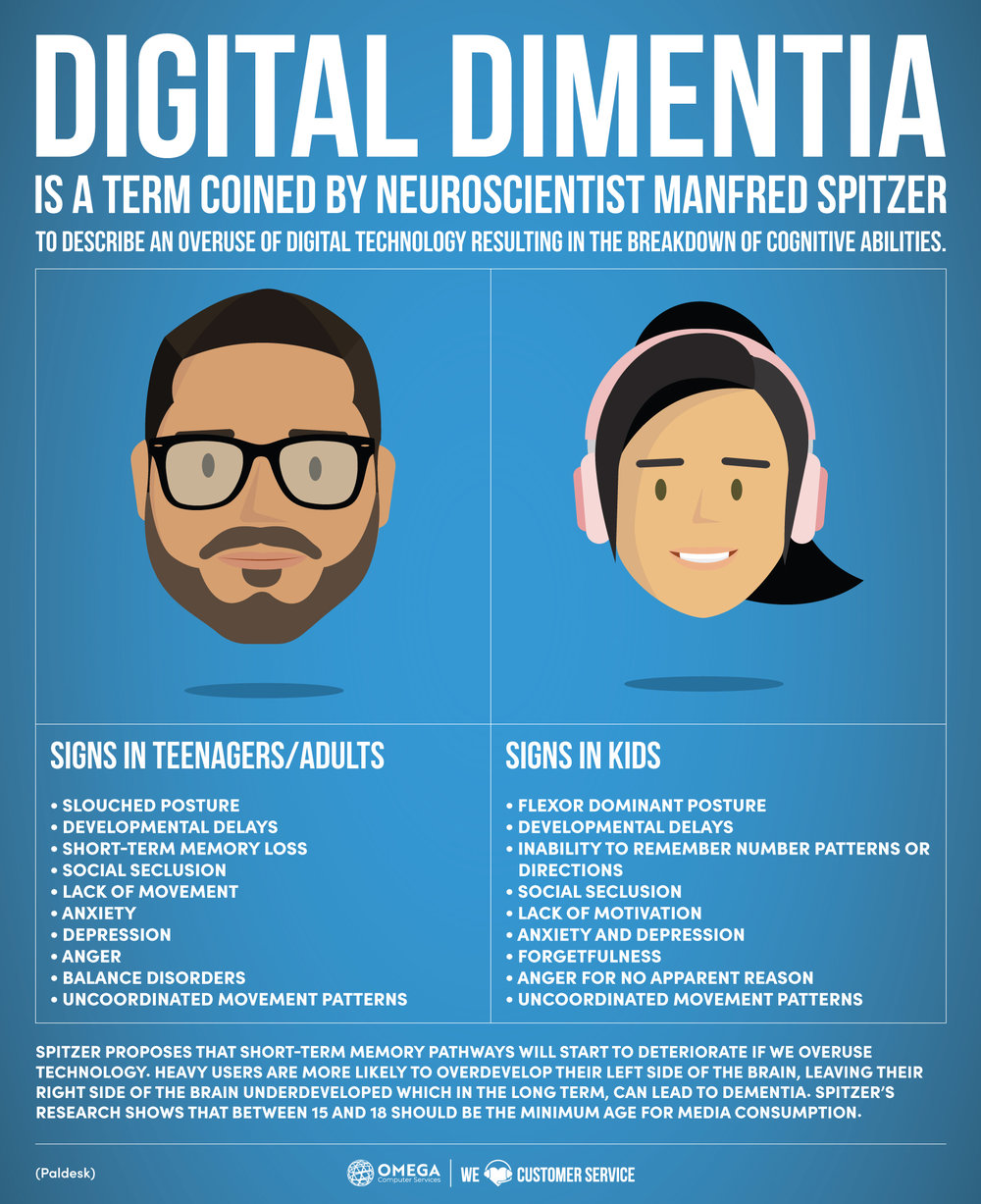
And you can clearly see how this ability among the broad mass of students has been noticeably and steadily declining. And not only in our country. A special term has even been coined: "digital dementia" — a decline in cognitive abilities serious enough to affect a person's daily activities.
For those interested in the scale of the disaster and what can be done about it — welcome under the cut!
Let's Start with Tales of Deep Antiquity
In the second half of the 19th century, there was a nobleman, Moscow University professor, and corresponding member of the Russian Academy of Sciences named Sergei Alexandrovich Rachinsky. Before he turned 40, he left Moscow, returned to his family estate, and founded a village school there, where he taught mathematics among other subjects.
Sergei Alexandrovich himself described the process as follows:
"...I set about teaching arithmetic in a village school, not suspecting what I was getting into. No sooner had I begun exercises in mental arithmetic, which had not been practiced in the school until then, than a real passion for them developed, one that has not abated to this day. From early morning until late evening, I was pursued by one group of students after another, then all together, demanding mental problems... Very soon it turned out that they were getting ahead of me, that I needed to prepare, to practice myself... In the evening there were choir rehearsals in which all the best students participated, and I was left alone with the non-singing students. This was exactly what my tormentors were waiting for. All at once, all thirty or forty of them would descend upon me: 'Sergei Alexandrovich, give me a division problem! — Give me one with hundreds! — Give me one with ones! — Give me one with millions! — Give me one with thousands!'... this incessant intensive wrestling with numbers gave me a real arithmetic nightmare, drove me into number theory, and repeatedly made me discover America — that is, theorems of Fermat and Euler unknown to me..."
Rachinsky had several notable students; in particular, the painter Bogdanov-Belsky depicted his teacher's lesson like this:

On the blackboard, if you look closely, there is a problem written:
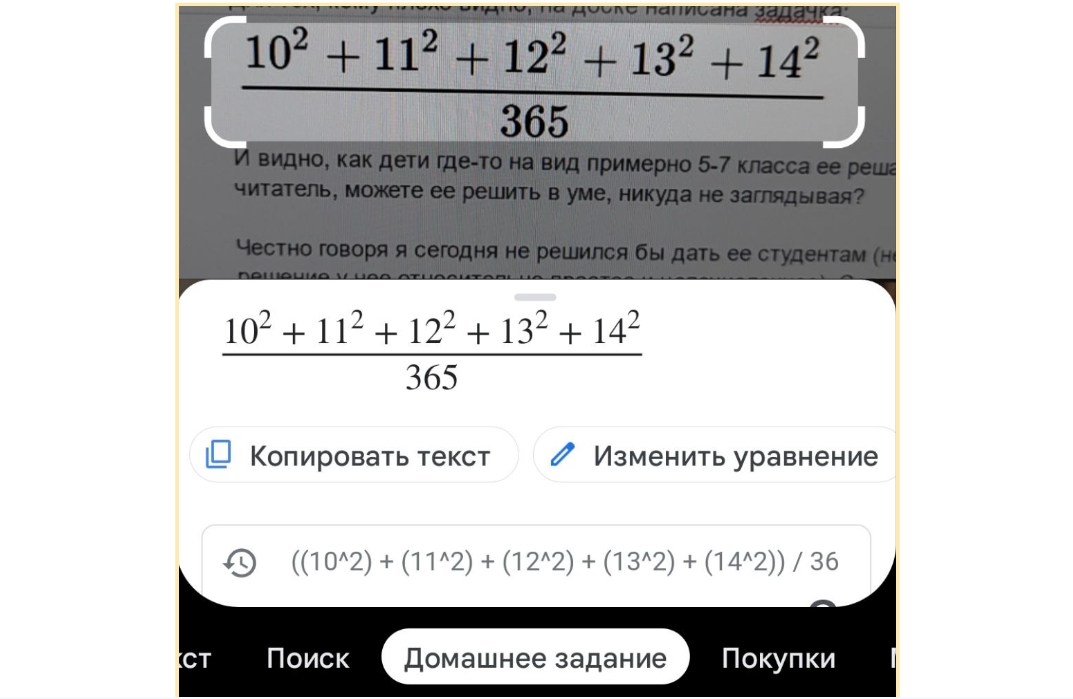
(10²+11²+12²+13²+14²)/365
And you can see how children who appear to be in roughly grades 5-7 are solving it, and some have even already solved it.
And you, dear reader, can you solve it in your head without looking anything up?
Honestly, today I wouldn't dare give it to students (despite the fact that the solution is relatively simple and yields a whole number). Modern students, with all the uncompromising nature typical of youth, will point their smartphone at the projector screen and in a second get the answer from Google Lens in "Homework" mode. They went through all of school doing this. Below I pointed my phone at it, but I hid the solution so as not to spoil things for those who actually tried to engage their brains:

Such instant solving of problems that schoolchildren a century ago wrinkled their brows over (and formed their brain convolutions) has produced a natural psychological defense reaction today: there's no need to understand complex questions, to keep anything in your head, no need to study, no need (and this is the most important thing!) to train your abilities (and strain your brain convolutions). Today everything is on the internet! Absolutely EVERYTHING! And everyone you ask among young people thinks so. And millions of lemmings, as we know, can't be wrong.
I especially love it when future programmers reason this way. I immediately and cheerfully agree: "Of course! And in general, you can sit any secretary down to program in place of a senior — the main thing is to teach her to search for solutions on StackOverflow!" Hmm... When put that way, even the most categorical begin to suspect that a secretary might not handle Senior Software Engineer tasks after all (strange, why is that, since she has the whole, whole internet! Absolutely all of it!).

In any case, the drive toward developing one's brain is clearly drastically lower today than 130 years ago (another painting by the same artist):
You can see that the young man has serious problems with his trousers and jacket (and his bast shoes are on their last legs), but the desire to learn is clearly readable even from behind. And since there were many such knowledge-hungry students in those poor times, Rachinsky by the end of his life had founded 18 (eighteen!) schools with his own money, where about 1,000 children studied. A most worthy person!
Closer to Our Times
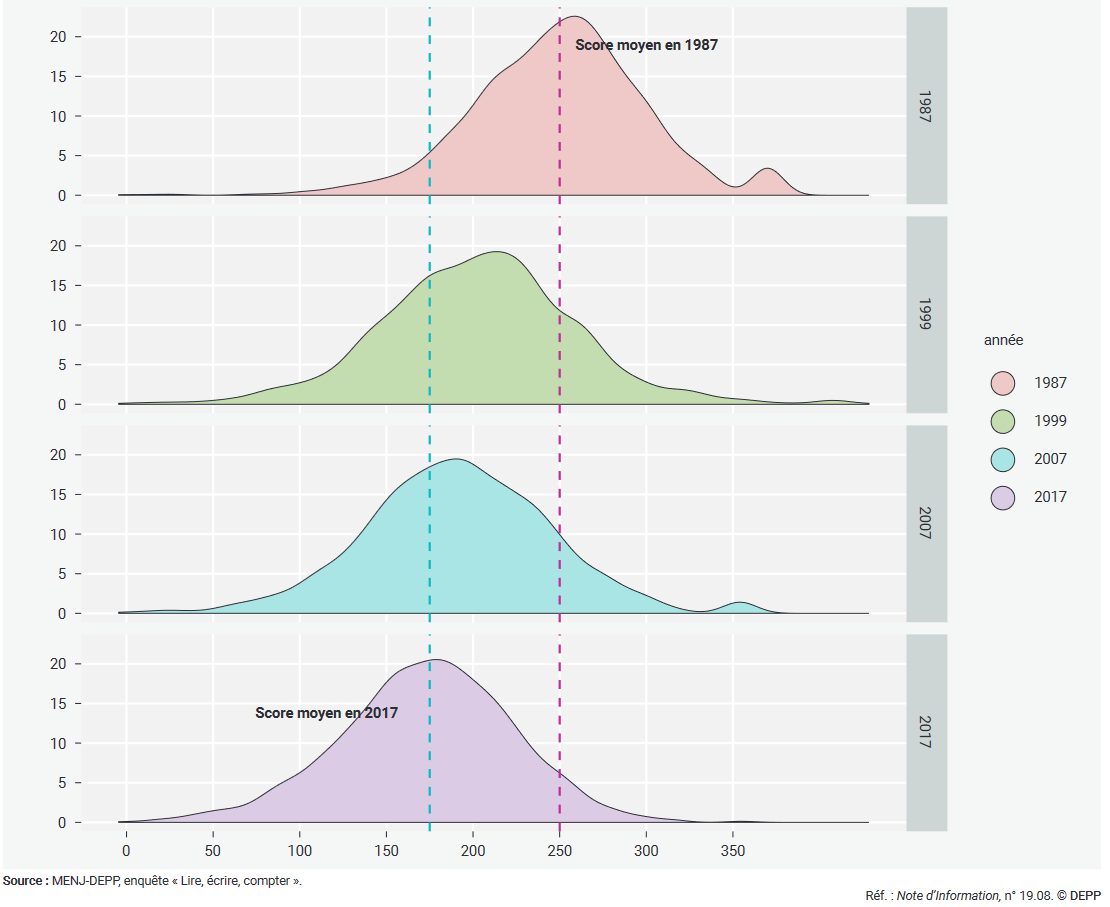
However, closer to our times. As I already said above — problems with the degradation of schoolchildren's mental abilities are observed in all developed countries. For example, in France, sixth-graders (roughly the same age as in the painting above) have been tested on the same mathematics tests since 1987. Apparently, these cruel people don't let the poor children use smartphones while taking the test, so the results look like this (the original is in French, for those interested):
French Ministry of Education: Changes in CM2 student performance in mathematics over thirty years (1987-2017)
We see a shift in the "bell curve" peak of scores by approximately 30% from 250 to 175 points over 30 years (and even then, they cheated a bit with rounding — the peak was not at 250 but to the right). But for me personally, what matters more is that the "bump" on the right practically disappears. These are the most mathematically talented kids who will later advance science and modern technology. This graph confirms my subjective feelings about the decreasing percentage of strong students who are ready and, most importantly, able to tackle complex problems.
A sketch from life on this topic. Just a month ago, students did an assignment noticeably worse than in previous years. I began going through the algorithm with them step by step (a generally not-too-complex one). At some point in the process, an 8x8 matrix of elements came up, and the number of elements needed to be divided by 4. As usual, I asked: "How much will that be?" And I was floored, because no one answered... Aaargh... That feeling when you think you've hit rock bottom... and then someone knocks from below!
Come on, this problem can be solved at least three ways:
Head-on (for the few who can still divide two-digit numbers mentally):
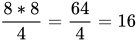
8*8/4 = 64/4 = 16For the advanced (who can simplify expressions):
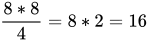
8*8/4 = 8*2 = 16For real programmers:
8*8/4 = 2³*(2³/2²) = 2^(3+3-2) = 2&sup4; = 16But in reality, even the practical skill of such minimal mental arithmetic is absent. Where's my Google Lens? Why doesn't it pick up problems from voice yet?
Funny enough, literally the following week after this incident, there was a conference in St. Petersburg, and I told my colleagues from ITMO and Innopolis this story, to which the Innopolis professor immediately and confidently asked:
— Was this the second year?
Me, slightly surprised:
— Yes, but how did you know?
It turned out he observes exactly the same picture (a sharp step-down in abilities). "COVID children," he says... the generation that prepared for university entrance exams and completed their first year on remote learning, for whom smart apps quite successfully (judging by test scores) replaced brain development. And that would be fine, but ultimately this dramatically affects the ability to absorb and create algorithms. And apparently not just algorithms.
The Smartphone Effect
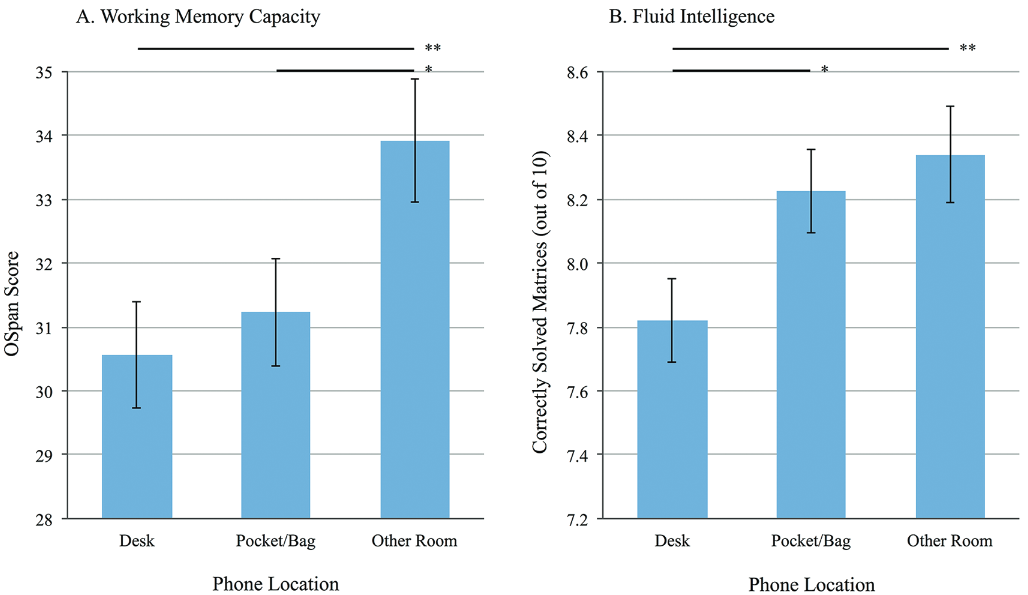
An interesting cruel experiment was conducted several years ago in the US. 548 students were divided into 3 groups: one had their smartphones taken away at the entrance to the auditorium; the second had smartphones with them but in a pocket or bag; and the third had smartphones lying on the desk but weren't allowed to use them. The results were published in a paper titled "Brain Drain: The Mere Presence of One's Own Smartphone Reduces Available Cognitive Capacity" and were in some sense predictable — even having a smartphone in one's field of vision impaired test performance (because there it is, right next to you — the solution to all problems!):

The impact of smartphones on memory and cognitive abilities, oil on canvas
And these studies correlate quite well with the picture observed by many teachers. Here's what a colleague who teaches chemistry writes:
"The picture with schoolchildren and students is exactly the same. The reason is very simple: their brain has long been replaced by Google. A student can come to a test even drunk, but if they have their phone, everything's fine. They'll do everything, solve all the problems, etc. But if they DON'T have their phone... That's it! Disaster!!! Their own brain has forgotten how to work. They don't remember the simplest things and basic terminology.
It reached the point of absurdity. A female student (whose phone had died) sits and waits for her friend to give her hers. 'Why?' I ask. 'I need to look at the periodic table.' A useful thing. Without it, solving chemistry problems is rather difficult. I point my finger at the wall where a paper periodic table hangs. The student is in shock. In her eyes is the mute question: 'Wait, you can do that???' She's not in the auditorium for the first time, she's seen that poster, but... the thinking pattern works: she searches for information ONLY on the internet and ONLY in ready-made form. Other options aren't even considered. Process the available information? No, that's too hard.
There are exceptions, but in the whole cohort you can count them on your fingers, and one hand's fingers will suffice."
Pay attention — on one hand's fingers for the whole cohort! And tomorrow everything will be even worse...
Books on Digital Overload
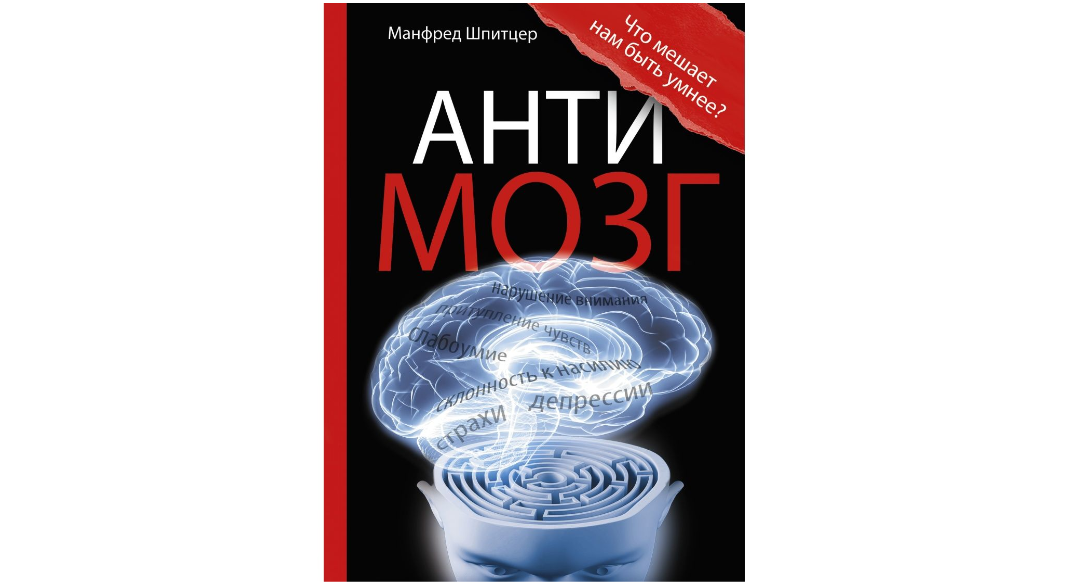
An interesting popular book about the impact of information flows on mental activity (primarily in children) was written by the German neuroscientist and psychiatrist Manfred Spitzer. The book was published in English as "Digital Dementia" and is quite easy to find in electronic form:
It was written 10 years ago and has amusing examples from the era of internet development at that time:
"Every day I receive emails from schoolchildren and students roughly like this:
Dear Professor,
I / we am/are working on a paper [homework / bachelor's thesis / master's thesis / dissertation] on the topic 'The brain and x' [for the variable x, substitute any content]. Could you answer these questions for me/us: 1) How does the brain work? 2) ..."
I can confirm this phenomenon! Such letters — living evidence of unwillingness to think with one's own head — I used to receive too (especially before exams). But my field isn't about the brain, so it wasn't as epic. Spitzer tries to explain as accessibly as possible that a brain trained in information processing mode and a brain in new information synthesis mode are not the same thing. And the second mode is extremely important to consciously train, which has become quite dismal in today's age of easy access to ready-made information and answers (to any question in any textbook!).
Stupidity, as it turns out, is caused and exacerbated by an excess of information, and the situation has become absolutely extreme:
Recently my wife and I were in a southern country, and one family there struck us. A father, mother, and two children approximately 5 and 10 years old came to eat every time with two tablets. The children would sit at the table, bury themselves in the tablet, and the parents would bring them food from the buffet. The children ate without regaining consciousness — without taking their eyes off the screen. And so every time... every day... Meanwhile, all around there was sun, palm trees, and warm sea, but for the children, obviously, only cartoons and games existed. Why this absolutely ordinary case of the "tablet babysitter" made such an impression, I'm not sure. Especially when the child ate poorly and they threatened to take the tablet away. And the child would start (without looking away from the screen) moving the spoon more actively! The parents definitely solved their problems (what to do with the kids, poor appetite, and bad behavior), but something tells me they've created many other problems. Gadget dependency will be off the charts. Engage your own brain? How? And more importantly, why?
The term digital dementia itself is popular in South Korea, where children receive tablets and smartphones in their hands very early and very massively, and where these problems became noticeable earlier. I remember in Hong Kong being struck by teenagers in school uniforms who were almost universally very hunched over. Especially the boys. A direct consequence of computers and, apparently, gaming from early childhood.
For those who find Spitzer too popular, a more serious book on the same topic was written by the Swedish neuroscientist, professor at the Karolinska Institute in Stockholm, Torkel Klingberg:
It contains an enormous number of references to modern research, while providing understandable explanations for completely everyday situations:
"Imagine this situation: You've just walked into a room, probably to fetch something. But for some reason you hesitated, stared at the wall, and are trying to remember what exactly you were going to do.
Your brain simply forgot what command was addressed to it. But why did this happen? [...] As a result, the excess of information in the brain led to you simply staring at the wall and being unable to remember anything. Our brain has certain limits for storing and processing information."
The book examines the ability to concentrate (and distractibility), the ability to memorize information (and forgetfulness), and increasing your IQ (and information stress). For those interested in deep research, the book will help you maintain information hygiene and make your brain activity training more systematic.

And since we've gone down the book route, I'll also recommend Dave Asprey's "Head Strong":
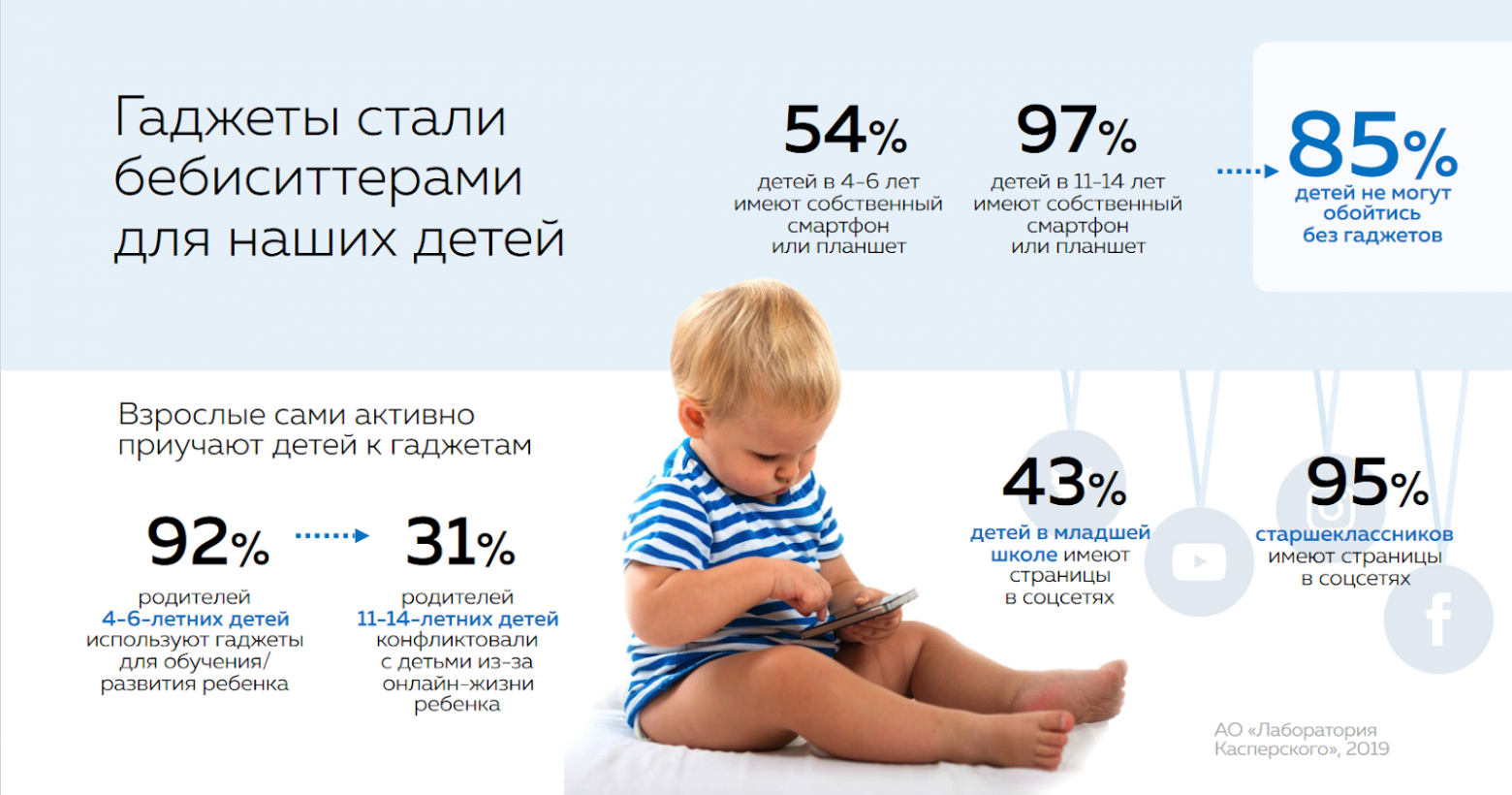
I'll say right away that in terms of scientific rigor — it's the most superficial of all the books presented, and there's plenty of cherry-picking, though the subtitle "A proven plan to maximize your brain's performance in two weeks" transparently hints at this (there are no easy quick paths to brain enhancement in reality). This book is interesting primarily for the epic story of its author. He earned 6 million dollars at age 26 selling his first IT company. Then lost all the money within a year. Then created the next company, which he sold for 400+ million. It would be a typical American success story if not for one nuance. When Dave was creating his first company, he weighed just over 70 kilograms and was a quick young man. When he was selling the second, he weighed almost 140 kilograms, had shot nerves, lashed out at employees, couldn't concentrate on simple documents, and fell asleep in meetings like an old man. Despite being young. At some point, caffeine wasn't enough to stimulate his brain, and he got hooked on nootropics, was on them for 8 long years, and got off with great difficulty. In short, if you read his book as a confession of a "brain addict," it reads very differently and becomes extremely useful.
Dave Asprey's story says in plain text what these children will face after 30. And maybe even earlier. And they might not have millions of dollars like Dave for effective recovery.
The Willpower Factor
After yet another lecture where I mentioned modern trends, a student who felt the symptoms of "digital obesity" approached me and asked what he should do. I gave advice (digital hygiene, the works), but you could see right in his eyes that following the advice would be hard for him. Can anything be done about this? Absolutely! There's a book called "The Willpower Instinct":

Its author is Stanford University professor Kelly McGonigal. Characteristically, when she began teaching this course at the university as part of the continuing education program, she had to order auditoriums of increasing size 4 times. Because the arriving students simply didn't fit. And it wasn't just students who came to listen, but also teachers, athletes, doctors, and entrepreneurs. Professor McGonigal not only gave lectures and homework assignments but also actively collected feedback on which strategies actually worked for the audience and which didn't. Accordingly, I have two pieces of news for you: good and bad. The bad news is that there's no universal strategy (because people are different, and everyone has their own strengths and weaknesses). And the good news is that for the vast majority of people, a personal strategy can be found. Because willpower is a muscle (yes, once again, just like with the previous brain book authors!), and if you train this muscle — it does get stronger.
Brief Conclusions
- Don't try to campaign against digital obesity (just as with regular obesity). You'll only face aggression. Yes, we who can read carefully remember that aggression is one of the signs of digital dementia, but that's no reason to draw fire on yourself. The most important (and difficult) thing is to change YOUR life and YOUR habits. Because forewarned is forearmed. Lifespans are increasing. And may dementia overtake you later!
- In the coming years, the percentage of people with good abstract thinking abilities (for example, scientists or software architects) will noticeably drop. Alarm bells about this have been sounding for a long time, but the management system of our education is unfortunately structured so that these signals don't reach the brain of the dinosaur — the decision-making centers — and won't reach them in the coming years. This is not a reason to give up. On the contrary, it means that families, companies, and every thinking person needs to develop and implement their own strategies that will contribute to your greater success, without wasting time. Start using your brain for its intended purpose right now! Become one of those rare individuals whose brain hasn't been replaced by Google!
- The Chinese will conquer the world. I follow with great interest how the Chinese were the first in the world to begin regulating the domain of digital drugs. Considering that both education and science are managed notably more wisely there (a separate big question — why), one can confidently forecast great success for Chinese technology companies in the coming years. In science, by the way, they're already achieving great success now.
Summary of Recommended Books
- Manfred Spitzer "Digital Dementia" — a very motivational book where Professor Spitzer tries to save you and your children. If you lack motivation — start with this one. By the way, it's clearly visible that in the 10 years since it was written, the situation has significantly worsened.
- Torkel Klingberg "The Overflowing Brain" — the most scientific of the recommended books. Conceptually, Professor Klingberg says the same thing as the previous author, but more scientifically, laying everything out more clearly, with similar conclusions and recommendations. For all those who've trained their brain above average.
- Dave Asprey "Head Strong" — the only book in this short list not by a professor but by a millionaire entrepreneur. So he'll habitually be selling you not just his story but his special coffee. But if you read it as an addict's confession (someone who was on nootropics for a long time), it's genuinely gripping in places.
- Kelly McGonigal "The Willpower Instinct" — an extremely useful and practical book that isn't directly related to brain training, but very clearly shows why people gain excess weight. Her advice will definitely help in the successful practical application of the anti-digital obesity recommendations from the previous authors.
All these books are easily found in electronic form, but I recommend buying them. It's psychology again. Something you paid even the equivalent of a couple cups of coffee for has a greater chance of being applied than something gotten from a torrent. Consider this a potentially extremely successful investment in yourself. And with your own hands (and head), make this investment actually successful.
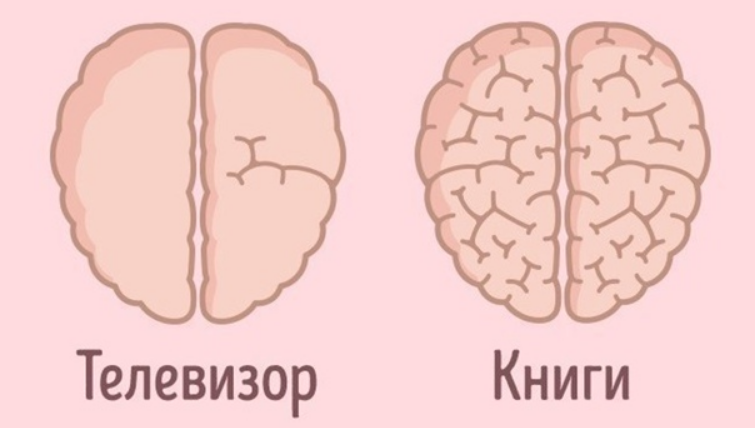
I wish everyone who read this far smart colleagues and bosses, clever children, talented subordinates, and most importantly — may your brain not be overloaded with information and work effectively in the mode of generating and implementing great new things!
Stay tuned!)
Acknowledgments
I would like to sincerely thank:
- My alma mater Moscow State University for an excellent school of scientific work,
- Separately, for invaluable feedback, I would like to thank Alexander Dyakonov, Anton Konushin, Yaroslav Kholodov, Vladimir Frolov, Alexander and Mikhail Chernykh, and Anastasia Antsiferova, who did a great deal to make this article better,
- And finally, a huge thank you to Konstantin Kozhemyakov, Alexei Bryntsev, Darya Tserekh, Egor Kashkarov, Andrey Akifiev, Fedor Pritula, Maxim Velikanov, Anton Konushin, and Egor Chistov for a large number of substantive comments and edits that made this text much better!
FAQ
What is this article about in one sentence?
This article explains the core idea in practical terms and focuses on what you can apply in real work.
Who is this article for?
It is written for engineers, technical leaders, and curious readers who want a clear, implementation-focused explanation.
What should I read next?
Use the related articles below to continue with closely connected topics and concrete examples.