Putting a Cat Back on Its Feet: Titanium Prosthetics and Microarc Oxidation
The real story of how a cat named Dymka, who lost all four paws to frostbite, received 3D-printed titanium prosthetics with biocompatible calcium-phosphate coatings created using custom high-current microarc oxidation equipment.
This is a real story about saving a cat named Dymka who lost all four paws, her tail, and ears due to frostbite, yet survived. More than that, she ended up in the hands of compassionate people who helped the animal literally get back on its feet — specifically, with prosthetics made using the latest technology.
Dymka the Cat and Some Veterinary Science
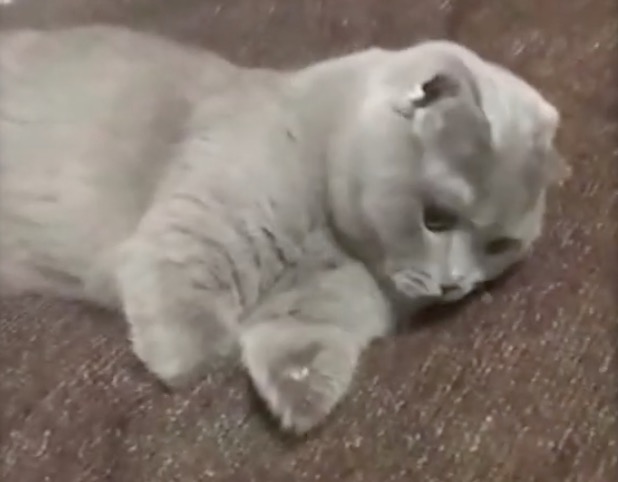
Dymka was a lost house cat poorly adapted to life outdoors who likely would have perished entirely, except a caring person rescued her. However, severe frostbite injuries resulted in the loss of all four paws — essentially a death sentence for an active animal like a cat. Dymka could only crawl and ate poorly because she couldn't assume the necessary posture. Veterinarians suggested euthanasia as the only humane option.
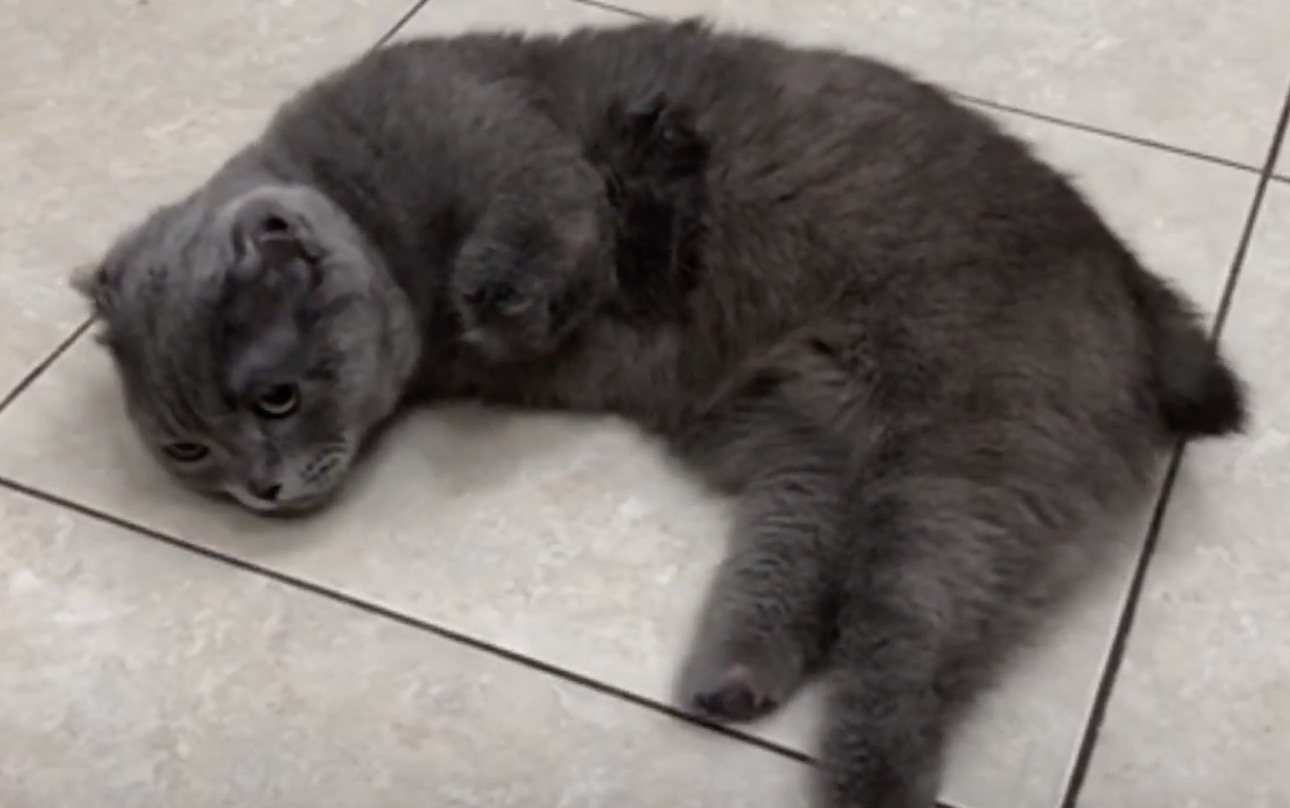
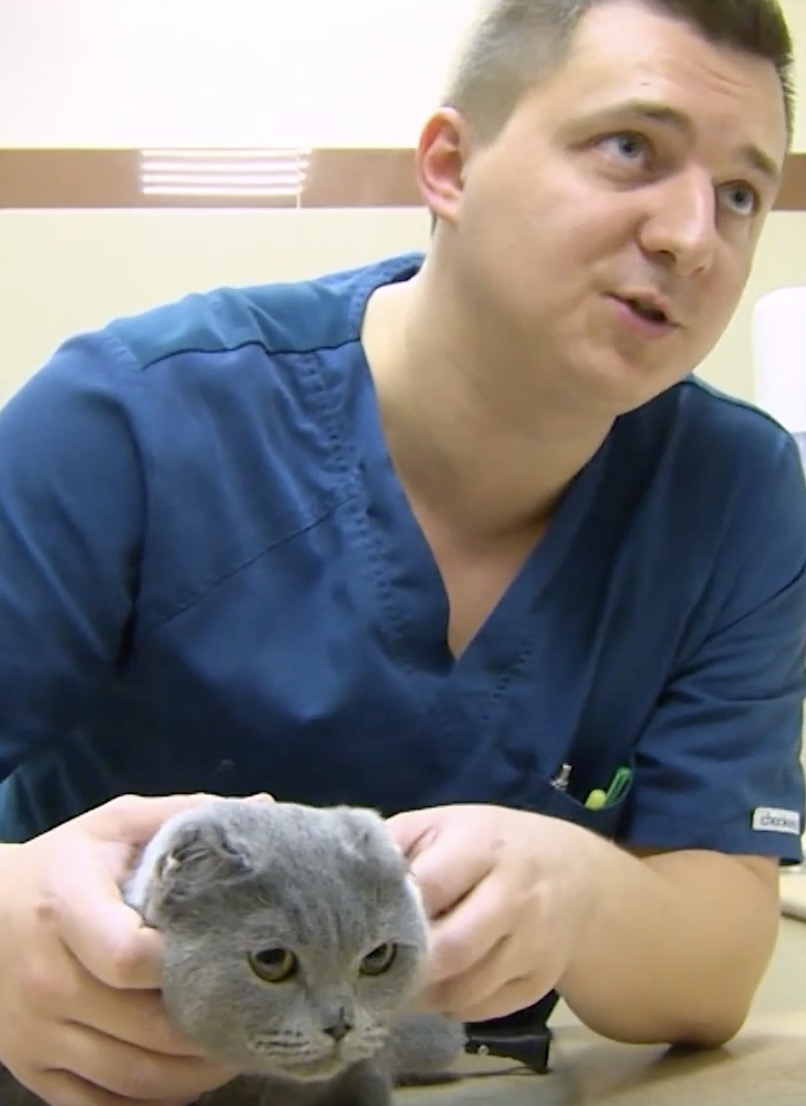
However, her new owner was determined. Associates recommended contacting Sergey Gorshkov, Novosibirsk's most renowned veterinary specialist known for tackling complex cases.
The veterinary surgeon took the case because he had previously become the first in the world to fit a cat with prosthetics on all four paws — documented in a scientific journal article. His experience helped, though challenges remained. Cat bones are thin, requiring detailed, precise prosthesis modeling.
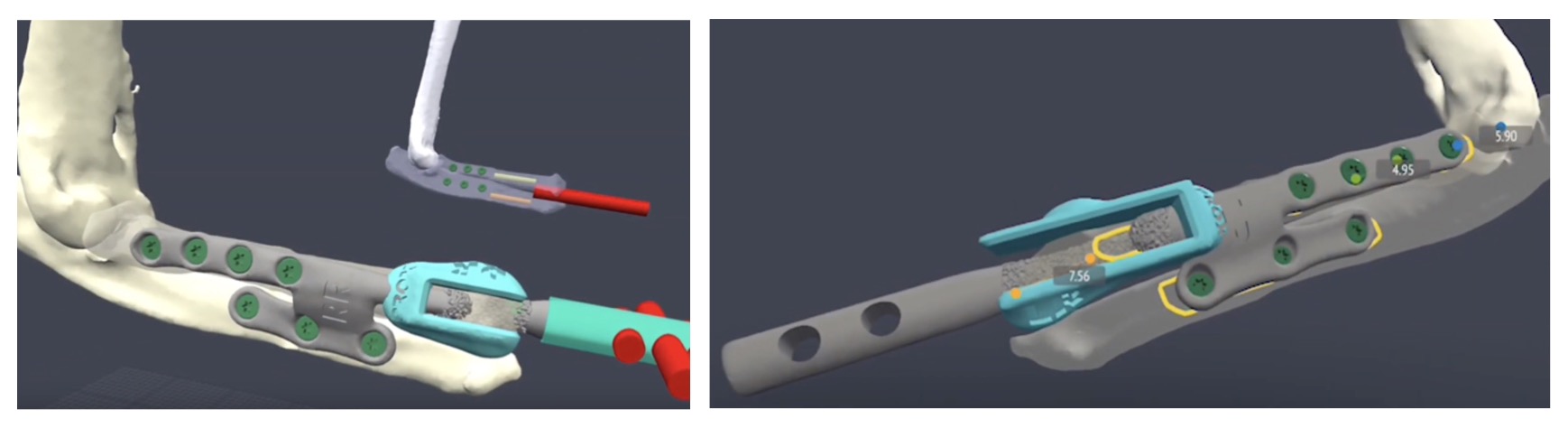
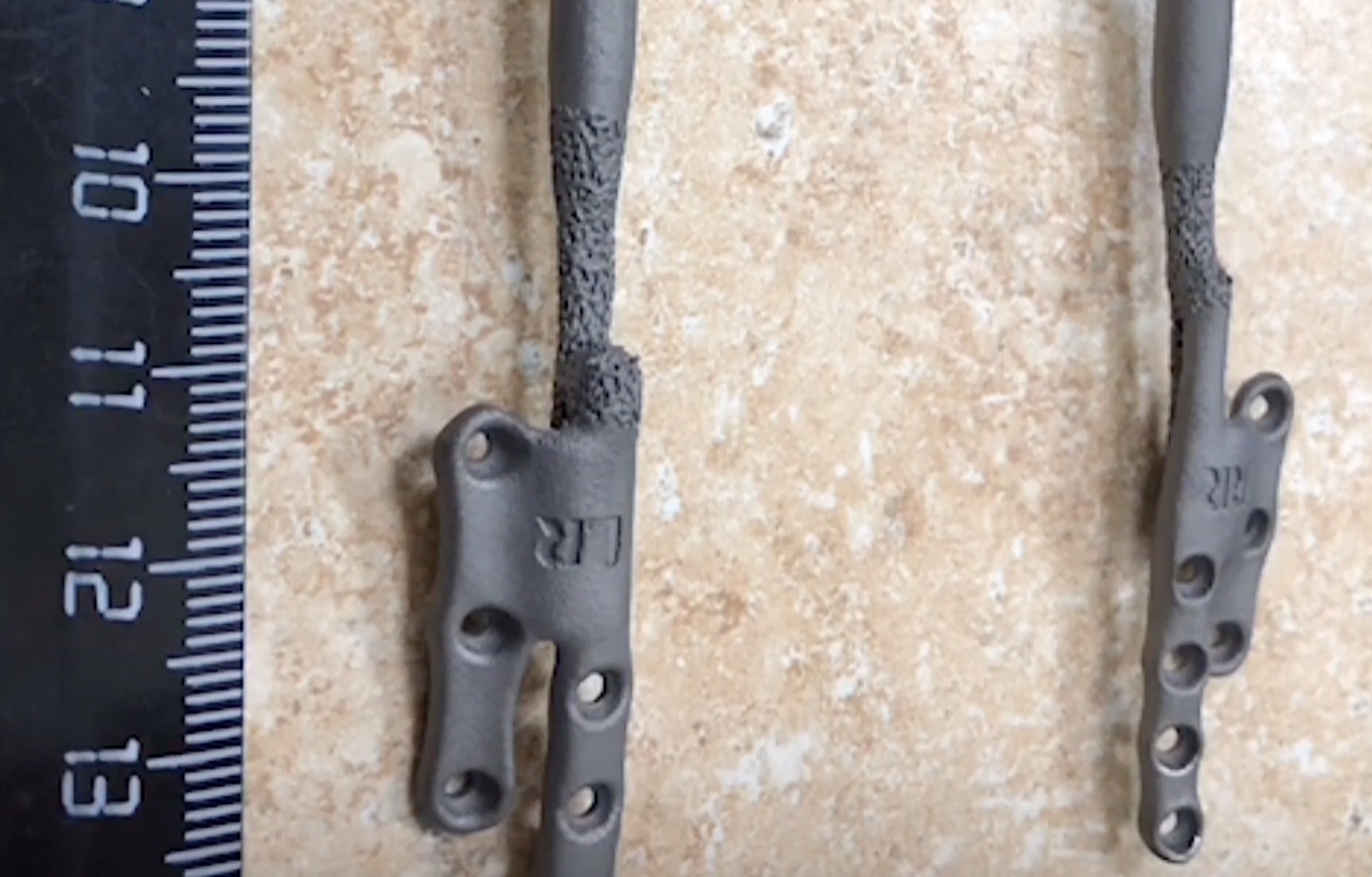
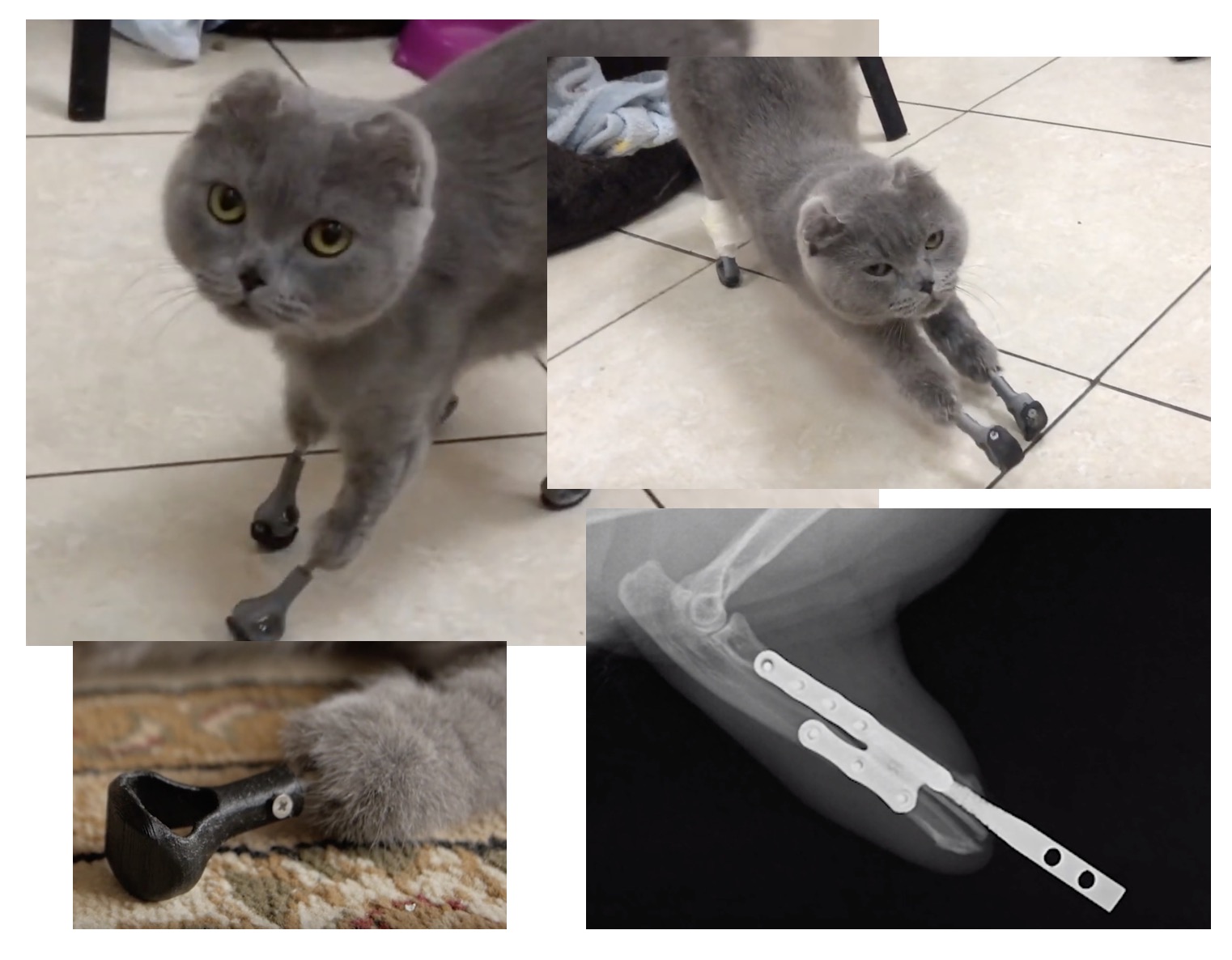
X-ray images and the specialist's experience guided prosthesis configuration design. After extensive prototyping and optimization, a titanium prosthesis was 3D-printed and implanted.
One Prosthesis Differs from Another
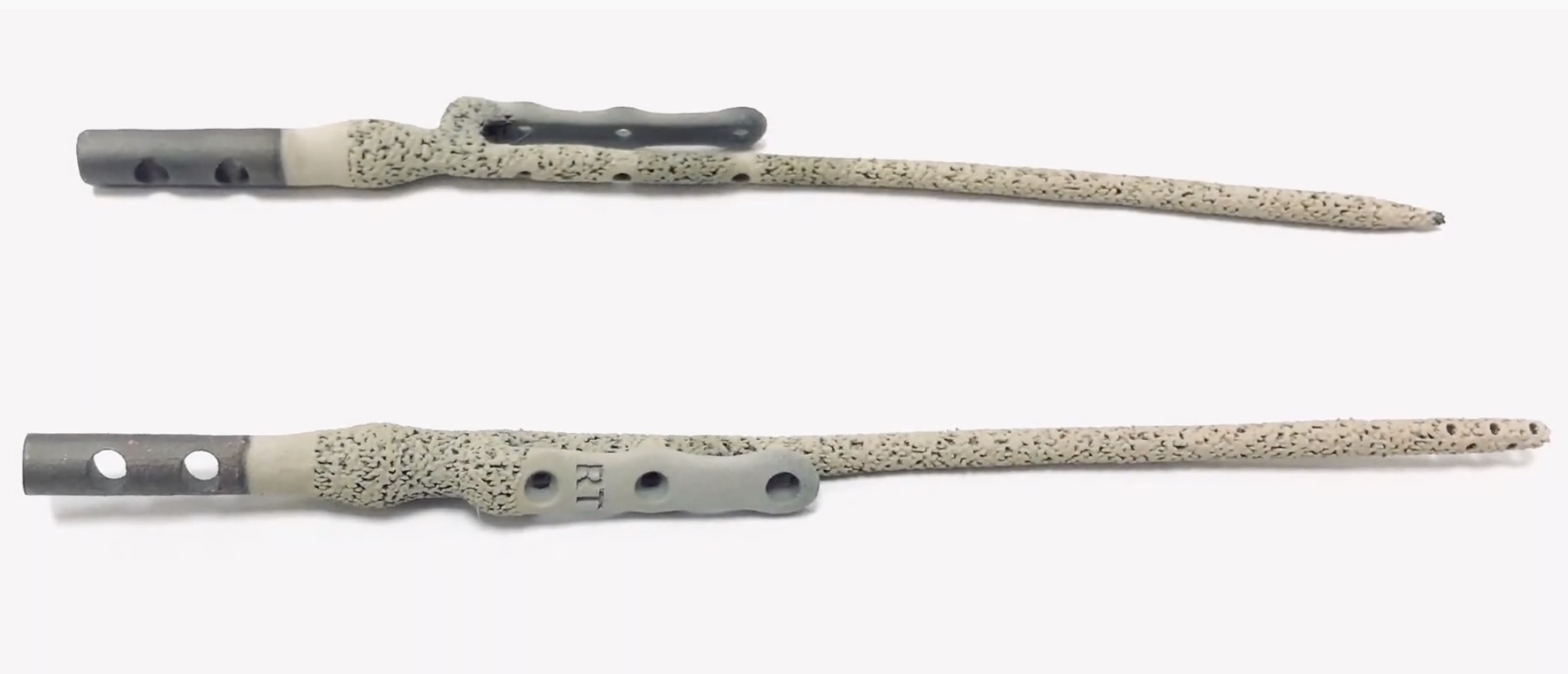
The surgery lasted over five hours and succeeded. However, an important prerequisite preceded this success. Although titanium is biocompatible, special coatings are necessary to prevent rejection and allow bone tissue to penetrate and secure within the prosthesis.
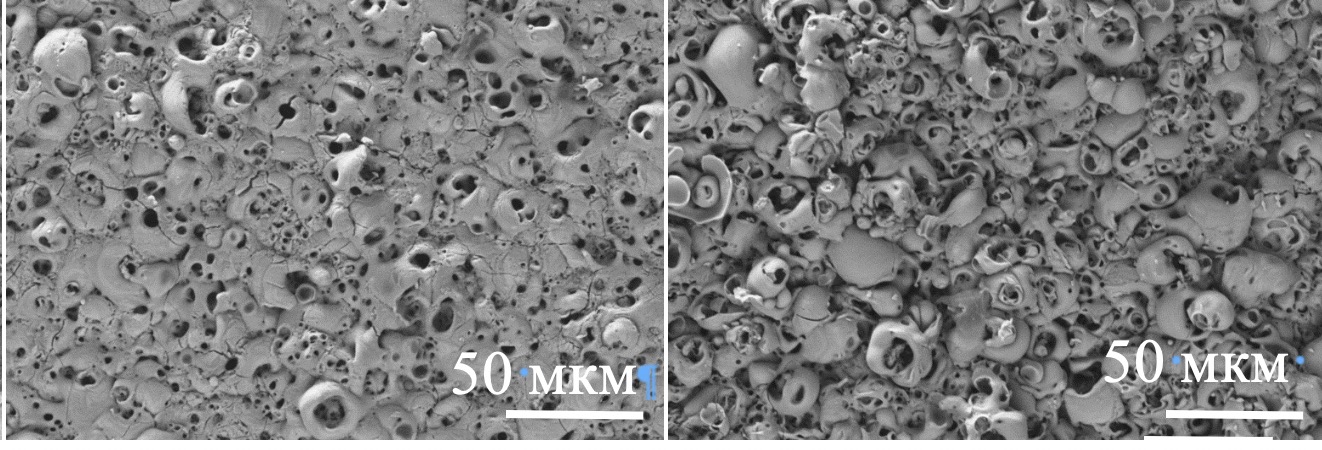
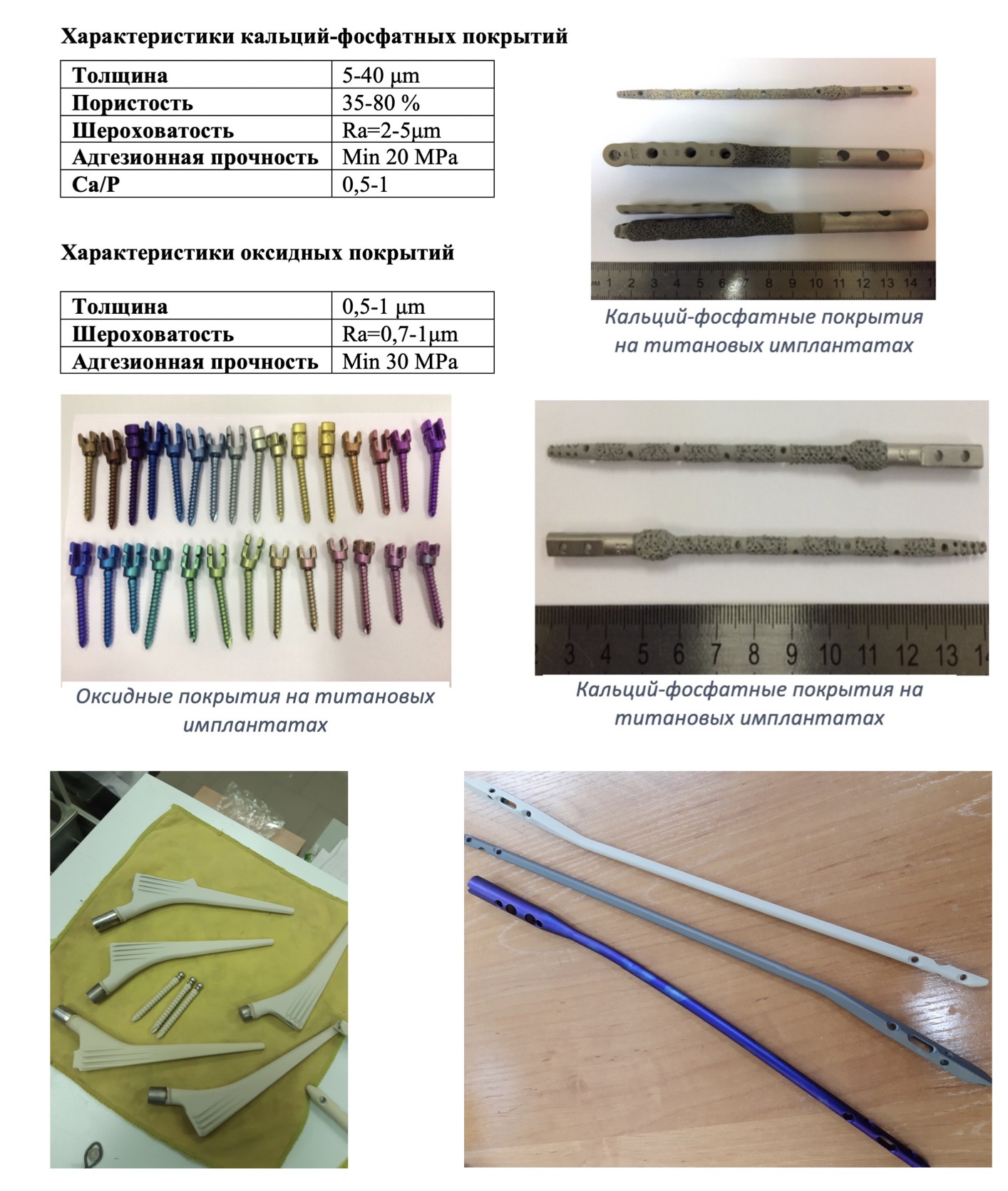
A special biocompatible porous calcium-phosphate coating was necessary. This coating technology was developed at Tomsk Polytechnic University under S.I. Tverdokhlebov's direction. The team created special electrolyte chemistry and microarc oxidation modes for titanium, producing high-quality calcium-phosphate coatings. The prostheses received completely biocompatible film with strong adhesion before implantation.
Microarc Oxidation Source
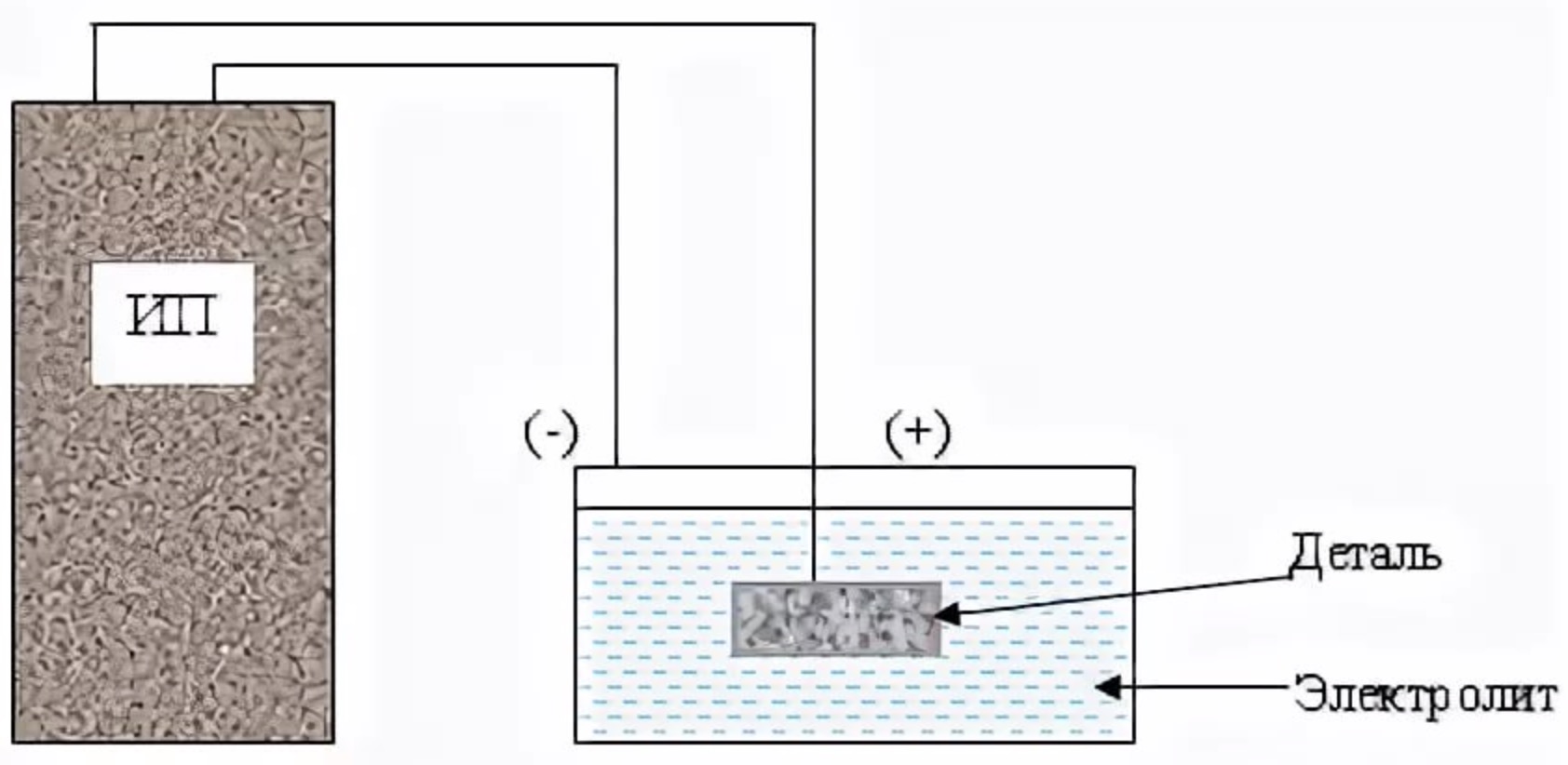
The coating process works as follows: a titanium metal bath (cathode) holds the part requiring coating (anode). High solution conductivity creates near short-circuit conditions initially. Success requires injecting massive current (tens of kiloamps) at startup to create an explosive vapor layer preventing short-circuit. Microdischarges within this layer enable microarc oxidation processing.
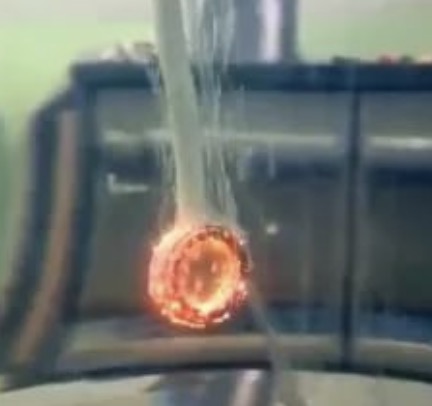
The part glows with microdischarges that gradually become less visible as dielectric coating accumulates, blocking current. Creating this double layer requires enormous power due to high startup currents. The solution: an impulse current source allowing reliable double-layer formation with fully submerged parts.
Voltage and current impulse shape critically affects future coating characteristics. Total charge passing through the electrical circuit determines necessary coating thickness and operational characteristics, essential for industrial repeatability.
The development team created an impulse, high-current source with output signal control. Managing high-current impulse electronics switching kiloamp currents (at 300-500 volts) required interference protection, reliability, and safety measures.
Equipment Overview
Two high-voltage capacitor banks (KB1, KB2) provide the microarc oxidation process startup — massive charge injected rapidly. A powerful 20-kilowatt DC power source charges these banks. The accumulated charge transfers to the load via a dual-channel output impulse formatter and controller.
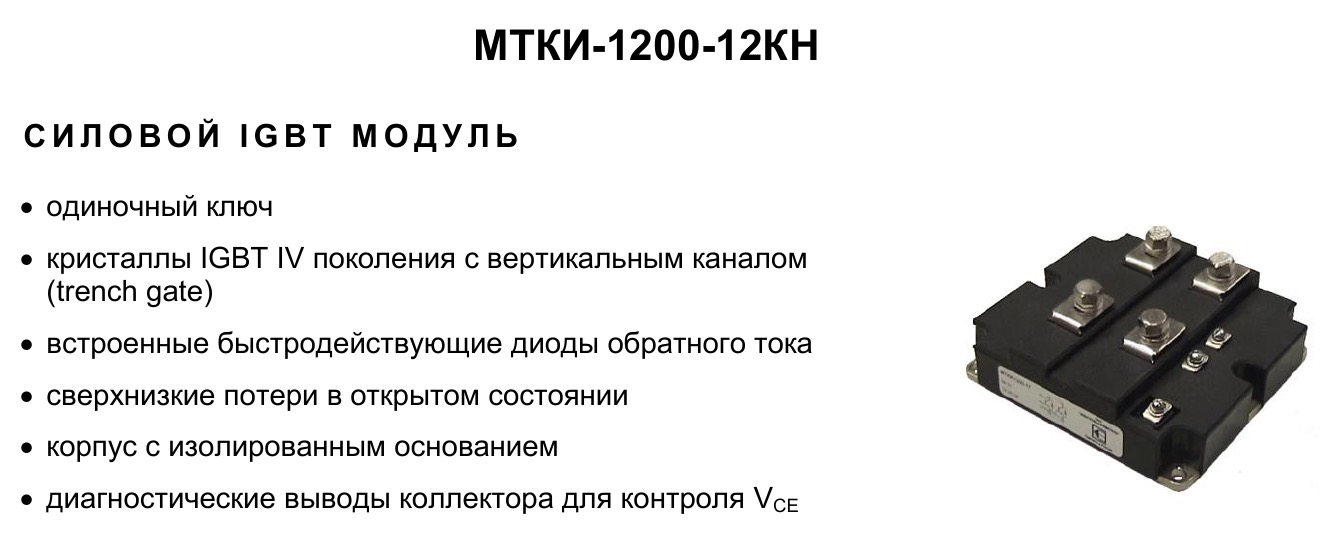
Why two capacitor banks? The system must switch over 2,000 amps at frequencies up to 400 Hz, requiring appropriate power switches. High-current electronics cost significantly — suitable devices run $3,000-4,000 and are fabricated primarily to order. Device service life is limited to several hundred continuous-operation hours. The solution: divide output power between two channels using specialized power switches.
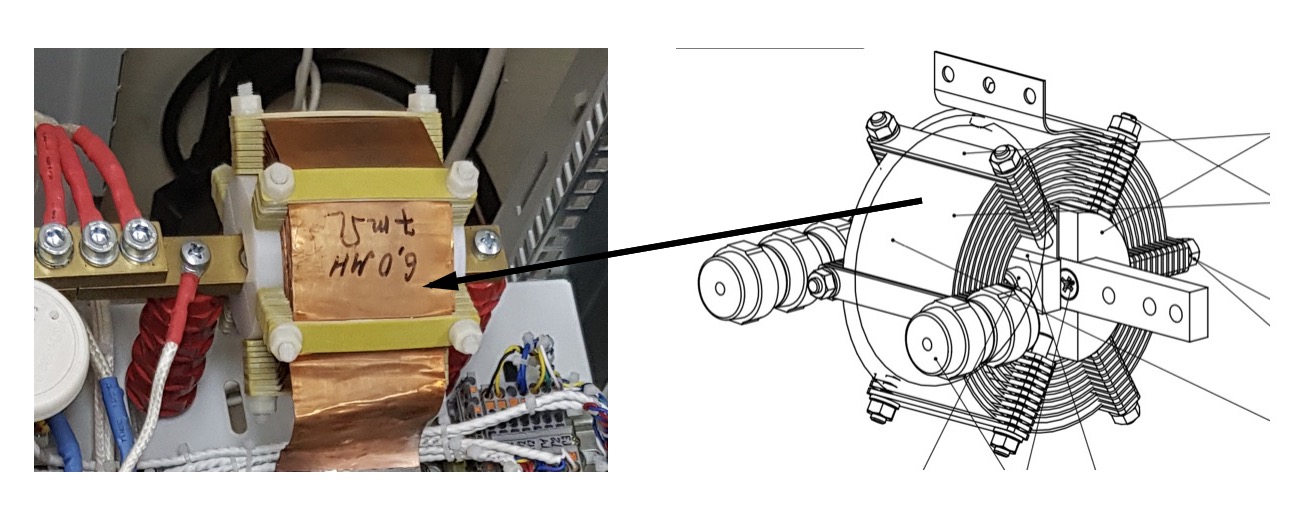
These devices perform well with reasonable pricing. Continuous-operation resource (at 0.8 limiting modes) spans several thousand hours. Startup current surge can reach tens of kiloamps, so two powerful inductors protect the capacitor bank power circuit.
High-power electronics involves large components, often requiring machinist and toolmaker labor. For example, inductors consist of several meters of copper foil wound on frames with cooling gaps.
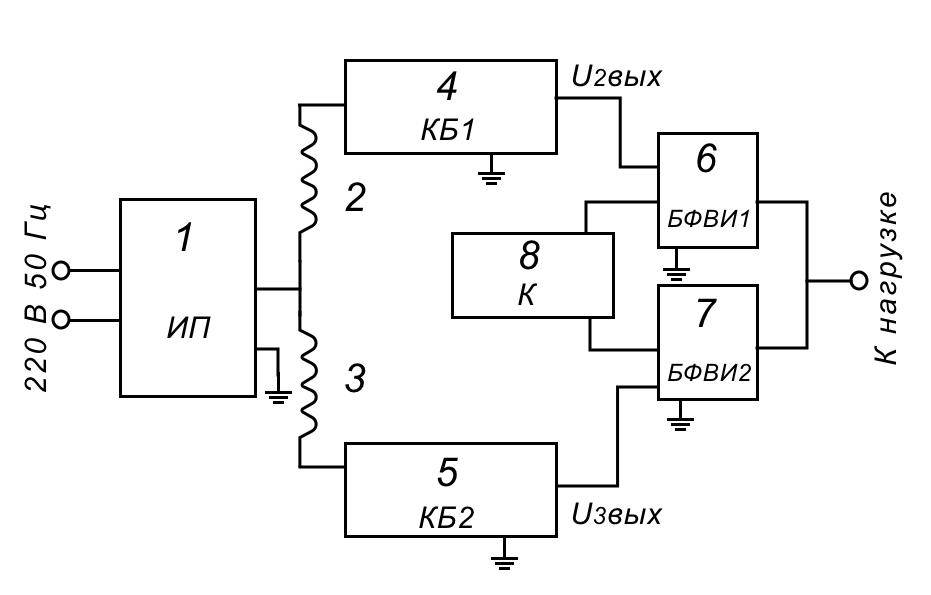
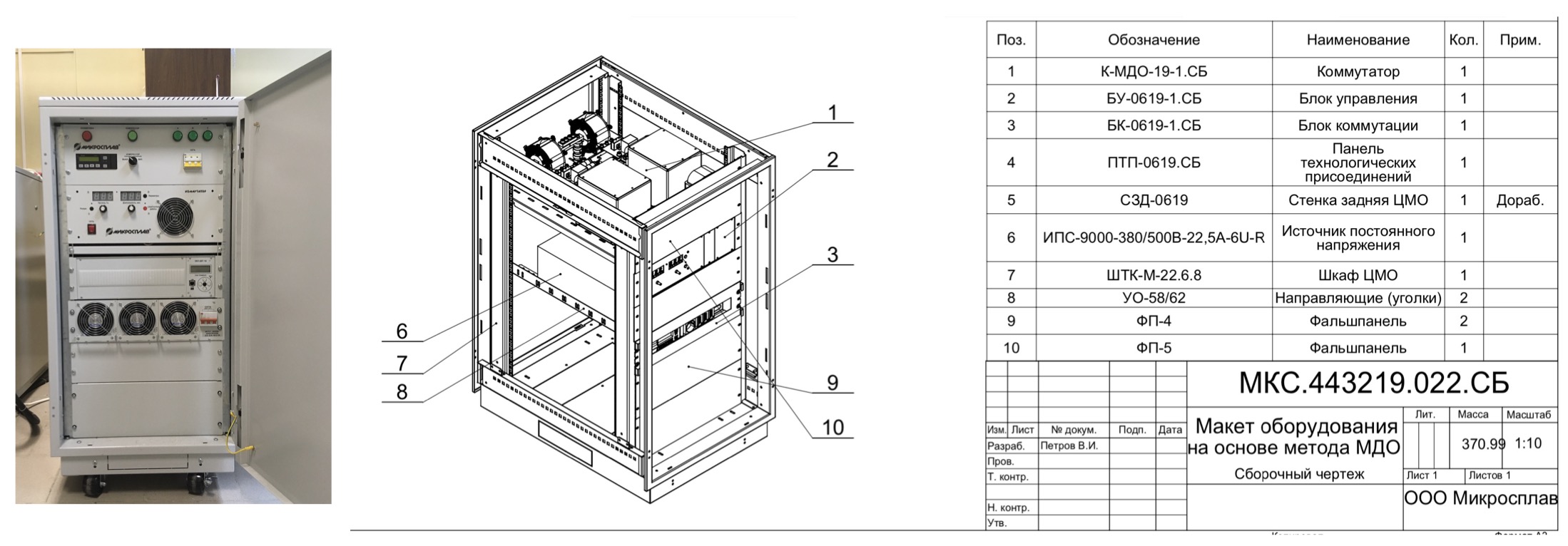
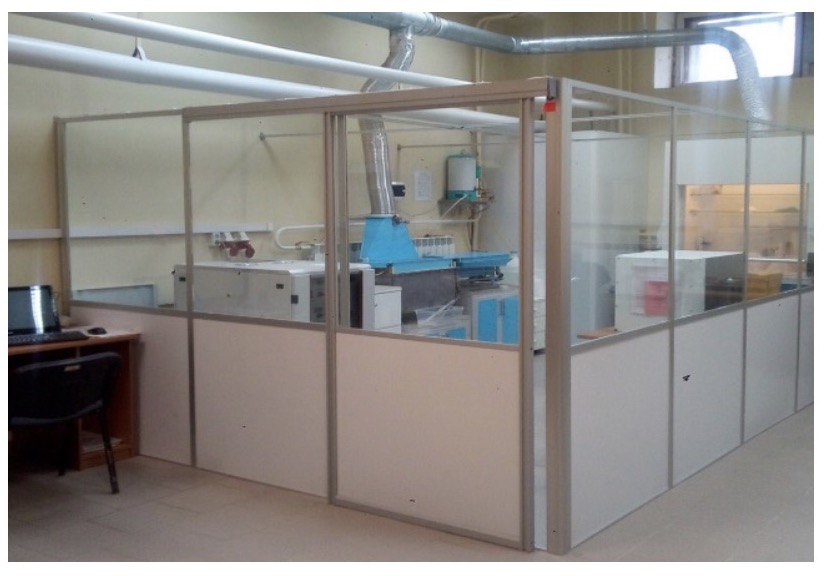
Three blocks comprise the installation — the power supply, the high-current switch (containing capacitors, power switches, inductors), and control electronics managing everything, generating impulse forms, and monitoring operation. The entire construction fits in an industrial rack with chiller cooling.
Power Supply Selection
Choosing the capacitor bank power source was critical. The source must meet rigorous requirements with reliable protection and management systems, plus interference protection for high-current switching operations at frequency modes generating various interference.
The developers accommodated even unexpected requests and requirements. Specifically, detailed equipment node configuration knowledge was necessary for managing protocol adaptation, requiring new firmware development — accomplished rapidly. The company takes documentation seriously with excellent technical support.
Project Management
How was this project managed and how much time elapsed? For such projects, following GOST R 15.301-2016 "System for Product Development and Manufacturing Launch" is optimal. Following GOST recommendations ensures proper, efficient project execution when all developers understand and follow its ideology. The project coordinator (chief designer) must clearly assign tasks and monitor completion throughout.
A team of four primary developers and a technician participated, coordinated through the Notion project management service. Three workflow streams — "Development and Prototyping," "Necessary Additional Work," and "Purchasing" — received tasks as they arose, with deadlines and responsible parties assigned. Completed assignments went to archive. All documentation and necessary files were stored in the cloud with access across devices.

Weekly meetings (typically Thursdays) discussed current affairs with strictly 45-minute time limits — the most crucial team interaction element. Everyone knows the project matters; they'll report results; they must finish incomplete work and maintain credibility. As chief designer, I functioned somewhat as an authoritative instructor accepting student homework assignments, in a good sense.
Timelines compressed. Each developer knew final project delivery dates. Given the task emerged from scratch, approximately 10 months elapsed until first successful testing. Logistics extended timelines significantly — high-current electronics components aren't simple; appropriate suppressor capacitors can take months to arrive.
Necessary components (where available) assembled within four months. Full installation assembly required approximately three weeks. Debugging and testing took another 10 days. Corrections, troubleshooting, adjustments, and technical documentation updates required several more weeks.
Applications and Impact
This wasn't solely for saving Dymka. This technology applies to protective and biocompatible human implant coatings and colored coatings on various alloys and metal composites.
Acknowledgments
Biocompatible coating technology was developed at Tomsk Polytechnic University, the Institute of Strong-Current Electronics of the Siberian Branch of RAS, and Tomsk Scientific Center. Special thanks to Habr community member @NordicEnergy for valuable technical consultation during project implementation. Even with substantial experience and technical competence, consultations help. I consistently seek Habr community assistance, and someone always appears to help clarify matters.
Cat Dymka Update
Our article's heroine cat Dymka? She's doing well. Surgery succeeded; her life continues normally. She stretches amusingly like all cats after morning awakening.
Medical and biotechnology development fundamentally cannot proceed without animals' crucial role. Veterinary specialists deserve deep personal respect. The great neurophysiologist I.P. Pavlov wisely said: "The medical doctor treats people, but the veterinary doctor treats humanity."