Requesting Kernel Source Code from Manufacturers, and Their Rude Response
In the tech world, many companies manufacture devices and software for them. However, in some cases, these companies fail to comply with international open-source norms, leading to violations of freedom and agreements — as exemplified by the Honor 90 brazenly violating GPLv2.
In the tech world, many companies manufacture devices and software for them. However, in some cases, these companies fail to comply with international open-source software norms, leading to violations of freedom and breach of agreements. A prime example of this is the Honor 90 case, where GPLv2 is brazenly violated.
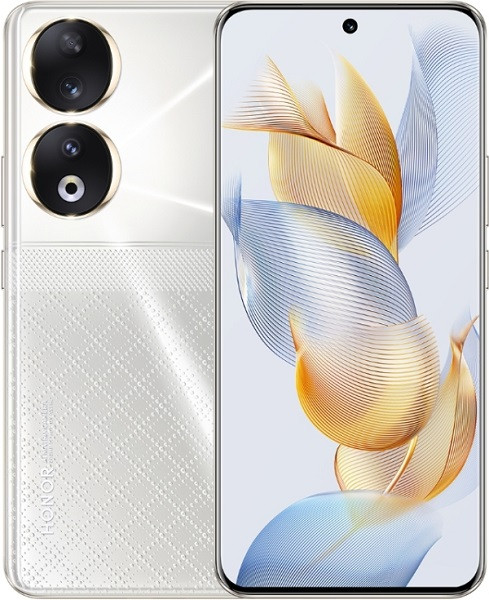
Manufacturers often ignore the GPL, and even if you ask them about it, they'll still say "No." I think this is terrible and must change.
It has always frustrated me how manufacturers put obstacles in developers' way.
So I decided to request the kernel source code for my tablet (Digma Plane 4G 1538E), purchased from Citilink in 2018-19. This article will cover this specific case and Digma's actions.
Photos below.
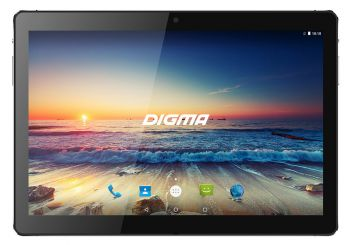
Yesterday, on the evening of October 24th, I wanted to port PostmarketOS to this device.
A bit about PostmarketOS: it is not Android, and it doesn't use anything from it.
It's a full-fledged Linux distribution based on Alpine Linux.
I found the kernel source code from a different device, but I specifically wanted the Digma one. I decided to write to Digma's support through their official website. I went to the device list — my tablet wasn't there.
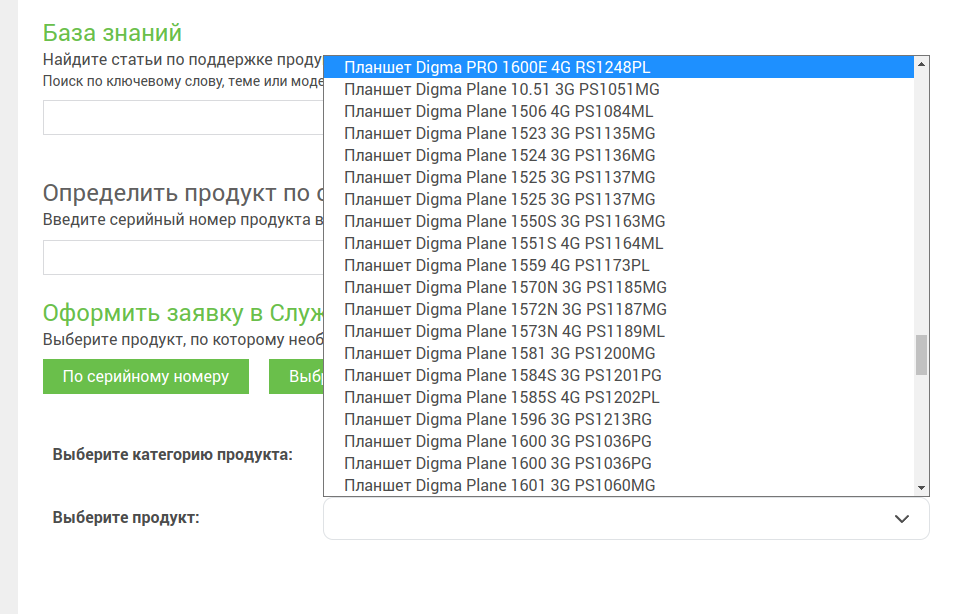
No big deal, I thought, and entered the serial number. The device was found, and I began describing my issue.
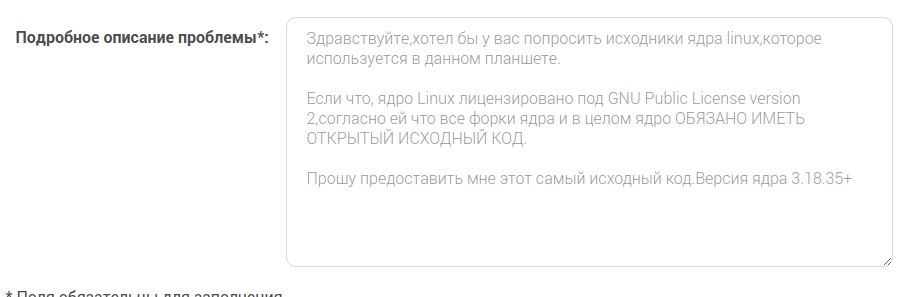
Half an hour later, I received a response from Digma's technical support.
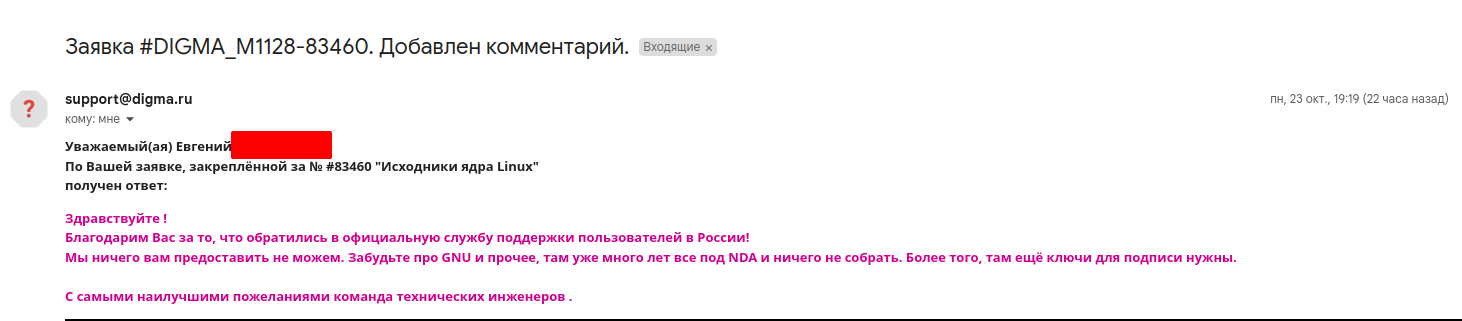
Immediately realizing the battle would not be easy, I went to Google about NDA and GPLv2.
Let me explain NDA for those hearing about it for the first time.
NDA (Non-Disclosure Agreement) — a legal contract between two parties for the purpose of mutual exchange of materials, knowledge, or other information while restricting third-party access.
Most likely, the OEM supplier that makes boards for various devices releases everything under NDA. And lives in their own fairy-tale world without GPL. So, to the letter mentioning NDA, I crafted a response using Richard Stallman's answers.
He is the founder of the free software movement, the GNU project, the Free Software Foundation, and the League for Programming Freedom.

GPLv2 (GNU General Public License Version 2) — is a free software license that ensures the freedom to use, modify, and distribute program code.
In the context of manufacturers of phones, tablets, and other devices that use open-source software, GPLv2 means they must provide the source code of their modifications and additions to the software if they want to distribute products containing that code.
This means that if a manufacturer releases a device based on open-source software such as Linux or Android, and makes changes to that code, they must provide those changes in source code form. This allows the developer community to improve and enhance the software, and also ensures transparency regarding how the manufacturer uses the software.
If a manufacturer fails to provide the source code of their modifications, they may be considered a violator of the GPLv2 license. This can lead to legal consequences, including lawsuits and fines. As well as loss of Google certification.
Back in 2001, Richard Stallman responded regarding NDA and GPL. In short, Digma violated GPLv2 and admitted it by saying everything is under NDA.
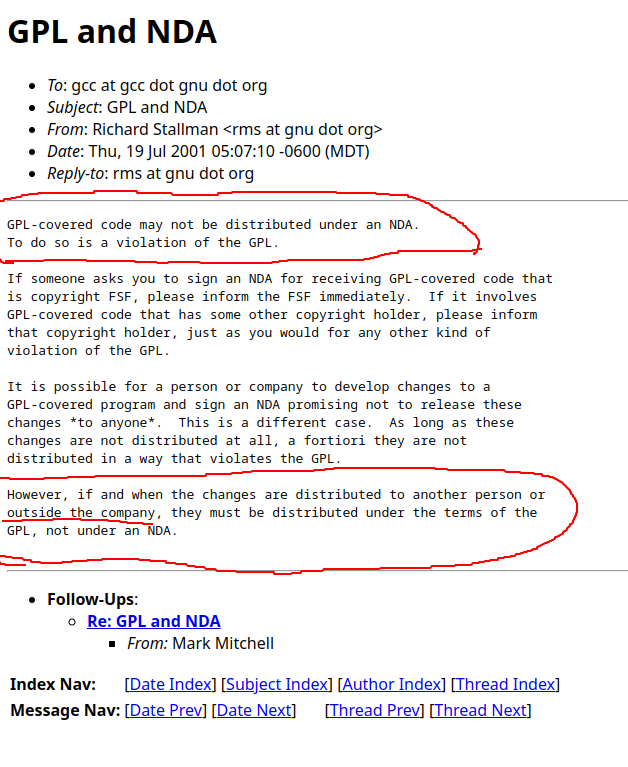
Link to Stallman's response
Based on this response from Richard Stallman, I composed a reply, not forgetting to threaten with FSF and Google.
FSF (Free Software Foundation) — a nonprofit organization founded in October 1985 in Boston, Massachusetts by Richard Stallman to support the free software movement and, in particular, the GNU project.
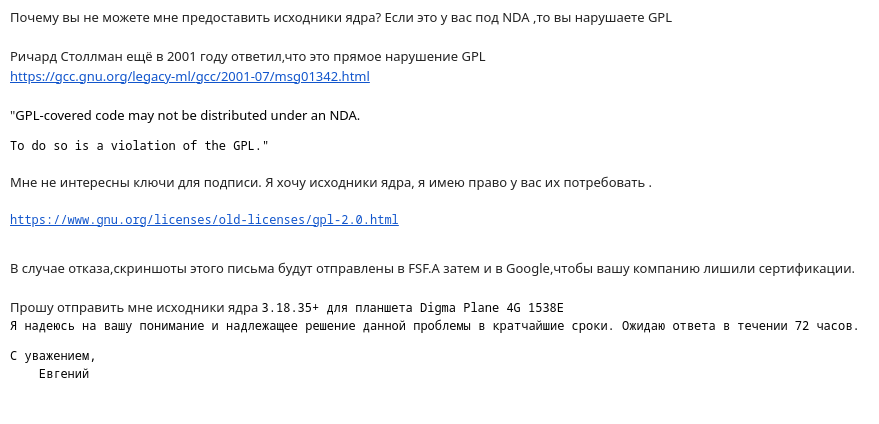
I added a link to GPLv2 for the manufacturer, so they would start fulfilling their obligations, releasing kernel source code and stop violating GNU GPLv2.
The response didn't take long, but it came with an attitude.
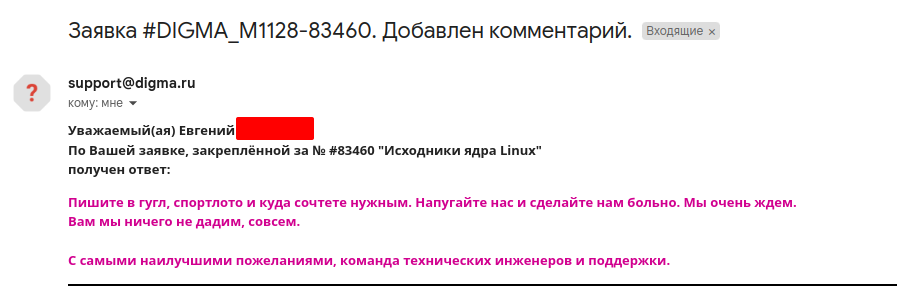
Not expecting such a response from Digma, I decided to "scare them and make it hurt."
If you receive a similar response, or if you're denied source code, immediately write to GNU, FSF, SFLC, and Google. They have no right to refuse you, even if they cite NDA.
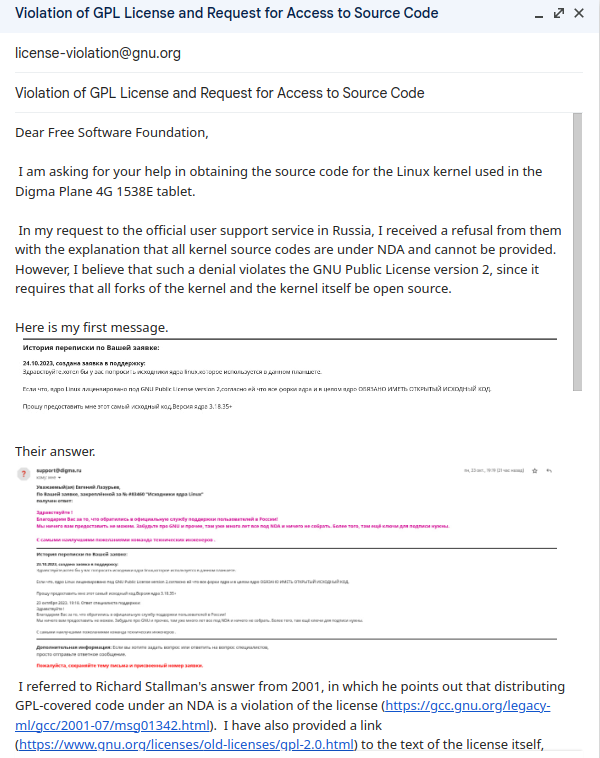
I composed letters to FSF, Software Freedom Conservancy, and GNU.
My letter to GNU.
Email addresses where you can write about this (at least the ones I know).license-violation@gnu.org
help@softwarefreedom.org
licensing@fsf.org
No response from them yet. But I want this situation to get public attention. After all, if Digma, like other tech manufacturers, values their reputation and trust, they clearly need to change something and punish someone for this.
You too can contact your manufacturer for kernel source code. It doesn't matter whether it's Xiaomi or OnePlus, Redmi or OPPO. Manufacturers are obligated to provide it to you — don't hesitate to ask them. They may very well peacefully and without unnecessary questions give you the sources.
These devices are intended only for use by regular consumers and have no application in military, medical, or other critical industries. My request is simply a standard rule of corporate conduct that will not affect their financial performance or high-risk zones.