Sogdiana-1: The History of the First Uzbek Computer
The story of the rare Sogdiana-1 personal computer, created in the late 1980s at the Tashkent 'Algorithm' factory -- the only serial computer production facility in Uzbekistan, built on the Soviet clone of the Intel 8080 processor.
Introduction
This article tells the story of a rare personal computer called "Sogdiana-1," created in the late 1980s at the Tashkent "Algorithm" factory -- the only serial computer production facility in Uzbekistan at the time. The machine represents a fascinating chapter in Soviet computing history, where a defense industry factory pivoted to consumer electronics during Perestroika.
The Backstory: Radio-86RK
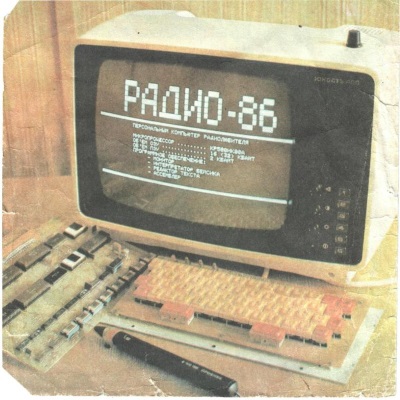
The development began with the popular Soviet computer "Radio-86RK," whose schematics were published in the magazine "Radio" in 1986. This machine was based on the Soviet clone of the Intel 8080 processor and contained only 29 integrated circuits, making it accessible for amateur radio enthusiasts to build at home.
Based on this design, an entire family of computers emerged: "Mikrosha," "Apogey BK-01," "Partner 01.01," and other models. The Radio-86RK became one of the most popular DIY computer projects in the Soviet Union, with thousands of units built by hobbyists across the country.
The Tashkent "Algorithm" Factory
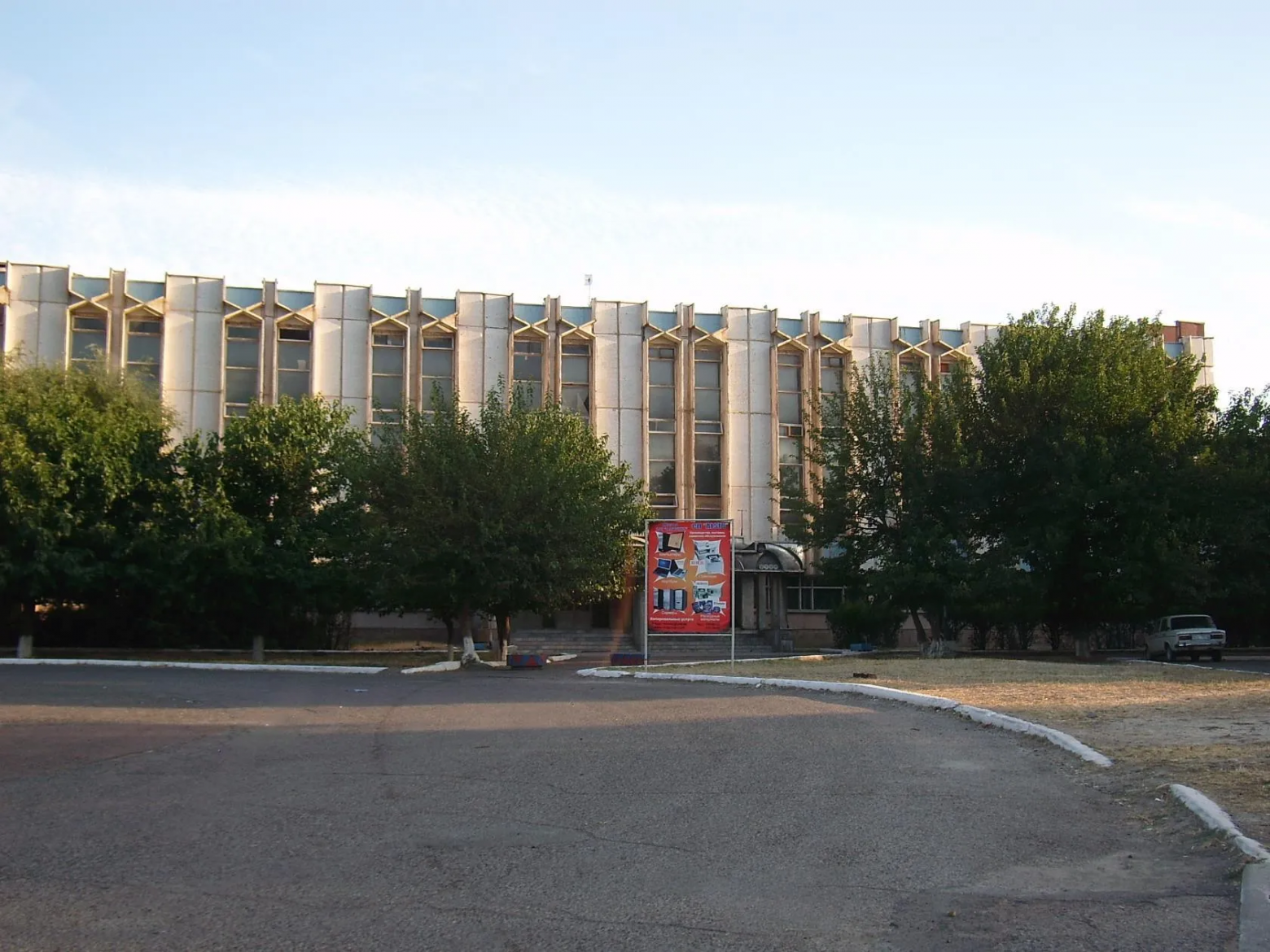
The "Algorithm" factory was established in the late 1970s as a branch of Moscow enterprises under the Soviet Ministry of Radio Industry. Its original purpose was manufacturing components for electronic computers and anti-missile defense computing systems. By 1986, the factory received its own independent name.
During Perestroika, the Soviet leadership required defense industry enterprises to produce consumer goods. The factory tried manufacturing kitchen knives and yarn winding devices, but the engineers proposed a more promising project.
The Key Role of Sergei Poroshin
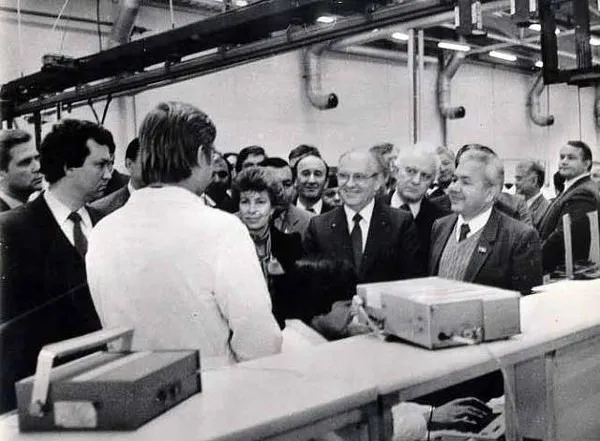
A young specialist named Sergei Poroshin, a graduate of the Yoshkar-Ola institute and computer technology enthusiast who had personally built a Radio-86RK, proposed the idea of establishing serial production of a personal computer. This decision addressed two goals simultaneously: fulfilling the government program for consumer goods production, and generating additional profit, since affordable computers were in short supply in 1989.
Technical Specifications of Sogdiana-1
Processor
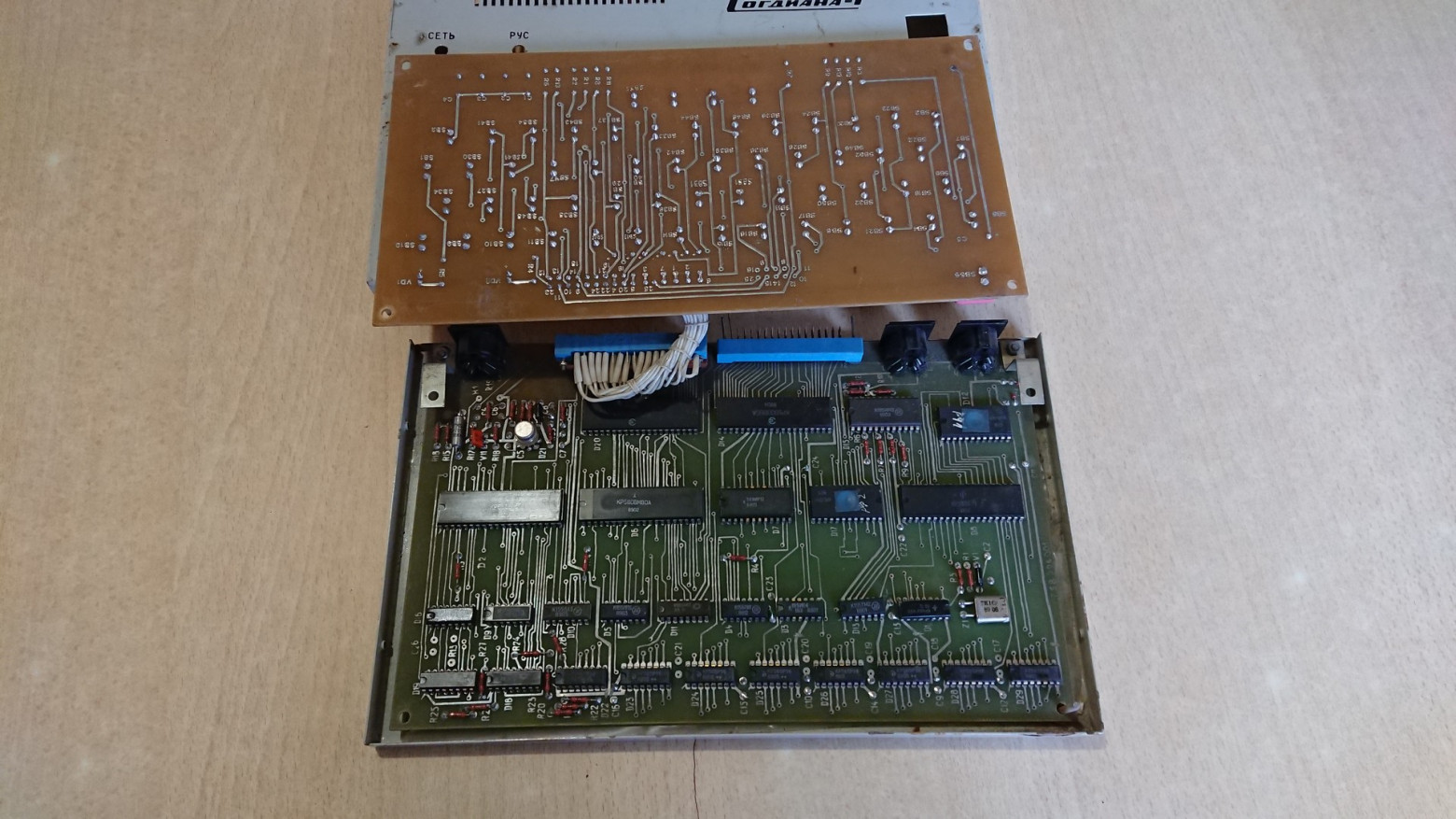
KR580VM80A -- a Soviet clone of the Intel 8080/8080A:
- 8-bit architecture
- 16-bit address bus (up to 64 KB of memory)
- Clock frequency: 2-2.5 MHz
Memory
- RAM: 16 KB on K565RU6 chips
- ROM: Two K573RF2 chips, 2 KB each
Video System
- KR580VG75 chip (alphanumeric terminal) and KR580VT57 (direct memory access)
- Text mode: 64 characters x 25 lines
- Pseudo-graphics support (up to 192x102 pixels in extended mode)
- Composite video output for connection to a television
Important caveat: The video circuit periodically "stole" the system bus, reducing the effective processor speed to approximately 1.3 MHz.
Keyboard
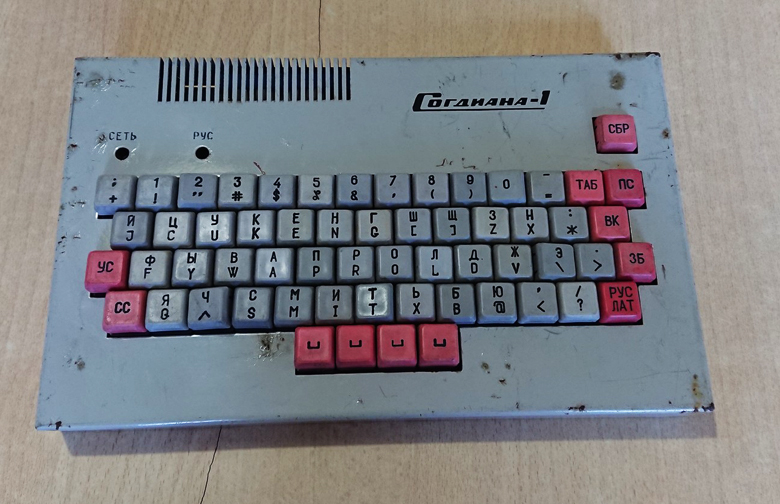
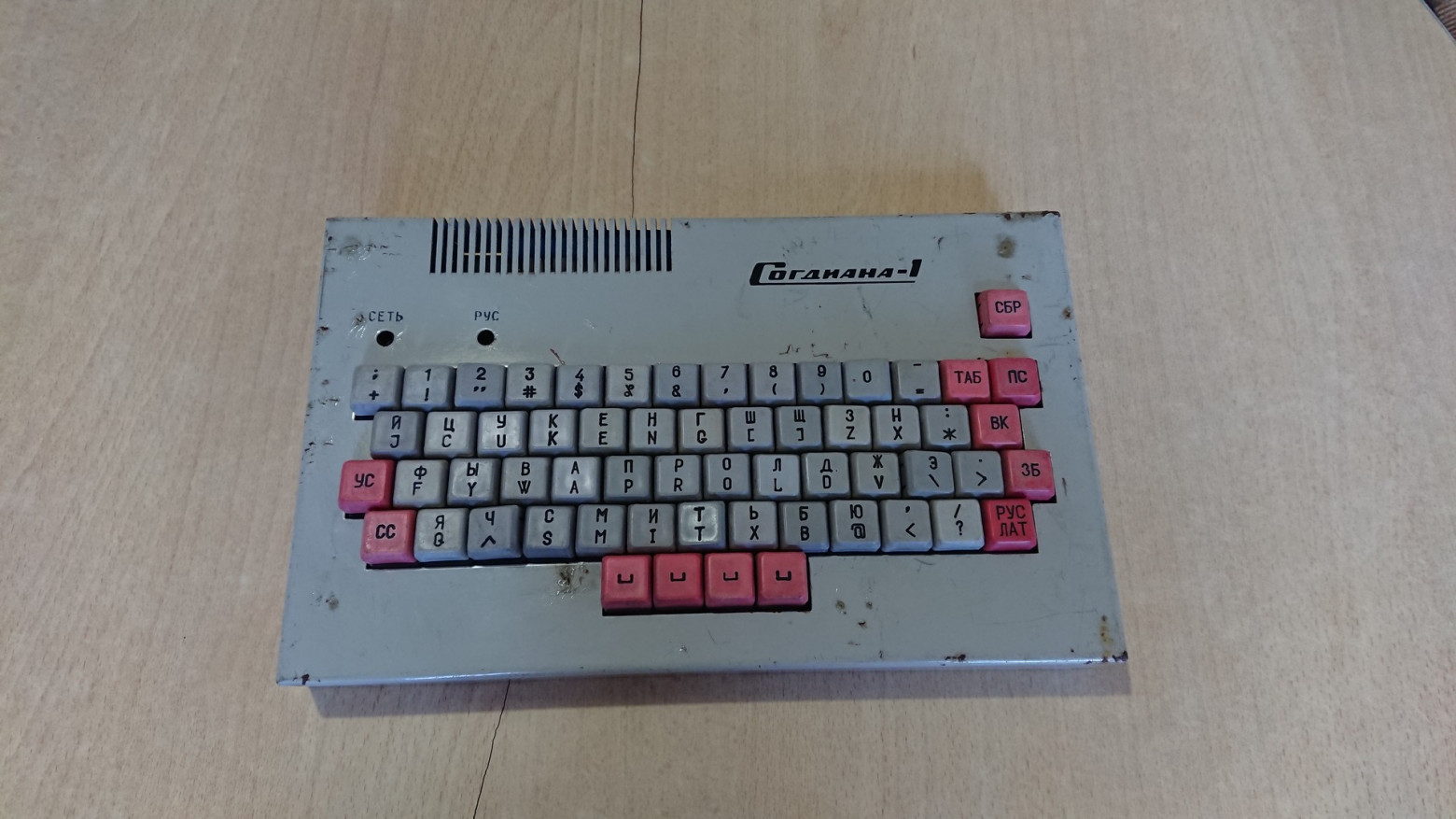
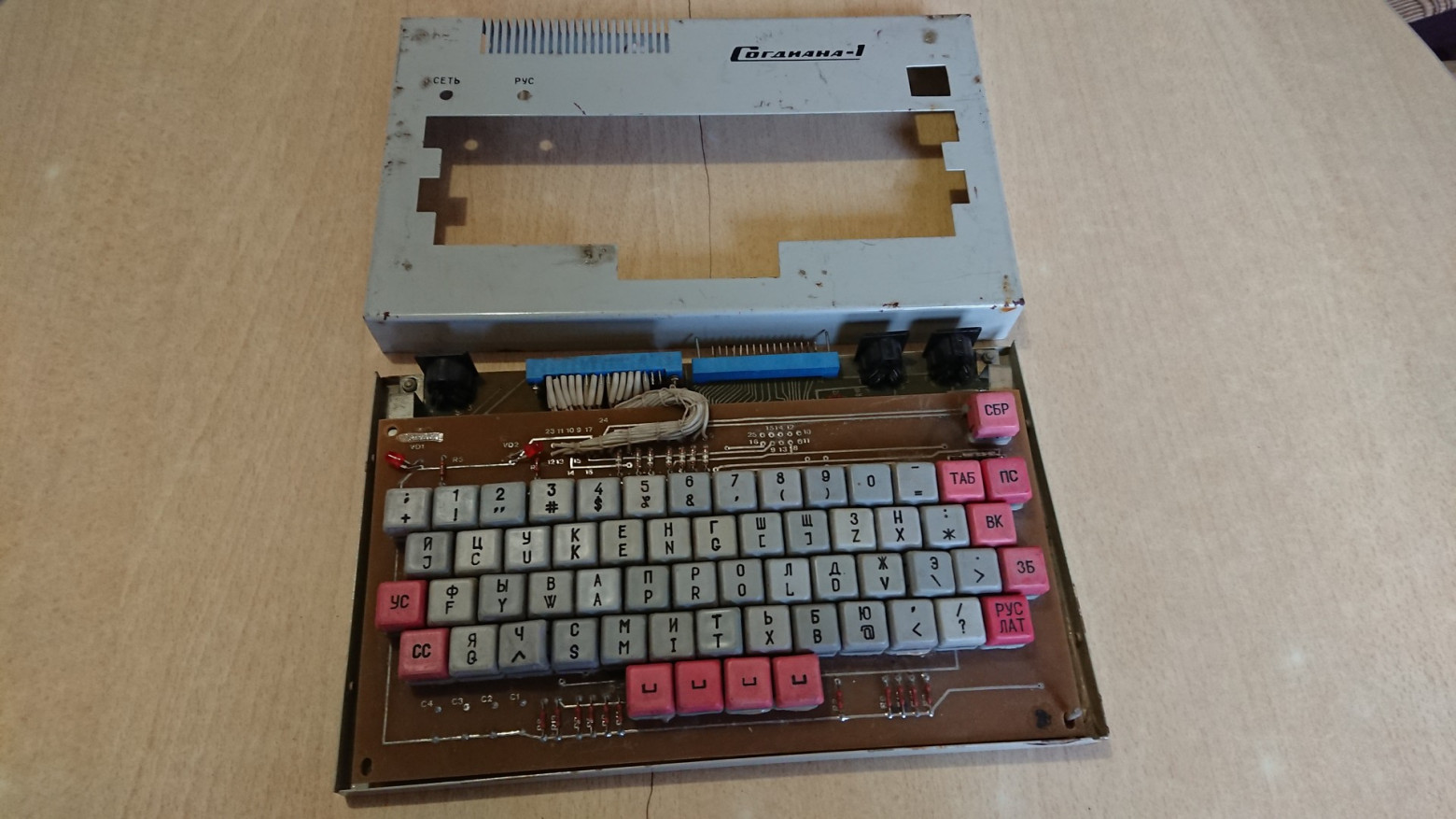
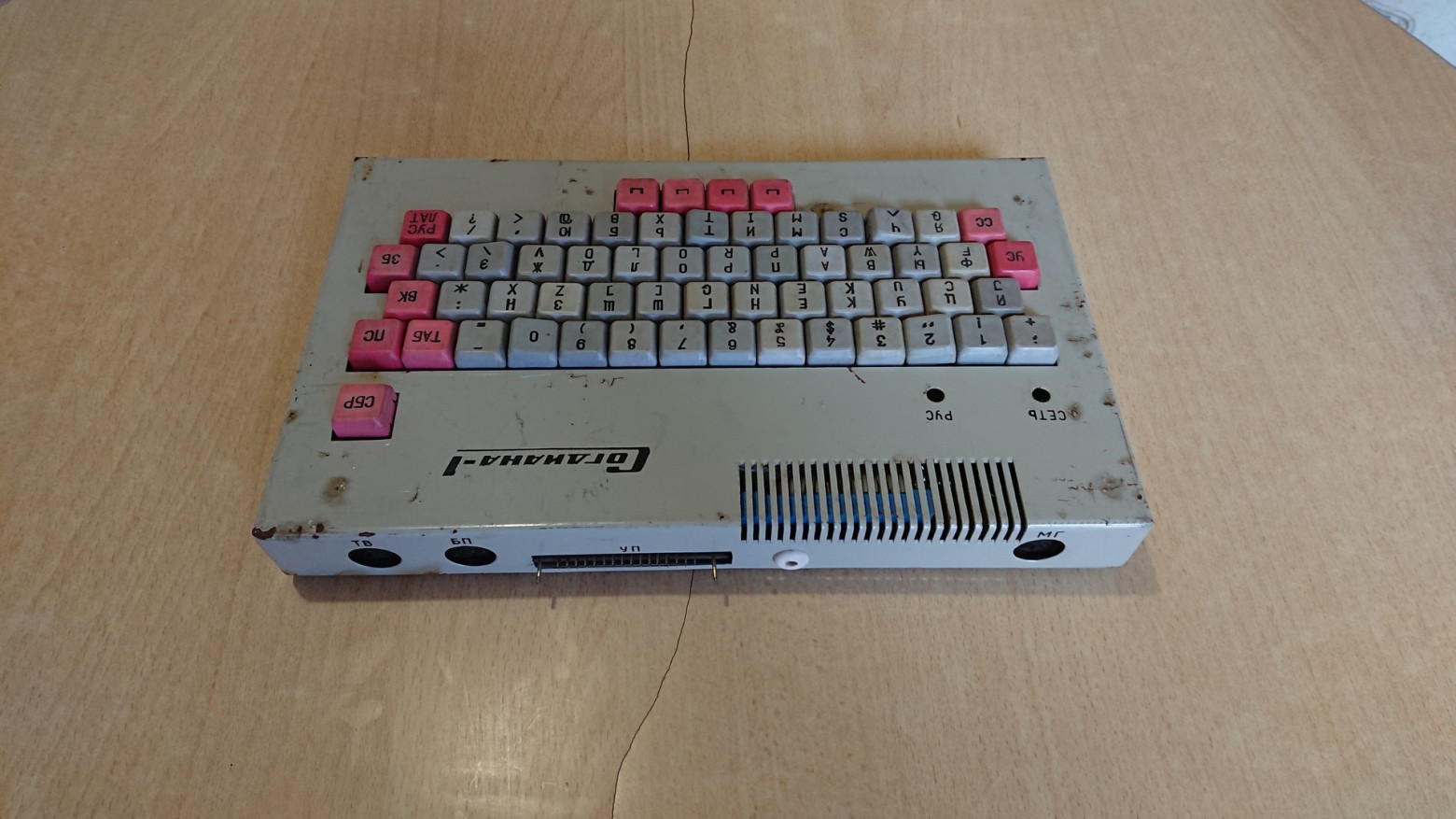
A 59-key spring-loaded keyboard with both Latin and Cyrillic characters ("JCUKEN" and "YTSYKEN" layouts).
Software
The ROM contained a "Monitor" program with the following capabilities:
- Input/output subroutines
- Cassette tape loader
- RAM monitor for viewing and modifying memory contents
- A simple debugger
Additional software (BASIC interpreter, assembler, text editor) was loaded from cassette tape. This was standard practice for computers of this era and price range.
Improvements Over Time
The initial keyboard proved inconvenient -- the keys "wobbled" in their sockets and regularly got stuck. After several years, the factory established cooperation with the "Kopir" factory in Kozmodemyansk, which produced keyboards using German technology. This significantly improved the reliability and usability of the machine.
Success in Uzbekistan
The Sogdiana-1 enjoyed success in Uzbekistan for several reasons:
- It had the status of an industrial product from a state enterprise, lending it credibility
- There was less risk of receiving a defective unit compared to homemade computers
- It was ready to use out of the box, requiring no assembly
The End of Production
The factory construction was completed in 1990. After the dissolution of the Soviet Union in 1991, Uzbekistan became a foreign country for Russia. The enterprise lost its defense contracts and faced an economic crisis. The appearance of Western personal computers and market liberalization also reduced demand for such machines.
Historical Significance
The exact number of units produced is unknown. The computers have survived only in private collections. However, the very existence of the Sogdiana-1 demonstrates that in the late Soviet period, Uzbekistan possessed its own infrastructure for producing computer technology -- enterprises, specialists, and supply chains capable of transforming a magazine schematic into a serial industrial product.
The story of the Sogdiana-1 is also a story about how the crumbling Soviet defense industry tried to reinvent itself, and how individual initiative -- in this case, from a young engineer named Poroshin -- could create something meaningful even within a rigid bureaucratic system.