$700,000 Scam on Solana: How a Token with 4 Billion Percent Growth Crashes to Zero in Seconds
A first-hand investigation into an industrial-scale Solana token scam operation, tracing how fraudsters create tokens, inject fake liquidity, simulate organic trading activity with hundreds of wallets, and then drain everything — leaving investors with worthless assets.
This article is the result of my personal investigation into a massive, systematic fraud scheme operating on the Solana blockchain. While developing an arbitrage bot, I stumbled upon a pattern that revealed an industrial-scale scam operation controlling approximately $700,000 in stolen funds.
How I Found the Scam
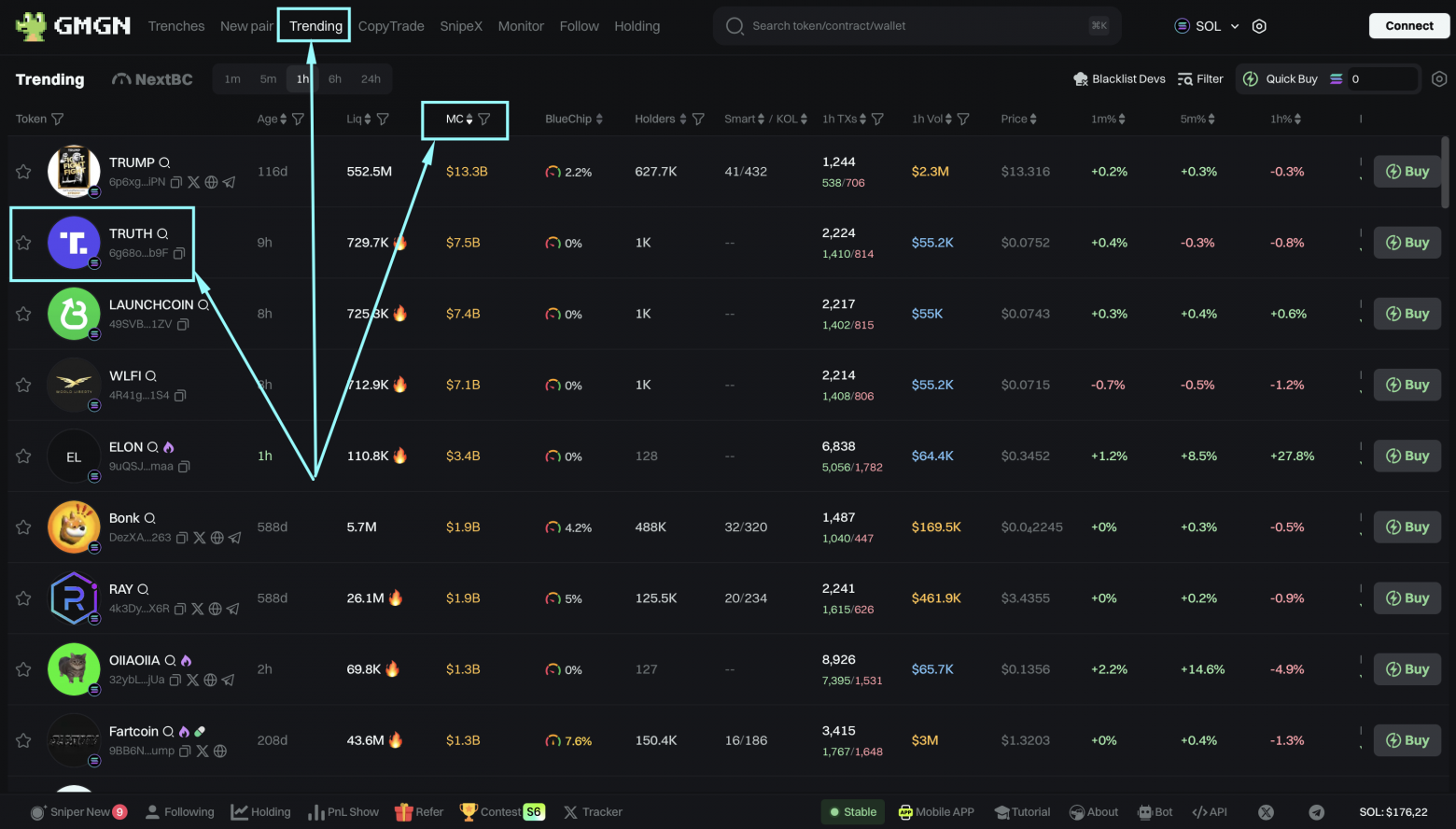
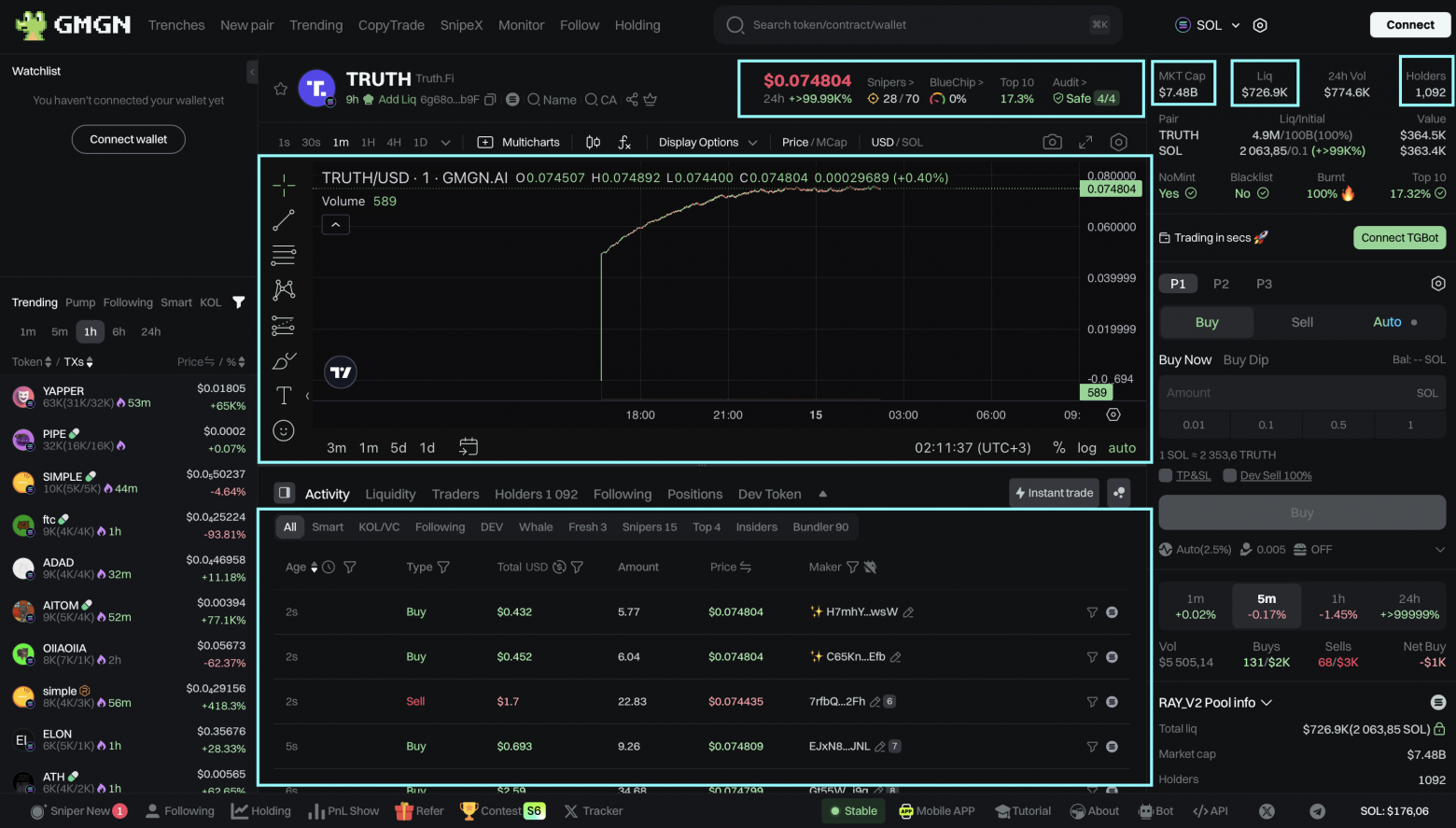
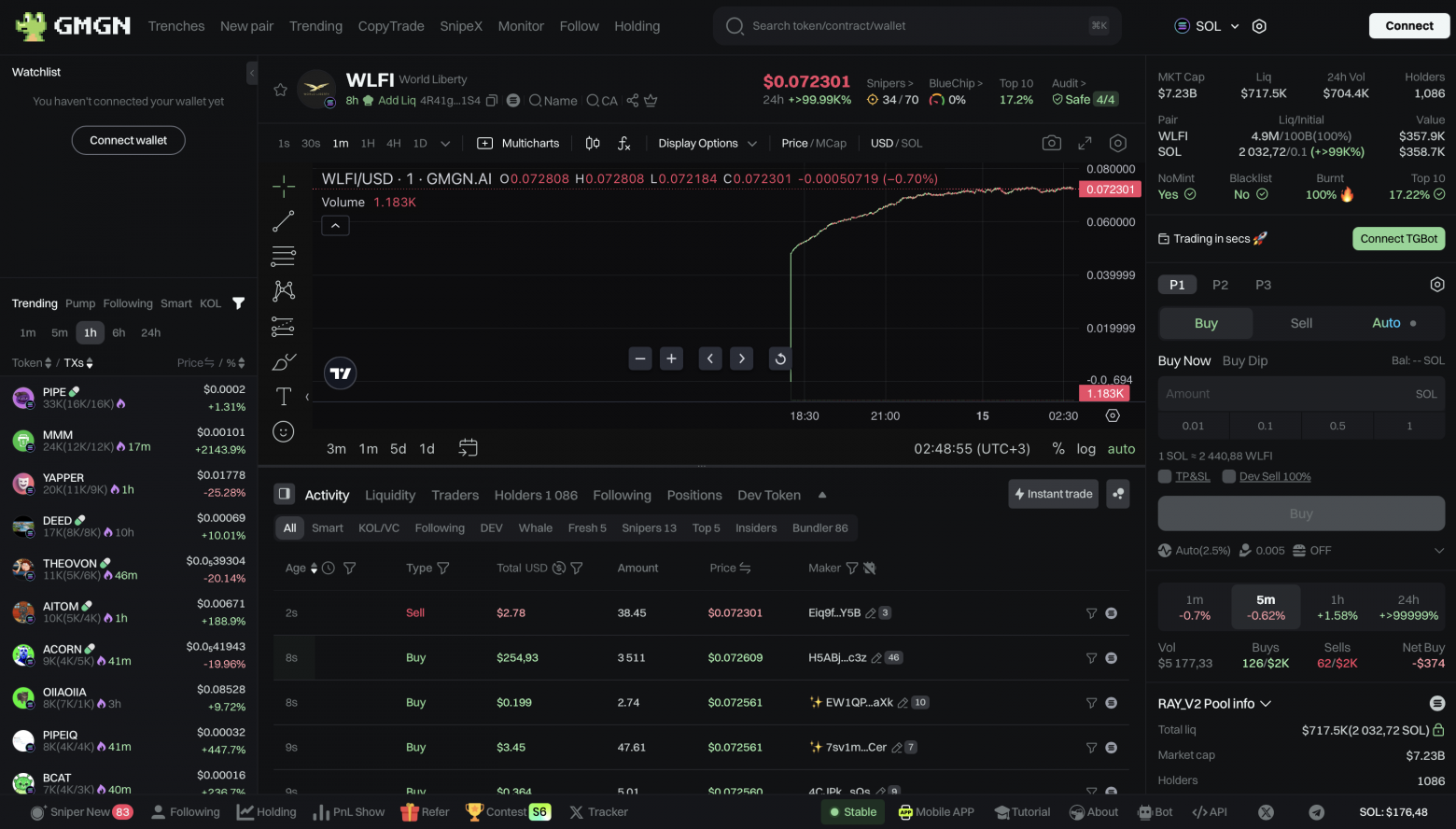
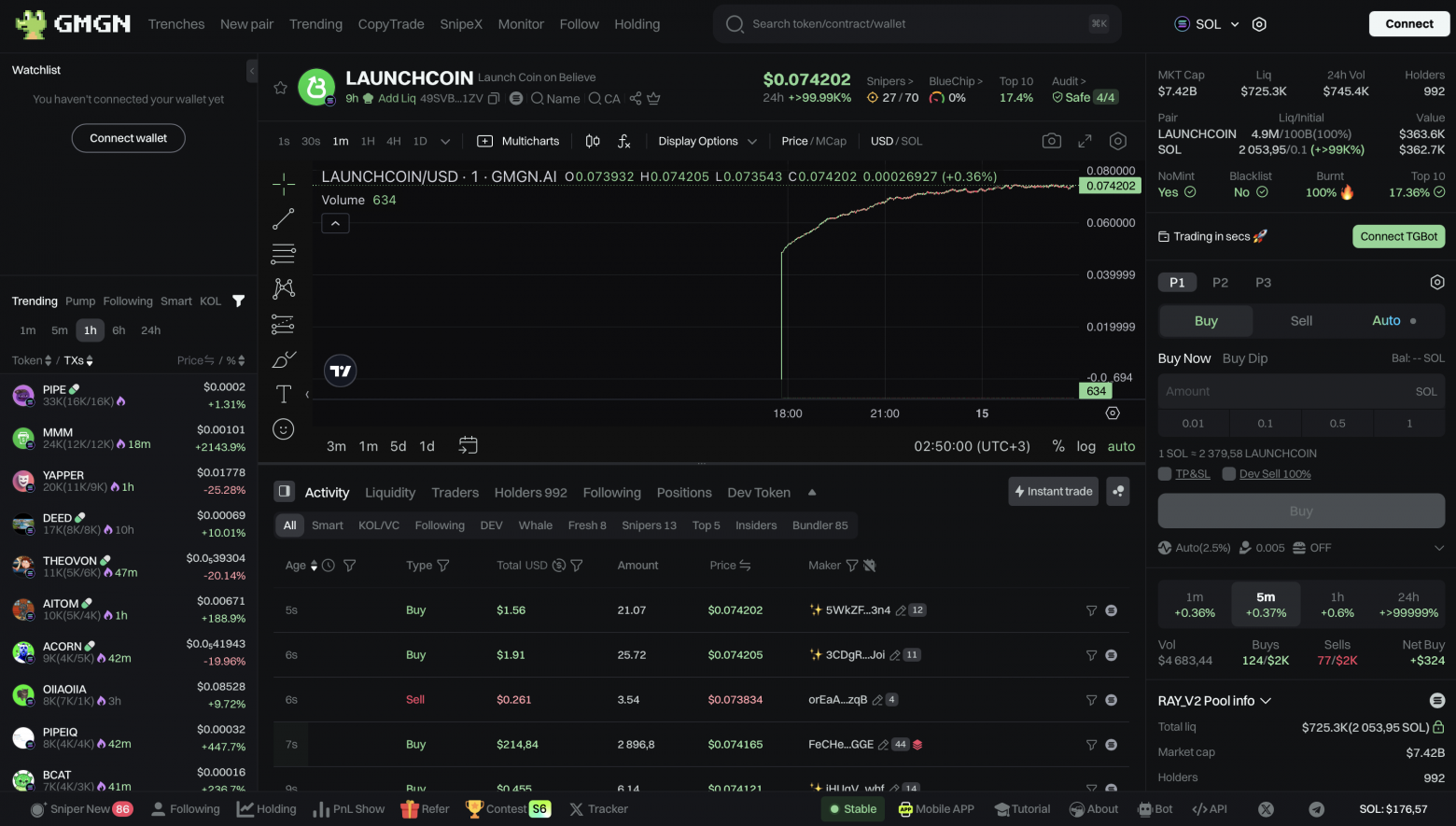
It started when I noticed a token with impossibly perfect metrics. The market cap was astronomical for a token that was only a few hours old. The price chart showed consistent, almost too-perfect upward movement. Everything about it screamed fake, but the platforms I was using — GMGN and DexScreener — showed it as legitimate trading activity.
The Anatomy of the Scam
After extensive analysis using blockchain explorers like Solscan, I was able to reconstruct the entire scheme step by step:
Step 1: Token Creation
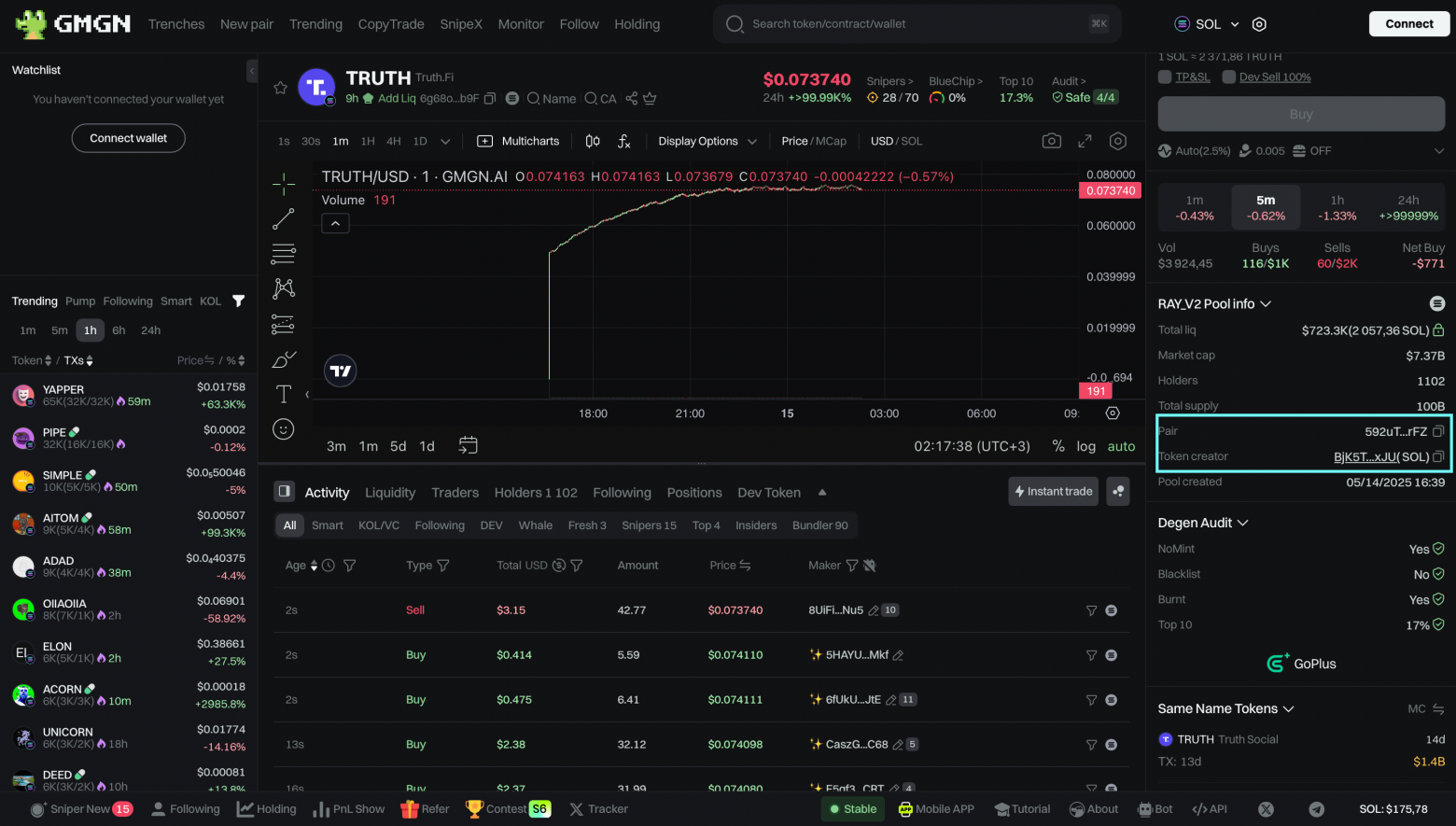
The scammer creates a new token in minutes for minimal cost. The token gets a custom name, logo, and branding designed to look like a legitimate project. This is trivially easy on Solana, where token creation costs just a few dollars.
Step 2: Liquidity Injection
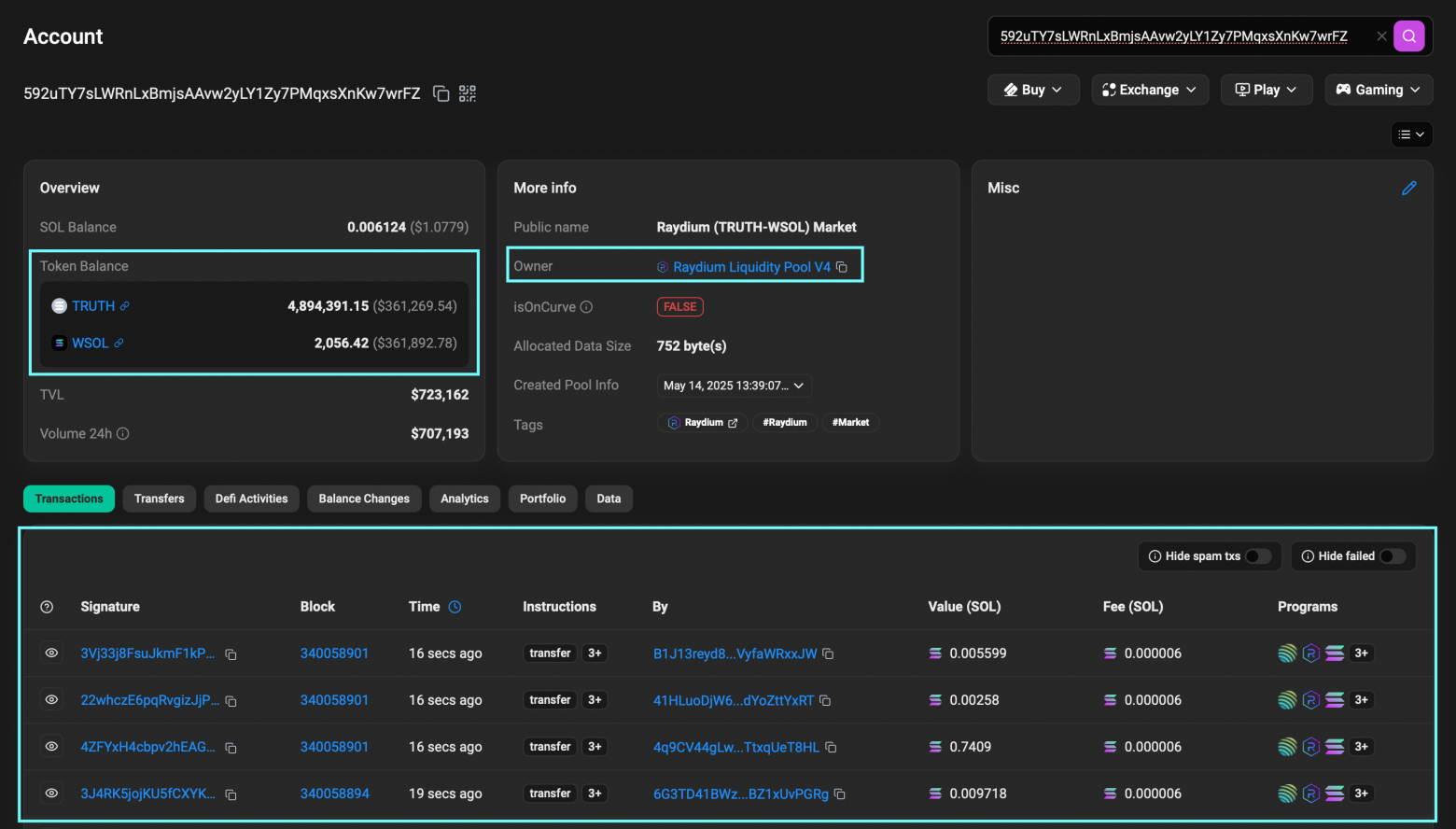
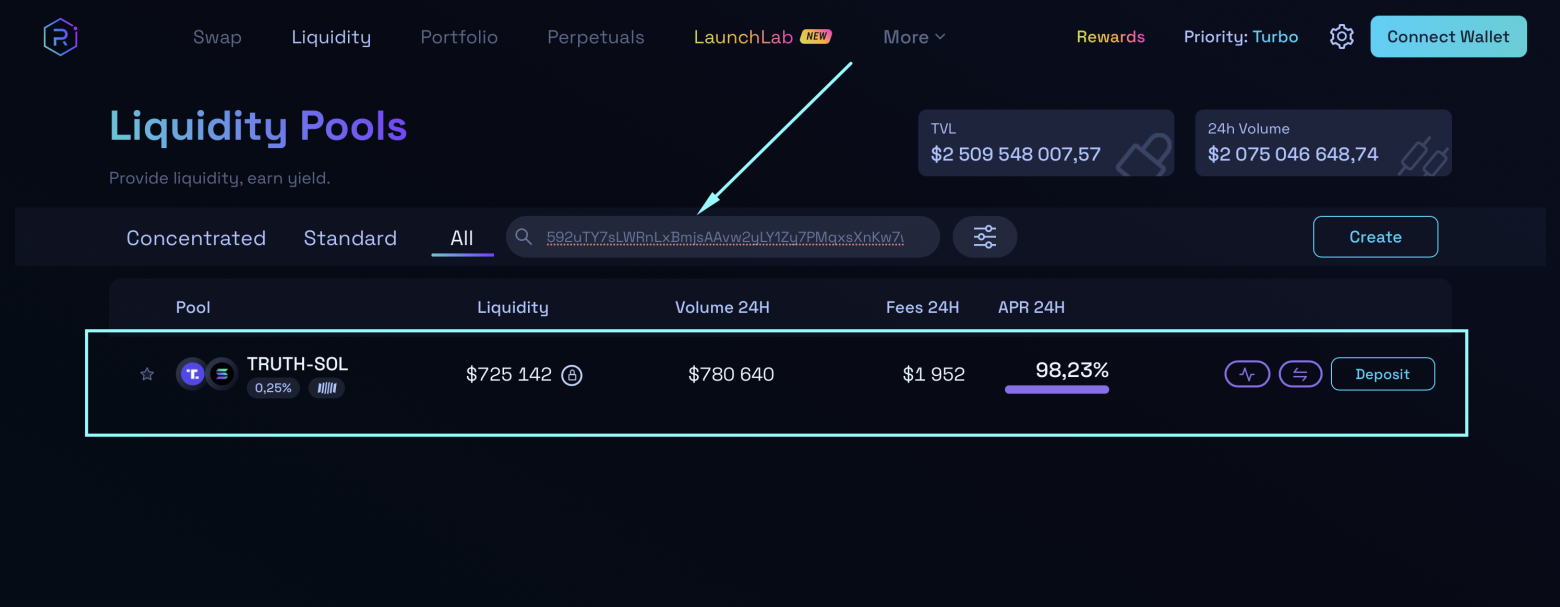
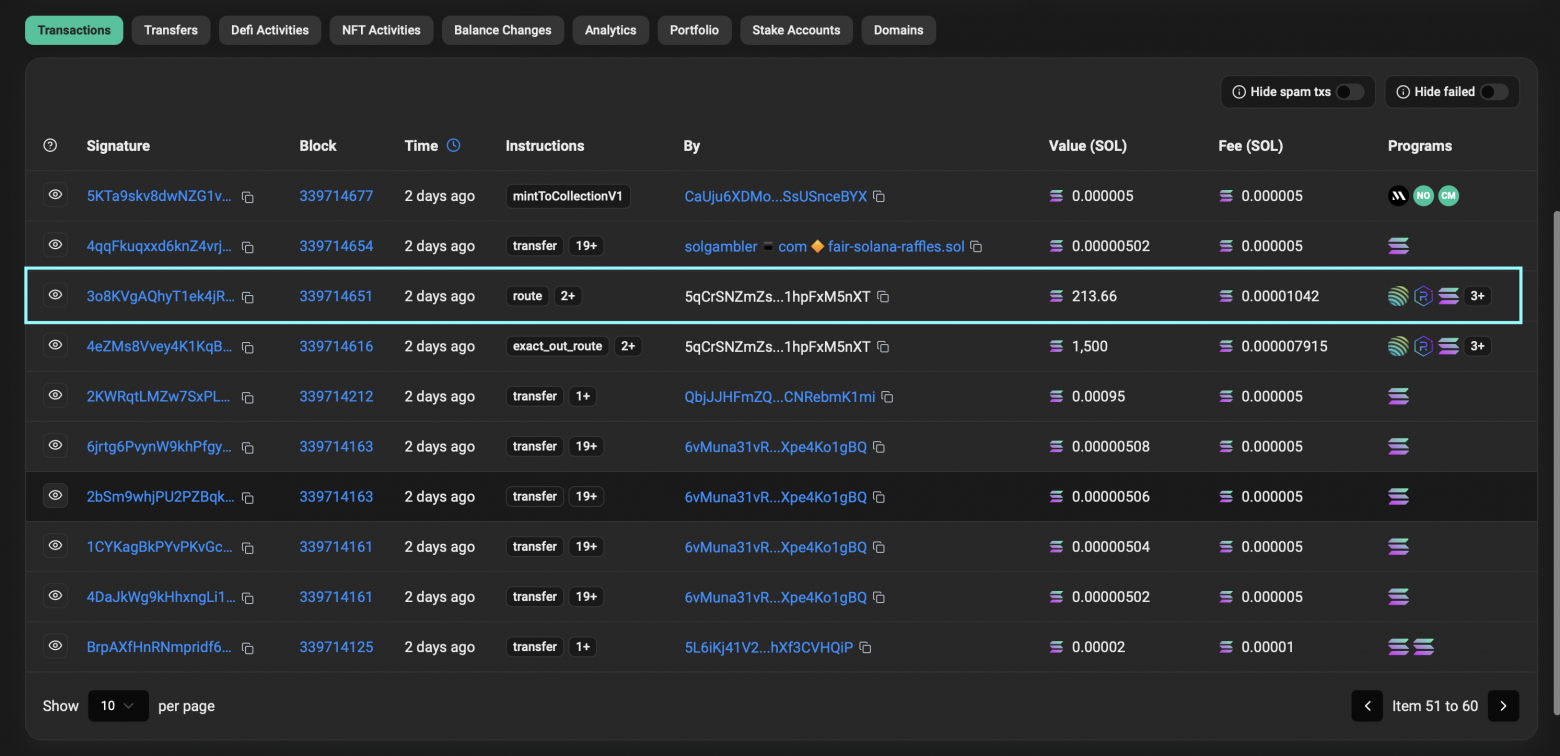
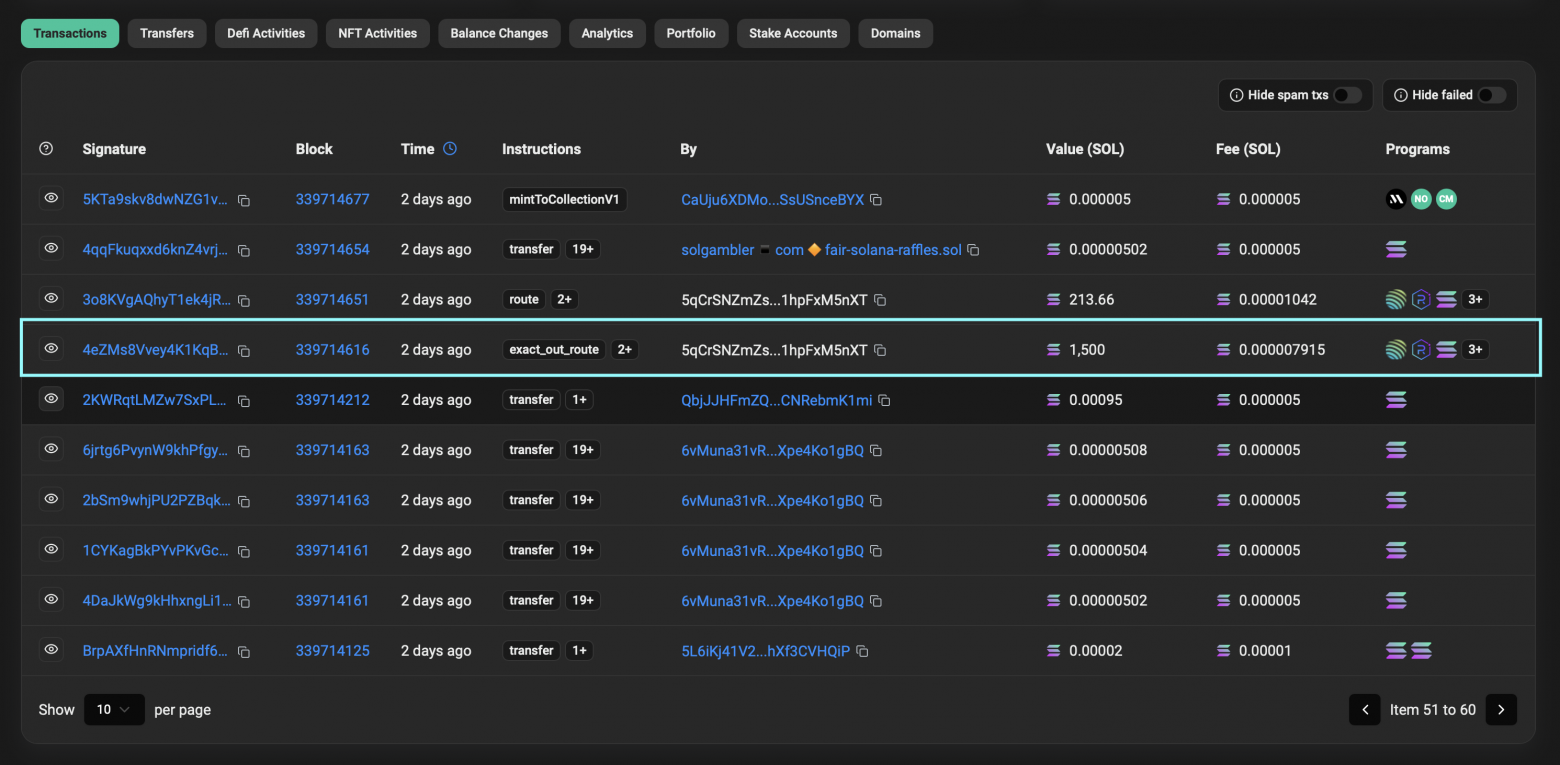
The scammer deposits between 1,000 and 2,000 SOL ($100,000-$500,000) into a liquidity pool, creating an artificially high market cap. This massive initial liquidity makes the token appear established and trustworthy to unsuspecting traders browsing platforms.
Step 3: Artificial Trading Activity
Hundreds of pre-created fake wallets begin executing programmed buy transactions. These wallets simulate organic trading activity — buying at different amounts, at different intervals, creating the illusion of genuine market interest. The volume numbers look impressive, the holder count grows rapidly, and the price chart shows a beautiful upward trajectory.
Step 4: Victim Attraction
Thanks to the impressive metrics — high market cap, strong volume, many holders, perfect chart — the token appears in trending sections of popular platforms like GMGN and DexScreener. Real traders, seeing what looks like a promising new token, begin buying in. The scam even passes many common anti-scam filters because the token distribution appears healthy across hundreds of wallets.
Step 5: The Rug Pull
Once sufficient real money has accumulated in the liquidity pool from genuine buyers, the scammer withdraws all liquidity in a single transaction. The token price instantly crashes to zero. There is no recovery — the liquidity is gone, and the token becomes worthless. The entire collapse happens in seconds.
Tracing the Money
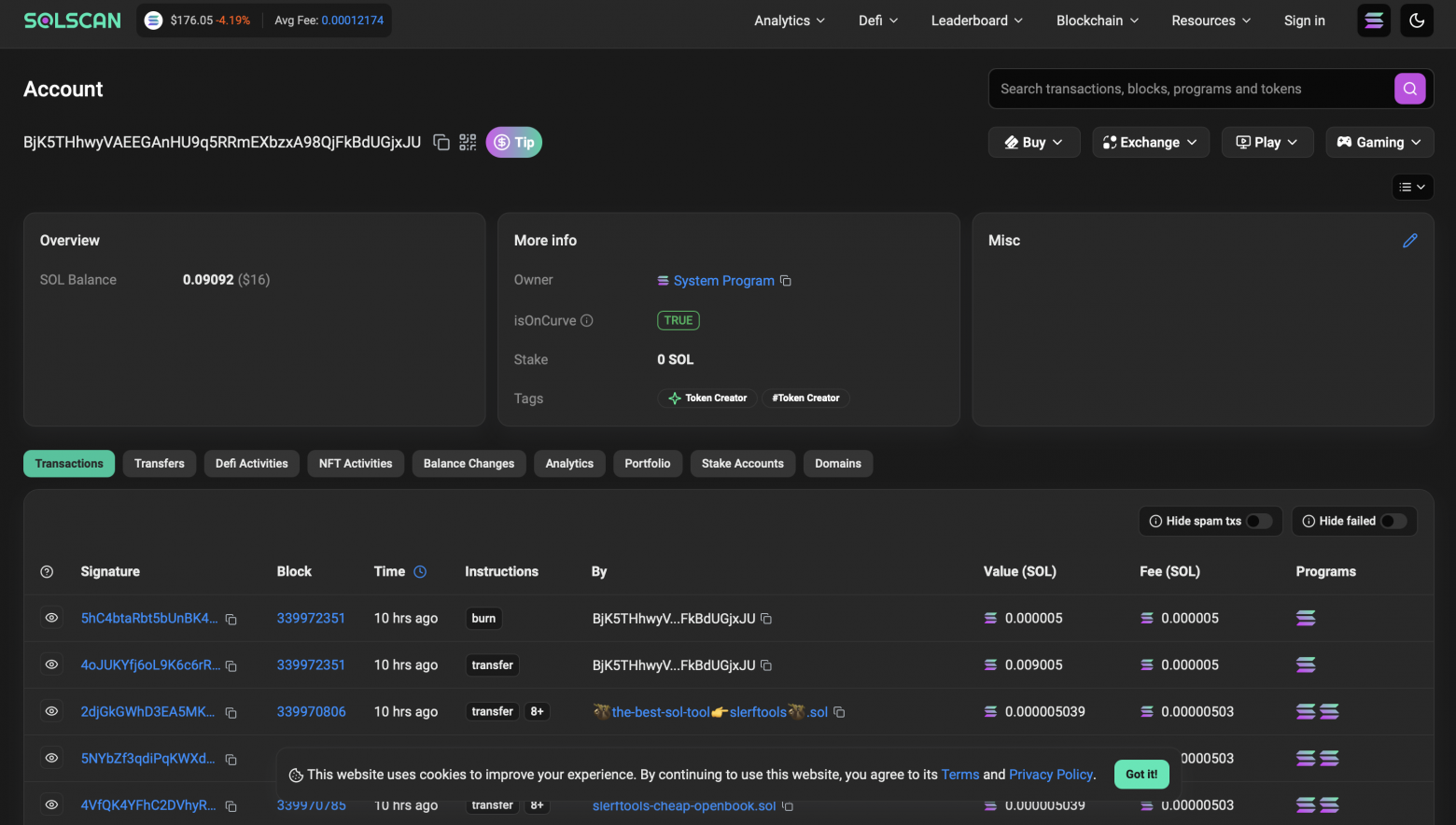
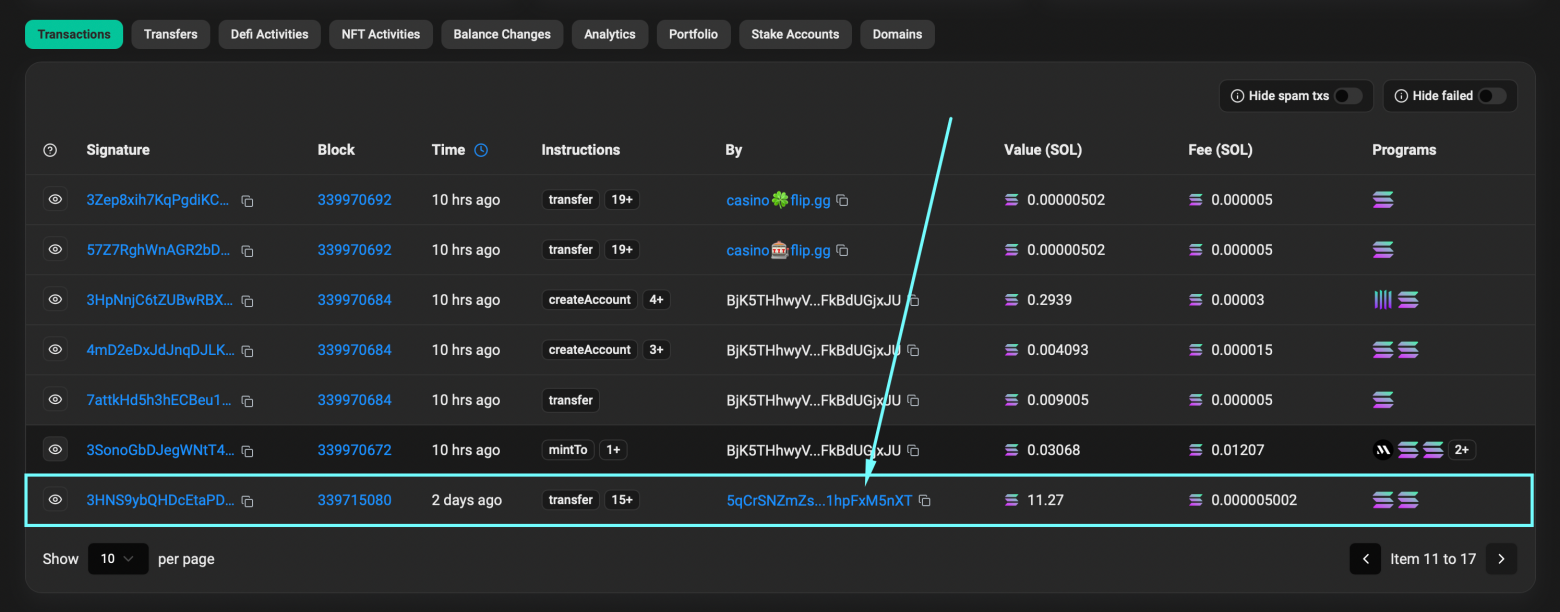
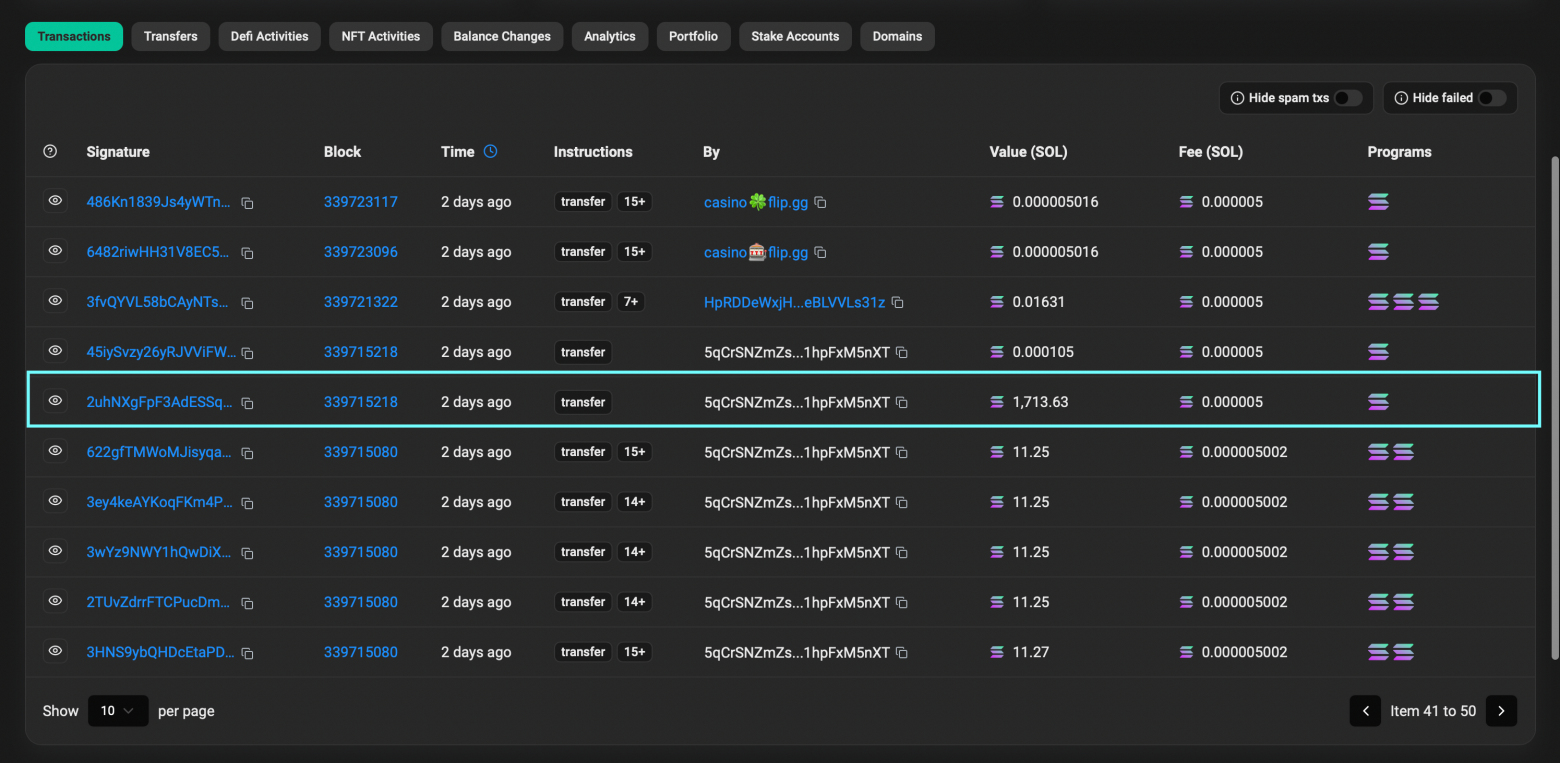
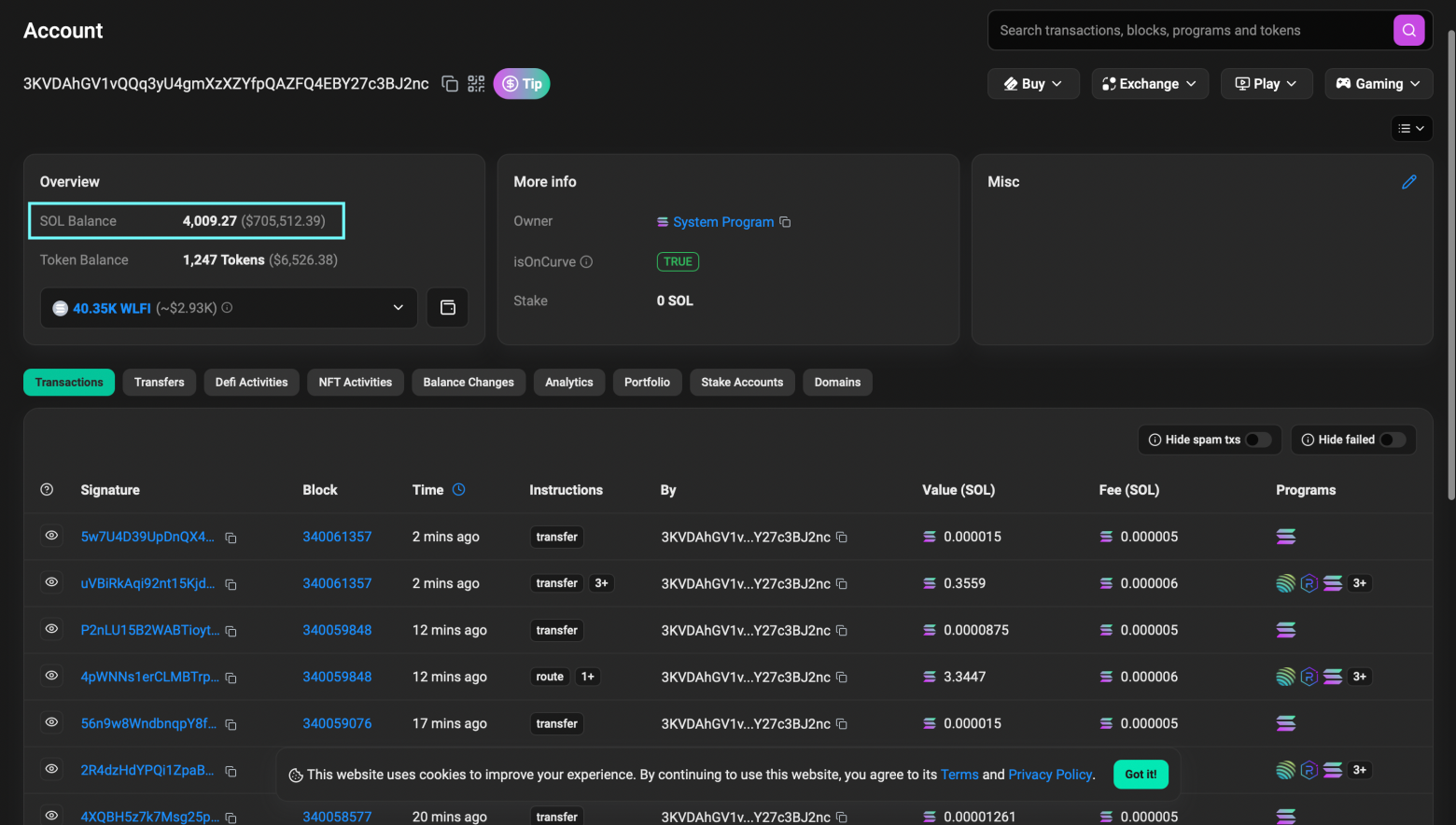
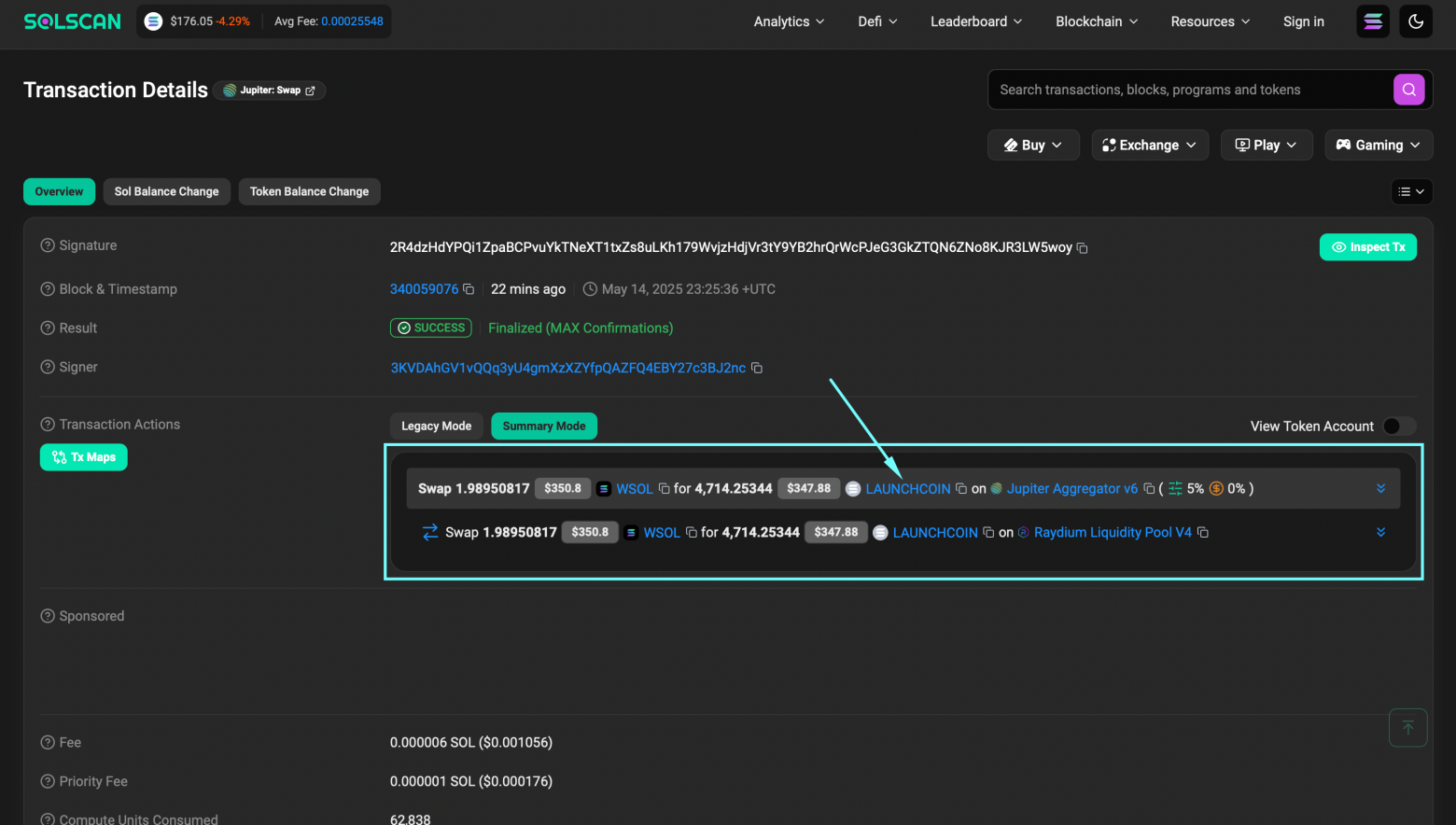
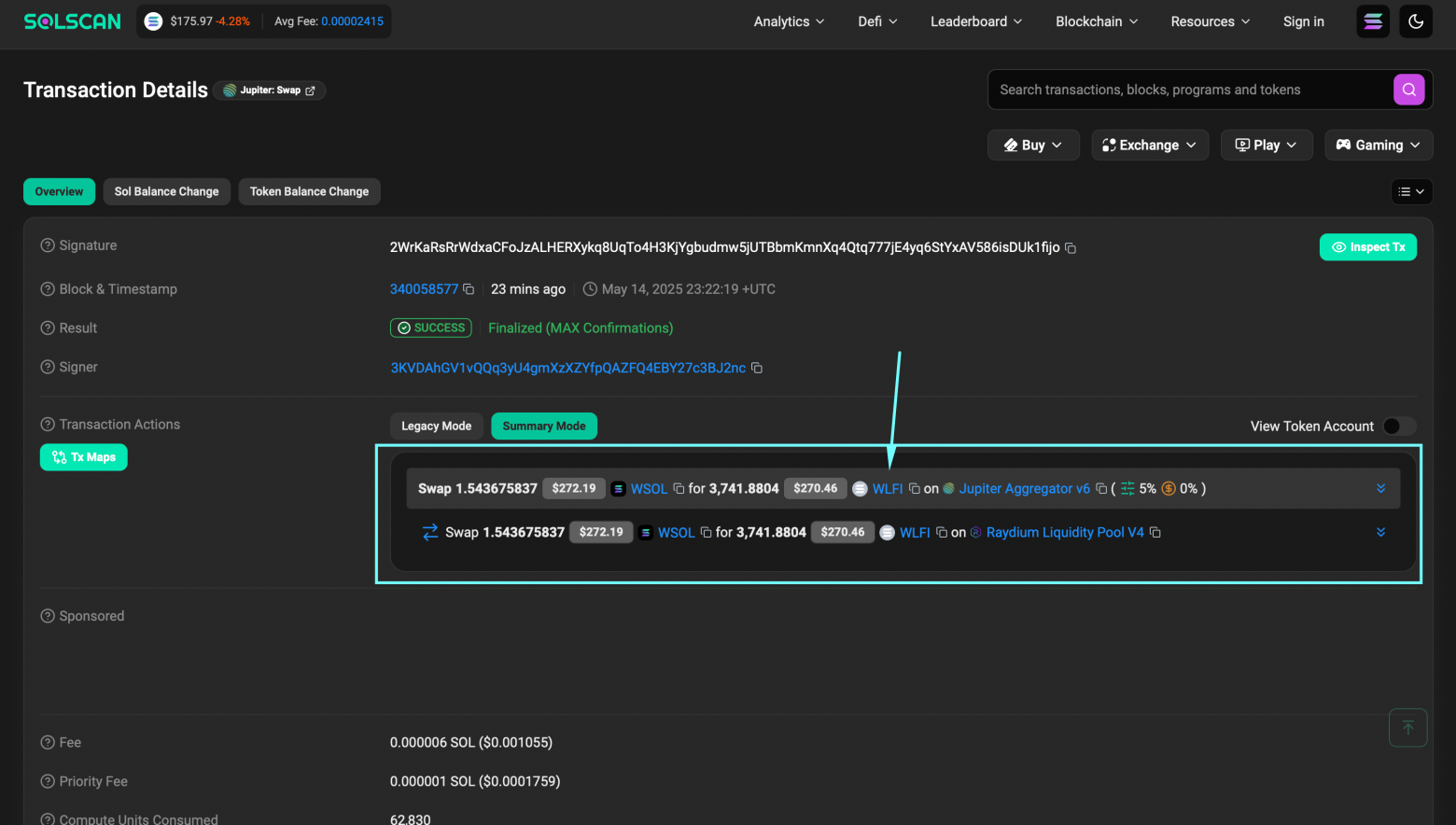
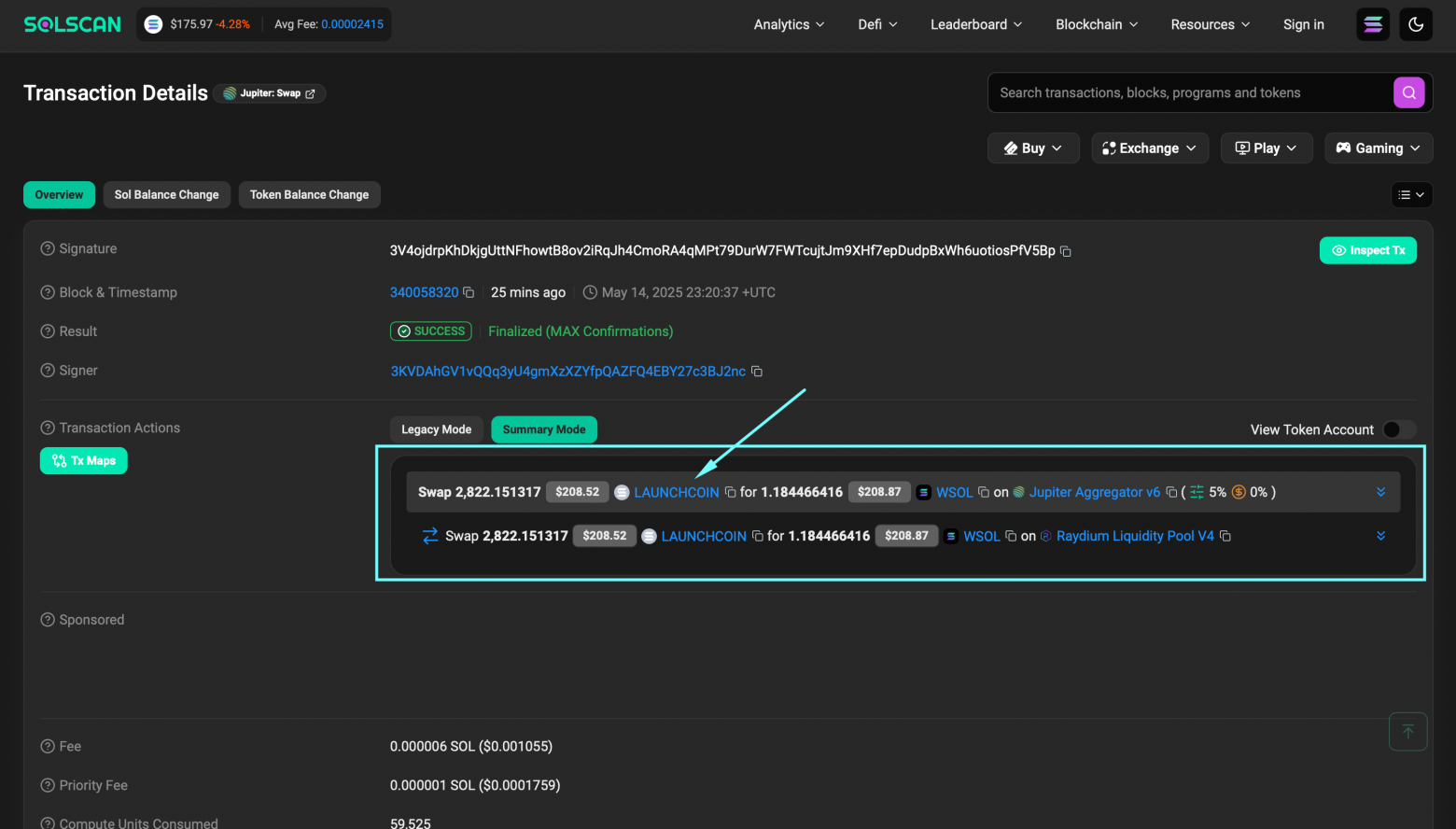
Using Solscan, I traced wallet movements and identified what appeared to be a master account. This account held approximately 4,000 SOL — roughly $700,000. The same wallet was connected to multiple identical scam tokens, all following the exact same pattern.
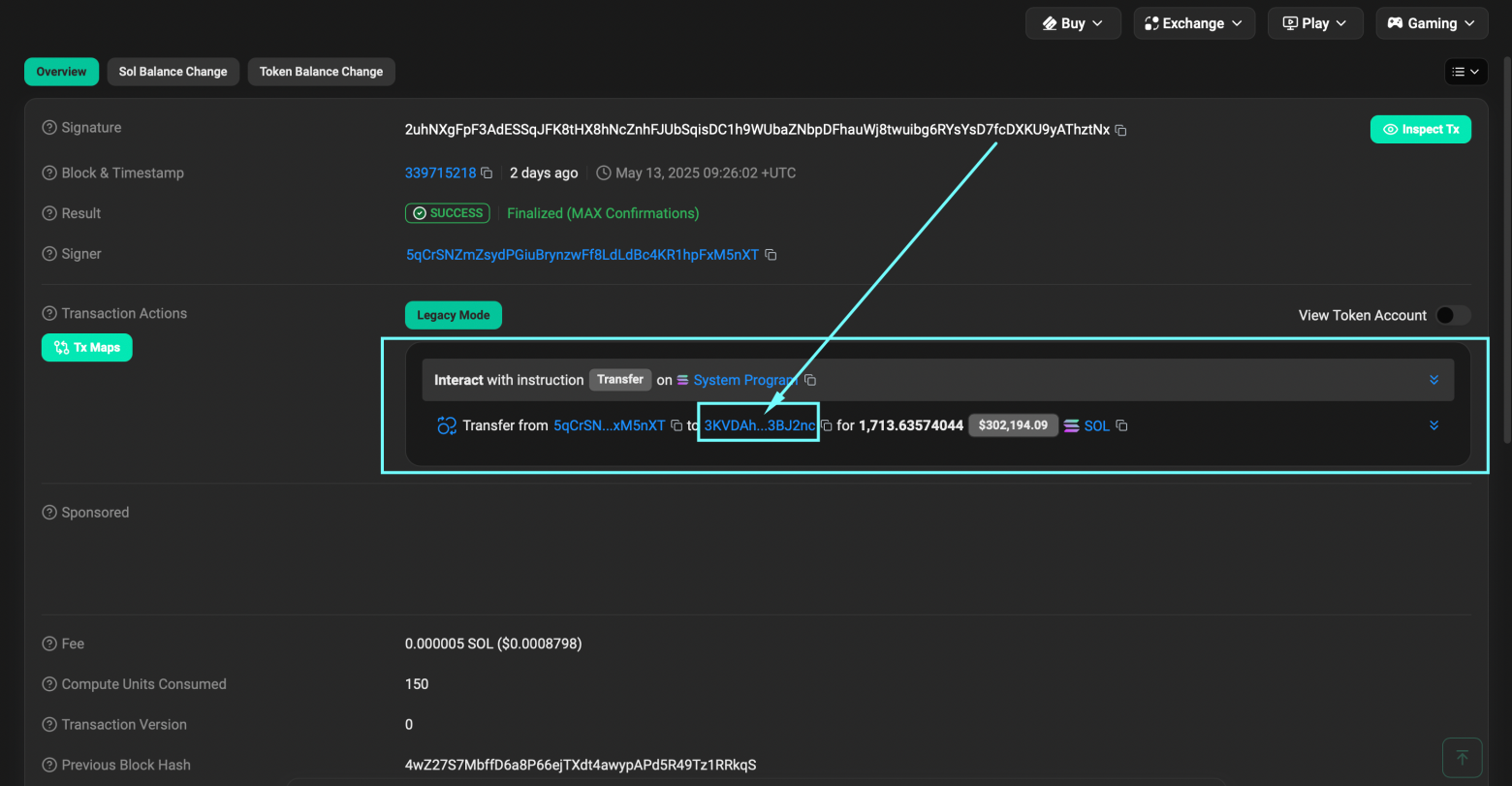
Scale of the Operation
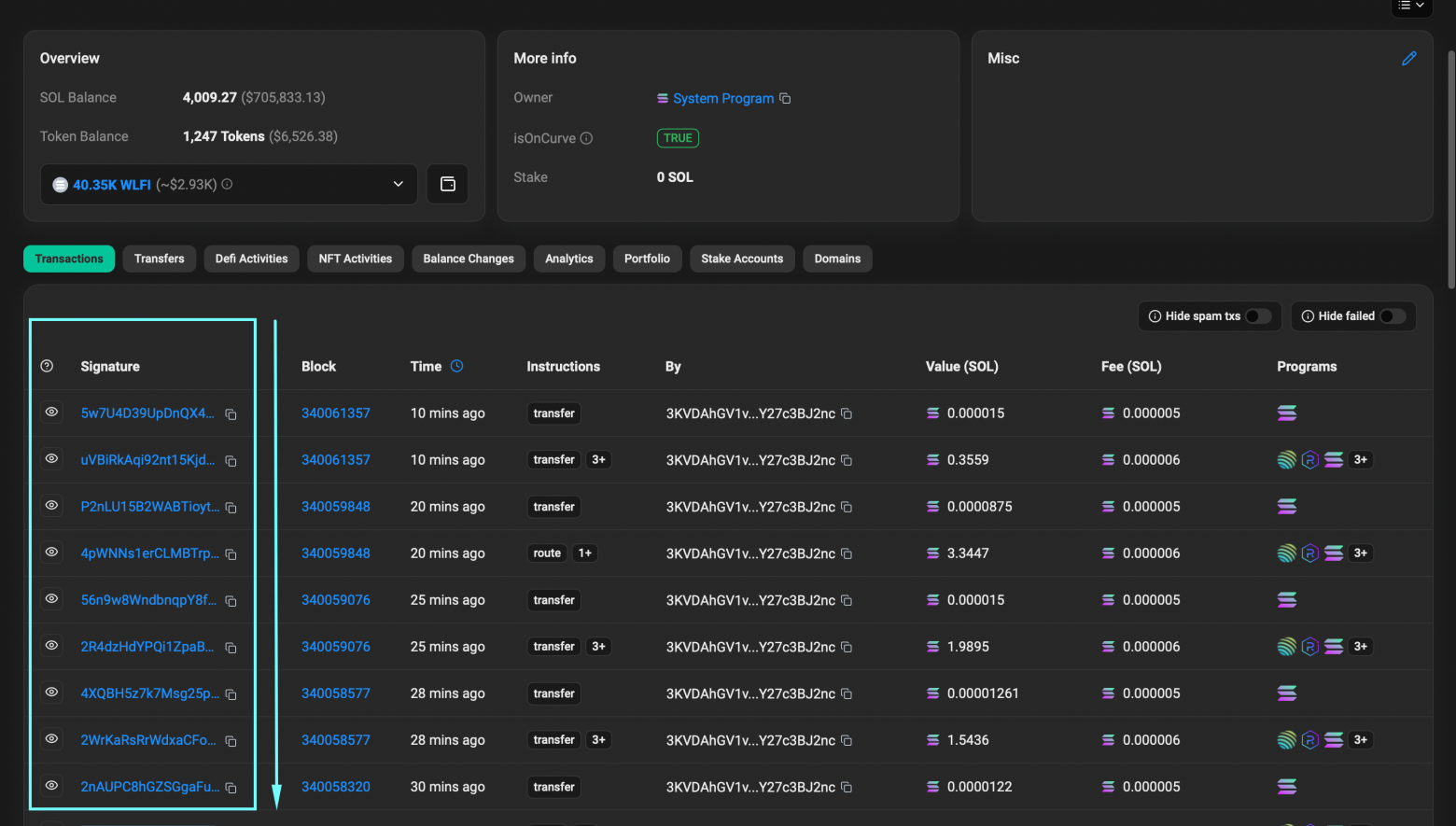
This is not a one-off scheme. The operation runs on a template basis, launching new scam tokens every 30-60 minutes with complete automation. Each cycle is identical: create token, inject liquidity, simulate trading, attract victims, pull the rug. It's industrial-scale fraud running around the clock.
Can You Profit from It?
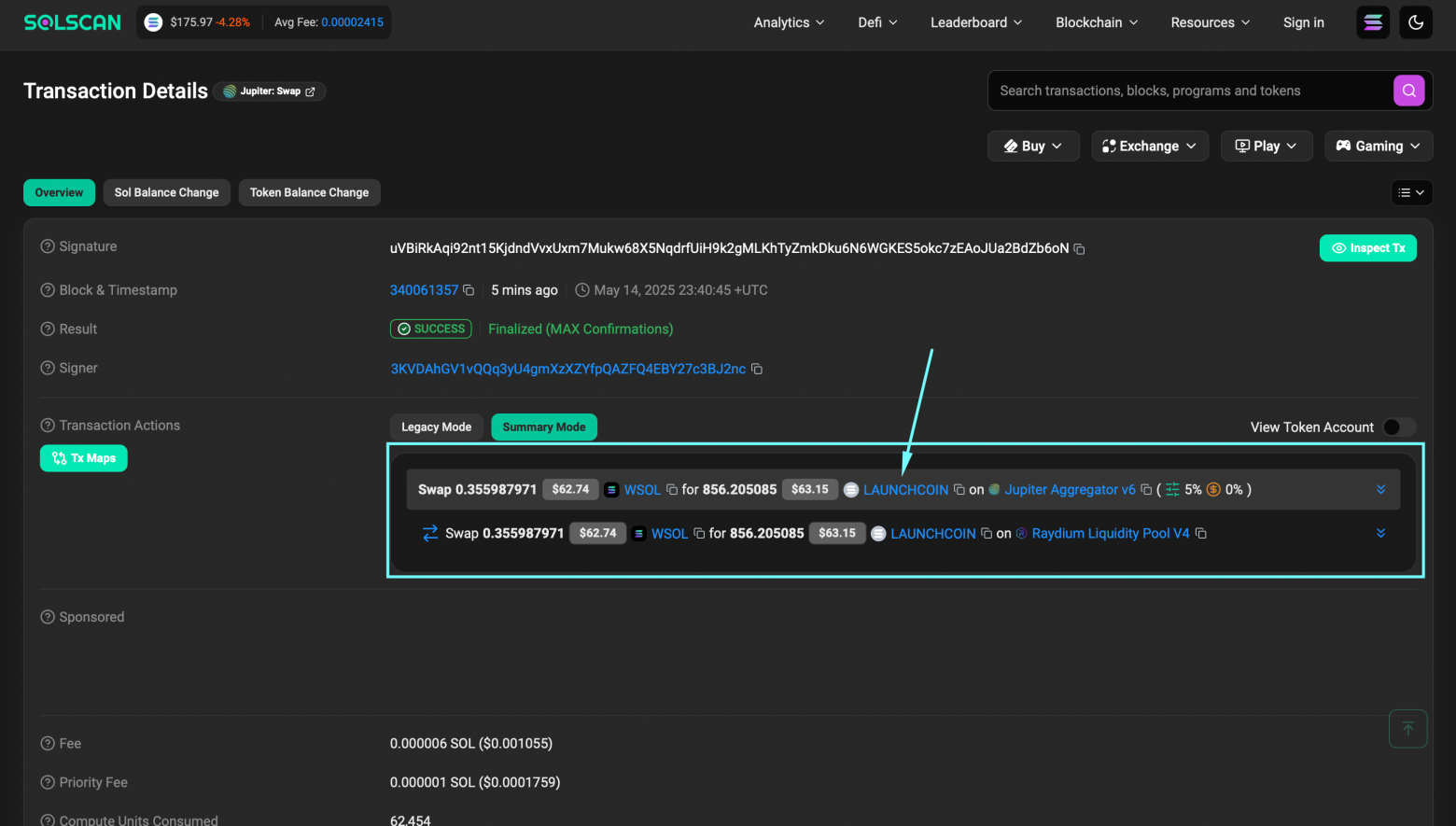
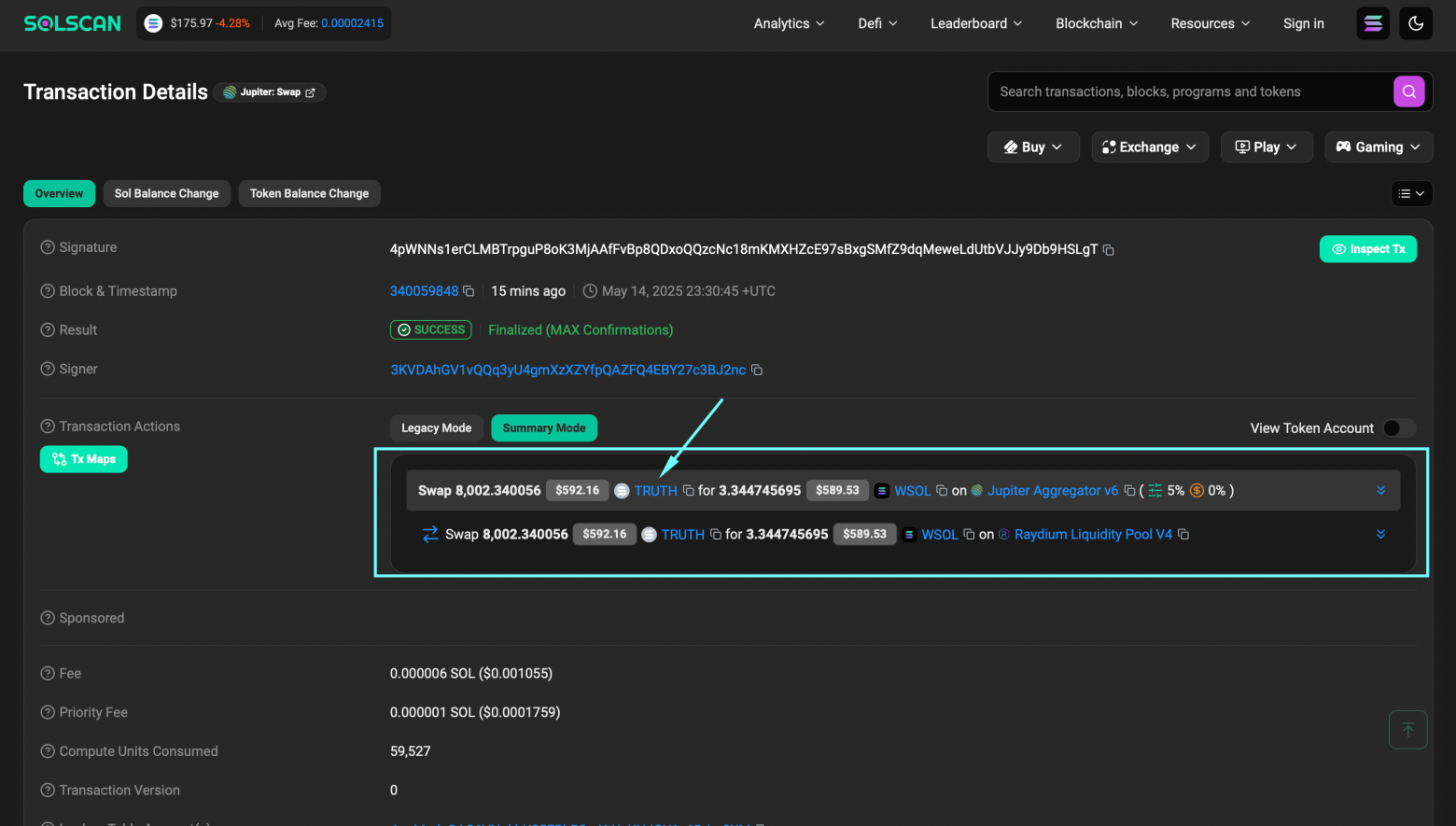
I tried. My win rate was approximately 40% when I timed exits before the liquidity withdrawal. But this is woefully insufficient for long-term profitability. The risk-reward mathematics are brutal: potential gains of 3-4x against total loss scenarios create a negative expected value. I personally lost $40 when one token's price dropped to zero in about 3 seconds — faster than any human could react.
Red Flags to Watch For
Based on my analysis, here are the warning signs:
- Suspiciously perfect price charts showing consistent upward movement without any dips
- Market caps disproportionately high for tokens that are only hours old
- Excessive liquidity for brand-new projects with no track record
- Hundreds of holders that all appear to have bought at similar times
- Tokens that pass anti-scam filters due to distributed holdings across many wallets
Conclusion
The Solana ecosystem, with its low transaction costs and high speed, has become a breeding ground for automated scam operations. The scheme I documented is just one of many operating simultaneously. The combination of fake liquidity, bot-driven trading activity, and instant rug pulls makes this one of the most efficient fraud operations in crypto today.
If you're trading on Solana — or any blockchain for that matter — remember: if the metrics look too good to be true, they almost certainly are. No amount of technical analysis or bot automation can protect you from a rug pull that happens in three seconds.
FAQ
What is this article about in one sentence?
This article explains the core idea in practical terms and focuses on what you can apply in real work.
Who is this article for?
It is written for engineers, technical leaders, and curious readers who want a clear, implementation-focused explanation.
What should I read next?
Use the related articles below to continue with closely connected topics and concrete examples.