Spy Stories: "The Halibut" — Cold War Submarine Cable Wiretapping
The story of a remarkable Cold War espionage device — a steel cylinder packed with tons of electronics and a plutonium power source, designed to tap into armored Soviet submarine communication cables in the Sea of Okhotsk.
Recently I came across a very interesting post on Habr. It intrigued me so much that I wanted to read a bit more detail than the author had provided. And so, thanks to my modest curiosity and tremendous luck, I managed to speak with a person who had dealt with this device firsthand. At the time, he held a senior position in the USSR State Technical Commission, and it was his team that studied this device at the Ministry of Defense. So I'd like to start from the beginning, with all the technical specifications and without errors.
In Kamchatka, we had a massive stockpile of missiles. But they needed to be connected to Moscow somehow. A trunk cable ran along the Trans-Siberian route to Vladivostok. Accordingly, the simplest solution was to lay a submarine cable from Vladivostok to Kamchatka.
The cable was armored, the cable was shielded, and the transmitted information was encrypted. However, there was no noise masking. So by connecting directly to the cable, the information could be intercepted and later decrypted.
For this purpose, the United States created Project "Cocoon" (IVY BELLS), and within its framework developed a wonder-device. We christened it the "Device for Information Extraction from Armored Submarine Cable Communication Lines" — codenamed "Halibut" (Камбала).
The Device
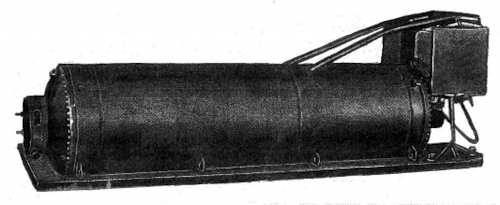
"The Halibut" was built as a steel cylinder more than 5 meters long and approximately 1,200 mm in diameter. Inside the hermetically sealed tube, several tons of electronic equipment were mounted for receiving, amplifying, and demodulating signals tapped from the cable, along with a nuclear (plutonium) power source. The designed service life was several decades.
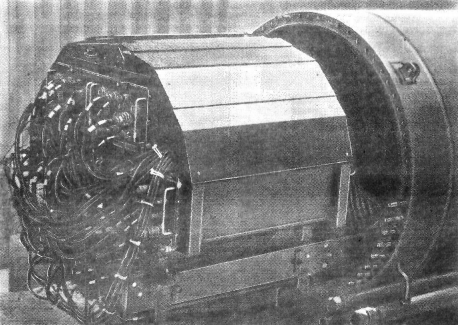
The device also included a special induction sensor that extracted information directly from the cable. And not just from an ordinary cable, but also from one protected by double armor made of steel tape and steel wire.
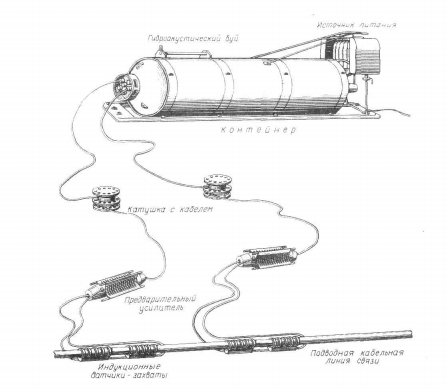
Signals from the sensor were pre-amplified by an antenna amplifier, then directed for demodulation, separation of individual conversations, and recording onto tape recorders.
Recording
Recording of intercepted conversations was performed by 60 automatically operating tape recorders, which activated when signals were present in the cable and stopped when signals were absent. Each tape recorder was rated for 150 hours of recording. The total recording capacity of intercepted conversations was approximately 3,000 hours.
Retrieval
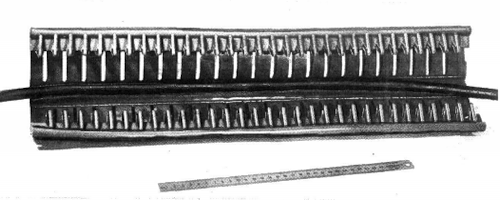
When the tape was exhausted, a specially trained diver would locate the wiretapping device using a hydroacoustic beacon installed on the container, detach the induction sensor-clamp and the preliminary antenna amplifier from the cable, and deliver the device to a specially equipped submarine. The device weighed just over 100 kg in water. Inside the submarine, the tape recorders were replaced, after which the device was reinstalled on the communication line.
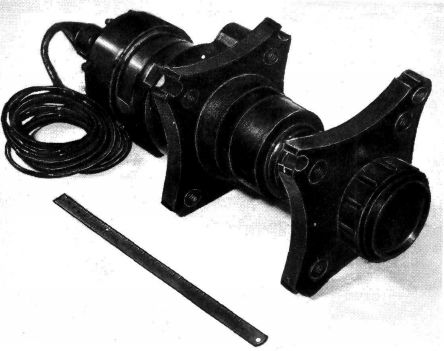
For practical deployment of such a system, a specially equipped submarine was required, fitted with devices for locating submarine cables. These devices were mounted outside the submarine and operated at very great depths.
The Discovery
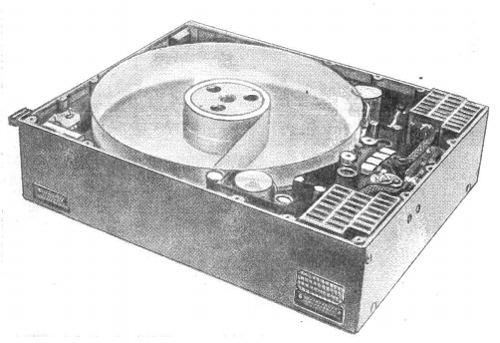
But as they say, every cloud has a silver lining. In 1988, our fishermen — who knew nothing about the cable or "The Halibut" — accidentally damaged the cable. And it was during the repair of that damage that they found it. The device was sent to Moscow, where it was thoroughly studied by all manner of specialists, including the person who told me everything about "The Halibut."
P.S. First, I apologize for the terrible quality of the images — it's all we had. Second, if this article is well received, I'll write about the land-based version — "The Mole" — and some other assorted goodies.