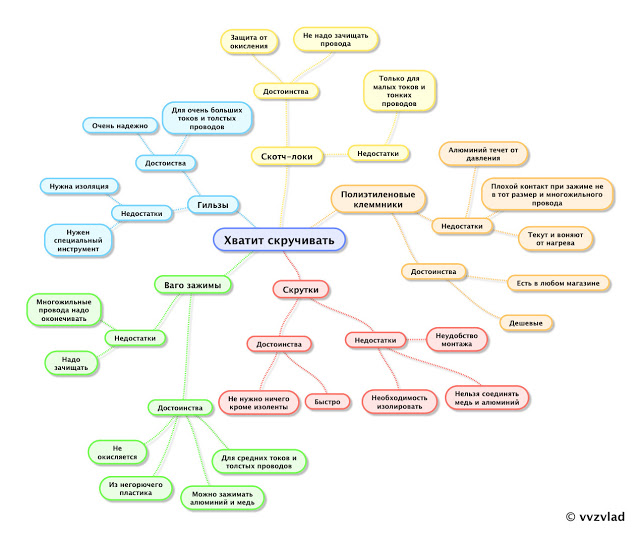
Stop Twisting Wires!
A comprehensive guide to modern wire connection methods — from polyethylene terminal blocks and WAGO self-clamping connectors to ScotchLok IDC connectors and crimp sleeves — explaining why twisting wires together is dangerous and what alternatives exist.
About ordinary wiring
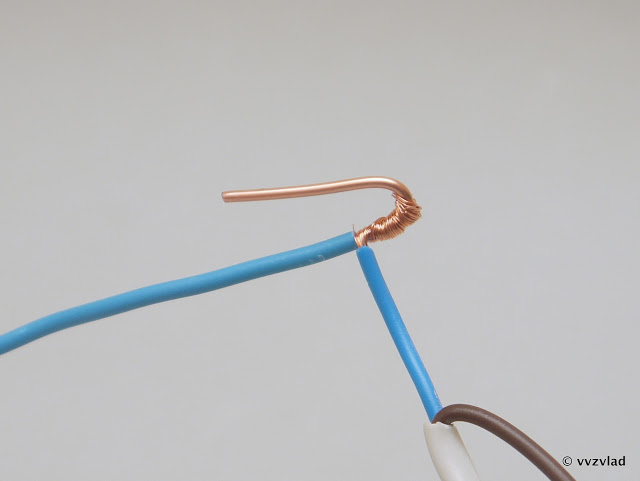
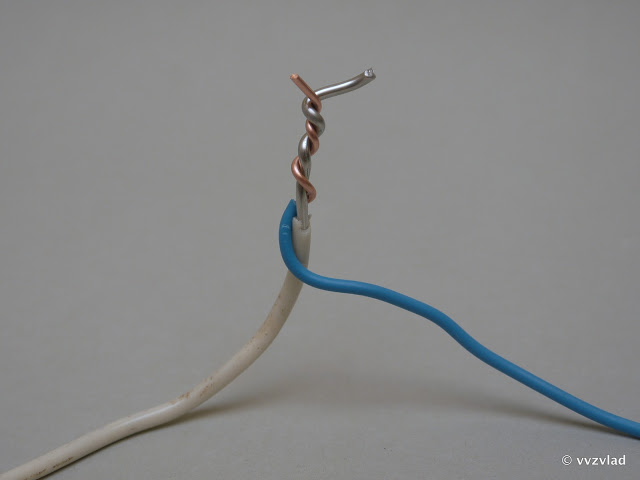
Seriously, stop it. There are plenty of cool gadgets for connecting all sorts of wires, yet the technique of "bite off the insulation with your teeth, twist, wrap with electrical tape" is alive and well to this day.
When I see something like this, it makes me uncomfortable... And when I see this, I want to kill the author.
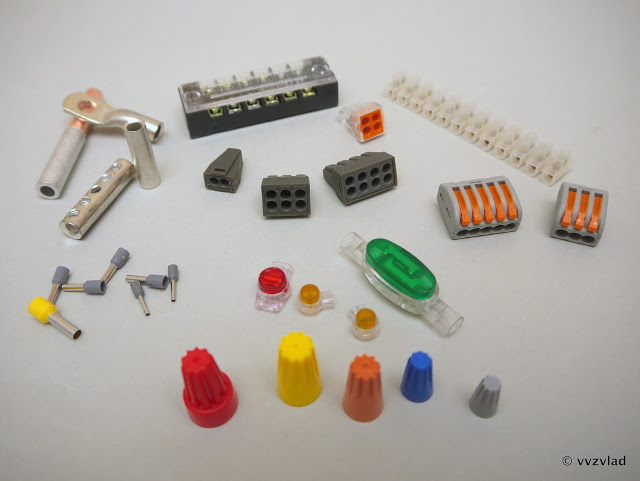
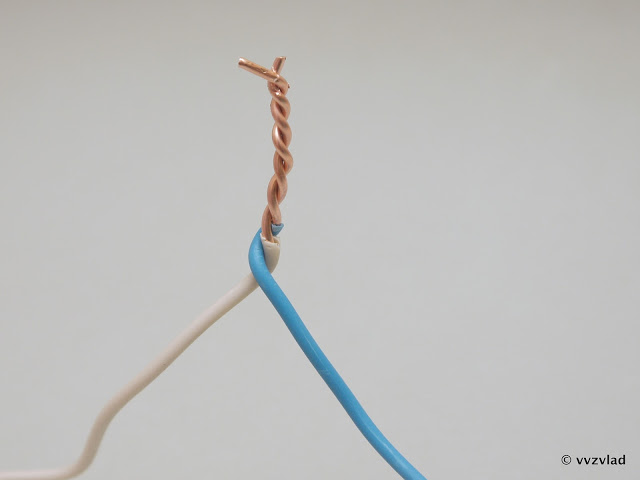
The thing is, you must never connect copper and aluminum wires by twisting them together.
There are several reasons for this. The main one is the oxidation problem of aluminum wire in contact with copper — a galvanic couple forms, which slowly but surely destroys the connection. And the faster, the more current flows through this twist.
Of course, such a connection won't fall apart after a couple of hours, even if you plug in a heater or kettle through it. But over time, the resistance will slowly increase, causing the twist to heat up more and more. And if the load isn't constant but episodic, then the constant heating-cooling cycles will further worsen conductivity. Different materials expand differently when heated, and switching a load on and off through such a twist is equivalent to constantly yanking it back and forth. You understand, nothing good will come of that.
It's fine if it's just heating — you can usually detect it by the characteristic smell of burning insulation. But arcing at the connection, especially near wallpaper or anything flammable, can easily turn into a fire.
Polyethylene terminal blocks
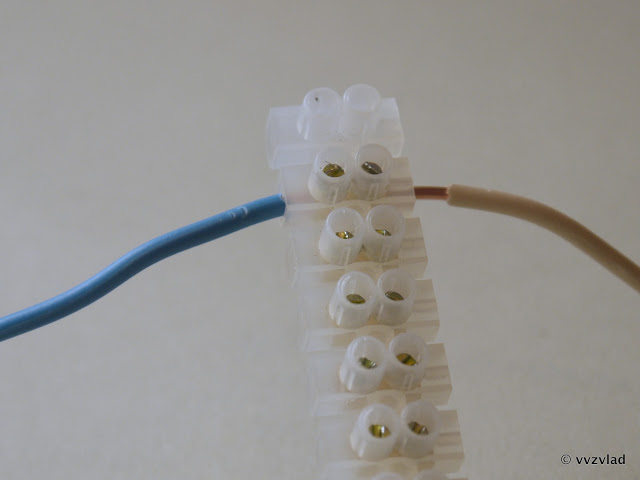
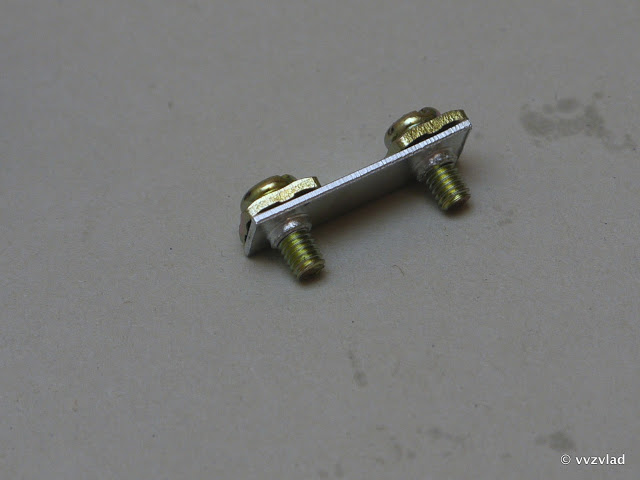
This thing is sold in any hardware store and costs pennies. Inside there's a brass sleeve with two screws.
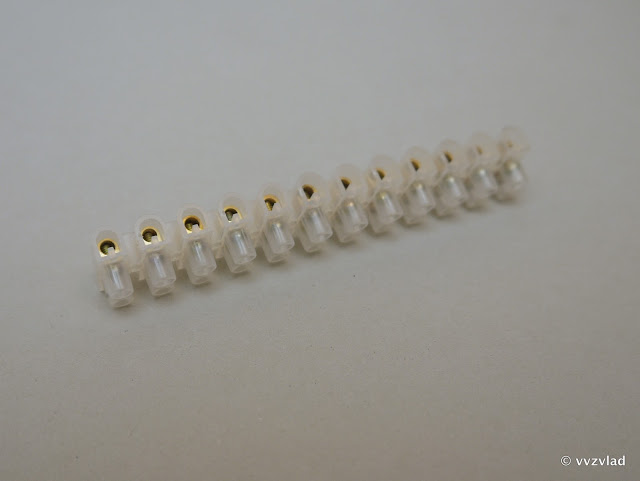
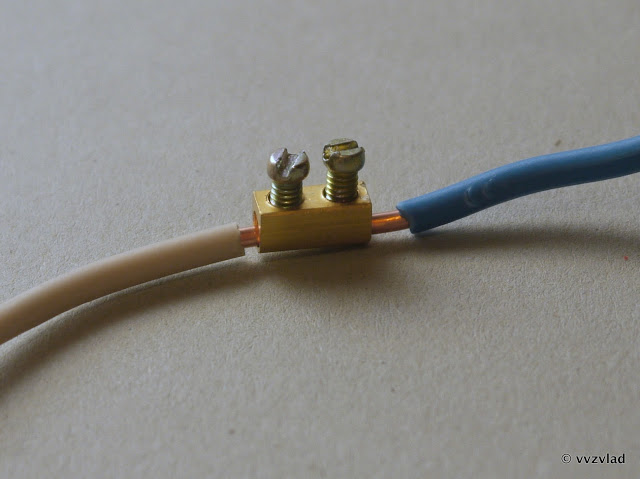
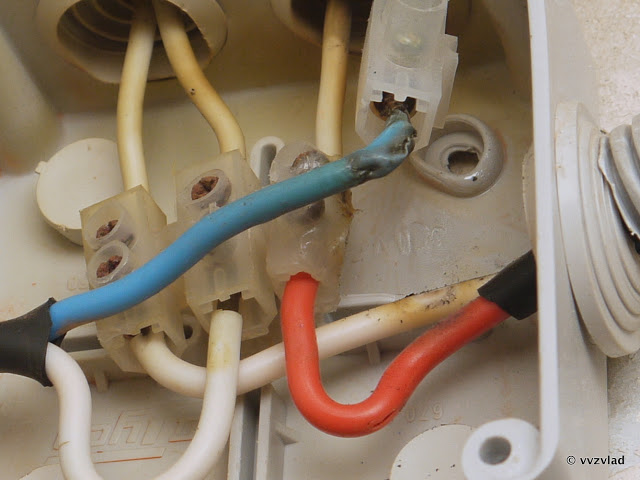
You stuff the wires in, tighten the screws. I pulled it out specially for clarity. With insulation it will look like this. Each segment can be cut off. Seems like an ideal solution. But there's a catch.
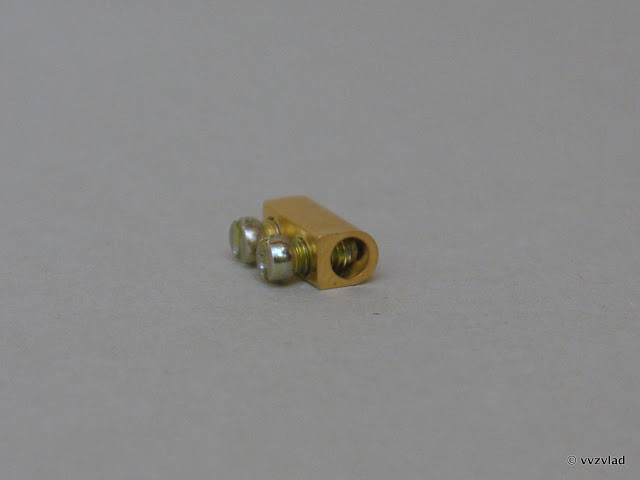
Actually, there are a whole wagon and a small cart full of catches and drawbacks — don't be fooled by the simplicity:
- You can't clamp aluminum. Aluminum wire has creep under constant pressure, and after some time the contact can easily disappear or deteriorate. What this leads to — you already know: heating and fire. Strictly speaking, ALL screw connections with aluminum must be retightened once a year.
- You can't clamp stranded wires. These connectors have the full set of things stranded wire hates — rotational movement, uneven screw surface, and point-like uneven pressure.
- You need to match the size to the wire gauge. A wire won't fit into too small a diameter, and it's awkward to clamp in too large a one.
- If you tighten just a bit too much, the hard but brittle brass easily cracks.
- Don't pay attention to the current rating labels when buying. They lie. Divide the current by two, better by three.
In general, it's advisable not to use such terminal blocks at all. If you do use them, then only with solid-core wires and for connecting something small — a light bulb, a fan (not industrial). And no aluminum! Also advisable to buy not no-name Chinese ones, but terminal blocks from reputable manufacturers: Tridonic, ABB, Legrand, Weidmuller.
Cost: 10 to 50 rubles.
TB Series Terminal Blocks
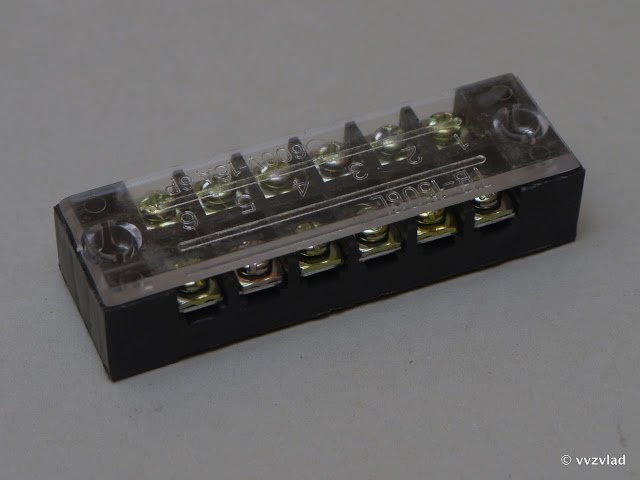
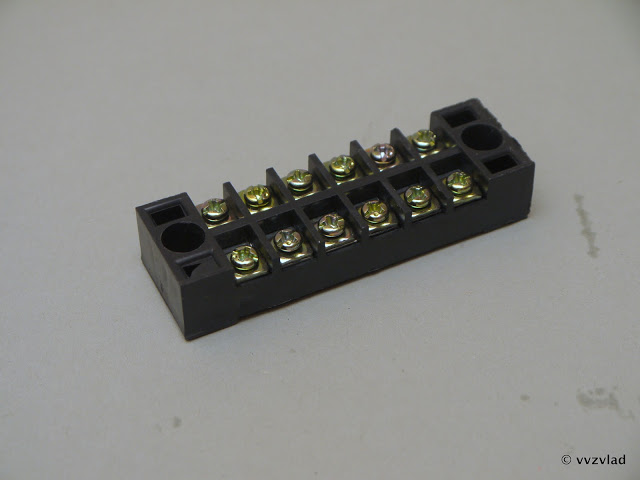
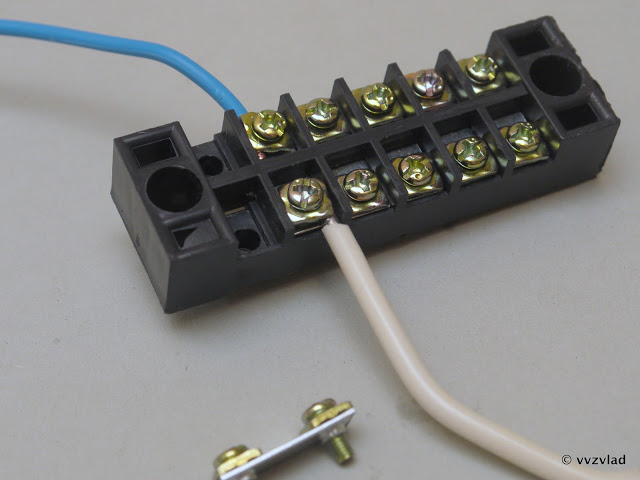
Blocks made of hard black plastic. Already better. They have a removable cover and this internal structure.
You unscrew, insert the wire, tighten.
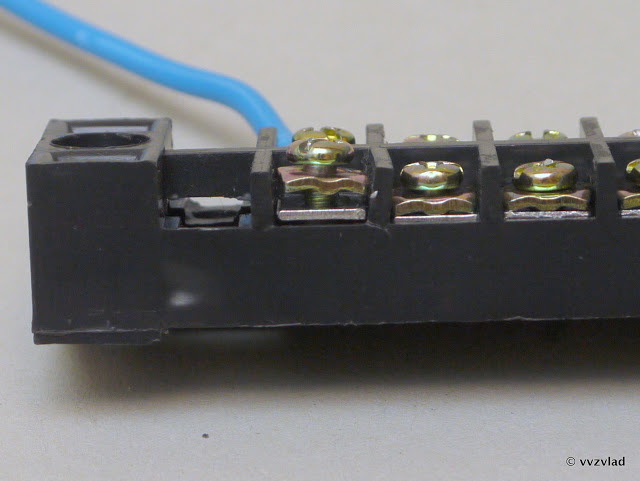
The advantage — the clamping is done not by the screw itself, but by a metal plate. It presses against the bottom steel plate. Moreover, the upper part isn't flat but has a textured surface that increases the contact area.
Thanks to this, you can clamp stranded and aluminum wires. Aluminum ones, though, should at least occasionally be checked for loosening of the clamp. The blocks themselves are rated for 25A and 40A currents.
The inconvenience — they can't be cut or divided. Either buy a bunch of small ones (I haven't seen less than 6-position ones), or even for two wires you put one large block.
Cost: 30 to 80 rubles.
Self-clamping connectors (WAGO or REXANT series 773 and their copies)
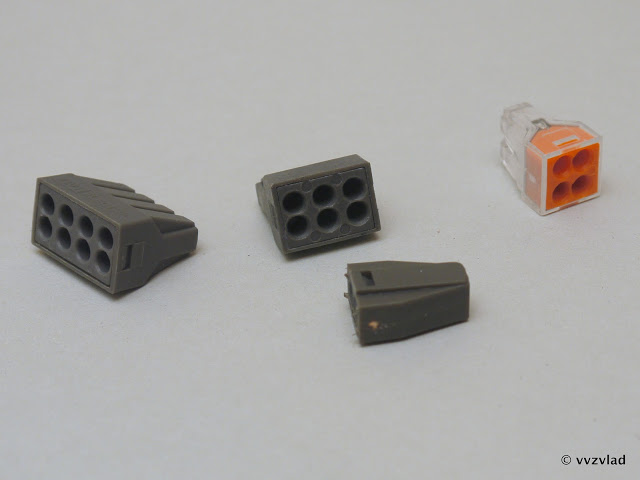
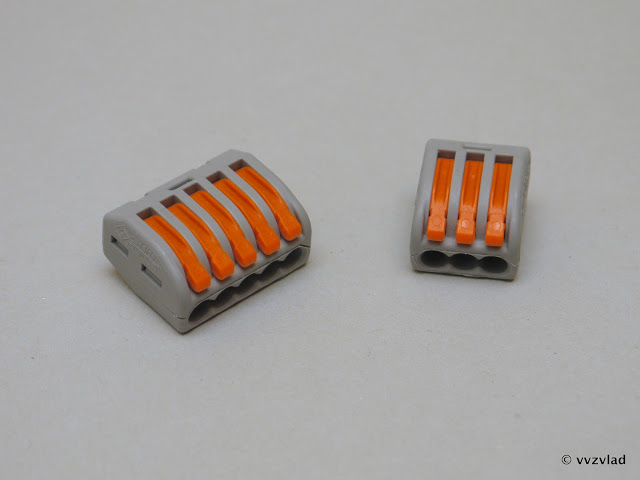
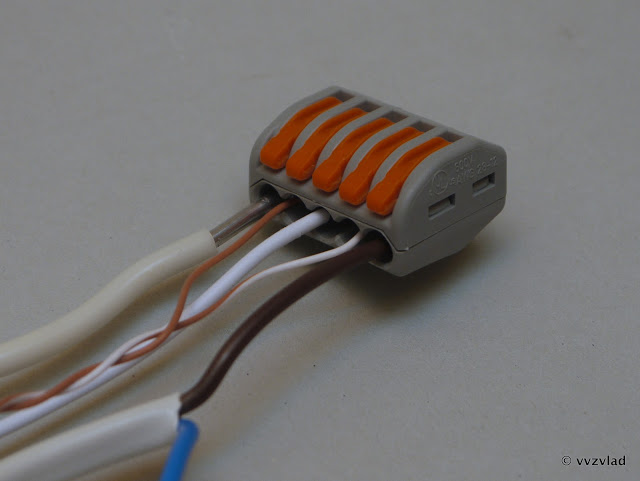
Also called express connectors. Very convenient things. Strip the wire, push it in all the way, done.
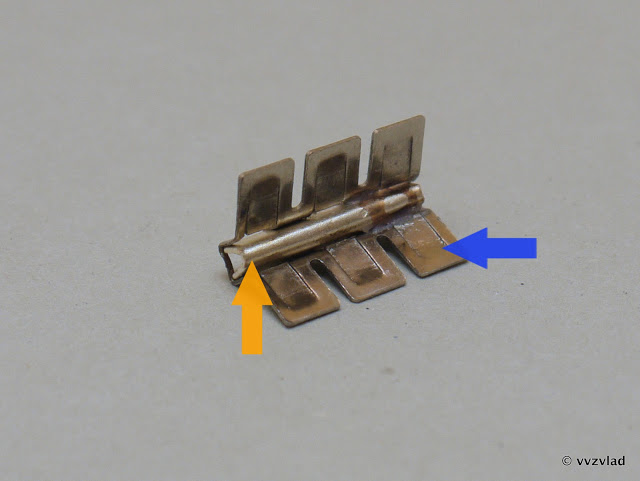
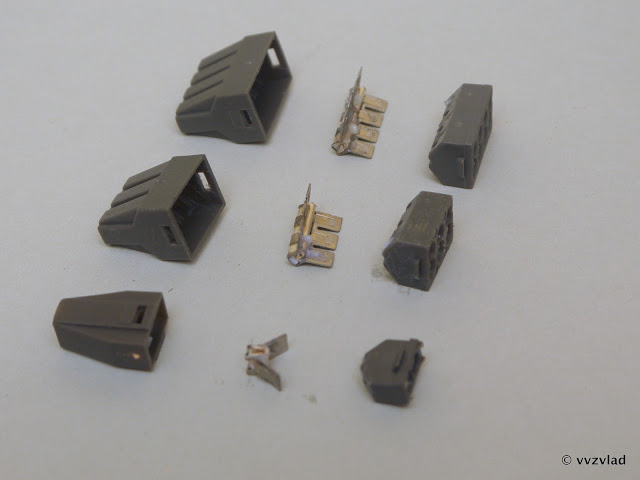
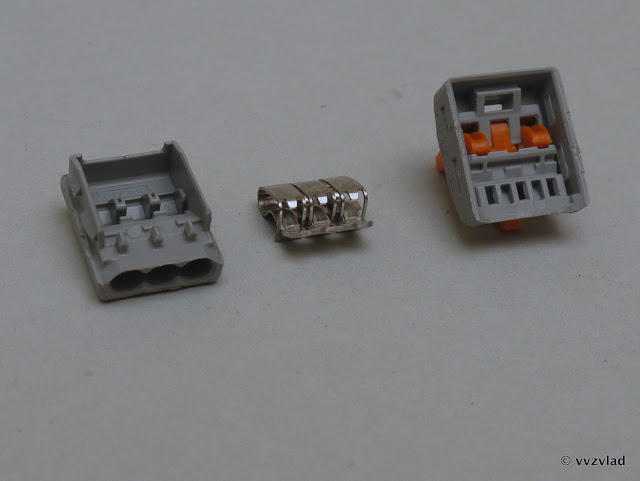
Inside there's a clamping plate (blue arrow) and a small bus bar (orange) made of tinned copper.
When you push wires in, the following happens: the plate presses the wire against the bus bar, maintaining pressure the entire time. And the design of the clamping part doesn't let the wire fall out. You can barely pull it out even if you try. They're actually single-use, but if you really want to, you can carefully rotate the wire around its axis and pull it out.
Since the copper contact is tinned, you can insert aluminum wire into such a connector without worrying about problems. At the same time, the constant pressure won't let the aluminum wire fall out.
The white paste is quartz sand with technical petroleum jelly, specifically for aluminum wires. Quartz sand is an abrasive that scrapes off the oxide film from the aluminum surface, and the petroleum jelly prevents it from forming again.
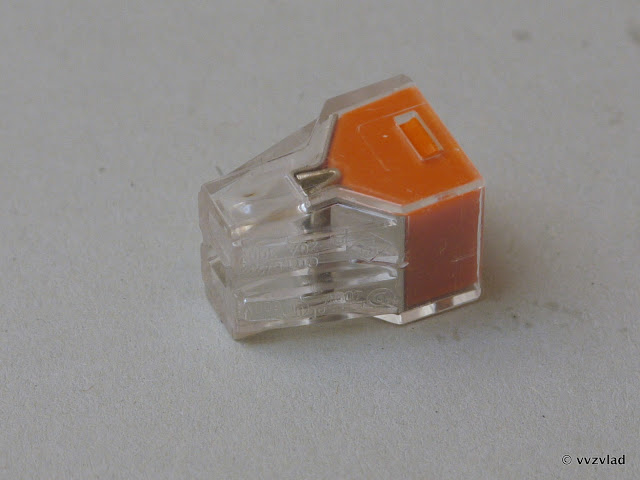
There are the same connectors but transparent. They differ in nothing except the colorant. And in transparent connectors it's more convenient to see the wire — whether it's pushed all the way in or not.
The plastic is non-flammable — when temperature rises, it melts without releasing harmful substances into the air.
Rated for 25A, which is approximately 4 kW. Attention! The current ratings are stated only for original WAGO connectors.
Rexant connectors (manufacturer — SDS Group) use a different spring steel that relaxes when heated. Accordingly, the maximum current is limited, and they're not recommended for anything beyond lighting.
Here's a test where they held 50A and didn't even melt. Well, that was under ideal conditions — in open air with good cooling. And the connectors were original, yes.
Cost: 2 to 6 rubles, depending on the number of contacts.
WAGO 222 Series Lever Connectors
I've only seen WAGO brand ones, nobody else makes them. For especially difficult cases when you have several types of wires, different thicknesses, aluminum, copper, etc.
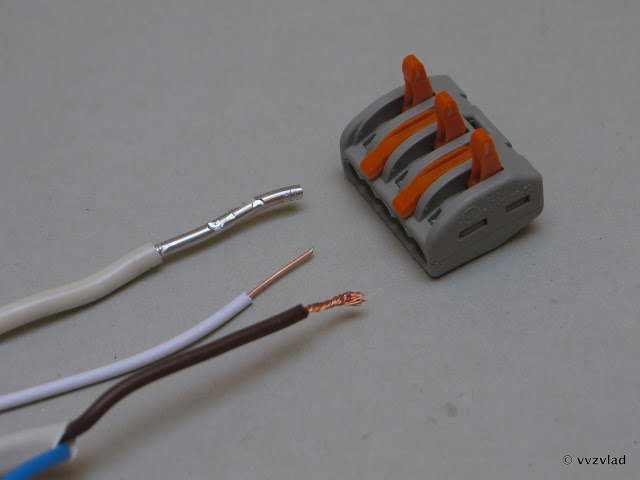
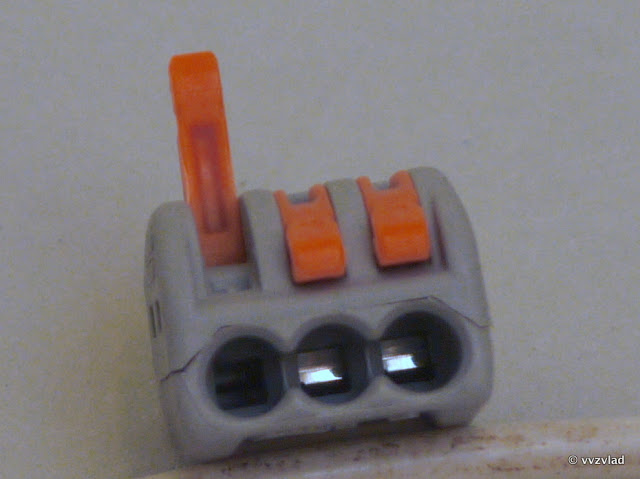
Lift the lever. Push in the wires, lower the lever.
If needed — you can raise the lever, pull out the wire, insert another. And do this many, many times. An excellent thing for those circuits whose wiring might change a bunch of times.
They accept everything. Current — up to 32A. Inside — a plate that presses against a common bus bar is connected to the lever. A clever design, basically.
The bus bar — tinned copper, as usual.
Cost: 5 to 15 rubles.
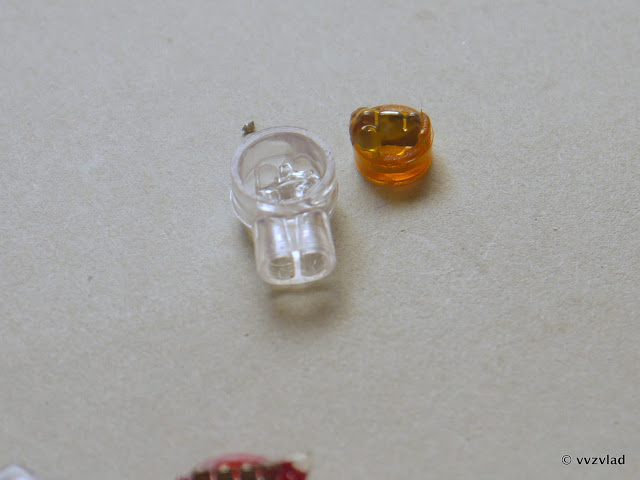
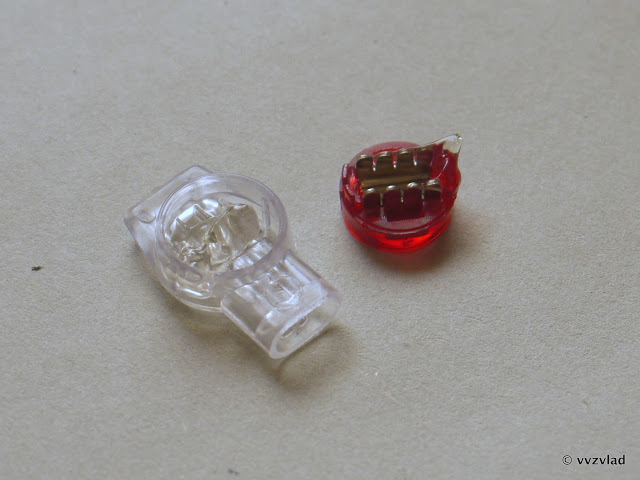
ScotchLok insulation displacement connectors
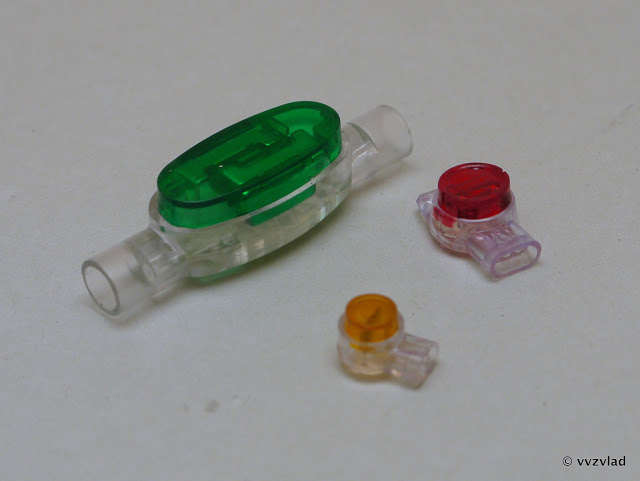
These are for low-current applications (networking, telephone, LED lighting, etc.).
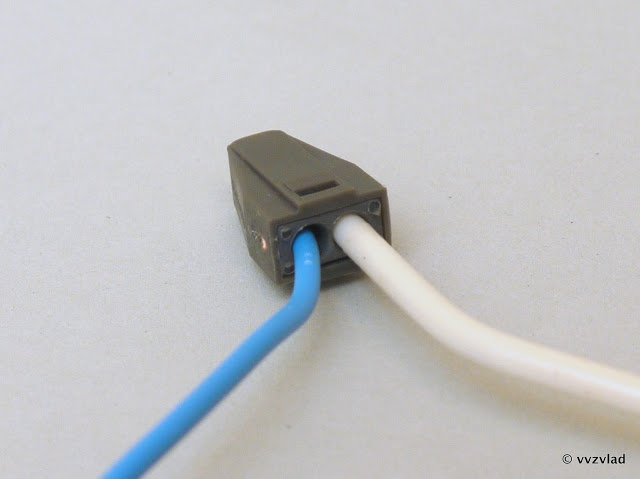
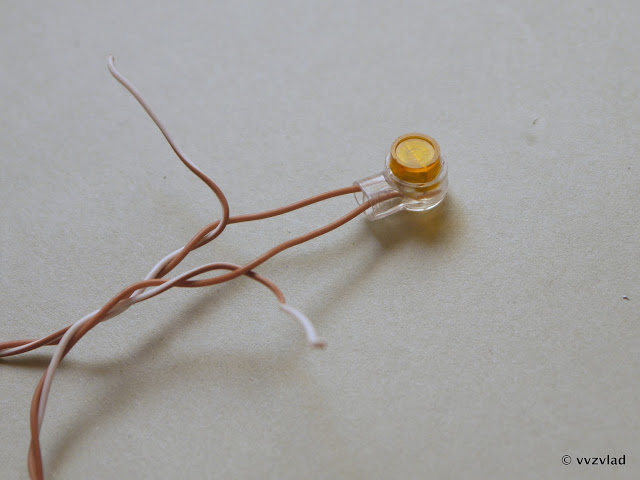
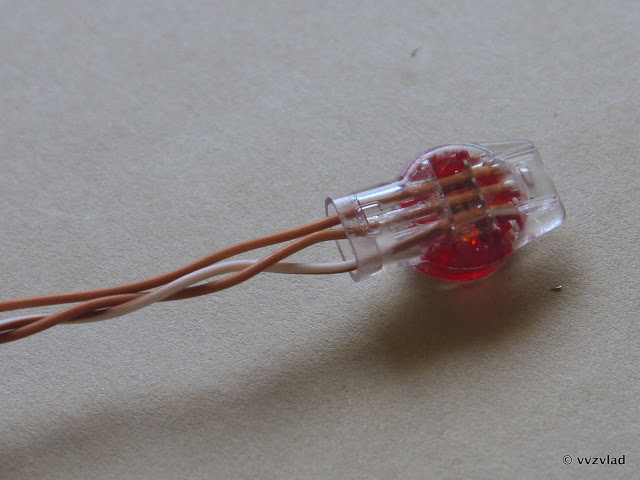
The concept is simple — you stuff several wires into this thing. Then you snap it shut with pliers or any pressing tool. No, there is of course a special tool, but I don't see the point in it — it's just small pliers with flat jaws.
Network and structured cabling installers especially love them for their simplicity, cheapness, waterproofness, and the fact that you don't need to strip insulation.
Inside there's a hydrophobic gel that protects against corrosion, moisture, oxidation, etc. And a plate with a cutting-clamping surface. Or two plates.
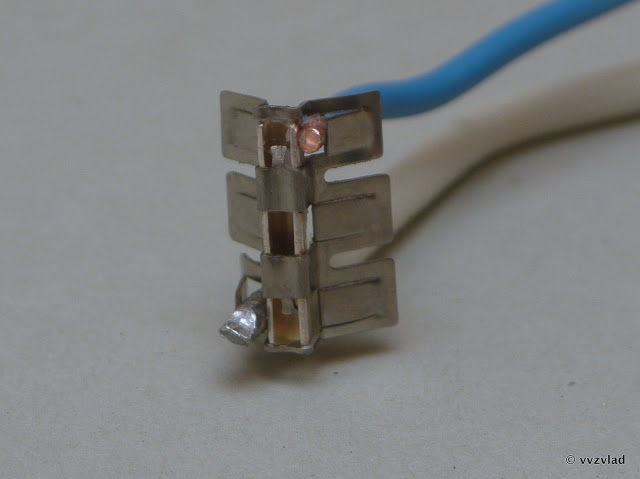
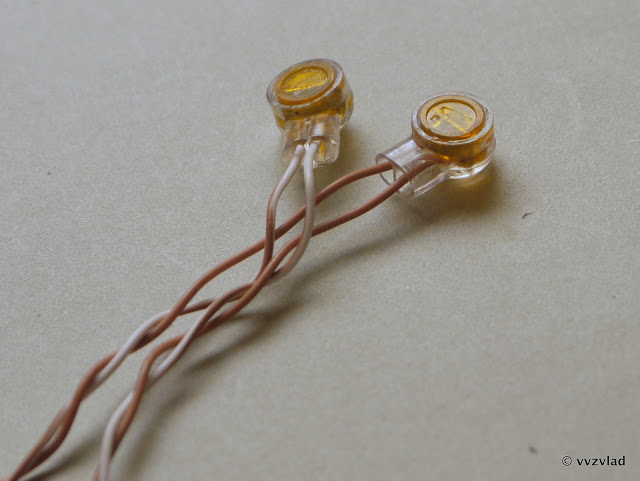
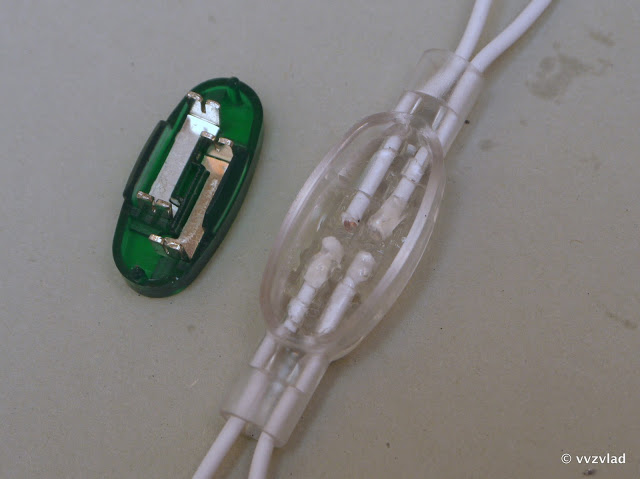
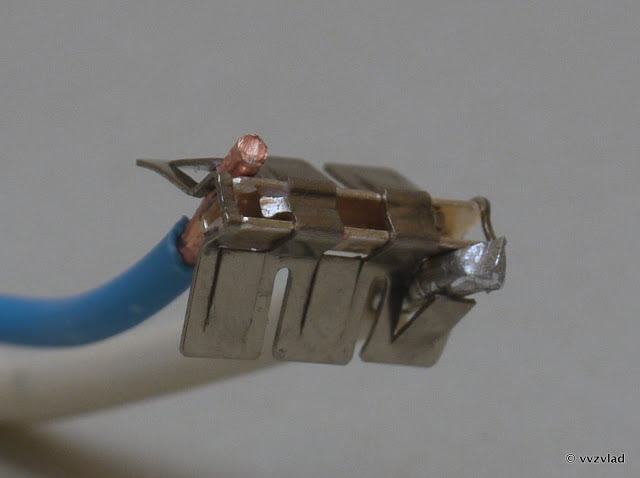
Here you can see what happens to the cable after installation: the blades cut through the insulation and firmly press against the wire. There's also a version for two cables at once, and the plates are a bit thicker — quite suitable for lighting.
Naturally they're single-use and maintenance-free. Need to replace one — you cut out the section of cable with the connector and put in a new one.
Cost: 1 to 4 rubles per piece.
For high currents
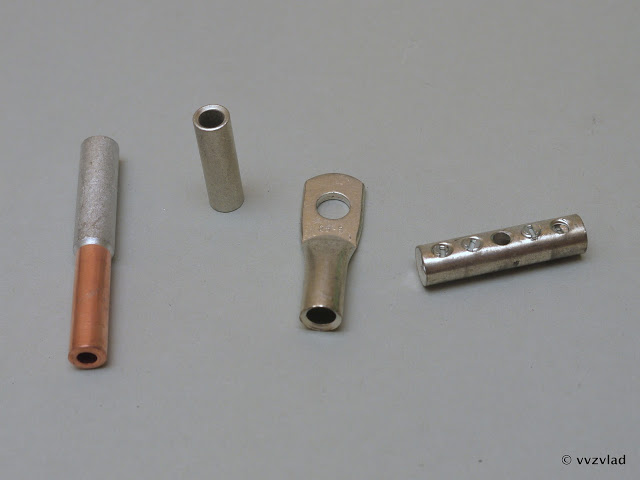
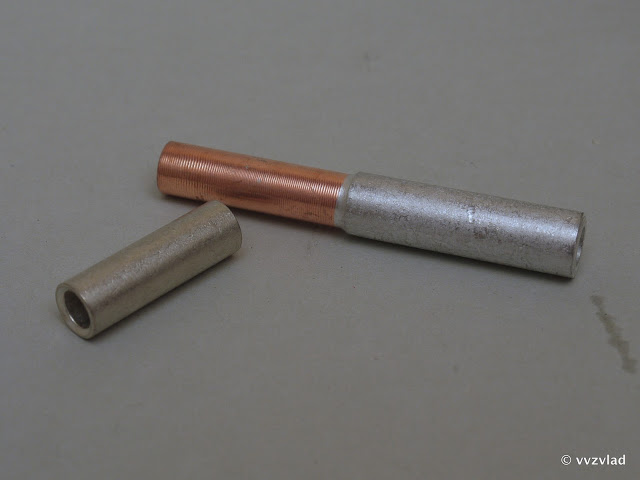
For such cases, there are crimp sleeves.
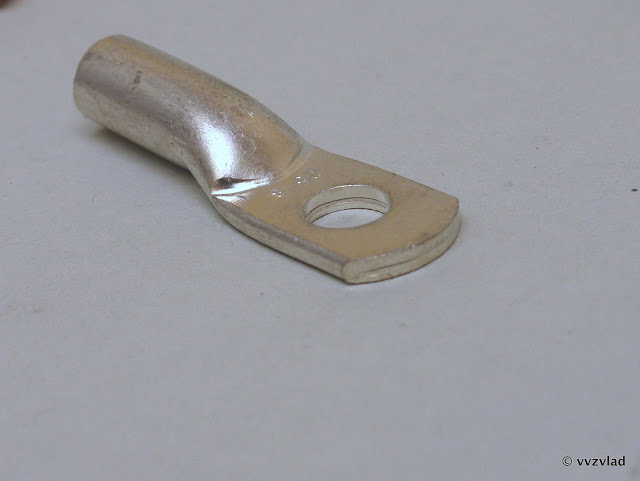
Top — a sleeve for connecting aluminum and copper cable, bottom — a universal tinned copper one.
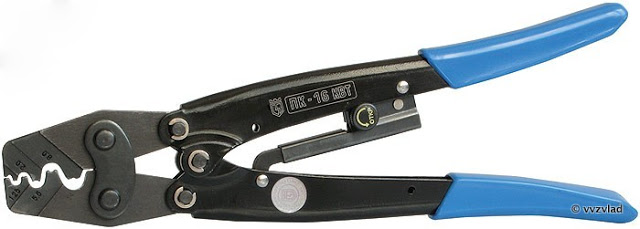
You insert the wire (or several) inside, and crimp the sleeve with a special tool.
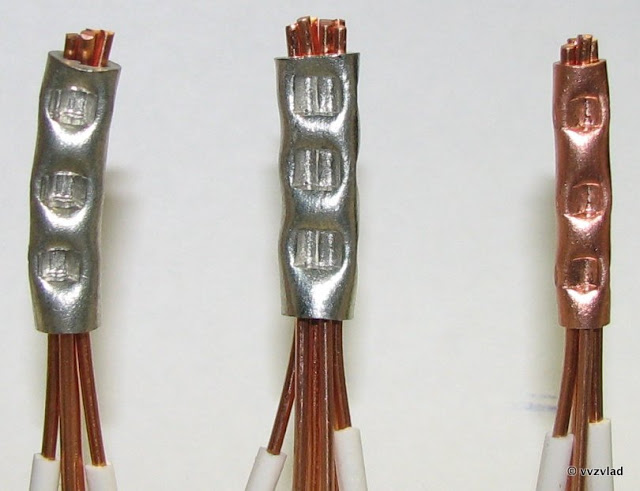
And here's what a crimped sleeve looks like.
The huge advantage is that with the right size choice and proper crimping, the resistance doesn't increase compared to regular wire. And it's maintenance-free, which is sometimes important. This means you can wall it in (after proper insulation, of course), bury it in the ground (taking care of waterproofing), etc.
Sleeves with a flat end and a hole are used mainly for grounding, when you need to connect a wire to a housing.
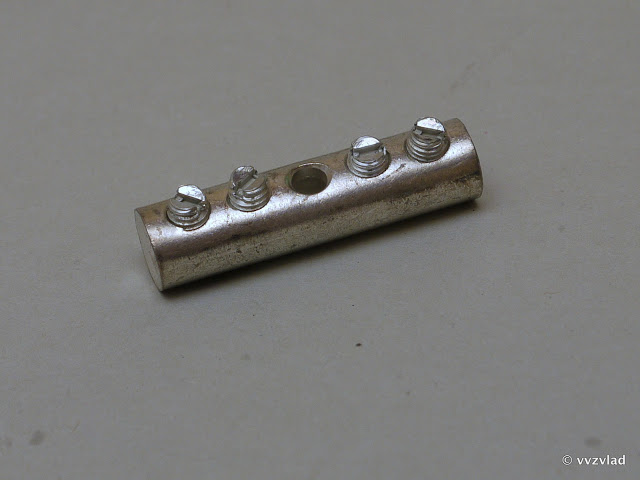
Sleeves with screw clamps — for when you need to clamp a wire without tools.
Current ratings — equivalent to the ratings for the copper wire gauge that matches the sleeve's inner diameter.
Cost: from 10 rubles per sleeve, from 1000 for the crimping tool.
About stranded wires
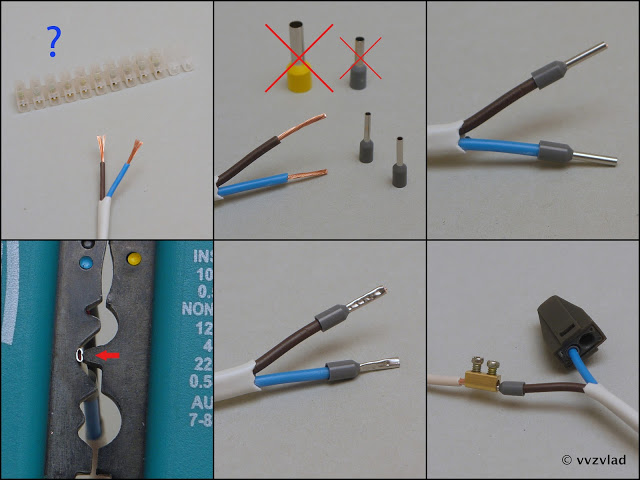
There's also the situation when you need to connect a solid-core wire with a stranded one.
Sure, you can tin it and then clamp it like a solid core. But there's an easier option.
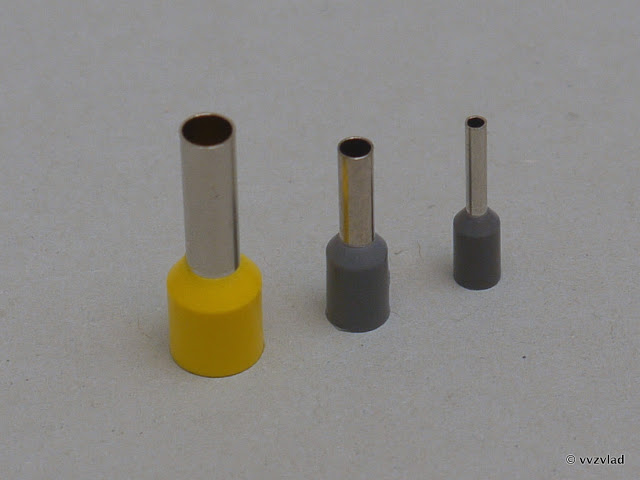
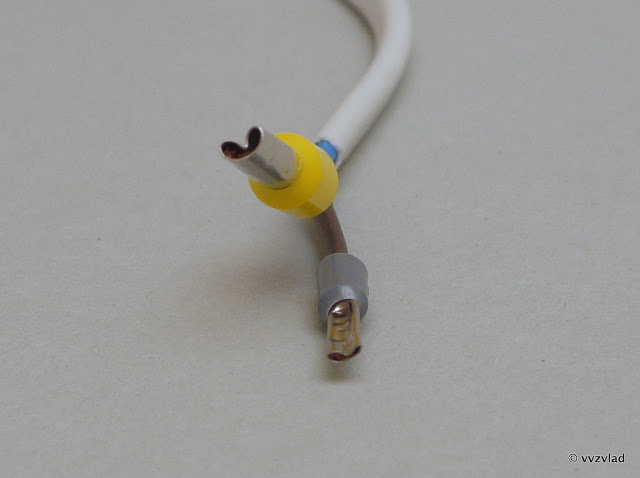
They're called ferrules — pin-type insulated wire end ferrules. The concept is simple: you match the diameter to the wire gauge, lightly twist so it doesn't fray, put on the ferrule and crimp it along its full length (at least 3-4 times). That's it — now this wire can be clamped in any type of connector without worrying about strands breaking off, contact loss, or anything else. It's important to choose the right ferrule diameter for the wire, otherwise the contact will be worse and the wire might slip out.
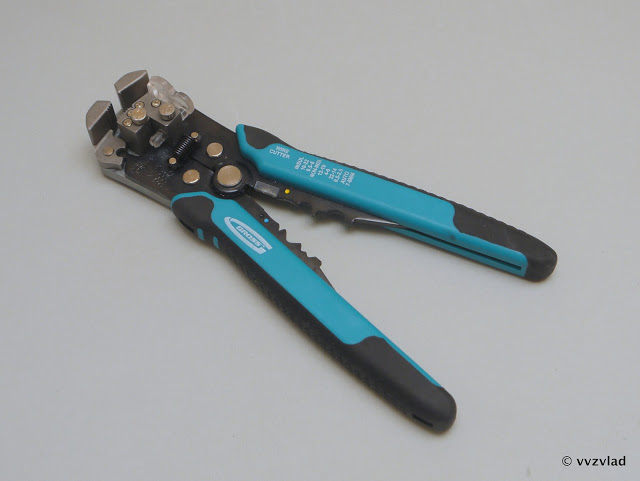
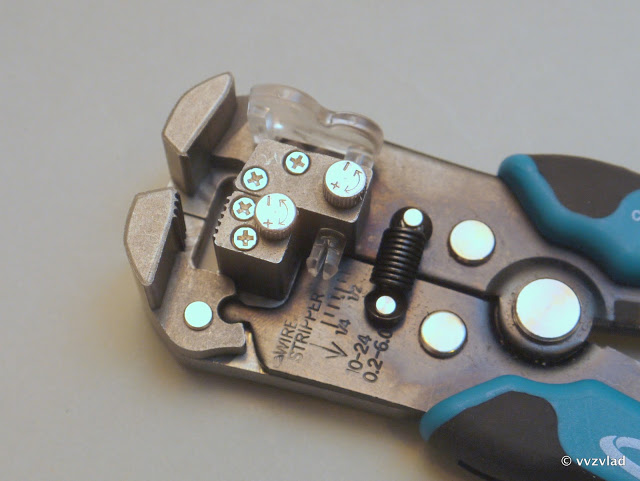
You can crimp them even with a hammer and screwdriver, or pliers, but it's better with a proper tool — and it's not very expensive, from 500 to 2000 rubles. Better not to buy the cheapest Chinese no-name, but spend 30-40% more than the minimum price.
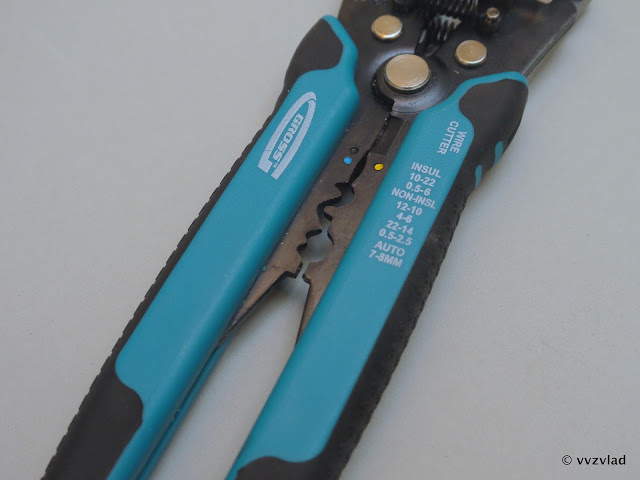
I use this one: a combination wire stripper and crimper.