"Not Bad, Huh?" — The Plane That Outran Sound, Concorde, and Its Own Era
The story of the Tu-144, the world's first supersonic passenger aircraft that flew before the Concorde but was ultimately doomed by its fuel-hungry engines and the Soviet Union's lack of a market for luxury air travel.
On December 31, 1968, a historic event took place at the airfield in Zhukovsky. After two weeks of waiting for favorable weather conditions, four men took their seats in the world's first supersonic passenger aircraft. Commander Eduard Elyan, co-pilot Mikhail Kozlov, flight test engineer Vladimir Benderov, and flight engineer Yuri Seliverstov prepared for the flight of the Tu-144.
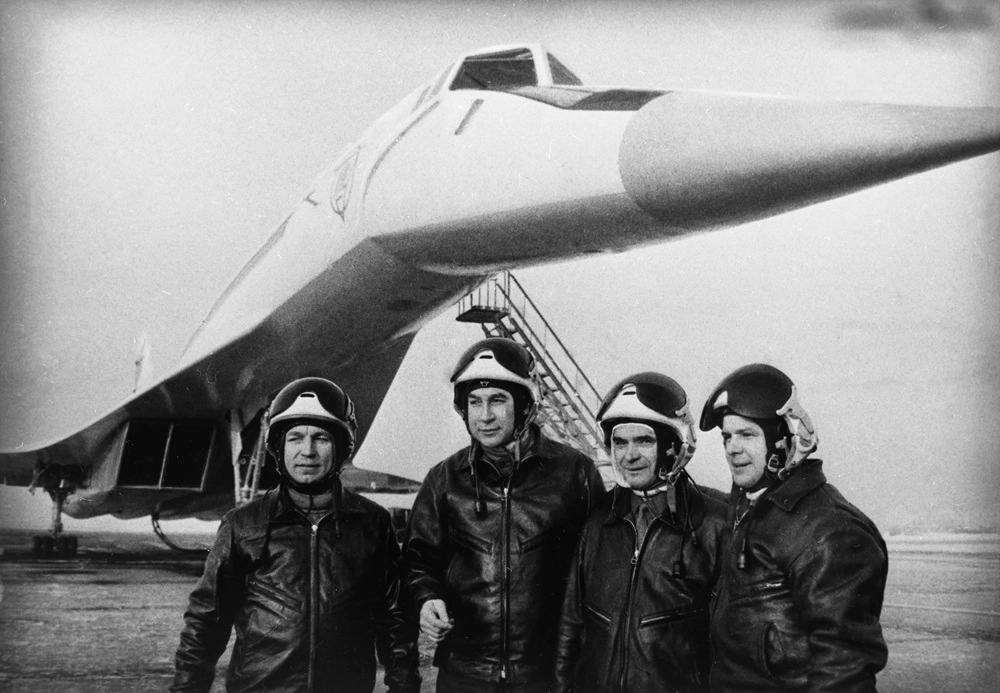
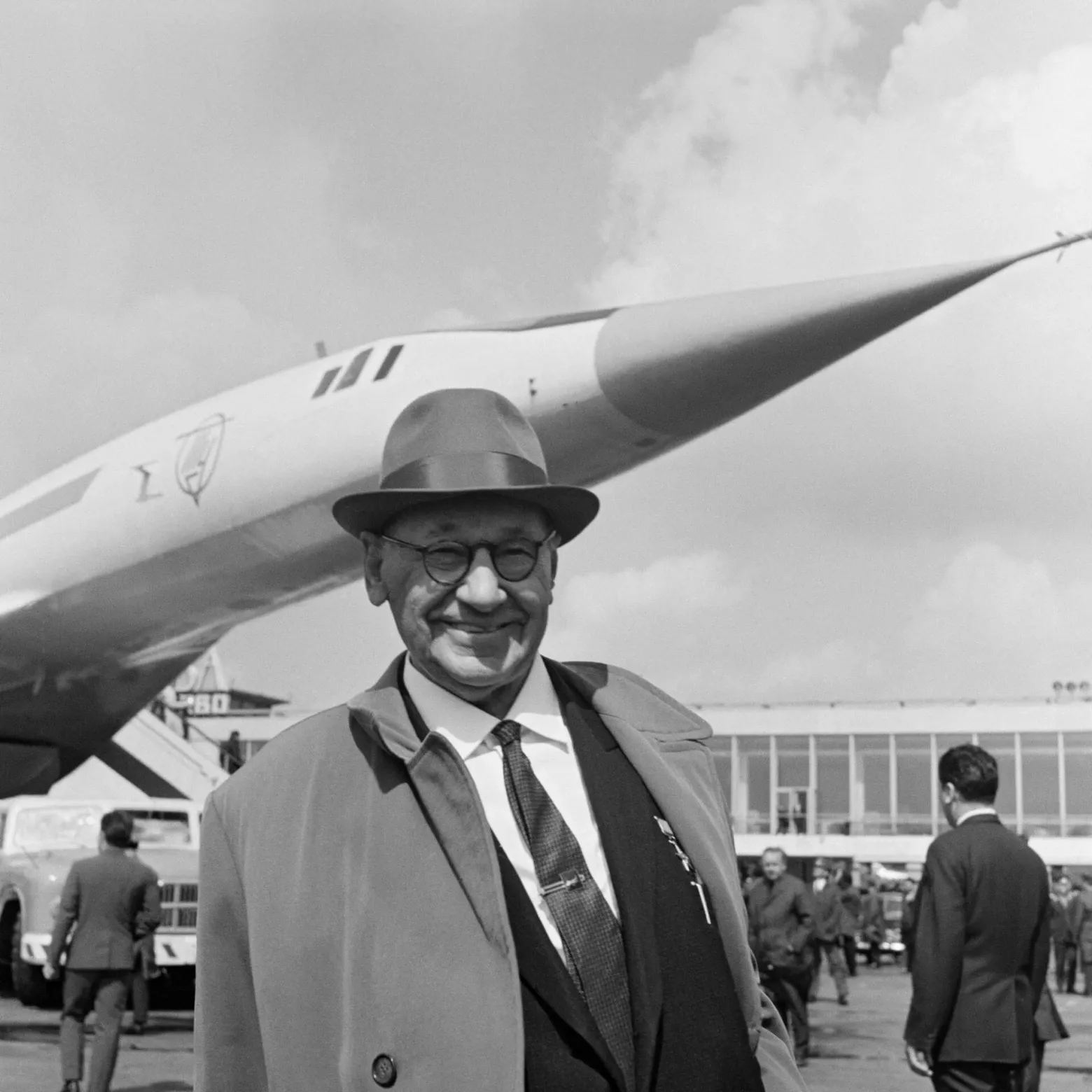
The four NK-144 engines reached takeoff thrust, and after a 25-second takeoff roll, the long white arrow with its drooped nose lifted off the runway. The flight lasted 37 minutes. Over the radio, Elyan reported easy handling, and before landing cheerfully uttered his now-famous phrase: "Not bad, huh?" Andrei Nikolaevich Tupolev, standing by the radio station, responded in his customary manner: "Zero forty-eight, this is me."
Two months later, the Anglo-French Concorde made its first flight. The American Boeing 2707 would never be built — the project was canceled in 1971. The Tu-144, meanwhile, broke the sound barrier on June 5, 1969, becoming the first passenger aircraft to achieve supersonic speed.
From Idea to Reality
In the late 1950s, transatlantic airlines were overloaded. Aircraft flew at speeds of 800–900 km/h. The logic was simple: a faster aircraft could make twice as many flights. Britain and France signed an agreement to develop Concorde in 1962. In the USSR, they independently reached similar conclusions.
On July 16, 1963, a government decree was issued to create a supersonic passenger aircraft, the Tu-144, at the Tupolev Design Bureau. Alexei Andreyevich Tupolev, son of Andrei Nikolaevich, was appointed lead designer, with his father providing overall direction. Engine development was entrusted to the Design Bureau of Nikolai Kuznetsov.
The task was ambitious: cruising speed of 2,300–2,700 km/h, range of 4,000–4,500 km with 100 passengers or 6,500 km with 50 passengers using additional fuel tanks.
Physics and Engineering Challenges
The difference between military and civilian supersonic flight is fundamental. A fighter pilot is supplied with oxygen through a mask and has an ejection seat. Passengers need comfortable conditions: a pressurized cabin with air conditioning, ordinary plumbing.
At Mach 2, external surfaces heat up to 100–120°C. Aluminum loses strength at 190°C. The Tu-144 was built from heat-resistant AK4-1 alloy, with VAD-23 and OTCh-1 alloys used on load-bearing elements. Windows were made from fluoroacrylate organic glass. The tail section was protected with titanium sheet and basalt fiber. Evaporative panels were installed inside to cool the structure.
No passenger aircraft in the world had ever done anything like this.

During the transition to supersonic speed, the center of pressure shifts backward, creating a pitch-down moment. The aerodynamics change, the center of pressure moves aft, and the aircraft starts to nose-dive.
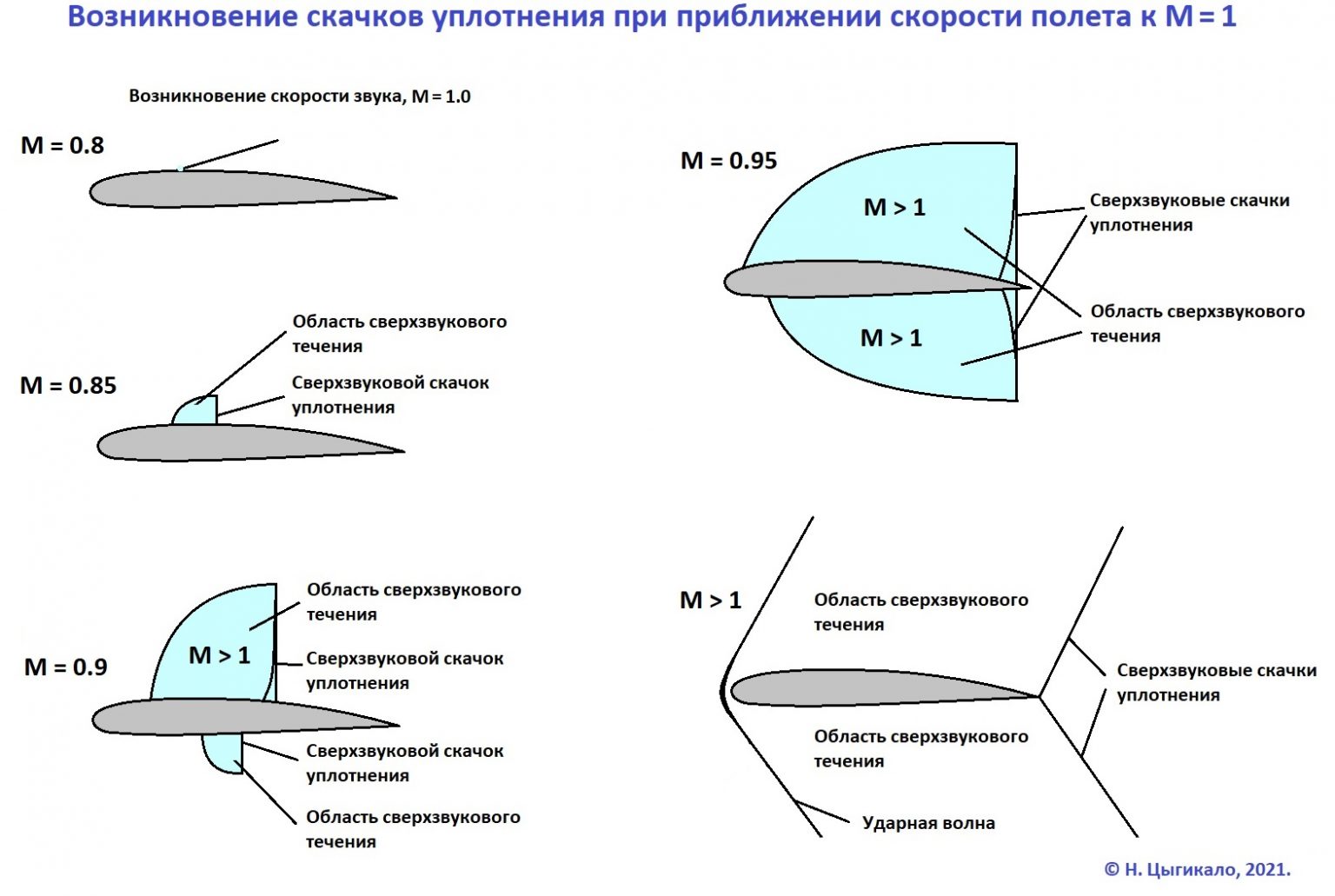
The solution was found in fuel balancing: when entering supersonic flight, fuel is pumped from wing tanks to a rear balancing tank in the fin box. The center of gravity shifts backward, compensating for the aerodynamic effect. During deceleration, the process reversed.
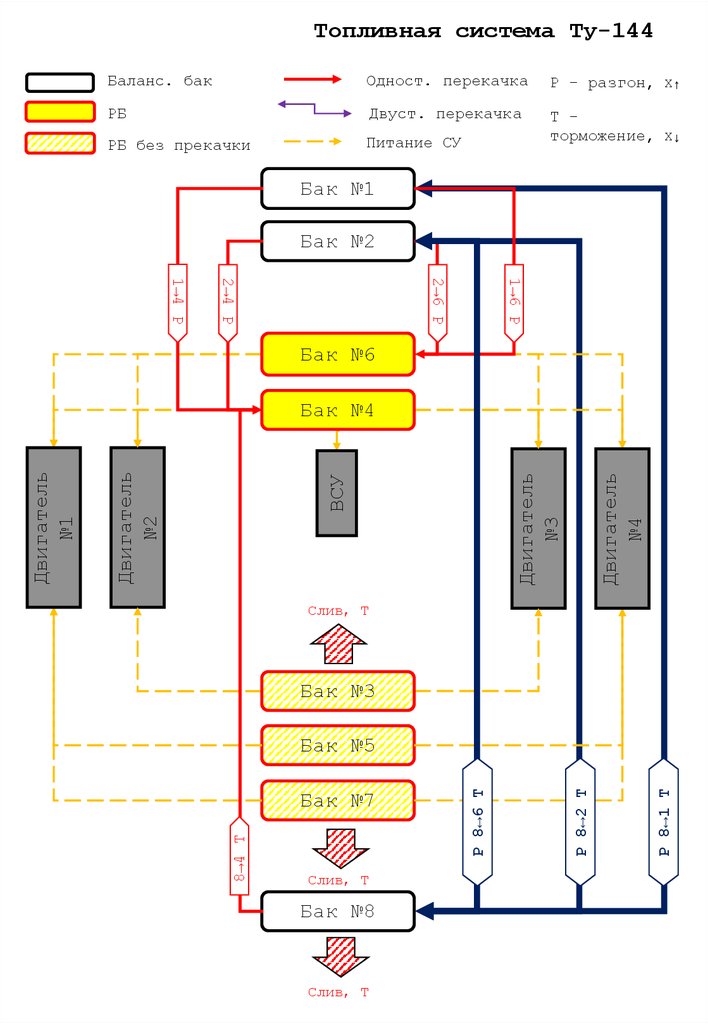
On the production Tu-144, there were eight groups of tanks, feeder tanks, and three balancing circuits. The electronic SUIT1-2B system managed the complex supersonic transition procedure, pumping fuel between multiple groups.
Due to aerodynamic heating, conventional windows were pushed inward. Tupolev initially wanted to do without windows entirely, using cameras and screens instead. However, passengers experienced claustrophobia. Special panels of heat-resistant organic glass had to be developed.
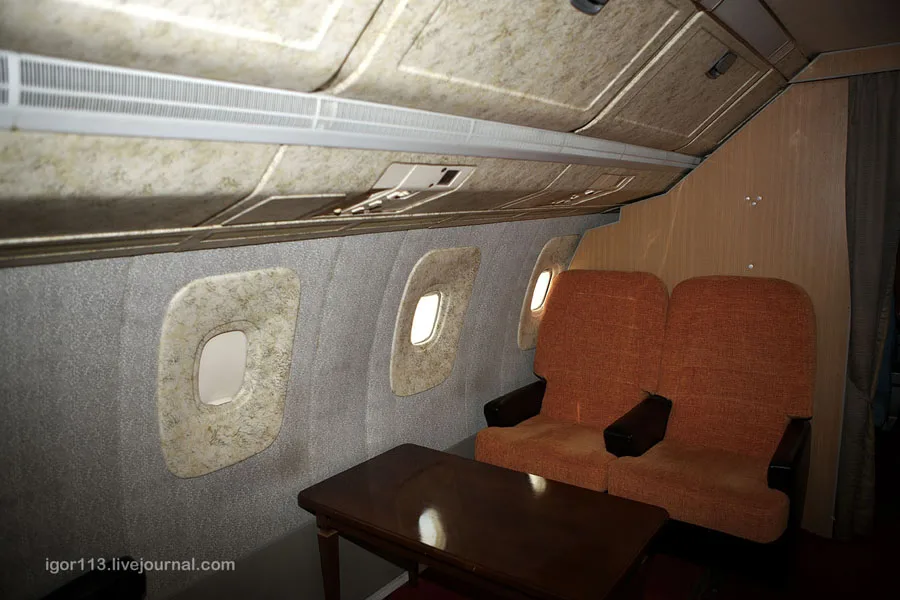
The windows turned out small, and at supersonic speeds you couldn't see much through them. But the very fact of having a window was psychologically essential.
Design
The Tu-144 was built in a tailless delta configuration with four-section elevons (a hybrid of ailerons and elevators) on the wing's trailing edge. Roll and pitch were controlled by these elevons.
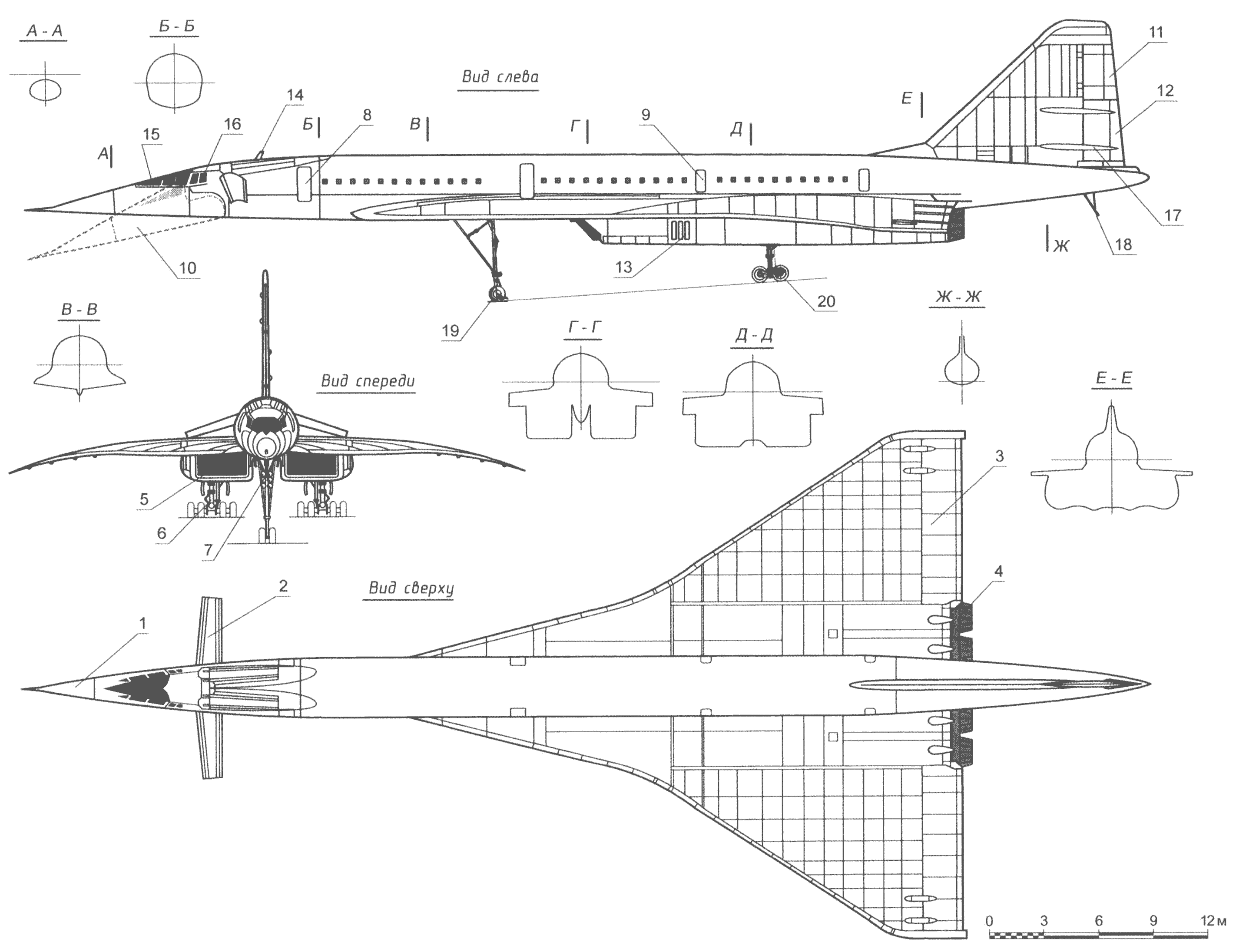
This configuration created a problem during approach: for low-speed flight, a high angle of attack is needed, but when elevons deflect downward, they create a pitch-down moment.
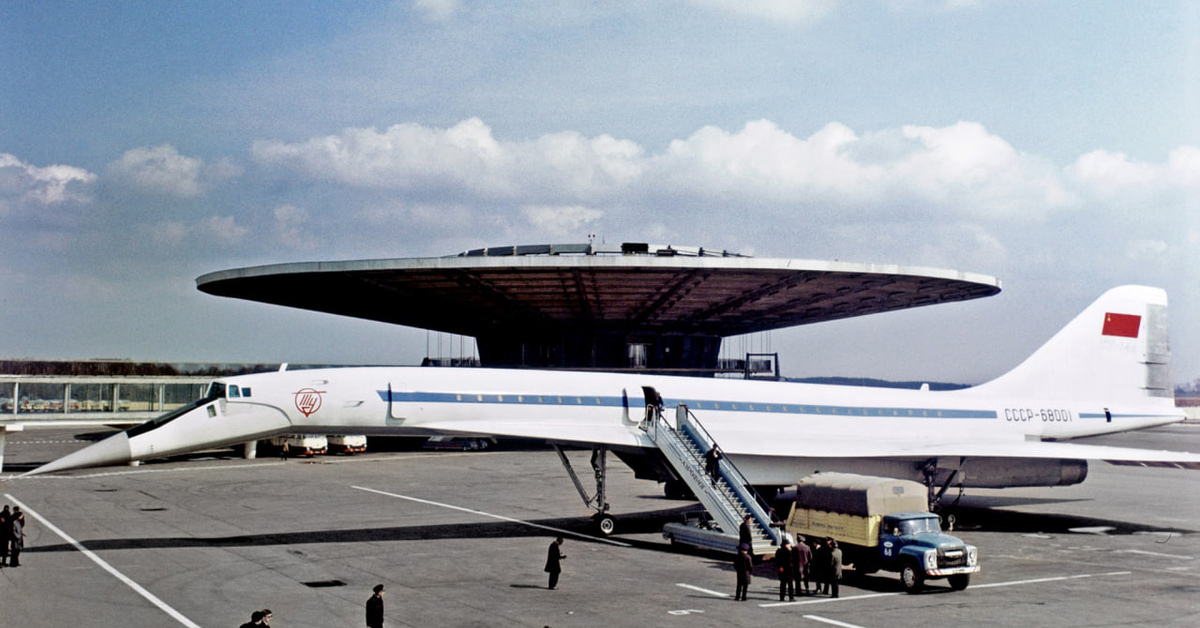
The first prototype Tu-144 (aircraft 68001) didn't fully solve this problem — it was a pure tailless delta with a different wing shape.
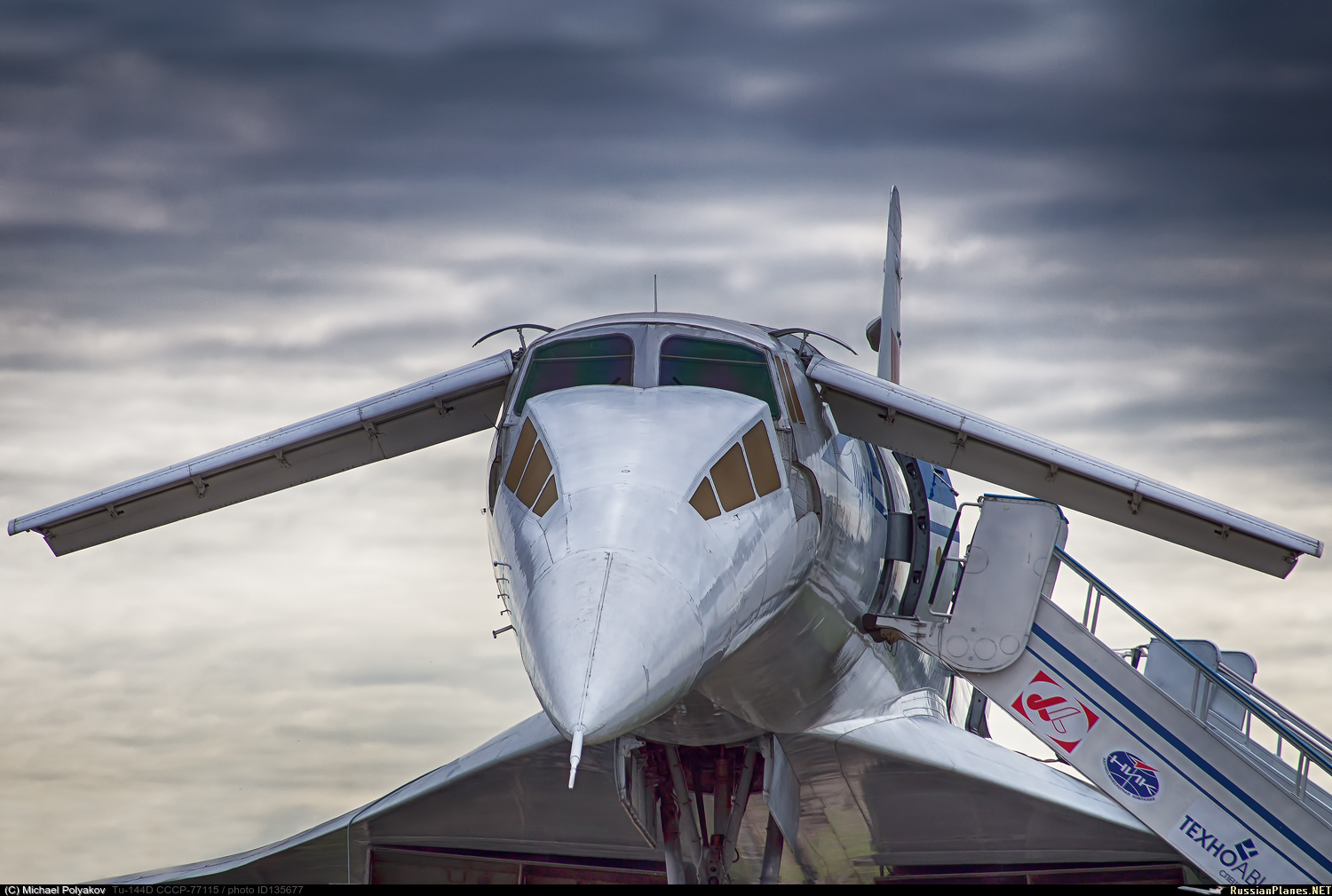
Then came a different aircraft. On the pre-production aircraft 77101 (first flight June 1, 1971), "whiskers" appeared — a retractable forward horizontal stabilizer (canard). Two small multi-slotted wings that generate lift ahead of the center of mass, compensating for the pitch-down moment. In cruise flight, they retract.
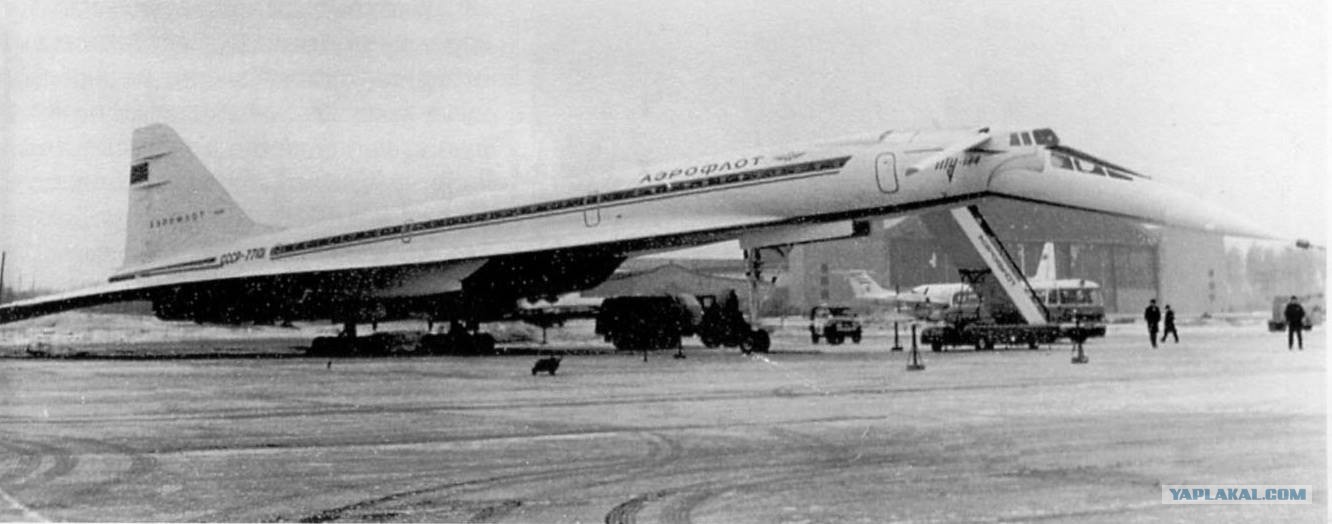
This solution became a significant distinction from Concorde, which had no forward stabilizer. The Tu-144 with canards approached for landing more slowly (about 300 km/h on the glideslope versus a 360 km/h liftoff speed). It was precisely the presence of the canards that would later be the reason NASA chose the Tu-144 for its experiments.
Wing
The wing had an area of 503 square meters. The leading edge sweep was 76° in the strake portion and 57° on the outer panels. This was a compound ogival (gothic) delta, optimized for both subsonic and Mach 2+ flight. The wingtips were conically twisted to account for deformation from thermal effects. The lift-to-drag ratio at Mach 2 was 8.1 — the best figure among all supersonic passenger aircraft.
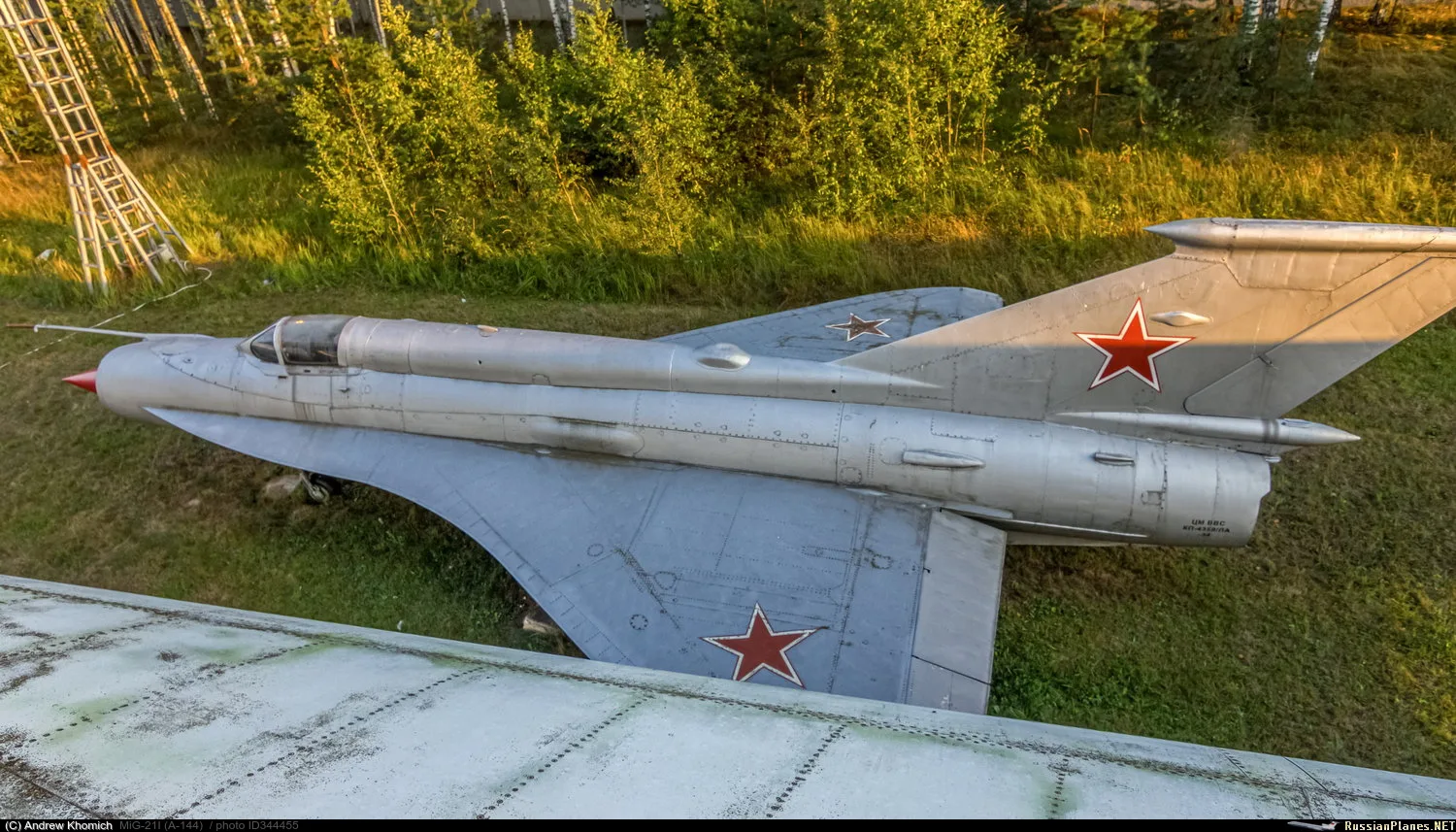
To test the wing under real conditions, an experimental MiG-21I was built in 1964, fitted with a scaled-down copy of the Tu-144's wing and tested in actual flight.
The wing itself was manufactured at the Voronezh Aviation Plant. They planned to transport it by river, but the rivers froze. So the wing was slung under an Mi-4 helicopter. Test pilot from the Mil Design Bureau, Vasily Koloshenko, dared to take off with a running start — a vertical liftoff didn't work, but with a takeoff roll it succeeded.
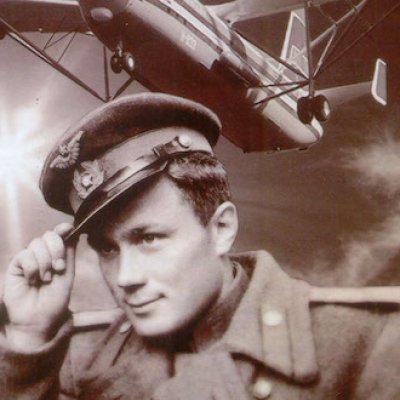
The wing was delivered.
Cockpit and Nose
The cockpit was recessed into the fuselage — there was no protruding canopy. At supersonic speed, a protruding windshield would create additional drag and heating. The solution for takeoff and landing was a droop nose: the entire nose section ahead of the cockpit tilted downward by 17°, exposing the windshield.
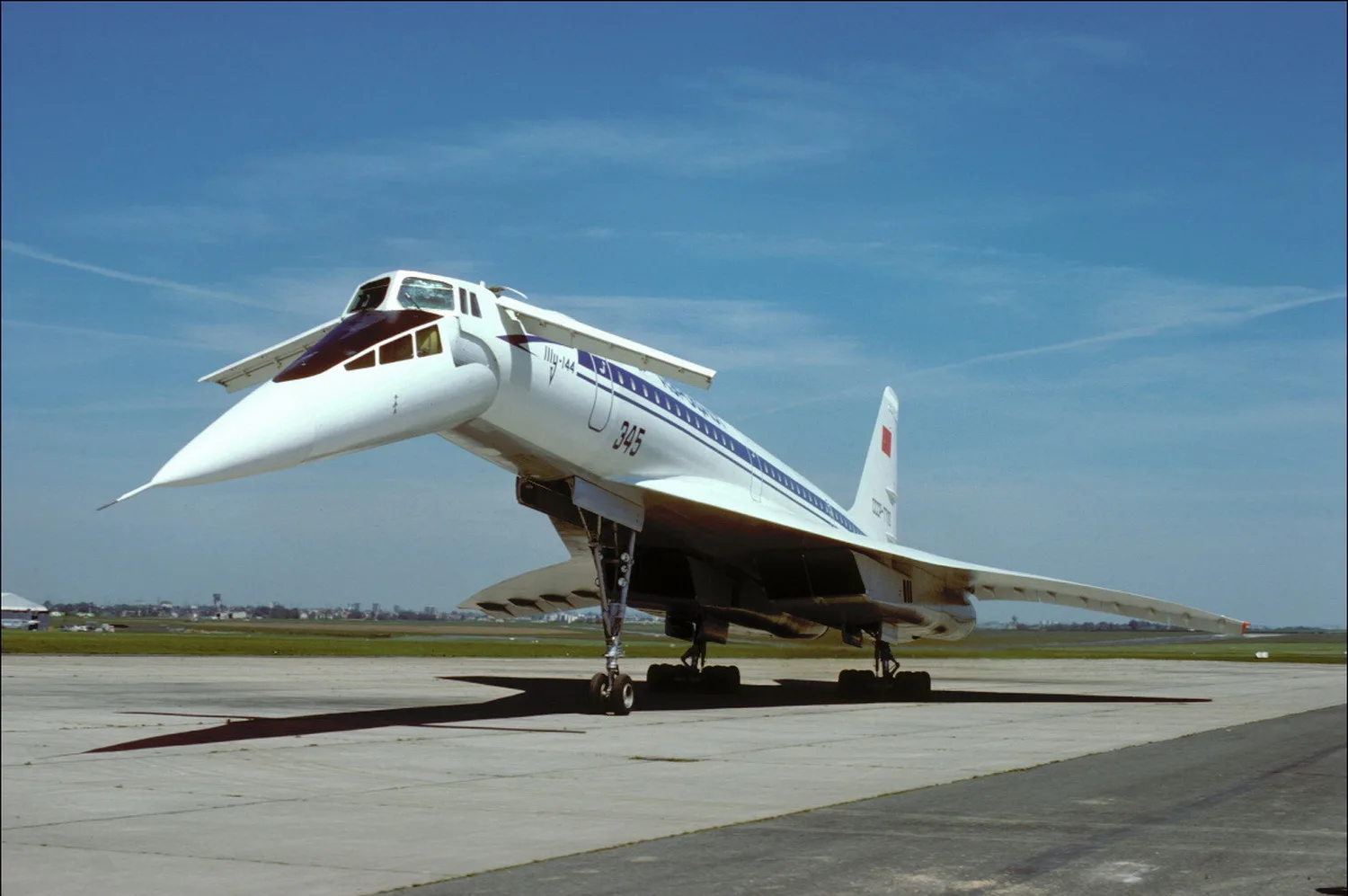
Concorde had an analogous design.
Landing Gear
Three supports: a nose gear with two wheels and two main gears with eight-wheel bogies.
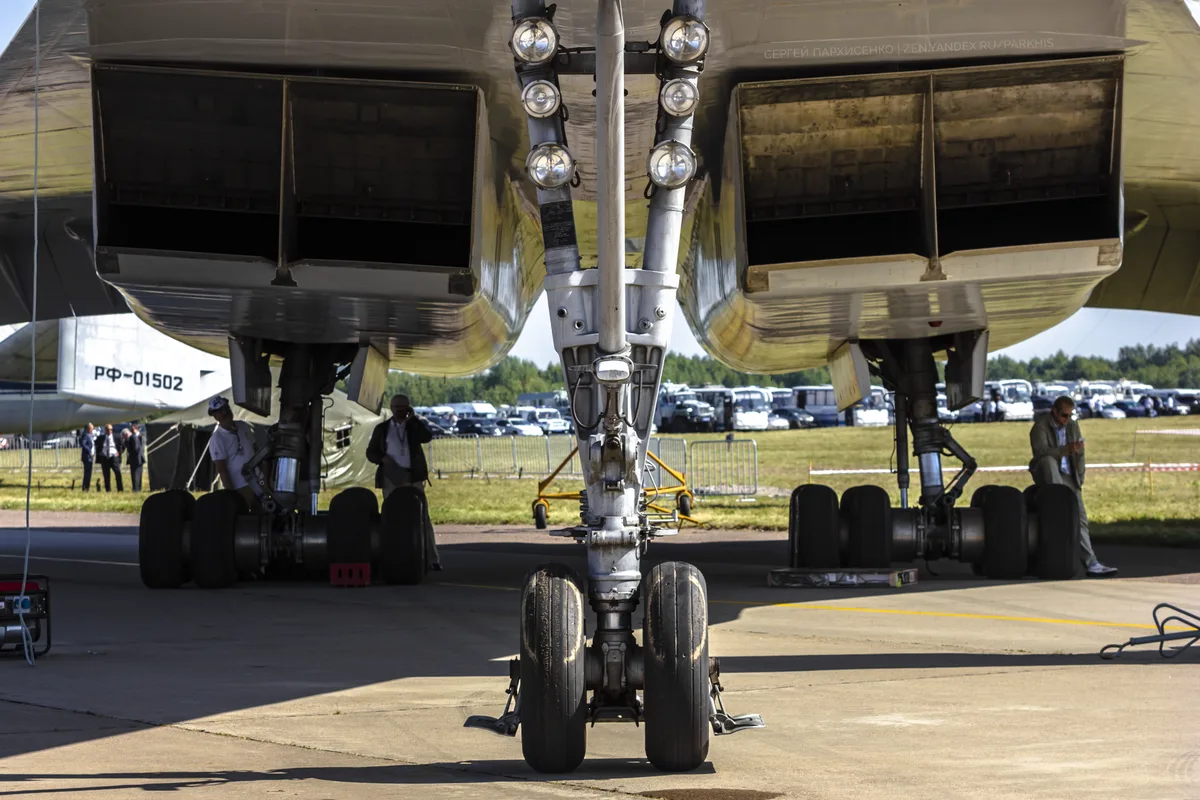
The load on each wheel was about 8 tons. The main gear retracted into the space between the engine air channels — the only possible location with this layout. Retraction was complex: the strut rotated, folded, and was pulled into a narrow bay. The doors had to provide a perfect seal.
During landing, the forward canard was deployed. The brakes were equipped with an anti-lock system — at 300 km/h, wheel lock-up would mean blown tires. Landing roll was 2,570 meters. A braking parachute was not used — on a tailless design with rear center of gravity, it would create a nose-over moment.
Engines as the Achilles' Heel
If the airframe was ideal, then the engines became the program's stumbling block. The NK-144, a turbofan with afterburner, was developed at Nikolai Kuznetsov's Design Bureau based on the NK-8.
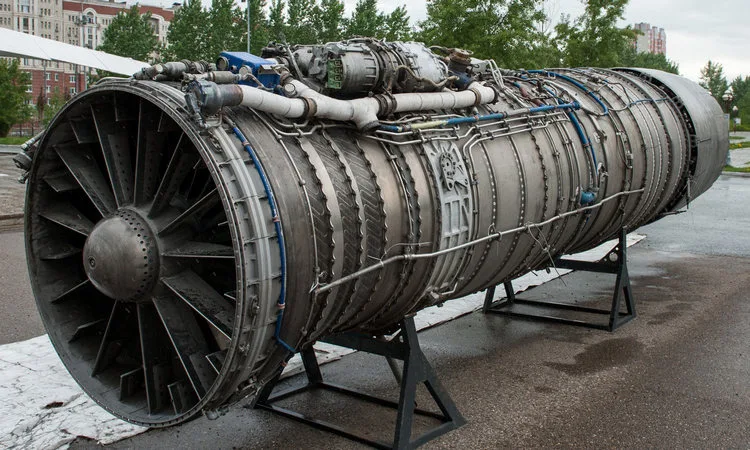
The NK-144 was the only turbofan engine with afterburner in the history of aviation to be installed on a production passenger aircraft. On military machines, afterburner is the norm, but on a civilian aircraft it was unprecedented.
The NK-144 could not sustain supersonic cruising without afterburner. The afterburner chamber burned additional fuel. Four NK-144A engines at supersonic cruise consumed about 39 tons of kerosene per hour — roughly ten per engine. With a fuel capacity of about 95 tons, this meant two and a half hours of supersonic flight and a range of 3,000–3,600 km.
For comparison: the Rolls-Royce/SNECMA Olympus 593 on Concorde provided supersonic cruise without afterburner, consuming about 20.5 tons per hour. The difference was nearly twofold. Concorde could fly 6,000 km across the Atlantic.
Because of the afterburner, the engine nacelles had to be spread apart along the wing, away from the fuselage — the exhaust plumes overheated the fuselage. This layout forced a redesign of the landing gear: the main struts were placed under the nacelles.
The hoped-for salvation lay in the RD-36-51A engines designed by Pyotr Kolesov's Design Bureau.
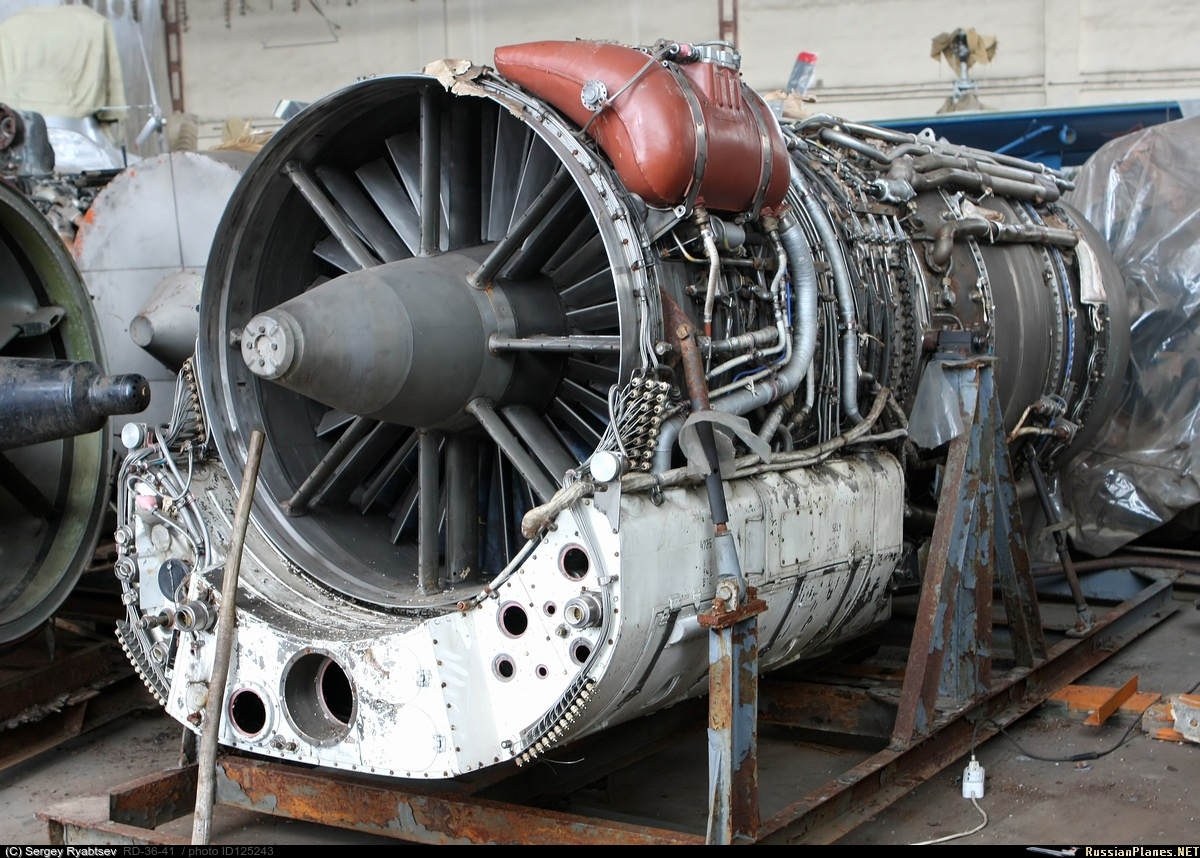
These were non-afterburning, fuel-efficient engines — the world's first gas turbine engines designed for supersonic cruise flight. Fuel consumption was about 26 tons per hour. The Tu-144D modification with these engines was supposed to fly 4,500–5,000 km.
However, the RD-36-51A was late. Development had been underway since 1964. By the mid-1970s, the engine existed but with a service life of only 50 hours. Specific fuel consumption exceeded the target by 3.4%. Deliveries were delayed, aircraft sat idle. By the end of 1980, out of 230 planned flights, only 110 had been completed.
On June 5, 1976, a Tu-144D with a 5-ton payload flew the Moscow–Khabarovsk route: 6,200 km. It proved the concept was possible. But serial operation remained unattainable.
Incidentally, the NK-144 lineage did not disappear. It gave rise to the NK-22, NK-25, and NK-32 engines, which remain in use to this day.
Air Intakes
The Tu-144 used adjustable axisymmetric air intakes with a movable center body.
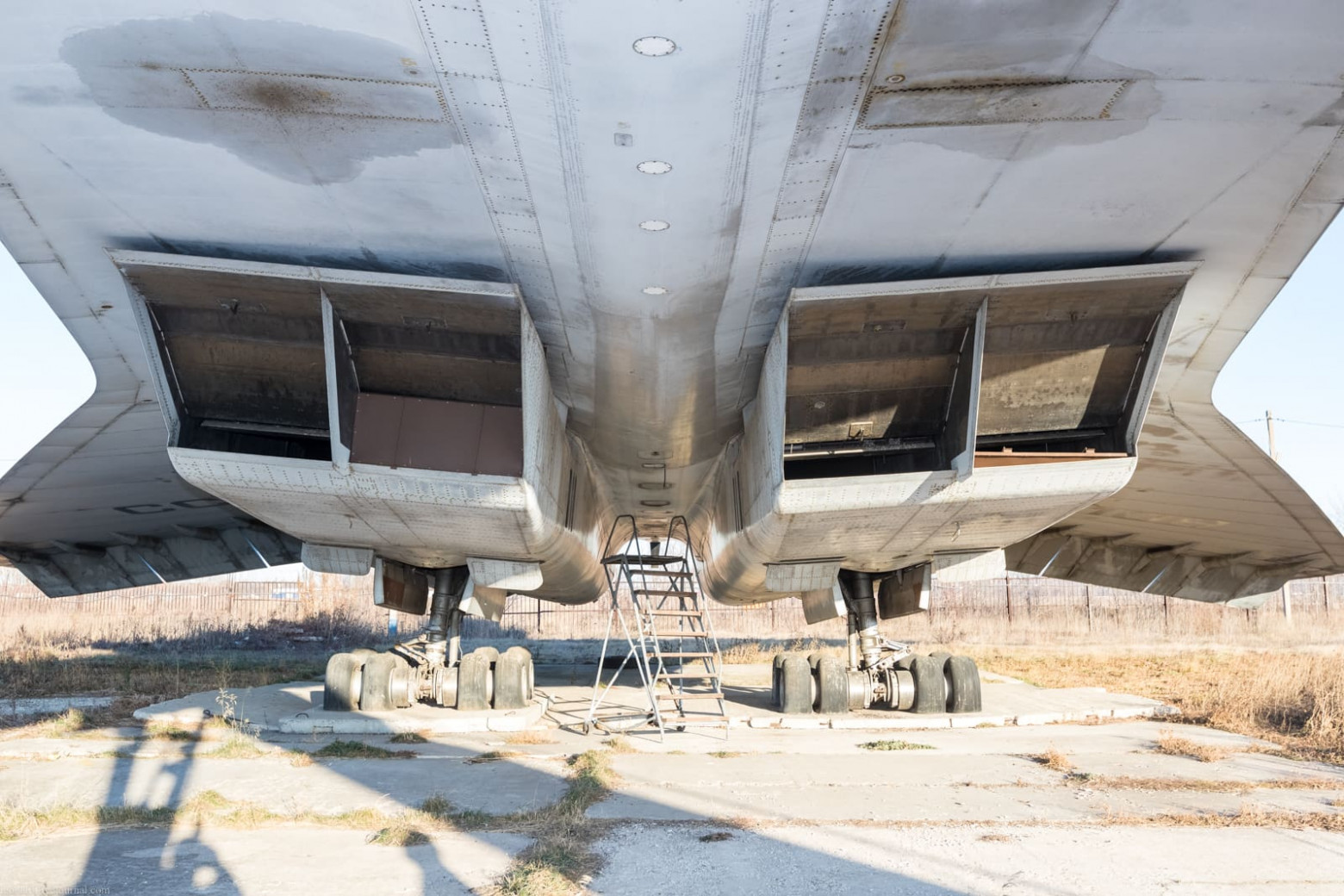
The cone extended and retracted, forming a system of oblique shock waves that gradually decelerated the airflow. The geometry changed automatically depending on speed. The lower flap of each intake was also adjustable, providing flow compression in cruise mode.
On the production Tu-144, each pair of engines was fed by a unified intake block with a common horizontal compression wedge. Between the prototype and the production aircraft, the air intakes were completely redesigned, modifying the lower wing surface and increasing the gap. This improved the pressure recovery coefficient and thrust at cruise.
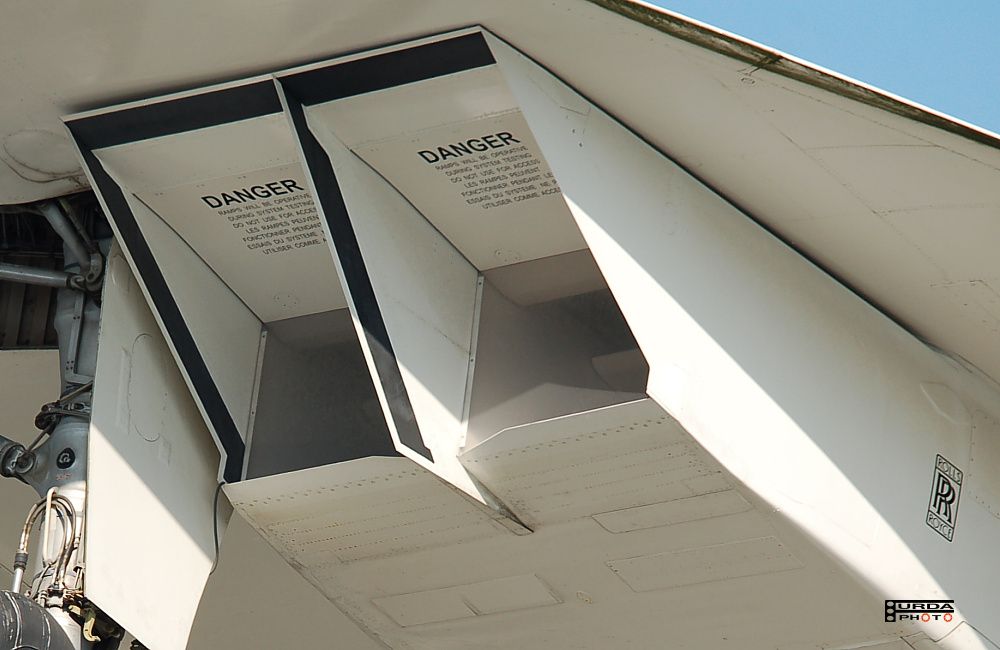
Concorde had rectangular-section air intakes with movable ramps — a fundamentally different solution.
Cooling and Air Conditioning
The skin heated up to 100–120°C. The cabin had to be kept at 20–22°C. The air conditioning system bled air from the engine compressors, cooled it through turbo-cooling units and fuel-air heat exchangers. The fuel was used as a coolant — it absorbed heat on its way to the engines.
The system ran continuously at full power throughout the entire supersonic phase. You could still talk, but had to raise your voice. Concorde had the same problem.
Avionics and Control Systems
The avionics of the Tu-144 are discussed less often than its engines, but that's unfair.
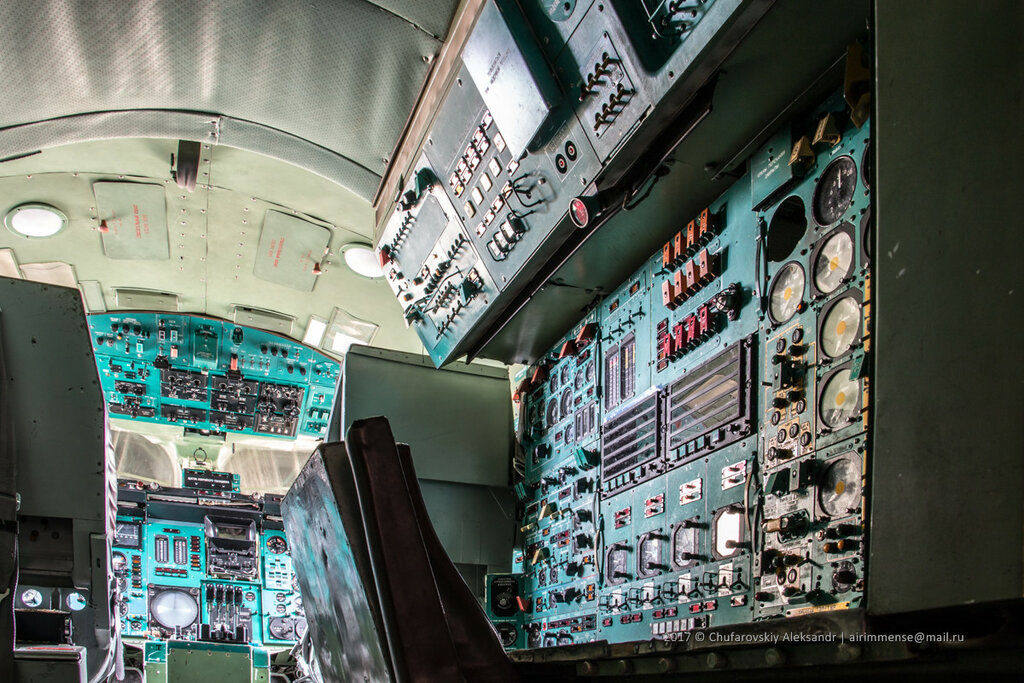
All primary systems — flight controls, electrical, hydraulic — had quadruple redundancy. Four independent circuits with independent power supplies, wiring, and actuators. Failure of one, two, even three — the aircraft remained controllable.
The navigation and flight complex (NFC) was built around the Orbita-10 onboard digital computer.
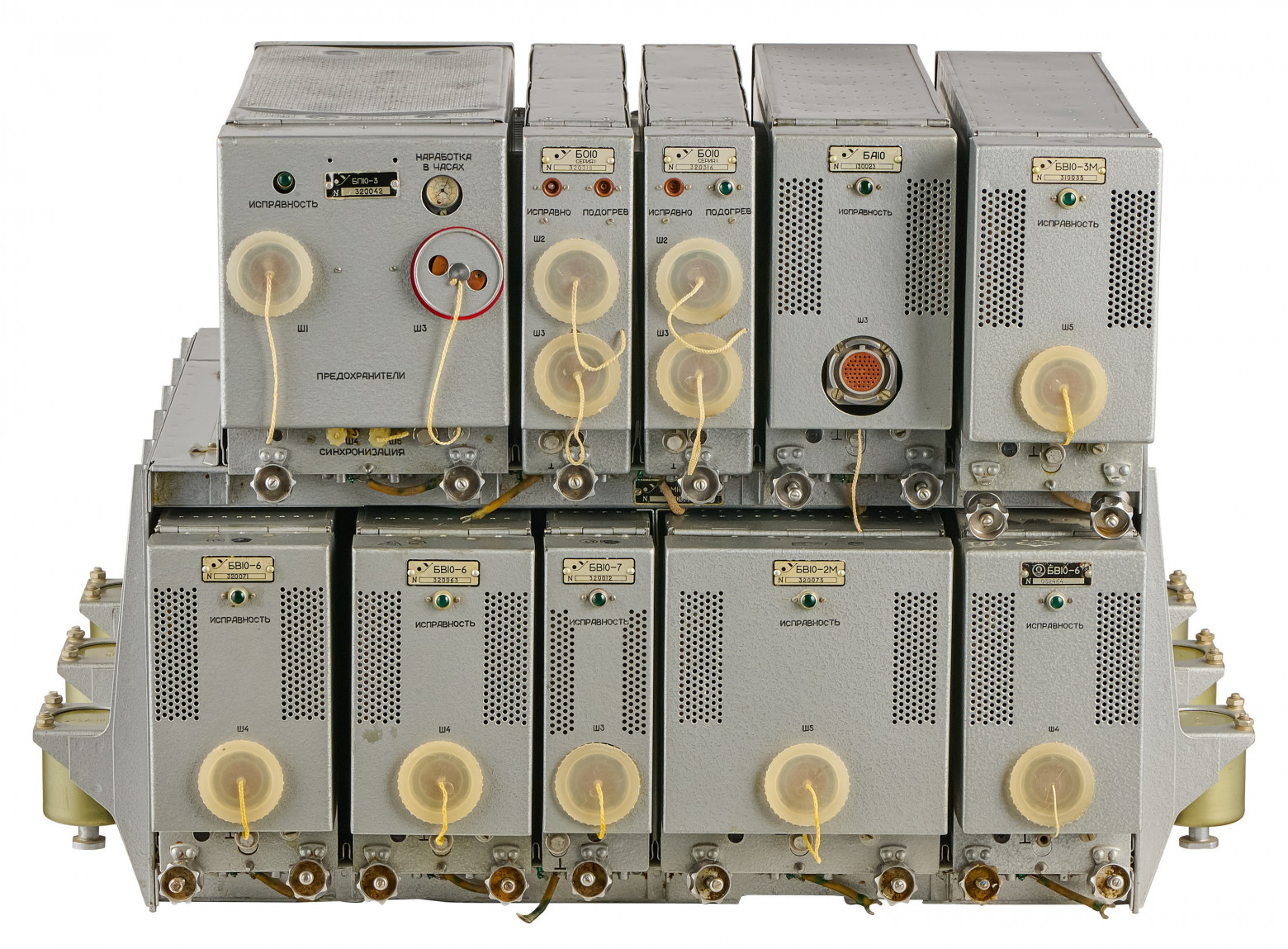
The NFC was compatible with the international navigation system, allowing the aircraft to operate on all airways worldwide in any weather conditions.
The automatic flight control system provided flight with angle, altitude, and speed stabilization. Instrument approaches were performed automatically, day and night, in any weather.
The control system was fly-by-wire with hydraulic actuators in the output circuits. There was no mechanical linkage between the control column and the control surfaces — only electrical signals. This was a second-generation aircraft with third-generation elements: digital processing, stabilization algorithms.
For the first time in the USSR, the Tu-144 employed an automatic system for monitoring the technical condition of onboard systems. The aircraft diagnosed its own malfunctions, reducing maintenance workload. Inside, there were 300 kilometers of wiring.
The Le Bourget Tragedy
June 3, 1973. The 30th Paris International Air Show at Le Bourget. About 300,000 spectators.
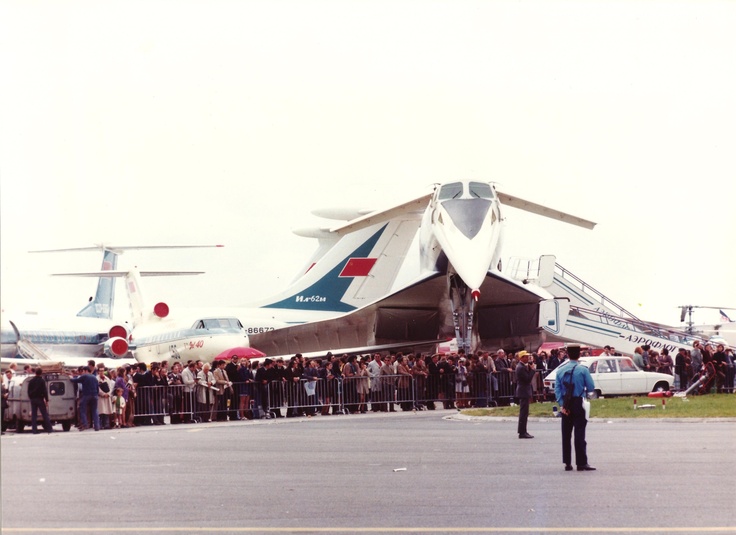
The atmosphere was tense. The day before, Concorde had put on an impressive demonstration. Kozlov promised: "Wait until you see how we fly." The French reduced the Tu-144's allocated demonstration time.
On board the Tu-144S were six people: commander Mikhail Kozlov (44 years old, Hero of the Soviet Union), co-pilot Valery Molchanov (33), navigator Georgy Bazhenov, flight engineer Anatoly Dralin, deputy chief designer Vladimir Benderov (48), and engineer Boris Pervukhin.
15:19 — takeoff from runway 03.
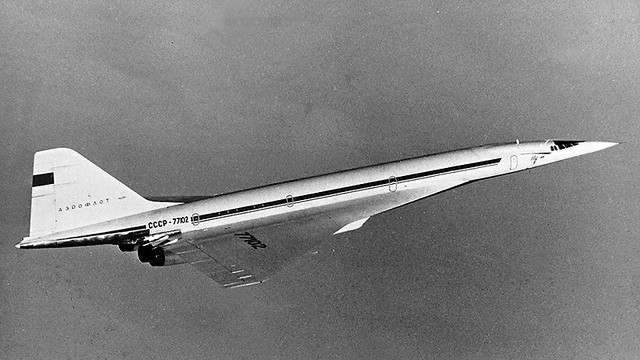
A series of maneuvers, a pass over the runway at low speed with gear down. The aircraft began to climb. At 1,200 meters, the unexpected happened: the nose dropped, the aircraft entered a dive at an angular rate of 8°/s. The pitch reached 38°. The aircraft was hurtling toward the ground.
At 750 meters, the crew began pulling out. The forward canard was deployed. Speed: 780 km/h. G-force: 4.5–5 g. At 280 meters, the structure couldn't take it — the left wing outer panel separated. A half-roll. The aircraft broke apart in mid-air.
The wreckage fell on the town of Goussainville, about 8 km from the airport. Six people on board died, along with eight on the ground, including children. Up to 60 were injured. Fifteen houses were destroyed.
The investigation was international and lasted over a year. The conclusion: all systems were functional, no structural defects found. The cause was not established; the case was closed.
There is a theory about a French reconnaissance fighter, a Dassault Mirage IIIR, filming the flight with a nose-mounted camera pod. The Tu-144 crew had not been warned. Kozlov may have spotted the Mirage and reflexively maneuvered to avoid a collision. Benderov, standing in the cockpit with a movie camera (unbuckled), may have fallen during the abrupt maneuver and blocked the control column.
A more technically substantiated theory involves the ABSU (automatic flight control system). Aircraft 77102 had an experimental panel with twenty toggle switches installed. One fed an additional signal into the lateral control channel; the adjacent one was intended for the longitudinal channel, but that channel was "raw" — not fully developed. The panel was supposed to be sealed shut, but in the wreckage it was found open, without its seal, with both toggle switches engaged.
The disaster did not kill the project. Before Le Bourget, in the summer of 1971, the prototype Tu-144 had already flown to Prague, Berlin, Warsaw, and Sofia. After the crash, the aircraft was demonstrated again in 1975 and 1977. At the 1975 show, Elyan, rehabilitating the aircraft, took the controls. During the approach, a flock of pigeons hit the windshield. He landed and taxied watching through the cockpit side windows.
In Service
On December 26, 1975, the first Moscow–Alma-Ata flight took place, carrying mail and cargo. Passengers would follow two years later.
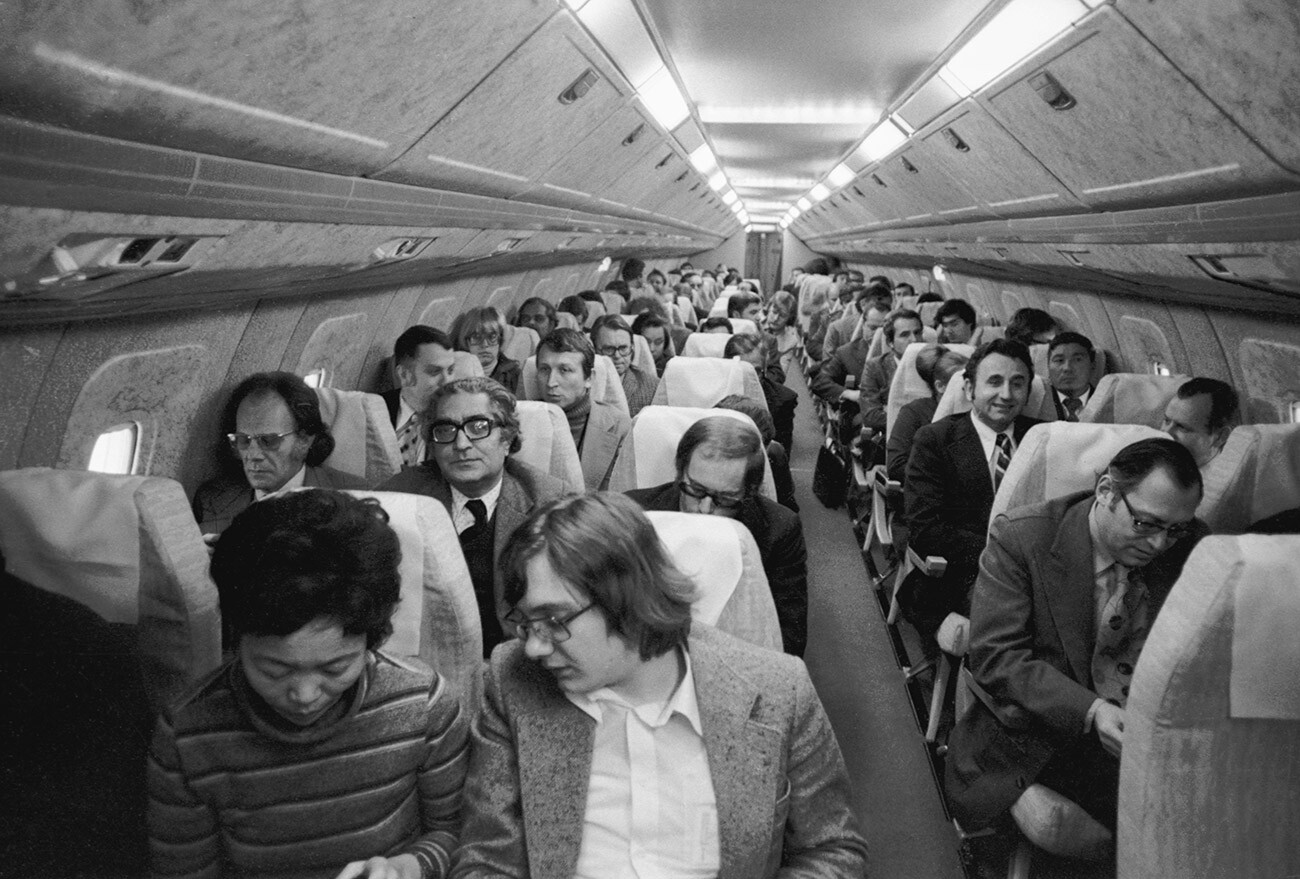
On November 1, 1977, flight SU-499 departed from Domodedovo — the first passenger service. About 80 people on board. The date was timed to the 60th anniversary of the October Revolution. A special boarding stairway had been built for the Tu-144. On the very first landing, it got stuck.
The flight took place at an altitude of 16–17 km at a speed of about 2,000 km/h. The distance of 3,260 km took roughly two hours at cruise, plus subsonic segments. The service ran once a week on Tuesdays.
A ticket cost 83 rubles 70 kopecks (the average salary was 160 rubles). On board, they served black caviar, fruit, and 50 grams of cognac. The flight attendants, according to passenger recollections, were "every one of them a beauty." Minor malfunctions required thorough checks before each flight.
If Alma-Ata wasn't accepting flights, the only alternate was Tashkent — there were no other diversion airports. Dispatchers monitored the weather every 10–15 minutes. There was virtually no fuel reserve — a consequence of the NK-144A's thirst. Passenger flights were operated by Tupolev Design Bureau test pilots.
The Tu-144 was cleared to land at 18 Soviet airports thanks to its forward canards and low approach speed. Concorde required certification for each airport. But the Tu-144 only flew to Alma-Ata — there wasn't enough fuel for longer routes.
The Yegoryevsk Disaster
On May 23, 1978, aircraft 77111 (a Tu-144D with the new RD-36-51A engines) was performing a pre-delivery test flight. The program included reaching supersonic speed and descending to 3,000 meters to start the auxiliary power unit.
When the APU was started, a fire broke out — a fuel supply line ruptured. Flames spread through the internal compartments. The cockpit filled with smoke. The crew shut down two engines.
The test pilots (in the right seat was none other than Eduard Elyan, who had lifted the first Tu-144 into the sky in 1968) landed the burning aircraft on a plowed field near the village of Kladkovo in the Yegoryevsk district. Gear retracted. Canards retracted. Touchdown at approximately 380 km/h.
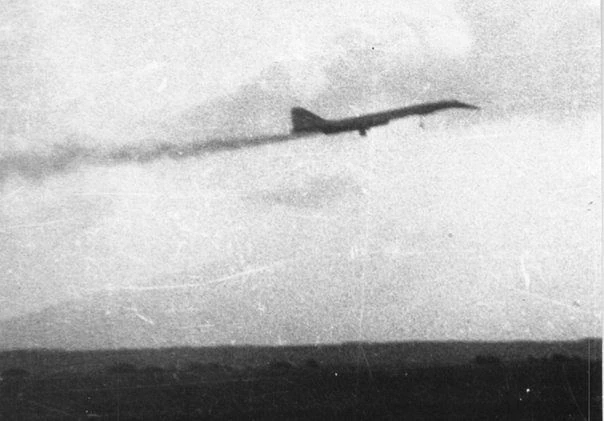
The aircraft touched down on its engine nacelles with almost no bank, slid 620 meters, losing fuel. The crew evacuated: the pilots through the cockpit side windows, the engineers through a door. Of eight people on board, two died, unable to escape the burning aircraft. Six survived.
On June 1, 1978, Aeroflot terminated supersonic passenger services.
NASA and the Flying Laboratory
In the early 1990s, the United States launched the High Speed Civil Transport program. They considered Concorde but chose the Tu-144. The reasons: higher maximum speed, the presence of forward canards, and probably the lower lease cost.
On June 17, 1994, a contract was signed between the Tupolev ANTK and NASA. Aircraft 77114 was pulled from storage — a Tu-144D that had first flown on April 13, 1981.
The RD-36-51A engines had deteriorated beyond use. In their place, NK-32-1 engines from the Tu-160 strategic bomber were installed. The nacelles and air intakes were redesigned, the wing was reinforced. The fuel and fire suppression systems were upgraded. Hundreds of research sensors were installed. Maximum speed increased from Mach 2.15 to Mach 2.3.
On March 17, 1996, the rollout took place. A white airframe with Russian and American flags on the tail was christened "Moskva." The designation: Tu-144LL (Flying Laboratory).
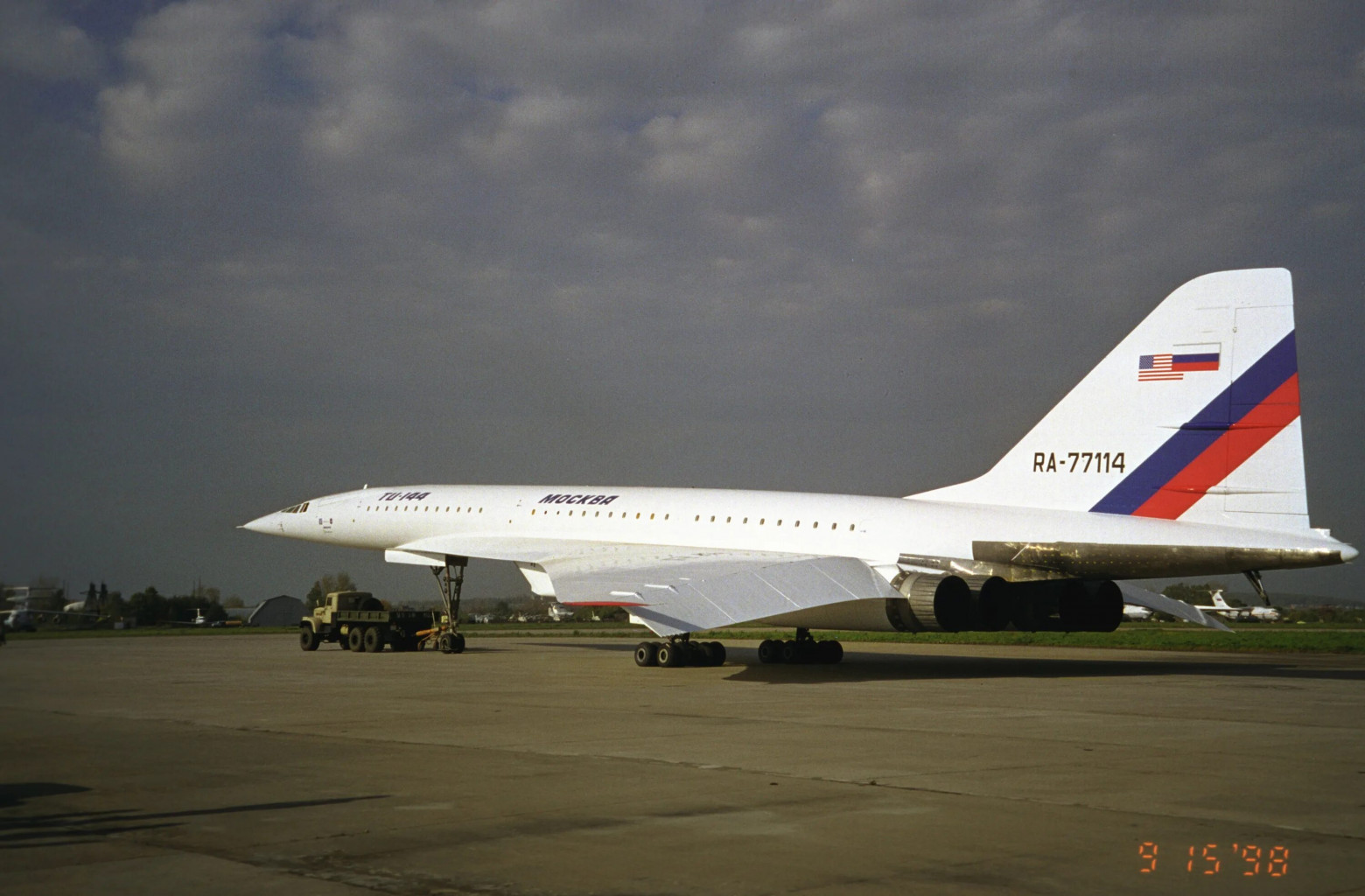
On November 29, 1996, the first flight took place. From 1996 to 1999, 27–32 flights were completed at speeds exceeding Mach 2 and altitudes above 17 km. In September 1998, two NASA pilots flew the Soviet supersonic airliner for the first time. On February 11, 1998, the main research program was officially completed.
The program cost 14 million dollars. In 1999, NASA wound down the program, acknowledging that creating a new supersonic transport was beyond reach at that time.
A private company wanted to buy the aircraft for resale in the United States, but the NK-32-1 engines from the Tu-160 belonged to the military. The export was blocked. Thanks to the mayor of Zhukovsky, Andrei Voityuk, and test pilot Valery Vanshin, the aircraft was donated to the city.
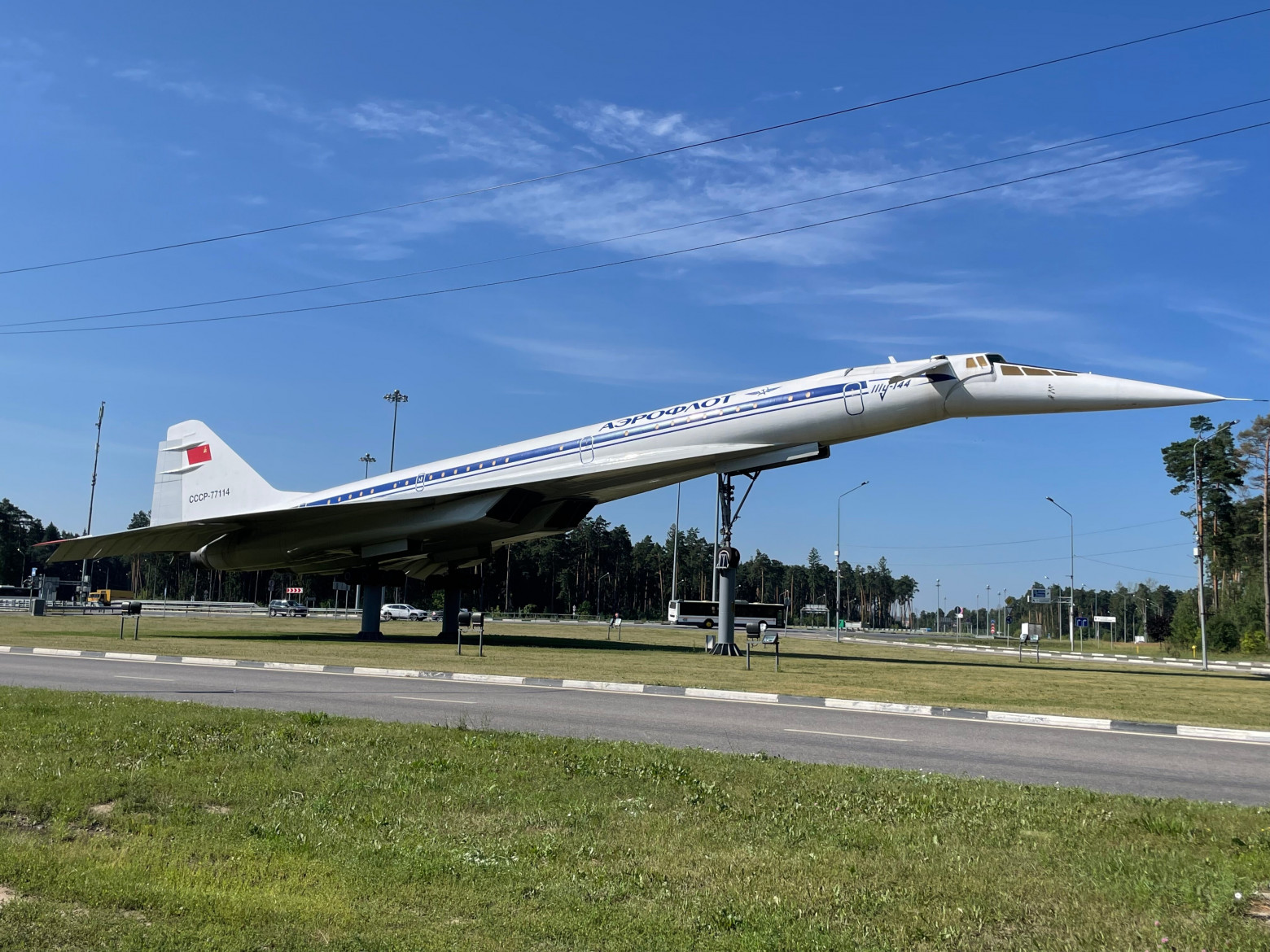
Today, the Tu-144LL stands at the intersection of Tupolev Highway and Tupolev Street in Zhukovsky. Its last flight was in 1999.
Why the Idea Proved Unviable
It's tempting to look for a single reason, but there are several at once.
Engines: The NK-144A at supersonic cruise operated on afterburner continuously. Every hour — 39 tons of kerosene for four engines. To grasp the scale: the Tu-154, carrying the same number of passengers at subsonic speed, burned 5.5 tons per hour. The difference was not twofold, as often written, but sevenfold.
The Olympus 593 on Concorde provided supersonic cruise without afterburner at about 20–22 tons per hour. Also extravagant, but enough for 6,200 km.
The Tu-144S had a range of 3,000–3,500 km — enough for exactly one route. Moscow to Alma-Ata. Just barely. The only alternate was Tashkent.
The RD-36-51A was supposed to change everything. Non-afterburning, ~26 tons per hour, giving the Tu-144D a range of 4,500–5,000 km. An entire network of routes. But the engine was never brought to maturity. By the end of 1980, out of 230 planned flights, only 110 had been completed.
Economics: Concorde survived 27 years. This is often cited as proof of success. Development cost 1 billion euros (in 1970s terms). All 74 orders were canceled. Not a single airline bought one voluntarily. British Airways and Air France received their aircraft under government pressure.
BA paid 1 euro for two additional airframes. Air France paid 1 franc. The first years brought losses of tens of millions. Later, BA bought out its fleet for 16.5 million pounds and raised ticket prices. A London–New York ticket rose to $10,000 one way. Flights often went half-empty.
In good years, BA earned 30–50 million euros in operating profit from Concorde. Over 27 years total: 1.75 billion in revenue against 1 billion in costs.
Concorde survived by finding a niche. You leave London in the morning — you land in New York before you took off. The perfect product for the wealthy client.
In the USSR, there was no such client. Aeroflot flew at a loss; regular tickets were subsidized by the state. Add the other problems on top of that.
Legacy
A total of 16 flight-capable examples were built. The combined flight time of all airframes was 4,110 hours over 2,556 flights.
Several aircraft survive today:
- Aircraft 77106 — Central Air Force Museum, Monino. Performed cargo flights.
- Aircraft 77107 — Kazan, KNITU-KAI. Record-holder: 2,430 km/h.
- Aircraft 77110 — Ulyanovsk, Museum of Civil Aviation. One of the two that carried passengers.
- Aircraft 77114 — Zhukovsky, at the intersection of Tupolev Highway and Tupolev Street.
- Aircraft 77115 — partially at the Sinsheim Museum of Technology, partially in Voronezh.
In the author's view, the Tu-144 is not a story of failure. It is a story of people who spent ten years battling physics, materials, and bureaucracy, burying colleagues at Le Bourget and near Yegoryevsk.
The airframe was magnificent. NASA confirmed this twenty years later by choosing it specifically. The aerodynamics were the best of any supersonic passenger aircraft. The avionics were brilliant.
And does the world need such machines? That is a different question entirely.