Our Universe Is Inside a Supermassive Black Hole — A Study
An international team of physicists from the University of Portsmouth proposes that our Universe did not originate from a singularity but formed inside a collapsing black hole — offering a cyclical cosmology that elegantly resolves several outstanding puzzles in modern astrophysics.
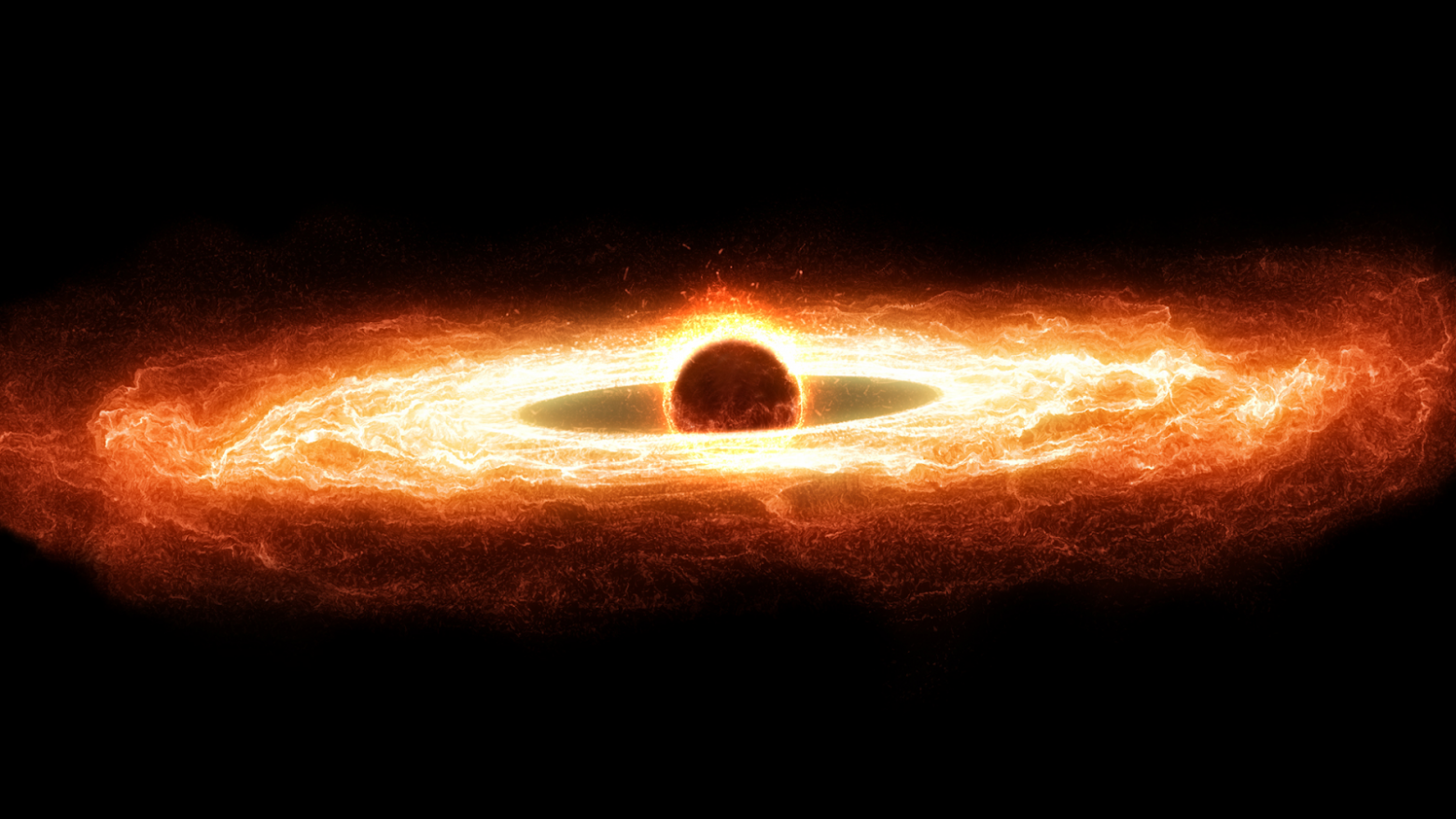
An international group of physicists from the Institute of Cosmology and Gravitation at the University of Portsmouth has published research proposing an alternative to the Big Bang theory. According to their hypothesis, our Universe did not originate from a singularity but instead formed inside a collapsing black hole, where matter was compressed and then «bounced back like a compressed spring» from the accumulated energy.
The Cyclical Nature of the Universe
The theory treats the origin of the cosmos not as a one-time event emerging from nothing but as the continuation of a cosmic cycle. Our Universe is neither first nor last in this sequence, and almost certainly not unique. Every sufficiently massive black hole in the parent universe could in principle give birth to an entirely new cosmos inside itself.
The Event Horizon as the Boundary of the Observable Universe
In this model, the edge of the observable universe is interpreted as the event horizon of our black hole. Matter and energy exchange occurs with the parent universe: we emit Hawking radiation outward while receiving infalling matter from outside. This boundary is precisely why we cannot see beyond it — not because there is nothing there, but because causality prevents information from crossing in that direction.
The model also implies that other black holes in our own universe may contain their own invisible universes, potentially connected to one another through wormholes.
An Explanation for Dark Matter
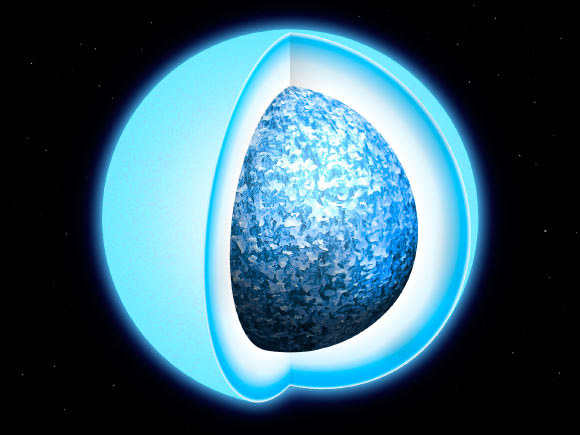
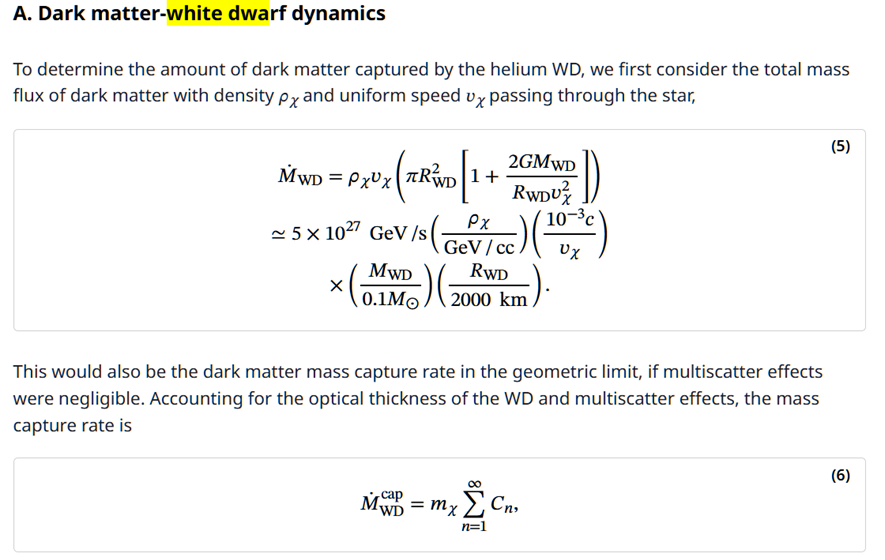
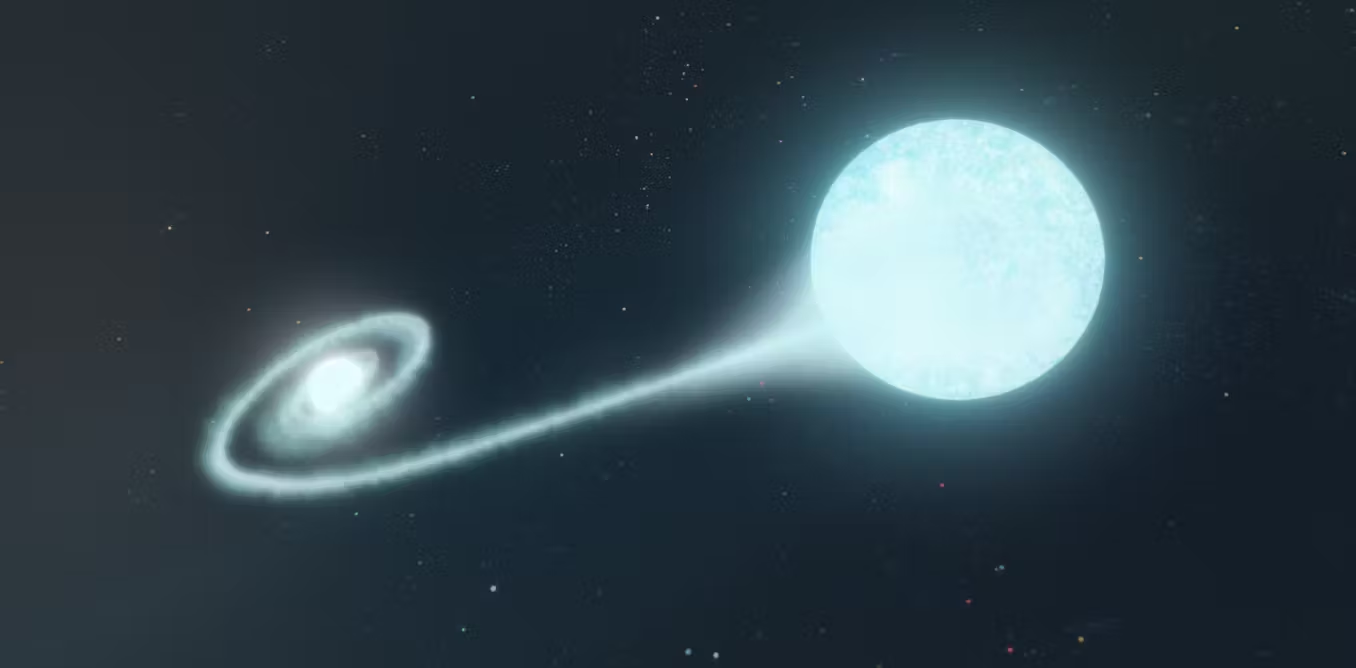
The researchers Joseph Bramante and Nirmal Raja proposed a specific mechanism for the origin of dark matter. Their mathematical analysis suggests that dark matter consists of remnants of helium white dwarfs that existed more than 100 trillion years ago — stars belonging to the previous, far older universe that our black hole absorbed as it consumed the dead cosmos of its parent. Over time these white dwarfs transformed into black holes of their own, releasing particles that do not interact with ordinary matter. This is what we detect today as dark matter.
Cosmic Mysteries This Model Resolves
Several persistent anomalies in modern astrophysics find natural explanations within this framework:
- Anomalous rotation curves of distant galaxies, which have long resisted explanation under standard dark matter models.
- The origin of supermassive black holes — their existence in the very early universe is difficult to explain by conventional accretion, but trivial if they are inherited structures.
- Galaxies observed by the James Webb Space Telescope that appear far too old and too massive for the standard Big Bang chronology.
- The curious observation that roughly two-thirds of early galaxies rotate clockwise and one-third counterclockwise — an asymmetry that would be natural if the universe was born rotating, as it would be from a spinning black hole, but highly improbable in a universe created isotropically from a singularity.
Why This Theory Has Theoretical Appeal
Unlike the standard Big Bang model, this hypothesis does not require the existence of an infinite singularity — a concept that causes deep problems in both general relativity and quantum mechanics. The new model is consistent with both theories simultaneously, without introducing additional contradictions. It also provides a mechanism for dark energy: the gravitational influence of matter in the surrounding parent universe, pulling on ours from outside.
The idea of a universe inside a black hole is not new. It was first proposed by Raj Kumar Pathria in 1972, but attracted little attention at the time. Recent observations from the James Webb Space Telescope, which revealed galaxies that seem to predate the Big Bang, have renewed serious scientific interest in the concept.
How to Test It
Confirmation of the theory would require establishing a direct physical connection between dark matter and the remnants of white dwarfs from an earlier era. Our universe would not have had enough time to produce the required quantity of such stars on its own — if the observed abundance of dark matter turns out to match predictions for inherited white dwarf remnants, that would constitute strong evidence for the model.