Where Is the Flood of Useless Software? Why AI Assistant Claims Don't Add Up
A veteran developer with 25 years of experience challenges the AI coding productivity narrative with hard data: app store releases are flat, domain registrations are steady, Steam game output is unchanged, and GitHub repository creation shows no spike -- if AI tools truly made developers 10x more productive, where is all the extra software?
This is a translation of an article by Mike Judge, a Seattle-based engineer and development director with over 25 years of professional experience.
The Productivity Paradox
I have been programming for over 25 years, and when AI coding assistants first appeared, I embraced them enthusiastically. I genuinely wanted them to work. But then I came across research suggesting that developers cannot reliably assess their own productivity gains when using AI tools. This made me uncomfortable, so I decided to measure it myself.
The Self-Experiment
I conducted a six-week study on my own work:
- Before starting each task, I estimated how long it would take
- I flipped a coin to decide whether to use AI tools or work without them
- I recorded the actual completion time
- I analyzed the results for statistically significant differences
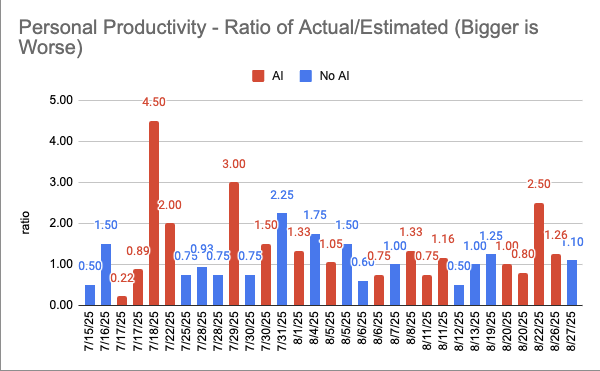
The result: no statistically significant differences between AI-assisted and non-assisted work. The data was too close to call, though my median slowdown with AI roughly matched the METR study's finding of an approximately 19–21% decrease in productivity.
The Central Question
If so many developers became extraordinarily productive thanks to these tools, where is the flood of low-quality software?
This is the core of my argument. If AI coding assistants genuinely delivered the massive productivity gains their vendors claim, we should observe measurable consequences: an exponential increase in app releases, a flood of indie games on Steam, an explosion of new websites and SaaS products, a visible inflection point in software output data. Let us look at the numbers.
The Data
iOS App Store monthly releases (March 2019 – April 2025):
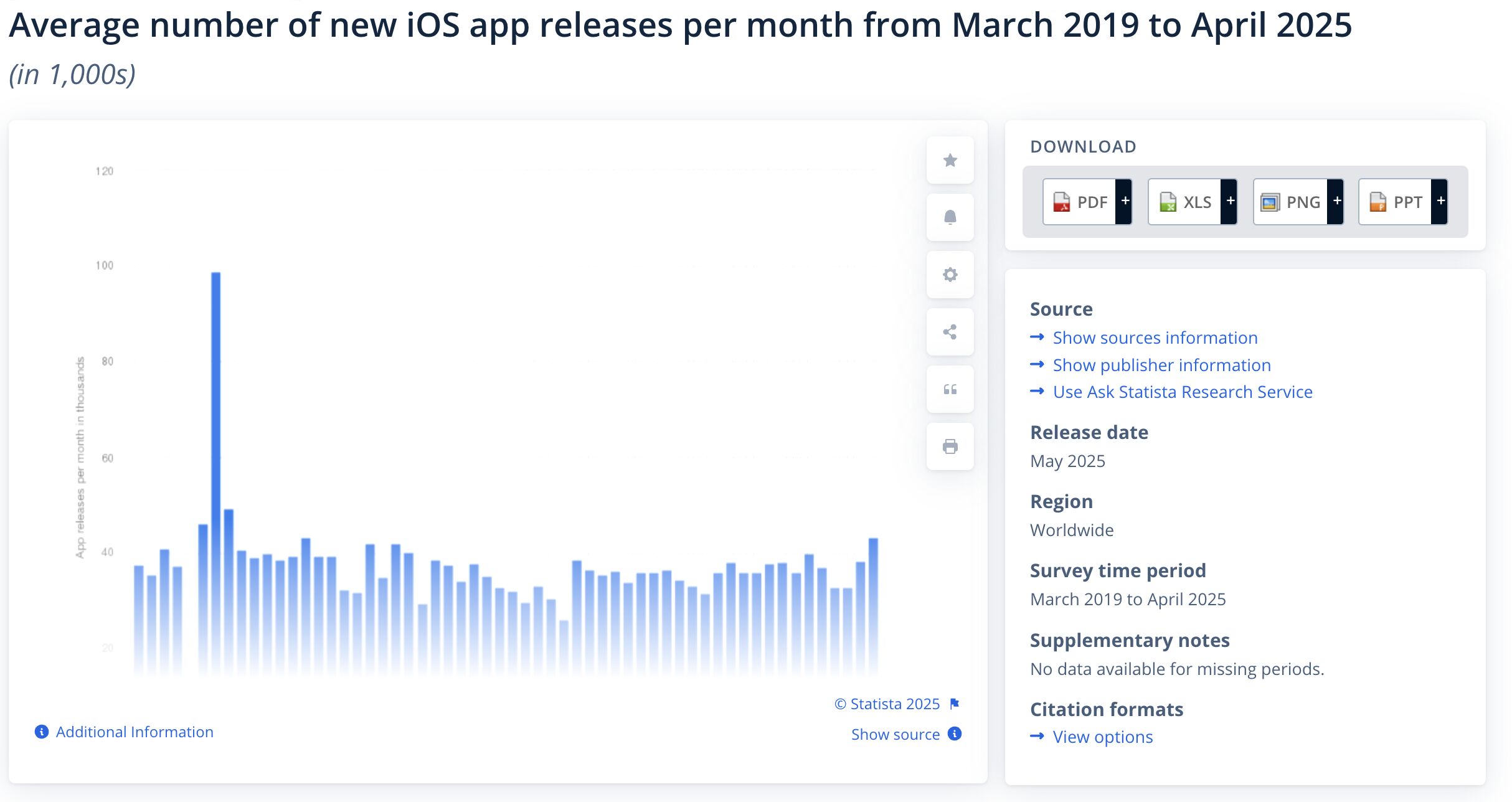
Flat. No spike. No inflection point.
Google Play monthly releases (March 2019 – May 2025):
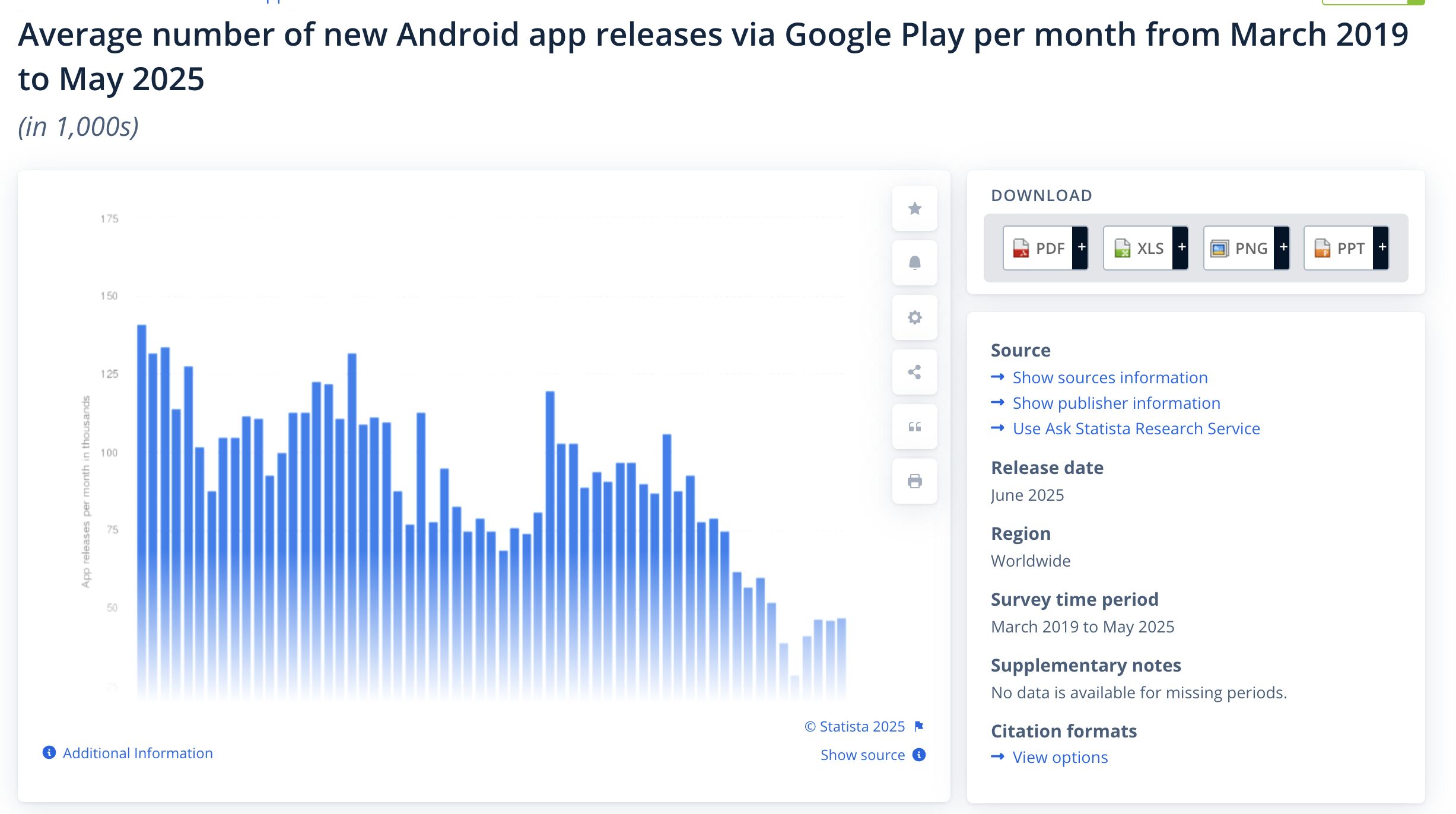
Same story. Flat.
Total registered domain names (via Verisign Domain Name Industry Brief):
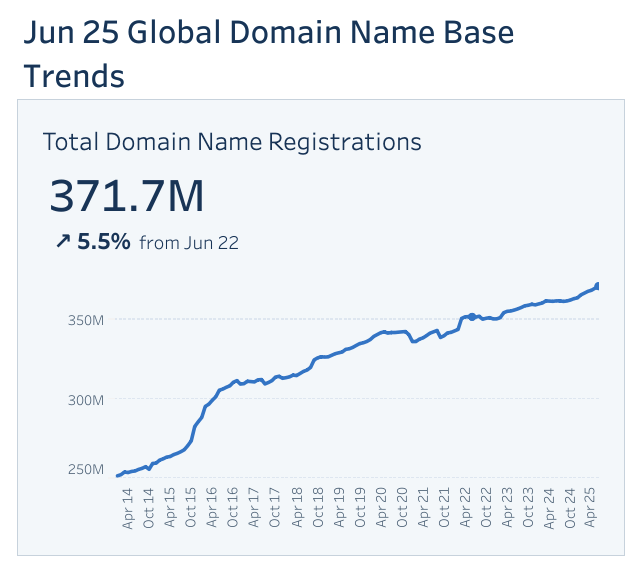
Steady growth at the same rate as before. No AI-driven acceleration.
Steam monthly game releases (via SteamDB):
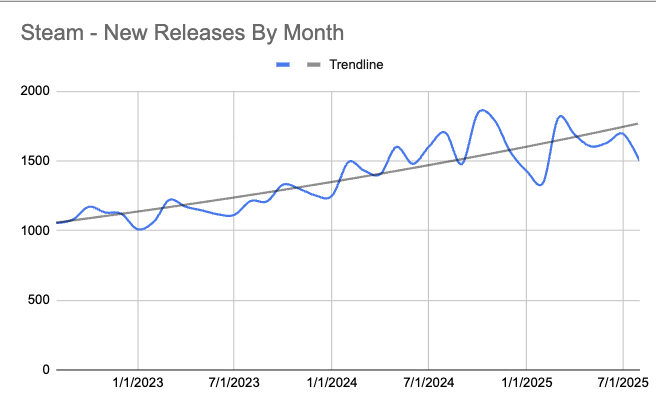
Flat. If anything, slightly declining.
New public GitHub repositories per month (via GH Archive, $70 BigQuery bill):
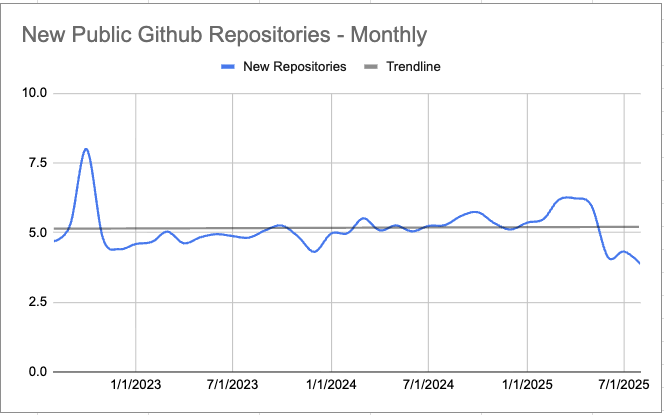
No spike. No exponential growth. Just the same steady baseline.
What the Industry Claims
Let us catalog the bold statements from major vendors:
- Cursor: "Built to make you extraordinarily productive"
- Claude Code: "Write software better and faster"
- GitHub Copilot: "Delegate like a pro"
- Google: Claims a 25% developer speed increase
- OpenAI: Publishes research on programming efficiency
- Developer self-reports: 14% claim "10x productivity gains"
If 14% of developers truly became 10 times more productive, global software output would have roughly doubled. It has not. Not even close.
Real-World Consequences
These inflated claims are not harmless marketing. They have real consequences:
- Engineers are being fired for not adopting AI tools fast enough
- Workers stay in jobs they dislike out of FOMO, afraid of falling behind
- People waste time trying to master prompt engineering instead of building things
- Salary negotiations are skewed by false productivity assumptions
- Companies make "AI-First" rebranding decisions that affect real careers
Preemptive Rebuttals
"You just need better prompting skills."
If this were true, there would be a new generation of "10x engineers" shipping dozens of projects a year. Where are they? If you are one of the 14% who claim 10x productivity, show me the 30+ applications you have built this year, with proof.
"It is new technology; it needs time."
Billions of dollars have already been invested. These tools are being marketed as effective today, and hiring decisions are being made on the basis of those claims right now. Statistical proof of real-world impact is needed now, not promised for tomorrow.
"You will fall behind without AI."
GitHub itself admits that the acceptance rate for Copilot suggestions is only 29–34% after six months of use. Where is the skill progression? Where is the trajectory toward mastery?
"Code quality is improving, even if quantity is not."
The industry widely acknowledges that testing has declined. Multiple reports show code quality has regressed by roughly a decade. If quality were truly improving, it would be measurable.
"Everyone uses web tech now, fewer people need domains."
People still value personal domains. The base rate of domain adoption has not changed.
"The .ai domain boom proves AI success."
That is FOMO-driven startup pivoting and rebranding, not genuine software proliferation. Total domain creation remains flat.
"Coding is only part of development."
Solo developers still exist. GitHub projects are still created by enthusiasts. Code writing is inseparable from software creation. If writing code became dramatically faster, we would see more finished software.
Conclusion
To any developer who is struggling with AI tools and feeling like they are falling behind: your intuition is backed by data. You are not falling behind if current tools slow you down. The numbers show that developers release no more software than before — and that is the only metric that truly matters. Claims of 10x productivity improvements are almost certainly untrue. Demand evidence.
If you dare, show these graphs to your manager and ask what they think.