Why Airships Never Took Off. Part 13: Through the North Pole aboard the Norge
In 1926, Roald Amundsen and Umberto Nobile piloted the semi-rigid airship N-1 "Norge" on a three-day flight from Spitsbergen across the North Pole to Alaska — the first undisputed aerial conquest of the pole. This is the full story of how they got there and how they almost did not make it back.
Series Navigation
- Why Airships Never Took Off. Part 1: From Montgolfier to a Borodino Bomber
- Why Airships Never Took Off. Part 2: Rise and Fall of French Airships
- Why Airships Never Took Off. Part 3: Birth of the German Zeppelins
- Why Airships Never Took Off. Part 4: The Kaiser's Airships Go to War
- Why Airships Never Took Off. Part 5: Shadows Over Britain
- Why Airships Never Took Off. Part 6: London Under the Bombs
- Why Airships Never Took Off. Part 7: Fire in the Sky
- Why Airships Never Took Off. Part 8: The End of Wartime Zeppelins
- Why Airships Never Took Off. Part 9: Ashes of War and New Opportunities
- Why Airships Never Took Off. Part 10: The Most Famous and Successful Zeppelin
- Why Airships Never Took Off. Part 11: Aircraft Carriers in the Sky
- Why Airships Never Took Off. Part 12: Italian Semi-Rigid Airships
- Why Airships Never Took Off. Part 13: Through the North Pole aboard the Norge (Current)
This is Part 13 of the series Why Airships Never Took Off. The article chronicles the historic 1926 polar expedition aboard the semi-rigid airship N-1 "Norge," commanded by Italian engineer Umberto Nobile and Norwegian explorer Roald Amundsen.
Historical Background
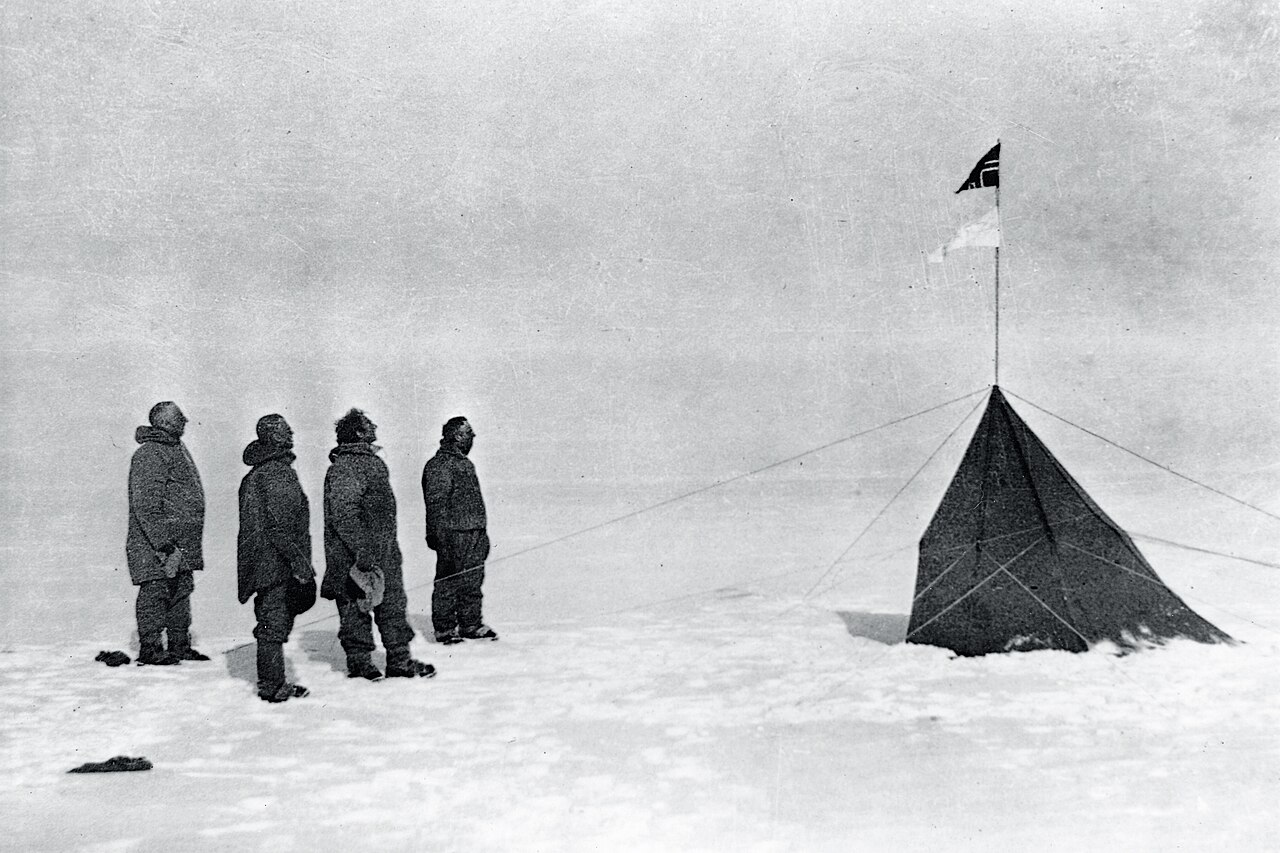
Reaching the North Pole by air had eluded countless expeditions throughout the early 1920s. American polar aviator Richard Byrd had hoped to use the USS Shenandoah airship for such an attempt, but those plans collapsed after the vessel crashed in Ohio in September 1925. Roald Amundsen — the Norwegian explorer who had conquered the South Pole in 1911 — then approached Hugo Eckener at Zeppelin Luftschiffbau about a German zeppelin for a polar flight, but post-World War I restrictions on German aircraft development stalled that route too.
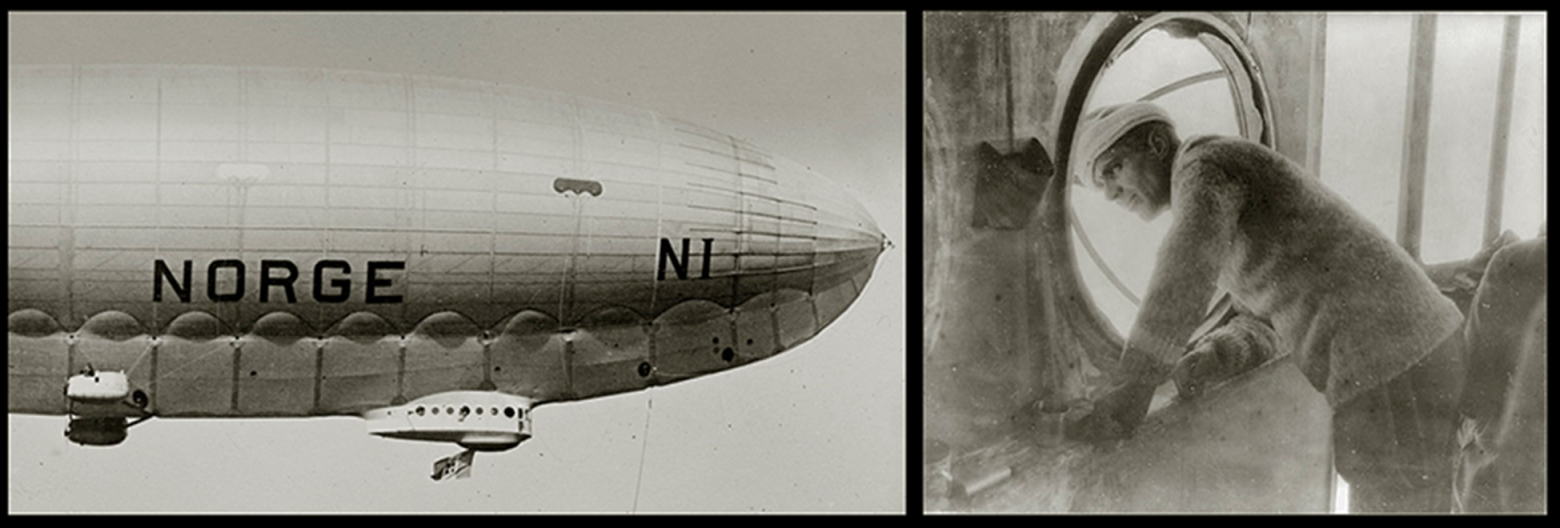
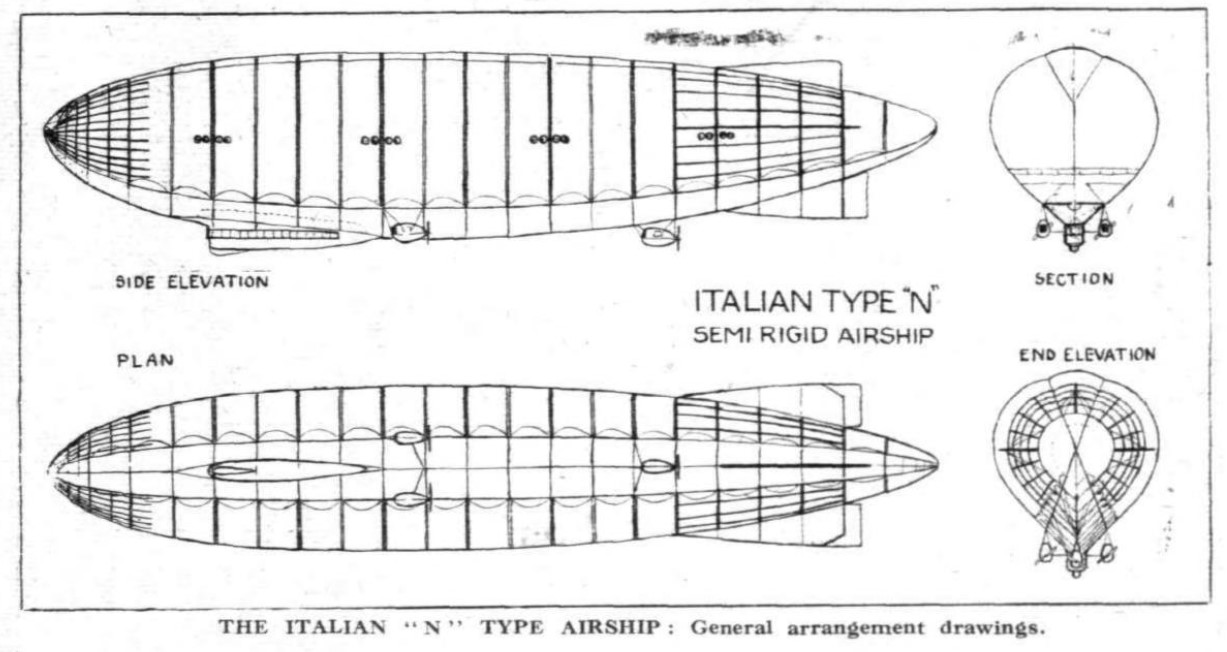
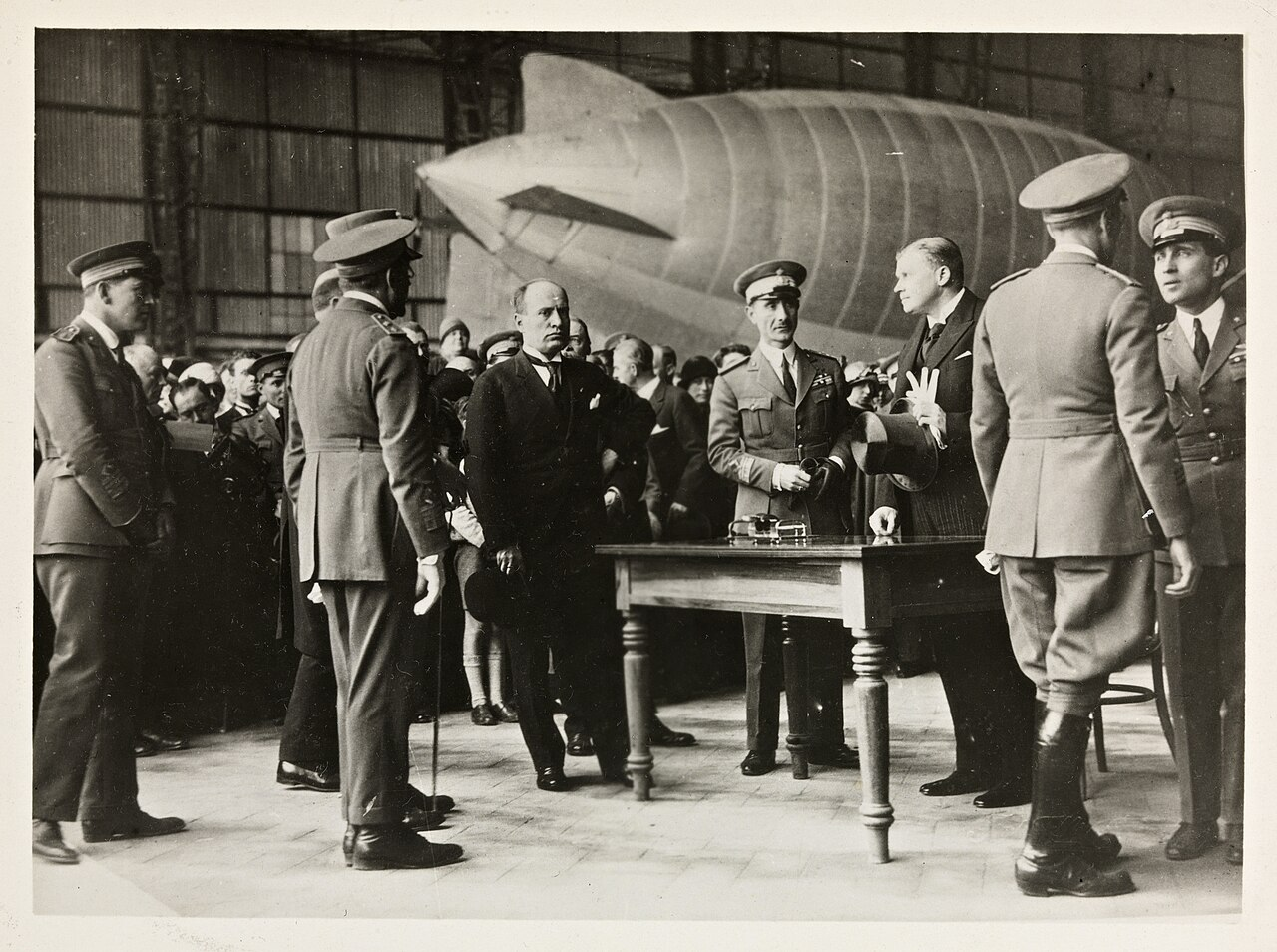
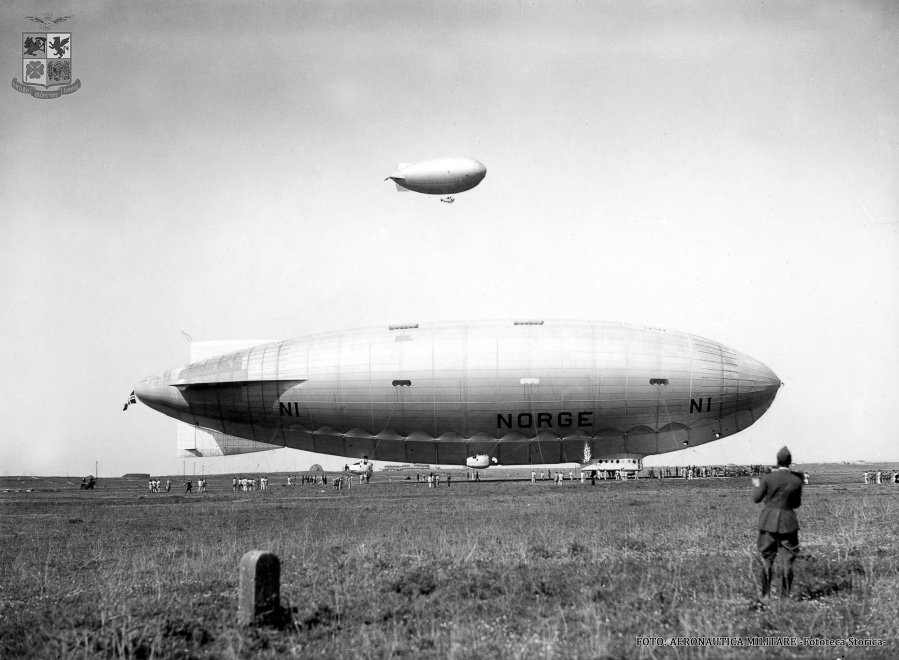
The solution came from Italy. Umberto Nobile had built the N-1, a semi-rigid airship originally constructed for the Royal Italian Navy. When Amundsen proposed the polar mission, Nobile and Italian authorities agreed to cooperate. The airship would be purchased, renamed "Norge" (Norway), and extensively modified for Arctic conditions.
The N-1 Norge: Technical Specifications
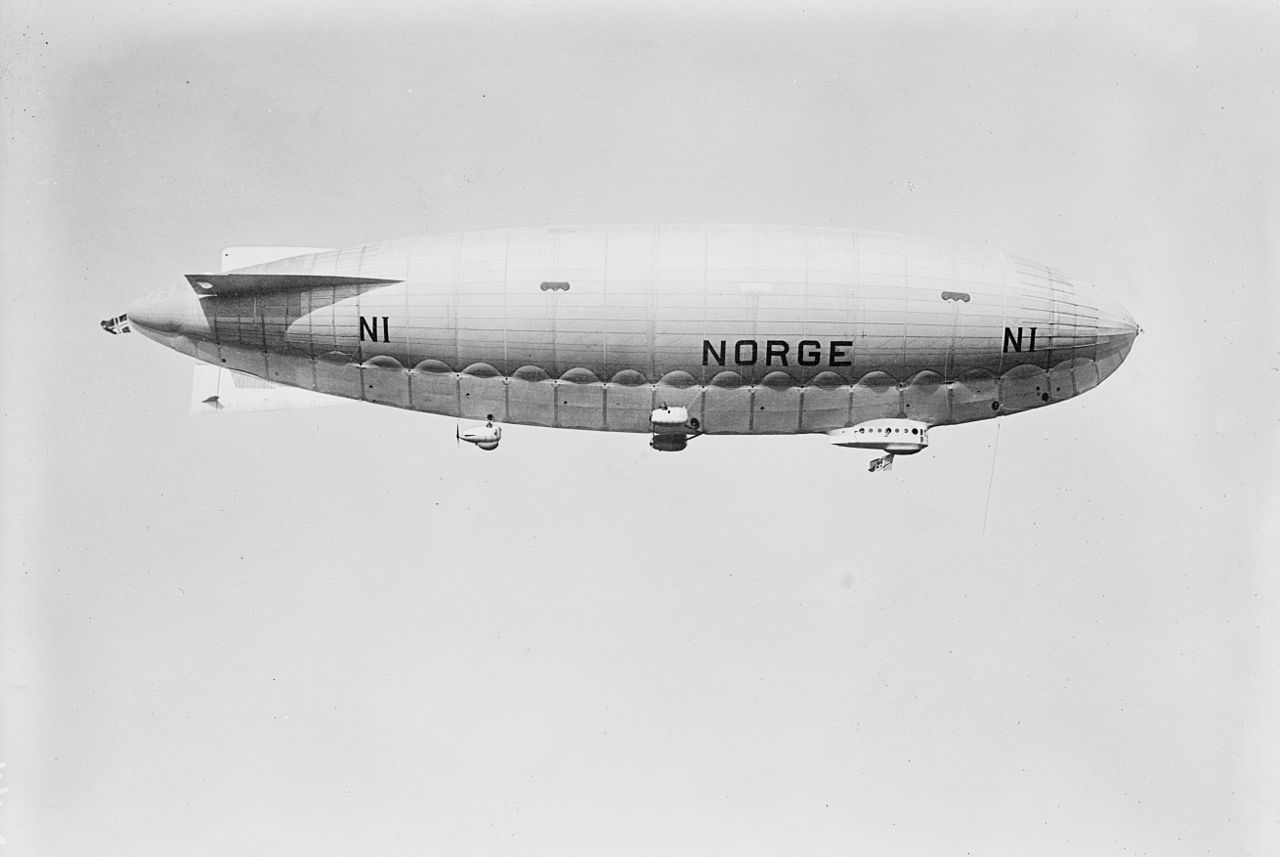
- Length: 106 meters
- Maximum diameter: 26 meters
- Structure: Semi-rigid with aluminum framework and gas envelope
- Propulsion: Three engines
- Crew capacity: 16 persons for the polar leg
- Original mass reduced by approximately 1.6 metric tons through modifications
Preparing the airship for polar conditions required significant work. At temperatures below -20°C, the envelope material becomes dangerously brittle and prone to cracking — catastrophic for a semi-rigid design. Engineers improved gondola thermal insulation, reinforced the envelope, and addressed the risk of ice accumulation that could make the vessel too heavy to stay airborne.
The Route: Rome to the Arctic
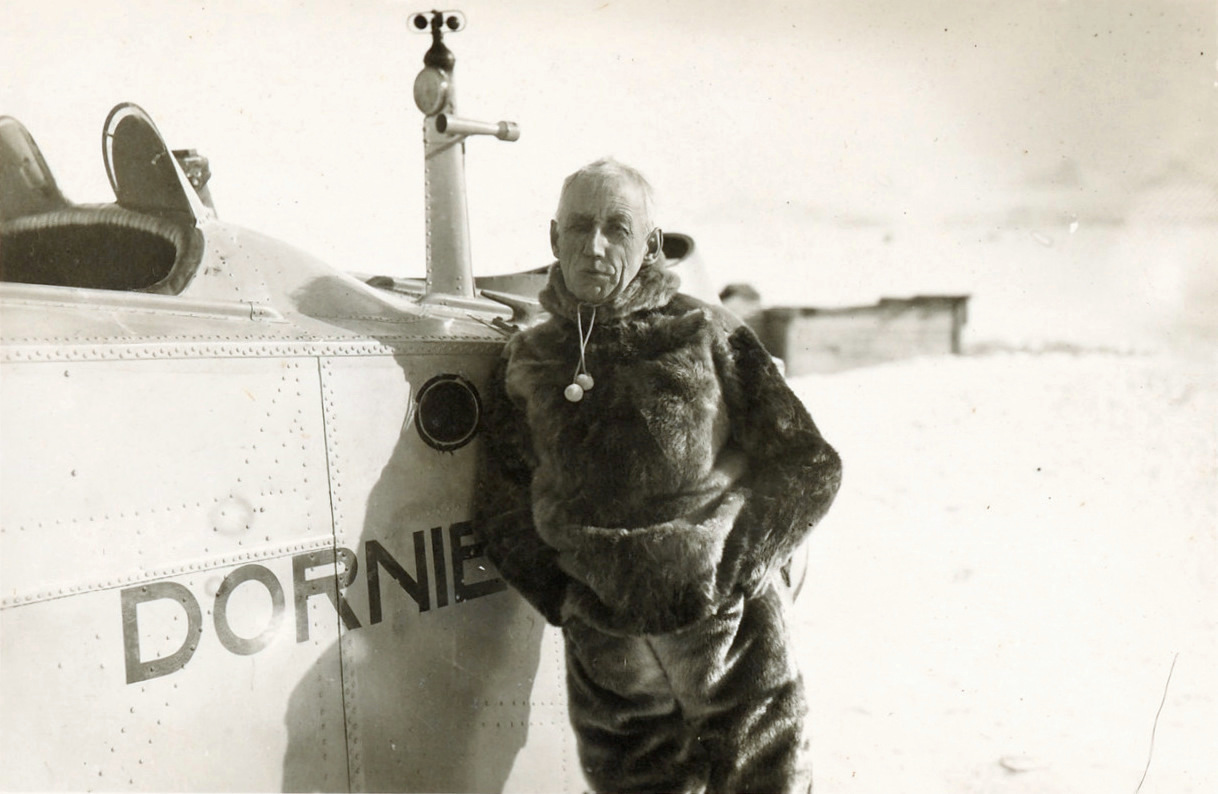
The expedition departed Ciampino Aerodrome near Rome on April 10, 1926, with Norwegian and Italian flags flying. The crew included Nobile as captain and chief engineer, mixed Norwegian and Italian personnel, Swedish meteorologist Finn Malmgren from Uppsala University, and Russian radioman Gennady Olonkin. Roald Amundsen and American businessman-aviator Lincoln Ellsworth would join the final polar leg. Nobile's dog Titina made the entire journey.
April 10–13: Rome to Pulham, England. The first leg covered more than 2,200 kilometers over France and the North Sea in approximately 36 hours. Severe headwinds complicated navigation, but the vessel reached RAF Pulham without damage, where the British air staff and Crown Prince Olaf of Norway were waiting.
April 13–14: Pulham to Oslo. The second stage crossed the historically treacherous North Sea smoothly. The airship appeared over the Oslo Fjord on the morning of April 14 to thousands of spectators and a formal reception including King Haakon VII.
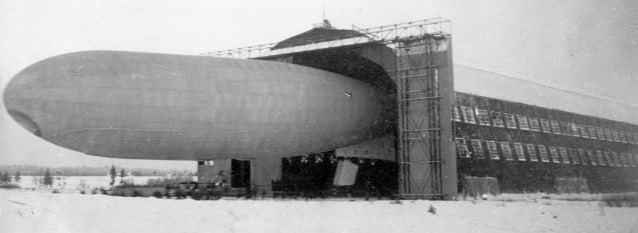
April 14–15: Oslo to Gatchina, Soviet Union. Dense fog over the Baltic forced blind instrument flying for much of the leg. Crew members emerged from clouds unsure whether they had reached Finland or Estonia; identifying the Valga–Riga railway line eventually confirmed their position. The airship landed at Gatchina after 43 hours of total flight time, greeted by Red Army personnel in the snow.
April 15 – May 5: Extended Soviet Stopover. Soviet authorities provided full support: a renovated hangar, meteorological and radio staff, supplies, and public access that attracted visitors from Leningrad, Moscow, and beyond. Nobile later wrote of the "warmth, respect, and cordiality" shown throughout their Russian stay.
May 5–7: Gatchina to Spitsbergen. The northward departure on May 5 included a ceremonial flyover of Leningrad with the Neva River and Winter Palace visible below. One of the three engines failed over Lake Ladoga due to a solenoid problem. Additional damage to the stabilizers and rudder required repair at the final staging point. The airship reached Vadso, Norway on May 6 and the expedition base at Ny-Ålesund on Spitsbergen on May 7.
The Polar Crossing: May 11–13
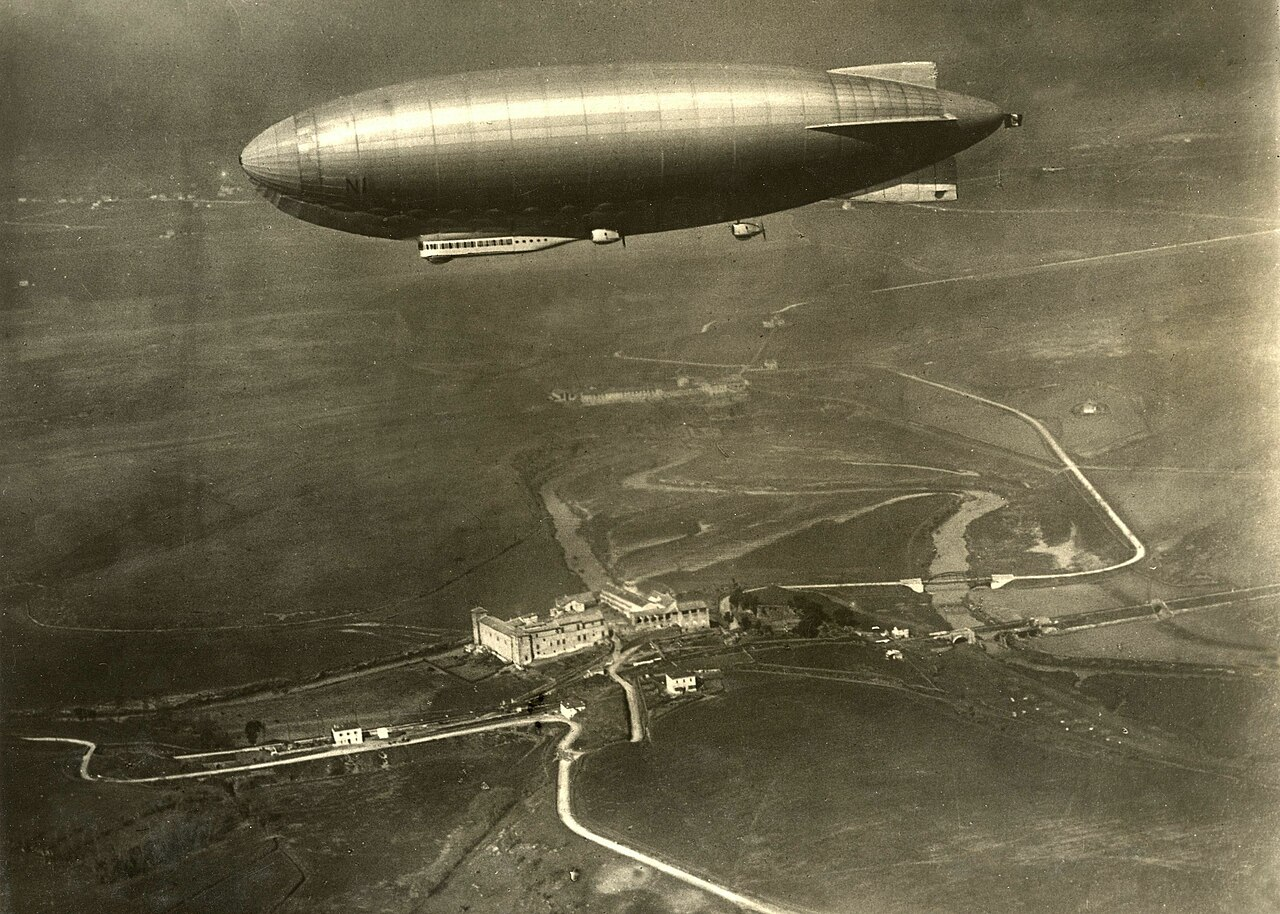
On the morning of May 11, after final preparations at Ny-Ålesund, the Norge lifted off into favorable conditions. A powerful anticyclone provided stable meteorological cover across the Arctic.
The primary in-flight hazard was continuous monitoring for dangerous icing. Crew member Alessandrini executed perilous exterior inspections — climbing the outer ladder of the ice-coated dome at roughly 80 km/h wind speed to check the envelope. Fortunately, no critical ice accumulation occurred, though twice during the flight individual engines failed temporarily due to ice blockage in the fuel lines.
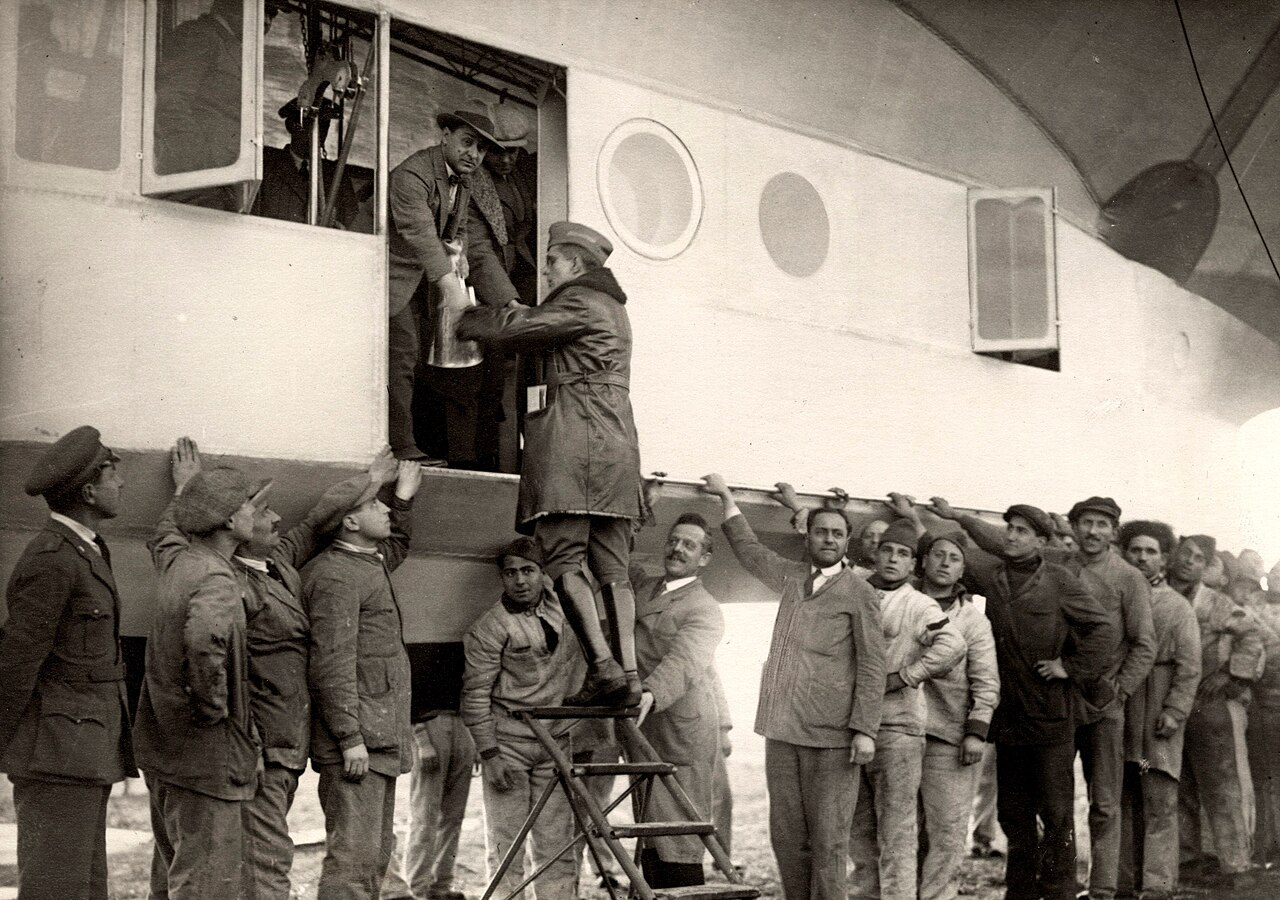
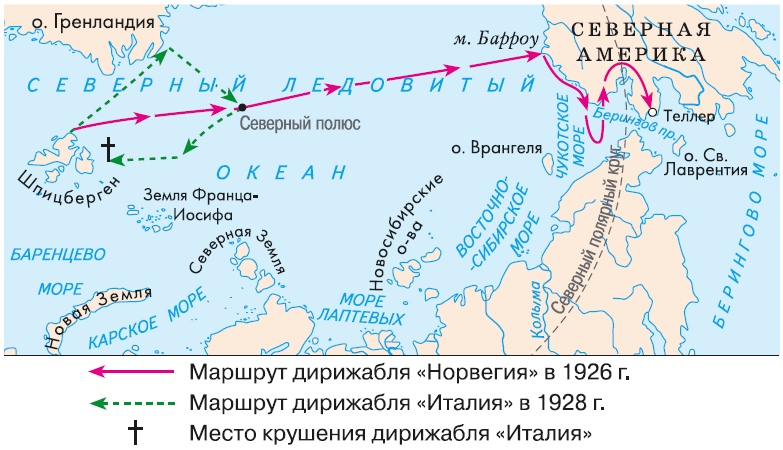
Sextant measurements confirmed they had reached the North Pole at approximately 01:30 on May 12. Nobile reduced altitude to 150–200 meters and cut speed to a minimum. The crew ceremonially dropped the flags of Italy, Norway, and the United States onto the ice below. A radio confirmation was transmitted worldwide — and then the transceiver failed, causing genuine alarm about the expedition's fate around the globe.
The Return: Complications and Near-Disaster
The homeward leg toward Alaska was considerably more difficult than the outbound crossing. Ice chunks thrown by the propellers punched a meter-long tear in the dome, accelerating hydrogen loss to dangerous levels. Navigator Risér-Larsen, having been awake for dozens of hours, began to hallucinate — at one point reporting "an entire cavalry corps" approaching for rescue, at another suggesting the crew simply jump from the airship.
As the airship approached the Alaskan coast, sunshine heated the remaining hydrogen and caused dangerous pressure build-up in the envelope. The decision to land became urgent.
Landing at Teller, Alaska
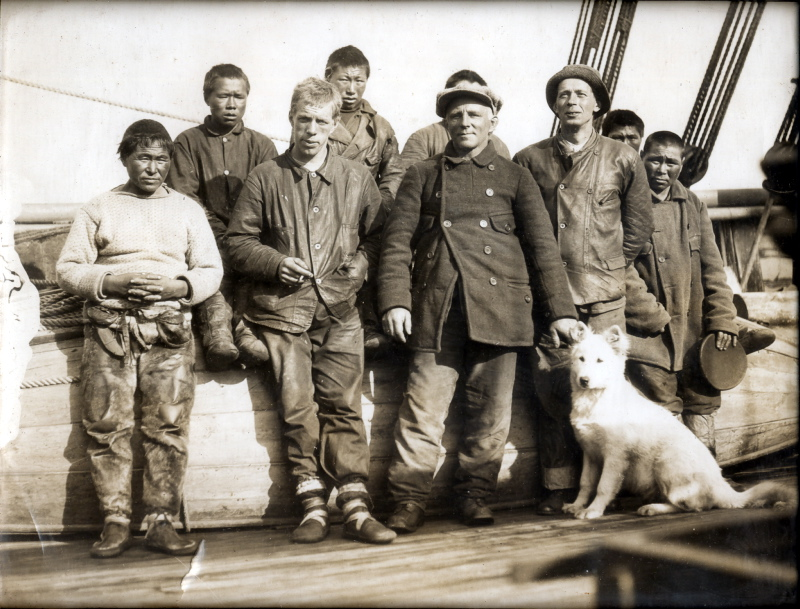
On May 14, the Norge located Teller — a small Inuit settlement of approximately 10 white residents and 45 Inuit — on the Alaskan coast, roughly 160 kilometers northwest of Nome. The crew landed after approximately three days of near-continuous flight. They used the local telegraph station to dispatch messages confirming their survival. After eighteen days of recovery at Teller, dog teams carried the exhausted crew to the ice boundary, where a vessel from Nome transported them to Seattle, arriving June 27.
Priority Dispute
American aviators Richard Byrd and Floyd Bennett claimed they had flown over the North Pole on May 9 — two days before the Norge's crossing — in a Fokker F.VIIa/3m trimotor, receiving ticker-tape parades in New York and official medals. Decades of subsequent analysis of their flight records revealed inconsistencies that make their claimed achievement almost certainly false. The Norge expedition stands as the legitimate first aerial conquest of the North Pole.
Legacy
The expedition made Roald Amundsen the first person to reach both geographic poles. It demonstrated that semi-rigid Italian airships could operate in polar conditions. And for Umberto Nobile, it was only the beginning: he went on to build the improved N-4 "Italia" and launched a second polar expedition — one that would end in catastrophe and trigger the largest Arctic rescue operation in history.