Why Airships Never Took Off. Part 8: The End of Wartime Zeppelins
The spring and summer of 1916 was a “happy time” for German Zeppelins in the skies over Britain. They flew almost unhindered to drop tons of bombs on London and the surrounding area, suffering virtually no losses. However, in the fall the situation began to change dramatically. T
Editor's Context
This article is an English adaptation with additional editorial framing for an international audience.
- Terminology and structure were localized for clarity.
- Examples were rewritten for practical readability.
- Technical claims were preserved with source attribution.
Source: the original publication
Series Navigation
- Why Airships Never Took Off. Part 1: From Montgolfier to a Borodino Bomber
- Why Airships Never Took Off. Part 2: Rise and Fall of French Airships
- Why Airships Never Took Off. Part 3: Birth of the German Zeppelins
- Why Airships Never Took Off. Part 4: The Kaiser's Airships Go to War
- Why Airships Never Took Off. Part 5: Shadows Over Britain
- Why Airships Never Took Off. Part 6: London Under the Bombs
- Why Airships Never Took Off. Part 7: Fire in the Sky
- Why Airships Never Took Off. Part 8: The End of Wartime Zeppelins (Current)
- Why Airships Never Took Off. Part 9: Ashes of War and New Opportunities
- Why Airships Never Took Off. Part 10: The Most Famous and Successful Zeppelin
- Why Airships Never Took Off. Part 11: Aircraft Carriers in the Sky
- Why Airships Never Took Off. Part 12: Italian Semi-Rigid Airships
- Why Airships Never Took Off. Part 13: Through the North Pole aboard the Norge
The spring and summer of 1916 was a “happy time” for German Zeppelins in the skies over Britain. They flew almost unhindered to drop tons of bombs on London and the surrounding area, suffering virtually no losses. However, in the fall the situation began to change dramatically. The key to victory was the installation of machine guns with the latest incendiary bullets on British night interceptors. The German airships, which were lifted into the air by cylinders with extremely flammable hydrogen, one after another began to turn into flaming torches rushing towards English soil. Just yesterday, the almost safe “hunting grounds” of German balloonists in a matter of weeks turned into a fiery hell for them, from where they can hardly return. However, the command of the German Zeppelins, led by the fanatical Peter Strasser, was by no means going to abandon the bombing of London, which personally pleased the Kaiser.
Part 1: from hot air balloon to bomber for Borodino
Part 2: the birth and death of French airship construction
Part 3: the birth of the German Zeppelins
Part 4: The Kaiser's skyships go to war
Part 5: Shadows over Britain
Part 6: London under the bombs
Part 7: Fire in the Sky
Part 8. The collapse of military zeppelins ← you are here
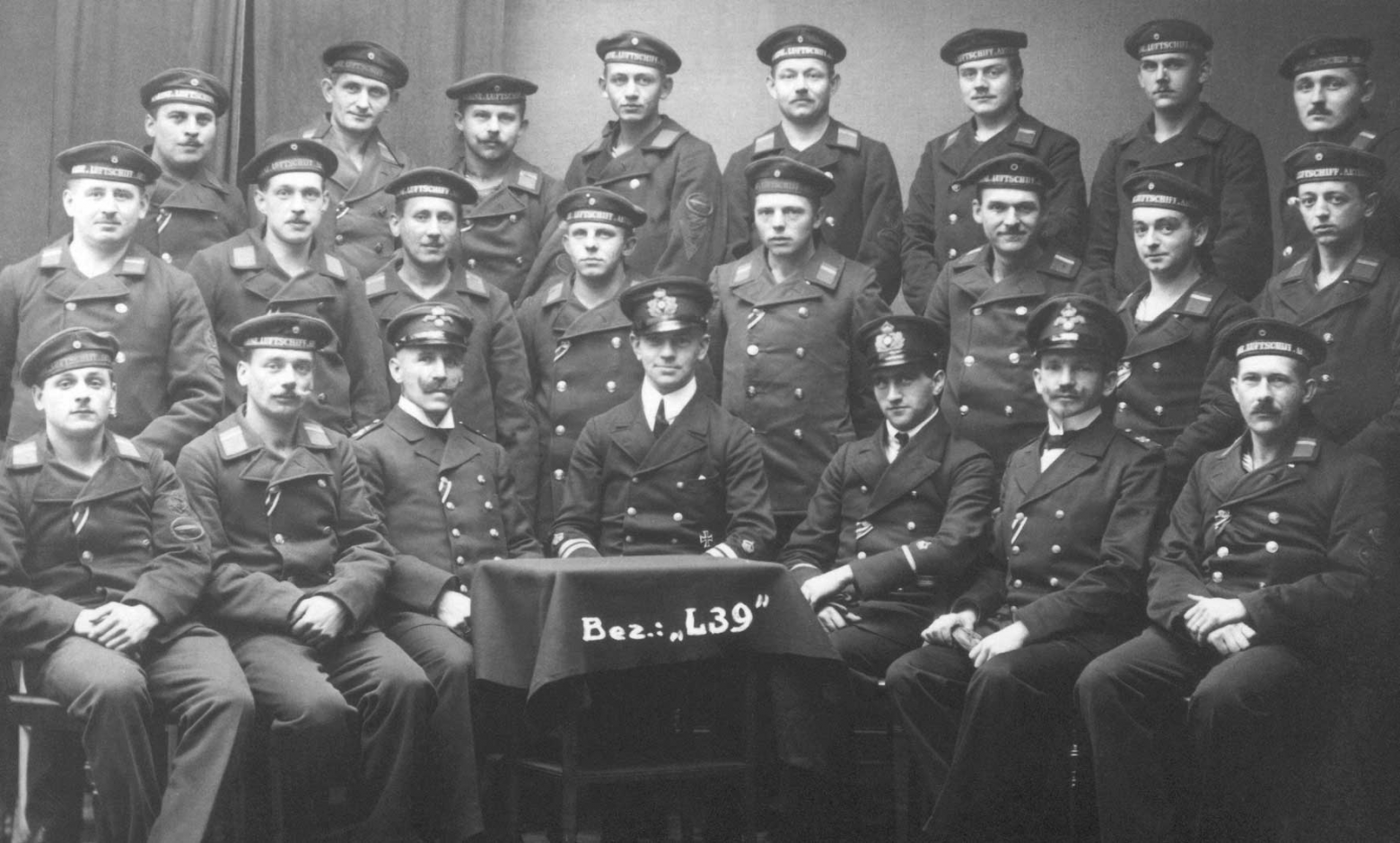
They tried to carry out a new raid on London, this time at high altitude, on March 16, 1917, but the airships were caught in a storm and did not reach the British coast. Moreover, the L-39 was carried to the Western Front line, where it was shot down by the French, and it crashed vertically down near Compiègne - approximately where the surrender of the German Empire would eventually be signed. Along the way, it turned out that at new operating altitudes of about 5 kilometers above the North Sea, the crews began to seriously suffer from frostbite and lack of oxygen, and even heavily insulated clothing did not help much. After this, flights to London were stopped again, and all Zeppelins were temporarily transferred to maritime patrol.
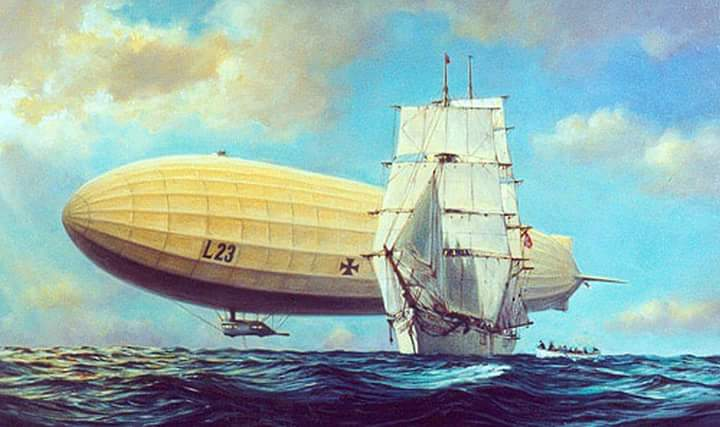
At this time, one almost curious thing happened: the only case in history of a ship being captured from an airship. L-23, while on patrol, came across the Norwegian three-masted barque Royal, sailing towards Britain. Lieutenant Commander Ludwig Bockholt ordered a bomb to be dropped as the ship progressed. The crew took the hint and moved into the lifeboats; an inspection group of six people was disembarked from the airship. It turned out that there was indeed contraband on board, which was being transported to Britain; the ship was captured as a trophy and brought to Cuxhaven harbor with the forced participation of the crew under the supervision of German officers. True, the command did not appreciate the trick, and forbade zeppelin commanders from doing this in the future, so as not to put huge airships at risk for the sake of, in fact, demonstrating hussar valor.
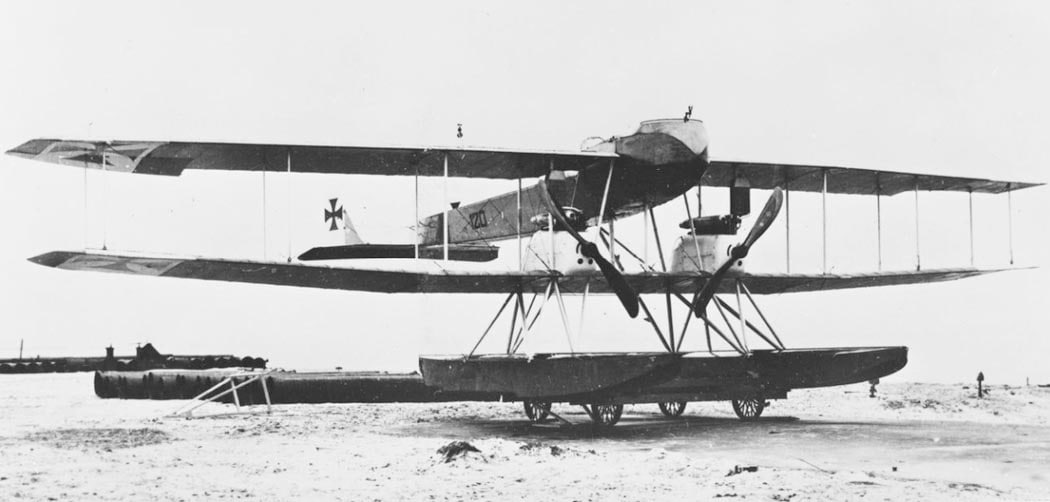
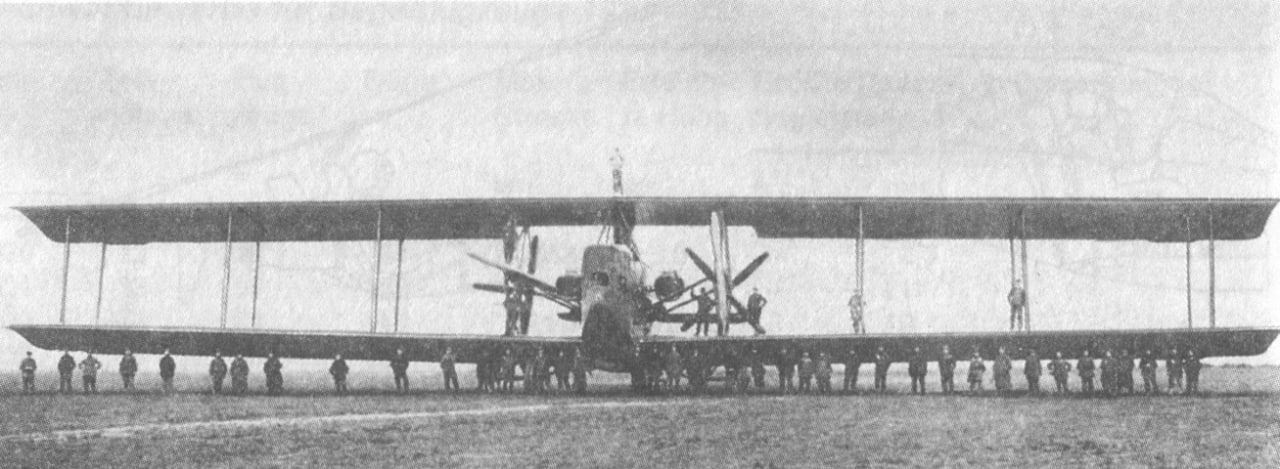
At the same time, in the spring of 1917, a new player called Gotha G.IV entered the game from the German side. It was the first mass-produced twin-engine long-range bomber in history, capable of taking off from an airfield on the coast, bombing London and returning to base. The project grew out of the rather strange Gotha G.I pepelats, a long-range reconnaissance biplane with a pair of engines located on the lower wing and a cockpit on the upper wing. One of the already experimental vehicles was transferred to the fleet - and this led to unexpected results. The sailors converted the Gotha G.I into a UWD seaplane, which on March 19, 1916 led the largest seaplane raid of the Kaiser's fleet on Britain. The six vehicles dropped several hundred bombs on targets in and around Dover and returned safely.
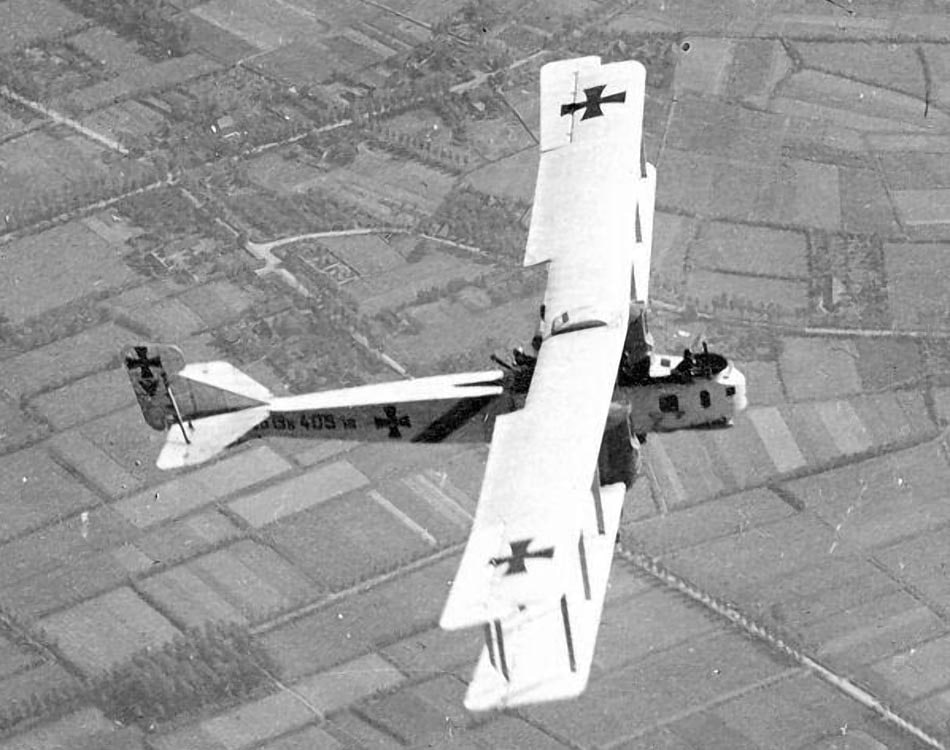
The leaders of the army aviation also liked the idea, after which the Gotha company began work on converting the Gotha G.I from a reconnaissance aircraft into a bomber. For almost the entire year of 1916, the low-volume Gotha G.II and Gotha G.III were tested on the Balkan fronts, which were relatively safe for German aviation. By the end of the year, taking into account the experience of their operation, a much more advanced Gotha G.IV was created, which has already gone into mass production. It was already the “great-grandfather” of the He-111 and Ju-88, known from World War II: a high-speed and long-range aircraft for its time with two 260 horsepower engines, capable of carrying up to 600 kg of bombs, delivering ammunition to a distance of up to 250 km at a speed of 125 km/h and returning to base. For self-defense against interceptors, there were 3–4 machine guns on board. At the turn of 1914–1915, only M-type airships could do approximately the same thing, but after two years of the rapid evolution of wartime aviation, much cheaper and suitable for mass production aircraft reached similar performance characteristics.
The main goal for the new machines was quite clear from the very beginning: London, whose skies had become too dangerous for Zeppelins. All new bombers produced by the factories were transferred to the separate Luftstreitkräfte army air force created in October 1916 - the ancestor of the future Luftwaffe. They were brought together into a special aviation squadron, Kagohl 3 (Kampfgeschwader 3 der OHL), directly subordinate to the command, which received the semi-official name Englandgeschwader. A new airbase was equipped for them near occupied Ghent with especially carefully aligned runways: experience with previous models showed that heavy vehicles suffer too much when landing at field airfields, which are quite suitable for small airplanes.
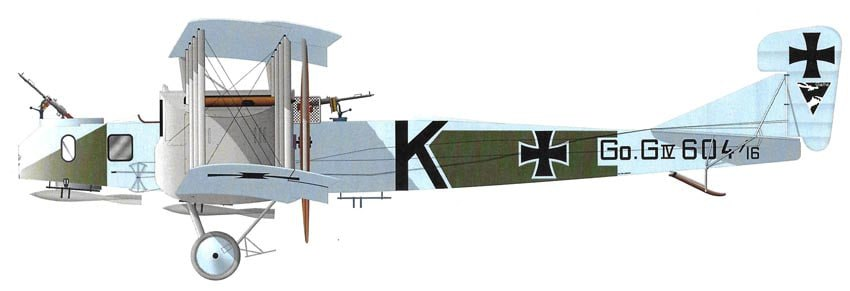
The first raid on May 25 was carried out by 10 bombers. Their target was London, but due to the weather, bombs were dropped on the port of Folkestone and the military base at Shorncliffe. 95 people died, including 48 women and 12 children. 70 British planes chased the Goths, but only one pilot managed to catch up and fire at one of the bombers. Only off the Belgian coast the group was intercepted by the latest fighters of the Western Front, which managed to shoot down one of the vehicles. Another vehicle crashed due to unclear circumstances over Belgian territory, but overall the experience was considered quite successful by the German command.
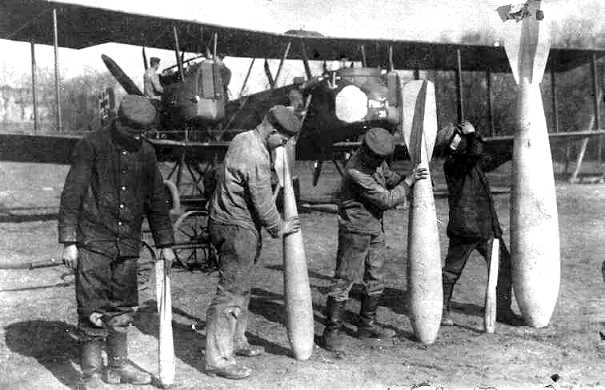
On a clear day on June 13, 14 Gotha G.IVs appeared over London in two dense formations and dropped several tons of bombs on the city. Despite the fire of anti-aircraft guns and the lifting of more than 90 interceptors into the air, the German vehicles were bombed and escaped with minimal damage, simultaneously shooting down one of the interceptors. For the British, the raid by a large group of bombers came as a surprise and an extremely unpleasant surprise. The air defense of Greater London had been sharpened since the autumn of 1915 for defense against Zeppelins, but it was poorly suited against high-speed twin-engine bombers. Both interceptor pilots and air defense crews were accustomed to working against huge targets, but not against twin-engine biplanes, which outran many fighters of that time.
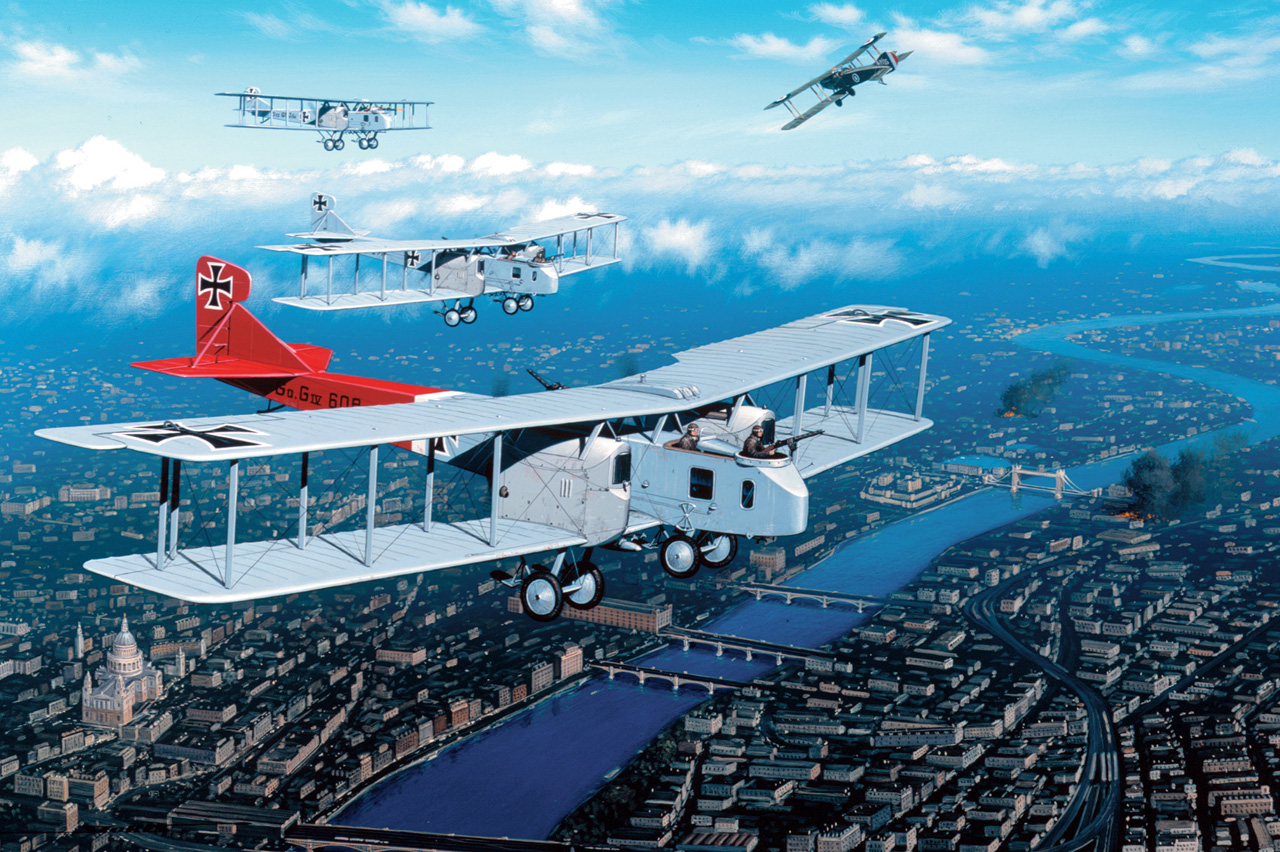
Compared to the largest Zeppelin raids, the material damage was not too great; two trains, residential buildings, offices and a school were hit. But 162 people died on the ground, including 18 children in a bombed school, and almost half a thousand were injured. It was the deadliest strike in the history of the German bombing of Britain in the First World War. Kaiser Wilhelm was so pleased with the results and the outrage in the British press that he immediately summoned the commander of Kagohl 3, Captain Ernst Brandenburg, to Berlin, and presented him with the highest Prussian order of Pour le Mérite. In Britain, the rage over the raid, its victims and the inability of the air defense to do anything with the “damned Gotha” was terrible, leading to street riots, accompanied by beatings and pogroms of shops of people with German surnames. It was after this raid that King George V decided to change the name of his originally German Saxe-Coburg-Gothic dynasty to Windsor after the name of one of the family castles. The British hated "Gotha" even more than Zeppelins, and before the Second World War it became a common name in English for aerial terror.
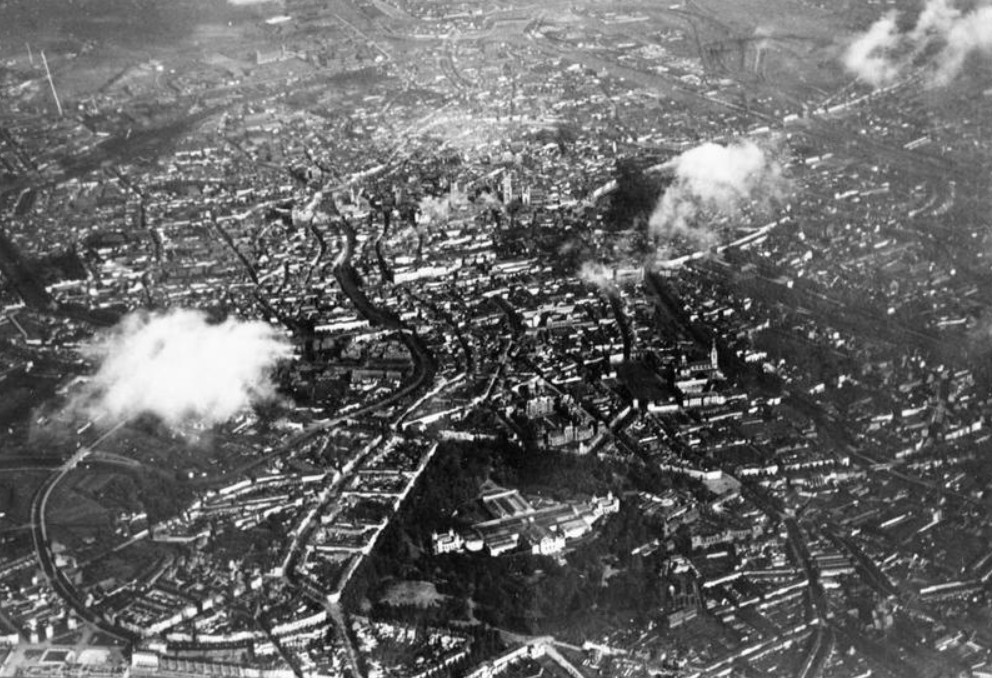
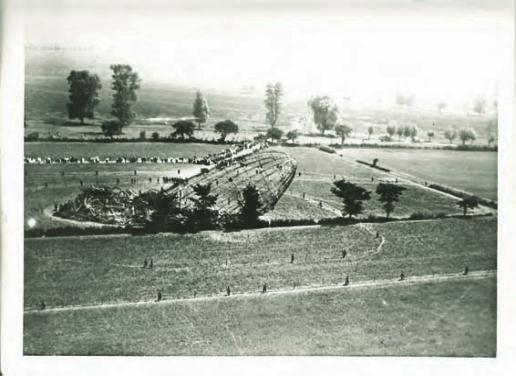
However, the airships also tried to return to the skies of London: Zeppelinführer Peter Strasser was not going to give up his fixed idea and cede laurels to aviators on airplanes. On June 17, a group of 6 new high-altitude zeppelins set off for British shores. Two of them were caught in a storm and were forced to return, two more did the same due to problems with the engines. L-42 dropped bombs on the Royal Navy depots at Ramsgate, but L-48 was not so lucky. For some unknown reason, he descended lower than expected, after which he was attacked by three British interceptors at once. The damaged car began to lose altitude, made a hard landing near the town of Theberton and caught fire. Either two or three of the crew survived.
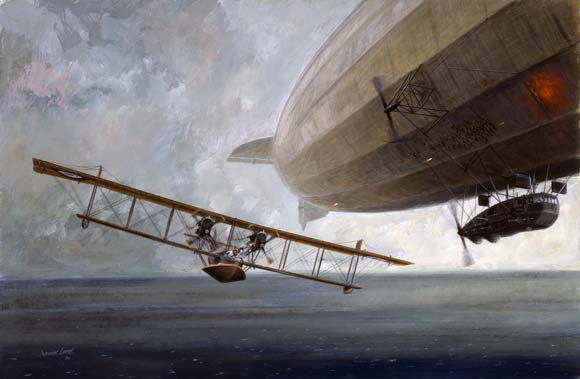
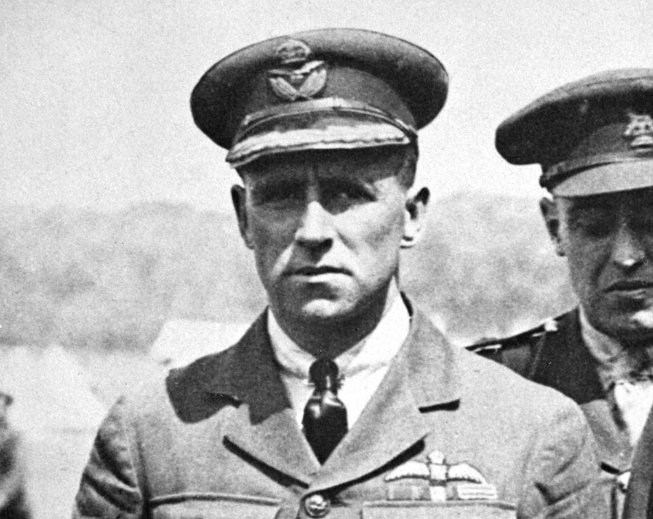
After this, the airships were again transferred to sea patrol, but even there it became increasingly less safe for more advanced and numerous aircraft. First, on May 14, L-22 was intercepted off the Dutch coast by a British Curtiss Model H-12 reconnaissance floatplane. It was a large American-made aircraft, which was designed with an eye toward the possibility of non-stop flight across the Atlantic. The British Navy purchased them with an eye not only to maritime patrols, but also to the targeted hunt for Zeppelins. The first flights began in April 1917, and then the meeting took place. Canadian Lieutenant Robert Leckie, the future chief of staff of the Canadian Air Force in World War II, flew the plane into the airship, the bow turret gunner dropped the ammunition of the twin Lewis gun at the target from dagger range. The flaming zeppelin crashed into the sea.
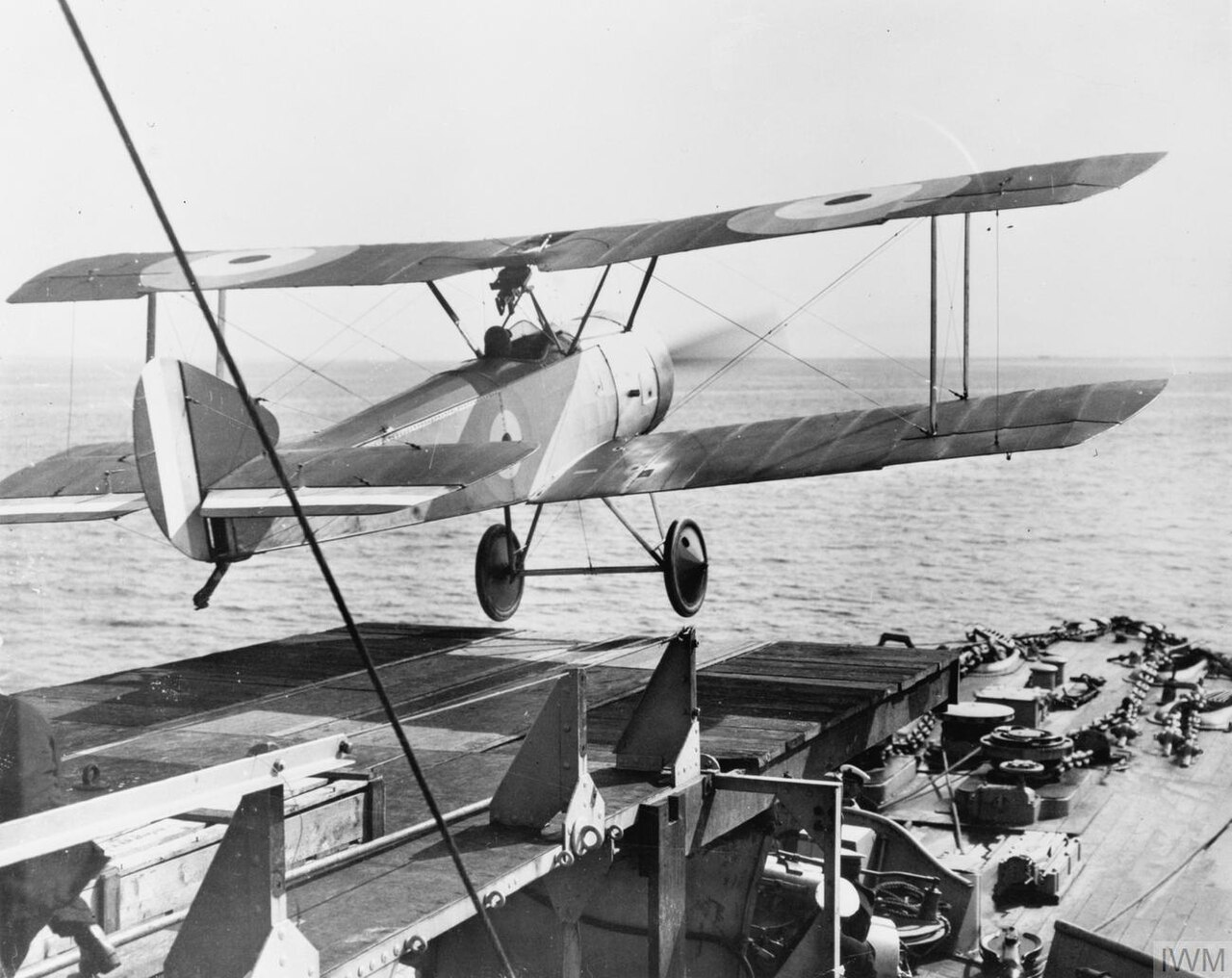
On August 21, L-23 encountered a British squadron of several cruisers and destroyers off the Danish coast. Until recently, this would have been more of a problem for the Royal Navy - but it was the second half of 1917, and the cruiser HMS Yarmouth was already equipped with an experimental catapult for launching seaplanes. Bernard Smart's Sopwith Pup was launched into the air, caught up and attacked the zeppelin. It caught fire and fell into the sea.
On September 5, Robert Leckie's same Curtiss Model H-12, paired with a DH-4 bomber, encountered L-44 and L-46 at sea. They would have been easy prey - but they were accompanied by several German ships, which opened heavy anti-aircraft fire. Leckie attacked the L-44, but failed to set it on fire, after which both British aircraft were damaged by fire from the ships and were forced to retreat. DH4 then had to make an emergency landing at sea - but it was not a seaplane and quickly sank. To save both members of his crew, Leckie splashed down his car, but with the increased weight and damaged engine he was no longer able to take off. The radio also turned out to be out of action, and the fate of all aviators would have been sad - but on board the newest ultra-long-range aircraft there was prudently... cages with four carrier pigeons! The corpse of one of them with the coordinates in the note was found on the British coast, and after three days of waiting without food and with two liters of fresh water, the crews were rescued by an approaching destroyer.
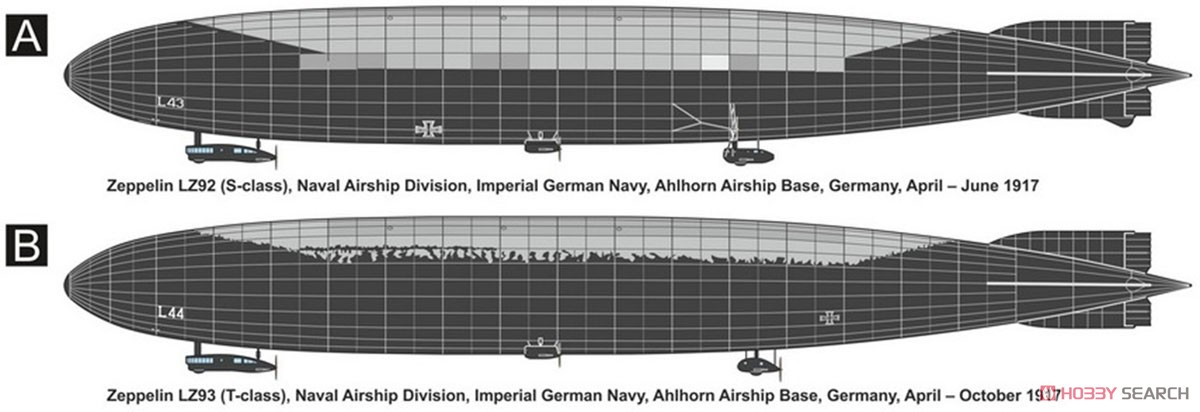
Again, a large group of either 7, or 11, or 13 (according to different sources) zeppelins appeared over Britain on the evening of October 19. The newest lightweight vehicles flew at an altitude beyond the reach of airplanes, more than 5 kilometers. Moreover, the Germans applied two innovations. Firstly, all the lower surfaces were painted not in the usual beige or gray color, but with matte black paint. In the darkness of the night, this made it very difficult to detect them from the ground, even in the light of searchlights. Secondly, the night with the desired wind direction was specially selected. After reaching the calculated points, the zeppelins turned off their engines and walked towards London in complete silence in the air currents.
When bombs began to explode north of the British capital, but neither searchlights, nor interceptors, nor sound measuring stations could find anything, the commander of the north-western sector of the Greater London Air Defense Zone, Alfred Rawlinson, quickly realized what was most likely happening. He contacted his superiors and proposed an emergency plan of action. A counterintuitive decision was made. The searchlight stations were turned off, the battery fire had stopped, and the city blocks were already in blackout mode. Soon, under the zeppelins there was a dark void without any landmarks. Dozens of people were killed, but many bombs fell on vacant lots and did not cause much damage.
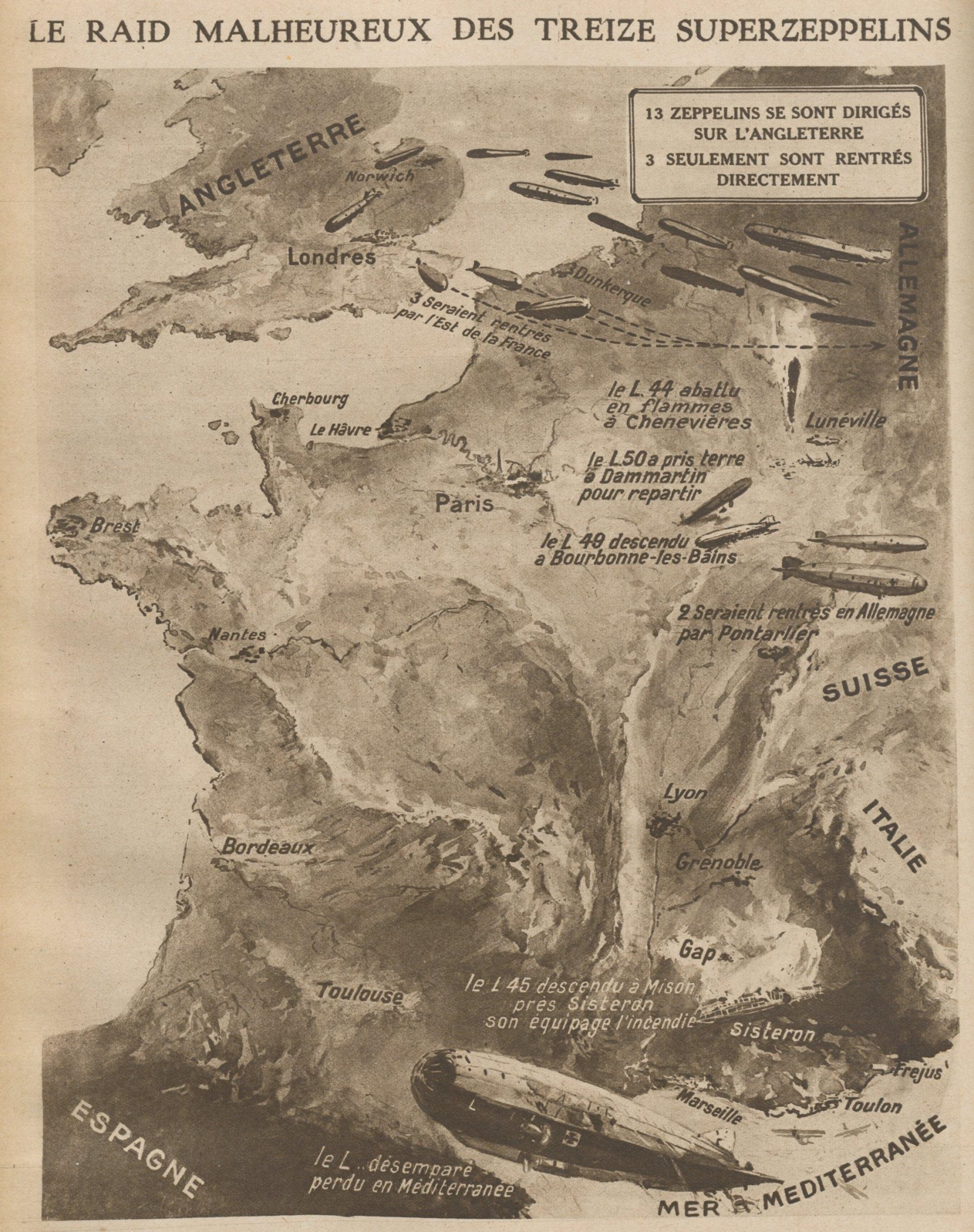
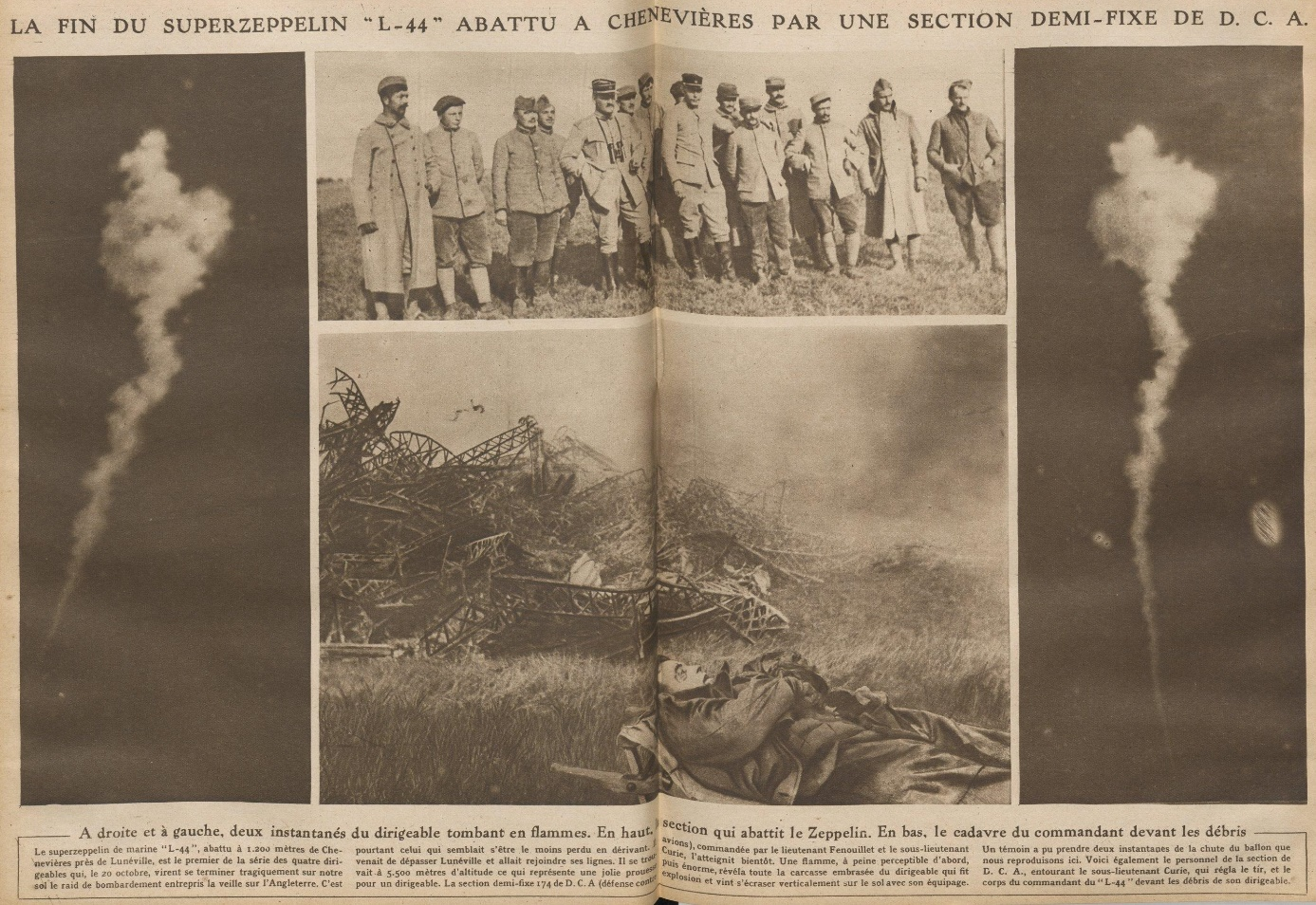
This was only the beginning of problems for the raid participants. An unexpected storm wind, especially strong at altitude, once again rose over the sea, and the vehicles trying to fight it were carried uncontrollably to the south. At full speed, the engines soon ran out of fuel. The L-44 was the first to be unlucky: it was carried over the Western Front, and the fire of the French troops burned it near Luneville with its entire crew. The L-49 turned out to be more fortunate: after exhausting its fuel supply, it was able to land near Langres, Diderot’s hometown. True, this happened near the location of the French rear part, the crew was almost immediately captured, and the airship remained almost undamaged. Studying the design of the newest U-type zeppelin and the documentation found on board turned out to be very interesting for the Entente countries.
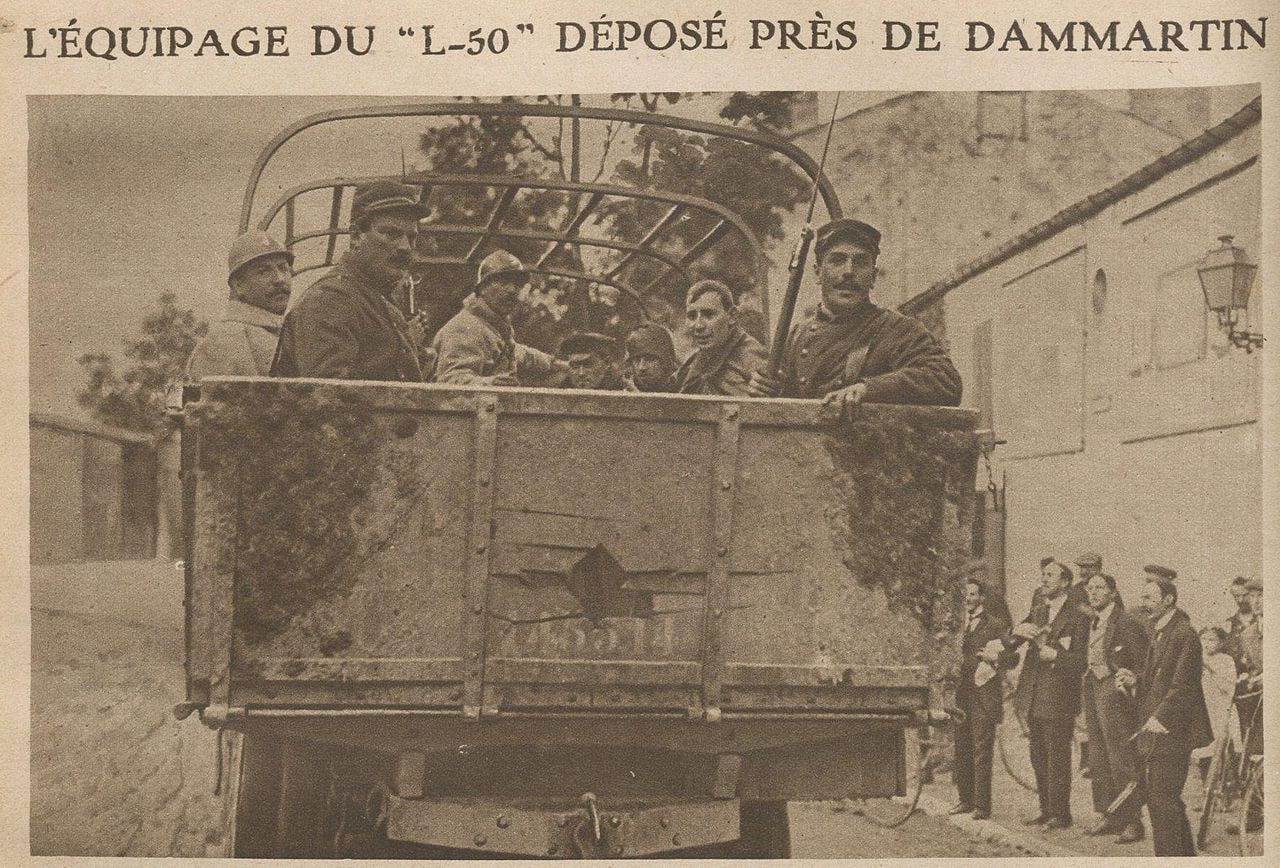
The commander of the L-50 ordered to release the gas, descend and make at least a hard landing on French territory, which was done at Chaumont, where it was no longer so far from the Swiss border. In the process, the front gondola fell off, 16 battered Germans were captured, but five more remained on board the dramatically lighter vehicle. They were carried away somewhere towards the Mediterranean Sea, and no one else saw them with the L-50. A similar fate, but without deaths, befell the L-45: the crew managed to land and burn it already on approach to Marseille and the Cote d'Azur. Then they were captured by gendarmes almost from Saint-Tropez, and the skeleton of the airship became a local landmark for a long time. Lieutenant Commander Waldemar Kölle turned out to be so talkative in captivity that during interrogations he leaked everything he knew, including the names of the commanders of all the airships. When German spies sent a summary report compiled by the British and French to Germany, Zeppelinführer Peter Strasser, who was already falling into hysterics, ordered, just in case, to shoot several of his officers as spies.
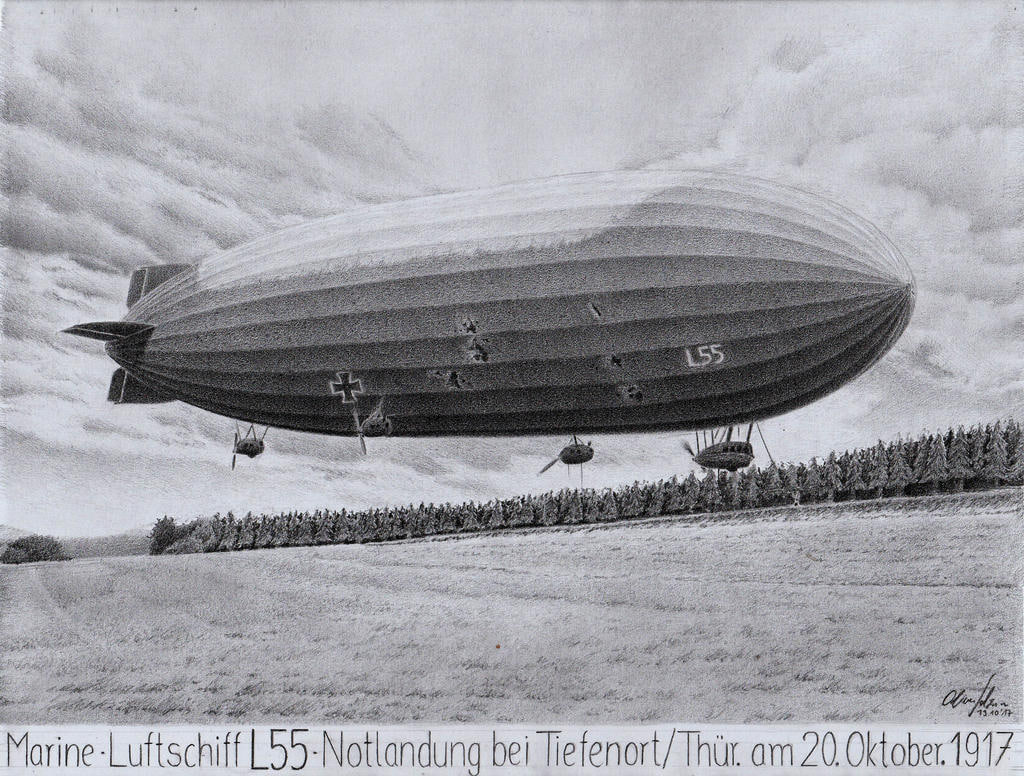
The crew of the newest L-55 managed to cross the line of the Western Front and reach German Thuringia - in an attempt to escape anti-aircraft fire and find the necessary air currents, it managed to reach an absolutely record height for airships of 7.5 kilometers - but after landing, taking into account the damage received from the shelling, all that remained was to write it off. Of the 11 or 13 vehicles that participated in the “silent raid,” 5 were lost. Not long before, due to erroneous orders and the arrogance of an inexperienced commander, the experimental ultra-long and ultra-high 226-meter L-57 of the “special” low-volume type W, known as the Afrika-Schiff (“African Ship”), was lost. It was designed and built specifically for an unusual mission: to deliver a load of ammunition and medicine thousands of kilometers to East Africa for the ongoing war with rebellious zusuls Entente troops of Lieutenant Colonel Paul Emil von Lettow-Vorbeck. A return was not planned: the crew was supposed to replenish the personnel of the German colonial partisans, and parts of the disassembled zeppelin were supposed to be used as consumables. For example, they were going to make tents for personnel from durable lining fabric.
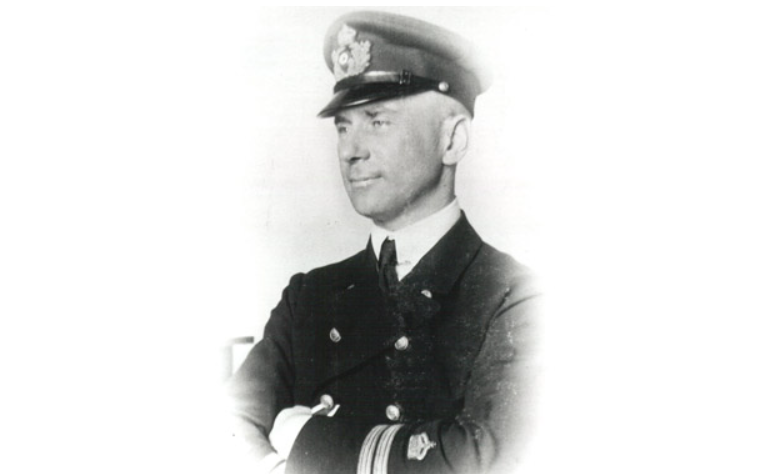
The ingenious decision of Peter Strasser, who was apparently quietly driving, was to appoint the not very experienced and extremely arrogant corvetten captain Ludwig Bockholt, the same one who managed to “impudently” capture the sailing ship of Norwegian smugglers, as the head of a unique and extremely risky mission. He still hoped to use the most experienced officers for his beloved bombing of Britain. As a result, the commander again showed hussarism and took the already loaded airship out of the boathouse, when all the signs already pointed to an approaching storm. As a result of the ensuing misadventures and the efforts of the ground staff, the Zeppelin burned down zum Teufel along with the already scarce, laboriously collected cargo.
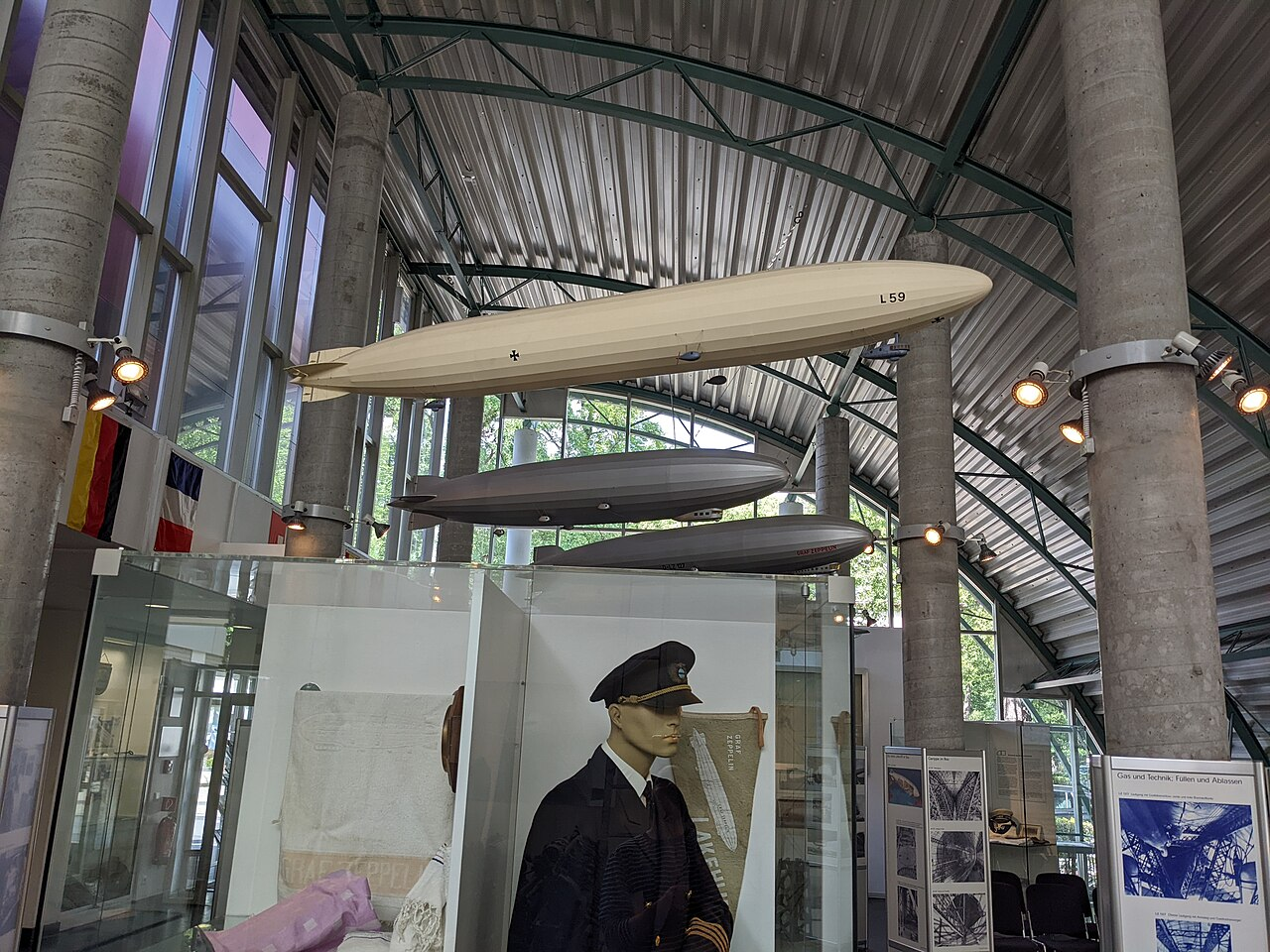
However, the epic did not end there. Not only was Bockholt not seriously punished, but he was also urgently given a second spare Afrika-Schiff type W L-59, built just for such a case, with the same task. On November 3, he took off with a new 50 tons of cargo, crossed the territory of Austria-Hungary and their allied Bulgaria, making a planned landing in the Bulgarian Yambol. The final destination of the flight was a pre-designated rendezvous point with von Lettow-Vorbeck on the Makonde plateau in modern Tanzania. Attempts at departure on November 13 and 16 failed, one due to bad weather, the second due to shelling by allied Ottoman forces. On November 21, the crew managed to set off on the third attempt. They crossed Asia Minor, the Aegean and Mediterranean Seas, and snuck through the desert portion of British-controlled Egypt further south.
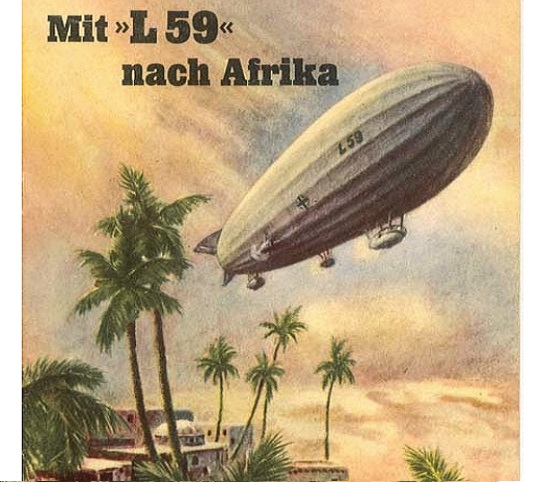
When the car was already approaching Sudanese Khartoum, and there was not much left to fly, Bockholt received a sudden order from Berlin to return. The fact was that von Lettow-Vorbeck, under the pressure of British colonial troops, had just lost the last major city, went into the wasteland, the Makonde plateau was occupied by the enemy, and even the commander himself did not know where the detachment would be by the time the zeppelin arrived. Having followed approximately the same route and unable to resist parading over Istanbul, the captain brought the airship back to the Bulgarian Yambol. During the flight, his airship covered 6,757 km in 95 hours. As a result, Ludwig Bockholt disappeared with the L-59 and its entire crew on April 7, 1918 in the area of the Strait of Otranto, going on an equally ambitious operation to bomb the British naval base in Malta.
After this, the main participants in the bombing of London finally became the increasingly numerous and sophisticated “Gotha”, in some raids there were already dozens of them, and the giant Riesenflugzeug wunderwaffle aircraft, small-scale or single heavy multi-engine bombers, which joined them in the fall. Naval Zeppelins - all Army vehicles had by this time been handed over to the Navy, written off or lost - now appeared over Britain rarely, in some cases as a complement to bomber raids. The era of airship-bombers was steadily coming to an end. Full-fledged independent raids resumed only in the spring of 1918, when all bomber aircraft were sent to Operation Kaiserschlacht, the last desperate (and almost successful in some places) attempt to break through the Western Front and turn the tide of the war.
After the unsuccessful outcome of the last attack on Paris for the Germans, the leadership of the Kaiser's Reich began to fall into approximately the same state into which one Austrian artist had come since the summer of 1944. It came down to completely wild, suicidal and outright terrorist initiatives like Operation Feuerplan: all the bombers remaining in service were supposed to attack London and Paris in waves, one after another, until the combat-ready vehicles were completely exhausted, and completely burn out these cities with a stream of incendiary and high-explosive fragmentation bombs. Bombs were even manufactured and delivered to air bases - but by that time September 1918 had arrived, the outcome of the war had become completely obvious, and no one dared to give the order for fear of the post-war consequences.
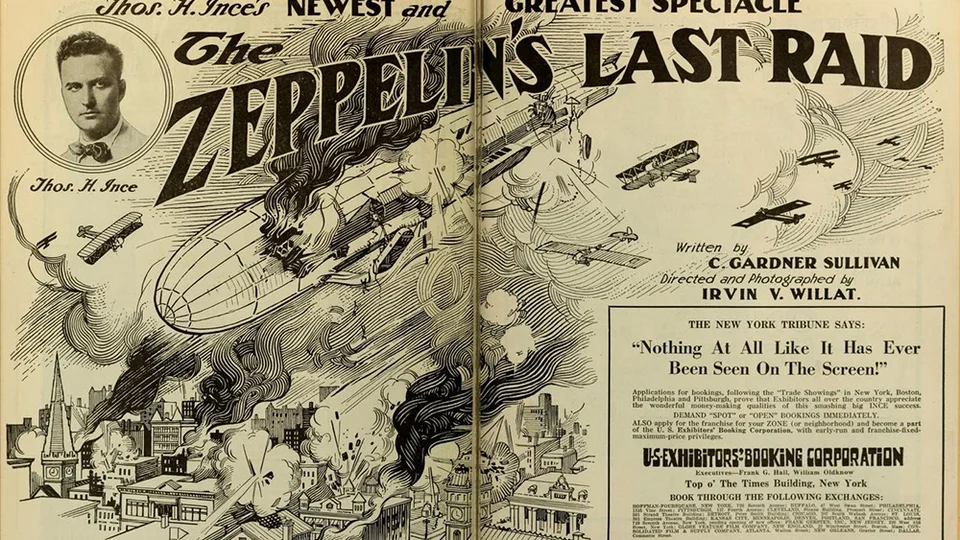
The last attempt at a mass airship raid on Britain, which took place on August 5, 1918, was frankly insane and very symbolic. It looks so perfect, filled with classical tropes, as a plot to end the arc, that it seems unrealistic - but the universe decreed it that way. The five vehicles on board the newest L-70 were personally led into battle by Zeppelinführer Peter Strasser - who, it seems, was not going to return alive from the raid and was not going to survive the approaching surrender of Germany. The airships, contrary to all the hard-earned practice, took off in flight very dark, and were noticed very close to approaching. British aircraft were sent to intercept, including an Airco DH.4 with a crew of the British Egbert Cabbury, who destroyed the L-21 in November 1916, and the familiar Canadian Robert Leckie as a gunner. Each of them had already managed to shoot down a zeppelin and was eager to add to their victory count. Cabbury, strictly speaking, ran to the airfield from a concert where his wife was performing, and found there the only combat-ready bomber, not very suitable for intercepting air targets - but the temptation was too great. Lekki, who ran up second, jumped into the gunner’s seat, the car was lifted into the air, suspended bombs were dropped on a vacant lot, and they flew towards the target.
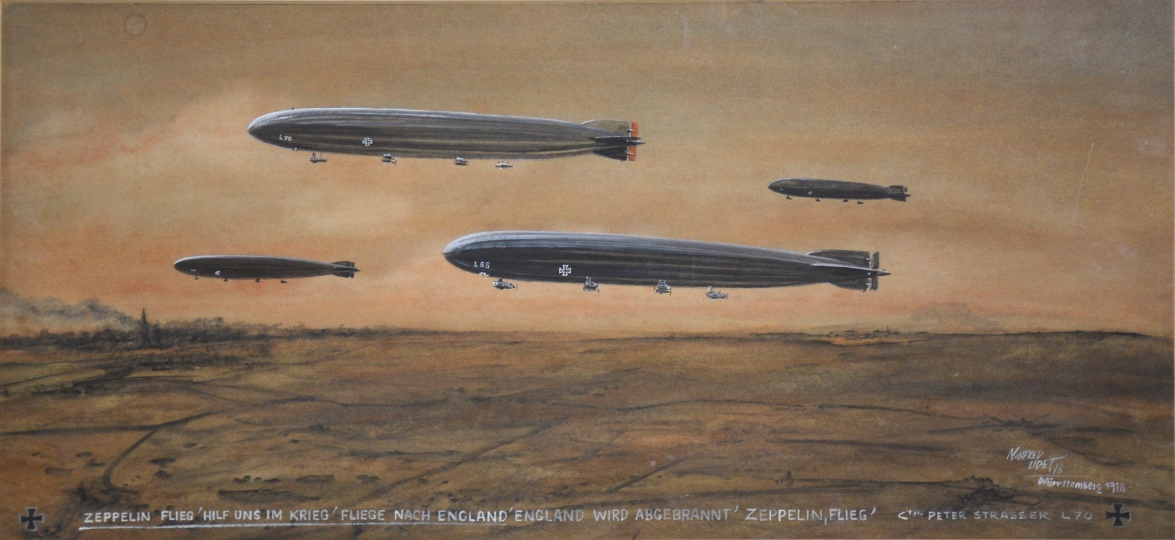
As befits an “unrealistic mythological or Hollywood plot with pianos from the bushes,” their plane jumped out onto the flagship L-70 with Peter Strasser on the bridge: the newest and most powerful airship of the latest military type X. Let’s give the word on what’s next to Egbert Cabbury:
At 22:20 we climbed to an altitude of 16,400 feet (5 kilometers), and I attacked the zeppelin from below on the port side. It was an incredibly exciting - and awe-inspiring - sight of a huge airship obscuring the entire sky above us. The tracer shells ignited the gas, the flames quickly spread and turned the airship into a fireball in less than a minute. The L-70 fell like a stone into the clouds. One of the most terrifying sights I have ever seen is this huge machine rushing down in flames with all the crew on board.
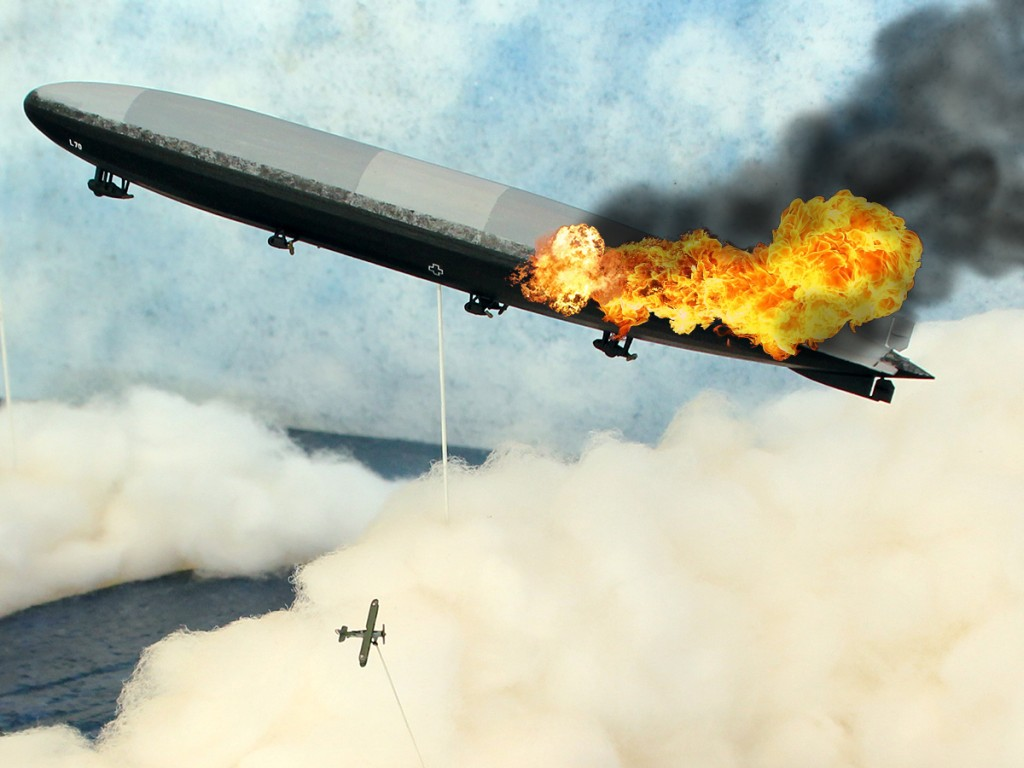
Of course, no one survived, the burning carcass of the car fell into the sea, another zeppelin was damaged by fire and quickly turned around, the rest dropped bombs and followed suit. Peter Strasser shared the fate to which he had previously doomed many of his subordinates, even when the vulnerability of the Zeppelins became obvious. No one dared to undertake any more airship raids on Britain. However, before the end of the war, Robert Leckie managed to intercept and shoot down another patrol zeppelin over the sea, achieving a unique personal record of three destroyed airships and receiving the nickname “Canadian zeppelin killer” in history. After the end of the war, the remaining Zeppelins were doomed to be handed over to the Allies, and the crews burned some of them as a sign of protest.
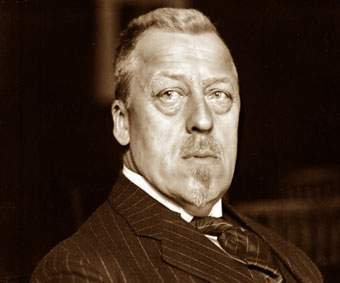
In the post-Soviet space, the German zeppelins of the First World War left two unusual traces. The first of these can be called the Central Market in Riga, the core of which is five large pavilions with characteristic semicircular roofs. Their shape is not accidental, and here's why. The fact is that in 1916, near the Latvian village of Vainode near Libau, almost on the modern Lithuanian-Latvian border, the Kaiser’s fleet built an advanced base for zeppelins with two slipways. They were named "Valhalla" and "Walter". Each of them was 240 meters long and 37 meters high, to accommodate even the then newest R-type super-zeppelins.
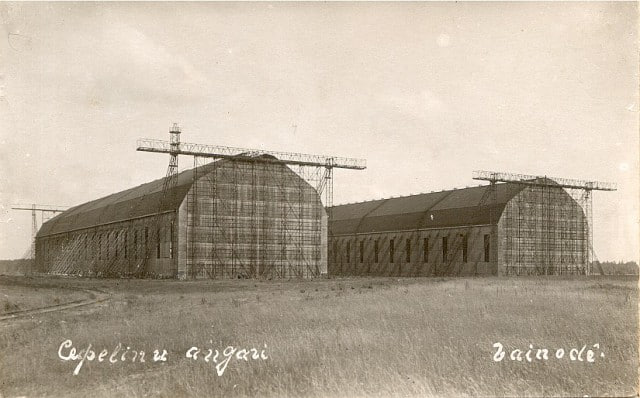
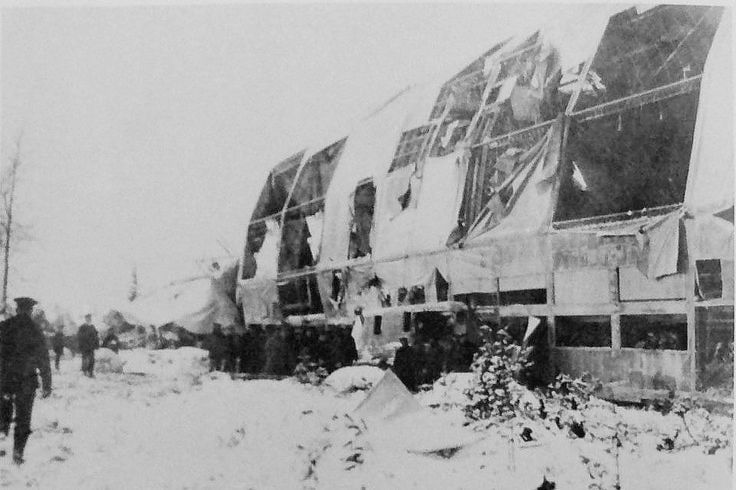
Basically, airships from Vainöde operated over the Baltic as reconnaissance aircraft, but in some cases they went on raids with bombs on board. Not all of them ended successfully for the Germans. So, on December 29, 1916, L-38 went to bomb Petrograd and Revel (now Tallinn). However, the weather is treacherous not only in the North Sea, but also in the Baltic: shortly after takeoff, it fell into a snow storm and crashed onto the shore of the Baltic Sea north of Libau. SL-14 managed to carry out two bomb attacks on Russian targets on the Moonsund Islands at the beginning of 1917, but died due to carelessness Trunkel and Zhrunkel ground character in May of that year. More successful was the L-37, which managed to take part as a bomber in the battles for the Moonsund archipelago in October 1917. He lived until the end of the war - and was transferred as reparations to Japan. However, the command of the Japanese fleet did not see the point in operating a complex, expensive and fairly worn-out machine, and the airship was dismantled for duralumin, valuable for aircraft construction. But just in case, they borrowed one of the large boathouses from near Berlin, reassembling it at the main naval aviation base, Kasumigaura, northeast of Tokyo.
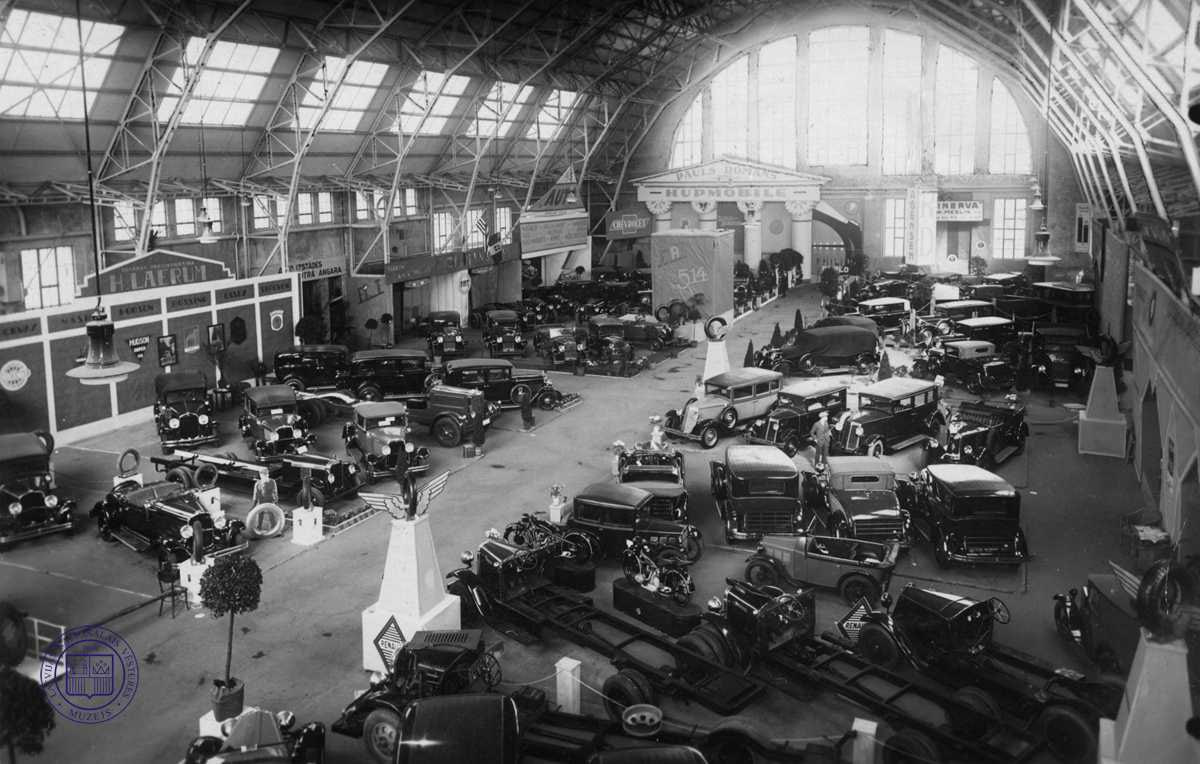
In 1922, the mayor's office of Riga in already independent Latvia began to think about the reconstruction and renovation of the main food market of the city, which then had the sad reputation of being a hotbed of unsanitary conditions. The project of creating covered market buildings from boathouses abandoned by the Germans and requisitioned by the Latvian government in Vainőd was recognized as the best (and more economical) project. That's what they did. After a long epic with a lack of funds and technical problems, two boathouses turned into five buildings. True, the original height was considered unnecessary: the buildings were supposed to be heated in winter, and with such a volume of air, it was too energy-consuming using the technologies of the 1920s. Therefore, the height of the buildings reached only 20.5 meters. Basements for warehouses and freezers were placed under the buildings. Thanks to the boathouses converted into civilian objects, the renovated Riga Central Market, officially opened in 1930, long became one of the most advanced markets in Europe - and its covered buildings served as a source of inspiration for the projects of covered pavilions of post-war markets in some cities of the USSR, for example, in Smolensk. To date, these are the best preserved fragments of military sheds for zeppelins of the First World War.
In neighboring Lithuania, the memory of the zeppelins of the First World War manifested itself in an even stranger way. It all started with the fact that the Prussian king Frederick II the Great in the middle of the 18th century began to plant potatoes in his kingdom. At first, the process was slow, the peasants did not understand how to act with the new crop, they were poisoned by berries and were scared. It was to this time that stories go back to how the king came up with a trick: he ordered potatoes to be planted in the royal fields under the protection of soldiers, and the soldiers received instructions to talk in detail about what they are and how to grow and eat this “expensive delicacy strictly for the royal table.” After which, naturally, all the surrounding villagers began to dig up the tubers at night and steal them for themselves. Be that as it may, the Prussians were firmly hooked on potatoes, and there is still a tradition of placing tubers on the grave of Frederick II in gratitude.
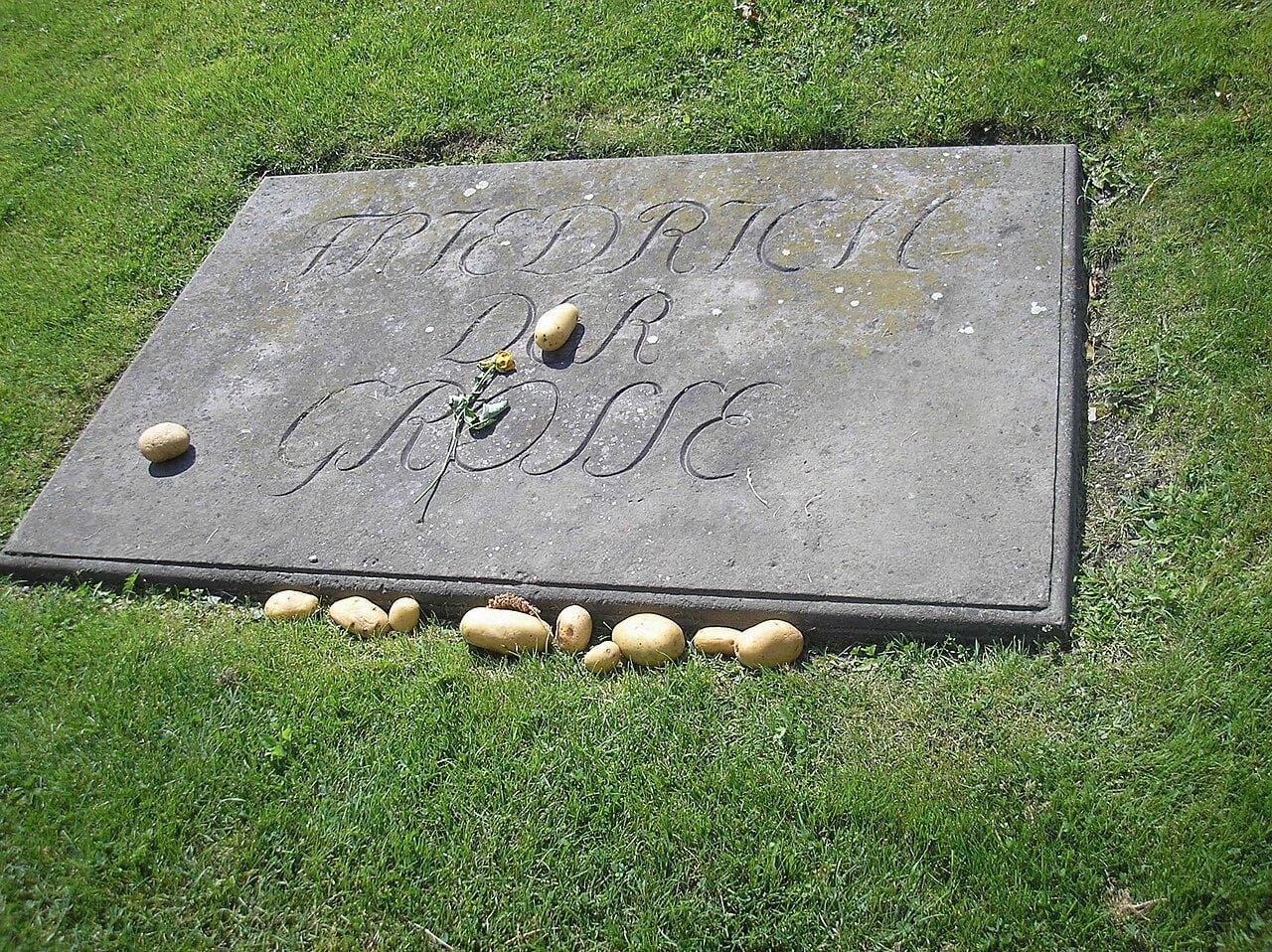
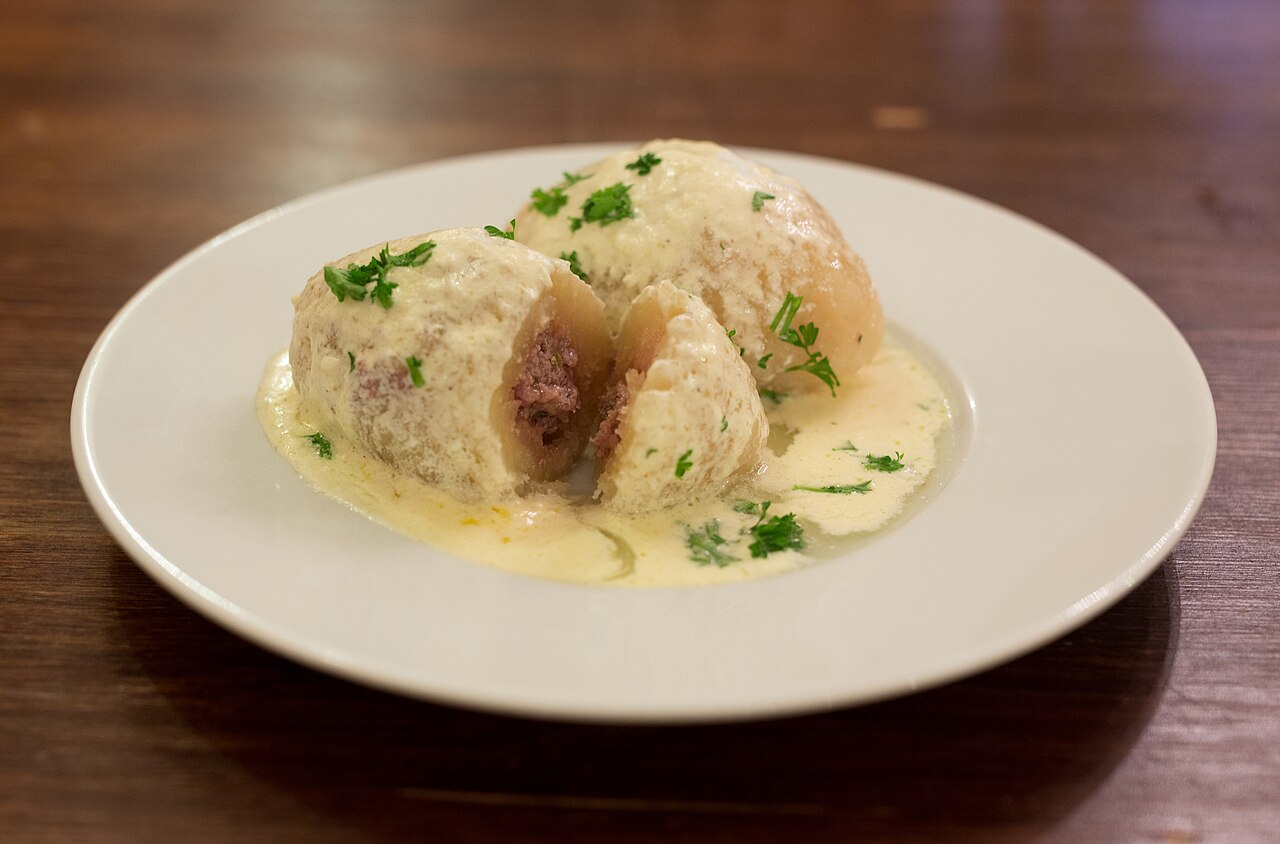
From the Prussians, especially after the divisions of the Polish-Lithuanian Commonwealth between Russia, Prussia and Austria, potatoes spread among its peoples - first the Poles, and from them among the Belarusians and Lithuanians. It is not entirely clear where and who exactly came up with the idea of wrapping meat in grated potatoes and frying or baking it like that - but soon a popular dish called “sorcerers” (Bel. kalduny, Pol. kołduny, Lit. koldūnai) appeared in the region. It is not entirely clear who came up with it first, but Belarusians are especially active in insisting on their priority. Which, taking into account their special love for potatoes, due to falling under the wave of fashion for the root vegetable from the West, and under the wave of measures for its forced introduction under Nicholas I in the Russian Empire, seems to be true.

Among Lithuanians, in the wake of the purification of the language in the 19th century, a similar dish more often began to be called didžkukuliai (“big dumplings”). However, in the 1936 cookbook “Didžioji virėja” (“Great Cooking”), which was a translation of the famous work of Elena Molokhovets slightly adapted to national tastes, the item “Bulviniais kaldūnais (cepelinais)” - “potato sorcerers (zeppelins)” suddenly appears. After the next war, after which Lithuania became part of the USSR, sorcerers / didzhkukulyai under the “more beautiful and understandable” name “zeppelins” were chosen as one of the main exemplary dishes of Lithuanian national cuisine. Both the Lithuanians themselves and other peoples of the Soviet Union became accustomed to the term. Zeppelins remain an important culinary symbol in newly independent Lithuania to this day - although residents of Sineokaya sometimes bristle at the cultural appropriation of Belarusian sorcerers.
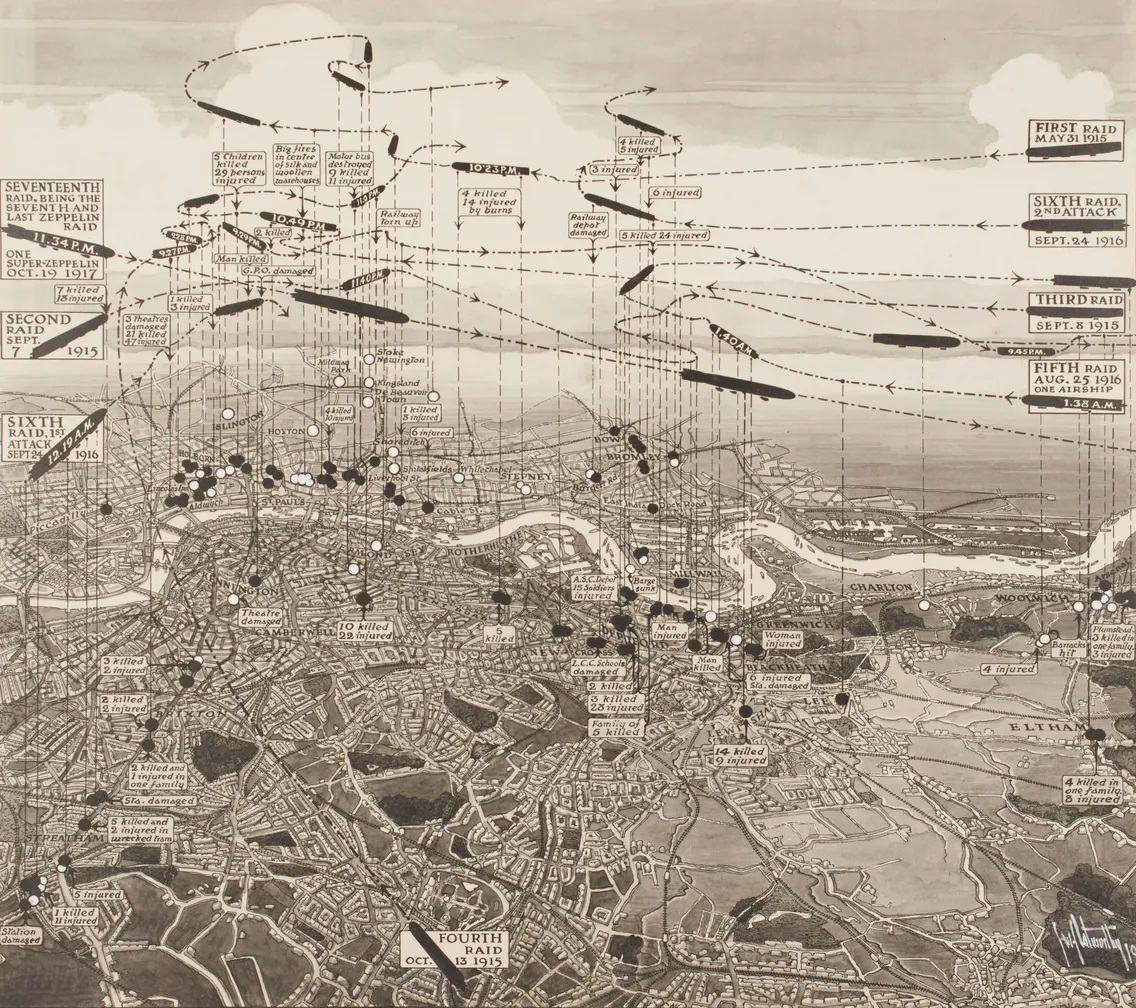
A total of 84 zeppelins were built in Germany during the war; with Schütte-Lanz rigid airships, the figure goes beyond a hundred. Two-thirds of them were lost, approximately half from enemy fire and other causes, and 468 crew members were killed on board. There were 51 raids on Great Britain alone, during which 5,806 bombs were dropped with a total mass of almost 200 tons. 557 people were killed, 1,358 were injured, and damage was estimated at £1.5 million (more than $200 million in 2025 dollars today). This did not help suppress either the war machine or the will of the British to resist the Germans - just like the incomparably more murderous and destructive air raids and strikes of cruise and ballistic missiles in the Second World War. But in both world wars, the bombing of Britain and especially London was a fixation for the German leadership.
August 5, 1918 with death Personal His Imperial Highness Four Golden Banners Personalized Bomb Carrier Peter Strasser's zeppelin, the history of bomber airships ended. The functions of bombing strikes, including the destruction of cities, were finally taken over by airplanes, and since World War II they have achieved impressive and tragic successes in this area. After the First World War, airship construction was mainly associated with other purposes: long-distance passenger transportation in the VIP segment, state PR and research expeditions in high latitudes. The swan song of the last airships will be sung from the 20s to the 30s of the twentieth century, including in the USSR. And the last battle with their participation would take place in 1942 (!), and in rather daring and unusual circumstances - but we’ll tell you about that next time.
© 2026 MT FINANCE LLC
Why This Matters In Practice
Beyond the original publication, Why Airships Never Took Off. Part 8: The End of Wartime Zeppelins matters because teams need reusable decision patterns, not one-off anecdotes. The spring and summer of 1916 was a “happy time” for German Zeppelins in the skies over Britain. They flew almost unhindered to drop tons of...
Operational Takeaways
- Separate core principles from context-specific details before implementation.
- Define measurable success criteria before adopting the approach.
- Validate assumptions on a small scope, then scale based on evidence.
Quick Applicability Checklist
- Can this be reproduced with your current team and constraints?
- Do you have observable signals to confirm improvement?
- What trade-off (speed, cost, complexity, risk) are you accepting?