Why Teachers Are Fleeing Schools and Children Don't Want to Learn — and How I'm Fixing It
A robotics school founder with 9 years of experience and 120,000 readers describes the collapse of Russian provincial education — teacher shortages, poverty wages, zero disciplinary authority — and details the gamified self-paced learning system he built to solve the motivation crisis, using diamonds, rating battles, and Minecraft-integrated Python courses.
Hello everyone. My name is Maxim Ivankov, and I have been building robotics and programming schools for children for nine years. During that time I have opened dozens of centers across Russia, helped many more people launch their own technical schools for kids, and continued teaching children myself throughout. I am 30 years old with three children — my oldest just started first grade. Today I want to talk about something I have spent years experimenting with and finally found a working solution for: how to make children actually want to learn.
Part 1: Why Teachers Are Leaving
When I opened my first robotics school in the Krasnodar region nine years ago, I assumed children naturally wanted to learn robotics and programming. It turned out not everyone finds it as interesting as I do. But that was a minor problem. The larger problem I did not anticipate was structural: engineers are becoming an endangered species, and this traces directly to the disappearance of physics and computer science teachers from Russian schools.
Outside Moscow, qualified subject-matter teachers are increasingly rare. The economics are the reason. Base salary for an 18-hour teaching week breaks down roughly as follows:
- Moscow: over 60,000 rubles per month
- St. Petersburg: approximately 45,000–50,000 rubles
- Most other regions: 5,000–20,000 rubles for the same 18-hour load
And that 18-hour figure represents only in-classroom time — the legal minimum, not actual working hours. Teachers spend an equal or greater amount of time outside class on grading, bureaucratic documentation, and administrative reporting. Well-run schools hire separate methodologists to handle the paperwork so teachers can actually teach. Such schools are extremely rare.
To survive financially, teachers in most regions take on multiple positions — typically two or three assignments simultaneously — resulting in 40–45-hour work weeks with 8–9 lessons per day. On top of that, there is essentially no boundary between work time and personal time: "Teachers must be available 24/7 for student and parent inquiries."
If a student does not come home on time, the teacher receives calls. If a student misbehaves seriously, the teacher can face legal liability regardless of the circumstances. And modern teachers have essentially zero disciplinary authority against disruptive students.

The Authority Collapse
There is a scene in the 1993 film Demolition Man where police officers are given full authority to handle dangerous criminals but no protective equipment or force — only conversation. The result is predictably disastrous. This is an apt metaphor for the modern Russian teacher's situation.
A student can curse at a teacher in front of the class. If the exhausted teacher responds physically — even something as mild as taking the student by the ear to escort them to the principal — parents will review the security footage and file an abuse complaint. They will likely win. The teacher gets fired.
"Modern teachers have no authority against troublemakers. Everything rests on old-school teachers who remember a different era. In Soviet times, a troublemaker received correction through various means they understood. Today, parents believe children should never be touched. Teachers are respected less, and there is less parental partnership."
The Numbers Behind the Crisis
- Approximately 31,000 physics teachers currently work in Russian schools — the number has halved over 20 years
- Pedagogical universities produce 1,000–2,000 potential physics teachers annually
- Only about half of pedagogy graduates actually enter schools; fewer still remain after the first year
- By the 2024/25 school year: approximately 18,000 official teaching vacancies, but real shortages counting informal substitutes reach hundreds of thousands
- Shortfall estimates: ~100,000 primary teachers, ~73,000 mathematics teachers, ~59,000 foreign language teachers
Given that annual new supply reaching schools is a fraction of official vacancy numbers, the deficit does not close. It widens every year.
Part 2: The Motivation Problem
Against this backdrop: how do you motivate children to learn? A child who sees their physics class taught by a mathematics teacher (because the physics teacher quit and cannot be replaced) is not going to develop a passion for physics. A child who watches their teachers visibly struggling, overwhelmed, and disrespected is not going to see teaching as a path worth emulating.
Some children have engineer or programmer parents who model technical curiosity — that is the most reliable path to a new generation of engineers. But it does not scale. Occasionally an unusually self-directed child pushes themselves through YouTube and engineering books. But without a mentor, nothing substantial comes of it.
My key conclusion after nine years: after-school technical clubs are essential, and the approach matters enormously. Excellent curriculum alone is insufficient. You need teachers who are genuinely passionate, and you need a classroom atmosphere that makes children want to be there.
The single most important insight I have found: learning motivation belongs to the group, not the individual. Group lessons create dramatically stronger motivation than one-on-one instruction. Everything I built afterward follows from this principle.
Part 3: The Self-Paced Format
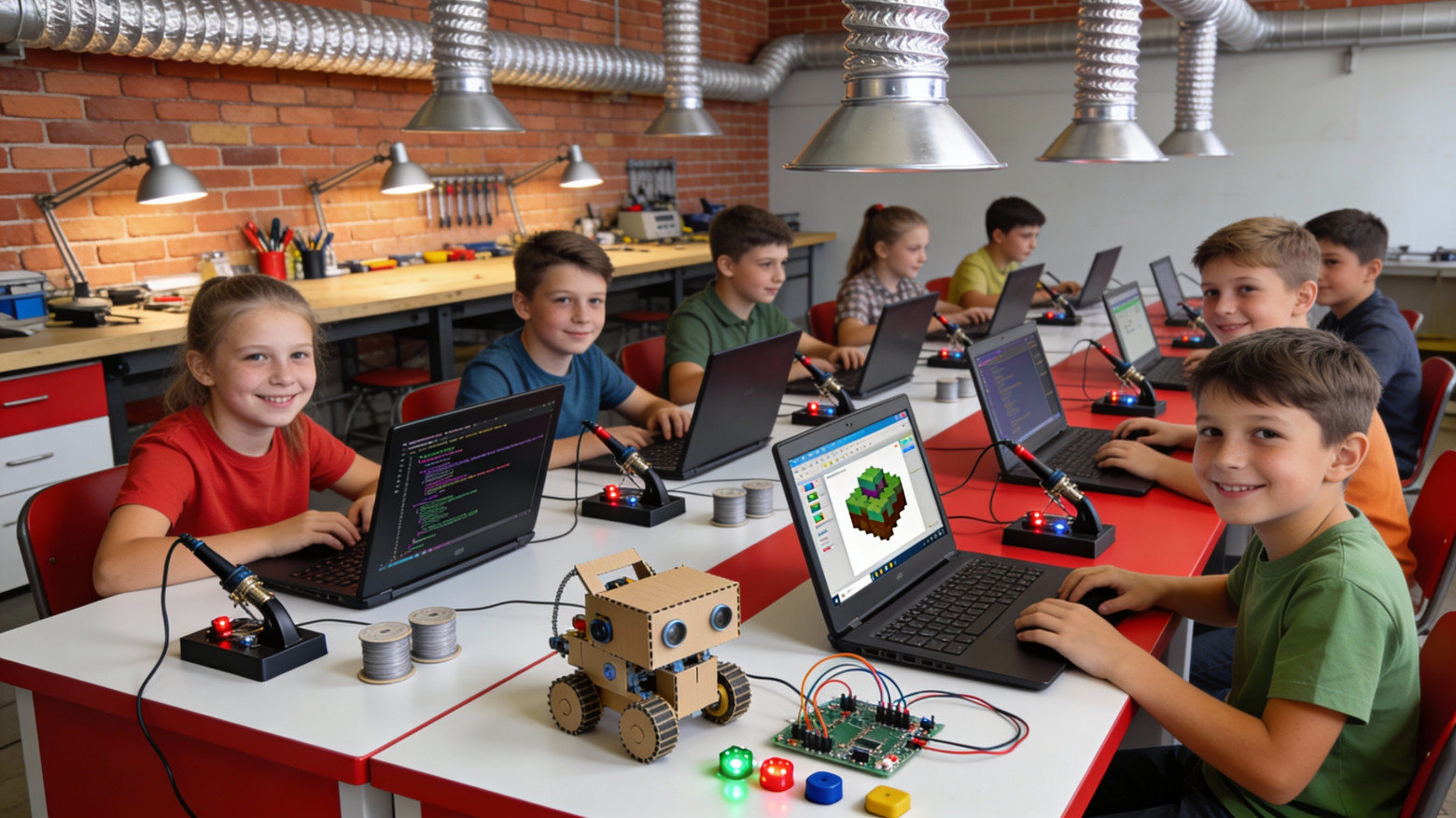
The format I developed over nine years looks like this: students learn independently at their own pace, working through identical material at individual speeds, while the teacher acts as a mentor — available for questions, facilitating conversation, but not delivering lectures every session. This sounds simple. Not every teacher can execute it.
RoboTechnika — Electronics and Robotics
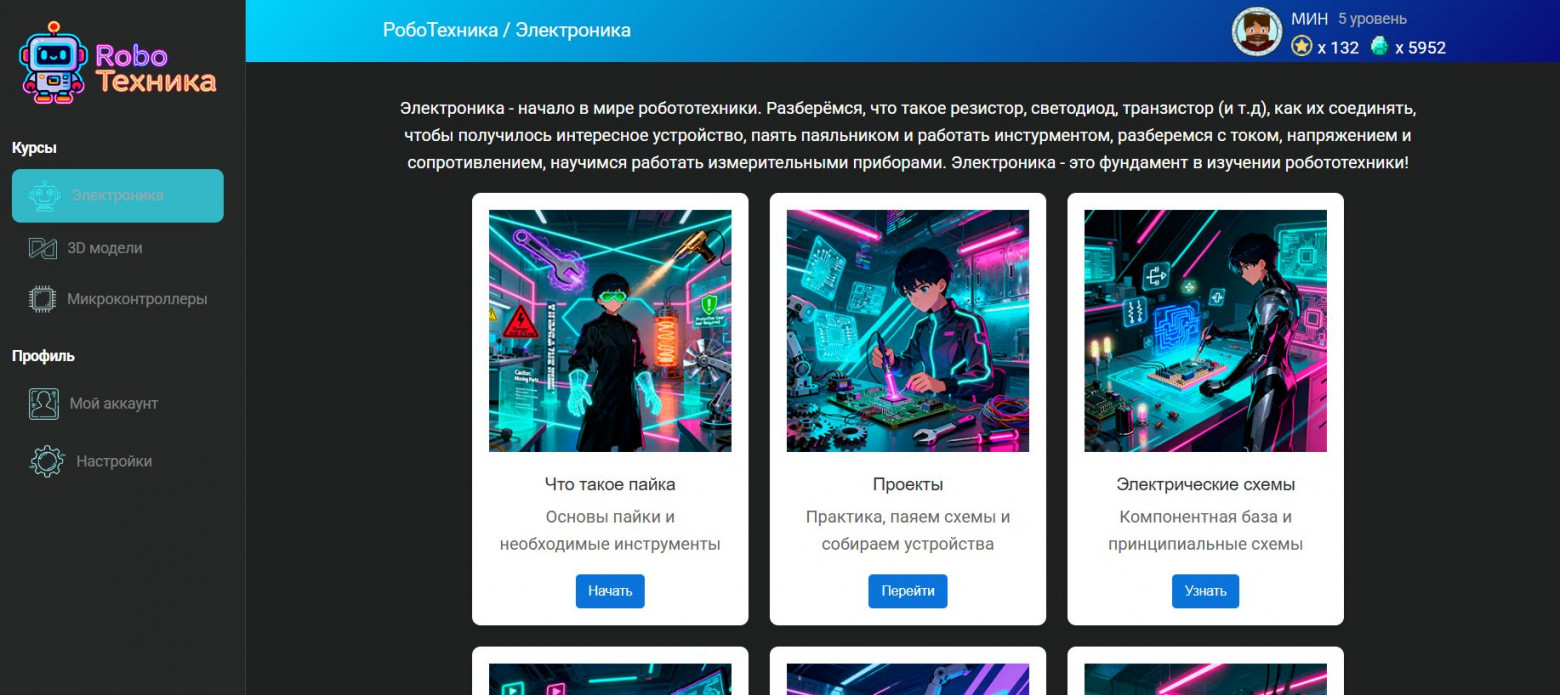
For the electronics and robotics track, I built a platform called RoboTechnika. Students arrive at class, log in on their phones, and find their current project — a speaker, an alarm, a radio, a corded phone. Each project has detailed step-by-step instructions. Students gather components, use soldering irons, and assemble following the guide.
Early projects are very detailed. As students progress, instructions become less complete and students are expected to think through more of the implementation themselves. By the end of Level 1 (approximately 30 projects, taking 1.5–2 years at one 2-hour session per week), students are building circuits from brief specifications rather than step-by-step guides.
Minecrafter — Programming
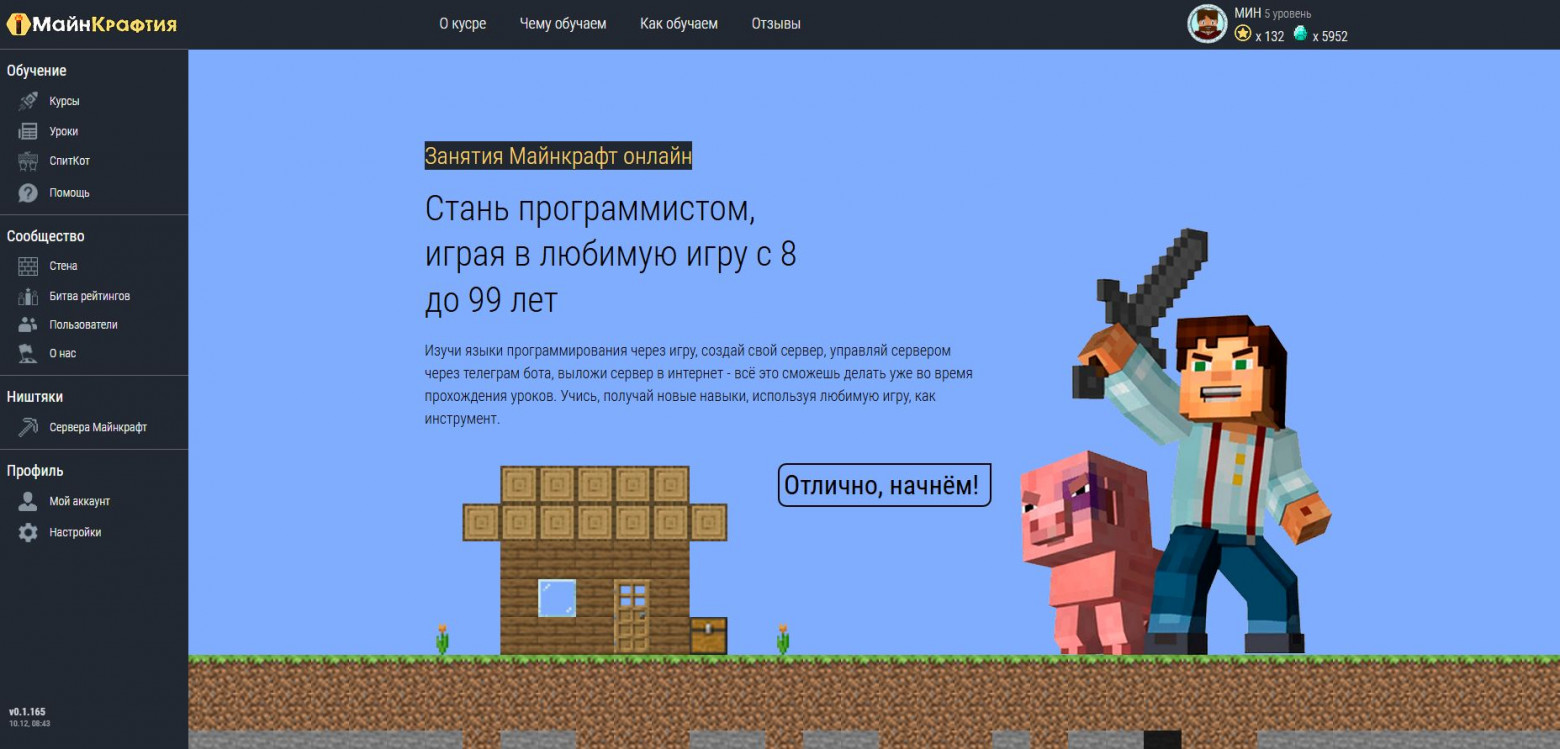
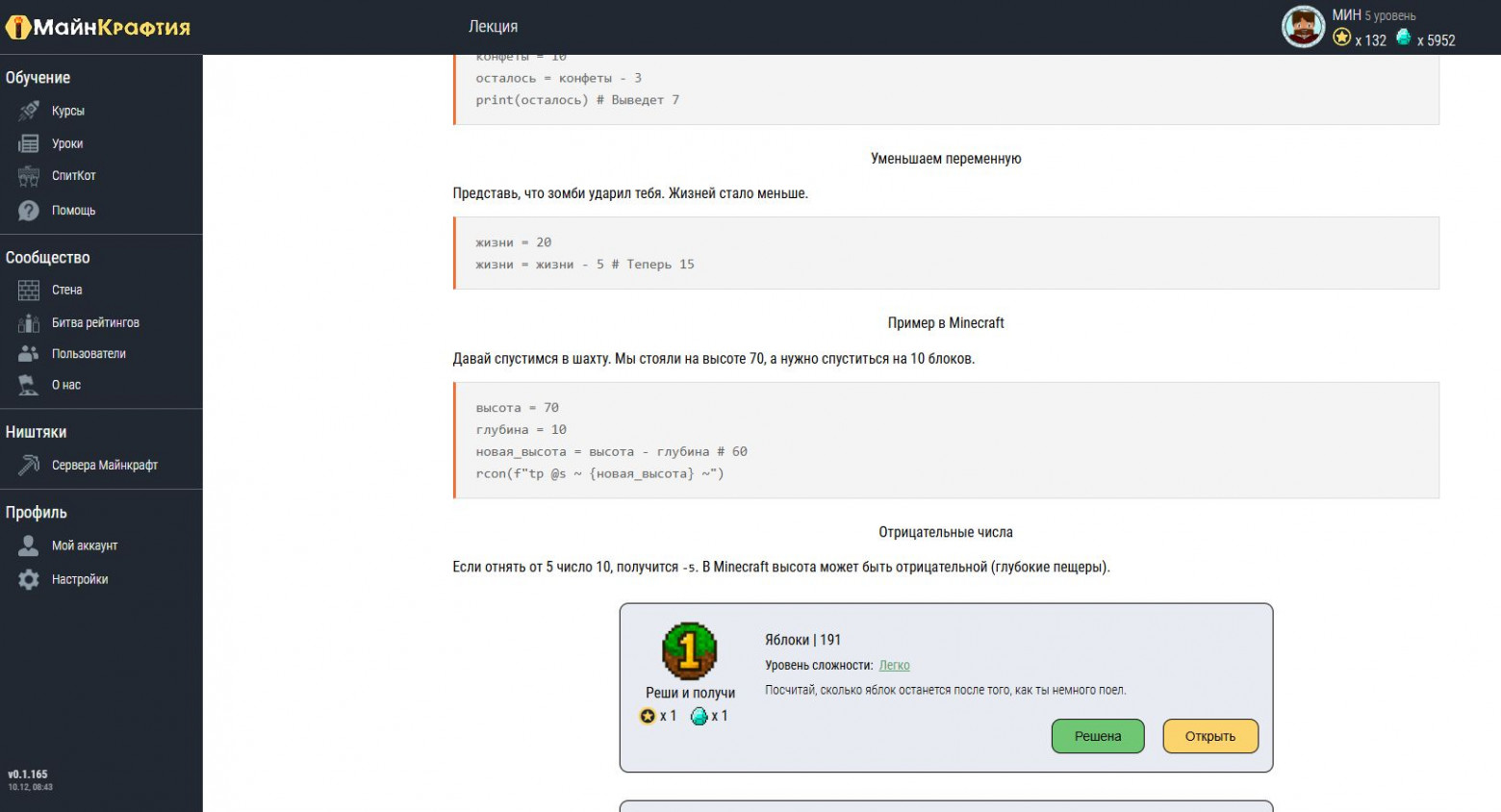
For programming, I built Minecrafter. The platform contains multiple courses: Python in Minecraft, web development (HTML/CSS/JavaScript), setting up personal Minecraft servers on Ubuntu in Docker, and others. Each course contains 50–300 mini-lessons. Each lesson begins with 2–3 minutes of theory, followed by three tasks: simple, medium, and difficult. All tasks are automatically checked — no teacher involvement required for assessment.
The classroom during a Minecrafter session is lively. Students discuss problems, help each other, and compete informally. One student might complete 30 lessons in a month while another completes 20 — same conditions, different results. This is exactly as it should be. Everyone absorbs material differently and at different speeds. The self-paced format means the faster students are never waiting and the slower students are never left behind and humiliated.
I hear from parents regularly: "For other clubs we sometimes have to force our child to go. But for your classes — he always runs there enthusiastically."
There is an interesting pattern in mathematics competitions for grades 5–7: quick solvers initially dominate. But when difficulty increases substantially, the fast-but-shallow solvers start losing to the slow-but-deep ones. Our format naturally respects both types.
Part 4: The RoboCoins Economy
I do not pressure children during class. There is no requirement to complete 10 lessons or one full project per session. Adults have days when they arrive at work unmotivated — something happened at home, or they burned out. Children are people too. Maybe twice a month a student arrives with no energy and spends the session soldering a few wires or playing Counter-Strike 1.6 on my servers. This is normal.
But some children lack self-directed work habits, particularly younger ones in grades 1–3 who have not yet developed independent work culture. For these students, I introduced RoboCoins.
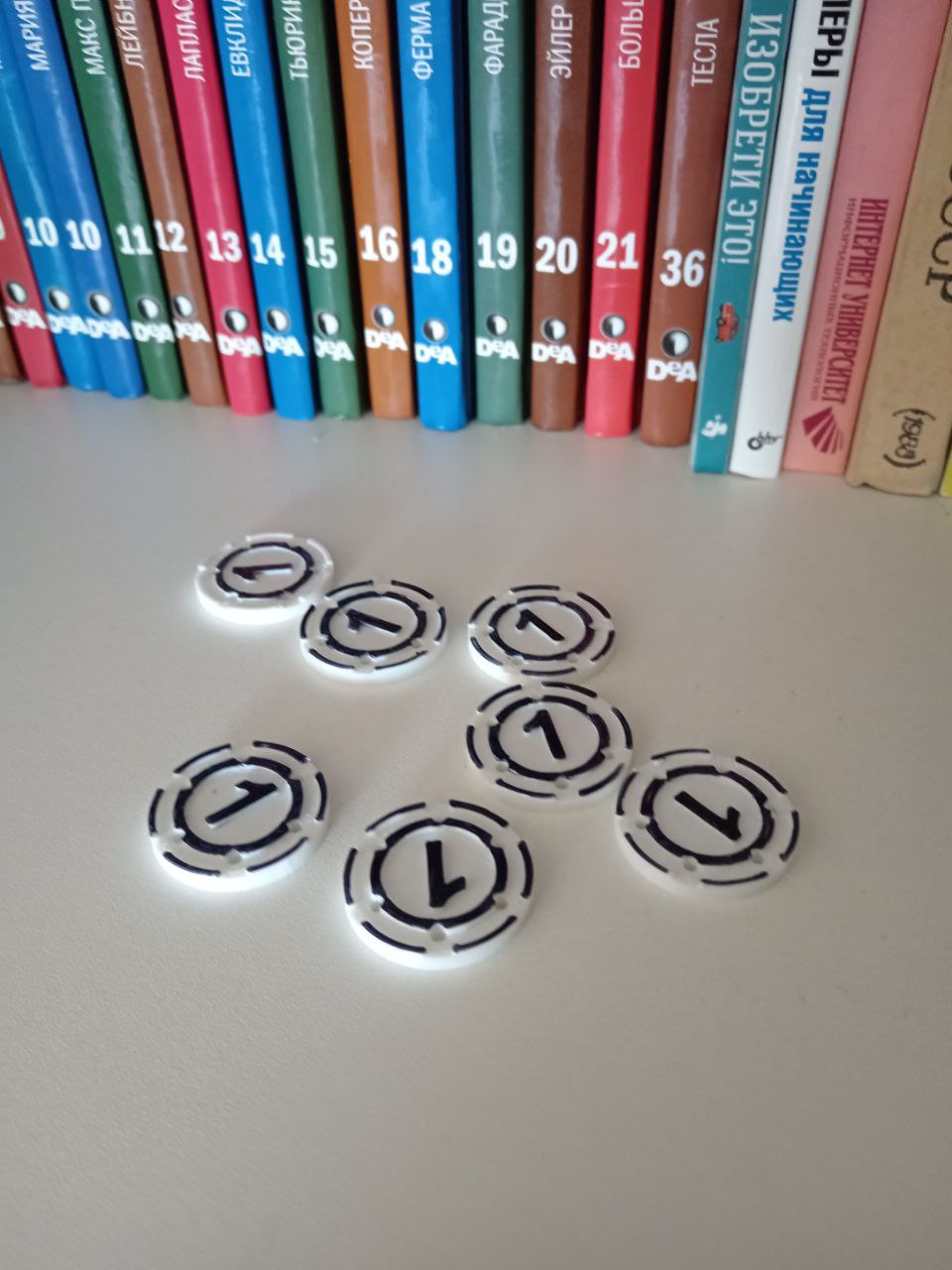
For good work and good behavior during class, students receive RoboCoins. One cabinet in the classroom displays items for purchase:
- Lollipop: 1 RoboCoin
- Cookies: 3 RoboCoins
- Chips: 3 RoboCoins
- Headphones: 30 RoboCoins
- Gaming accessories: 50+ RoboCoins
To earn RoboCoins, students need to minimally work and behave reasonably. The system works reliably — children want them and become genuinely upset when they do not receive them. This is the first motivation layer for students who need external encouragement.
Part 5: The Diamond Economy and Level System
Both RoboTechnika and Minecrafter have their own in-platform currency: diamonds.
- In RoboTechnika: completing a project awards 5–30 diamonds depending on complexity
- In Minecrafter: opening the next lesson costs 1 diamond; solving a simple problem earns 1 diamond, medium earns 2, difficult earns 3
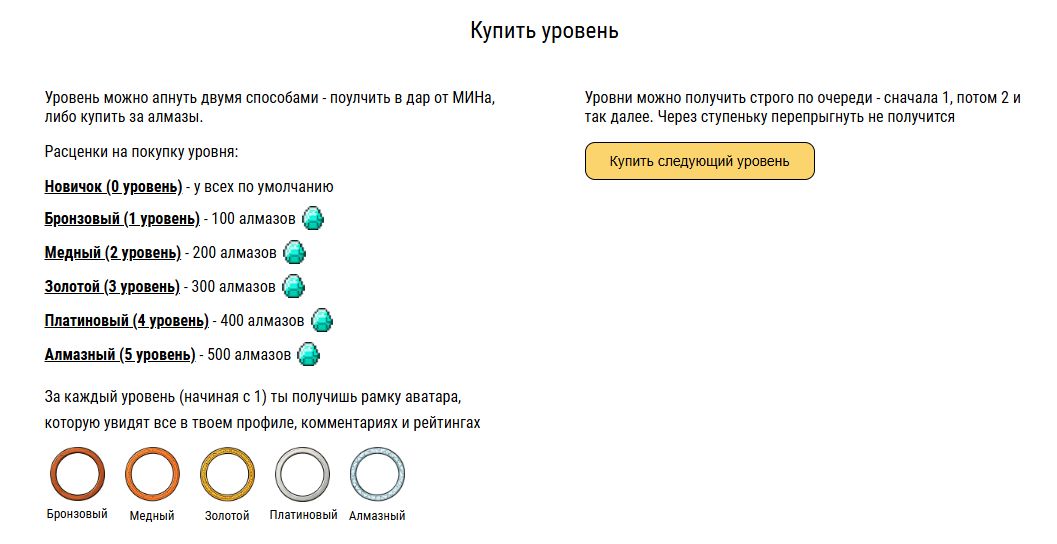
Diamonds are spent to purchase account levels. Levels function as a RoboCoin multiplier:
- Level 1: 1 RoboCoin per class (default)
- Level 2: 2 RoboCoins per class
- Level 3: 3 RoboCoins per class
- Level 4: 4 RoboCoins per class
- Level 5: 5 RoboCoins per class (maximum)
Level costs: Level 1 = 100 diamonds, Level 2 = 200, continuing to Level 5 = 500. You cannot skip levels — must purchase sequentially. Maximum level requires 1,500 total diamonds.
The effect was immediate: students started studying at home between sessions — something that had previously been extremely rare. The motivation was clear: more diamonds means faster level-up means more RoboCoins per class means faster store purchases. The loop is self-reinforcing.
Part 6: Rating Battles
The next addition multiplied engagement by a further significant factor. Beyond diamonds, both platforms award rating points for solving problems and completing projects. All student ratings are combined in a single visible leaderboard.
At the start of each month, the top three students receive diamond bonuses:
- 1st place: 100 diamonds
- 2nd place: 50 diamonds
- 3rd place: 20 diamonds
After prizes are distributed, all ratings reset to zero. Everything starts over.
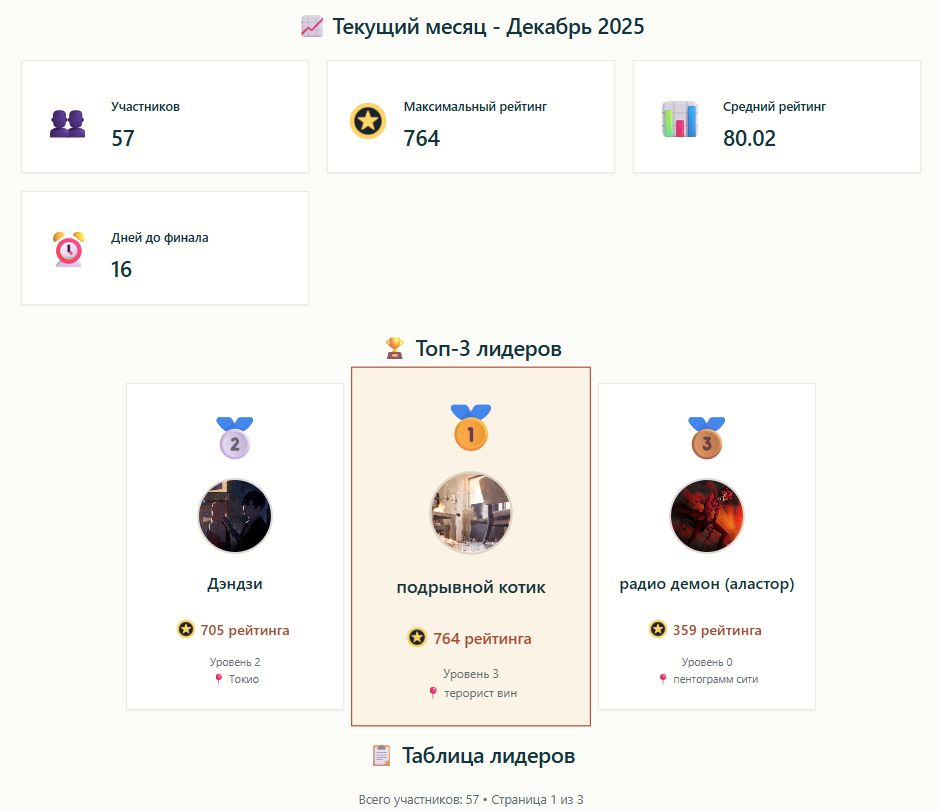
The competition that erupted surprised even me. Strong students fought hard for the top three prizes. But more interesting was what happened with weaker students: they used the leaderboard as a measure of who was working hardest, and they competed intensely to avoid the bottom. They celebrated overtaking even a single rank. For teachers, the leaderboard provides genuine KPI data — you can see at a glance who has been working and how much.
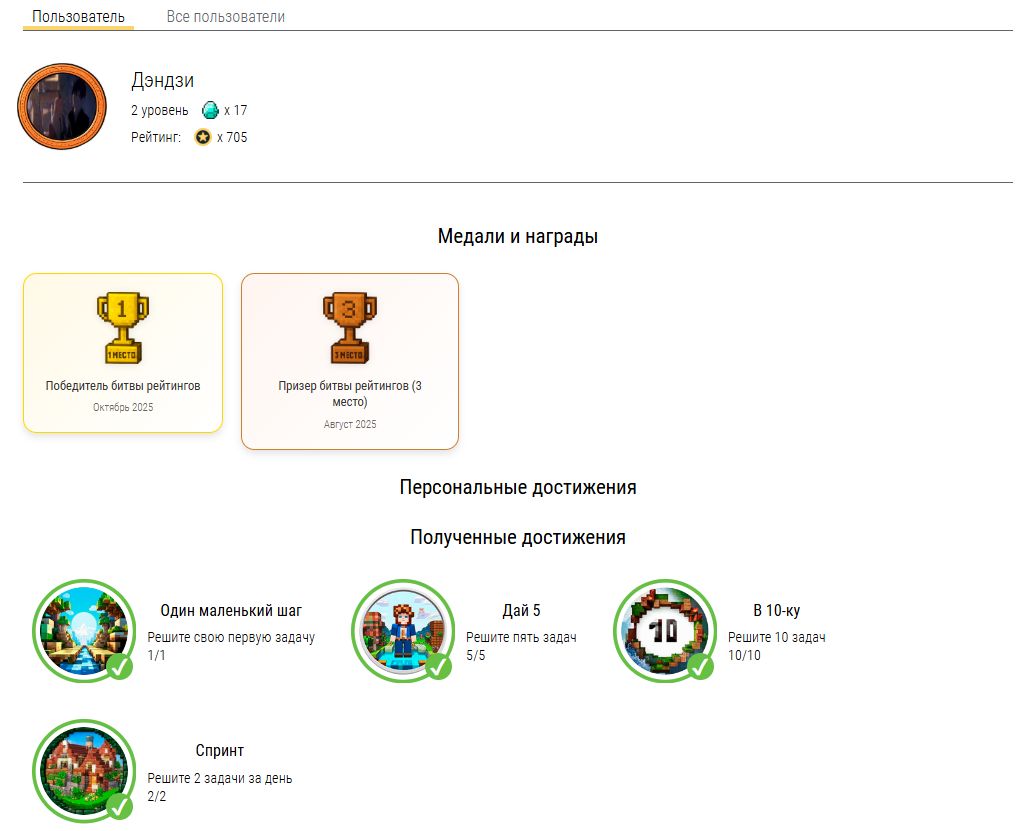
Student profiles function like game accounts: custom avatars, chosen display names, achievement badges for completing daily challenges or course sections, trophies for rating battle victories, and a comment section where classmates can leave messages.
Part 7: The Technical Architecture — Python in Minecraft
The Python in Minecraft course deserves its own explanation, because what looks simple to the student is architecturally non-trivial.
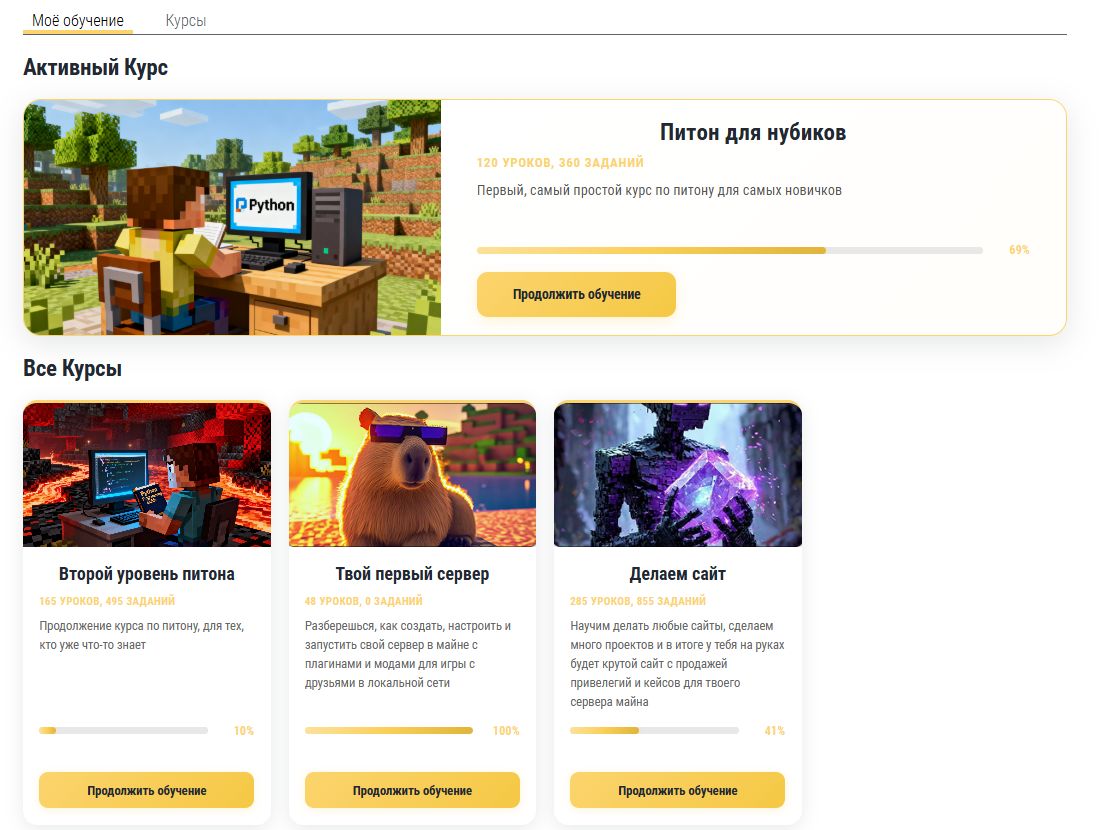
From the student's perspective: they arrive, press one button labeled "Launch," and within seconds they are in a Minecraft world and can open problem sets in their browser. They write a Python solution, press "Check," and something happens in Minecraft — their character teleports, blocks materialize, effects trigger. Simple.
Behind the scenes:
- React frontend serving the lesson content and problem interface
- Desktop launcher application that handles authentication and orchestrates startup
- Personal Minecraft server launched per-student (the "setting up a Minecraft server on Ubuntu in Docker" course teaches exactly this)
- RCON interface providing a server API for programmatic control
- Flask backend receiving task-check requests from the frontend, executing auto-tests against student code, and sending commands to the Minecraft server via RCON
- Minecraft client — the student's game window, connecting to their personal server
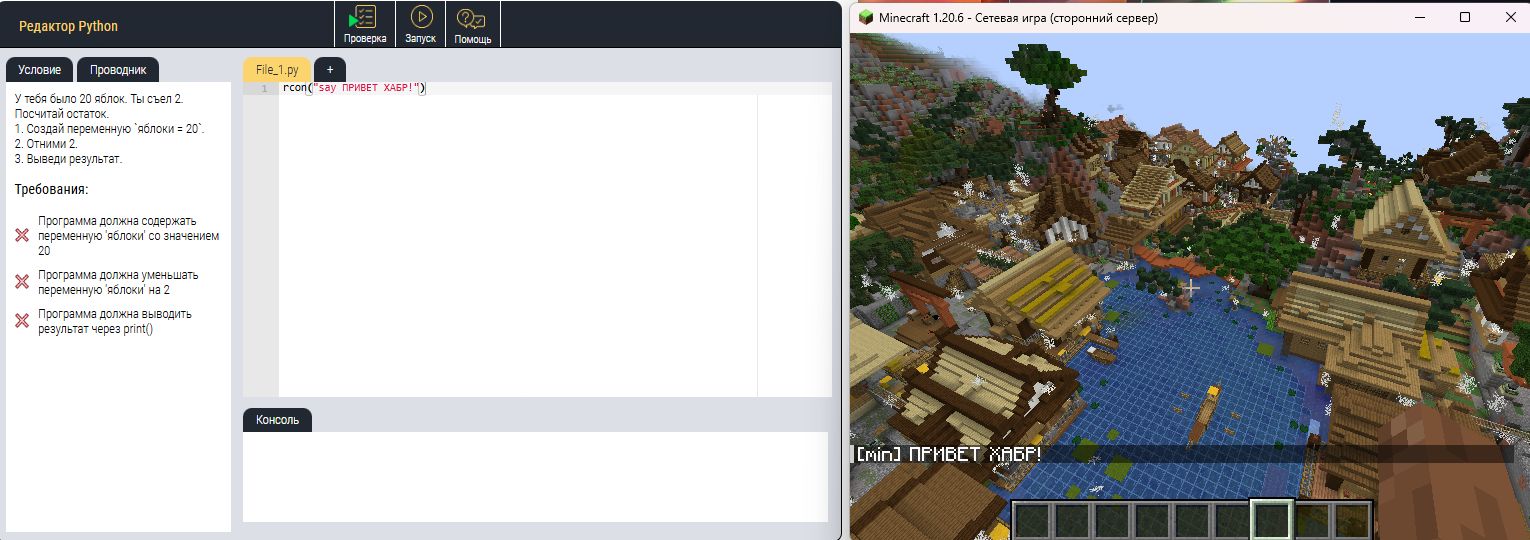
When the student presses "Check," the Flask backend runs their code, evaluates whether it produces the correct output, and if so fires a sequence of RCON commands to the Minecraft server — spawning blocks, triggering effects, teleporting the character. For the student, the feedback loop is magical. For the engineer, it is just a well-orchestrated set of microservices.
The "Python for Newbies" course is intentionally extremely extended: variables and data types get 15 lessons; conditionals get another 20. Lessons are small and individually simple, yet some children still find them challenging. This granularity is essential for the grades 4–6 audience, who have no prior programming exposure and are still developing abstract reasoning skills.
Scratch in Minecraft — The Next Frontier
For the youngest students, Python remains a barrier. Scratch — MIT's visual block programming environment — is the established standard for beginner programming, with Russian-language blocks and drag-and-drop mechanics. I am currently building a Scratch-in-Minecraft integration: a custom Scratch editor embedded in the lesson platform, with problems that students solve by assembling block programs that control Minecraft characters and environments.
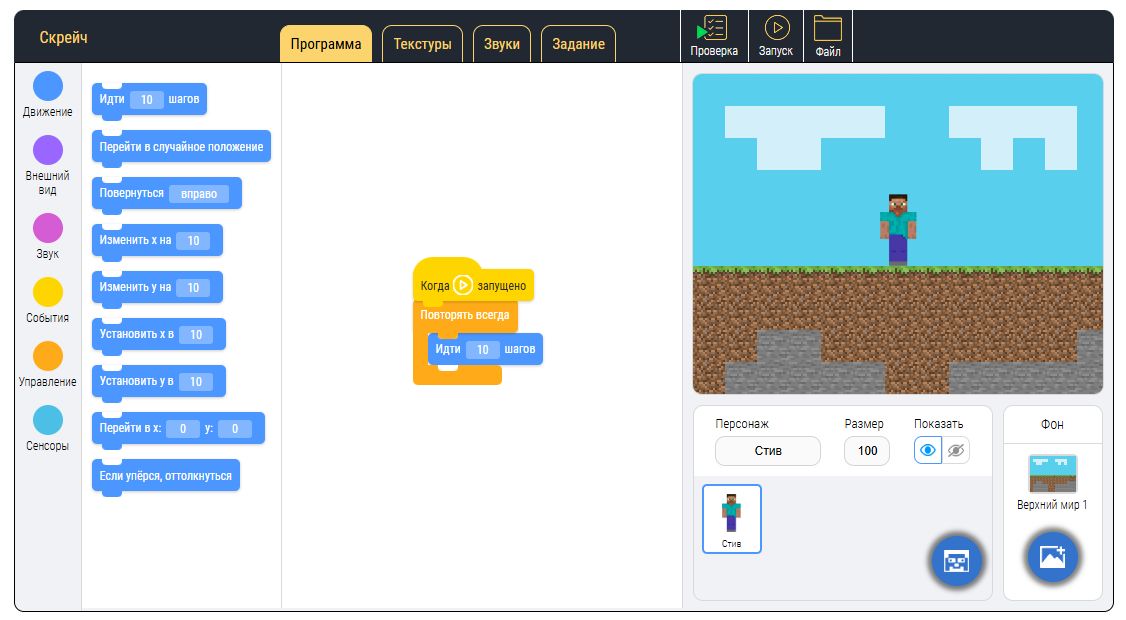
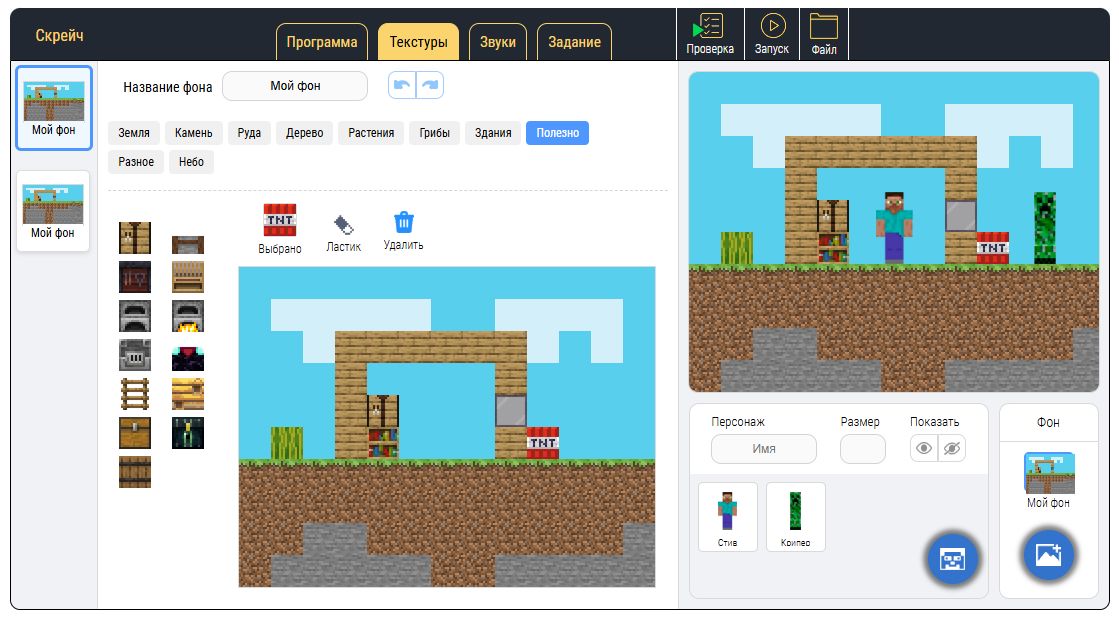
Backgrounds and characters are rendered in Minecraft pixel-art style. When complete, this should be accessible to students as young as 7 — and should generate the same diamond-and-rating engagement loop that makes the older courses work.
Part 8: What the Results Look Like
After children go through this system, here is what the progression looks like:
- Robotics Level 1 (electronics): 30 projects, 1.5–2 years at 2 hours/week. Students learn to solder, read circuit diagrams, identify components, and build working devices from brief specifications.
- 3D Modeling and Printing: 6 months. Students design enclosures and mechanical parts for their own projects.
- Robotics Level 2 (microcontrollers): students learn to program Arduino-family boards and build increasingly complex automated systems.
- Programming (Minecrafter): students move freely between courses — Python, web development, server administration — within a single session. The platform allows cross-course navigation, and many students pursue multiple tracks simultaneously.
Children continue for years. They love coming to class, and parents are satisfied. The gamification creates a system where the rewards for learning compound over time — higher levels mean more RoboCoins, better standing in rating battles means more diamonds, more diamonds means faster level advancement. The loop has no ceiling within the course material available.
Part 9: Teaching Your Own Children
One question I am frequently asked: how do you motivate your own children to study?
My eldest son is 7; my middle is 5. Understanding what is happening in Russian schools, I have been working on this problem seriously for 1.5 years. My first attempt: I obtained the 2100 curriculum textbooks — the program I was educated under, which emphasizes critical thinking — and spent a month doing 3–4 hour daily sessions with my eldest. The program is excellent. But after a month I burned out. Combining full-time work, family time, and structured daily teaching proved unsustainable. And my middle son enters school in 1–2 years — teaching one child and then repeating the process for the next is poor strategy. Automation is necessary.
For young children — those who can barely read and struggle to maintain attention on a single task for extended periods — video format is the only thing that works online. I am slowly building courses for my own children in mathematics and computer science, with short video lessons and interactive tasks using the same gamification framework.
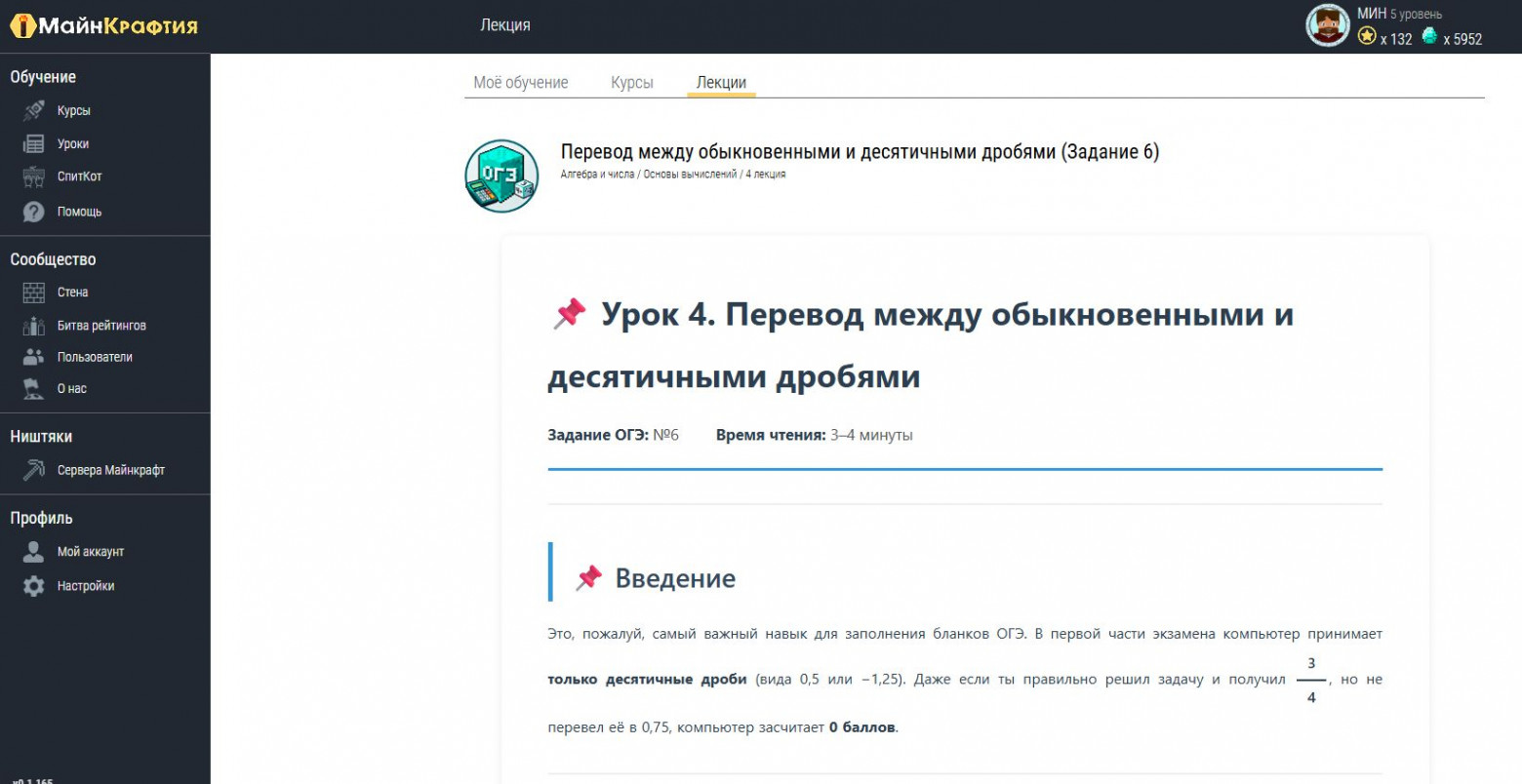
My wife teaches mathematics and computer science. Together we are developing an OGE (Grade 9 state exam) mathematics preparation course, to be implemented in Minecrafter. The format: eight ninth-graders in one group, each working on the platform independently at their own pace, with the teacher available for questions. 150 lessons with theory, automatic-checking assignments with feedback on exactly where solutions went wrong, and timed mock exams that simulate the real OGE format.
The hypothesis: the group format — even for exam preparation, even for older students — will outperform individual tutoring because of the motivational effect of the shared environment. The diamond and rating systems work for grades 10–11 students just as well as for younger ones. We are counting on synergistic effects between the exam prep cohort and the younger robotics and programming students who are already embedded in the gamification ecosystem.
Summary
- Some children are lucky enough to have engineer or programmer parents who serve as natural mentors. This is the most reliable path to new engineers — but it does not scale.
- School teachers, especially in smaller Russian cities, are losing credibility and authority with children every year. Teachers are not responsible for this situation. The economics and the legal framework have made the profession untenable.
- After-school technical clubs matter enormously for both career orientation and learning motivation. But approach matters. Teaching format, gamification design, and classroom atmosphere have a larger effect on outcomes than curriculum quality alone.