Your Xiaomi Isn't Really Xiaomi: Who Actually Makes Chinese Phones
Many people know that Xiaomi and other Chinese brands outsource assembly — but what if they do not even develop their own phones? A look at the invisible ODM giants that manufacture most of the world's budget smartphones and explain why they cost so little.
Many people know that Xiaomi, Honor, Tecno, or Realme do not make phones themselves. But what if I told you they do not even develop them? Many budget models are merely sold under these brand names, while all development and production — from start to finish — is done by completely different companies. These companies are not well known, but without them the legendary "value for money" would not exist at all. Let us figure out what this means and how it happened.
First, a short educational detour through three important abbreviations.
Suppose You Want to Make Your Own Smartphone
Well, where do you start? Obviously you need your own R&D center, a factory, production lines, component supply chains... Or do you?
Actually, none of that is necessary — because other specially trained people (and robots) will happily do it for you. There are three formats for this kind of outsourcing:
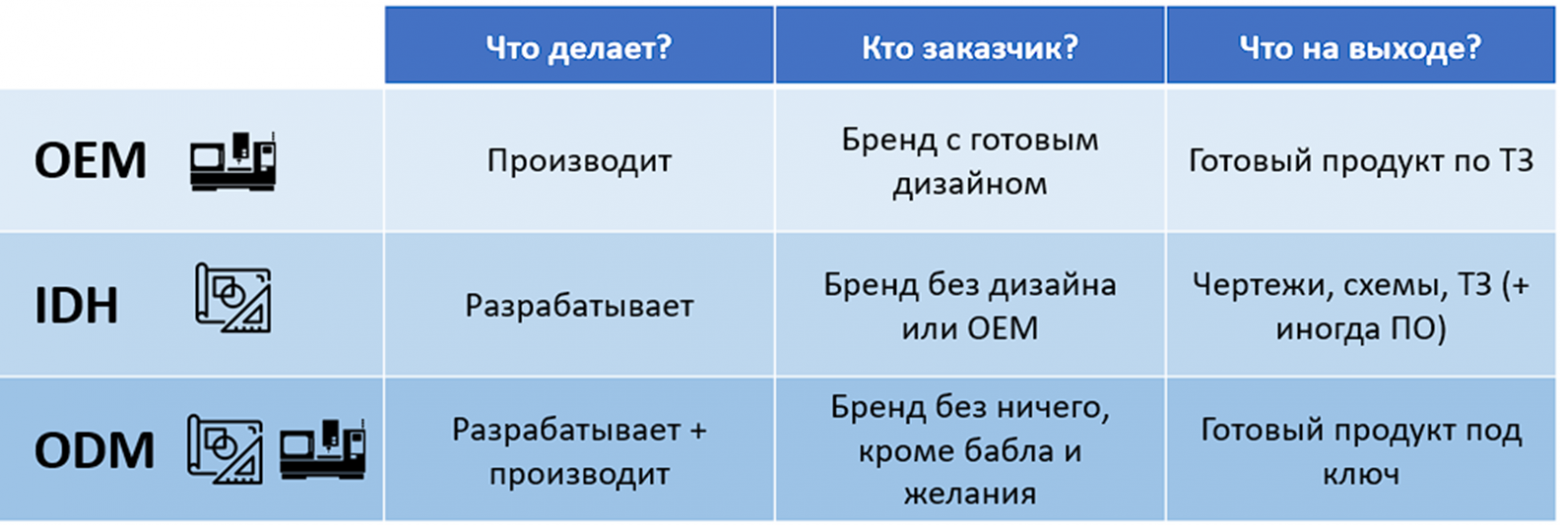
OEM (Original Equipment Manufacturer). You design the product and write detailed specifications. Then you hand the specs to another company that manufactures the product for you. This is exactly how Apple works: the engineers in Cupertino design the new iPhone, and Foxconn (the OEM) assembles it. "Designed in California, assembled in China." Samsung and certain Dell models follow a similar pattern.
IDH (Independent Design House). If you have a factory but lack R&D competence, an IDH will design and engineer the gadget for you and hand you the specs for production. It is the reverse of the OEM model. For mass-market products you can also pass those specs to EMS (Electronic Manufacturing Services) companies, whose focus is production scalability and cost optimization.
ODM (Original Design Manufacturer). If you have nothing but money and need a turnkey product, ODM companies handle everything — from the first sketch to the final screw. You walk in and say: "Make us a value phone with a 100-megapixel camera, NFC, and a $150 price tag." The ODM replies: "No problem, ready in six months" — then designs, engineers, and manufactures the quantity you need. You just put your brand name on it and sell.
The abbreviation tour is over. To answer the question in the headline, we only need those last three letters — ODM.
What If Xiaomi Is Not Really Xiaomi?
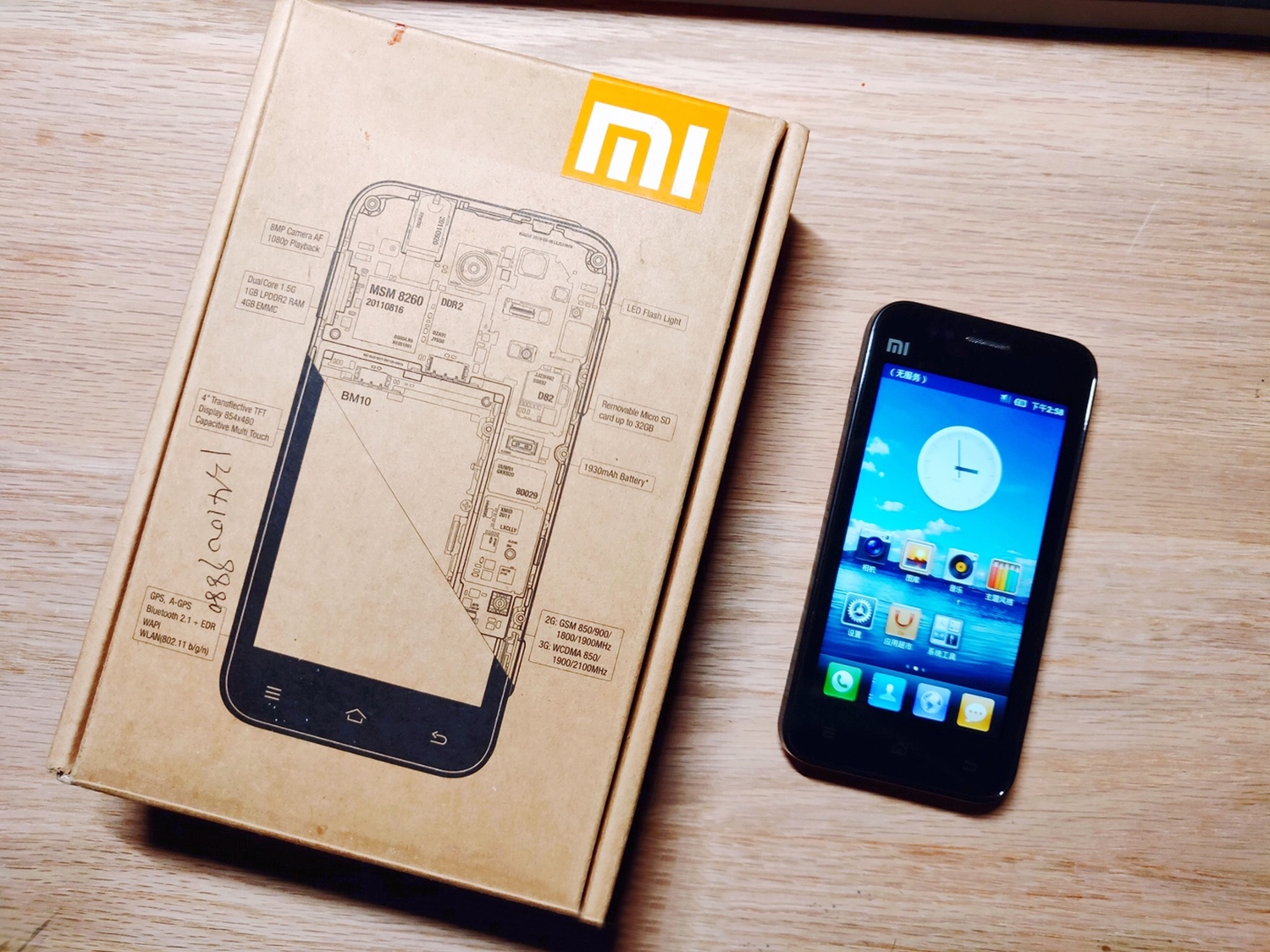
Let us rewind fourteen years. Back then Xiaomi was not a giant ecosystem of mixed electronics but a promising startup with exactly one product: a version of Android called MIUI. The OS turned out decent, and the company logically decided to "build a home for it." In 2011 the first Xiaomi Mi 1 appeared.
Over the following two years came Mi 2 and Mi 3 — well-received phones offering near-flagship specs at around $300. Xiaomi was carving out its segment, the brand was gaining recognition, and a fan base was forming.
But founder Lei Jun and his team had bigger ambitions:
Selling 10–20 million phones per year is nice, but for China that is nothing. Real growth is in the mass market — we need to go there!
How do you quickly launch a decent budget phone at $150 when you only know how to make near-flagship devices at $300–400? You get help from someone.
The first Redmi smartphone used blueprints and components (including the processor) from Taiwan's MediaTek, and various OEM and ODM companies handled manufacturing. Xiaomi's role was limited to project management, adding MIUI, and handling marketing and sales. The second Redmi followed a similar pattern, switching to Qualcomm — likely to ease entry into foreign markets.
But early Redmi models still could not match budget offerings from ZTE, Meizu, Huawei, and Lenovo sub-brands. Xiaomi needed a quality leap or risked missing the departing train entirely.
The Invisible Giant
Fortunately for Lei Jun, by the early 2010s China already had several top-tier smartphone ODMs. The largest and most powerful was called Wingtech Technologies — and that is who the Xiaomi team turned to.
Wingtech was founded in 2006 in Zhejiang province by Zhang Xuezhen, a former ZTE engineer. The company soon launched a factory and opened a research center in Shenzhen — China's innovation hub, its own Silicon Valley. In 2008 Wingtech began ODM smartphone production. At first the clients were small, obscure companies. But in the early 2010s China's smartphone boom hit full stride, and the ODM market flourished. Major players came knocking — Meizu, Lenovo, and eventually Xiaomi in 2015.
By that time Wingtech could offer Xiaomi everything it needed:
- A fully ready smartphone platform as a turnkey solution — Xiaomi only needed to choose specs and customize MIUI.
- A complete R&D cycle, from board design and chassis engineering to component testing and certification.
- End-to-end component sourcing, assembly, and mass production — with Xiaomi free to join in on supplier selection if desired.
In 2015, the Xiaomi Redmi Note 3 emerged from Wingtech's workshop — and it was a completely different phone. Compared to the plastic bar of soap that was Redmi Note 2, this was almost a flagship. Metal body. Fingerprint sensor. And still around $140.
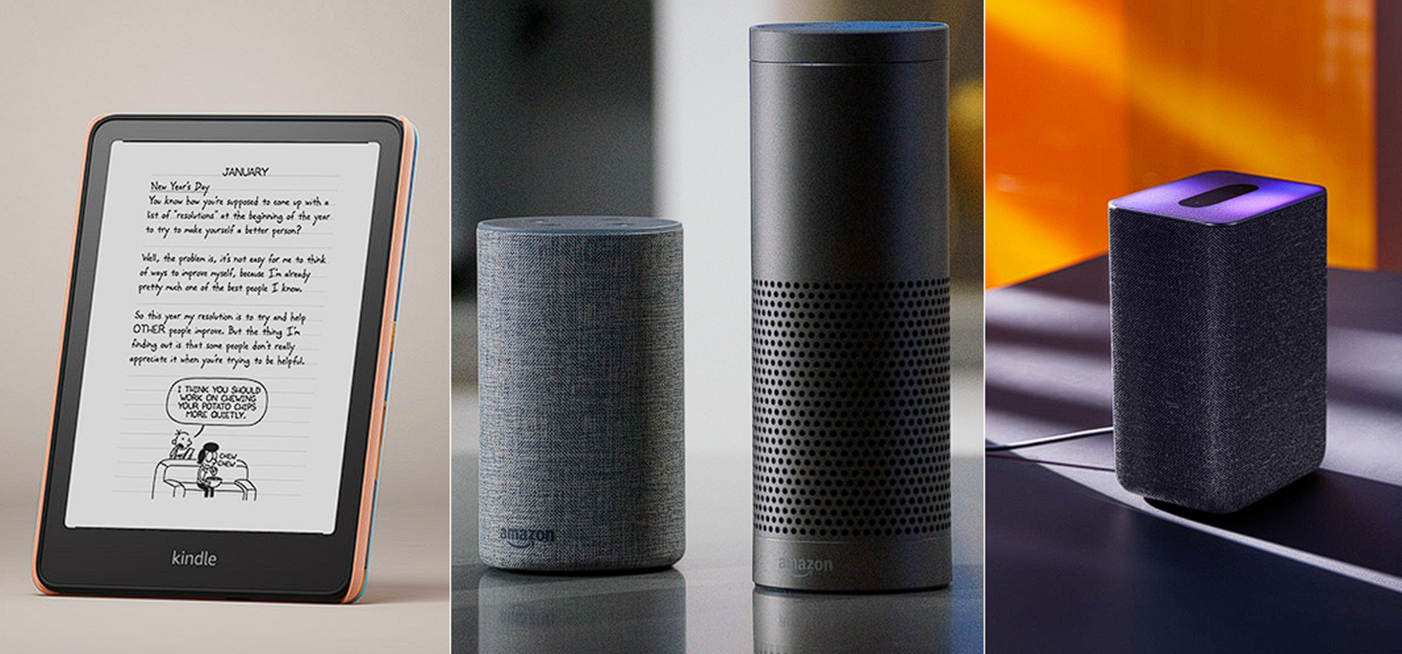
In 2016 the Redmi Note 3 became one of the best-selling smartphones in both China and India. "Value for money" became Xiaomi's defining phrase — even though the phone was Wingtech's work from start to finish.
Since then, Wingtech has been the ODM manufacturer for all Redmi models, and later the POCO line as well. Only from the early 2020s, having grown into a massive corporation, did Xiaomi begin taking more development and design in-house — though it still outsources the bulk of Redmi and POCO production.
Important note: Xiaomi designs and manufactures its flagship Mi series itself and produces through OEMs such as Foxconn and BYD Electronics. The Wingtech story applies specifically to Redmi and POCO.
Other Chinese smartphone brands use the exact same playbook: develop flagship models in-house, and delegate cheap and mid-range mass-market lines to ODM partners. Almost all of them do this.
But Why Is ODM Cheaper?
China has three major smartphone ODMs: Wingtech, Huaqin, and Longcheer. All three serve not just Chinese manufacturers but global companies — Samsung, Amazon, Tesla, and others. They handle not only smartphones but almost any type of consumer electronics.
In 2024, 44% of all smartphones sold worldwide were manufactured by ODMs. These three Chinese companies control roughly 70–80% of the entire global ODM market, with roughly equal shares of about 25–30% each. Do the math: every third or fourth smartphone in the world is made by one of these three companies.
Why is it so economically beneficial? Several reasons:
- No CapEx to speak of. An established ODM already has factories, machinery, logistics, warehouses, and a research center. Capital expenditures were made and paid back long ago. Compared to building R&D and production from scratch, incremental costs are negligible.
- Economies of scale. Serving many large customers simultaneously means production and development operate at scale — easy to ramp output and achieve lower unit costs.
- Purchasing power. When you are buying 10 million chips for multiple clients simultaneously, you can pressure suppliers for significant discounts.
- Genuine access to technology. Wingtech, for example, acquired major Dutch semiconductor manufacturer Nexperia and several Chinese chipset companies. Huaqin and Longcheer made their own strategic acquisitions.
- Standard platform solutions. Imagine that every year Xiaomi, Lenovo, Huawei, OPPO, Vivo, and others all come to you asking for essentially the same thing: a good, cheap smartphone. This task repeats endlessly with small variations (better camera here, bigger battery there). The ODM eventually builds standard platforms — ready-made smartphone frameworks where only the camera, chassis, firmware, and a few other details change. It is like Volkswagen Group's MQB car platform used across many European brands, but applied to smartphones. Products roll off the line quickly, cleanly, in series — and cheaply. It also dramatically shortens the development cycle: Xiaomi orders a new Redmi and six months later Wingtech ships a batch.
The Flip Side
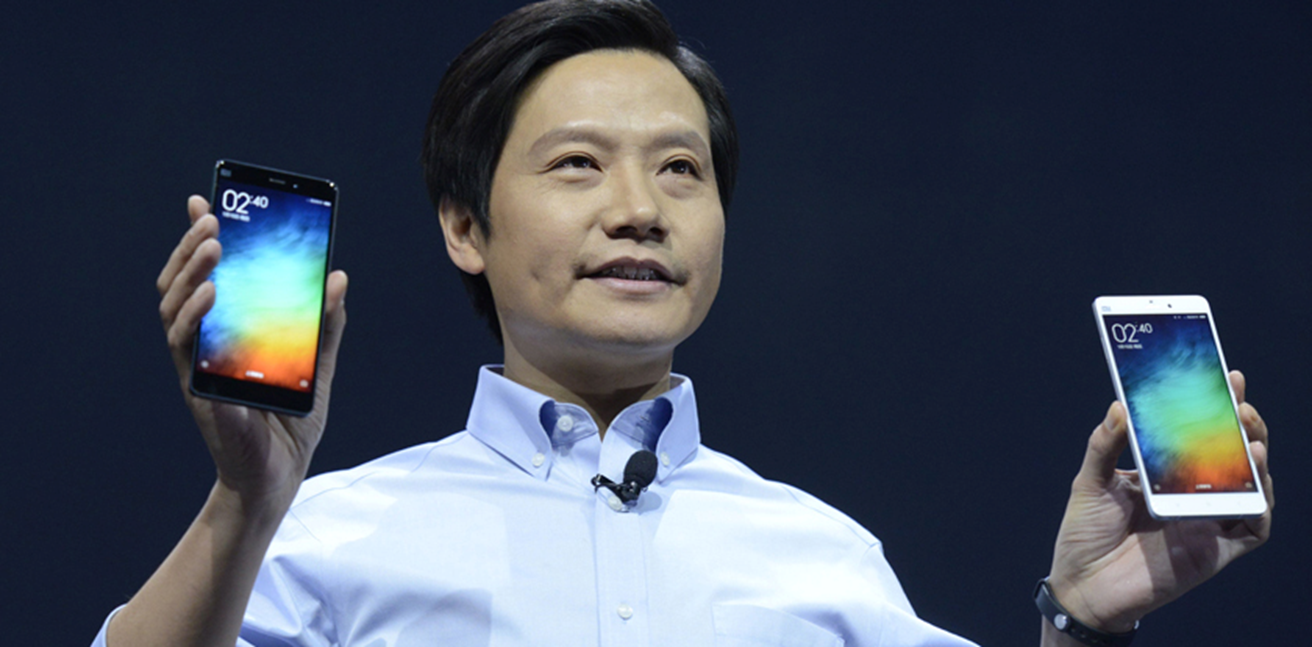
What happens when one large ODM takes very similar orders from many competing companies? It starts creating standard solutions — and offers them to all its customers. The result: Chinese budget phones look nearly identical externally, despite every brand wanting unique, recognizable design. Standard platform solutions are just too temptingly fast and cheap to resist. How similar they are internally is left as an exercise for the imagination.
ODM dominance creates a vicious circle. Companies order entire product lines from ODMs year after year. The ODM builds know-how and crystallizes it into platform solutions. Eventually all of that ODM's customers are using the same solutions — which means each brand is inadvertently enriching its competitors' technological capabilities, and vice versa. Genuine differentiation becomes impossible; only positioning, marketing, and creative advertising remain as levers.
Refusing to use ODMs is equally dangerous, though. Your competitor will not refuse, and will beat you on price and production speed. ODMs are, in a sense, a drug for Chinese smartphone companies — their shared addiction.
Personally, I think this level of ODM involvement in budget smartphone creation is fine. Yes, you get nearly identical phones for $150. But thanks to these companies' scale and accumulated expertise, you pack a remarkable amount into those $150.
If you have a Chinese (or any non-Apple) smartphone, look up who actually made it — the answer might surprise you.